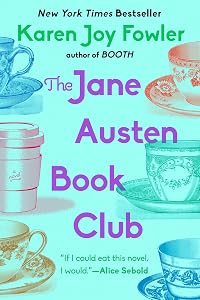
The Jane Austen Book Club
by Karen Joy Fowler
On This Page
Description
A sublime comedy of contemporary manners, this is the novel Jane Austen might well have written had she lived in twenty-first century California.Nothing ever moves in a straight line in Karen Joy Fowler's fiction, and in her latest, the complex dance of modern love has never been so devious or so much fun.
Six Californians join to discuss Jane Austen's novels. Over the six months they meet, marriages are tested, affairs begin, unsuitable arrangements become suitable, and love happens. With show more her finely sighted eye for the frailties of human behavior and her finely tuned ear for the absurdities of social intercourse, Fowler has never been wittier nor her characters more appealing. The result is a delicious dissection of modern relationships.
Dedicated Austenites will delight in unearthing the echoes of Austen that run through the novel, but most readers will simply enjoy the vision and voice that, despite two centuries of separation, unite two great writers of brilliant...
. show less
Tags
Recommendations

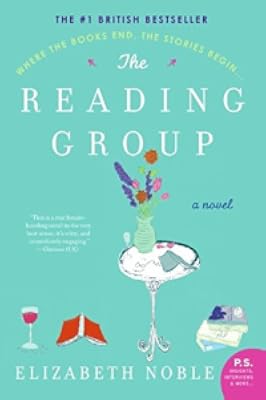
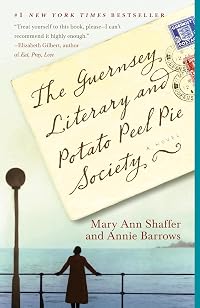
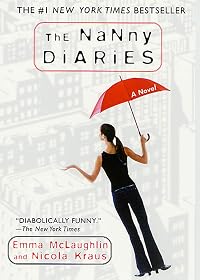
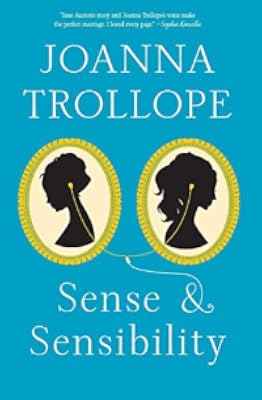
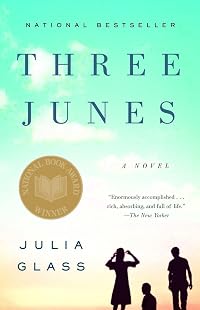
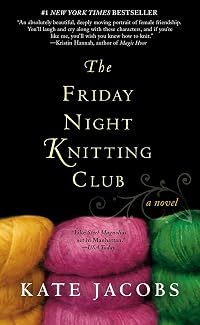
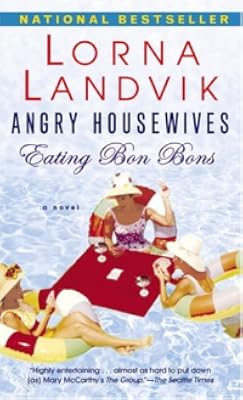
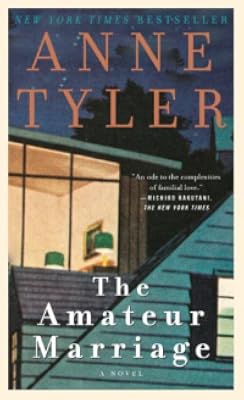
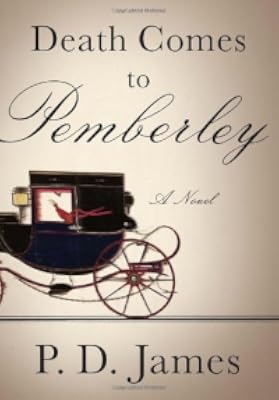
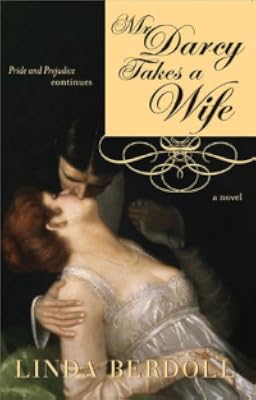
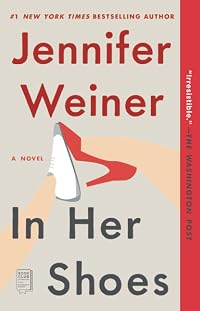
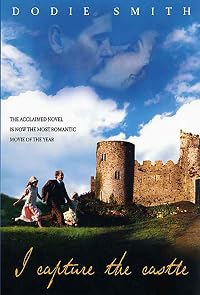

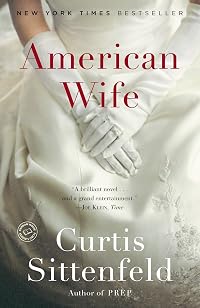
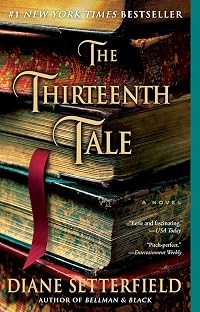
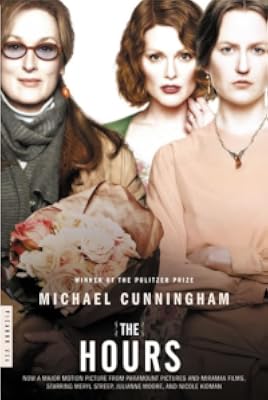
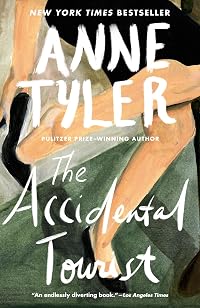
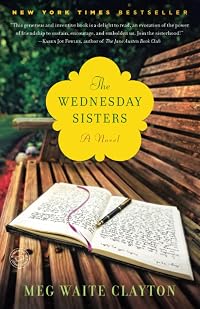
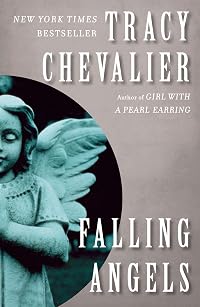
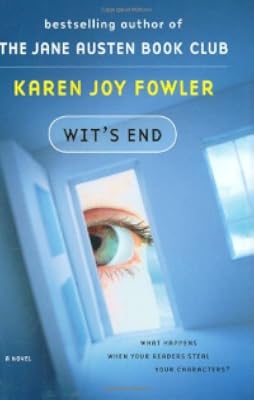
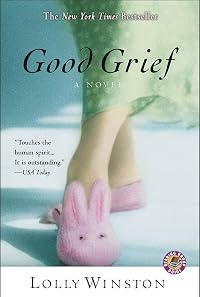
Member Recommendations


Member Reviews
I feel another Austen phase coming on, so couldn't resist this frothy little ode to my favourite author. The concept is cute - five women and a guy get together to discuss Jane Austen's six novels - but Karen Joy Fowler's witty writing makes this more than just a clever device. Yes, each character is tied into the text they choose to discuss - Jocelyn the control freak leads in with Emma, Sylvia finds parallels with her own love life in Persuasion, while her emotional daughter Allegra goes for Sense and Sensibility - but the narratives really come to life through revealing anecdotes and the distinct 'voices' of the women (and token guy, Grigg). I loved reading about them all, and the references to Austen's novels were a bonus (although show more poor Mr Knightley isn't well received!) When discussing Sense and Sensibility, Grigg cynically observes that women 'want the heel, not the soul', which is a very pithy summary of Marianne and Willoughby! If I didn't agree with some of the group dissections of the novels (primarily Emma), I also uncovered some hidden truths in Austen's work, like paying more attention to the characters who aren't successful in love, like Lydia, Maria and Eliza, rather than the fairytale lives of the heroines.
A lovely, light-hearted read that fellow fans of Austen will enjoy, and any uninitiated readers ('Grigg had never read Pride and Prejudice! We really didn't know what to say') will hopefully be tempted to test the water too. show less
A lovely, light-hearted read that fellow fans of Austen will enjoy, and any uninitiated readers ('Grigg had never read Pride and Prejudice! We really didn't know what to say') will hopefully be tempted to test the water too. show less
'The Jane Austen Book Club' is one of those novels that might be dismissed as 'chick lit' but actually turns out to be a sharp, witty, intelligent and well-written book that, whilst certainly a light read, is also one to be deliciously savoured.
The premise is simple but original. A group of friends start a book club. Not just any book club, but, in light of their collective issues with modern life, an 'All-Jane-Austen-All-The-Time' book club. Six people, six books, with each of the group hosting the meeting for their chosen novel. The chapters are structured around these meetings, so the first chapter is 'MARCH, CHAPTER 1... in which we gather at Jocelyn's to discuss Emma', and so on. In each chapter the host's history and personality show more is more fully explored, the month's novel is discussed (but never so much that it bores or alienates the reader), and at the same time the other characters are lightly threaded through the background to keep the overall plot evolving.
As well as showcasing Austen's novels, this is very much a character piece. Each of the six book club members are entirely individual and it makes for much more interesting and amusing reading. Bernadette is a serial wife, rather eccentric and flamboyant, with a liking for yoga and Pride and Prejudice. Loyal Sylvia works at the library and has just had her life shattered by her husband Daniel's confession that he is leaving her for another woman. Her beautiful daughter Allegra is constantly doing daring things - not always without paying the price - and is getting over a devastating betrayal by her ex-girlfriend Corinne. Jocelyn is a dominant terminal singleton, afraid of being hurt and making up for it by matchmaking everyone else. Prudie is a rather artificial, self-conscious young French teacher who doesn't quite know how to interact with other people without coming across all wrong. And Grigg, poor Grigg, a sci-fi fan and Austen virgin brought into the group by Jocelyn as a distraction for Sylvia, entirely out of his depth and trying not to make an idiot of himself. The novel is narrated by a kind of all-seeing other, one who describes each character in the third person but frequently mentions 'us' and 'we'; part of the fun of the reading is trying to work out which of the six, if any, might be telling the story.
Thus characters are deepened, love blossoms and dies and blooms again, and the story goes on. Of course it ends with optimism, hope and a well-timed bit of Austen wisdom. To my surprise, at the end of the book Fowler has also added some little extras which add to the reading experience - some contemporary and modern literary criticism of Austen and her novels, a brief summary of each of the books (handy for those not familiar with all of the works, or those who might want a quick refresher on characters and plots), and at the VERY end, a funny set of 'Questions for Discussion' on Austen AND Fowler presented by each of the six book club members.
Clearly a liking for Jane Austen helps when reading this novel, but ultimately there is nothing in here that should put off a less knowledgeable reader, particularly given the handy summaries at the back (which I wish I'd noticed earlier, I must admit). It is a scrumptious book - funny, romantic, inspiring and positive - and definitely one I'll be keeping to read again.
I'd also highly recommend the recent movie of the book (starring Maria Bello, Maggie Grace and Hugh Dancy), which is surprisingly faithful to the book in spite of its challenging structure, and just as sparkling! show less
The premise is simple but original. A group of friends start a book club. Not just any book club, but, in light of their collective issues with modern life, an 'All-Jane-Austen-All-The-Time' book club. Six people, six books, with each of the group hosting the meeting for their chosen novel. The chapters are structured around these meetings, so the first chapter is 'MARCH, CHAPTER 1... in which we gather at Jocelyn's to discuss Emma', and so on. In each chapter the host's history and personality show more is more fully explored, the month's novel is discussed (but never so much that it bores or alienates the reader), and at the same time the other characters are lightly threaded through the background to keep the overall plot evolving.
As well as showcasing Austen's novels, this is very much a character piece. Each of the six book club members are entirely individual and it makes for much more interesting and amusing reading. Bernadette is a serial wife, rather eccentric and flamboyant, with a liking for yoga and Pride and Prejudice. Loyal Sylvia works at the library and has just had her life shattered by her husband Daniel's confession that he is leaving her for another woman. Her beautiful daughter Allegra is constantly doing daring things - not always without paying the price - and is getting over a devastating betrayal by her ex-girlfriend Corinne. Jocelyn is a dominant terminal singleton, afraid of being hurt and making up for it by matchmaking everyone else. Prudie is a rather artificial, self-conscious young French teacher who doesn't quite know how to interact with other people without coming across all wrong. And Grigg, poor Grigg, a sci-fi fan and Austen virgin brought into the group by Jocelyn as a distraction for Sylvia, entirely out of his depth and trying not to make an idiot of himself. The novel is narrated by a kind of all-seeing other, one who describes each character in the third person but frequently mentions 'us' and 'we'; part of the fun of the reading is trying to work out which of the six, if any, might be telling the story.
Thus characters are deepened, love blossoms and dies and blooms again, and the story goes on. Of course it ends with optimism, hope and a well-timed bit of Austen wisdom. To my surprise, at the end of the book Fowler has also added some little extras which add to the reading experience - some contemporary and modern literary criticism of Austen and her novels, a brief summary of each of the books (handy for those not familiar with all of the works, or those who might want a quick refresher on characters and plots), and at the VERY end, a funny set of 'Questions for Discussion' on Austen AND Fowler presented by each of the six book club members.
Clearly a liking for Jane Austen helps when reading this novel, but ultimately there is nothing in here that should put off a less knowledgeable reader, particularly given the handy summaries at the back (which I wish I'd noticed earlier, I must admit). It is a scrumptious book - funny, romantic, inspiring and positive - and definitely one I'll be keeping to read again.
I'd also highly recommend the recent movie of the book (starring Maria Bello, Maggie Grace and Hugh Dancy), which is surprisingly faithful to the book in spite of its challenging structure, and just as sparkling! show less
Mini-Me and The Book Accumulator recommended the film of this and I borrowed the book from Mini-Me - and really didn't know what to make of it. On the one hand, there are 5 women and a man of unknown provenance sitting around monthly in California discussing their beloved Miss Austen. On the other hand, we delve into the back stories of the characters and they are très dark. Daaaaaark dark. Sexual assault, emotional betrayal, divorce - these ladies really can't catch a break. Totally at odds with their fluffy discussion. Maybe that's the point - but it was too disconnected for me.
Six people meet monthly to discuss Jane Austen's novels. There's a fairly contented woman in her sixties, two long-standing friends in their 50s, a young French teacher, another young woman who is the daughter of one of the good friends, and a guy who really prefers science fiction.
The book has brief descriptions of the meetings, and a lot of flashbacks into the characters' pasts. I found it interesting, on the whole, but did not enjoy it as much as I had expected to. There really isn't much plot, and there isn't a whole lot of discussion of Austen either. I couldn't really relate to any of the characters who seemed flat - not even amusing like some of Austen's characters - and although I kept trying to like it, I think I must have show more missed the point.
Still, it made pleasant enough light reading.
There are brief details about Jane Austen's novels at the back of the book, and some fascinating glimpses into comments and quotations made by her family, friends and other readers.
Perhaps three and a half stars. show less
The book has brief descriptions of the meetings, and a lot of flashbacks into the characters' pasts. I found it interesting, on the whole, but did not enjoy it as much as I had expected to. There really isn't much plot, and there isn't a whole lot of discussion of Austen either. I couldn't really relate to any of the characters who seemed flat - not even amusing like some of Austen's characters - and although I kept trying to like it, I think I must have show more missed the point.
Still, it made pleasant enough light reading.
There are brief details about Jane Austen's novels at the back of the book, and some fascinating glimpses into comments and quotations made by her family, friends and other readers.
Perhaps three and a half stars. show less
This is a bit of a catch-22 situation. You might like this book a lot if you have read all of the Jane Austen books because you get the inside jokes and the oblique references or you might hate this book a lot if you have read all of the Jane Austen books because you indeed get the references.
In my case I had not read any Austen books when I read this. I had seen a few adaptations of the books in various forms : historical (Pride and Prejudice 2005), modern (aka Clueless) so I had no bases to critique the interpretations of the books by the members of the Austen book club. I did like the characters. I was able to connect with some parts of each of them. It would have been more enjoyable if I had read the Austen books and been able to show more make parallels with the characters' lives but then maybe it would have colored my views too much. Like I said catch-22 situation. show less
In my case I had not read any Austen books when I read this. I had seen a few adaptations of the books in various forms : historical (Pride and Prejudice 2005), modern (aka Clueless) so I had no bases to critique the interpretations of the books by the members of the Austen book club. I did like the characters. I was able to connect with some parts of each of them. It would have been more enjoyable if I had read the Austen books and been able to show more make parallels with the characters' lives but then maybe it would have colored my views too much. Like I said catch-22 situation. show less
Jane Austen is one of my favorite authors--maybe even my top favorite. I'm not sure how appealing this book would be to those who don't know her and like her writing. There's not only a lot of comments about her books, but a lot of allusions in the situations of the present day characters--ones not pointed out or obvious.
Austen wrote six mature novels and this book deals with a book club made up of six characters each with their own chapter--there's Bernadette the oldest at 67; Prudie the youngest in her twenties; Jocelyn and Sylvia, best friends in their fifties who have known each other since they were eleven; Sylvia's 30-year-old lesbian daughter Allegra and the token male Grigg who is in his forties. The first line is, "Each of us show more has a private Austen." Each section focuses on a member of the book club as they meet to discuss one of the books. For instance the first book is Emma and in between the discussion we learn the story of Jocelyn, a dog breeder who like Austen's heroine could be described as handsome, clever and rich. The second section and book is the turn of Sense and Sensibility and we focus on Allegra who, like Marianne, is convinced passion should be the focus of life and is something of a drama queen. At that point I was already wondering what role each would take on as the book proceeded. Would the token male be identified with Darcy, the most famous of Austen's male characters? Would Sylvie, going through a difficult divorce, the quiet caregiver, get a second chance at love like Anne Eliot?
I think poor Grigg was my favorite. I felt almost embarrassed for my gender at the way the others treated him in the novel. Bernadette thought he shouldn't have been included in the club, Allegra is rudely challenging to his first remarks and Jocelyn is condescending and dismissive about his love of science fiction. At the end, when he suggests they read Patrick O'Brien's nautical adventures next, the collective reaction is that you could go from O'Brien to Austen, but you can't stoop from Austen to O'Brien. I find that bit of book snobbishness a shame. Great literature should broaden, not narrow, and ironically O'Brien was himself a fan of Austen, and it shows in his style. There's also this odd use of first person plural--use of "we," "us" and "our" that didn't work for me. Yet at the end I did feel affection for all the characters, and I admit I got a geeky enjoyment in wallowing at all the Austen lore. (Including my silent, "You tell them, sister" at complaints of the Mansfield Park film adaptation.) So, not sure if this is for Austen lovers only, but as one that qualifies as a fan, yes, I did enjoy it. show less
Austen wrote six mature novels and this book deals with a book club made up of six characters each with their own chapter--there's Bernadette the oldest at 67; Prudie the youngest in her twenties; Jocelyn and Sylvia, best friends in their fifties who have known each other since they were eleven; Sylvia's 30-year-old lesbian daughter Allegra and the token male Grigg who is in his forties. The first line is, "Each of us show more has a private Austen." Each section focuses on a member of the book club as they meet to discuss one of the books. For instance the first book is Emma and in between the discussion we learn the story of Jocelyn, a dog breeder who like Austen's heroine could be described as handsome, clever and rich. The second section and book is the turn of Sense and Sensibility and we focus on Allegra who, like Marianne, is convinced passion should be the focus of life and is something of a drama queen. At that point I was already wondering what role each would take on as the book proceeded. Would the token male be identified with Darcy, the most famous of Austen's male characters? Would Sylvie, going through a difficult divorce, the quiet caregiver, get a second chance at love like Anne Eliot?
I think poor Grigg was my favorite. I felt almost embarrassed for my gender at the way the others treated him in the novel. Bernadette thought he shouldn't have been included in the club, Allegra is rudely challenging to his first remarks and Jocelyn is condescending and dismissive about his love of science fiction. At the end, when he suggests they read Patrick O'Brien's nautical adventures next, the collective reaction is that you could go from O'Brien to Austen, but you can't stoop from Austen to O'Brien. I find that bit of book snobbishness a shame. Great literature should broaden, not narrow, and ironically O'Brien was himself a fan of Austen, and it shows in his style. There's also this odd use of first person plural--use of "we," "us" and "our" that didn't work for me. Yet at the end I did feel affection for all the characters, and I admit I got a geeky enjoyment in wallowing at all the Austen lore. (Including my silent, "You tell them, sister" at complaints of the Mansfield Park film adaptation.) So, not sure if this is for Austen lovers only, but as one that qualifies as a fan, yes, I did enjoy it. show less
I've read the (very) negative reviews of this (there are many) and I have to say, I think a lot of people just didn't get this book. They wanted it to be plot-driven and fun (as so many Austen take-offs are), but this book is much more character-driven and contemplative. I learned a lot about Jane Austen from it (especially from the back matter) and it was a great way to continue to explore her work. It's also so gratifying for me to read about people who live for and through literature. The characters all seemed real to me. I enjoyed their back stories, their foibles, the glimpses into their psyches. Though not the most enthralling novel, this contains many little everyday life stories that are memorable and full of meaning.
To explain show more my favorite part of the book, I'll have to go into spoiler territory.In the chapter where the club discusses [b:Persuasion|2156|Persuasion|Jane Austen|http://photo.goodreads.com/books/1298411870s/2156.jpg|2534720], Sylvia's husband writes her a great love letter. As you may know, the best thing about Persuasion is the love letter Wentworth sends to Anne in the end. Sigh. Is there anything better than a great love letter?
And, for fun, I decided who each character resembled in the world of Austen:
Prudie = Mrs. Bennet. You're not totally stupid, but you're super annoying and married to someone who's probably too good for you. Also, you are way too interested in young men.
Jocelyn = Elinor Dashwood. You're so together and sensible. But it seems like you're so worried about other people's happiness that you're going to let your own slip by the wayside.
Sylvia = Fanny Price. So annoying. You are not perfect! You try to be good and somehow end up making me really dislike you.
Allegra = Marianne Dashwood. Girl, you crazy. Even though you're the life of the party, you seem bound to end up with a dullsville mate.
Bernadette = Emma. I know Bernadette is old and Emma is young, but they both think they're the queen and we're the sorry people.
Grigg = Henry Tilney. So likable and clever with weird taste in women.
(You will notice only one of the characters from my favorite Austen novels, P&P and Persuasion, made it on the list. That's probably why the book got three stars instead of four.) show less
To explain show more my favorite part of the book, I'll have to go into spoiler territory.
And, for fun, I decided who each character resembled in the world of Austen:
Prudie = Mrs. Bennet. You're not totally stupid, but you're super annoying and married to someone who's probably too good for you. Also, you are way too interested in young men.
Jocelyn = Elinor Dashwood. You're so together and sensible. But it seems like you're so worried about other people's happiness that you're going to let your own slip by the wayside.
Sylvia = Fanny Price. So annoying. You are not perfect! You try to be good and somehow end up making me really dislike you.
Allegra = Marianne Dashwood. Girl, you crazy. Even though you're the life of the party, you seem bound to end up with a dullsville mate.
Bernadette = Emma. I know Bernadette is old and Emma is young, but they both think they're the queen and we're the sorry people.
Grigg = Henry Tilney. So likable and clever with weird taste in women.
(You will notice only one of the characters from my favorite Austen novels, P&P and Persuasion, made it on the list. That's probably why the book got three stars instead of four.) show less
Members
- Recently Added By
Published Reviews
ThingScore 25
The real problem, though, is that the book club remains a convenience for gathering the novel's capsule stories. Fowler does not contrive any pleasing symmetries between her stories and Austen's, and the characters' discussions of Austen's novels are thin and uninteresting. They manage little more than "I think Catherine Moreland's a charming character", versus "She's very, very silly. show more Implausibly gullible." Fowler may have faith in Austen, but she does not trust her characters to make you interested in their particular readings. And she is certainly not prepared to make these characters as foolish or parti pris as some of the readers whose judgments Austen so mercilessly recorded. show less
added by KayCliff
If, as a writer, you are going to take on Jane Austen - a novelist whose art, as Thornton Wilder put it, is so consummate that its secret is hidden, impossible wholly to illuminate - you had better make damn sure you are up to the job.
added by Nevov
Lists

Read the book and saw the movie
1,170 works; 195 members

Best books about books
209 works; 105 members

Best Books about Readers
23 works; 14 members

Best Friendship Stories
205 works; 16 members

Novels featuring language professionals
98 works; 12 members

Books I've Read More Than Once
602 works; 49 members

Books Set in California
112 works; 15 members

Austenland
166 works; 11 members

Books tagged "feel good"
129 works; 20 members

Top Five Books of 2017
757 works; 231 members

Books Read in 2014
2,343 works; 89 members

Literature About Women and Girls
394 works; 39 members

Books Read in 2005
174 works; 7 members

Fiction with Women's Names in the Title
378 works; 15 members

Authors portrayed in Novels
7 works; 2 members

Books Read in 2016
4,666 works; 197 members

Reading or Libraries
6 works; 1 member

Writing and Authorship
4 works; 1 member

Florida
366 works; 3 members

Books You Couldn't Finish
202 works; 32 members

living room bookshelf
150 works; 1 member

The Five Books That Represent Us
391 works; 148 members

books read in 2019
50 works; 1 member

Biggest Disappointments
606 works; 163 members

Female Author
1,234 works; 67 members

Unread books
1,063 works; 87 members
Talk Discussions
Past Discussions
The Jane Austen Book CLub in I Love Jane Austen (April 2008)
Author Information

62+ Works 15,147 Members
Karen Joy Fowler is the author of several novels and short story collections. Her works include Sarah Canary, The Sweetheart Season, Sister Noon, and The Jane Austen Book Club. She has received numerous awards including the World Fantasy Award in 1999 for Black Glass, the World Fantasy Award in 2011 for What I Didn't See, and the 2014 PEN/Faulkner show more Award for Fiction for We Are All Completely Beside Ourselves. This same title was nominated for The Man Booker Prize for Best Novel in 2014. (Bowker Author Biography) show less
Some Editions
Awards and Honors
Work Relationships
Is contained in
Has the adaptation
Has as a student's study guide
Common Knowledge
- Canonical title*
- Der Jane Austen Book Club
- Original title
- The Jane Austen book club
- Original publication date
- 2004
- People/Characters
- Jocelyn Morgan; Bernadette; Prudie; Sylvia Hunter; Grigg Harris; Allegra Hunter (show all 64); Mike; Steven; Pauline; Bryan; Mr. Parker; Daniel Hunter; Tony; Mrs. Morgan; Diego Hunter; Andy Hunter; Billy; Dean; Lisa Streit; Trey Norton; Elijah Wallace; Katy Singh; Megan Stahl; Cameron Watson; Sallie Wong; Roberta; Laurie Kerstin; Karin Bhave; Ms. Fry; Danny Fargo; Jimmy Johns; Nessa Trussler; Mr. Chou; Amelia; Bianca Sillman; Caty; Roberta Reinicker; Tad Reinicker; Burtie Chambers; Hillary; Roxanne; Pam; Miss Olive; Madame Dubois; Lloyd Hucksley; Mattie Murphy; John Andretti; Ben Weinberg; Cynthia; Reverend Watson; Tybald Parker; Mrs. Grossmann; Sandra; Tom Burke; Diego Sanchez; Mrs. Sanchez; Constance; Paul; Dr. Samantha Yep; Callie Abramson; Travis Browne; Brittany Auslander; Melinda Pande; Senor Obando
- Important places
- California, USA; San Francisco, California, USA; Silicon Valley, California, USA; Sacramento, California, USA
- Related movies
- The Jane Austen Book Club (2007 | IMDb)
- Epigraph
- Seldom, very seldom, does complete truth belong to any human disclosure; seldom can it happen that something is not a little disguised, or a little mistaken. - Jane Austen, Emma.
- Dedication
- For Sean Patrick Jmes Tyrrell,
Missing and forever missed. - First words
- We sat in a circle on Jocelyn's screened porch at dusk, drinking cold sun tea, surrounded by the smell of her twelve acres of fresh-mowed California grass.
- Quotations
- Above Daniel's head, one leaf, and only one leaf, ticked about on the walnut tree. How exacting, how precise the breeze! It smelled of the river, a green smell in a brown month. She took a deep breath. (p.243)
In general, librarians enjoyed special requests. A reference librarian is someone who enjoys the chase. When librarians read for pleasure, they often pick a good mystery. They tend to be cat people as well, for reasons more o... (show all)bscure. (p.213) - Last words
- (Click to show. Warning: May contain spoilers.)In honor of Bernadette, with best wishes for her future health and happiness, Austen repeats herself: 'The mere habit of learning to love is the thing.' -Jane Austen, 1775-1817
- Blurbers
- O'Connor, Patricia T.; Dirda, Michael; Kipen, David; Corrigan, Maureen; Freeman, John; Sebold, Alice
- Original language
- English
*Some information comes from Common Knowledge in other languages. Click "Edit" for more information.
Classifications
Statistics
- Members
- 6,786
- Popularity
- 1,775
- Reviews
- 199
- Rating
- (2.97)
- Languages
- 14 — Danish, Dutch, English, Estonian, Finnish, French, German, Hungarian, Italian, Lithuanian, Polish, Portuguese, Spanish, Swedish
- Media
- Paper, Audiobook, Ebook
- ISBNs
- 58
- UPCs
- 1
- ASINs
- 29