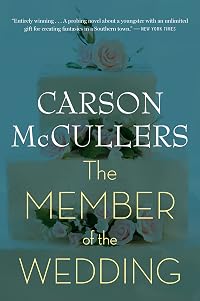
The Member of the Wedding
by Carson McCullers 
On This Page
Description
The novel that became an award-winning play and a major motion picture and that has charmed generations of readers, Carson McCullers's classic The Member of the Wedding is now available in small- format trade paperback for the first time. Here is the story of the inimitable twelve-year-old Frankie, who is utterly, hopelessly bored with life until she hears about her older brother's wedding. Bolstered by lively conversations with her house servant, Berenice, and her six-year-oldmale cousin -- show more not to mention her own unbridled imagination -- Frankie takes on an overly active role in the wedding, hoping even to go, uninvited, on the honeymoon, so deep is her desire to be the member of something larger, more accepting than herself. "A marvelous study of the agony of adolescence" (Detroit Free Press), The Member of the Wedding showcases Carson McCullers at her most sensitive, astute, and lasting best. show lessTags
Recommendations














Member Recommendations

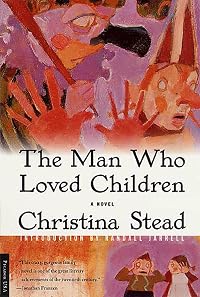
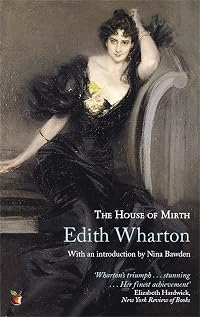
KayCliff Frankie and Harriet are both brave, lonely schoolgirl heroines, residents of the Deep South.
11
Member Reviews
I think McCullers is an acquired taste, like olives and mushrooms. Fortunately for me, I've acquired a taste for all three.
Our heroine, Frankie, is 12, bored, out-of-sorts, and hot in her small Southern town. All she has to look forward to during this draggingly long summer is her brother's wedding. And look forward to it she does!
As Frankie is a complete innocent, she believes that she not only will be a part of the wedding, but will blithely accompany her brother and his new bride on their honeymoon (and presumably for the rest of their lives).
Okay, that seems an absurd premise and that Frankie is simply a figure of fun. Not so. McCullers shows Frankie's slow awakening to things only dimly understood as she wanders around town, show more completely without escort or guidance. The book is divided in two parts; the second part turns quite a bit darker as this girl ventures into places where she doesn't belong, makes mistakes, and shows a fairly alarming streak of anger in her character.
I thoroughly enjoyed this book, but it's not for everyone. It's weird and McCullers' view of life is distinctly off-kilter. Still, recommended for those who enjoy Southern Gothic or the off-beat. show less
Our heroine, Frankie, is 12, bored, out-of-sorts, and hot in her small Southern town. All she has to look forward to during this draggingly long summer is her brother's wedding. And look forward to it she does!
As Frankie is a complete innocent, she believes that she not only will be a part of the wedding, but will blithely accompany her brother and his new bride on their honeymoon (and presumably for the rest of their lives).
Okay, that seems an absurd premise and that Frankie is simply a figure of fun. Not so. McCullers shows Frankie's slow awakening to things only dimly understood as she wanders around town, show more completely without escort or guidance. The book is divided in two parts; the second part turns quite a bit darker as this girl ventures into places where she doesn't belong, makes mistakes, and shows a fairly alarming streak of anger in her character.
I thoroughly enjoyed this book, but it's not for everyone. It's weird and McCullers' view of life is distinctly off-kilter. Still, recommended for those who enjoy Southern Gothic or the off-beat. show less
was very well received in our Book Circle. There was more talk about the treatment of time than I had focused on, and that makes me think I will read it again with a more critical eye. But oh, poor Frankie, going through the private turmoil of change that is teenage years, in a particular place and time, without a mother to model herself toward or against, with a deep need to belong and an equally deep imagination.
Her behavior reminded me, along with a recent review of something else this week, of Goffman's The Presentation of Self in Everyday Life, wherein he details the ways we act differently in different company, in different roles, etc. It was written a long time ago, but Frankie reminded me of how we consciously and unconsciously show more try on presentations every day, until, if we are lucky, we arrive at the set of realities that constitute our public and private personhood. show less
Her behavior reminded me, along with a recent review of something else this week, of Goffman's The Presentation of Self in Everyday Life, wherein he details the ways we act differently in different company, in different roles, etc. It was written a long time ago, but Frankie reminded me of how we consciously and unconsciously show more try on presentations every day, until, if we are lucky, we arrive at the set of realities that constitute our public and private personhood. show less
Remember the oppressive boredom of a long and sultry teenage summer?
Feeling vaguely fearful and fiercely moody, at the precipice of childhood’s end.
Wanting to be alone, grown, and babied too.
Unsure whether to belong or be different.
Everything in flux, including your very sense of self.
This short novel will take you back to that time.
“This was the summer when for a long time she had not been a member…
It was the summer of fear for Frankie...
The summer when Frankie was sick and tired of being Frankie...
The year when Frankie thought about the world.”
Image: Belonging - and not, by johnhain/Pixabay (Source.)
Mood(y) and characters
This is a book of mood and transition more than plot. Of vivid, believable, quirky characters.
It covers a show more few days in the life of 12-year old tomboy Frankie. It’s set in the southern US, in the early 1940s. Frankie’s father owns a watch, clock, and jewellery shop. They’re white, not well off, but not poor either. They don’t own a car, but employ Berenice (who is "colored") as a cook, housekeeper, and childminder. Six-year old cousin John Henry is often around: bright for his age and both a comfort and annoyance to Frankie.
Her older brother, Jarvis, is returning after two years away with the army, to marry Janice. Suddenly, everything changes for Frankie - including the name she uses: F Jasmine, and finally Frances: one in each section of the book. She has some similarities with Scout in To Kill a Mockingbird, another motherless tomboy in the deep south, albeit slightly younger.
Frankie becomes obsessed: wanting to be a part of not just the wedding, but the married life of her brother and the bride she has yet to meet.
“They are the we of me.”
In a subtle masterstroke of not belonging, the eponymous wedding happens offstage: we see the buildup and the aftermath, with only a few retrospective details of the event itself.
“The wedding was like a dream outside her power or like a show unmanaged by her in which she was supposed to have no part.”
Passing through the valley of the shadow of death sex
“There was an uneasy doubt that she could not quite place or name.”
Frankie’s mother died giving birth to her, and she’s known other people who died. But it’s the shadow of puberty, sexuality, and sex that lingers more darkly and puzzlingly. The pain of no longer being able to share her father’s bed. Misunderstandings of things seen and heard. Her misreading of a potentially dangerous situation made me shudder with vicarious fear over many - familiar - pages.
A wedding is a happy occasion, but the mood of the story is heavy with increasing foreboding, albeit sprinkled with touching moments and gentle humour. The final tragedy is unexpected, unnecessary, and powerful.
Image: Taylor Flanagan as Frankie, Chelsea Manasseri as Berenice, and Jago Mystiek as John Henry. Photo by by Errich Petersen (Source.)
Radical
Segregation is “the unseen line”, but neither McCullers nor her characters think “colored” people should be separated and there’s a very matter-of-fact and accepting conversation about a cross-dressing gay man (using terminology of the time).
At the last supper before the wedding, Berenice and Frankie put the world to rights and get existential. Berenice would have “no separate colored people”, with everyone having light brown skin, blue eyes (like her glass eye), and black hair. And no war. Frankie wants material things like planes and motorcycles for everyone, “a better law of gravity” (I love that!), and for people to be able “instantly change back and forth from boys to girls”. How radical is that for 1946?
Multisensory
It’s words on a page, but vividly so. Pages permeated by music (as all McCullers’ works are - she was offered a place to study piano at Juilliard). Here, it’s the recurring “jazz spangle” of a piano-tuner in a neighbours’ house, leaving melodies unfinished.
I’m sure I’d know the fragrance of Sweet Serenade if I ever encountered it. And bridging words, visuals, and scent, is lavender: usually an aromatic plant, but here, the colour of lips, ears, sky, and an evening.
Relishing revisiting
I first read this poignant novella about a tomboy near-teen, when I was a tomboy teen: desperately wanting to be adult, but wary too. Longing to belong, but also yearning to be uniquely myself, if I could only figure out what that was.
I’ve read it at least a couple of times since, and again, now my own child is beyond a teen. It’s all so true, even though it’s set in a time and place I’ve never been.
This was the first McCullers I read, and one of the first American books I read. A schoolfriend, who is still a close friend, suggested it, and I went on to read all McCullers’ other books more than once. Catherine, thank you.
Image: Carson McCullers (Source.)
Quotes
• “The summer was like a green sick dream, or like a silent crazy jungle under glass.”
• “The sound of whistling, and it was a grieving August song that did not end. The minutes were very long.”
• “The lavender sky had at last grown dark and there was slanted starlight and twisted shade.”
• “Noises at twilight had a blurred sound, and they lingered.”
• “Their voices bloomed like flowers… She had the feeling that unknown words were in her throat, and she was ready to speak them. Strange words were flowering in her throat and now was the time for her to name them.”
• “The trees were poison green. There was a jellied stillness in the air.” show less
Feeling vaguely fearful and fiercely moody, at the precipice of childhood’s end.
Wanting to be alone, grown, and babied too.
Unsure whether to belong or be different.
Everything in flux, including your very sense of self.
This short novel will take you back to that time.
“This was the summer when for a long time she had not been a member…
It was the summer of fear for Frankie...
The summer when Frankie was sick and tired of being Frankie...
The year when Frankie thought about the world.”
Image: Belonging - and not, by johnhain/Pixabay (Source.)
Mood(y) and characters
This is a book of mood and transition more than plot. Of vivid, believable, quirky characters.
It covers a show more few days in the life of 12-year old tomboy Frankie. It’s set in the southern US, in the early 1940s. Frankie’s father owns a watch, clock, and jewellery shop. They’re white, not well off, but not poor either. They don’t own a car, but employ Berenice (who is "colored") as a cook, housekeeper, and childminder. Six-year old cousin John Henry is often around: bright for his age and both a comfort and annoyance to Frankie.
Her older brother, Jarvis, is returning after two years away with the army, to marry Janice. Suddenly, everything changes for Frankie - including the name she uses: F Jasmine, and finally Frances: one in each section of the book. She has some similarities with Scout in To Kill a Mockingbird, another motherless tomboy in the deep south, albeit slightly younger.
Frankie becomes obsessed: wanting to be a part of not just the wedding, but the married life of her brother and the bride she has yet to meet.
“They are the we of me.”
In a subtle masterstroke of not belonging, the eponymous wedding happens offstage: we see the buildup and the aftermath, with only a few retrospective details of the event itself.
“The wedding was like a dream outside her power or like a show unmanaged by her in which she was supposed to have no part.”
Passing through the valley of the shadow of death sex
“There was an uneasy doubt that she could not quite place or name.”
Frankie’s mother died giving birth to her, and she’s known other people who died. But it’s the shadow of puberty, sexuality, and sex that lingers more darkly and puzzlingly. The pain of no longer being able to share her father’s bed. Misunderstandings of things seen and heard. Her misreading of a potentially dangerous situation made me shudder with vicarious fear over many - familiar - pages.
A wedding is a happy occasion, but the mood of the story is heavy with increasing foreboding, albeit sprinkled with touching moments and gentle humour. The final tragedy is unexpected, unnecessary, and powerful.
Image: Taylor Flanagan as Frankie, Chelsea Manasseri as Berenice, and Jago Mystiek as John Henry. Photo by by Errich Petersen (Source.)
Radical
Segregation is “the unseen line”, but neither McCullers nor her characters think “colored” people should be separated and there’s a very matter-of-fact and accepting conversation about a cross-dressing gay man (using terminology of the time).
At the last supper before the wedding, Berenice and Frankie put the world to rights and get existential. Berenice would have “no separate colored people”, with everyone having light brown skin, blue eyes (like her glass eye), and black hair. And no war. Frankie wants material things like planes and motorcycles for everyone, “a better law of gravity” (I love that!), and for people to be able “instantly change back and forth from boys to girls”. How radical is that for 1946?
Multisensory
It’s words on a page, but vividly so. Pages permeated by music (as all McCullers’ works are - she was offered a place to study piano at Juilliard). Here, it’s the recurring “jazz spangle” of a piano-tuner in a neighbours’ house, leaving melodies unfinished.
I’m sure I’d know the fragrance of Sweet Serenade if I ever encountered it. And bridging words, visuals, and scent, is lavender: usually an aromatic plant, but here, the colour of lips, ears, sky, and an evening.
Relishing revisiting
I first read this poignant novella about a tomboy near-teen, when I was a tomboy teen: desperately wanting to be adult, but wary too. Longing to belong, but also yearning to be uniquely myself, if I could only figure out what that was.
I’ve read it at least a couple of times since, and again, now my own child is beyond a teen. It’s all so true, even though it’s set in a time and place I’ve never been.
This was the first McCullers I read, and one of the first American books I read. A schoolfriend, who is still a close friend, suggested it, and I went on to read all McCullers’ other books more than once. Catherine, thank you.
Image: Carson McCullers (Source.)
Quotes
• “The summer was like a green sick dream, or like a silent crazy jungle under glass.”
• “The sound of whistling, and it was a grieving August song that did not end. The minutes were very long.”
• “The lavender sky had at last grown dark and there was slanted starlight and twisted shade.”
• “Noises at twilight had a blurred sound, and they lingered.”
• “Their voices bloomed like flowers… She had the feeling that unknown words were in her throat, and she was ready to speak them. Strange words were flowering in her throat and now was the time for her to name them.”
• “The trees were poison green. There was a jellied stillness in the air.” show less
Twelve year old Frankie is a girl on the brink of moving from the innocence of childhood into the life of adults. She's led a simple and sheltered life so far it seems, but the news of her brother's engagement and approaching wedding brings about a turning point into that transition from girl into womanhood. She's made starkly aware that there is *more* out there and she very keenly feels the desire to be a part of something bigger, better, and more intimate than she's ever known.
I appreciate the qualities of the novel - it's a very well written and unique coming-of-age story - but I didn't...like it. I think, though, that I didn't enjoy it exactly *because* it's so well done: it reminds me too much of that awful, awkward feeling at show more that age of both wanting so desperately to be an adult but also hating the idea of growing up. show less
I appreciate the qualities of the novel - it's a very well written and unique coming-of-age story - but I didn't...like it. I think, though, that I didn't enjoy it exactly *because* it's so well done: it reminds me too much of that awful, awkward feeling at show more that age of both wanting so desperately to be an adult but also hating the idea of growing up. show less
One August, during the dog days of summer, 12-year-old Frankie's soldier brother Jarvis comes home from military service in Alaska to marry his fiancee, Janice. Frankie, now calling herself F. Jasmine, becomes obsessed with her brother's wedding, and she is determined to go away with her brother and his new wife after the wedding. F. Jasmine will tell this to anyone who will listen to her, which really boils down to her African American housekeeper Berenice and her 6-year-old cousin John Henry. It's obvious from the beginning that this will not end well.
***Spoilers***
Frankie/F. Jasmine/Frances is at an awkward period in her development. She no longer considers herself a child, but adults still treat her as a child. It's normal to feel show more lonely and left out at that age. It is not normal act out on those feelings with kitchen knives or loaded pistols. I didn't identify with Frankie; I was scared of her. I felt the absence of parental authority and guidance. Frankie's father is barely present in the novel. I'm not sure what responsibility Berenice has for Frankie. She makes suggestions about what Frankie should do, but she doesn't seem to have the authority to make Frankie do anything or to restrict her movements. Frankie is uncomfortable with her sexuality, and this is projected onto her cat, Charles/Charlina, and onto John Henry, who plays dress-up in women's clothes and plays with Frankie's doll. Frances latches onto her new friend, Mary Littlejohn, with the same fervency she exhibited for the wedding. I'm left with a feeling of dread about how this relationship will end. show less
***Spoilers***
Frankie/F. Jasmine/Frances is at an awkward period in her development. She no longer considers herself a child, but adults still treat her as a child. It's normal to feel show more lonely and left out at that age. It is not normal act out on those feelings with kitchen knives or loaded pistols. I didn't identify with Frankie; I was scared of her. I felt the absence of parental authority and guidance. Frankie's father is barely present in the novel. I'm not sure what responsibility Berenice has for Frankie. She makes suggestions about what Frankie should do, but she doesn't seem to have the authority to make Frankie do anything or to restrict her movements. Frankie is uncomfortable with her sexuality, and this is projected onto her cat, Charles/Charlina, and onto John Henry, who plays dress-up in women's clothes and plays with Frankie's doll. Frances latches onto her new friend, Mary Littlejohn, with the same fervency she exhibited for the wedding. I'm left with a feeling of dread about how this relationship will end. show less
A coming-of-age novel, of sorts, about a twelve-year old girl growing up in the American South during World War II, a girl who becomes obsessed with the idea of her brother's wedding and somehow convinces herself that when it's over, she will go off with them and into another, freer life.
Carson McCullers' writing style is a little odd. It is, on the surface, very plain, even unsophisticated, but at the same time it often has a strange, oblique quality to it. It takes some getting used to, but I'd already done so once, over the course of The Heart Is a Lonely Hunter, which I loved. It had to win me all over again when I started this one, and that took a while, but by the end it was absolutely working for me. And McCullers does an amazing show more job of capturing what it's like to be at that in-between age. Not just the usual cusp-of-adolescence stuff either -- inklings about sex, a longing to escape the confines of childhood and find or make one's own place in the world -- but also the, for lack of a better phrase, existential crisis of it all. I'd almost forgotten what that's like, and it hit me with quite a shock of recognition to see it represented so well here. show less
Carson McCullers' writing style is a little odd. It is, on the surface, very plain, even unsophisticated, but at the same time it often has a strange, oblique quality to it. It takes some getting used to, but I'd already done so once, over the course of The Heart Is a Lonely Hunter, which I loved. It had to win me all over again when I started this one, and that took a while, but by the end it was absolutely working for me. And McCullers does an amazing show more job of capturing what it's like to be at that in-between age. Not just the usual cusp-of-adolescence stuff either -- inklings about sex, a longing to escape the confines of childhood and find or make one's own place in the world -- but also the, for lack of a better phrase, existential crisis of it all. I'd almost forgotten what that's like, and it hit me with quite a shock of recognition to see it represented so well here. show less
While E.M. Forster’s Howard’s End seems thematically, stylistically, and even conceptually eons away from Carson McCullers’ The Member of the Wedding, Forster’s eerie “only connect” haunts the pages of the latter novel. McCullers’ protagonist, Frankie, a child caught on the cusp of adulthood, struggles to create and express her individual identity through social memberships. We watch helplessly as she wanders from person to person, struggling to connect and identify with someone else’s experience. As someone hovering on various thresholds (she’s between childhood and adulthood, is forever hesitating in doorways, is not clearly gendered initially, and hails from an unnamed town that seems to be a waiting place show more between the present and the future), Frankie’s attempts to form an identity that is both distinct and can connect with other people seems like an effort to claim a space for herself, to assert that she belongs. The book suggests, through Frankie, that identity is just as much about connection and belonging as it is about individuality. And if that's not a queer theme, I don't know what is. :) show less
Members
- Recently Added By
Published Reviews
ThingScore 75
Frankie is the pawky, gawky heroine of Carson McCullers' slim (195-page) new novel—she calls it a novella. Unlike Novelist McCullers' earlier books (The Heart Is a Lonely Hunter, Reflections in a Golden Eye), which were well filled with the complex, morbid relationships of adults, The Member of the Wedding is a serious attempt to recapture that elusive moment when childhood melts into show more adolescence. The result is often touching, always strictly limited by the small scope of its small characters. Like childhood, it is full of incident but devoid of a clear plot; always working its way ahead, but always doubling back on itself; two-faced, two-minded. The soiled elbows of Frankie, the brat, keep showing below the sleeves of the orange satin bridal dress which F. Jasmine Addams, Esq. wears to her older brother's wedding. show less
added by kidzdoc
Lists

The Guardian's 1000 Novels Everyone Must Read
1,005 works; 551 members

1001 Books You Must Read Before You Die
1,448 works; 1,134 members

Novels from The Guardian's Great American Novelist Tournament
148 works; 24 members
20th Century Literature
1,161 works; 55 members

Southern Fiction
212 works; 52 members
1940s
221 works; 25 members

Books You Read During High School (For School)
301 works; 53 members
500 Great Books by Women
507 works; 60 members

Publishing Triangle 100 Best Lesbian and Gay Novels
97 works; 6 members

Books Read in 2014
2,343 works; 89 members

A Novel Cure
742 works; 23 members

A's favorite novels
100 works; 3 members

Main Character is aged 10-19
363 works; 6 members

Favorite Books from the 1940s
38 works; 3 members

Books Read in 2020
4,379 works; 123 members

Llibres que he llegit el 2009
35 works; 1 member

Schwob Nederland
207 works; 2 members

Romans
49 works; 1 member

A Good Read (Radio 4)
287 works; 1 member
American Lit for Eng 11 Research Project
368 works; 6 members
Books Mentioned in The Wedding Planner's Daughter series
107 works; 2 members

Want to Read
12 works; 1 member

Literary Works Read in College
316 works; 15 members

Books Featuring Teens
25 works; 4 members

Llibres que he llegit el 2023
38 works; 1 member

AP Lit
363 works; 6 members

Books You Read For University
184 works; 3 members

Books That Made Us Cry
278 works; 145 members

Recommended Reading : 600 Classics Reviewed, Editors of Salem Press, 2015
634 works; 6 members

My Play Collection
769 works; 3 members

Books We Want To Read Again For The First Time
384 works; 160 members

Books Read in 2026
2,051 works; 68 members

Books Read in 2010
631 works; 11 members

My E-Book Collection - Opinions Welcome
92 works; 10 members
Five star books
1,767 works; 109 members
Author Information

98+ Works 22,730 Members
Carson McCullers was born in Columbus, Georgia, on February 19, 1917. She died at age fifty in Nyack, New York, on September 29, 1967. A promising pianist, she had hoped to enroll at the Juilliard School of Music when she was seventeen, but when she arrived in New York, she attended writing classes at Columbia University instead. In December 1936 show more her first story, "Wunderkind," was published in "Story" magazine. That winter she began work on "The Mute," which would become her enduring masterpiece, "The Heart Is a Lonely Hunter." (Publisher Provided) Carson McCullers was born Lula Carson Smith on February 19, 1917 in Columbus, Georgia. At the age of seventeen, desiring to become a famous concert pianist, she went to New York City to attend the Julliard School of Music. Her family sacrificed and raised money for her tuition to go to Julliard, but she lost all of her money when she left her pocketbook on the subway. Unable to tell her family what had happened, she took writing classes at Columbia University and New York University from 1935-1936. Her first novel, The Heart Is a Lonely Hunter, was published in 1940. Her other novels included Reflections in a Golden Eye, The Ballad of the Sad Café, The Member of the Wedding, and Clock Without Hands. With the help of Tennessee Williams, The Member of the Wedding was adapted into a play, which won the New York Drama Critics Circle Award in 1950. She died from a stroke and subsequent brain hemorrhage on September 29, 1967at the age of 50. (Bowker Author Biography) show less
Carson McCullers has a Legacy Library. Legacy libraries are the personal libraries of famous readers, entered by LibraryThing members from the Legacy Libraries group.
Some Editions
Awards and Honors
Notable Lists
Series
Belongs to Publisher Series
Work Relationships
Is contained in
Has the adaptation
Is abridged in
Has as a reference guide/companion
Has as a student's study guide
Common Knowledge
- Canonical title
- The Member of the Wedding
- Original title
- The Member of the Wedding
- Original publication date
- 1946
- People/Characters
- John Henry West; Berenice Sadie Brown; Frankie Addams
- Important places
- Sugarville, Georgia, USA; Winter Hill, Georgia, USA; Georgia, USA
- Important events
- World War II (1939 | 1945)
- Related movies
- The Member of the Wedding (1952 | IMDb)
- Dedication
- For Elizabeth Ames
- First words
- It happened that green and crazy summer when Frankie was twelve years old.
- Quotations
- “The world is certainly a small place,” she said.
“What makes you say that?”
“I mean sudden,” said Frankie. “The world is certainly a sudden place.”
“Well, I don’t know,” said Berenice. “Som... (show all)etimes sudden and sometimes slow.”
Frankie’s eyes were half closed, and to her own ears her voice sounded ragged, far away:
“To me it is sudden.”
That is the way it is when you are in love. Invariably. A thing known and not spoken.
Berenice began with the old same story that they had heard many times before. The story of her and Ludie Freeman. A long time ago.
“Now I am here to tell you I was happy. There was no human woman in all the world mo... (show all)re happy than I was in them days,” she said. “And that includes everybody. You listening to me, John Henry? It includes all queens and millionaires and first ladies of the land. And I mean it includes people of all color. You hear me, Frankie? No human woman in all the world was happier than Berenice Sadie Brown.”
She had started with the old story of Ludie. And it began an afternoon in late Octorber almost twenty years ago. The story started at the place where first they met each other, in front of Camp Campbell’s Filling Station outside fo the city limits of the town. It was the time of the year when the leaves were turning and the countryside was smoky and autmn gray and gold. And the story went on from that first meeting to the wedding at the Welcome Ascension Church in Sugarville. And then on through the years with the two of them together. The house with brick front steps and the glass window son the corner of Barrow Street. The Christmas of the fox fur, and the June of the fish fry thrown for twenty-eight invited relatives and guests. The years with Berenice cooking dinner and dewing Ludie’s suits and shirts on the machine and the two of them always having a good time. And the nine months they lived up North, in the city of Cincinnati, where there was snow. Then Sugarville again, and days margining one into another, and the weeks, the months, the years together. And the pair of them always had a good time, yet it was not so much the happenings she mentioned as the way she told about these happenings that made F. Jasmine understand.
Berenice spoke in an unwinding kind of voice, and she had said that she was happier than a queen. As she told the story, it seemed to F. Jasmine that Berenice resembled a strange queen, if a queen can be colored and sitting at a kitchen table. She unwound the story of her and Ludie like a colored queen unwinding a bolt of cloth of gold—and at the end, when the story was over, her expression was always the same: the dark eye starting straight ahead, her flat nose widened and trembling, her mouth finished and sad and quiet.
I wish I was somebody else except me. - Last words
- (Click to show. Warning: May contain spoilers.)But the sentence was left unfinished for the hush was shattered when, with an instant shock of happiness, she heard the ringing of the bell.
- Blurbers
- Sitwell, Edith
- Original language
- English
- Canonical DDC/MDS
- 813.52
- Canonical LCC
- PS3525.A1772
- Disambiguation notice
- Please do not combine Carson McCuller's original novel with either her stage play adaptation, the related Bloom's Guide , or other treatments of the story. Thank you.
Classifications
Statistics
- Members
- 3,120
- Popularity
- 5,641
- Reviews
- 72
- Rating
- (3.88)
- Languages
- 14 — Catalan, Czech, Danish, Dutch, English, Estonian, French, German, Greek, Hungarian, Italian, Polish, Portuguese, Spanish
- Media
- Paper, Audiobook, Ebook
- ISBNs
- 74
- UPCs
- 2
- ASINs
- 43