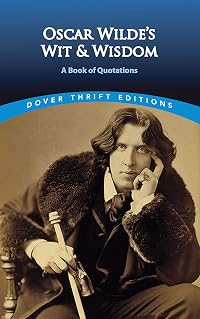
Oscar Wilde's Wit and Wisdom: A Book of Quotations (Dover Thrift Editions)
by Oscar Wilde 
On This Page
Description
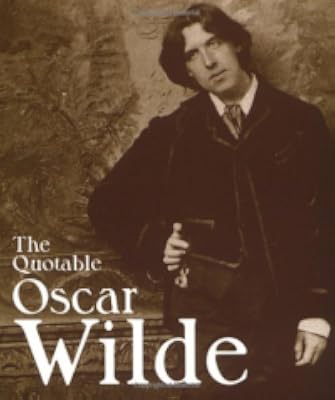
Epigrams, aphorisms, and other bon mots gathered from the celebrated wit's plays, essays, and conversation offer an entertaining selection of observations both comic and profound. Organized by category, the nearly 400 quotes range in subject from human nature, morals, and society to art, politics, history, and more.Tags
Recommendations



















Member Reviews
Wrapping up by my triple read of Oscar Wilde, a man whose pardon is yet to come (at least Alan Turing finally can rest in peace), I dove in for a last push in understanding Oscar Wilde via this quotations book. I concluded that his wit comes in many forms. It may sound like an excuse, a justification, some brutal honesty, sarcasm, a skewed observation, or simply a slam. But my favorite kinds of wit is thought provoking, a bit of hmmm moment, and definitely can induce a giggle or a smile.
Reading through the book, quite a few of the women related quotes still make me cringe (reference my Dorian Gray review), but this book certainly shed more light on the Wildean wit. Some of these wit read like Victorian stand-up comedy. Try these show more one-liners:
“A good reputation is one of the many annoyances to which I have never been subjected.” - ‘A Woman of No Importance’
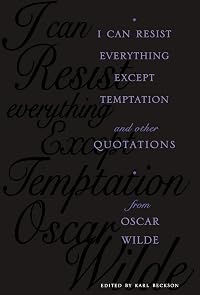
“I can resist everything except temptation.” - ‘Lady Windermere’s Fan’
“Don’t be led astray into the paths of virtue.” - In Conversation
The quotes are organized into subjects with the source identified. I thought some of the “Men” quotes are better suited for “People in General”; perhaps I am missing the context on how it was used in the original publication. For the sources I have read, it was ‘focused’ to read only the quote and yet remembering the context. Rather enjoyable!
A selection of Quotes:
On Life – ‘The Soul of Man under Socialism’
“To live is the rarest thing in the world. Most people exist, that is all.”
On Life – In Conversation – I wish I know when this was said, before or after this hard labor prison.
“I wrote when I did not know life; now that I do know the meaning of life, I have no more to write. Life cannot be written; life can only be lived.”
On Love – In Conversation
“Keep love in your heart. A life without it is like a sunless garden when the flowers are dead. The consciousness of loving and being loved brings a warmth and richness to life that nothing else can bring.”
On Conduct – ‘The Remarkable Rocket’ – I thought this seems mean, but I’m missing context.
“A sensitive person is one who, because he has corns himself, always treads on other people’s toes.”
On Conduct – In Conversation – this was thought provoking and made me think of his trial.
“I never came across anyone in whom the moral sense was dominant who was not heartless, cruel, vindictive, log-stupid, and entirely lacking in the smallest sense of humanity. Moral people, as they are termed, are simple beasts. I would sooner have fifty unnatural vices than one unnatural virtue.”
On Literature – ‘The Picture of Dorian Gray” – This reads even better standalone than in the book.
“The books that the world calls immoral books are books that show the world its own shame.”
On Poverty – ‘The Soul of Man under Socialism’ – So true; lived through this…
“Sometimes the poor are praised for being thrifty. But to recommend thrift to the poor is both grotesque and insulting. It is like advising a man who is starving to eat less.”
On Government – ‘The Soul of Man under Socialism’ – an hmm moment…
“High hopes were once formed of democracy; but democracy means simply the bludgeoning of the people by the people for the people.”
On Emotion – ‘The Picture of Dorian Gray’ – If this is true, I am a shallow person.
“It is only shallow people who requires years to get rid of an emotion. A man who is master of himself can end a sorrow as easily as he can invent a pleasure.” show less
Reading through the book, quite a few of the women related quotes still make me cringe (reference my Dorian Gray review), but this book certainly shed more light on the Wildean wit. Some of these wit read like Victorian stand-up comedy. Try these show more one-liners:
“A good reputation is one of the many annoyances to which I have never been subjected.” - ‘A Woman of No Importance’
“I can resist everything except temptation.” - ‘Lady Windermere’s Fan’
“Don’t be led astray into the paths of virtue.” - In Conversation
The quotes are organized into subjects with the source identified. I thought some of the “Men” quotes are better suited for “People in General”; perhaps I am missing the context on how it was used in the original publication. For the sources I have read, it was ‘focused’ to read only the quote and yet remembering the context. Rather enjoyable!
A selection of Quotes:
On Life – ‘The Soul of Man under Socialism’
“To live is the rarest thing in the world. Most people exist, that is all.”
On Life – In Conversation – I wish I know when this was said, before or after this hard labor prison.
“I wrote when I did not know life; now that I do know the meaning of life, I have no more to write. Life cannot be written; life can only be lived.”
On Love – In Conversation
“Keep love in your heart. A life without it is like a sunless garden when the flowers are dead. The consciousness of loving and being loved brings a warmth and richness to life that nothing else can bring.”
On Conduct – ‘The Remarkable Rocket’ – I thought this seems mean, but I’m missing context.
“A sensitive person is one who, because he has corns himself, always treads on other people’s toes.”
On Conduct – In Conversation – this was thought provoking and made me think of his trial.
“I never came across anyone in whom the moral sense was dominant who was not heartless, cruel, vindictive, log-stupid, and entirely lacking in the smallest sense of humanity. Moral people, as they are termed, are simple beasts. I would sooner have fifty unnatural vices than one unnatural virtue.”
On Literature – ‘The Picture of Dorian Gray” – This reads even better standalone than in the book.
“The books that the world calls immoral books are books that show the world its own shame.”
On Poverty – ‘The Soul of Man under Socialism’ – So true; lived through this…
“Sometimes the poor are praised for being thrifty. But to recommend thrift to the poor is both grotesque and insulting. It is like advising a man who is starving to eat less.”
On Government – ‘The Soul of Man under Socialism’ – an hmm moment…
“High hopes were once formed of democracy; but democracy means simply the bludgeoning of the people by the people for the people.”
On Emotion – ‘The Picture of Dorian Gray’ – If this is true, I am a shallow person.
“It is only shallow people who requires years to get rid of an emotion. A man who is master of himself can end a sorrow as easily as he can invent a pleasure.” show less
This is a short book that lists saying from Oscar Wilde. I found it tedious and boring. The saying are not truly witty but more like pathetic.
I liked this collection of Oscar Wilde quotes well enough, but a number of them may have been funnier or more meaningful in the context of his plays and stories. Some favorites from this collection were:
"Experience is the name every one gives their mistakes."
"The only difference between the saint and the sinner is that every saint has a past, and every sinner has a future."
"Moods don't last. It is their chief charm."
"Experience is the name every one gives their mistakes."
"The only difference between the saint and the sinner is that every saint has a past, and every sinner has a future."
"Moods don't last. It is their chief charm."
Hardbound book cover designed by Hy Fujita.
Ratings
Members
- Recently Added By
Author Information

1,786+ Works 121,426 Members
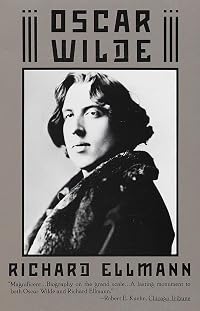
Flamboyant man-about-town, Oscar Wilde had a reputation that preceded him, especially in his early career. He was born to a middle-class Irish family (his father was a surgeon) and was trained as a scholarship boy at Trinity College, Dublin. He subsequently won a scholarship to Magdalen College, Oxford, where he was heavily influenced by John show more Ruskin and Walter Pater, whose aestheticism was taken to its radical extreme in Wilde's work. By 1879 he was already known as a wit and a dandy; soon after, in fact, he was satirized in Gilbert and Sullivan's Patience. Largely on the strength of his public persona, Wilde undertook a lecture tour to the United States in 1882, where he saw his play Vera open---unsuccessfully---in New York. His first published volume, Poems, which met with some degree of approbation, appeared at this time. In 1884 he married Constance Lloyd, the daughter of an Irish lawyer, and within two years they had two sons. During this period he wrote, among others, The Picture of Dorian Gray (1891), his only novel, which scandalized many readers and was widely denounced as immoral. Wilde simultaneously dismissed and encouraged such criticism with his statement in the preface, "There is no such thing as a moral or an immoral book. Books are well written or badly written. That is all." In 1891 Wilde published A House of Pomegranates, a collection of fantasy tales, and in 1892 gained commercial and critical success with his play, Lady Windermere's Fan He followed this comedy with A Woman of No Importance (1893), An Ideal Husband (1895), and his most famous play, The Importance of Being Earnest (1895). During this period he also wrote Salome, in French, but was unable to obtain a license for it in England. Performed in Paris in 1896, the play was translated and published in England in 1894 by Lord Alfred Douglas and was illustrated by Aubrey Beardsley. Lord Alfred was the son of the Marquess of Queensbury, who objected to his son's spending so much time with Wilde because of Wilde's flamboyant behavior and homosexual relationships. In 1895, after being publicly insulted by the marquess, Wilde brought an unsuccessful slander suit against the peer. The result of his inability to prove slander was his own trial on charges of sodomy, of which he was found guilty and sentenced to two years of hard labor. During his time in prison, he wrote a scathing rebuke to Lord Alfred, published in 1905 as De Profundis. In it he argues that his conduct was a result of his standing "in symbolic relations to the art and culture" of his time. After his release, Wilde left England for Paris, where he wrote what may be his most famous poem, The Ballad of Reading Gaol (1898), drawn from his prison experiences. Among his other notable writing is The Soul of Man under Socialism (1891), which argues for individualism and freedom of artistic expression. There has been a revived interest in Wilde's work; among the best recent volumes are Richard Ellmann's, Oscar Wilde and Regenia Gagnier's Idylls of the Marketplace , two works that vary widely in their critical assumptions and approach to Wilde but that offer rich insights into his complex character. (Bowker Author Biography) show less
Oscar Wilde has a Legacy Library. Legacy libraries are the personal libraries of famous readers, entered by LibraryThing members from the Legacy Libraries group.
Series
Belongs to Publisher Series
Common Knowledge
- People/Characters
- Oscar Wilde
Classifications
Statistics
- Members
- 469
- Popularity
- 64,789
- Reviews
- 4
- Rating
- (3.89)
- Languages
- Czech, English
- Media
- Paper, Ebook
- ISBNs
- 8
- UPCs
- 3
- ASINs
- 6