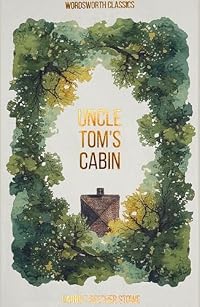
Uncle Tom's Cabin
by Harriet Beecher Stowe
On This Page
Description
In debt, Kentucky farmer Arthur Shelby reluctantly decides to trade two of his slaves. The two, middle-aged Uncle Tom and young Harry, are to be sold to Mr. Haley, a detestable slave trader. Eliza, Harry's mother and Mrs. Shelby's maid, overhears the details of the arrangement, warns Uncle Tom, and flees with Harry to the north. Eliza and Harry barely make it across the Ohio River before slave catchers can catch up with them. On the run, Eliza and her family seek shelter and safety.Tags
Recommendations
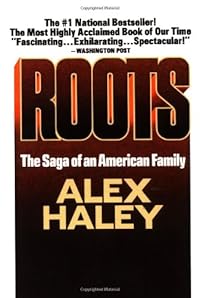
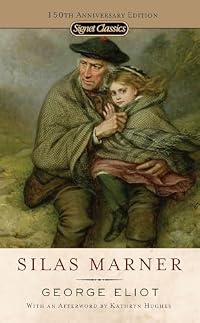
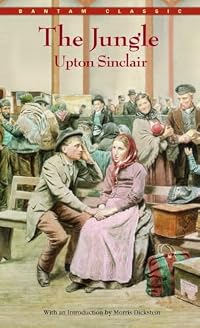
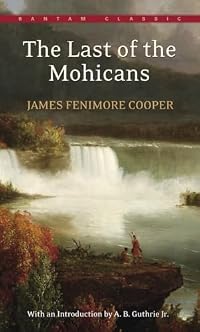
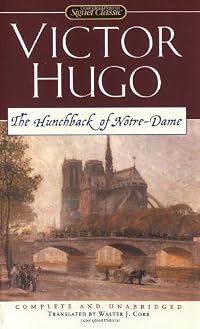
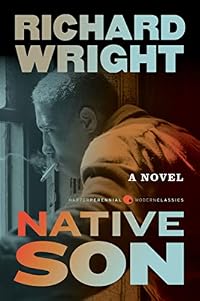
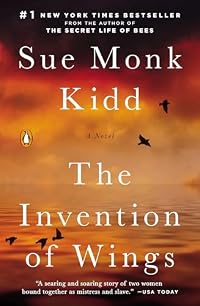

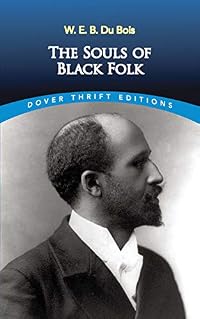
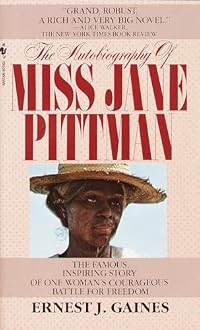

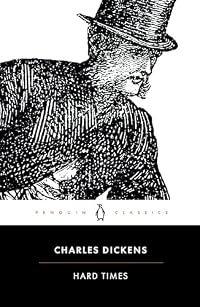
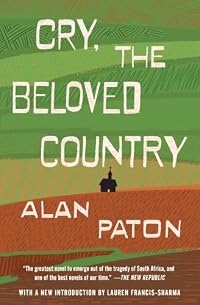
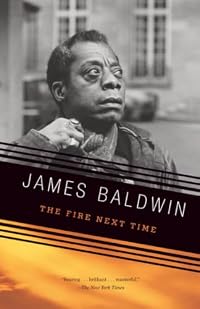

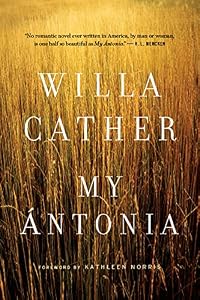
Member Recommendations
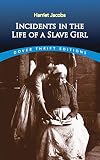
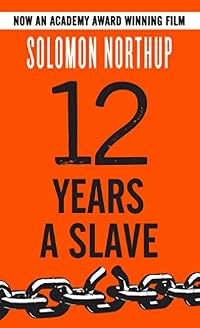
LisaMaria_C This is the slave narrative of Harriet Jacobs and shares with Stowe a Christian sensibility and emphasis on how slavery destroys a slaves moral agency.
31
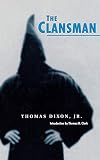
anonymous user Dixon himself called The Clansman a sequel to Uncle Tom. In many ways its antithesis. Both controversial. Both worth examining for historical context more so than literary value.
22
Member Reviews
Initially published in installments, from 1851 to 1852, this American classic is a work of power. Stowe herself disclaimed authorship, attributing the book to God’s hand; and, it isn’t hard to understand why. Uncle Tom’s Cabin would be a wonderful read if only because of Stowe’s excellent skill as a writer, but the true power of the story lies much deeper than literary skill. With bold passion, Stowe calls an entire nation (North and South alike) to carry it’s ways before the great throne of God. She urges humans to feel for the humanity of others, often breaking the “fourth wall” to challenge the reader, “Now, how would you feel if it were you?” She tries her society in the great court of God’s impending judgment, show more as she writes of one slave-master, “His Master’ll be sending for him, and then see how he’ll look!” Or, again from the closing sentence, “Not surer is the eternal law by which the millstone sinks in the ocean, than that stranger law by which injustice and cruelty shall bring on nations the wrath of Almighty God!” The whole of the book is an unrelenting challenge to see the world through the eyes of Heaven. And, above all else, it is a proclamation of living Gospel. If Stowe believes the world has any hope at all, she believes it is the Gospel of Christ, which she places at the very core of this book. She offers two Christ-figures, one white and one black, in the persons of young Evangeline (a play on the Greek word for “gospel”) and Uncle Tom. The score of characters who find salvation through the life, love, and death of these two figures is the point of the book, as Stowe essentially asserts that man’s only hope against the darkest evils of this world is the Gospel of Christ, received and lived by those who will fully lay down their lives for Him. As a side note, it is terribly unfortunate that “Uncle Tom” has become a derogatory label in our society, as Stowe’s Uncle Tom was the most powerful, Christlike character in the book. It is my understanding that later theatrical adaptations of Uncle Tom cast him in a different light, but to misunderstand Stowe’s Uncle Tom as a weak man is to misunderstand the Gospel of Christ. The true Uncle Tom broke racism on an incredible scale; he did not further it’s cause. show less
To truly appreciate the enormity of Harriet Beecher Stowe's opus we must keep in mind that it was written over 175 years ago by a woman who lived at a time when slavery was still an accepted albeit contentious institution in America. Weaving together several separate but interrelated storylines the plights of Stowe's fictional characters were all based on truthful accounts, often first-hand accounts, from actual slaves, slave owners, and those who crossed paths with both of them. Not an easy read, "Uncle Tom's Cabin" is many things: a collection of harrowing survival tales encompassing love, triumph, and tragedy; an impassioned set of Abolitionist arguments; a condemnation of not only the practice of owning human beings but of the show more mindsets (political, social, and religious) which allowed it to flourish; and a biblical allegory with Uncle Tom's Christ-like presence underlining both the good and bad around him. Yes, Stowe's praise of her black subjects' moral attributes are at times simplistic, even patronizing; yes, some of her characters are over the top (Little Eva and Topsy come immediately to mind), and yes she does go overboard with the Methodist bible-thumping especially towards the end....but as previously stated these stories were written in a very different time by a woman determined to move an entire nation towards a new social justice. It's sad to note that 100 years later Harper Lee's "To Kill a Mockingbird" would show America just how far it hadn't come. show less
One reason I was drawn to read this work is, like The Prince gives us an etymologically unsound adjective, so the crude pejorative of an "Uncle Tom" does not gibe with this title character who is really a caricature of a slave buying the Christian message that supported slavery (slavery is bible-supported, we must suffer, reward is pie-in-the-sky eaten after death). Of course, the Xtian faith was also enlisted by the abolitionists and here Harriet Elizabeth Beecher Stowe (June 14, 1811 – July 1, 1896) attacked the cruelty of slavery with an imagined pantheon that became influential, even in Britain, and made the political issues of the 1850s regarding slavery tangible to millions, energizing anti-slavery forces in the American North. show more While Uncle Tom is practically a crucified saint under Simon Legree's whip, Evangeline St. Clare the daughter of Augustine St. Clare and called Eva is a true visitiation of an angel. Eva often talks about love and forgiveness, even convincing the dour slave girl Topsy (a degraded stereotype that recalls to me Sheronda from Jackie Brown) that she deserves love.
Before dying, a terminally ill Eva gives a lock of her hair to each of the slaves, telling them that they must become Christians so that they may see each other in Heaven. On her deathbed, she convinces her father to free Tom... All of this is really over the top and one-dimensional, but Stowe is so earnest, so entertaining in her quaint descriptions, and so on the right side, that it is all warm and heartening.
This edition includes a conclusion where Stowe reveals from what sources most of the events are sourced from real slavery culture. show less
Before dying, a terminally ill Eva gives a lock of her hair to each of the slaves, telling them that they must become Christians so that they may see each other in Heaven. On her deathbed, she convinces her father to free Tom... All of this is really over the top and one-dimensional, but Stowe is so earnest, so entertaining in her quaint descriptions, and so on the right side, that it is all warm and heartening.
This edition includes a conclusion where Stowe reveals from what sources most of the events are sourced from real slavery culture. show less
Although the character Uncle Tom has been criticized for being too meek and utterly subservient, and too gentle and religious when maybe a real person would have been bitter and rebellious instead, that's hardly the point of this book.
Stowe, the daughter of a preacher, opposed slavery on the grounds of her faith. That is evident throughout the book, and regardless of the reader's religious persuasion, the truth about slavery and its inherent injustice is brought to light and boldly condemned.
In this book, she represented an entire range of slaves and slave-owners, from the persistent superlative meekness and gentleness of Uncle Tom to the desperate rebellion of others, and from the kindness of one slave-owner to the insane cruelty of show more Simon Legree. She draws special attention to the tragedy of mothers and children being separated and the inability of slaves to protect themselves or their families, and even the futility of a kind master's good intentions. show less
Stowe, the daughter of a preacher, opposed slavery on the grounds of her faith. That is evident throughout the book, and regardless of the reader's religious persuasion, the truth about slavery and its inherent injustice is brought to light and boldly condemned.
In this book, she represented an entire range of slaves and slave-owners, from the persistent superlative meekness and gentleness of Uncle Tom to the desperate rebellion of others, and from the kindness of one slave-owner to the insane cruelty of show more Simon Legree. She draws special attention to the tragedy of mothers and children being separated and the inability of slaves to protect themselves or their families, and even the futility of a kind master's good intentions. show less
Where to start.
Stowe's intended audience were white Americans who had the power to begin the changes necessary to abolish slavery. As a protest novel Stowe appealed to her readers' emotional reactions. Throughout the course of the novel Stowe works to gain her readers' emotional trust and investment in the story and characters, relating closely to common personality types and values of her time.
Stowe works to persuade her audience to see slavery through the lens of motherhood and Christianity. Something about how we're all children under God and finding equality there. Since I'm a mother myself, the moves Stowe employs hit home pretty hard.
As readers we give authors a little of our trust and Stowe methodically and intentionally betrays show more that trust. Definitely a book I love to hate. show less
Stowe's intended audience were white Americans who had the power to begin the changes necessary to abolish slavery. As a protest novel Stowe appealed to her readers' emotional reactions. Throughout the course of the novel Stowe works to gain her readers' emotional trust and investment in the story and characters, relating closely to common personality types and values of her time.
Stowe works to persuade her audience to see slavery through the lens of motherhood and Christianity. Something about how we're all children under God and finding equality there. Since I'm a mother myself, the moves Stowe employs hit home pretty hard.
As readers we give authors a little of our trust and Stowe methodically and intentionally betrays show more that trust. Definitely a book I love to hate. show less
If this was the bright shining light of American social liberalism in 1851, it's easy to see why achieving racial equality continues to be an uphill battle. When even the abolitionists who want to free the slaves don't seem to have any respect or liking for African Americans, something seems wrong.
It's obviously a mistake to judge this book by the standards of today but I think it's equally wrongheaded to consider the book a faithful document of American slavery, as we are sometimes asked to do. It's not. It's pure melodrama and should be regarded as such. Its importance lies in its role as the first American bestseller and in the fact that many people bought its veracity as a document of slave life--it helped create intellectual and show more cultural conditions in which your ordinary middle class northerner wasn't made to feel like a radical freak for hazarding an abolitionist opinion. It's deeply problematic, but it got the point across.
So how is it as a novel? It's okay. It's more entertaining (if less harrowing) than the autobiography of Frederick Douglass and more captivating (if less convincing) than its own factual final chapter written strictly from Stowe's point of view. Be prepared for Dickensian levels of coincidence and a truly nauseating amount of Christian propaganda. There are some interesting characters and it's very accessible. Without its historical legacy, though, there is no way anyone in 2016 would still be reading this for its literary value. I give it a rating compatible with its symbolic, rather than actual, worth. show less
It's obviously a mistake to judge this book by the standards of today but I think it's equally wrongheaded to consider the book a faithful document of American slavery, as we are sometimes asked to do. It's not. It's pure melodrama and should be regarded as such. Its importance lies in its role as the first American bestseller and in the fact that many people bought its veracity as a document of slave life--it helped create intellectual and show more cultural conditions in which your ordinary middle class northerner wasn't made to feel like a radical freak for hazarding an abolitionist opinion. It's deeply problematic, but it got the point across.
So how is it as a novel? It's okay. It's more entertaining (if less harrowing) than the autobiography of Frederick Douglass and more captivating (if less convincing) than its own factual final chapter written strictly from Stowe's point of view. Be prepared for Dickensian levels of coincidence and a truly nauseating amount of Christian propaganda. There are some interesting characters and it's very accessible. Without its historical legacy, though, there is no way anyone in 2016 would still be reading this for its literary value. I give it a rating compatible with its symbolic, rather than actual, worth. show less
Stowe seems to have two main goals in Uncle Tom’s Cabin. The first is to demonstrate that slavery as an institution is wrong. Buying and selling human beings is abhorrent, and arguments about how well slaves are treated are missing the point.
The other goal seems to be to humanize slaves of African origin, especially for those in the North who might oppose slavery but still retain a feeling of prejudice against people of African origin. In large part, Stowe does this by showing how slaves can act just like white people if they are taught and treated like white people.
She offers this as proof that Black people are just as human as white people are, but this is troublesome because it a very narrow scope of behavior. Stowe goes to show more lengths to show that those slaves who lie or cheat or act brutally are doing so only as products of a system that treats them as subhuman. She offers a similar explanation for the behavior of white people towards slaves: they are products of an abhorrent institution as much as the slaves themselves are. (Of course, the difference is that white people don't need to prove their humanity through their actions; their humanity is a given no matter how inhumanely they act.) This is a reasonable hypothesis, but the way that Stowe presents it seems to suggest that the goal is for all people in the United States to act the same, or rather, for all people to act white, which is very limiting to people who are not white.
I don’t actually get the sense that Stowe herself believes this, but rather that she’s started along this track and has to take it to its conclusion. Indeed, near the end of the novel is a letter from the character George Harris, who has escaped slavery with his wife and son and after several years in Canada has decided to move to Liberia. George lists as one of his weaknesses that half of his blood is "hot and hasty" Anglo-Saxon blood, which is at odds with his African side, which is by nature "affectionate, magnanimous, and forgiving." (616) This is a limitation of Stowe’s abolitionist argument. Black people don’t deserve to be free because the African race is somehow superior to or more moral than the white race but because they are human beings who should not be bought and sold as commodities.
Through George Harris, Stowe also points out that no matter how well George assimilates, as a man of African descent, he will always be treated differently within the United States’ white-dominant culture unless he denies all connection to his African heritage. And this leads me to the most uncomfortable part of reading this novel. With as unpleasant (but not surprising) as it was to read about the horrible treatment of people a society has decided for economic reasons to treat as not-quite-human, the most uncomfortable part was how some of the words of her characters echo of the things people say today in defense of violence against Black people. About halfway through the book, one of the white characters says in reference to the circumstance of a slave in another family being beaten to death by her owner, “I don’t feel a particle of sympathy for such cases. If they’d only behave themselves, it would not happen.” (331)
After Michael Brown’s shooting death in Ferguson, Missouri, I had conversations in which the other person expressed nearly this exact sentiment. If he’d just done what the officers said, it wouldn’t have happened.
Or the unarmed teens who were thrown to the ground at the pool in McKinney, Texas. If they’d cooperated, this wouldn’t have happened.
Or Sandra Bland, who was stopped for a minor traffic violation, arrested for not putting out her cigarette, and later was found dead while in jail in Hempstead, Texas. If she’d behaved herself, meaning, if she’d done what the white police officer said even though she was within her rights to refuse, this wouldn’t have happened.
Combine this with the way that Stowe lets no one off the hook---no matter how far a person is from slavery, if they’re not actively acting against it, if they’re benefitting from the system at all, they are complicit. Holding the view that the system is broken isn’t enough. As a white person who’s constantly struggling with what I can do to help change the racist culture of my home country, that’s pretty difficult to read.
Even with the difficulty, there was beauty in this novel. I found the entire center section when Tom is living with the St. Clares in New Orleans to be particularly poignant, especially the relationship Tom has with the young, too-perfect-to-believe Eva. The transcendent nature of the spirituality that Eva and Tom share with one another and then with everyone they encounter was melodramatic, but it was also quite moving to me.
The brand of nonviolent resistance in which Tom engages at Simon Legree’s plantation sounds very similar to what little I’ve read about Adin Ballou’s Christian nonviolence (which led to the nonviolent resistance of the 1960’s Civil Rights Movement via Martin Luther King, Jr, who learned it from Gandhi, who learned it from Tolstoy, who learned it from the writings of Adin Ballou).
Stowe writes about how, once Tom is infused with the divine spirit, the physical abuse he receives no longer reaches him in the way it had: “But the blows fell now only on the outer man, and not, as before, on the heart.” (559)
Was this a parallel idea of Stowe’s, or was she in conversation with Ballou before or during the writing of Uncle Tom’s Cabin?
It seems that Ballou was writing widely about non-resistance at the same time that Stowe was writing her novel, so I suppose the influence could have gone either way (or happened in parallel).
Along with the echoes of Ballou, there are also echoes of Stowe’s ties to Unitarianism, including a line that is nearly identical to the Unitarian Universalist First Principle.
The First Principle is “The inherent worth and dignity of every person.”
The line from Augustine St. Clare is that his mother impressed upon him the “idea of the dignity and worth of the meanest human soul.” (323)
Although Stowe appears to have ties to the Unitarians of her time, I haven’t been able to discover the origin of the wording of the First Principle, which wasn’t adopted officially by the Unitarian Universalist Association until 1985. Was this wording common in the mid-nineteenth century when Stowe was writing Uncle Tom’s Cabin? I don’t know, but the similarity is striking. show less
The other goal seems to be to humanize slaves of African origin, especially for those in the North who might oppose slavery but still retain a feeling of prejudice against people of African origin. In large part, Stowe does this by showing how slaves can act just like white people if they are taught and treated like white people.
She offers this as proof that Black people are just as human as white people are, but this is troublesome because it a very narrow scope of behavior. Stowe goes to show more lengths to show that those slaves who lie or cheat or act brutally are doing so only as products of a system that treats them as subhuman. She offers a similar explanation for the behavior of white people towards slaves: they are products of an abhorrent institution as much as the slaves themselves are. (Of course, the difference is that white people don't need to prove their humanity through their actions; their humanity is a given no matter how inhumanely they act.) This is a reasonable hypothesis, but the way that Stowe presents it seems to suggest that the goal is for all people in the United States to act the same, or rather, for all people to act white, which is very limiting to people who are not white.
I don’t actually get the sense that Stowe herself believes this, but rather that she’s started along this track and has to take it to its conclusion. Indeed, near the end of the novel is a letter from the character George Harris, who has escaped slavery with his wife and son and after several years in Canada has decided to move to Liberia. George lists as one of his weaknesses that half of his blood is "hot and hasty" Anglo-Saxon blood, which is at odds with his African side, which is by nature "affectionate, magnanimous, and forgiving." (616) This is a limitation of Stowe’s abolitionist argument. Black people don’t deserve to be free because the African race is somehow superior to or more moral than the white race but because they are human beings who should not be bought and sold as commodities.
Through George Harris, Stowe also points out that no matter how well George assimilates, as a man of African descent, he will always be treated differently within the United States’ white-dominant culture unless he denies all connection to his African heritage. And this leads me to the most uncomfortable part of reading this novel. With as unpleasant (but not surprising) as it was to read about the horrible treatment of people a society has decided for economic reasons to treat as not-quite-human, the most uncomfortable part was how some of the words of her characters echo of the things people say today in defense of violence against Black people. About halfway through the book, one of the white characters says in reference to the circumstance of a slave in another family being beaten to death by her owner, “I don’t feel a particle of sympathy for such cases. If they’d only behave themselves, it would not happen.” (331)
After Michael Brown’s shooting death in Ferguson, Missouri, I had conversations in which the other person expressed nearly this exact sentiment. If he’d just done what the officers said, it wouldn’t have happened.
Or the unarmed teens who were thrown to the ground at the pool in McKinney, Texas. If they’d cooperated, this wouldn’t have happened.
Or Sandra Bland, who was stopped for a minor traffic violation, arrested for not putting out her cigarette, and later was found dead while in jail in Hempstead, Texas. If she’d behaved herself, meaning, if she’d done what the white police officer said even though she was within her rights to refuse, this wouldn’t have happened.
Combine this with the way that Stowe lets no one off the hook---no matter how far a person is from slavery, if they’re not actively acting against it, if they’re benefitting from the system at all, they are complicit. Holding the view that the system is broken isn’t enough. As a white person who’s constantly struggling with what I can do to help change the racist culture of my home country, that’s pretty difficult to read.
Even with the difficulty, there was beauty in this novel. I found the entire center section when Tom is living with the St. Clares in New Orleans to be particularly poignant, especially the relationship Tom has with the young, too-perfect-to-believe Eva. The transcendent nature of the spirituality that Eva and Tom share with one another and then with everyone they encounter was melodramatic, but it was also quite moving to me.
The brand of nonviolent resistance in which Tom engages at Simon Legree’s plantation sounds very similar to what little I’ve read about Adin Ballou’s Christian nonviolence (which led to the nonviolent resistance of the 1960’s Civil Rights Movement via Martin Luther King, Jr, who learned it from Gandhi, who learned it from Tolstoy, who learned it from the writings of Adin Ballou).
Stowe writes about how, once Tom is infused with the divine spirit, the physical abuse he receives no longer reaches him in the way it had: “But the blows fell now only on the outer man, and not, as before, on the heart.” (559)
Was this a parallel idea of Stowe’s, or was she in conversation with Ballou before or during the writing of Uncle Tom’s Cabin?
It seems that Ballou was writing widely about non-resistance at the same time that Stowe was writing her novel, so I suppose the influence could have gone either way (or happened in parallel).
Along with the echoes of Ballou, there are also echoes of Stowe’s ties to Unitarianism, including a line that is nearly identical to the Unitarian Universalist First Principle.
The First Principle is “The inherent worth and dignity of every person.”
The line from Augustine St. Clare is that his mother impressed upon him the “idea of the dignity and worth of the meanest human soul.” (323)
Although Stowe appears to have ties to the Unitarians of her time, I haven’t been able to discover the origin of the wording of the First Principle, which wasn’t adopted officially by the Unitarian Universalist Association until 1985. Was this wording common in the mid-nineteenth century when Stowe was writing Uncle Tom’s Cabin? I don’t know, but the similarity is striking. show less
Members
- Recently Added By
Lists

1001 Books You Must Read Before You Die
1,448 works; 1,132 members

The Guardian's 1000 Novels Everyone Must Read
1,005 works; 546 members

Classics you know you should have read but probably haven't
420 works; 407 members

1898 C.K. Shorter List of Best 100 Novels
100 works; 34 members

Great American Novels
158 works; 42 members

Favourite 19th century fiction
257 works; 62 members

Southern Fiction
212 works; 51 members
Female Author
1,235 works; 67 members
Best Political Fiction
92 works; 12 members

Books that changed the world
67 works; 64 members
Favourite Books
1,817 works; 308 members
Female Protagonist
1,056 works; 56 members
150 Best Novels Selected by Brander Matthews (1883)
150 works; 7 members

Books Featured on Gilmore Girls
307 works; 21 members
500 Great Books by Women
507 works; 60 members

The American Experience
173 works; 18 members
19th Century
190 works; 16 members
Didactic Fiction
29 works; 3 members

Blue Pyramid 1,276 Best Books of All Time
1,248 works; 32 members
1,001 BYMRBYD Concensus
723 works; 27 members
Out of Copyright
244 works; 14 members

Publisher's Weekly Bestsellers Prior to 1895 in Chronological Order
95 works; 6 members
The Well-Educated Mind Reading Challenge
75 works; 7 members

Newark Public Library's 1904 List of a Thousand of the Best Novels
95 works; 5 members
Best of American Literature
146 works; 9 members

100 Best Books by American Women During the Past 100 Years, 1833-1933
27 works; 5 members
Victorian Period
113 works; 10 members
Books mentioned in The Diary of a Provincial Lady
59 works; 4 members
F. B. Perkins' List of 100 Best Fiction
100 works; 5 members

Carole's List
445 works; 13 members
The College Board: 101 Great Books Recommended for College-Bound Readers
111 works; 7 members

Books Set in Kentucky
14 works; 5 members

Well-Educated Mind
150 works; 3 members

Books Read in 2009
464 works; 11 members
CCE 1000 Good Books List
1,033 works; 12 members

Books Read in 2017
4,248 works; 130 members
American Lit for Eng 11 Research Project
368 works; 6 members

Race and Racism in America
23 works; 1 member
Mensa for Kids Excellence in Reading Award Program (Grades 9-12)
116 works; 4 members

Robert B. Downs's Books that Changed America
15 works; 1 member

Top Five Books of 2023
767 works; 317 members

Books Read In 2009
43 works; 1 member

The Story of the World: Activity Book Four: The Modern Age
333 works; 2 members

Books That Made Us Cry
278 works; 145 members
The Well-Educated Mind, Susan Wise Bauer, 2016
179 works; 3 members

Books Read in 2025
4,043 works; 97 members

Recommended Reading : 600 Classics Reviewed, Editors of Salem Press, 2015
634 works; 6 members

ebooks_TBR_Kindle
600 works; 1 member

DigitalDreamDoor top 300
300 works; 4 members
The Complete Rory Gilmore Reading List
506 works; 5 members

.
194 works; 2 members
School Made Us Read It
380 works; 196 members

.
396 works; 1 member

Books With Family Relationships in the Title
44 works; 4 members

Beautiful Feet Books
304 works; 7 members

Book Titles Mentioned In Newberry Medal And Honor Books
884 works; 3 members

Generation Joshua
115 works; 3 members

Books mentioned in Fire and Hemlock by Diana Wynne Jones
33 works; 1 member

Sonlight Books
1,487 works; 25 members
Mensa for Kids Excellence in Reading Award Program (Grades 9-12)
116 works; 3 members

Fiction with Men's Given Names in the Title
302 works; 11 members

1964 College Preparatory Reading List
202 works; 8 members

Books Read in 2021
5,361 works; 114 members
Fiction (Mostly) in Selective Bibliography of American Literature 1775-1900
431 works; 3 members

Literary and artistic references in HBO's Lovecraft Country
32 works; 1 member
In Our Time books
4,934 works; 2 members

Robert B. Downs's Books that Changed the World
16 works; 1 member

A Reading List
100 works; 3 members
r/History Recommended Reading List
603 works; 12 members

Literary Works Read in College
316 works; 15 members

Greatest Books, allegedly
484 works; 9 members

Books and authors mentioned by Le Clézio in his Nobel Prize speech
87 works; 3 members

Which house?
423 works; 16 members

Unread books
1,063 works; 85 members

Best African American Literature
53 works; 9 members
Author Information

259+ Works 22,718 Members
Harriet Beecher was born in Litchfield, Connecticut, one of nine children of the distinguished Congregational minister and stern Calvinist, Lyman Beecher. Of her six brothers, five became ministers, one of whom, Henry Ward Beecher, was considered the finest pulpit orator of his day. In 1832 Harriet Beecher went with her family to Cincinnati, Ohio. show more There she taught in her sister's school and began publishing sketches and stories. In 1836 she married the Reverend Calvin E. Stowe, one of her father's assistants at the Lane Theological Seminary and a strong antislavery advocate. They lived in Cincinnati for 18 years, and six of her children were born there. The Stowes moved to Brunswick, Maine, in 1850, when Calvin Stowe became a professor at Bowdoin College. Long active in abolition causes and knowledgeable about the atrocities of slavery both from her reading and her years in Cincinnati, with its close proximity to the South, Stowe was finally impelled to take action with the passage of the Fugitive Slave Act in 1850. By her own account, the idea of Uncle Tom's Cabin (1852) first came to her in a vision while she was sitting in church. Returning home, she sat down and wrote out the scene describing the death of Uncle Tom and was so inspired that she continued to write on scraps of grocer's brown paper after her own supply of writing paper gave out. She then wrote the book's earlier chapters. Serialized first in the National Era (1851--52), an important abolitionist journal with national circulation, Uncle Tom's Cabin was published in book form in March 1852. It was an immediate international bestseller; 10,000 copies were sold in less than a week, 300,000 within a year, and 3 million before the start of the Civil War. Family legend tells of President Abraham Lincoln (see Vol. 3) saying to Stowe when he met her in 1862: "So this is the little lady who made this big war?" Whether he did say it or not, we will never know, since Stowe left no written record of her interview with the president. But he would have been justified in saying it. Certainly, no other single book, apart from the Bible, has ever had any greater social impact on the United States, and for many years its enormous historical interest prevented many from seeing the book's genuine, if not always consistent, literary merit. The fame of the novel has also unfortunately overshadowed the fiction that Stowe wrote about her native New England: The Minister's Wooing (1859), Oldtown Folks (1869), Poganuc People (1878), and The Pearl of Orr's Island (1862), the novel that, according to Sarah Orne Jewett, began the local-color movement in New England. Here Stowe was writing about the world and its people closest and dearest to her, recording their customs, their legends, and their speech. As she said of one of these novels, "It is more to me than a story. It is my resume of the whole spirit and body of New England." (Bowker Author Biography) Harriet Beecher Stowe (1811-1896) remains one of the most influential writers in American history. Following the publication of "Uncle Tom's Cabin" she became an instant celebrity, speaking against slavery in the United States & Europe. (Publisher Provided) show less
Some Editions
Awards and Honors
Notable Lists
Daniel S. Burt's Novel 100 (089 – 89)
Series
Belongs to Publisher Series
Kramers pocket-reeks (10)
Ajast aega (1)
Toppers In Strip (14)
Baluard (2)
Oud Goud (II)
Ajast aega (2)
Penguin American Library (PAL3)
Crisol literario (74)
Doubleday Dolphin (C13)
Letras Universales (264)
Grandes Novelas de Aventuras (XXXII)
Geração Público (33)
Corticelli [Mursia] (63)
Instructor Literature Series (No.296)
Airmont Classics (143)
insel taschenbuch (0272)
Modern Library (261)
Everyman's Library (371)
B. Wahlströms ungdomsböcker (2566)
Work Relationships
Is contained in
Harriet Beecher Stowe: Three Novels: Uncle Tom's Cabin, The Minister's Wooing, Oldtown Folks by Harriet Beecher Stowe
Twelve Years A Slave: Original Edition - With Bonus of Uncle Tom's Cabin and Original illustrations by Solomon Northup
Twelve Years a Slave / Life of Frederick Douglass / Uncle Tom's Cabin / Life of Josiah Henson / Incidents in the Life of a Slave Girl / Up From Slavery by Solomon Northup
Is retold in
Has the adaptation
Is abridged in
Is expanded in
Has as a reference guide/companion
Has as a commentary on the text
Has as a student's study guide
Common Knowledge
- Canonical title
- Uncle Tom's Cabin
- Original title
- Uncle Tom's Cabin or, Life among the Lowly; Uncle Tom's Cabin
- Alternate titles*
- Het leven onder de slaven; De negerhut; De negerhut van oom Tom
- Original publication date
- 1852-03-20; 1943-11: Classic Comics #15 (USA) (USA); 1948-11: Classics Illustrated #15 (USA) (USA)
- People/Characters
- Uncle Tom; Arthur Shelby; Emily Shelby; Evangeline St. Clare; George Shelby; George Harris (show all 15); Eliza Harris; Augustine St. Clare; Harry Harris; Little Eva; Miss Ophelia; Topsy; Simon Legree; Tom Loker; Sambo
- Important places
- Kentucky, USA; New Orleans, Louisiana, USA; Southern States, USA
- Related movies
- Uncle Tom's Cabin (1927 | IMDb); Uncle Tom's Cabin (1987 | IMDb)
- First words
- Late in the afternoon of a chilly day in February, two gentlemen were sitting alone over their wine, in a well-furnished dining-parlor, in the town of P_______, in Kentucky.
- Quotations
- "Your heart is better than your head, in this case, John," said the wife, laying her little white hand on his. "Could I ever have loved you, had I not known you better than you know yourself?"
Of course, in a novel, people's hearts break, and they die, and that is the end of it; and in a story this is very convenient. But in real life we do not die when all that makes life bright to us dies to us. There is a most b... (show all)usy and important round of eating, drinking, dressing, walking, visiting, buying, selling, talking, reading, and all that makes up what is commonly called living, yet to be gone through; and this yet remained to Augustine.
"Well," said St. Clare, "suppose that something should bring down the price of cotton once and forever, and make the whole slave property a drug in the market, don't you think we should soon have another version of the Script... (show all)ure doctrine? What a flood of light would pour into the church, all at once, and how immediately it would be discovered that everything in the Bible and reason went the other way!"
My master! and who made him my master? That's what I think of—what right has he to me? I'm a man as much as he is. I know more about business than he does; I am a better manager than he is; I can read better than he can; I ... (show all)can write a better hand,—and I've learned it all myself, and no thanks to him,—I've learned it in spite of him; and now, what right has he to make a dray-horse of me?
The mousing man, who bore the name of Marks, instantly stopped his sipping, and, poking his head forward, looked shrewdly on the new acquaintance, as a cat sometimes looks at a moving dry leaf, or some other possible object o... (show all)f pursuit.
There was not a white person on the place, and, in southern courts, the testimony of colored blood is nothing.
“ Witness, eternal God!” Said George, kneeling on the grave of his poor; “ oh, witness, that, from this hour, I will do what one man can to drive out this curse of slavery from my land!” - Last words
- (Click to show. Warning: May contain spoilers.)Not by combining together, to protect injustice and cruelty, and making a common capital of sin, is this Union to be saved,—but by repentance, justice and mercy; for, not surer is the eternal law by which the millstone sinks in the ocean, than that stronger law, by which injustice and cruelty shall bring on nations the wrath of Almighty God!
- Original language
- English
- Disambiguation notice
- The Young Folks' Edition of Uncle Tom's Cabin has different text and ~92 pages; please do not combine with the main work.
*Some information comes from Common Knowledge in other languages. Click "Edit" for more information.
Classifications
- Genres
- Fiction and Literature, General Fiction, Historical Fiction
- DDC/MDS
- 813.3 — Literature & rhetoric American literature in English American fiction in English Middle 19th Century 1830-1861
- LCC
- PS2954 .U5 — Language and Literature American literature American literature Individual authors 19th century
- BISAC
Statistics
- Members
- 19,503
- Popularity
- 302
- Reviews
- 208
- Rating
- (3.79)
- Languages
- 28 — Arabic, Bengali, Catalan, Chinese, Czech, Danish, Dutch, English, Estonian, Finnish, French, German, Greek, Hungarian, Indonesian, Italian, Norwegian (Bokmål), Norwegian, Polish, Portuguese, Romanian, Russian, Croatian, Slovak, Spanish, Swedish, Turkish, Yiddish
- Media
- Paper, Audiobook, Ebook
- ISBNs
- 848
- UPCs
- 7
- ASINs
- 492