

Philip Van Doren Stern (1900–1984)
Author of The Portable Edgar Allan Poe
About the Author
Image credit: Wikipedia
Works by Philip Van Doren Stern
The pocket week-end book 3 copies
Evil is My Love 2 copies
The Midnight Traveler — Editor — 1 copy
The Midnight Reader 1 copy
Lola: A Love Story 1 copy
Prehistoric Europe 1 copy
Manhunt 1 copy
The thing in the brook 1 copy
Associated Works
Uncle Tom's Cabin (1852) — Editor, some editions; Introduction, some editions — 19,592 copies, 209 reviews
The Life and Writings of Abraham Lincoln (Modern Library Classics) (1999) — Editor — 212 copies, 1 review
No, But I Saw the Movie: The Best Short Stories Ever Made Into Film (1960) — Contributor — 79 copies, 3 reviews
Tagged
Common Knowledge
- Canonical name
- Stern, Philip Van Doren
- Birthdate
- 1900-09-10
- Date of death
- 1984-01-29
- Gender
- male
- Education
- Rutgers University
- Occupations
- historian
novelist - Nationality
- USA
- Birthplace
- Wyalusing, Pennsylvania, USA
- Places of residence
- Wyalusing, Pennsylvania, USA
Brooklyn, New York, USA
New Jersey, USA - Place of death
- Sarasota, Florida, USA
- Associated Place (for map)
- USA
Members
Reviews
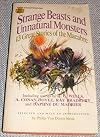
One of my favorite drugstore paperback collections of horror stories. You get pretty much everything here: from killer plants ("The Garden of Paris" by Eric Williams) to killer avians ("The Birds" by Daphne du Maurier), from vampires (E.F. Benson's excellent "Mrs. Amworth") to ghastly alien life hostile to humanity ("Slime" by Joseph Payne Brennan). Along the way, you'll encounter an assortment of other creepy-crawlies and supernatural beasts (moths, werewolves, et al.). The only show more questionable selection made by editor Philip Van Doren Stern--and everyone who's read the book seems to feel this way--is "The Elephant Man," Sir Frederick Treves's true account of the tragic life of Joseph Merrick. It deserves to be read, of course, but in a more fitting context than this. Otherwise, Strange Beasts and Unnatural Monsters is a top-notch collection that's worth hunting down at your local used book store...if such a place still exists. show less

This is an outstanding short story collection that I really enjoyed. This was published in 1942 and showcased 19 stories written in the 1920s and 1930s. Top tier authors. The editor noted (in 1942) that these stories were already from another era that only lived in their memories. Nearly 80 years further on as I read this now it is like being in a time machine. Two of the stories I knew I had read before, and two or three others maybe, but most were new to me.
Among the famous names are show more William Faulkner, Ernest Hemingway, F. Scott Fitzgerald, Eudora Welty and Carson McCullers. The two stories I have read before were Conrad Aiken's 'Silent Snow, Secret Snow' when I was in high school and Hemingway's 'The Snows of Kilimanjaro'. The latter is a painful story. More than ever, knowing more about Hemingway's life now, I was aware that Kilimanjaro felt like Hemingway was writing about a version of himself and how he rips the guts out of his real and perceived failings and throws them all over the pages. Oh this is a mean and pain filled story.
Speaking of Silent Snow, Secret Snow, I found it a little strange that I remembered a short story after 50 years. I think it was the repetitive image of the postman walking in the snow that kept the story with me. I do not think that way back when I realized what the story was about. As I read it now I rather quickly realized that the author had created a rather chilling description of a teenaged boy's descent into schizophrenia or some sort of dis-associative disorder. I didn't know about that sort of thing as a teenager myself. An excellent if slightly frightening story.
A couple stories in here were just too strange, like the Erskine Caldwell one, which keeps me from throwing 5 stars on this collection. But there are some excellent ones. I'm not a big fan of Sinclair Lewis but his "Young Man Axelbrod" rather charmed me. F. Scott Fitzgerald's 'Babylon Revisited' was another little treasure in here, a visit to Paris after nearly all the Americans had left it following the crash of '29.
Recommended if you can find it hiding on a friends of the library book sale shelf as I did. Read in 2020 show less
Among the famous names are show more William Faulkner, Ernest Hemingway, F. Scott Fitzgerald, Eudora Welty and Carson McCullers. The two stories I have read before were Conrad Aiken's 'Silent Snow, Secret Snow' when I was in high school and Hemingway's 'The Snows of Kilimanjaro'. The latter is a painful story. More than ever, knowing more about Hemingway's life now, I was aware that Kilimanjaro felt like Hemingway was writing about a version of himself and how he rips the guts out of his real and perceived failings and throws them all over the pages. Oh this is a mean and pain filled story.
Speaking of Silent Snow, Secret Snow, I found it a little strange that I remembered a short story after 50 years. I think it was the repetitive image of the postman walking in the snow that kept the story with me. I do not think that way back when I realized what the story was about. As I read it now I rather quickly realized that the author had created a rather chilling description of a teenaged boy's descent into schizophrenia or some sort of dis-associative disorder. I didn't know about that sort of thing as a teenager myself. An excellent if slightly frightening story.
A couple stories in here were just too strange, like the Erskine Caldwell one, which keeps me from throwing 5 stars on this collection. But there are some excellent ones. I'm not a big fan of Sinclair Lewis but his "Young Man Axelbrod" rather charmed me. F. Scott Fitzgerald's 'Babylon Revisited' was another little treasure in here, a visit to Paris after nearly all the Americans had left it following the crash of '29.
Recommended if you can find it hiding on a friends of the library book sale shelf as I did. Read in 2020 show less
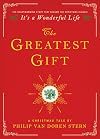
I can’t believe I’d never read the short story that “It’s a Wonderful Life” is based on! Obviously, a lot is different in the movie, but the core theme remains the same. I loved that this edition includes the background of the author coming up with the whole idea in a dream, and the director Frank Capra happening to get a hold of one of 200 copies that was sent out as a Christmas card in 1943. We truly never know how many lives we’ve touched.
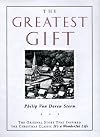
George Pratt is contemplating suicide, when a stranger appears and starts to talk him out of it. When George lets slip that he wishes he'd never been born, getting his wish may just change his perspective on how great a gift life is.
This is a short story that won't take you long to read, but if you slow yourself down may make you think about some of the ways in which your live has touched others', making the world a different place than it would be without you. Knowing that it inspired "It's show more a Wonderful Life" made me have rather different expectations for the story - I expected it to be longer and more fleshed out. But this is truly a short story, a compacted scene from the movie that is powerful in its own way for being more focused. show less
This is a short story that won't take you long to read, but if you slow yourself down may make you think about some of the ways in which your live has touched others', making the world a different place than it would be without you. Knowing that it inspired "It's show more a Wonderful Life" made me have rather different expectations for the story - I expected it to be longer and more fleshed out. But this is truly a short story, a compacted scene from the movie that is powerful in its own way for being more focused. show less
Lists
Awards


You May Also Like


Associated Authors
Statistics
- Works
- 53
- Also by
- 10
- Members
- 2,662
- Popularity
- #9,637
- Rating
- 3.8
- Reviews
- 37
- ISBNs
- 65
- Languages
- 5