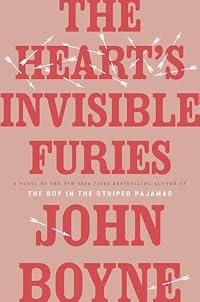
The Heart's Invisible Furies
by John Boyne
On This Page
Description
Named Book of the Month Club's Book of the Year, 2017 Selected one of New York Times Readers' Favorite Books of 2017 Winner of the 2018 Goldsboro Books Glass Bell Award From the beloved New York Times bestselling author of The Boy In the Striped Pajamas, a sweeping, heartfelt saga about the course of one man's life, beginning and ending in post-war Ireland Cyril Avery is not a real Avery -- or at least, that's what his adoptive parents tell him. And he never will be. But if he isn't a real show more Avery, then who is he? Born out of wedlock to a teenage girl cast out from her rural Irish community and adopted by a well-to-do if eccentric Dublin couple via the intervention of a hunchbacked Redemptorist nun, Cyril is adrift in the world, anchored only tenuously by his heartfelt friendship with the infinitely more glamourous and dangerous Julian Woodbead. At the mercy of fortune and coincidence, he will spend a lifetime coming to know himself and where he came from - and over his many years, will struggle to discover an identity, a home, a country, and much more. In this, Boyne's most transcendent work to date, we are shown the story of Ireland from the 1940s to today through the eyes of one ordinary man. The Heart's Invisible Furies is a novel to make you laugh and cry while reminding us all of the redemptive power of the human spirit. show lessTags
Recommendations

Member Reviews
This is an ambitious, sprawling, beautiful novel encompassing the life of Cyril Avery, a gay Irish man. Cyril’s story starts even before his birth, with his unmarried teenage mother being expelled from her small town, moving to Dublin, and giving him up for adoption. Cyril’s entire life is packed into the pages, with his mistakes, regrets, ill-fated marriage and relationships, the pain he caused others, and finally, happiness. Told in the first person and with a wicked, dry humor, the story is compelling all the way through.
 This review was written for LibraryThing Early Reviewers.
The Heart’s Invisible Furies is a sweeping saga, mostly set in Dublin, covering multiple generations of an unconventional family over a period of seventy years. It is the story of protagonist Cyril Avery, who is born in 1945 to an unwed mother and adopted by a distant self-absorbed couple. We follow his life as he matures, discovers his homosexuality, and leads a closeted life. In these years, homosexuality is illegal so he must conduct his sexual liaisons in secret. He develops a crush on Julian Woodbead, a childhood acquaintance who becomes a friend and the subject of his unrequited love. Cyril tries to convince himself to lead a so-called “normal” life by dating various women. He suffers, makes mistakes, and pays the price, show more endearing himself to reader in the process. It provides insight into the challenges of growing up gay in a disapproving society. This book’s timeless themes include the search for identity, the longing for acceptance, the need to develop a sense of home and family, and the desire to love and be loved.
The writing is superb, especially the dialogue, which provides laugh-out-loud humor to offset the abundant episodes of trauma, bigotry, and violent acts. Weighty topics are addressed, such as hate crimes, sex trafficking, and the AIDS epidemic. The story is structured in seven-year increments, during which Cyril experiences significant life events. The main characters are well-developed, especially Cyril and his birth mother, Catherine, whose story forms a subordinate plotline.
Boyne includes hard-hitting social commentary on the Catholic church and Irish social history as he confronts the homophobia and sexism of the mid-twentieth century. Cyril’s life mirrors the social changes being made in Ireland over the course of decades, moving from a time dominated by religion-dominated viewpoints and illegality to the passage of the marriage equality referendum, which parallels Cyril’s journey toward self-acceptance. It is filled with historical references, notable people, IRA violence, sexual content, and political and financial corruption.
It is an ambitious undertaking, though not without a few issues. It includes several stereotypical secondary characters, is a bit repetitious in places, and the primary narrative is carried by numerous unlikely coincidences. The epilogue, for a reason I could not discern, is written in a completely different style than the rest of the book. It is a lengthy book that occasionally indulges in superfluous side-stories.
Overall, I found this book engaging and look forward to reading more of this author’s work. Recommended to those that enjoy multi-generational family sagas and journeys of self-discovery. show less
The writing is superb, especially the dialogue, which provides laugh-out-loud humor to offset the abundant episodes of trauma, bigotry, and violent acts. Weighty topics are addressed, such as hate crimes, sex trafficking, and the AIDS epidemic. The story is structured in seven-year increments, during which Cyril experiences significant life events. The main characters are well-developed, especially Cyril and his birth mother, Catherine, whose story forms a subordinate plotline.
Boyne includes hard-hitting social commentary on the Catholic church and Irish social history as he confronts the homophobia and sexism of the mid-twentieth century. Cyril’s life mirrors the social changes being made in Ireland over the course of decades, moving from a time dominated by religion-dominated viewpoints and illegality to the passage of the marriage equality referendum, which parallels Cyril’s journey toward self-acceptance. It is filled with historical references, notable people, IRA violence, sexual content, and political and financial corruption.
It is an ambitious undertaking, though not without a few issues. It includes several stereotypical secondary characters, is a bit repetitious in places, and the primary narrative is carried by numerous unlikely coincidences. The epilogue, for a reason I could not discern, is written in a completely different style than the rest of the book. It is a lengthy book that occasionally indulges in superfluous side-stories.
Overall, I found this book engaging and look forward to reading more of this author’s work. Recommended to those that enjoy multi-generational family sagas and journeys of self-discovery. show less
The Heart’s Invisible Furies is my third John Boyne novel and worlds away from the Boy in the Striped Pyjamas and All the Broken Places.
Despite murder, grievous bodily harm, serial adultery, paedophilia, indecent exposure, jodhpur fetishism, pornography, rape, infanticide, judiciary corruption, an IRA kidnapping and child neglect all rearing their ugly heads in the first 125 pages, I still found myself snorting with laughter.
The dialogue is sublime, the characters are immense and Cyril’s 70-year journey is incredibly moving.
I loved adoptive parents Maude and Charles for their eccentricities, quirks and foibles and everything Mary-Margaret, Cyril’s surprising girlfriend, with her standards and prudery, made me smile.
From Dublin show more to Amsterdam, from New York City to Slovenia; from the Parliament House tearooms to MacIntryre’s bar, from the Aids ward in Mount Sinai to the Church of Our Lady - The Heart’s Invisible Furies is a masterpiece in storytelling, a heart-breaking tale of unrequited and requited love, an acerbic attack on hypocrisy and bigotry, Catholicism and homophobia, ministers, bankers and lawyers and a hard-hitting, emotive account of the suffering and consequences of being gay in the puritanical, small-minded Republic of Ireland.
4.75 stars because I wasn’t that keen on the epilogue. show less
Despite murder, grievous bodily harm, serial adultery, paedophilia, indecent exposure, jodhpur fetishism, pornography, rape, infanticide, judiciary corruption, an IRA kidnapping and child neglect all rearing their ugly heads in the first 125 pages, I still found myself snorting with laughter.
The dialogue is sublime, the characters are immense and Cyril’s 70-year journey is incredibly moving.
I loved adoptive parents Maude and Charles for their eccentricities, quirks and foibles and everything Mary-Margaret, Cyril’s surprising girlfriend, with her standards and prudery, made me smile.
From Dublin show more to Amsterdam, from New York City to Slovenia; from the Parliament House tearooms to MacIntryre’s bar, from the Aids ward in Mount Sinai to the Church of Our Lady - The Heart’s Invisible Furies is a masterpiece in storytelling, a heart-breaking tale of unrequited and requited love, an acerbic attack on hypocrisy and bigotry, Catholicism and homophobia, ministers, bankers and lawyers and a hard-hitting, emotive account of the suffering and consequences of being gay in the puritanical, small-minded Republic of Ireland.
4.75 stars because I wasn’t that keen on the epilogue. show less
I loved this book from beginning to end.
It begins with 16 year old Catherine Goggin who is publicly shamed by the local Catholic priest as she is pregnant outside of marriage. He forcibly expels her from the church, her home and community without any visible means of support. She travels to Dublin where she befriends a young gay couple who take her in. After a very violent incident her baby boy is born and she offers him up for adoption knowing she can't provide the essentials for him and needs to work to survive.
The reader then follows the life of young Cyril Avery who is told very clearly and often by his adoptive parents that they took him in out of the goodness of their hearts but that he is most definitely their adopted son and show more not a true Avery. They provide him with a comfortable home and see to his needs for survival but offer no love or affection. At a young age Cyril is enamoured of another young boy Julian, the son of his adoptive father's solicitor. When Charles Avery is imprisoned for tax fraud, they are forced to sell their home and Cyril is sent way to school. When his roommate is none other than Julian, Cyril realises he is still physically drawn to him. He keeps this hidden from heterosexual Julian as he fears losing his friendship but also it is illegal to be homosexual in Ireland.
The story takes us to Amsterdam, New York and back to contemporary Ireland. It looks at the impact of the AIDS epidemic and societies gradual acceptance of gay relationships.
The author has vividly portrayed what it was like to grow up adopted and gay in the fifties and sixties in Ireland, where the Catholic Church and priests have the power. This book had me laughing out loud often and I admit to shedding a tear or two. It is full of pathos and I admire how he wrote the sex scenes without trying to titillate but representing it as a natural urge or expression of love. This writer is going from strength to strength. show less
It begins with 16 year old Catherine Goggin who is publicly shamed by the local Catholic priest as she is pregnant outside of marriage. He forcibly expels her from the church, her home and community without any visible means of support. She travels to Dublin where she befriends a young gay couple who take her in. After a very violent incident her baby boy is born and she offers him up for adoption knowing she can't provide the essentials for him and needs to work to survive.
The reader then follows the life of young Cyril Avery who is told very clearly and often by his adoptive parents that they took him in out of the goodness of their hearts but that he is most definitely their adopted son and show more not a true Avery. They provide him with a comfortable home and see to his needs for survival but offer no love or affection. At a young age Cyril is enamoured of another young boy Julian, the son of his adoptive father's solicitor. When Charles Avery is imprisoned for tax fraud, they are forced to sell their home and Cyril is sent way to school. When his roommate is none other than Julian, Cyril realises he is still physically drawn to him. He keeps this hidden from heterosexual Julian as he fears losing his friendship but also it is illegal to be homosexual in Ireland.
The story takes us to Amsterdam, New York and back to contemporary Ireland. It looks at the impact of the AIDS epidemic and societies gradual acceptance of gay relationships.
The author has vividly portrayed what it was like to grow up adopted and gay in the fifties and sixties in Ireland, where the Catholic Church and priests have the power. This book had me laughing out loud often and I admit to shedding a tear or two. It is full of pathos and I admire how he wrote the sex scenes without trying to titillate but representing it as a natural urge or expression of love. This writer is going from strength to strength. show less
“But the way my mother told it, he wasn’t necessarily the villain of the piece. Maybe there were no villains in my mother’s story at all. Just men and women, trying to do their best by each other. And failing” (557).
Living in the shadows, Cyril, a shy, adopted boy who often gets overlooked and abandoned and even misnomered as Cecil, wants nothing more than to be free to live (and to be loved) as his true self—rather than hiding parts of himself that his conservative, Irish Catholic culture have condemned as degenerate. Through Cyril’s search for contentment and happiness and honesty with his identity, we’re taken on an epic journey, hitting major 20th and 21st-century historical junctures. And it all seems to come full show more circle—several times, in fact—with all those vacillating moments that make a life full-lived: serendipitous encounters and melancholic circumstances and perfect seasons and tragic losses.
I’m not normally drawn to end-of-life retellings where a narrator recounts all the events of their life. Those types of stories usually feel daunting; I tend to get uninterested halfway through. This wasn’t that. For one, it’s less looking backward and more moving forward. And more than that, Cyril’s life feels like many different lives, different stories made up of different genres. It opens with the Shakespearean tragedy of banishment and familial murder and then moves into something that seems like any scene from Wes Anderson’s The Royal Tenenbaums, watching Cyril grow up with eccentric adoptive parents, Charles and Maude (two of my favorite characters from this full cast). And as different decades are portrayed throughout his life, each is idiosyncratic. Some of my favorite sections, though, are those interactions between Cyril and Charles and Maude—they seem to add another layer to this Celtic story, one of much needed wit and humor and unexpected tenderness among all the injustices and tragedies that happen.
Sitting just shy of six hundred pages, this isn’t a short read, but it was certainly captivating enough to make it feel like a fast read. I really loved everything about this story: one man’s life that highlights the pain of abandonment and the joy of belonging, the sting of betrayal and the balm of forgiveness, the anguish of mendacity and the freedom of transparency. It’s poignantly beautiful and everything I’d hoped this backlist book would be. show less
Living in the shadows, Cyril, a shy, adopted boy who often gets overlooked and abandoned and even misnomered as Cecil, wants nothing more than to be free to live (and to be loved) as his true self—rather than hiding parts of himself that his conservative, Irish Catholic culture have condemned as degenerate. Through Cyril’s search for contentment and happiness and honesty with his identity, we’re taken on an epic journey, hitting major 20th and 21st-century historical junctures. And it all seems to come full show more circle—several times, in fact—with all those vacillating moments that make a life full-lived: serendipitous encounters and melancholic circumstances and perfect seasons and tragic losses.
I’m not normally drawn to end-of-life retellings where a narrator recounts all the events of their life. Those types of stories usually feel daunting; I tend to get uninterested halfway through. This wasn’t that. For one, it’s less looking backward and more moving forward. And more than that, Cyril’s life feels like many different lives, different stories made up of different genres. It opens with the Shakespearean tragedy of banishment and familial murder and then moves into something that seems like any scene from Wes Anderson’s The Royal Tenenbaums, watching Cyril grow up with eccentric adoptive parents, Charles and Maude (two of my favorite characters from this full cast). And as different decades are portrayed throughout his life, each is idiosyncratic. Some of my favorite sections, though, are those interactions between Cyril and Charles and Maude—they seem to add another layer to this Celtic story, one of much needed wit and humor and unexpected tenderness among all the injustices and tragedies that happen.
Sitting just shy of six hundred pages, this isn’t a short read, but it was certainly captivating enough to make it feel like a fast read. I really loved everything about this story: one man’s life that highlights the pain of abandonment and the joy of belonging, the sting of betrayal and the balm of forgiveness, the anguish of mendacity and the freedom of transparency. It’s poignantly beautiful and everything I’d hoped this backlist book would be. show less
My first and only previous encounter with John Boyne was the excellent young adult story "The Boy in the Striped Pyjamas". So when the opportunity arose and I was gifted early review status on "The Heart's Invisible Furies" I was happy to accept, read and review....and I am so glad I did!.
This is a work of great literary intent with bawdy undertones, an easy assimilated tale about the life of Cyril Avery, born out of wedlock and immediately given up for adoption. The story spans a period from the mid 1940's and moves at a ferocious pace up until the present and relayed to the reader in bite size 7 year chunks. Even though the novel stretches to some 600 pages once Boyne grabs your attention from the opening paragraph his colourful and show more descriptive prose holds you in awe until the final and very fitting conclusion.
Adoptive wealthy parents Charles and Maud guide the young Cyril in his early infant years. A childhood friend Julian Woodbead allows Cyril to discover and question his own sexuality. This soon leads to a realization that will form part of his decision making throughout his life. From Dublin to the waterways of Amsterdam, the streets of New York and finally returning to Dublin we travel with Cyril experiencing the good times the bad, the sad, the funny and the indifferent. Boyne explores successfully and with great humour and gusto attitudes of bigotry and tolerance against the background of a god fearing catholic population, an aids frightened society, and a world in panic immediately following the events of 9/11. At times you will want to laugh out loud or perhaps shed a tear.
I can honestly say that I have rarely been so moved by a story, the eloquent use of language, and the unveiling and interpretation of the issues raised and debated. Let's enjoy a few moments of the John Boyne magic...... "Cork City itself, a place she had never visited but that her father had always said was filled with gamblers, Protestants and drunkards"........"one man had been accused of exposing himself on the Milltown Road but the charges had been dismissed as the girl had been a Protestant"........"It was 1959, after all. I knew almost nothing of homosexuality, except for the fact that to act on such urges was a criminal act in Ireland that could result in a jail sentence, unless of course you were a priest, in which case it was a perk of the job.".........."Christ alive, said the sergeant, shaking his head in disbelief. I never heard of such a thing. What type of a woman would do something like that?.......The very best type , said Charles."
This book to me celebrates the sheer joy of the printed word. Life, love and loss it is all here in a 600 page extraordinary extravaganza! If you love to read and you love books then "The Heart's Invisible Furies" is sheer magic...so buy, cherish and appreciate as you are unlikely to read anything better this year, or possibly any year. A great big thanks to the good people at netgalley for this early opportunity to read and review this masterpiece in return for an honest review and that is what I have written. show less
This is a work of great literary intent with bawdy undertones, an easy assimilated tale about the life of Cyril Avery, born out of wedlock and immediately given up for adoption. The story spans a period from the mid 1940's and moves at a ferocious pace up until the present and relayed to the reader in bite size 7 year chunks. Even though the novel stretches to some 600 pages once Boyne grabs your attention from the opening paragraph his colourful and show more descriptive prose holds you in awe until the final and very fitting conclusion.
Adoptive wealthy parents Charles and Maud guide the young Cyril in his early infant years. A childhood friend Julian Woodbead allows Cyril to discover and question his own sexuality. This soon leads to a realization that will form part of his decision making throughout his life. From Dublin to the waterways of Amsterdam, the streets of New York and finally returning to Dublin we travel with Cyril experiencing the good times the bad, the sad, the funny and the indifferent. Boyne explores successfully and with great humour and gusto attitudes of bigotry and tolerance against the background of a god fearing catholic population, an aids frightened society, and a world in panic immediately following the events of 9/11. At times you will want to laugh out loud or perhaps shed a tear.
I can honestly say that I have rarely been so moved by a story, the eloquent use of language, and the unveiling and interpretation of the issues raised and debated. Let's enjoy a few moments of the John Boyne magic...... "Cork City itself, a place she had never visited but that her father had always said was filled with gamblers, Protestants and drunkards"........"one man had been accused of exposing himself on the Milltown Road but the charges had been dismissed as the girl had been a Protestant"........"It was 1959, after all. I knew almost nothing of homosexuality, except for the fact that to act on such urges was a criminal act in Ireland that could result in a jail sentence, unless of course you were a priest, in which case it was a perk of the job.".........."Christ alive, said the sergeant, shaking his head in disbelief. I never heard of such a thing. What type of a woman would do something like that?.......The very best type , said Charles."
This book to me celebrates the sheer joy of the printed word. Life, love and loss it is all here in a 600 page extraordinary extravaganza! If you love to read and you love books then "The Heart's Invisible Furies" is sheer magic...so buy, cherish and appreciate as you are unlikely to read anything better this year, or possibly any year. A great big thanks to the good people at netgalley for this early opportunity to read and review this masterpiece in return for an honest review and that is what I have written. show less
I teetered between a four and a five star rating, but I enjoyed reading it so much that I decided that five stars it is. The story essentially traces the life of a gay man, Cyril, from his birth in Ireland to a single unwed mother in the 1940's to the end of his life in 2015. It tells a story of struggle through this very human, and somewhat flawed, protagonist in seven year increments. Somehow Boyne manages to write a story with fully rendered characters, epic historical scope, incredible humor (like of the laugh out loud variety), and pathos. That's no small feat. It deals with everything surrounding the prejudice against homosexuals from both the political and societal angles including the AIDS crisis, violence against gay people, show more prostitution and the struggle to find love when such love was viewed as an aberration. Yet, the book ends on an uplifting note even as Cyril is reaching the end of his personal story.
If I were to be picky, I would point out that there were some fairly unlikely coincidences, and somehow the ending of the book didn't quite seem to live up to the momentum of the beginning. However, all in all, the overarching feel while reading this book was great: never dull, often funny, and yet, still important thematically. show less
If I were to be picky, I would point out that there were some fairly unlikely coincidences, and somehow the ending of the book didn't quite seem to live up to the momentum of the beginning. However, all in all, the overarching feel while reading this book was great: never dull, often funny, and yet, still important thematically. show less
Members
- Recently Added By
Published Reviews
ThingScore 65
The Heart’s Invisible Furies, Boyne’s tiende roman voor volwassenen, vertelt ook een verhaal dat nooit gebeurd zou kunnen zijn, daarvoor hangt het te veel van toevalligheden aan elkaar. Toch blijf je bereid je ongeloof op te schorten, omdat je wilt weten hoe het verder gaat. Hoe de hoofdpersoon zich nu weer gaat redden uit de moeilijke situatie waarin hij, meestal door zijn eigen domme show more gedrag of dat van iemand anders, is terechtgekomen. En of hij zijn echte moeder ooit gaat vinden.
Dat Boyne de puzzelstukjes veel te mooi in elkaar laat vallen, vergeef je hem. Hij trakteert ons op zoveel spannende scènes, op grappige dialogen met mooie Iers-Engelse uitdrukkingen erin, en zelfs op ontroering. Bovendien is The Heart’s Invisible Furies, net als The Boy in the Striped Pyjamas, duidelijk een bedacht verhaal, bedoeld om de wel waargebeurde geschiedenis te illustreren. Dat is Boyne dit keer heel goed gelukt. show less
Dat Boyne de puzzelstukjes veel te mooi in elkaar laat vallen, vergeef je hem. Hij trakteert ons op zoveel spannende scènes, op grappige dialogen met mooie Iers-Engelse uitdrukkingen erin, en zelfs op ontroering. Bovendien is The Heart’s Invisible Furies, net als The Boy in the Striped Pyjamas, duidelijk een bedacht verhaal, bedoeld om de wel waargebeurde geschiedenis te illustreren. Dat is Boyne dit keer heel goed gelukt. show less
added by sneuper
John Boyne delivers an epic full of verve, humour and heart...This blending of fact and fiction recalls William Boyd’s masterly Any Human Heart, which was such a convincing fictionalised biography that it came with its own set of footnotes....At every stage, Boyne seems to be saying that the individual is more powerful than the institutional. And at its core, The Heart’s Invisible Furies show more aspires to be not just the tale of Cyril Avery, a man buffeted by coincidence and circumstance, but the story of Ireland itself. show less
added by vancouverdeb
The Heart’s Invisible Furies” is a big, sweeping novel, the epic story of one man’s life. It takes on social issues and pivotal moments in Irish history as it follows the life of one Cyril Avery, a Pip-like orphan raised by indifferent adoptive parents and forced to make his own way in a very difficult world.
Cyril, who narrates the book, is wry, observant and funny, and it is his voice show more that gets us through what are sometimes horrific events. ...Despite these missteps, the book never really flags, and Cyril’s intelligent, witty voice takes us all the way through to the end of his life. “The Heart’s Invisible Furies” is a brilliant, moving history of an Irishman, and of modern Ireland itself. show less
Cyril, who narrates the book, is wry, observant and funny, and it is his voice show more that gets us through what are sometimes horrific events. ...Despite these missteps, the book never really flags, and Cyril’s intelligent, witty voice takes us all the way through to the end of his life. “The Heart’s Invisible Furies” is a brilliant, moving history of an Irishman, and of modern Ireland itself. show less
added by vancouverdeb
Lists

Top Five Books of 2020
982 works; 350 members

Top Five Books of 2018
802 works; 265 members
Top Five Books of 2017
757 works; 231 members

So You Liked Brokeback Mountain
11 works; 3 members

Contemporary Fiction
109 works; 7 members

Vine Reads
60 works; 1 member

To Read
617 works; 7 members

Kirkus Starred Fiction Reviews of Books Published in 2017
412 works; 7 members

Books Read in 2021
5,361 works; 114 members

Fiction (Non-Fantasy) by Irish Authors Set in Ireland
87 works; 3 members

Reading Glasses Podcast
410 works; 3 members
Author Information

43+ Works 31,391 Members
Acclaimed Irish novelist John Boyne was born in Dublin, Ireland on April 30, 1971. He studied English Literature at Trinity College, Dublin and Creative Writing at the University of East Anglia. He has written dozens of short stories and many novels, including the New York Times bestseller The Boy in the Striped Pyjamas. An award-winning film show more adaptation of this work was released in 2008. In 2015 his title, A History of Lonelines made The New Zealand Best Seller List. (Bowker Author Biography) show less
Awards and Honors
Awards
Distinctions
Notable Lists
Work Relationships
Common Knowledge
- Canonical title
- The Heart's Invisible Furies
- Original title
- The Heart's Invisible Furies
- Alternate titles*
- 2017
- Original publication date
- 2017
- People/Characters
- Cyril Avery; Julian Woodhead; Bastiaan; Charles Avery; Catherine Goggin
- Important places
- Amsterdam, North Holland, the Netherlands; New York, New York, USA; Dublin, Ireland
- Epigraph
- " Am I alone in thinking that the world becomes a more repulsive place every day?" asked Marigold, glancing across the breakfast table toward her husband , Christopher. " Actually," he replied, "I find that ---" "The question... (show all) was rhetorical ,"said Marigold, lighting a cigarette, her sixth of the day. " Please don't embarrass yourself by offering an opinion."
- Maude Avery , Like to the Lark, ( The Vico Press, 1950 ) - Dedication
- For John Irving
- First words
- Long before we discovered that he had fathered two children by two different women, one in Drimoleague and in Clonakilty, Father James Munroe stood on the alter of the Church of Our Lady, Star of the Sea, in the parish of Gol... (show all)een, West Cork, and denounced my mother as a whore.
- Last words
- (Click to show. Warning: May contain spoilers.)And at the end, when the entire congregation broke into applause, I realized I was finally happy.
- Original language*
- Engels
*Some information comes from Common Knowledge in other languages. Click "Edit" for more information.
Classifications
Statistics
- Members
- 3,161
- Popularity
- 5,817
- Reviews
- 170
- Rating
- (4.37)
- Languages
- 9 — Catalan, Danish, Dutch, English, French, German, Spanish, Swedish, Portuguese (Portugal)
- Media
- Paper, Audiobook, Ebook
- ISBNs
- 38
- ASINs
- 8
