The Mistress's Daughter: A Memoir
by A. M. Homes
On This Page
Description
An acclaimed novelist's memoir about what it means to be adopted and how all of us construct our sense of self and family. Before A.M. Homes was born, she was put up for adoption. Her birth mother was a 22-year-old single woman having an affair with a much older married man. Thirty years later, her birth parents came looking for her. Homes, renowned for the psychological accuracy and intensity of her storytelling, tells how they made contact with her, what happened next, and what she was show more able to reconstruct about the story of their lives. Her birth mother, a complex and lonely woman, never married or had another child, and died in 1998. Years later, Homes opened boxes of her mother's memorabilia, hoping to know her secrets, but no relief came. She then became obsessed with finding out as much as she could about all four parents and their families.--From publisher description. show lessTags
Recommendations







Member Reviews
A.M. Homes is a bastard. Literally, archaically speaking, she is. It's the kind of no-nonsense, bullshitless, provocative line A.M. Homes might have invoked about herself: "I am a bastard". I say it with the utmost homage and in admiration of Homes' raw transparency, so well chronicled in her memoir, The Mistress's Daughter. A.M. Homes' bio-mom got knocked-up at seventeen. Her bio-dad was a married man of then only meager entrepreneurial means (though by the time A.M. Homes finally met him thirty-three years after "fathering" her, he was quite well-to-do); a half-man/half-boy atrophied in his pathetic football adolescence, yet with a real doll of a society wife and four no doubt charming kids standing by his philandering side. Know that show more the bio-dad—in essence, little more than a spoonful of ejaculate—is the real fucking bastard of this sad, though adoption-affirming, inspiring as it is shocking, true tale.
Until reading A.M. Homes' (she's "Amy" here on out) magnificent memoir—a treatise of sorts on the trials of familial injustice—I viewed her wrongly as being like the preeminent shock-jock of contemporary U.S. literature. Like Howard Stern's highbrow sidekick, had such a sidekick existed. I viewed Amy that way because I had no idea where the grotesque satire of her short stories (which is all I'd ever read by her) was coming from. I knew she'd been adopted, but I had no real conception of how powerful were the psychic forces at work on her life and in her writing, first unleashed on Christmas Eve, 1992, when her adoptive mother, the only mother she'd ever known, informed her that their adoption attorney had called them out of the blue, having himself been contacted by Amy's biological mother, who requested that the adoption attorney have it communicated to Amy that, if Amy wanted to, it would be okay for Amy to contact her, the bio-mom. The adoption attorney complicated matters by contacting Amy's adoptive-mom with the news rather than Amy directly. WTF? was Amy's initial reaction to everything and everyone involved in this bombshell. Amy's life, as she'd known it up to then, was over. Not over for the worse entirely. But it would feel like the worse for her in a lot of fundamental ways for many years until she was able to see her bio-mom for the irreparably wounded woman she was; for the woman who never recovered from the exploitation and abandonment of her sickeningly narcissistic, summer-house-in-the-Hamptons, bio-dad, the coward who'd had her as that young piece of ass and then tossed her like so much used porn alongside the road. Amy Homes was thirty-one that Christmas Eve, on the cusp of discovering over the next fourteen years who she was, what she was made of, and perhaps more importantly, who she wasn't, what she wasn't made of.
"It's one of the pathological complications of adoption—adoptees don't really have rights, their lives are about supporting the secrets, the needs and desires of others."
As an adoptive parent myself, I am helped a lot in understanding many of the frustrations and fears potentially faced by my adopted kids, gleaned from reading so much practical wisdom (like what's quoted above—thank you, Amy!) even though none are yet adults, nor been sought after, so far, by persons of their biological beginnings.
What a phenomenal memoir, The Mistress's Daughter. It's as uncomfortably honest and unflinching as any I've ever read. Whatever fresh yet refined outrage emerges in Amy's telling, I know now—no matter what that crackpot critic with her Pulitzer Prize, Michiko Kakutani, ever spews in ignorance, misperception, personal bias or outright lies, about the artistic aspirations of A.M. Homes—is not driven by a desire to shock just for sensationalistic shocking's-sake (though shock you she will assuming you're human and not some vindictive robot writing book reviews for The New York Times—and that—no matter how desensitized you are to cruelty and hypocrisy), but to reveal the appalling truth and nothing but the appalling truth, Your Honor; the hardcore galling truth of her long-suffering journey to Identity; to some semblance of Acceptance after surviving the primal hells of the most heartless parental rejections; to a place of Peace after legal wrangling and threat of war, compelling her at all hours through a country of mothers, fathers, and other relative strangers on the internet, and landing her ultimately in an idyllic home with a garden on Long Island—near her adoptive roots and the nourishing memories of her "grandiloquent" adoptive grandmother—where A.M. Homes can breathe and just be again. show less
Until reading A.M. Homes' (she's "Amy" here on out) magnificent memoir—a treatise of sorts on the trials of familial injustice—I viewed her wrongly as being like the preeminent shock-jock of contemporary U.S. literature. Like Howard Stern's highbrow sidekick, had such a sidekick existed. I viewed Amy that way because I had no idea where the grotesque satire of her short stories (which is all I'd ever read by her) was coming from. I knew she'd been adopted, but I had no real conception of how powerful were the psychic forces at work on her life and in her writing, first unleashed on Christmas Eve, 1992, when her adoptive mother, the only mother she'd ever known, informed her that their adoption attorney had called them out of the blue, having himself been contacted by Amy's biological mother, who requested that the adoption attorney have it communicated to Amy that, if Amy wanted to, it would be okay for Amy to contact her, the bio-mom. The adoption attorney complicated matters by contacting Amy's adoptive-mom with the news rather than Amy directly. WTF? was Amy's initial reaction to everything and everyone involved in this bombshell. Amy's life, as she'd known it up to then, was over. Not over for the worse entirely. But it would feel like the worse for her in a lot of fundamental ways for many years until she was able to see her bio-mom for the irreparably wounded woman she was; for the woman who never recovered from the exploitation and abandonment of her sickeningly narcissistic, summer-house-in-the-Hamptons, bio-dad, the coward who'd had her as that young piece of ass and then tossed her like so much used porn alongside the road. Amy Homes was thirty-one that Christmas Eve, on the cusp of discovering over the next fourteen years who she was, what she was made of, and perhaps more importantly, who she wasn't, what she wasn't made of.
"It's one of the pathological complications of adoption—adoptees don't really have rights, their lives are about supporting the secrets, the needs and desires of others."
As an adoptive parent myself, I am helped a lot in understanding many of the frustrations and fears potentially faced by my adopted kids, gleaned from reading so much practical wisdom (like what's quoted above—thank you, Amy!) even though none are yet adults, nor been sought after, so far, by persons of their biological beginnings.
What a phenomenal memoir, The Mistress's Daughter. It's as uncomfortably honest and unflinching as any I've ever read. Whatever fresh yet refined outrage emerges in Amy's telling, I know now—no matter what that crackpot critic with her Pulitzer Prize, Michiko Kakutani, ever spews in ignorance, misperception, personal bias or outright lies, about the artistic aspirations of A.M. Homes—is not driven by a desire to shock just for sensationalistic shocking's-sake (though shock you she will assuming you're human and not some vindictive robot writing book reviews for The New York Times—and that—no matter how desensitized you are to cruelty and hypocrisy), but to reveal the appalling truth and nothing but the appalling truth, Your Honor; the hardcore galling truth of her long-suffering journey to Identity; to some semblance of Acceptance after surviving the primal hells of the most heartless parental rejections; to a place of Peace after legal wrangling and threat of war, compelling her at all hours through a country of mothers, fathers, and other relative strangers on the internet, and landing her ultimately in an idyllic home with a garden on Long Island—near her adoptive roots and the nourishing memories of her "grandiloquent" adoptive grandmother—where A.M. Homes can breathe and just be again. show less
I'm really surprised by how much I related to this memoir---like scarily so. I received this in a BookCrossing bookbox and dismissed it several times before deciding to give it a try. Weirdly, it was almost calling out to me to read it. I'm so glad I did---I devoured it in one afternoon. It didn't really solve or fix anything for me...just got me thinking and contemplating about my past and family stuff that I don't process through as much as I should.
Homes's memoir brings to mind so many thoughts on identity and the gut-born desire to be truly known. This passage resonated with me:
"I grew up convinced that every family was better than mine...I would hover on the edge, knowing that however much they include you--invite you to dinner, show more take you on family trips--you are never official, you are always the 'friend', the first one left behind."
That's exactly how I felt after my parents' divorce---the unwanted stepkid on both sides. Both parents tried to make me a part of their twisted new "family units" but I was already a part of only one family unit---the one they'd divided.
I was not adopted but I relate to so much of this story. We have in common the messed up desire to please lousy parents---to perform and hope they'll find us good enough to let into the selfish world they shut us out of. (My mom is a much different person now than she was in the years just after her divorce and she's an important part of my life now.) I don't often think back on the hard years but this story reminded me of that vulnerable girl who was looking to be loved and cared for by those who couldn't get past themselves to do it properly.
I thought of my dad when the author said after hearing her mother was sick, "I was so busy protecting myself from her that I didn't...(recognize) the trouble she was in." It's a messed up world when this is the relationship one has with her parent(s).
Cleaning up the home after her mother's death she says, "This is not how (she) would have wanted to have been presented---but this is who she is and what she left behind." This makes me think of my dad's mom who was estranged from us until the last few years of her life. This is how I felt after her death and I wondered if I was the only one in the whole world who even semi-mourned her. I mourned the "could have been" rather than the "was".
So there you go...a look into my guts. Probably won't see another one for awhile. Maybe I need to go back to the Aunt Dimitys... show less
Homes's memoir brings to mind so many thoughts on identity and the gut-born desire to be truly known. This passage resonated with me:
"I grew up convinced that every family was better than mine...I would hover on the edge, knowing that however much they include you--invite you to dinner, show more take you on family trips--you are never official, you are always the 'friend', the first one left behind."
That's exactly how I felt after my parents' divorce---the unwanted stepkid on both sides. Both parents tried to make me a part of their twisted new "family units" but I was already a part of only one family unit---the one they'd divided.
I was not adopted but I relate to so much of this story. We have in common the messed up desire to please lousy parents---to perform and hope they'll find us good enough to let into the selfish world they shut us out of. (My mom is a much different person now than she was in the years just after her divorce and she's an important part of my life now.) I don't often think back on the hard years but this story reminded me of that vulnerable girl who was looking to be loved and cared for by those who couldn't get past themselves to do it properly.
I thought of my dad when the author said after hearing her mother was sick, "I was so busy protecting myself from her that I didn't...(recognize) the trouble she was in." It's a messed up world when this is the relationship one has with her parent(s).
Cleaning up the home after her mother's death she says, "This is not how (she) would have wanted to have been presented---but this is who she is and what she left behind." This makes me think of my dad's mom who was estranged from us until the last few years of her life. This is how I felt after her death and I wondered if I was the only one in the whole world who even semi-mourned her. I mourned the "could have been" rather than the "was".
So there you go...a look into my guts. Probably won't see another one for awhile. Maybe I need to go back to the Aunt Dimitys... show less
Review: The Mistress’s Daughter by A. M. Homes.
This is a memoir of pain and self-discovery, outlined in harsh abnormal detail. Holms writes with extraordinary depth, courage and grace that will knock you down and pick you back up again. The book is interesting from the beginning pages to the end and I admire her abrupt honesty.
The basic story of her adoption is what captures the reader’s attention, but it is her powerful story telling that keeps the story intriguing. Homes knew she was adopted but didn’t meet her biological parents until she turned thirty-one. At this time she writes that it was the most ethereal and biological emotional experience of her life. She writes her emotions and thoughts in a sparse haunting language, show more which felt like she wasn’t really interested in her biological parents but she really was curious.
Her biological mother was the first to contact her but Homes felt frightened and unsure if this person was in her right mind. Then she meets her biological father who she is also unsure about his behavior. He only met her in strange places and kept her at arms length giving her the impression he didn’t want to claim her as his daughter. He had never married her biological mother and he had a whole family of his own that he completely kept invisible to her with many excuses to keep her isolated from them.
Holmes struggled with her identity, as well as her attempts to connect with her birth parents and finally a genealogical identity search to place her somewhere between her two mothers and two fathers. Homes writes about the issue of being adopted as being complex and with uncertainty of how she became living a fractured life. Like she said, special and shattering, leaving you asking yourself…. “adopted or not, who am I?” show less
This is a memoir of pain and self-discovery, outlined in harsh abnormal detail. Holms writes with extraordinary depth, courage and grace that will knock you down and pick you back up again. The book is interesting from the beginning pages to the end and I admire her abrupt honesty.
The basic story of her adoption is what captures the reader’s attention, but it is her powerful story telling that keeps the story intriguing. Homes knew she was adopted but didn’t meet her biological parents until she turned thirty-one. At this time she writes that it was the most ethereal and biological emotional experience of her life. She writes her emotions and thoughts in a sparse haunting language, show more which felt like she wasn’t really interested in her biological parents but she really was curious.
Her biological mother was the first to contact her but Homes felt frightened and unsure if this person was in her right mind. Then she meets her biological father who she is also unsure about his behavior. He only met her in strange places and kept her at arms length giving her the impression he didn’t want to claim her as his daughter. He had never married her biological mother and he had a whole family of his own that he completely kept invisible to her with many excuses to keep her isolated from them.
Holmes struggled with her identity, as well as her attempts to connect with her birth parents and finally a genealogical identity search to place her somewhere between her two mothers and two fathers. Homes writes about the issue of being adopted as being complex and with uncertainty of how she became living a fractured life. Like she said, special and shattering, leaving you asking yourself…. “adopted or not, who am I?” show less
Aficionados of Homes's seductively creepy novels and short stories will enjoy her memoir, which is in many ways no less weird than her fiction. The first half describes how Homes, at that point an adult woman, learns that her birth mother wants to be in touch. Homes's part of the back story, and her speculations, hopes, and fears about this unknown mother who asserts her motherness, will be familiar to those who have gone through this experience themselves (and to their friends, who have heard these anxious concerns before). The uncovering of just who these biological parents were and what they are now to the author is riveting.
The drive to know, plus the drive to buffer the experience and any potential commitment, explains the second show more half of the book. Critics have found this section less engaging, but I enjoyed it more, because here we see Homes at work, sleuthing and poking and fantasizing. She portrays herself as both obsessed and resistant, creating a parallel experience for the reader. We see the psyche from whom her strange, compelling fictional characters arise, the bizarre tangents that are their genesis. We see her enter into a world of genealogical and internet research and expose both the voyeurism and frustrations that any amateur genealogist has encountered. We ultimately encounter the insoluble riddle: Who am I if other people control the proof of my identity.
This memoir makes me want to re-read all the Homes I have, and go find even more. show less
The drive to know, plus the drive to buffer the experience and any potential commitment, explains the second show more half of the book. Critics have found this section less engaging, but I enjoyed it more, because here we see Homes at work, sleuthing and poking and fantasizing. She portrays herself as both obsessed and resistant, creating a parallel experience for the reader. We see the psyche from whom her strange, compelling fictional characters arise, the bizarre tangents that are their genesis. We see her enter into a world of genealogical and internet research and expose both the voyeurism and frustrations that any amateur genealogist has encountered. We ultimately encounter the insoluble riddle: Who am I if other people control the proof of my identity.
This memoir makes me want to re-read all the Homes I have, and go find even more. show less
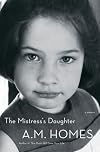
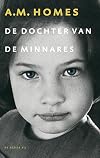
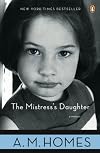
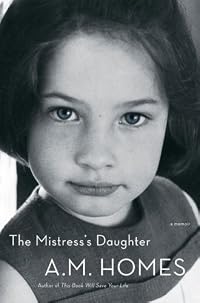
I picked up this book because I liked the picture on the cover of the author as a little girl. I was pleasantly surprised. On the surface, it’s one of those adoptee-reunited-with-birthparents stories. In general, I’m not very attracted to that genre. What makes this one a different experience is the the personality of the author, an acclaimed midlist novelist. Her birth mother (who has a clear case of borderline personality disorder, although the author never uses that term) finds the author and tries to insinuate herself in her life. The author only meets with her one time. Years later, the birthmother dies. The author goes through her dead birthmother’s things, and imagines what her life was like. It never seemed to occur to our show more author to ask her mother about her life when she was still alive. The author is more comfortable imagining a relationship than actually having one. show less
The distinguishing attribute of this book is the author's fearlessness. She doesn't pretend to be a nice person, only an honest one, and the result is sometimes shocking.
In brief: Homes, who was adopted at birth, is contacted at age 31 by her birth mother, a childish woman who has fantasies of Homes 'adopting' her. Eventually she meets her birth father, who knows only how to be either seductive (making promises he can't keep to Homes's birth mother, and eventually Homes herself) or submissive (to his wife).
It's not a novel, and Homes insists on telling the story chronologically, which effectively evokes the terribly uncertain and edgy state that she experienced while it was all happening. Some people can't handle this, accusing Homes of show more 'whining'. They mistake acute pain and deep disorientation for narcissism; perhaps they would have liked something more Hollywood-ready.
As it happens I have personal experience with all the types encountered here: adopted children encountering their birth parents, hidden half-siblings, women who relinquished their children at birth, and so forth; and Homes deserves full credit for true-to-life portraiture.
The second half of the book is less compelling, but if you read it at a sitting (not difficult) then the arc of it becomes of a piece with the whole. show less
In brief: Homes, who was adopted at birth, is contacted at age 31 by her birth mother, a childish woman who has fantasies of Homes 'adopting' her. Eventually she meets her birth father, who knows only how to be either seductive (making promises he can't keep to Homes's birth mother, and eventually Homes herself) or submissive (to his wife).
It's not a novel, and Homes insists on telling the story chronologically, which effectively evokes the terribly uncertain and edgy state that she experienced while it was all happening. Some people can't handle this, accusing Homes of show more 'whining'. They mistake acute pain and deep disorientation for narcissism; perhaps they would have liked something more Hollywood-ready.
As it happens I have personal experience with all the types encountered here: adopted children encountering their birth parents, hidden half-siblings, women who relinquished their children at birth, and so forth; and Homes deserves full credit for true-to-life portraiture.
The second half of the book is less compelling, but if you read it at a sitting (not difficult) then the arc of it becomes of a piece with the whole. show less
When she is 31 Homes is contacted by her birth mother and soon after by her birth father. It soon becomes apparent that both are emotionally stunted as each seems more interested in either'getting' something from her or holding her at arm's length rather than offering her anything remotely resembling unconditional positive regard - that is - liking her for herself because she is theirs. Homes struggles to balance her own emotions with trying to connect with them, but fails in the end with both; her mother dies, her father withdraws. To ameliorate her suffering Homes throws herself into genealogical research and something transformative happens. She becomes absorbed not only in the stories of the people to whom she is related but also to show more the stories of the false leads, her own adoptive family, everyone..... she no longer feels so alone as she reads about all these people, mostly immigrants, struggling to find their place in the American dream, some succeeding and others failing, some even going mad. Homes grows during the narrative from a somewhat stand-offish, prickly, and defended person, into some one whole and mature, deeply appreciative of those who love her for herself and able to let go of the rest and get on with living her life and having a family of her own. A great read for anyone who is interested in the journey that the young adopted adult is likely to go through at some time and also for those interested in genealogy. **** show less
Members
- Recently Added By
Lists

Top Five Books of 2013
1,562 works; 721 members

Books Read in 2007
324 works; 8 members
Author Information

Series
Belongs to Publisher Series
Common Knowledge
- Canonical title*
- Le sens de la famille
- Original title
- The mistress's daughter
- Original publication date
- 2007 (1e édition originale américaine) (1e édition originale américaine); 2009-09 (1e traduction et édition française) (1e traduction et édition française)
- People/Characters
- A.M. [Amy Michael] Homes; Ellen Ballman; Norman Hecht; Phyllis Homes
- Important places
- Washington, D.C., USA (metropolitan area); New York, New York, USA
- Epigraph
- There are two ways to live your life--one is as though nothing is a miracle, the other is as though everything is a miracle.
Albert Einstein - Dedication
- In memory of Jewel Rosenberg and in honor of Juliet Spencer Homes
- First words
- I remember their insistence that I come into the living room and sit down and how the dark room seemed suddenly threatening, how I stood in the kitchen doorway holding a jelly doughnut and how I never eat jelly doughnuts.
- Last words
- (Click to show. Warning: May contain spoilers.)I couldn't not know.
- Blurbers
- Tan, Amy ; Smith, Zadie ; Wilsey, Sean ; Gaitskill, Mary ; Curtis, Jamie Lee
*Some information comes from Common Knowledge in other languages. Click "Edit" for more information.
Classifications
- Genres
- Biography & Memoir, Nonfiction, General Nonfiction
- DDC/MDS
- 362.734092 — Society, Government, and Culture Social problems and social services Social Welfare Child welfare Adoption Adopted Children
- LCC
- HV874.82 .H66 .H66 — Social sciences Social pathology. Social and public welfare. Criminology Social pathology. Social and public welfare. Protection, assistance and relief Special classes Children Destitute, neglected, and abandoned
- BISAC
Statistics
- Members
- 788
- Popularity
- 35,121
- Reviews
- 43
- Rating
- (3.43)
- Languages
- 8 — Catalan, Dutch, English, French, German, Italian, Portuguese, Spanish
- Media
- Paper, Audiobook, Ebook
- ISBNs
- 27
- ASINs
- 10