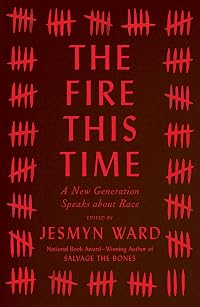
The Fire This Time: A New Generation Speaks about Race
by Jesmyn Ward (Editor)
On This Page
Description
"National Book Award-winner Jesmyn Ward takes James Baldwin's 1963 examination of race in America, The Fire Next Time, as a jumping off point for this groundbreaking collection of essays and poems about race from the most important voices of her generation and our time. In light of recent tragedies and widespread protests across the nation, The Progressive magazine republished one of its most famous pieces: James Baldwin's 1962 "Letter to My Nephew," which was later published in his landmark show more book, The Fire Next Time. Addressing his fifteen-year-old namesake on the one hundredth anniversary of the Emancipation Proclamation, Baldwin wrote: "You know and I know, that the country is celebrating one hundred years of freedom one hundred years too soon." Award-winning author Jesmyn Ward knows that Baldwin's words ring as true as ever today. In response, she has gathered short essays, memoir, and a few essential poems to engage the question of race in the United States. And she has turned to some of her generation's most original thinkers and writers to give voice to their concerns. The Fire This Time is divided into three parts that shine a light on the darkest corners of our history, wrestle with our current predicament, and envision a better future. Of the eighteen pieces, ten were written specifically for this volume. In the fifty-odd years since Baldwin's essay was published, entire generations have dared everything and made significant progress. But the idea that we are living in the post-Civil Rights era, that we are a "post-racial" society is an inaccurate and harmful reflection of a truth the country must confront. Baldwin's "fire next time" is now upon us, and it needs to be talked about. Contributors include Carol Anderson, Jericho Brown, Garnette Cadogan, Edwidge Danticat, Rachel Kaadzi Ghansah, Mitchell S. Jackson, Honoree Jeffers, Kima Jones, Kiese Laymon, Daniel Jose Older, Emily Raboteau, Claudia Rankine, Clint Smith, Natasha Trethewey, Wendy S. Walters, Isabel Wilkerson, and Kevin Young"-- show lessTags
Recommendations

Member Reviews
“Replace ropes with bullets. Hound dogs with German shepherds. A gray uniform with a bulletproof vest. Nothing is new.”
This book is dedicated, “ To Trayvon Martin and the many other black men, women, and children who have died and been denied justice for these last four hundred years.”
Bam.
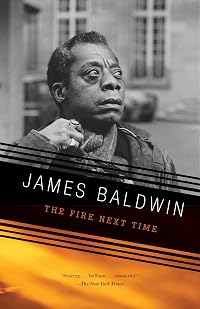
The title of this collection is a slight twist on James Baldwin’s “The Fire Next Time”, which in itself comes from an old slave song, “God gave Noah the rainbow sign, No more water, the fire next time!” The writings within are powerful and maddening. The piece about fathers had me in tears...
This book was published in 2016, the year Trump took office. Before the current racial unrest. Before George and Brianna. Yet, read this, show more “There was a lynching every four days in the early decades of the twentieth century. It’s been estimated that an African American is now killed by police every two to three days.” I wonder what the rate is now...
This volume is a tough read, but important. Tough because it's true. Important because it's true.
James Baldwin wrote, “Know whence you came. If you know whence you came, there is no limit to where you can go.” I hope someday, that is true for everyone living everywhere. I think that reading a book like this is a good start to fulfill that hope. show less
This book is dedicated, “ To Trayvon Martin and the many other black men, women, and children who have died and been denied justice for these last four hundred years.”
Bam.
The title of this collection is a slight twist on James Baldwin’s “The Fire Next Time”, which in itself comes from an old slave song, “God gave Noah the rainbow sign, No more water, the fire next time!” The writings within are powerful and maddening. The piece about fathers had me in tears...
This book was published in 2016, the year Trump took office. Before the current racial unrest. Before George and Brianna. Yet, read this, show more “There was a lynching every four days in the early decades of the twentieth century. It’s been estimated that an African American is now killed by police every two to three days.” I wonder what the rate is now...
This volume is a tough read, but important. Tough because it's true. Important because it's true.
James Baldwin wrote, “Know whence you came. If you know whence you came, there is no limit to where you can go.” I hope someday, that is true for everyone living everywhere. I think that reading a book like this is a good start to fulfill that hope. show less
This collection of essays, first published in 2016, brings together poems and essays from 18 contributors grappling with race and racism in the United States. In many ways, they reflect on or respond to James Baldwin's writings, some more directly than others. Most touch on a recent killing of a Black person by police in the news, and in a sense it's a record of collective grief and responding protest. It is a heart-wrenching read, but at the same time - like Baldwin - ultimately looking forward with hope.
I can see why this essay collection has been getting attention since its publication. The essays are in some ways all over the place topically: Edwidge Danticat asks if African Americans in the United States can be compared to show more refugees; Rachel Kaadzi Ghansah goes to James Baldwin's house in Paris and reflects on his importance in her own work; Kiese Laymon reflects on OutKast and other musical influences. There's poetry from Jericho Brown and Natasha Trethewey. They are all excellent and challenging, and may leave you fired up. show less
I can see why this essay collection has been getting attention since its publication. The essays are in some ways all over the place topically: Edwidge Danticat asks if African Americans in the United States can be compared to show more refugees; Rachel Kaadzi Ghansah goes to James Baldwin's house in Paris and reflects on his importance in her own work; Kiese Laymon reflects on OutKast and other musical influences. There's poetry from Jericho Brown and Natasha Trethewey. They are all excellent and challenging, and may leave you fired up. show less
It's hard to imagine a stronger collection of essays, stories, and poems that reflect black lives in America since Treyvon Martin's murder. It is edited by and begins with an introduction by Jesmyn Ward, author of the brilliant Salvage the Bones. She explains her return to James Baldwin's writings and her urge to gather new voices to reach out and share the pain and the dread a half century after Baldwin's The Fire Next Time. There are so many authors new to me, along with some familiar voices. The writers visit Baldwin's home in France, and South Carolina, New Orleans, Portsmouth NH. They have genetic testing done. They discover and honor the husband of the first published black female poet, Phillis Wheatley. They call out "White Rage" show more for what it is, before Donald Trump embodied it. They examine Rachel Dolezal and say, "When you are black, you don't have to look like it, but you have to look at it." Outkast's music is placed on the pedestal it so richly deserves. One contributor looks for and photographs a series of Know Your Rights! murals in NYC.
Each piece is a treasure, and my overall favorite is Garnette Cadogan's "Black and Blue", which explains what it's like to walk in the nighttimes of Kingston, Jamaica and the Bronx with rude boys and police standing by, waiting to take their shot.
I knew of Ward's greatness, having devoured her books. Now I have 17 more writers to investigate from this remarkable collection. I dream that this group gets to travel across the country and read in a venue in every town and city. show less
Each piece is a treasure, and my overall favorite is Garnette Cadogan's "Black and Blue", which explains what it's like to walk in the nighttimes of Kingston, Jamaica and the Bronx with rude boys and police standing by, waiting to take their shot.
I knew of Ward's greatness, having devoured her books. Now I have 17 more writers to investigate from this remarkable collection. I dream that this group gets to travel across the country and read in a venue in every town and city. show less
You need to read this book.
(Full disclosure: I received a free electronic ARC for review through NetGalley.)
"[W]e are writing an epic wherein black lives carry worth, wherein black boys can walk to the store and buy candy without thinking they will die, wherein black girls can have a bad day and be mouthy without being physically assaulted by a police officer, wherein cops see twelve-year-old black boys playing with fake guns as silly kids and not homicidal maniacs, wherein black women can stop to ask for directions without being shot in the face by paranoid white homeowners. I burn, and I hope."
- Jesmyn Ward, Introduction
"A friend recently told me that when she gave birth to her son, before naming him, before even nursing him, her show more first thought was, I have to get him out of this country."
- Claudia Rankine, "The Condition of Black Life Is One of Mourning"
Anthologies tend to be pretty hit or miss with me, but the eighteen pieces in The Fire This Time: A New Generation Speaks about Race are uniformly excellent. There wasn't a single poem or essay that I didn't love. I devoured the whole thing in most of an afternoon, and was left hungering for more.
Inspired by James Baldwin’s The Fire Next Time - “A Letter to My Nephew” in particular - Jesmyn Ward compiled a collection of essays on race by and for a new generation. The result is eclectic and surprising and just straight-up breathtaking.
I wasn't sure what to expect - a more academic bent, perhaps? - but in this case, I think my preconceptions were a positive, because The Fire This Time upended them in the best way possible. Through a mix of poems, personal essays, letters, and creative nonfiction, the contributors explore a wide range of topics, both expected and not: the black immigrant experience; police brutality and the Black Lives Matter movement; walking while black; reassessing one's long held identity in the wake of contemporary DNA testing; the legacy of slavery in New England; depression and loneliness as a consequence of cultural disconnectedness; constructing composite fathers; metafiction in hip hop; and "artistic rituals of labor," from grandmamas to Outkast.
It's hard to pick a favorite, but if pressed I'd have to go with Garnette Cadogan's "Black and Blue." As a child growing up in Kingston, Jamaica in the 1980s, Cadogan walked the streets well into the night. At first his wanderings were a means of escape: from the abusive stepfather who awaited him at home. But, over time, they morphed into something much deeper: a way to find adventure, serenity, and self-reflection. Picking mangoes and sneaking into street parties, he imagines himself to be a modern-day Tom Sawyer. He quotes Kierkegaard: “I have walked myself into my best thoughts.”
When Cadogan moved to New Orleans to attend college, university staff cautioned him away from certain areas, all less dangerous than the neighborhoods he walked in Jamaica: "These American criminals are nothing on Kingston’s, I thought. They’re no real threat to me. What no one had told me was that I was the one who would be considered a threat." And so begins his journey of "walking while black": of walking slowly, never running; wearing khakis and dress shirts and items emblazoned with his university logo, while avoiding hoodies altogether; leaving shiny items at home; crossing the street to put white people at ease. Including white women who, ironically, practice the same "vigilance in an environment where they are constantly treated as targets of sexual attention." And so an activity in which Cadogan once lost himself becomes one in which he must cultivate constant awareness of his surroundings.
In his interactions with the police, Cadogan observes that: "The cops had less regard for the witness and entreaties of black onlookers, whereas the concern of white witnesses usually registered on them. A black witness asking a question or politely raising an objection could quickly become a fellow detainee." This is one of many points that, while not emphasized, I hope registers with white readers specifically (of which I am one). The practical implication being that, if you see a police interaction, stick around. Bear witness. Film it if you can do so safely. Someone's life might depend on it.
Also wonderful is “The Dear Pledges of Our Love”: A Defense of Phillis Wheatley’s Husband by Honorée Jeffers. While researching Wheatley's life in order to write a series of poems about "the mother of African American literature," Jeffers comes to question the dominant narrative about her husband, John Peters. Much of what we know about Wheatley’s life in America comes from Margaretta Matilda Odell, who claimed to be a "collateral descendant" of Susannah Wheatley, Phillis's former mistress. Even though this claim has never been substantiated, historians continue to rely on her biography of Wheatley - which, despite its "good intentions," is steeped in the racism of the time, and ultimately "continues the disturbing historical trend of African Americans, and black women in particular, needing white benefactors to justify their lives and history."
Jeffers ends with a hope - a plea - for historians to revisit and reshape this biography, crafting one that both explores Wheatley's life prior to her enslavement - and affirms the humanity of black people.
Kevin Young's "Blacker Than Thou" - in which he identifies Rachel Dolezal as a hoaxer and imposter - is thoughtful, measured, and surprisingly funny; well worth the price of admission on its own. (To wit: "Did Dolezal really fool those black folks around her? I have a strange feeling she didn’t, that many simply humored her. You have to do this with white people, from time to time.")
I also loved editor Jesmyn Ward's "Cracking the Code," in which she recounts her and her parents' experiences having their DNA analyzed by 23andMe. For $99 a pop, they had their ancestry either confirmed, as in her father's case ("who always believed himself to have Native American heritage, and who had a strong affinity for Native American history and culture, found that he is 51 percent Native American") or shaken to its core ("it was discomfiting to find that my ancestry was 40 percent European [...] For a few days after I received my results, I looked into the mirror and didn’t know how to understand myself.").
Shortly after receiving the results, Ward's father registered with the Choctaw tribe of Slidell, Louisiana - which immediately brought to mind the upcoming "All the Real Indians Died Off": And 20 Other Myths About Native Americans by Roxanne Dunbar-Ortiz and Dina Gilio-Whitaker. The titular myth, "All the Real Indians Died Off," is done in part through erasure and with the purpose of stripping Native Americans of their tribal lands. After all, if there are no "Indians" left, what need do they have of reservations? This is accomplished in a variety of ways, including through restrictive blood quantum requirements that bar many people from rightfully claiming their Native descent; by policies that encourage intermarriage and migration to urban centers; and through transracial adoption.
Ward's story adds another dimension to this: "It’s impossible for most black Americans to construct full family trees. Official census records, used by so many genealogy enthusiasts to piece together their families’ pasts, don’t include our non-European ancestors." New technology such as home DNA testing kits allow African Americans and Native peoples the chance to reclaim heritage - and possibly, hopefully, power - that had long since been denied to them, to paraphrase Ward. What a remarkable thing.
I could go on and on but suffice it to say that you need to read this book. It's raw and urgent, timely and necessary, and smart and heartfelt AF. Buy it for yourself, give it to your friends, get copies in your local libraries.
TABLE OF CONTENTS
"The Tradition" by Jericho Brown
Introduction by Jesmyn Ward
Part One: Legacy
Homegoing, AD by Kima Jones
The Weight by Rachel Kaadzi Ghansah
Lonely in America by Wendy S. Walters
Where Do We Go From Here? by Isabel Wilkerson
“The Dear Pledges of Our Love”: A Defense of Phillis Wheatley’s Husband by Honorée Jeffers
White Rage by Carol Anderson
Cracking the Code by Jesmyn Ward
Part Two: Reckoning
"Queries of Unrest" by Clint Smith
Blacker Than Thou by Kevin Young
Da Art of Storytellin’ (a prequel) by Kiese Laymon
Black and Blue by Garnette Cadogan
The Condition of Black Life Is One of Mourning by Claudia Rankine
Know Your Rights! by Emily Raboteau
Composite Pops by Mitchell S. Jackson
Part Three: Jubilee
"Theories of Time and Space" by Natasha Trethewey
This Far: Notes on Love and Revolution by Daniel José Older
Message to My Daughters by Edwidge Danticat
Contributors
Permissions
About the Editor
http://www.easyvegan.info/2016/08/19/the-fire-this-time-edited-by-jesmyn-ward/ show less
(Full disclosure: I received a free electronic ARC for review through NetGalley.)
"[W]e are writing an epic wherein black lives carry worth, wherein black boys can walk to the store and buy candy without thinking they will die, wherein black girls can have a bad day and be mouthy without being physically assaulted by a police officer, wherein cops see twelve-year-old black boys playing with fake guns as silly kids and not homicidal maniacs, wherein black women can stop to ask for directions without being shot in the face by paranoid white homeowners. I burn, and I hope."
- Jesmyn Ward, Introduction
"A friend recently told me that when she gave birth to her son, before naming him, before even nursing him, her show more first thought was, I have to get him out of this country."
- Claudia Rankine, "The Condition of Black Life Is One of Mourning"
Anthologies tend to be pretty hit or miss with me, but the eighteen pieces in The Fire This Time: A New Generation Speaks about Race are uniformly excellent. There wasn't a single poem or essay that I didn't love. I devoured the whole thing in most of an afternoon, and was left hungering for more.
Inspired by James Baldwin’s The Fire Next Time - “A Letter to My Nephew” in particular - Jesmyn Ward compiled a collection of essays on race by and for a new generation. The result is eclectic and surprising and just straight-up breathtaking.
I wasn't sure what to expect - a more academic bent, perhaps? - but in this case, I think my preconceptions were a positive, because The Fire This Time upended them in the best way possible. Through a mix of poems, personal essays, letters, and creative nonfiction, the contributors explore a wide range of topics, both expected and not: the black immigrant experience; police brutality and the Black Lives Matter movement; walking while black; reassessing one's long held identity in the wake of contemporary DNA testing; the legacy of slavery in New England; depression and loneliness as a consequence of cultural disconnectedness; constructing composite fathers; metafiction in hip hop; and "artistic rituals of labor," from grandmamas to Outkast.
It's hard to pick a favorite, but if pressed I'd have to go with Garnette Cadogan's "Black and Blue." As a child growing up in Kingston, Jamaica in the 1980s, Cadogan walked the streets well into the night. At first his wanderings were a means of escape: from the abusive stepfather who awaited him at home. But, over time, they morphed into something much deeper: a way to find adventure, serenity, and self-reflection. Picking mangoes and sneaking into street parties, he imagines himself to be a modern-day Tom Sawyer. He quotes Kierkegaard: “I have walked myself into my best thoughts.”
When Cadogan moved to New Orleans to attend college, university staff cautioned him away from certain areas, all less dangerous than the neighborhoods he walked in Jamaica: "These American criminals are nothing on Kingston’s, I thought. They’re no real threat to me. What no one had told me was that I was the one who would be considered a threat." And so begins his journey of "walking while black": of walking slowly, never running; wearing khakis and dress shirts and items emblazoned with his university logo, while avoiding hoodies altogether; leaving shiny items at home; crossing the street to put white people at ease. Including white women who, ironically, practice the same "vigilance in an environment where they are constantly treated as targets of sexual attention." And so an activity in which Cadogan once lost himself becomes one in which he must cultivate constant awareness of his surroundings.
In his interactions with the police, Cadogan observes that: "The cops had less regard for the witness and entreaties of black onlookers, whereas the concern of white witnesses usually registered on them. A black witness asking a question or politely raising an objection could quickly become a fellow detainee." This is one of many points that, while not emphasized, I hope registers with white readers specifically (of which I am one). The practical implication being that, if you see a police interaction, stick around. Bear witness. Film it if you can do so safely. Someone's life might depend on it.
Also wonderful is “The Dear Pledges of Our Love”: A Defense of Phillis Wheatley’s Husband by Honorée Jeffers. While researching Wheatley's life in order to write a series of poems about "the mother of African American literature," Jeffers comes to question the dominant narrative about her husband, John Peters. Much of what we know about Wheatley’s life in America comes from Margaretta Matilda Odell, who claimed to be a "collateral descendant" of Susannah Wheatley, Phillis's former mistress. Even though this claim has never been substantiated, historians continue to rely on her biography of Wheatley - which, despite its "good intentions," is steeped in the racism of the time, and ultimately "continues the disturbing historical trend of African Americans, and black women in particular, needing white benefactors to justify their lives and history."
Jeffers ends with a hope - a plea - for historians to revisit and reshape this biography, crafting one that both explores Wheatley's life prior to her enslavement - and affirms the humanity of black people.
Kevin Young's "Blacker Than Thou" - in which he identifies Rachel Dolezal as a hoaxer and imposter - is thoughtful, measured, and surprisingly funny; well worth the price of admission on its own. (To wit: "Did Dolezal really fool those black folks around her? I have a strange feeling she didn’t, that many simply humored her. You have to do this with white people, from time to time.")
I also loved editor Jesmyn Ward's "Cracking the Code," in which she recounts her and her parents' experiences having their DNA analyzed by 23andMe. For $99 a pop, they had their ancestry either confirmed, as in her father's case ("who always believed himself to have Native American heritage, and who had a strong affinity for Native American history and culture, found that he is 51 percent Native American") or shaken to its core ("it was discomfiting to find that my ancestry was 40 percent European [...] For a few days after I received my results, I looked into the mirror and didn’t know how to understand myself.").
Shortly after receiving the results, Ward's father registered with the Choctaw tribe of Slidell, Louisiana - which immediately brought to mind the upcoming "All the Real Indians Died Off": And 20 Other Myths About Native Americans by Roxanne Dunbar-Ortiz and Dina Gilio-Whitaker. The titular myth, "All the Real Indians Died Off," is done in part through erasure and with the purpose of stripping Native Americans of their tribal lands. After all, if there are no "Indians" left, what need do they have of reservations? This is accomplished in a variety of ways, including through restrictive blood quantum requirements that bar many people from rightfully claiming their Native descent; by policies that encourage intermarriage and migration to urban centers; and through transracial adoption.
Ward's story adds another dimension to this: "It’s impossible for most black Americans to construct full family trees. Official census records, used by so many genealogy enthusiasts to piece together their families’ pasts, don’t include our non-European ancestors." New technology such as home DNA testing kits allow African Americans and Native peoples the chance to reclaim heritage - and possibly, hopefully, power - that had long since been denied to them, to paraphrase Ward. What a remarkable thing.
I could go on and on but suffice it to say that you need to read this book. It's raw and urgent, timely and necessary, and smart and heartfelt AF. Buy it for yourself, give it to your friends, get copies in your local libraries.
TABLE OF CONTENTS
"The Tradition" by Jericho Brown
Introduction by Jesmyn Ward
Part One: Legacy
Homegoing, AD by Kima Jones
The Weight by Rachel Kaadzi Ghansah
Lonely in America by Wendy S. Walters
Where Do We Go From Here? by Isabel Wilkerson
“The Dear Pledges of Our Love”: A Defense of Phillis Wheatley’s Husband by Honorée Jeffers
White Rage by Carol Anderson
Cracking the Code by Jesmyn Ward
Part Two: Reckoning
"Queries of Unrest" by Clint Smith
Blacker Than Thou by Kevin Young
Da Art of Storytellin’ (a prequel) by Kiese Laymon
Black and Blue by Garnette Cadogan
The Condition of Black Life Is One of Mourning by Claudia Rankine
Know Your Rights! by Emily Raboteau
Composite Pops by Mitchell S. Jackson
Part Three: Jubilee
"Theories of Time and Space" by Natasha Trethewey
This Far: Notes on Love and Revolution by Daniel José Older
Message to My Daughters by Edwidge Danticat
Contributors
Permissions
About the Editor
http://www.easyvegan.info/2016/08/19/the-fire-this-time-edited-by-jesmyn-ward/ show less
"To think, I remember telling my husband, our daughters will never know a world in which the president of their country has never been black. Indeed, as we watched President Obama's inauguration speech,... the world ahead for my girls seemed full of greater possibility.... Many more doors suddenly seemed open to my girls, and the 'joyous daybreak' evoked by Martin Luther King, Jr., in his 'I Have a Dream' speech, a kind of jubilee, seemed to have emerged. However, it quickly became clear that this one man was not going to take all of us with him into the postracial promised land. Or that he even had full access to it. Constant talk of 'wanting him to fail' was racially tinged, as were the 'birther' investigations, and the bigoted show more commentaries and jokes by both elected officials and ordinary folk.
Like Barack Obama's father, many of us had brought our black bodies to America from somewhere else. Some of us, like the president, were the children of such people. We are people who need to have two different talks with our black offspring: one about why we're here and the other about why it's not always a promised land for people who look like us."
- Edwidge Danticat, "Message to My Daughters"
My copy of this anthology is littered with post-it flags. Danticat's poignant message to her daughters is the final entry and it concludes a reading experience full of insight and challenge. The authors were asked by Jesmyn Ward to write a piece for the anthology with an eye toward the experience of living while black in America post Trayvon Martin and the dozens of other black men and women killed and denied justice by a society that fears the color of their skin and justifies violence based on that fear. Some pieces are angry, most are thoughtful and forthright and moving. Claudia Rankine's "The Condition of Black Life Is One of Mourning" is exquisite. "Know Your Rights!" by Emily Raboteau includes photographs of street art in various New York City neighborhoods, beautiful murals designed to educate those who walk by of their Miranda rights and their right not to be capriciously searched.
Highly recommended. show less
Like Barack Obama's father, many of us had brought our black bodies to America from somewhere else. Some of us, like the president, were the children of such people. We are people who need to have two different talks with our black offspring: one about why we're here and the other about why it's not always a promised land for people who look like us."
- Edwidge Danticat, "Message to My Daughters"
My copy of this anthology is littered with post-it flags. Danticat's poignant message to her daughters is the final entry and it concludes a reading experience full of insight and challenge. The authors were asked by Jesmyn Ward to write a piece for the anthology with an eye toward the experience of living while black in America post Trayvon Martin and the dozens of other black men and women killed and denied justice by a society that fears the color of their skin and justifies violence based on that fear. Some pieces are angry, most are thoughtful and forthright and moving. Claudia Rankine's "The Condition of Black Life Is One of Mourning" is exquisite. "Know Your Rights!" by Emily Raboteau includes photographs of street art in various New York City neighborhoods, beautiful murals designed to educate those who walk by of their Miranda rights and their right not to be capriciously searched.
Highly recommended. show less
Needs to be read by every citizen, regardless of background. Along with the letters of James Baldwin that the title references, and Baldwin's progeny -- Coates, Kenan, etc. -- this book should be a required prerequisite to any discussion of citizenship and what it means to live together as a community. Powerful collection of essays and poems directed toward not only those who bear the heaviest burden of racism's effects but also toward those who, for too long, have supported the status quo through mock outrage and a desire that everyone with a conscience keep silent about the effects of history.
Claudia Rankine sums it up perfectly in her essay "The Condition of Black Life is One of Mourning," writing:
'The Charleston murders alerted us show more to the reality that a system so steeped in anti-black racism means that on any given day it can be open season on any black person -- old or young, man, woman or child. There exists no equivalent reality for white Americans. We can distance ourselves from this fact until the next horrific killing, but we won't be able to outrun it. History's authority over us is not broken by maintaining a silence about its continued effects" (Rankine 155). show less
Claudia Rankine sums it up perfectly in her essay "The Condition of Black Life is One of Mourning," writing:
'The Charleston murders alerted us show more to the reality that a system so steeped in anti-black racism means that on any given day it can be open season on any black person -- old or young, man, woman or child. There exists no equivalent reality for white Americans. We can distance ourselves from this fact until the next horrific killing, but we won't be able to outrun it. History's authority over us is not broken by maintaining a silence about its continued effects" (Rankine 155). show less
“Though the white liberal imagination likes to feel temporarily bad about black suffering, there really is no mode of empathy that can replicate the daily strain of knowing that as a black person you can be killed for simply being black.”
Using James Baldwin's landmark, The Fire Next Time, his examination of race in America, as a starting point, Jesmyn Ward has compiled a group of essays and poems from prominent writers, to show how little has changed since Baldwin wrote that piece in the early 60s and may have even accelerated, in regards to senseless police shootings of African Americans.
Some of the essays are stronger than others, but they all bring their message across.
Using James Baldwin's landmark, The Fire Next Time, his examination of race in America, as a starting point, Jesmyn Ward has compiled a group of essays and poems from prominent writers, to show how little has changed since Baldwin wrote that piece in the early 60s and may have even accelerated, in regards to senseless police shootings of African Americans.
Some of the essays are stronger than others, but they all bring their message across.
Members
- Recently Added By
Lists

Bitter Southerner Summer Reading Roundup
198 works; 8 members

List of Removed Books from Nimitz Library
353 works; 1 member
Author Information

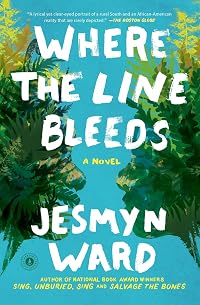
Jesmyn Ward was born in DeLisle, Mississippi in 1977. She became a writer after the death of her brother by a drunk driver. She received a MFA in creative writing from the University of Michigan. Her books include the novel Where the Line Bleeds, the memoir Men We Reaped, and the nonfiction work The Fire This Time: A New Generation Speaks about show more Race. Salvage the Bones won the National Book Award in Fiction in 2011 and an Alex Award in 2012. Sing, Unburied, Sing won the National Book Award in Fiction in 2017. She taught at University of New Orleans, the University of South Alabama, and Tulane University. (Bowker Author Biography) show less
All Editions
Some Editions
Awards and Honors
Distinctions
Work Relationships
Contains
Is an abridged version of
Is a reply to
Common Knowledge
- Original title
- The Fire This Time: A New Generation Speaks About Race
- Original publication date
- 2016
- Epigraph
- The Tradition: Jericho Brown: Aster. Nasturtium. Delphinium. We thought / Fingers in dirt meant it was our dirt, learning / Names in heat, in elements classical / Philosophers said could change us. Star Gazer. / Foxglove. Sum... (show all)mer seemed to bloom against the will / Of the sun, which news reports claimed flamed hotter / On this planet than when our dead fathers / Wiped sweat from their necks. Cosmos. Baby's Breath. / Men like me and my brothers filmed what we / Planted for proof we existed before / Too late, sped the video to see blossoms / Brought in seconds, colors you expect in poems / Where the world ends, everything cut down. / John Crawford. Eric Garner. Mike Brown.
- First words
- After George Zimmerman shot and killed Trayvon Martin on February 26, 2012, I took to twitter.
- Last words
- (Click to show. Warning: May contain spoilers.)When that day of jubilee finally arrives, all of us will be there with you, walking, heads held high, crowns a-glitter, because we do have a right to be here.
Classifications
- Genre
- Nonfiction
- DDC/MDS
- 305.896 — Society, government, & culture Social sciences, sociology & anthropology Social group - Age, Gender, Ethnicity Ethnic and national groups Other ethnic and national groups Africans and people of African descent; Blacks of African origin
- LCC
- E185.615 .F526 — History of the United States United States
- BISAC
Statistics
- Members
- 1,028
- Popularity
- 25,276
- Reviews
- 32
- Rating
- (4.30)
- Languages
- English, Spanish
- Media
- Paper, Audiobook, Ebook
- ISBNs
- 12
- UPCs
- 1
- ASINs
- 3