
Honorée Fanonne Jeffers
Author of The Love Songs of W.E.B. Du Bois
About the Author
Honoree Fanonne Jeffers teaches at the University of Oklahoma.
Image credit: from Publishers Weekly
Works by Honorée Fanonne Jeffers
Sister Lilith {short story} 2 copies
The Gospel of Barbecue 1 copy
Associated Works
The Fire This Time: A New Generation Speaks about Race (2016) — Contributor — 1,016 copies, 32 reviews
Dark Matter: A Century of Speculative Fiction from the African Diaspora (2000) — Contributor — 594 copies, 11 reviews
African American Poetry: 250 Years of Struggle and Song (2020) — Contributor — 234 copies, 4 reviews
Angles of Ascent: A Norton Anthology of Contemporary African American Poetry (2013) — Contributor — 47 copies
Catch the Fire!!!: A Cross-Generational Anthology of Contemporary African-American Poetry (1998) — Contributor — 35 copies, 1 review
Gathering Ground: A Reader Celebrating Cave Canem's First Decade (2006) — Contributor — 30 copies, 1 review
What God Is Honored Here?: Writings on Miscarriage and Infant Loss by and for Native Women and Women of Color (2019) — Contributor — 27 copies, 2 reviews
The Future Has an Appointment with the Dawn (2011) — Introduction, some editions — 15 copies, 1 review
Another South: Experimental Writing in the South (Modern & Contemporary Poetics) (2002) — Contributor — 6 copies
Tagged
Common Knowledge
- Canonical name
- Jeffers, Honorée Fanonne
- Birthdate
- 1967
- Gender
- female
- Education
- University of Alabama (M.F.A.|1996)
Talladega College (BA|1989) - Occupations
- poet
novelist
professor
critic - Organizations
- University of Oklahoma
- Awards and honors
- Harper Lee Award for Literary Distinction (2018)
NAACP Image Award for Outstanding Literary Work – Poetry (2021)
Alabama Writers Hall of Fame (2020) - Agent
- Sarah Burnes
- Relationships
- Jeffers, Trellie James (mother)
Jeffers, Lance (father)
Jeffers, Valjeanne (sister) - Nationality
- USA
- Birthplace
- Kokomo, Indiana, USA
- Places of residence
- Alabama, USA
Durham, North Carolina, USA
Atlanta, Georgia, USA
Norman, Oklahoma, USA - Associated Place (for map)
- USA
Members
Reviews
4.5 stars
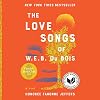
Alright -- I'm going to start with a disclaimer. I did not know that it was 816 pages when I decided to listen to it as an audiobook. I'm not always as attentive when consuming literature as an audiobook, and my experience is sometimes too influenced by the voice actors, particularly if I don't enjoy their reading. That out of the way....
This is immense and epic, and digs deep into themes of addiction, racism, colorism (within Black communities too), historical relations between show more indigenous peoples and African Americans, sexual abuse, generational trauma...and more. It is a LOT for one novel to hold, and I wonder if it would have benefitted if trilogized (I just made up a word, I know). I can see, on the other hand, where that might have been a disadvantage -- threads would have been lost, as well as momentum.
The historical narratives resonated the most for me (hi, historian here!), and I appreciated the juxtaposition of Ailey reading about Samuel Prichard in the archives/ interviewing her relatives against the historical narrative so that we weren't just getting Ailey's perspective. The story is brutal in so many ways, and more importantly, it is true in its brutality. What the book has to tell us regarding generational trauma and how it can play out in a variety of ways, is invaluable. The novel is so massively interwoven, it is hard to say where cuts could have been made, but I do have a few things that diminished my experience of the book.
First, I really didn't care for the excruciating detail in describing Ailey's graduate studies. This may be totally personal. I have a PhD, and I'm a history professor, so perhaps I was having my own issues with grad school trauma, but I really didn't want to hear about footnotes versus endnotes. There were a lot of WHO CARES moments for me here. I get that not everyone is acquainted with the process of archival research, but I found these details a distraction from the more important substance of the research she was doing, as well as what she was processing. I also get that there was some mentoring happening with the cleaning of Dr. Oludara's office, but again -- I didn't need the details.
Second, in a case of the details were important but I only needed them once: Gandy. I had no issue with revisiting the situation generally, but playing out the scene, with similar descriptions, over and over and over? I don't generally need trigger warnings, and I am privileged I have never had to deal with that kind of trauma, but I started to feel so beaten down by the *description* (it is painful and disgusting) that it started to feel more about the shocking rawness of the image, rather than the shockwaves of the trauma. I can't imagine that my fatigue, however, is anything like the fatigue suffered by Lydia, Ailey, and Coco. This may be a very different experience from those who have lived through similar experiences, so I tread lightly considering this criticism. It may be more of a personal response to something that might be essential for other readers. For contrast, with a similar situation, we hear about Samuel's sins repeatedly (and effectively), but its always in the service of understanding the fuller picture of the tragedy--the forced silence (when life is on the line), the choices no human being should ever be forced to make, and the overarching theme of power.
My favorite character was Uncle Root, and I loved how he was voiced in the audiobook. You could hear his care, his intelligence, his pride in who he was, and his pride in Ailey. He served an important purpose for me as well -- occasionally I just didn't like Ailey very much. I needed Root's unconditional love of her to remind me how flawed we all are, and that like it or not, I probably had some real "moments" myself in my twenties. I struggled with the voicing of Ailey in the audiobook-- I felt her "little girl" voice/narrative never really left and I think that was part of my problem. I don't know if it was intentional, but it grated a bit.
I want to recognize my positionality here (white woman), because I think it is important. There's a lot in this book that I've never experienced, and likely never will experience. But that may be exactly the reason to read this book. The criticisms I mention above are quibbles relative to how this "epochal saga" (as Kirkus Reviews would have it) operates on SO MANY different levels: multi-generational history, coming-of-age story, family dynamics, polemics of perspectives (e.g. Du Bois v. Booker T. Washington)...just to name a few. There are stories wrapped in stories wrapped in stories, demanding an attention and care from the reader that few books even dare to achieve these days. The archival epilogue is a must read/listen for its beautiful array of sources -- do NOT skip it. show less
Alright -- I'm going to start with a disclaimer. I did not know that it was 816 pages when I decided to listen to it as an audiobook. I'm not always as attentive when consuming literature as an audiobook, and my experience is sometimes too influenced by the voice actors, particularly if I don't enjoy their reading. That out of the way....
This is immense and epic, and digs deep into themes of addiction, racism, colorism (within Black communities too), historical relations between show more indigenous peoples and African Americans, sexual abuse, generational trauma...and more. It is a LOT for one novel to hold, and I wonder if it would have benefitted if trilogized (I just made up a word, I know). I can see, on the other hand, where that might have been a disadvantage -- threads would have been lost, as well as momentum.
The historical narratives resonated the most for me (hi, historian here!), and I appreciated the juxtaposition of Ailey reading about Samuel Prichard in the archives/ interviewing her relatives against the historical narrative so that we weren't just getting Ailey's perspective. The story is brutal in so many ways, and more importantly, it is true in its brutality. What the book has to tell us regarding generational trauma and how it can play out in a variety of ways, is invaluable. The novel is so massively interwoven, it is hard to say where cuts could have been made, but I do have a few things that diminished my experience of the book.
First, I really didn't care for the excruciating detail in describing Ailey's graduate studies. This may be totally personal. I have a PhD, and I'm a history professor, so perhaps I was having my own issues with grad school trauma, but I really didn't want to hear about footnotes versus endnotes. There were a lot of WHO CARES moments for me here. I get that not everyone is acquainted with the process of archival research, but I found these details a distraction from the more important substance of the research she was doing, as well as what she was processing. I also get that there was some mentoring happening with the cleaning of Dr. Oludara's office, but again -- I didn't need the details.
Second, in a case of the details were important but I only needed them once: Gandy. I had no issue with revisiting the situation generally, but playing out the scene, with similar descriptions, over and over and over? I don't generally need trigger warnings, and I am privileged I have never had to deal with that kind of trauma, but I started to feel so beaten down by the *description* (it is painful and disgusting) that it started to feel more about the shocking rawness of the image, rather than the shockwaves of the trauma. I can't imagine that my fatigue, however, is anything like the fatigue suffered by Lydia, Ailey, and Coco. This may be a very different experience from those who have lived through similar experiences, so I tread lightly considering this criticism. It may be more of a personal response to something that might be essential for other readers. For contrast, with a similar situation, we hear about Samuel's sins repeatedly (and effectively), but its always in the service of understanding the fuller picture of the tragedy--the forced silence (when life is on the line), the choices no human being should ever be forced to make, and the overarching theme of power.
My favorite character was Uncle Root, and I loved how he was voiced in the audiobook. You could hear his care, his intelligence, his pride in who he was, and his pride in Ailey. He served an important purpose for me as well -- occasionally I just didn't like Ailey very much. I needed Root's unconditional love of her to remind me how flawed we all are, and that like it or not, I probably had some real "moments" myself in my twenties. I struggled with the voicing of Ailey in the audiobook-- I felt her "little girl" voice/narrative never really left and I think that was part of my problem. I don't know if it was intentional, but it grated a bit.
I want to recognize my positionality here (white woman), because I think it is important. There's a lot in this book that I've never experienced, and likely never will experience. But that may be exactly the reason to read this book. The criticisms I mention above are quibbles relative to how this "epochal saga" (as Kirkus Reviews would have it) operates on SO MANY different levels: multi-generational history, coming-of-age story, family dynamics, polemics of perspectives (e.g. Du Bois v. Booker T. Washington)...just to name a few. There are stories wrapped in stories wrapped in stories, demanding an attention and care from the reader that few books even dare to achieve these days. The archival epilogue is a must read/listen for its beautiful array of sources -- do NOT skip it. show less
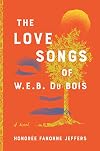
This gorgeous, provocative novel moves back and forth between centuries, weaving together the personal story of the main narrator, Ailey Pearl Garfield, and a historical chronicle of her enslaved ancestors (which are called “Song” throughout the book), bringing us rich, unforgettable characters of several ethnicities and races: Creek, African, European, and many mixtures thereof. The storylines eventually come together when Ailey, a Ph.D. candidate in history, is researching her doctoral show more thesis. Even the way in which Ms. Jeffers threads these stories together is fresh and quite ingenious, introducing characters at the margins of one segment who become prominent elsewhere, and as her Ailey character observes: “Only half the history has been told. The question is the point.” The horrors of life in the nineteenth-century plantation culture are not sugar-coated, nor are the twentieth-century personal trials and tragedies in Ailey’s life, yet despite the gruesome and despicable acts, the unnecessary deaths and tribulations, it reads like an epic adventure tale.
Also, I loved the book title’s play on the classic T.S. Eliot poem, “The Love Song of J. Alfred Prufrock,” which is a navel-gazing tale of a white man that is laced with the themes of isolation, alienation, depression, and the erosion of reliance on traditional authority. These same themes may be juxtaposed with the lives of the Black, often mixed-race, characters in Ms. Jeffer’s novel, not so linearly, but reflecting what W.E.B. Du Bois called, in his seminal “The Souls of Black Folk,” the double-consciousness of Black people in the United States – both African and American. Also very clever was the use of different voices: the third-person plural voice of the Creek and Cherokee natives who occupied the land that we came to know as Georgia before the Jim Ogelthorpe and his British settlers arrived; the immediate first-person narrative of Ailey, and the third-person omniscient viewpoint of Ailey’s family, particularly of her mother, Belle, and her sister, Lydia. Although predicted the ending of Ailey’s quest, that did not distract in any way from the story or the telling of it. There are no perfect characters here, just as there are not perfect persons in real life. And, yet we love them nevertheless. So moving. show less
Also, I loved the book title’s play on the classic T.S. Eliot poem, “The Love Song of J. Alfred Prufrock,” which is a navel-gazing tale of a white man that is laced with the themes of isolation, alienation, depression, and the erosion of reliance on traditional authority. These same themes may be juxtaposed with the lives of the Black, often mixed-race, characters in Ms. Jeffer’s novel, not so linearly, but reflecting what W.E.B. Du Bois called, in his seminal “The Souls of Black Folk,” the double-consciousness of Black people in the United States – both African and American. Also very clever was the use of different voices: the third-person plural voice of the Creek and Cherokee natives who occupied the land that we came to know as Georgia before the Jim Ogelthorpe and his British settlers arrived; the immediate first-person narrative of Ailey, and the third-person omniscient viewpoint of Ailey’s family, particularly of her mother, Belle, and her sister, Lydia. Although predicted the ending of Ailey’s quest, that did not distract in any way from the story or the telling of it. There are no perfect characters here, just as there are not perfect persons in real life. And, yet we love them nevertheless. So moving. show less
The Love Songs of W.E.B. Du Bois: An Oprah's Book Club Pick (Oprahs Book Club 2.0) by Honorée Fanonne Jeffers
4.5⭐️
“We are the earth, the land. The tongue that speaks and trips on the names of the dead as it dares to tell these stories of a woman’s line. Her people and her dirt, her trees, her water.”
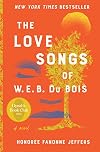
The Love Songs of W.E.B. Du Bois by Honoree Fanonne Jeffers is a sweeping multigenerational saga that delves deep into the roots, the land , the ancestry and legacy of a mixed race African American family . The narrative switches between the past in the "Song" segments of the novel and the show more present day story narrated by Ailey Pearl Garfield .While the past segments span generations of her mother's family in Chicasetta in present day Georgia, the present day narrative starts with Ailey the youngest child of a doctor and a school teacher with two older sisters being raised in the 'city'.
When Ailey as an adult embarks on researching her family's history, her lineage is traced to its indigenous roots in the Creek village and the land which was taken from its indigenous owners only to be allotted to settlers who bring with them slave labor from Africa to work the plantations they build on the very same land in pre-Civil War America.
This is a lengthy read and to be honest I was intimidated by the sheer volume of this book which is why I had put it aside in favor of other books . But I was pleasantly surprised at how engaging this novel was and the amazing journey this story takes us on spanning decades of the history of a nation and its people . Ailey's personal experiences with abuse, loss, grief and search for her own purpose in life and a place in her own family connects with the stories of those who came before her -racially diverse generations of grandparents, aunts, uncles , cousins and extended family. While Ailey's research takes her through a history of slavery and oppression, trauma and abuse, the present day narrative delves into issues pertaining to feminism, education, racial identity , shared trauma, sexual identity and substance abuse.
Compelling and immersive, emotional and informative , The Love Songs of W.E.B. Du Bois is an experience that I would definitely recommend. show less
“We are the earth, the land. The tongue that speaks and trips on the names of the dead as it dares to tell these stories of a woman’s line. Her people and her dirt, her trees, her water.”
The Love Songs of W.E.B. Du Bois by Honoree Fanonne Jeffers is a sweeping multigenerational saga that delves deep into the roots, the land , the ancestry and legacy of a mixed race African American family . The narrative switches between the past in the "Song" segments of the novel and the show more present day story narrated by Ailey Pearl Garfield .While the past segments span generations of her mother's family in Chicasetta in present day Georgia, the present day narrative starts with Ailey the youngest child of a doctor and a school teacher with two older sisters being raised in the 'city'.
When Ailey as an adult embarks on researching her family's history, her lineage is traced to its indigenous roots in the Creek village and the land which was taken from its indigenous owners only to be allotted to settlers who bring with them slave labor from Africa to work the plantations they build on the very same land in pre-Civil War America.
This is a lengthy read and to be honest I was intimidated by the sheer volume of this book which is why I had put it aside in favor of other books . But I was pleasantly surprised at how engaging this novel was and the amazing journey this story takes us on spanning decades of the history of a nation and its people . Ailey's personal experiences with abuse, loss, grief and search for her own purpose in life and a place in her own family connects with the stories of those who came before her -racially diverse generations of grandparents, aunts, uncles , cousins and extended family. While Ailey's research takes her through a history of slavery and oppression, trauma and abuse, the present day narrative delves into issues pertaining to feminism, education, racial identity , shared trauma, sexual identity and substance abuse.
Compelling and immersive, emotional and informative , The Love Songs of W.E.B. Du Bois is an experience that I would definitely recommend. show less
“You should not expect a monster to change, even at the end of a fairy tale. For in a children’s story, the monster must be killed. If he remains alive, his nature will be limned. There is no gentling of an abomination.”
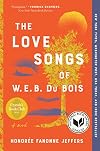
At the center of this sprawling epic, is Ailey Pearl Garfield, a young black woman. She is struggling with her own identity and where she fits in with her ancestral past. To aid in this process, she becomes an historian and on her free time she begins to unearth her show more family’s deep-ranging connections- from their roots in Africa, to their enslavement and arrival on the Georgia coast. She discovers that her ancestors are a complex mix of black, white and indigenous blood.
This is such an impressive debut and how Jeffers keeps the multiple timelines flowing is a marvel. She also does not flinch from the horrors of slavery, especially in regard to the women and children, which can be very disturbing to read at times. Sure, the novel could have used a bit of editing but it remains a terrific achievement. show less
At the center of this sprawling epic, is Ailey Pearl Garfield, a young black woman. She is struggling with her own identity and where she fits in with her ancestral past. To aid in this process, she becomes an historian and on her free time she begins to unearth her show more family’s deep-ranging connections- from their roots in Africa, to their enslavement and arrival on the Georgia coast. She discovers that her ancestors are a complex mix of black, white and indigenous blood.
This is such an impressive debut and how Jeffers keeps the multiple timelines flowing is a marvel. She also does not flinch from the horrors of slavery, especially in regard to the women and children, which can be very disturbing to read at times. Sure, the novel could have used a bit of editing but it remains a terrific achievement. show less
Lists
Awards


You May Also Like


Associated Authors
Statistics
- Works
- 11
- Also by
- 21
- Members
- 1,792
- Popularity
- #14,356
- Rating
- 4.3
- Reviews
- 55
- ISBNs
- 37
- Languages
- 3
- Favorited
- 1