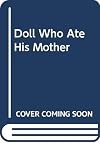
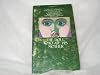
The Doll Who Ate His Mother
by Ramsey Campbell
On This Page
Tags
Recommendations





















Member Reviews
This is a tough book to rate, but when you understand this is Ramsey Campbell’s debut novel, the good and bad points fall into place. If you love Campbell’s work this is a glimpse of a fledgling writer. If you’ve never read Campbell before, don’t start with this for the author went on to bigger and better things garnering recognition well deserved. The story is also dated — understandably, written over 40 years ago. What people expected, accepted, and found frightening was entirely different back then. So was depth required. Both a horror story with satanic elements, and a thriller involving a disturbed boy perhaps corrupted by the perverse beliefs of those who raised him, alas, the book’s greatest flaw is the lack of menace show more (for a modern audience). I also spotted what should have been a surprise, but such is an annoying habit of mine. Some will dislike the surreal sauntering sensation the book invokes, but this lends a strange uneasy appeal to the narrative and can be forgiven as a writer finding his voice — and a distinctive voice it now is to those who appreciate his work. Still, there were moments when simple everyday things came across as overly described to where I had to read a sentence twice. Ultimately, the book fails to fall into the horror category for me, and it lacks a depth that left me feeling there’s more to explore, leaving characters shallow. The best and spookiest scene comes toward the end and takes place in a basement, and something about this still lingers, like seeing only the surface of a story through a murky window pane. show less
I don’t think I’ve ever seen the word “Georgian” used so much in a book! Seriously!
As for the story itself, well, let me just say, the title might be spookier than the tale itself! The bad guy is creepy for sure, but he can't carry the whole story. And the good guys are pretty dull. The main one, Clare, is such a strange character, that I never understood anything she did, and even at the end, I didn't know what to think about her. And that kind of sums up my feeling about this book, I don't know what to think about it. It's just a weird 284 page read.
As for the story itself, well, let me just say, the title might be spookier than the tale itself! The bad guy is creepy for sure, but he can't carry the whole story. And the good guys are pretty dull. The main one, Clare, is such a strange character, that I never understood anything she did, and even at the end, I didn't know what to think about her. And that kind of sums up my feeling about this book, I don't know what to think about it. It's just a weird 284 page read.
8475740650
Review coming soon on scifiandscary.com
Currently rereading this ... doing a Ramsey Campbell extravaganza of sorts.
Il n'est vraiment pas évident de parler de ce livre tant il est étrange et semble échapper à toute tentative de résumé ou d'explication... La poupée qui dévora sa mère est le premier roman de Ramsey Campbell, un des 'grands' de la littérature horrifique anglaise. Né à Liverpool en 1946, il est l'auteur d'une dizaine de romans et de plus de deux cents nouvelles. Campbell est injustement méconnu de ce coté de la manche, et c'est dommage car son écriture est riche et efficace. Il excelle dans la création d'atmosphères à la fois étranges et malsaines qui frappent le lecteur dès les premières pages. Ce premier roman en est une excellente preuve. L'histoire commence de manière originale et inquiétante, avec ce crime show more absurde et grotesque, le vol du bras d'un homme, qui enflamme l'imagination du lecteur. Mais l'enquête que va mener Clare pour trouver le bras de son frère la conduira très loin de ce à quoi on aurait pu s'attendre, elle ira jusqu'au confins de l'horreur et de la folie. Nous avons ici affaire à une véritable histoire de terreur. La tension monte dès les premières pages et ne cessera de monter au fur et à mesure qu'avance de l'enquête de l'héroïne. Pourtant le roman ne contient pas à proprement parler de scènes terrifiantes, mais il dégage une ambiance qui met le lecteur mal à l'aise, et ce tout au long du récit. Une ambiance étouffante et moite, qui semble coller au lecteur, tant et si bien que même après l'étrange final du livre, le sentiment de malaise et de gêne persistera encore. Campbell utilise des passages surréalistes, dont le livre regorge, et d'habiles descriptions qui nous présentent les maisons, les briques, la lumière, comme des entités vivantes pour désorienter son lecteur et maintenir un sentiment étrange tout au long du roman. Ainsi, même lorsque rien de terrifiant ne se produit, on est constamment sur nos gardes. L'auteur réutilisera les mêmes techniques narratives pour ses autres livres (notamment pour La secte sans nom (The nameless) un de ses romans les plus étranges, d'ailleurs brillamment adapté au cinéma par Jaume Balaguero), ce qui lui confère un style unique et très déroutant pour ses lecteurs. Lire un livre de Ramsey Campbell c'est toujours s'embarquer pour un voyage étrange vers une destination inconnue et terrifiante. show less
Aug 15, 2010French
Ratings
Members
- Recently Added By
Lists

Stephen King's Biggest Influences
46 works; 3 members
Nightmare Magazine's Top 100 Horror Books
100 works; 7 members

Stephen King's 'Danse Macabre' reading list
111 works; 25 members

Stephen King Danse Macabre Appendix Starred List
53 works; 1 member
Stephen King's Danse Macabre Full Appendix List
110 works; 2 members
BlackDog's Complete Paperbacks From Hell List
639 works; 3 members
Author Information

314+ Works 9,865 Members
John Ramsey Campbell was born January 4, 1946 in Liverpool, England. He is a horror fiction author and editor. At the age of 11 he wrote a collection called Ghostly Tales which was published as a special issue of Crypt of Cthulhu magazine titled- Ghostly Tales- Crypt of Cthulhu 6. He continued to write and later published his collection called The show more Inhabitant of the Lake and Less Welcome Tenants. At the suggestion of August Derleth, he rewrote many of his earliest stories, which he had originally set in the Massachusetts locales of Arkham, Dunwich and Innsmouth, and relocated them to English settings in and around the fictional Gloucestershire city of Brichester. The invented locale of Brichester was deeply influenced by Campbell's native Liverpool, and much of his later work is set in the real locales of Liverpool. In particular, his 2005 novel Secret Stories both exemplifies and satirizes Liverpoolian speech, characters and humor. John Campbell's titles include The Doll Who Ate His Mother, The One Safe Place , The Seven Days of Cain and The Last Revelation of Gla'aki. (Bowker Author Biography) show less
Some Editions
Awards and Honors
Awards
Common Knowledge
- Canonical title
- The Doll Who Ate His Mother
- Original publication date
- 1976
- Dedication
- for Kirby
a good agent; an even better friend - First words
- There were no taxis.
- Last words
- (Click to show. Warning: May contain spoilers.)Dorothy began to run, to outdistance the rain.
Classifications
- Genres
- Horror, Fiction and Literature, General Fiction, Fantasy
- DDC/MDS
- 823.914 — Literature & rhetoric English & Old English literatures English fiction 1900- 1901-1999 1945-1999
- LCC
- PZ4 — Language and Literature Fiction and juvenile belles lettres Fiction and juvenile belles lettres Fiction in English
- BISAC
Statistics
- Members
- 326
- Popularity
- 97,618
- Reviews
- 6
- Rating
- (3.30)
- Languages
- 5 — English, French, German, Italian, Spanish
- Media
- Paper
- ISBNs
- 18
- ASINs
- 4