On This Page
Description
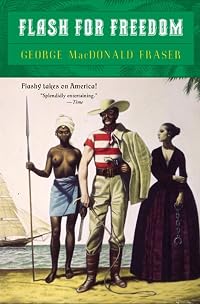
A game of cards leads Flashman from the jungle death-house of Dahomey to the slave state of Mississippi as he dabbles in the slave trade in Volume III of the Flashman Papers. When Flashman was inveigled into a game of pontoon with Disraeli and Lord George Bentinck, he was making an unconscious choice about his own future - would it lie in the House of Commons or the West African slave trade? Was there, for that matter, very much difference? Once again Flashman's charm, cowardice, treachery, show more lechery and fleetness of foot see the lovable rogue triumph by the skin of his chattering teeth. show lessTags
Recommendations
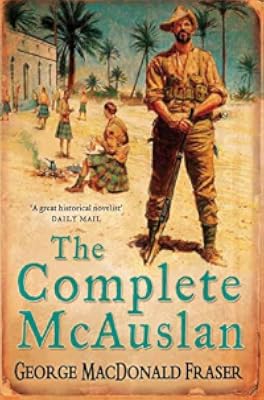
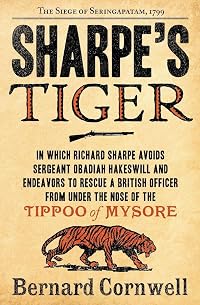
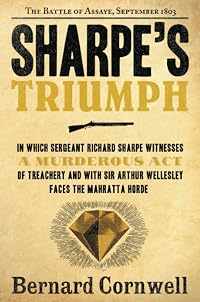
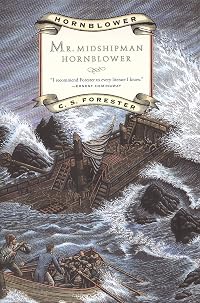









Member Recommendations
Member Reviews
To think that everything that happens in Flash for Freedom!, the third of the Flashman novels, arises out of a game of pontoon (with Benjamin Disraeli, no less) is testament to the writing abilities of author George MacDonald Fraser. The plotting is spectacular, and it is a wonder that ol' Flashy even gets into these messes, let alone gets out of them. He always seems like he's done for, but once again the jammy sod gets through his adventures essentially none the worse for wear, and usually having sampled the finest of the local women.
In some ways, Flash for Freedom! compares unfavourably to its two predecessors. For one, it has less laughs. To be sure, Flash is as shameless as ever (particularly with Cassy on page 275) but he spends show more much of the book in thrall to one force or another, whether under the watchful eye of a terrifying slave-ship captain, an American naval officer, Abraham Lincoln (yes, that's right), or various other players. Being the coward he is, he often errs on the side of caution and tries not to put his head above the parapet any more than he has to. This means he doesn't have the freedom to abuse his gift for lechery as much as he could in Flashman (where he romps through India and Afghanistan) and Royal Flash (where he was impersonating a prince, with all the power that commands). He also operates under a series of pseudonyms for the most part, so doesn't have to worry much about the damage his actions might do to the reputation of grand old Harry Flashman, patriot and war hero. The most amusing thing about the first Flashman book was how, no matter how shameless and cowardly he was, he always emerged to be (wrongly) thought of as a hero and upstanding gentleman. But by the end of Flash for Freedom!, no one involved is any the wiser as to who Flash really is. So yes, the laughs are rarer in this book, and this is in part because of Fraser's plotting. Whilst the plotting is ingenious, it does mean most of the time is spent getting Flashy into various scrapes and then out of them, rather than making the reader laugh.
But whilst it is not quite as uproariously funny as its predecessors, it is in some ways better. However, whether you are likely to think so depends solely on the reasons you have for reading the Flashman books. If you read them solely for laughs, Flash for Freedom! probably shouldn't be near the top of your list (though, as I have intimated, it does have its moments). But the Flashman series has always been more than just a comedic romp. The books are also cracking adventures, well-researched historical fiction and possessing of fully-realised characters. In these three regards, Flash for Freedom! represents the series well. The adventure is a strong one, taking him from England to the slave coast of Africa and then across the sea to the Caribbean then on to the USA, where he flits about the southern states. Both the fictional characters (Cassy was a treat) and the real-life historical figures (Abe Lincoln is awesome) are well-rendered.
But the greatest strength of Flash for Freedom! is its historical authenticity. Fraser has done his homework on the slave trade of the 1800s and there were things in this book which I hadn't known previously, even though I am a former history student. Slavery was more than just the common image of black people picking cotton in a field, or even about the horrors and indignities they suffered on the slave-ships and the plantations. Fraser does evoke this horror and humiliation of the human spirit (particularly through Cassy), but he also addresses the unseen side of the slave trade. He notes the corruption by which British and American businessmen and politicians would profit from this illegal trade (Flashy's father-in-law is a respectable businessman with one of his fingers in this particular rotten pie) and also the cancerous effect it had on the society as a whole (the trial at the end of the book becomes a farce as witnesses are intimidated, the judge is bought and the truth is shamelessly fudged). As one character remarks to Flashman on page 303: Oh, it's a fine, dirty business... the slime and corruption doesn't end on the slave deck, I can tell you." Fraser also confronts the fact - an uncomfortable fact, for some people - that the slave trade could not have existed and could not have thrived without the complicity of black tribes in Africa (see page 71) and raises, on the same page, a surprisingly socialist point about working conditions among whites in British industry at the time. This is real history: uncomfortable truths abound.
Some readers may find it hard to reconcile the above sentiments with the fact that Flashman indulges in all the depravities. He uses the 'n-word' with abandon and rapes some of the female slaves (at one point he lets it be known that slavers wanted their female slaves to be pregnant by a white man as 'mulatto' children fetched a higher price. Jesus Christ.) But he is a product of his time and of his circumstances; that does not make it right, and you may feel even guiltier about some of the funnier parts of the novel than you usually are, but if you're looking to the Flashman books for morality, then you're really in the wrong place. In my opinion, the casual, matter-of-fact approach by many of the characters (including Flashman) to the brutalities of slavery is more important than any sanitised politically-correct hand-wringing, as it shows just how easily people can be sucked into depravities and rationalise them if it is seen to be 'normal', as it was at the time. It also educates readers - and I'd wager, without judgement, that there are many avid readers of the Flashman series who'd never dream of picking up a history book - on the realities and complexities of the slave trade. And, make no mistake, the slave trade is still going on today. It might not be the same as in the mid-1800s, but tens of millions are still forced into slavery in the 21st century, and today's anti-slavery crusaders are much less prominent than the likes of Abraham Lincoln. That might seem a rather serious note on which to end a review of what is essentially an adventure-comedy-romp, but the Flashman series has always been much more than that, and Flash for Freedom! illustrates it perfectly." show less
In some ways, Flash for Freedom! compares unfavourably to its two predecessors. For one, it has less laughs. To be sure, Flash is as shameless as ever (particularly with Cassy on page 275) but he spends show more much of the book in thrall to one force or another, whether under the watchful eye of a terrifying slave-ship captain, an American naval officer, Abraham Lincoln (yes, that's right), or various other players. Being the coward he is, he often errs on the side of caution and tries not to put his head above the parapet any more than he has to. This means he doesn't have the freedom to abuse his gift for lechery as much as he could in Flashman (where he romps through India and Afghanistan) and Royal Flash (where he was impersonating a prince, with all the power that commands). He also operates under a series of pseudonyms for the most part, so doesn't have to worry much about the damage his actions might do to the reputation of grand old Harry Flashman, patriot and war hero. The most amusing thing about the first Flashman book was how, no matter how shameless and cowardly he was, he always emerged to be (wrongly) thought of as a hero and upstanding gentleman. But by the end of Flash for Freedom!, no one involved is any the wiser as to who Flash really is. So yes, the laughs are rarer in this book, and this is in part because of Fraser's plotting. Whilst the plotting is ingenious, it does mean most of the time is spent getting Flashy into various scrapes and then out of them, rather than making the reader laugh.
But whilst it is not quite as uproariously funny as its predecessors, it is in some ways better. However, whether you are likely to think so depends solely on the reasons you have for reading the Flashman books. If you read them solely for laughs, Flash for Freedom! probably shouldn't be near the top of your list (though, as I have intimated, it does have its moments). But the Flashman series has always been more than just a comedic romp. The books are also cracking adventures, well-researched historical fiction and possessing of fully-realised characters. In these three regards, Flash for Freedom! represents the series well. The adventure is a strong one, taking him from England to the slave coast of Africa and then across the sea to the Caribbean then on to the USA, where he flits about the southern states. Both the fictional characters (Cassy was a treat) and the real-life historical figures (Abe Lincoln is awesome) are well-rendered.
But the greatest strength of Flash for Freedom! is its historical authenticity. Fraser has done his homework on the slave trade of the 1800s and there were things in this book which I hadn't known previously, even though I am a former history student. Slavery was more than just the common image of black people picking cotton in a field, or even about the horrors and indignities they suffered on the slave-ships and the plantations. Fraser does evoke this horror and humiliation of the human spirit (particularly through Cassy), but he also addresses the unseen side of the slave trade. He notes the corruption by which British and American businessmen and politicians would profit from this illegal trade (Flashy's father-in-law is a respectable businessman with one of his fingers in this particular rotten pie) and also the cancerous effect it had on the society as a whole (the trial at the end of the book becomes a farce as witnesses are intimidated, the judge is bought and the truth is shamelessly fudged). As one character remarks to Flashman on page 303: Oh, it's a fine, dirty business... the slime and corruption doesn't end on the slave deck, I can tell you." Fraser also confronts the fact - an uncomfortable fact, for some people - that the slave trade could not have existed and could not have thrived without the complicity of black tribes in Africa (see page 71) and raises, on the same page, a surprisingly socialist point about working conditions among whites in British industry at the time. This is real history: uncomfortable truths abound.
Some readers may find it hard to reconcile the above sentiments with the fact that Flashman indulges in all the depravities. He uses the 'n-word' with abandon and rapes some of the female slaves (at one point he lets it be known that slavers wanted their female slaves to be pregnant by a white man as 'mulatto' children fetched a higher price. Jesus Christ.) But he is a product of his time and of his circumstances; that does not make it right, and you may feel even guiltier about some of the funnier parts of the novel than you usually are, but if you're looking to the Flashman books for morality, then you're really in the wrong place. In my opinion, the casual, matter-of-fact approach by many of the characters (including Flashman) to the brutalities of slavery is more important than any sanitised politically-correct hand-wringing, as it shows just how easily people can be sucked into depravities and rationalise them if it is seen to be 'normal', as it was at the time. It also educates readers - and I'd wager, without judgement, that there are many avid readers of the Flashman series who'd never dream of picking up a history book - on the realities and complexities of the slave trade. And, make no mistake, the slave trade is still going on today. It might not be the same as in the mid-1800s, but tens of millions are still forced into slavery in the 21st century, and today's anti-slavery crusaders are much less prominent than the likes of Abraham Lincoln. That might seem a rather serious note on which to end a review of what is essentially an adventure-comedy-romp, but the Flashman series has always been much more than that, and Flash for Freedom! illustrates it perfectly." show less
It's really hard to review this entry in the adventures of Harry Flashman. On the one hand it is researched well enough to make the time and place feel authentic (America in the mid-19th Century), and the various perils and awkward moments confronted by Flashman are some of the best in the series (court room drama, spies, slave ship battles, the underground railroad!) but the racism and rampant sexism are difficult to read.
One of the defining characteristics of the Flashman papers is how Fraser manages to put distance between Harry Flashman and the reader so that we are encouraged to view him as despicable and much of the humor comes from watching how this low character fails upwards. So when it comes to the slave trade a similar show more distance is created between the reader and that subject. The racist attitudes and "common sense" bigotry of the time period all feel accurate. This is how a society engages in justifying slavery, even in the cavalier no big deal racism of our hero.
Fraser's method of exposing the details of the middle passage and the horrendous acts slavers were capable of committing while simultaneously describing Harry Flashman's idiotic moral views walks a very interesting psychological tightrope. By allowing the reader to relax about Flashman's status as a jerk (it is never a question in these novels: he's a jerk) Fraser frees the reader to enjoy the very well written genre elements of the novel. We can rest, assured that slavery in the inhumane details described here are a form of evil and we can come away from an adventure novel with that as a legitimate backdrop without the burden of it being dramatic distance necessary for our protagonist to come. Flashman doesn't really do moral takeaways, ever, but as readers we don't need him to. He can keep on being Flashman while we come away disturbed by the setting he experienced. show less
One of the defining characteristics of the Flashman papers is how Fraser manages to put distance between Harry Flashman and the reader so that we are encouraged to view him as despicable and much of the humor comes from watching how this low character fails upwards. So when it comes to the slave trade a similar show more distance is created between the reader and that subject. The racist attitudes and "common sense" bigotry of the time period all feel accurate. This is how a society engages in justifying slavery, even in the cavalier no big deal racism of our hero.
Fraser's method of exposing the details of the middle passage and the horrendous acts slavers were capable of committing while simultaneously describing Harry Flashman's idiotic moral views walks a very interesting psychological tightrope. By allowing the reader to relax about Flashman's status as a jerk (it is never a question in these novels: he's a jerk) Fraser frees the reader to enjoy the very well written genre elements of the novel. We can rest, assured that slavery in the inhumane details described here are a form of evil and we can come away from an adventure novel with that as a legitimate backdrop without the burden of it being dramatic distance necessary for our protagonist to come. Flashman doesn't really do moral takeaways, ever, but as readers we don't need him to. He can keep on being Flashman while we come away disturbed by the setting he experienced. show less
It's really hard to review this entry in the adventures of Harry Flashman. On the one hand it is researched well enough to make the time and place feel authentic (America in the mid-19th Century), and the various perils and awkward moments confronted by Flashman are some of the best in the series (court room drama, spies, slave ship battles, the underground railroad!) but the racism and rampant sexism are difficult to read.
One of the defining characteristics of the Flashman papers is how Fraser manages to put distance between Harry Flashman and the reader so that we are encouraged to view him as despicable and much of the humor comes from watching how this low character fails upwards. So when it comes to the slave trade a similar show more distance is created between the reader and that subject. The racist attitudes and "common sense" bigotry of the time period all feel accurate. This is how a society engages in justifying slavery, even in the cavalier no big deal racism of our hero.
Fraser's method of exposing the details of the middle passage and the horrendous acts slavers were capable of committing while simultaneously describing Harry Flashman's idiotic moral views walks a very interesting psychological tightrope. By allowing the reader to relax about Flashman's status as a jerk (it is never a question in these novels: he's a jerk) Fraser frees the reader to enjoy the very well written genre elements of the novel. We can rest, assured that slavery in the inhumane details described here are a form of evil and we can come away from an adventure novel with that as a legitimate backdrop without the burden of it being dramatic distance necessary for our protagonist to come. Flashman doesn't really do moral takeaways, ever, but as readers we don't need him to. He can keep on being Flashman while we come away disturbed by the setting he experienced. show less
One of the defining characteristics of the Flashman papers is how Fraser manages to put distance between Harry Flashman and the reader so that we are encouraged to view him as despicable and much of the humor comes from watching how this low character fails upwards. So when it comes to the slave trade a similar show more distance is created between the reader and that subject. The racist attitudes and "common sense" bigotry of the time period all feel accurate. This is how a society engages in justifying slavery, even in the cavalier no big deal racism of our hero.
Fraser's method of exposing the details of the middle passage and the horrendous acts slavers were capable of committing while simultaneously describing Harry Flashman's idiotic moral views walks a very interesting psychological tightrope. By allowing the reader to relax about Flashman's status as a jerk (it is never a question in these novels: he's a jerk) Fraser frees the reader to enjoy the very well written genre elements of the novel. We can rest, assured that slavery in the inhumane details described here are a form of evil and we can come away from an adventure novel with that as a legitimate backdrop without the burden of it being dramatic distance necessary for our protagonist to come. Flashman doesn't really do moral takeaways, ever, but as readers we don't need him to. He can keep on being Flashman while we come away disturbed by the setting he experienced. show less
The recent death of George McDonald Fraser has brought a close (maybe permanent, maybe not?) to this delightful series of books. I have had the pleasure of following this series every since the release of the first book back in the sixties. The Flashman novels combine history (including substantial endnotes) with sex, action, adventure and the secret pleasure of enjoying the exploits of one of the most notoriously popular non-politically correct characters of 20th Century literature. Flashman is a womanizer, a coward, a scoundrel and a cheat, but in the novels, which are all narrated by Flashman himself, he is utterly honest with his readers. He is a man not proud of his faults, but certainly unabashed about them.
The Flashman novels show more could be dismissed as sensationalized light reading , but Fraser cleverly tied his character into most of the major events of the last sixty years of the nineteenth century, a Victorian Zelig or Forrest Gump. Flashman casually mentions this minor detail or that simple observation, then Fraser in his assumed role as editor of the Flashman papers meticulously explains in the endnotes how these mentions by Flashman confirm the truth of his narrative, since only if Flashman was there could he have known about this fact or that. Fraser's endnotes also round out the historic details of the narrative, giving background and elaboration to the history-as-I-lived-it tales told by Flashman. It all works wonderfully, even if you somewhat suspect that some details are being outrageously fabricated.
I very strongly recommend these books to anyone who has an interest in history and is willing to keep an open mind towards the womanizing and the language (the n-word appears quite a bit, but completely in character for Flashman). I would suggest the best way to read them is in order of publication. This doesn't follow Flashman's own life chronology, but the books published later often make reference to previous editions of the "Flashman Papers" and so is more fun for the reader to follow. show less
The Flashman novels show more could be dismissed as sensationalized light reading , but Fraser cleverly tied his character into most of the major events of the last sixty years of the nineteenth century, a Victorian Zelig or Forrest Gump. Flashman casually mentions this minor detail or that simple observation, then Fraser in his assumed role as editor of the Flashman papers meticulously explains in the endnotes how these mentions by Flashman confirm the truth of his narrative, since only if Flashman was there could he have known about this fact or that. Fraser's endnotes also round out the historic details of the narrative, giving background and elaboration to the history-as-I-lived-it tales told by Flashman. It all works wonderfully, even if you somewhat suspect that some details are being outrageously fabricated.
I very strongly recommend these books to anyone who has an interest in history and is willing to keep an open mind towards the womanizing and the language (the n-word appears quite a bit, but completely in character for Flashman). I would suggest the best way to read them is in order of publication. This doesn't follow Flashman's own life chronology, but the books published later often make reference to previous editions of the "Flashman Papers" and so is more fun for the reader to follow. show less
Our intrepid hero, Harry Flashman, is back for volume three of the Flashman Papers, a narrative of the life and times of one of the most ne’er-do-well wastrels to ever grace the pages of a published autobiography.
This installment picks up where the second volume left off; Harry returns from his Continental adventures, having matched wits with one of the greatest statesmen of the 19th century, Otto von Bismarck, and changed the course of European history as a result. Soon, however, Flashman once again finds himself in a pickle, as a result of his roguish behavior. Forced to flee polite society until the resulting scandal blows over, Flash is relegated to crewing aboard a slaver, as it plies its trade on the African subcontinent and show more into Caribbean waters.
Following capture by the U. S. Navy, his adventures continue in the American South, where he is constantly on the move, just one step ahead of his presumptive captors. As has become the custom in Harry’s autobiographies, well known historical events pepper his experiences, as Abraham Lincoln plays a starring role in this adventure.
As in the previous two Flashman novels, our Harry is revealed as the premier coward and opportunist of his era; faults which he quite willingly admits and even boasts of. In one of his numerous, desperate scrapes, his self directed exhortation captures the true Flashman spirit:
“…-bristle up the courage of the cornered rat, put on the bold front, and to hell with them. Bluff, my boy- bluff, shift and lie for the sake of your neck and the honour of Old England.”
Uproariously funny and entertaining, this installment is every bit the equal of its predecessors. show less
This installment picks up where the second volume left off; Harry returns from his Continental adventures, having matched wits with one of the greatest statesmen of the 19th century, Otto von Bismarck, and changed the course of European history as a result. Soon, however, Flashman once again finds himself in a pickle, as a result of his roguish behavior. Forced to flee polite society until the resulting scandal blows over, Flash is relegated to crewing aboard a slaver, as it plies its trade on the African subcontinent and show more into Caribbean waters.
Following capture by the U. S. Navy, his adventures continue in the American South, where he is constantly on the move, just one step ahead of his presumptive captors. As has become the custom in Harry’s autobiographies, well known historical events pepper his experiences, as Abraham Lincoln plays a starring role in this adventure.
As in the previous two Flashman novels, our Harry is revealed as the premier coward and opportunist of his era; faults which he quite willingly admits and even boasts of. In one of his numerous, desperate scrapes, his self directed exhortation captures the true Flashman spirit:
“…-bristle up the courage of the cornered rat, put on the bold front, and to hell with them. Bluff, my boy- bluff, shift and lie for the sake of your neck and the honour of Old England.”
Uproariously funny and entertaining, this installment is every bit the equal of its predecessors. show less
The character of Flash is pure scoundrel. MacDonald writes about him in such a way to amuse and entertain the reader. It was a quick, succinct read. It was also easy to follow. Nevertheless, the book does not hold long-standing value in the larger scheme of what composes literature.
3 stars.
3 stars.
After a gambling scandal involving a woman (of course), Flashman is forced into the slave trade by his horrible father-in-law. Then he finds himself forced into rescuing slaves along the underground railroad. Along the way he meets Abraham Lincoln, who sees through that lying old Flashy, but likes him anyway. Although this is another raucous, gawdy, naughty Flashman adventure, Fraser doesn't neglect his history. If a callous old cad like Flashman can be horrified by the trade there may be hope for him yet.
Members
- Recently Added By
Lists

Best Historical Fiction
620 works; 257 members

Historical Fiction
889 works; 91 members

Best Satire
188 works; 29 members

Books Read in 2023
5,547 works; 145 members
Author Information

48+ Works 19,663 Members
Author George MacDonald Fraser was born April 2, 1925 in Carlisle. He was refused entrance to the medical faculty of Glasgow University, so he joined the army in 1943. He served as an infantryman with the 17th Indian Division of the XIVth Army in Burma, a lance corporal and was commissioned in the Gordon Highlanders. After the war, he became a show more sports reporter with the Carlisle Journal; and during this time, he met and married Kathleen Hetherington, a reporter from another paper. He worked as a reporter and sub-editor on the Cumberland News and then moved to Glasgow, in 1953, where he worked at the Glasgow Herald as a features editor and deputy editor. Fraser's first novel was "Flashman" (1969), which was followed by nine sequels, so far, that deal with different venues of the 19th century ranging from Russia, Borneo and China to the Great Plains of the America West. Some of the other titles in the Flashman Papers are "Royal Flash" (1970), "Flashman in the Great Game" (1975), "Flashman and the Redskins" (1982), and "Flashman and the Angel of the Lord" (1994). Some of his non-fiction work includes "The Steel Bonnets" (1971), which is a factual study of the Anglo-Scottish border thieves in the seventeenth century, and "Quartered Safe Out Here" (1992). Fraser has also written a number of screenplays that include "The Three Musketeers" (1973), "Royal Flash" (1975), "Octopussy" (1983), and "Return of the Musketeers" (1989). He has also written a series of short stories about Private McAuslan whose titles include "The General Danced at Dawn" (1970), "McAuslan in the Rough" (1974), and "The Sheik and the Dustbin and other McAuslan Stories" (1988). He died of cancer on January 2, 2008. (Bowker Author Biography) show less
Some Editions
Series

Work Relationships
Is contained in
Common Knowledge
- Canonical title
- Flash for Freedom!
- Original title
- Flash for Freedom!
- Original publication date
- 1971
- People/Characters
- Harry Paget Flashman; John Morrison; Captain John Charity Spring, M.A.; Cassie; Abraham Lincoln; Susie Willinck
- Important places
- New Orleans, Louisiana, USA; Louisiana, USA; Buffalo, New York, USA
- Important events
- Slavery in colonial times and after the American Revolution
- Dedication
- For Kath, a memento of
the long Saturday - First words
- When the first two packets of the Flashman Papers were published, in 1969 and 1970, there was some controversy over their authenticity.
- Last words
- (Click to show. Warning: May contain spoilers.)"Those who knew him, either as John Morrison of Paisley and this city, where he was formerly Deacon of Weavers in the Trades' House of Glasgow, or by the title to which he was raised by a gracious sovreign only in November last, will be united in mourning his sudden melancholy demise..."
- Original language
- English UK
Classifications
Statistics
- Members
- 1,209
- Popularity
- 20,495
- Reviews
- 21
- Rating
- (3.96)
- Languages
- Danish, English, German, Spanish
- Media
- Paper, Audiobook, Ebook
- ISBNs
- 25
- UPCs
- 1
- ASINs
- 23