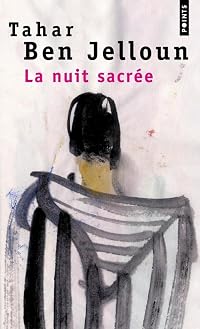
The Sacred Night
by Tahar Ben Jelloun
On This Page
Description
The Sacred Night continues the remarkable story Tahar Ben Jelloun began in The Sand Child. Mohammed Ahmed, a Moroccan girl raised as a boy in order to circumvent Islamic inheritance laws regarding female children, remains deeply conflicted about her identity. In a narrative that shifts in and out of reality moving between a mysterious present and a painful past, Ben Jelloun relates the events of Ahmed's adult life. Now calling herself Zahra, she renounces her role as only son and heir after show more her father's death and journeys through a dreamlike Moroccan landscape. A searing allegorical portrait of North African society, The Sacred Night uses Arabic fairy tales and surrealist elements to craft a stunning and disturbing vision of protest and rebellion against the strictures of hidebound traditions governing gender roles and sexuality. show lessTags
Recommendations



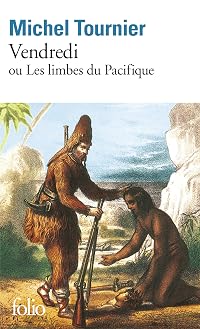
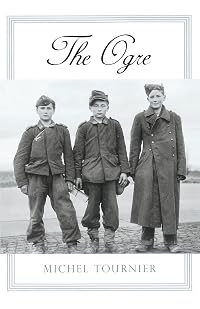
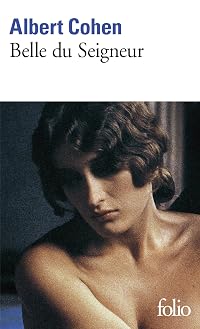







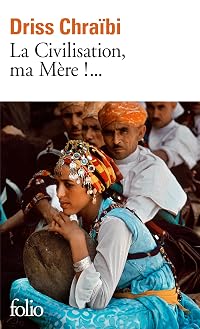

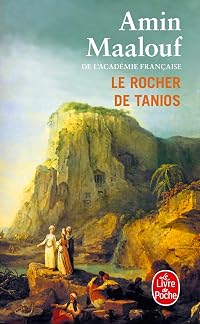
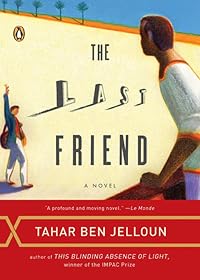


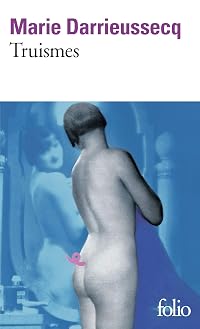






Member Recommendations


Member Reviews
The narrator, who has been brought up as a boy to secure an inheritance, as described in the earlier book L’enfant de sable, is released when her dying father makes a full confession to her during the 27th night of Ramadan (the Night of Power, Laylat al-Qadr). She cuts off all ties with her family and sets off to create a new life as a woman. Ben Jelloun makes a lot of play with religious and Arabian Nights imagery, as well as the symbolism of blindness and captivity.
This turns the book into a kind of Arab Orlando, with (sometimes brutally) realistic episodes intermingled with dreams and fables. There are scenes of rape and FGM, and although the author’s intention is clearly to make us look critically at relations between men and show more women in Moroccan society, by the standards of forty years later we would probably find that there is rather too much “male gaze” going on in the many sex scenes. Interesting, certainly for the time when it was written, but it perhaps hasn’t aged as well as it might have. show less
This turns the book into a kind of Arab Orlando, with (sometimes brutally) realistic episodes intermingled with dreams and fables. There are scenes of rape and FGM, and although the author’s intention is clearly to make us look critically at relations between men and show more women in Moroccan society, by the standards of forty years later we would probably find that there is rather too much “male gaze” going on in the many sex scenes. Interesting, certainly for the time when it was written, but it perhaps hasn’t aged as well as it might have. show less
Il romanzo con il quale lo scrittore marocchino Tahar Ben Jelloun vince nel 1987 il premio Goncourt narra di un uomo che nella notte “fatale” (la ventisettesima del mese di Ramadan in cui per i musulmani, i destini degli uomini "vengono suggellati“) chiama al letto di morte sua figlia. Circa venti anni prima, alla nascita di quell’ennesima femmina, egli aveva deciso che la bambina sarebbe stata cresciuta come fosse un maschio. Adesso l’uomo confessa alla figlia la sua colpa: ammette di aver commesso l’errore più grande della sua vita e le chiede perdono, consigliandole di andare a vivere altrove. Zahra è finalmente libera di essere donna, in un mondo in cui la donna è considerata inferiore. La dimensione onirica risulta show more eccessiva man mano che si procede nella lettura.
un padre, sul letto di morte, affranca il proprio figlio dalla schiavitù cui con la nascita lo aveva egli stesso condannato, restituendogli così la libertà. Una libertà del tutto speciale ed inquietante, tuttavia: quella di riprendersi "ufficialmente" la propria identità sessuale, e con essa il proprio ruolo sociale. Allevato come fosse maschio, Ahmed potrà riprendersi il sesso in cui è nato e tornare ad essere una donna show less
un padre, sul letto di morte, affranca il proprio figlio dalla schiavitù cui con la nascita lo aveva egli stesso condannato, restituendogli così la libertà. Una libertà del tutto speciale ed inquietante, tuttavia: quella di riprendersi "ufficialmente" la propria identità sessuale, e con essa il proprio ruolo sociale. Allevato come fosse maschio, Ahmed potrà riprendersi il sesso in cui è nato e tornare ad essere una donna show less
Jan 14, 2021Italian
Dans L'Enfant de sable, Tahar Ben Jelloun donnait la parole à un conteur, pour narrer l'histoire d'Ahmed, une jeune fille marocaine que son père avait fait passer pour un homme durant toute sa vie, afin de ne pas connaître le déshonneur de ne pas avoir d'héritiers masculins. Dans ce roman complémentaire, Ahmed reprend la parole, se fait conteuse d'elle-même : après la mort de son père, lors de la « nuit sacrée » (la 27e nuit du Ramadan), elle reprend son identité féminine, et décide de partir en laissant tous ses mauvais souvenirs derrière elle. Bien que ces deux romans soient complémentaires, ils peuvent parfaitement se lire isolément.
Mêlant les faits réels et la magie, Tahar Ben Jelloun développe dans son roman un show more portrait inédit du Maroc. Les traits les plus durs de la société marocaine y sont représentés : difficulté de la situation de la femme, soumise aux viols et à la supériorité masculine, problème de la mendicité, crimes de l'État... show less
Mêlant les faits réels et la magie, Tahar Ben Jelloun développe dans son roman un show more portrait inédit du Maroc. Les traits les plus durs de la société marocaine y sont représentés : difficulté de la situation de la femme, soumise aux viols et à la supériorité masculine, problème de la mendicité, crimes de l'État... show less
Mar 7, 2016 (Edited)Spanish
Phantastic déscription d'une fille, qui était une fois un garCon, parce que son Père le voulait. Liberation par meutre.
Aug 15, 2019French
La suite est aussi bonne que l'original
May 22, 2006French
Ratings
Members
- Recently Added By
Lists

Arab and Arab Diaspora Literature We Recommend
112 works; 53 members

Canon de la narrativa universal del s. XX (cicutadry)
499 works; 3 members
Author Information

Controversial winner of the prestigious French Prix Goncourt (1987), Tahar Ben Jelloun is a Moroccan writer who has not found much favor at home, despite his growing popularity abroad. According to some North African critics, Ben Jelloun intentionally sets out to please foreign readers. The critics contend that his writing reinforces European show more stereotypes by pandering to western tastes for quaint folklore and traditions, and exotic scenery. Moroccan critics have accused Ben Jelloun of creating artificial, fabricated stories that fail to convey a true picture of Morocco. They have also been offended by his criticism of Morocco, and the fact that he reveals sides of Moroccan life that are usually kept hidden. Ben Jelloun's story of a girl dressed as a boy, L'Enfant du Sable (The Sand Child) (1985), was scandalous in their eyes. After Ben Jelloun won the Prix Goncourt, a number of critics changed their minds and have begun to praise his work. (Bowker Author Biography) show less
Some Editions
Awards and Honors
Series
Belongs to Publisher Series
Work Relationships
Is contained in
Is a (non-series) sequel to
Common Knowledge
- Canonical title
- The Sacred Night
- Original title
- La nuit sacrée
- Original publication date
- 1987
- Original language
- French
- Disambiguation notice
- Original title: La Nuit sacrée
Classifications
Statistics
- Members
- 412
- Popularity
- 75,388
- Reviews
- 5
- Rating
- (3.55)
- Languages
- 14 — Arabic, Catalan, Danish, Dutch, English, Finnish, French, German, Indonesian, Italian, Romanian, Spanish, Swedish, Turkish
- Media
- Paper, Ebook
- ISBNs
- 33
- ASINs
- 7