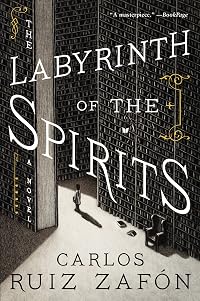
On This Page
Description
The internationally acclaimed, New York Times bestselling author returns to the magnificent universe he constructed in his bestselling novels The Shadow of the Wind, The Angel's Game, and The Prisoner of Heaven in this riveting series finale-a heart-pounding thriller and nail-biting work of suspense which introduces a sexy, seductive new heroine whose investigation shines a light on the dark history of Franco's Spain. In this unforgettable final volume of Ruiz Zafón's cycle of novels set in show more the universe of the Cemetery of Forgotten Books, beautiful and enigmatic Alicia Gris, with the help of the Sempere family, uncovers one of the most shocking conspiracies in all Spanish history. Nine-year-old Alicia lost her parents during the Spanish Civil War when the Nacionales (the fascists) savagely bombed Barcelona in 1938. Twenty years later, she still carries the emotional and physical scars of that violent and terrifying time. Weary of her work as an investigator for Spain's secret police in Madrid, a job she has held for more than a decade, the twenty-nine-year old plans to move on. At the insistence of her boss, Leandro Montalvo, she remains to solve one last case: the mysterious disappearance of Spain's Minister of Culture, Mauricio Valls. With her partner, the intimidating policeman Juan Manuel Vargas, Alicia discovers a possible clue-a rare book by the author Victor Mataix hidden in Valls' office in his Madrid mansion. Valls was the director of the notorious Montjuic Prison in Barcelona during World War II where several writers were imprisoned, including David Martín and Victor Mataix. Traveling to Barcelona on the trail of these writers, Alicia and Vargas meet with several booksellers, including Juan Sempere, who knew her parents. As Alicia and Vargas come closer to finding Valls, they uncover a tangled web of kidnappings and murders tied to the Franco regime, whose corruption is more widespread and horrifying than anyone imagined. Alicia's courageous and uncompromising search for the truth puts her life in peril. Only with the help of a circle of devoted friends will she emerge from the dark labyrinths of Barcelona and its history into the light of the future. In this haunting new novel, Carlos Ruiz Zafón proves yet again that he is a masterful storyteller and pays homage to the world of books, to his ingenious creation of the Cemetery of Forgotten, and to that magical bridge between literature and our lives. show lessTags
Recommendations


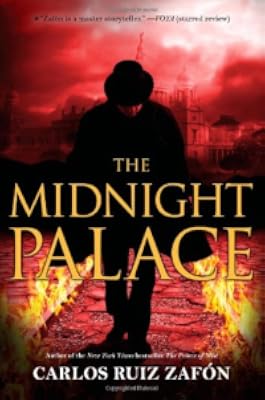















Member Recommendations
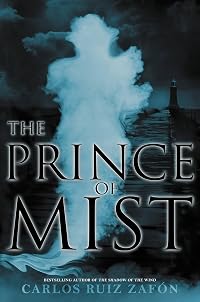
Andrew_Orange Same author and location.
Andrew_Orange Same author and location.
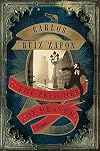
Andrew_Orange Same author and location.
Member Reviews
This is the fourth and final book in the Cemetery of Forgotten Books series.
To begin, The Shadow of the Wind will always be one of my favorite books. It is the first book in this series and a classic gothic novel. At this point, I've fallen so in love with Zafón's characters and his rich descriptions of Barcelona, that I have a hard time being objective about his work. I am more forgiving when there are plot hiccups because I'm already invested in the world he created. That being said let me dive into this latest installment.
The Labyrinth of Spirits picks up shortly after The Prisoner of Heaven ends. Our main protagonist is the troubled Alicia Gris. She's a bit of a femme fatale with her own troubled past and wounds, both physical show more and mental. The book pulls you in immediately with a scene from Fermin's past, but then we move forward in time and the middle has some pacing issues.
The plot is so convoluted with extra characters and layers upon layers of history that at times it’s hard to follow. I didn’t barrel through it as quickly as The Prisoner of Heaven or savor the atmosphere like The Shadow of the Wind. Instead I found that I enjoyed it most when I could sit and give it my full attention for a large chunk of time. Clocking in at over 800 pages (at least in ARC form), you need to sink into this world to juggle the different characters. Once you do, you are rewarded with slow but sure development. Obviously my favorite moments are when we return to the Sempere family. Once Alicia's path crossed with theirs I felt more connected.
***After this point my review assumes you’ve already read the whole series, but there are no spoilers for this book***
There's a moment in the book when Zafón actually explains the arch of the series. It's just perfect and gives an insider's wink to anyone who has read all four books. About The Labyrinth of Spirits he says,
“The fourth installment, fierce and enormous, spiced with perfumes from all the earlier ones, would lead us at last to the center of the mystery, uncovering all the puzzles with the help of my favorite fallen angel of mist, Alicia Gris.”
It's a perfect summary. Despite the author's sometimes loquacious tendencies and a pile of characters that it's easy to confuse (Gris' detective partner Vargas, her mentor Leandro, Inspector Fumero's apprentice Hendaya, the banker Sanchís and his wife Victoria Ubach, the author Víctor Mataix and his daughter Ariadna, the fumbling stalker Rovira, the journalist Vilajuana, the missing political minister Mauricio Valls, the besotted Fernandito, Daniel's cousin Sofía, and on and on...), the book is still a delight. It's a bit of work, but it's worth it in the end because it ties the whole world together.
I'm so glad we get to know Isabella Sempere's character a little better. Often when we lose a parent at a young age, it's easy to turn them into an idealized saint. Seeing the real person, full of flaws and bad decisions, can be painful, but it's so much more real. We finally have a chance to meet her, full of fire and grit, and hear her story in her own voice. It’s always been a flaw out Zafón’s to paint women as either whores or saints instead of giving them depth. I felt like this book gave us a few that were more developed, although it's certainly still focused more on the men. I wish we'd had a chance to explore the world through Bea's eyes, but we never get that privilege. Instead, the story comes full circle with Daniel and Bea's son Julián. We also spend more time with Fermin, who I've grown to love in all his irreverent glory.
BOTTOM LINE: Heartbreaking and beautiful, the story brings all of his characters together, somehow turning all four books into one complete tale. It's a must for anyone who loves the series. If you're new to his work I’d recommend try The Shadow of the Wind first to see if it's for you.
“At the time I was just a kid and life was still a few sizes too big for me.”
“However many sorrows you drag along with you, you’ll only have walked a few steps before bumping into someone who will remind you that there’s always another person with a far worse set of cards then yours in the game of life.”
“Some would argue that no genre is more fictitious than a biography.”
“With the possible exception of an autobiography,” Mataix granted.
“Learning how to differentiate between why one does things and why one says one does them is the first step toward getting to know oneself.”
“The most sincere pain is experienced alone.” show less
To begin, The Shadow of the Wind will always be one of my favorite books. It is the first book in this series and a classic gothic novel. At this point, I've fallen so in love with Zafón's characters and his rich descriptions of Barcelona, that I have a hard time being objective about his work. I am more forgiving when there are plot hiccups because I'm already invested in the world he created. That being said let me dive into this latest installment.
The Labyrinth of Spirits picks up shortly after The Prisoner of Heaven ends. Our main protagonist is the troubled Alicia Gris. She's a bit of a femme fatale with her own troubled past and wounds, both physical show more and mental. The book pulls you in immediately with a scene from Fermin's past, but then we move forward in time and the middle has some pacing issues.
The plot is so convoluted with extra characters and layers upon layers of history that at times it’s hard to follow. I didn’t barrel through it as quickly as The Prisoner of Heaven or savor the atmosphere like The Shadow of the Wind. Instead I found that I enjoyed it most when I could sit and give it my full attention for a large chunk of time. Clocking in at over 800 pages (at least in ARC form), you need to sink into this world to juggle the different characters. Once you do, you are rewarded with slow but sure development. Obviously my favorite moments are when we return to the Sempere family. Once Alicia's path crossed with theirs I felt more connected.
***After this point my review assumes you’ve already read the whole series, but there are no spoilers for this book***
There's a moment in the book when Zafón actually explains the arch of the series. It's just perfect and gives an insider's wink to anyone who has read all four books. About The Labyrinth of Spirits he says,
“The fourth installment, fierce and enormous, spiced with perfumes from all the earlier ones, would lead us at last to the center of the mystery, uncovering all the puzzles with the help of my favorite fallen angel of mist, Alicia Gris.”
It's a perfect summary. Despite the author's sometimes loquacious tendencies and a pile of characters that it's easy to confuse (Gris' detective partner Vargas, her mentor Leandro, Inspector Fumero's apprentice Hendaya, the banker Sanchís and his wife Victoria Ubach, the author Víctor Mataix and his daughter Ariadna, the fumbling stalker Rovira, the journalist Vilajuana, the missing political minister Mauricio Valls, the besotted Fernandito, Daniel's cousin Sofía, and on and on...), the book is still a delight. It's a bit of work, but it's worth it in the end because it ties the whole world together.
I'm so glad we get to know Isabella Sempere's character a little better. Often when we lose a parent at a young age, it's easy to turn them into an idealized saint. Seeing the real person, full of flaws and bad decisions, can be painful, but it's so much more real. We finally have a chance to meet her, full of fire and grit, and hear her story in her own voice. It’s always been a flaw out Zafón’s to paint women as either whores or saints instead of giving them depth. I felt like this book gave us a few that were more developed, although it's certainly still focused more on the men. I wish we'd had a chance to explore the world through Bea's eyes, but we never get that privilege. Instead, the story comes full circle with Daniel and Bea's son Julián. We also spend more time with Fermin, who I've grown to love in all his irreverent glory.
BOTTOM LINE: Heartbreaking and beautiful, the story brings all of his characters together, somehow turning all four books into one complete tale. It's a must for anyone who loves the series. If you're new to his work I’d recommend try The Shadow of the Wind first to see if it's for you.
“At the time I was just a kid and life was still a few sizes too big for me.”
“However many sorrows you drag along with you, you’ll only have walked a few steps before bumping into someone who will remind you that there’s always another person with a far worse set of cards then yours in the game of life.”
“Some would argue that no genre is more fictitious than a biography.”
“With the possible exception of an autobiography,” Mataix granted.
“Learning how to differentiate between why one does things and why one says one does them is the first step toward getting to know oneself.”
“The most sincere pain is experienced alone.” show less
Ever been to a celebration, perhaps a wedding reception, composed of a myriad, imperfect components yet taken together gave an outrageously fun, memorable good time? Perhaps the band was mediocre but the music appropriate and energetic, the food oddly-seasoned but plentiful and fresh, the drinks exotic but free and bottomless, and dance partners all strangers but outgoing and enthusiastic? There were flaws in the details but the overall experience was a _great time_? Yeah, well, that's this book in a snapshot.
To call "The Labyrinth of the Spirits" 'byzantine' does favors neither to the book nor Byzantium, and that is if one views "TLotS" only as a stand-alone novel. Taken as the climax and conclusion of the novel-in-four-parts that it show more really is, there are too many elements, threads, character arcs, and tragic spirals to even discuss sanely. But it is ravishingly satisfying, even though there are overwrought and overplayed parts to it. There are boogeymen that remain on stage well past their expiration date, there are delays in exposition that confound reason, and, apparently, Barcelona has crap weather. But there are joys to balance the tragic, and the sun does actually come out.
And Ruiz has now given us a character in Alicia Gris that stands up to the Iberian Falstaff that is Fermin, a razor-sharp yin to his yang. Gracias. show less
To call "The Labyrinth of the Spirits" 'byzantine' does favors neither to the book nor Byzantium, and that is if one views "TLotS" only as a stand-alone novel. Taken as the climax and conclusion of the novel-in-four-parts that it show more really is, there are too many elements, threads, character arcs, and tragic spirals to even discuss sanely. But it is ravishingly satisfying, even though there are overwrought and overplayed parts to it. There are boogeymen that remain on stage well past their expiration date, there are delays in exposition that confound reason, and, apparently, Barcelona has crap weather. But there are joys to balance the tragic, and the sun does actually come out.
And Ruiz has now given us a character in Alicia Gris that stands up to the Iberian Falstaff that is Fermin, a razor-sharp yin to his yang. Gracias. show less
In The Labyrinth of the Spirits, Carlos Ruiz Zafon brings his Cemetery of Forgotten Books quartet to a full circle conclusion. At the outset, we meet Alicia Gris, a tough-ass seductress, who, after suffering both physical and emotional scars from the Spanish Civil War, is recruited to help locate Minister of Culture Mauricio Valls (who astute readers will remember from the previous book The Prisoner of Heaven). From there, a large number of new characters emerge, as well as re-introductions to characters from Zafon's previous books, both good guys and bad.
I have such bittersweet feelings about this final book of the series. The Shadow of the Wind is one of my, if not MOST, favorite novels of all time. There's really almost nothing that show more can top it, and it was almost inevitable that any book following it would be disappointing, at least to some extent. And I'll admit that while I enjoyed The Angel's Game (book 2), I found it confusing, leaving me with more questions than answers. The Prisoner of Heaven (book 3), though short, was dark and depressing, and I found it somewhat lacking, not sure how it really added much to the series. Though each book referenced The Cemetery of Forgotten Books in some way, I just wasn't sure how it all linked together. But.
Now here we are with The Labyrinth of the Spirits. It's a massive tome, and though I love Zafon's writing, I will admit that this took me almost a full two months to work my way through. It's not a book that you can necessarily race through. There are so many characters, both old and new. I would almost recommend taking notes, because it's a bit hard to keep track of them all. Though Zafon himself states that this series of books is like a labyrinth and that they can be read in any order, I feel that reading them in the order that they were published makes the most sense. Additionally, because of the many characters and layers to this story/stories, it might be best to read them back-to-back. I re-read books 1 and 2 prior to reading books 3 and 4, and that definitely helped me connect characters and events that I most certainly would've forgotten about had I just read each book once, immediately after its release date.
Having said all of that, I thought this last book in the series really made the difference for me. I think The Shadow of the Wind is a great stand-alone book. If, like me, you were blown away by that one but were a bit disenchanted with books 2 and 3, I'd really recommend persevering through to the end of this one. It pulls all of the characters and events from all of the books together beautifully. I'm sad to see this series end, as I'll dearly miss many of these characters and their stories, but I do feel that it was a satisfying ending to a wonderful, sad, engrossing tale. show less
I have such bittersweet feelings about this final book of the series. The Shadow of the Wind is one of my, if not MOST, favorite novels of all time. There's really almost nothing that show more can top it, and it was almost inevitable that any book following it would be disappointing, at least to some extent. And I'll admit that while I enjoyed The Angel's Game (book 2), I found it confusing, leaving me with more questions than answers. The Prisoner of Heaven (book 3), though short, was dark and depressing, and I found it somewhat lacking, not sure how it really added much to the series. Though each book referenced The Cemetery of Forgotten Books in some way, I just wasn't sure how it all linked together. But.
Now here we are with The Labyrinth of the Spirits. It's a massive tome, and though I love Zafon's writing, I will admit that this took me almost a full two months to work my way through. It's not a book that you can necessarily race through. There are so many characters, both old and new. I would almost recommend taking notes, because it's a bit hard to keep track of them all. Though Zafon himself states that this series of books is like a labyrinth and that they can be read in any order, I feel that reading them in the order that they were published makes the most sense. Additionally, because of the many characters and layers to this story/stories, it might be best to read them back-to-back. I re-read books 1 and 2 prior to reading books 3 and 4, and that definitely helped me connect characters and events that I most certainly would've forgotten about had I just read each book once, immediately after its release date.
Having said all of that, I thought this last book in the series really made the difference for me. I think The Shadow of the Wind is a great stand-alone book. If, like me, you were blown away by that one but were a bit disenchanted with books 2 and 3, I'd really recommend persevering through to the end of this one. It pulls all of the characters and events from all of the books together beautifully. I'm sad to see this series end, as I'll dearly miss many of these characters and their stories, but I do feel that it was a satisfying ending to a wonderful, sad, engrossing tale. show less
For those familiar with the author's The Cemetery of Forgotten Books, this installment will come as a long-awaited prize. And that's why it's a tad difficult to even review it objectively. I suspect there are those who love the series almost unconditionally (myself counted among that number) and will brook no criticism. Suffice to say that this one has the all the familiar elements: intricate plotting, memorable dialog, doomed and complex characters, and that overall sense of the poetically macabre, that creeping chill even while being swept along in the dense and evocative prose.
Here we meet a new character, one Senorita Alica Gris. Carrying scars from the terrible Civil War in 1930s Barcelona, Gris has the cunning of a street urchin show more but also a touch of the damned, the devilish, about her. She's fully aware of her dark magnetism and wields it like a scythe on unsuspecting and instantly-infatuated victims. On top of which she works for a shadowy branch of the Spanish Secret Police and her job profile is equally, indeed suitably, vampirish.
At the center of the plot is Alicia's last assignment: to locate the missing Minister of Culture, Mauricio Valls, who has disappeared from his mansion. But wait, someone doesn't actually want him found...
Page after page has flown by, the clock has gone past midnight when you realize that 800 pages is not that long after all. Gris and her new partner, officer Vargas, are digging around and soon are back in Barcelona. Ah, there's the Sempere clan in their bookshop; and as for the inimitable Fermin, well, he pretty much started off the proceedings with a suitable amount of skulduggery, so all is well. Then with usual suspects David Martin and Julian Carax appearing as slim vignettes, the connection to the rest of the series is established. (How wonderful it is that each of these four books can be read as a standalone, and in any order. Of course I am fortunate that I started with the first.)
What is there to even say? This time I had a deeper appreciation of Barcelona itself as a character. The tight alleys and the brooding architectural style of this fascinating city do lend themselves to the sense of foreboding and murky backstories that emerge from the mist. Particularly poignant are real photographs from the 1930s and 1950s; having visited both Madrid and Barcelona now, all this was superbly satisfying. The author draws Barcelona in particular with such authority and intimacy that it's obvious he is an insider. In the same way he is merciless about the Spaniards' character in general. (He lives in LA though, perhaps I should stalk him? Hehe.)
The only part I didn't like was the end. Little Julian's story seemed unnecessary, and then began to strike me as self-indulgent. Oh well. Never mind. The previous 700 pages or so had me so grateful to be in the hands of this unabashedly and lavishly talented writer that I am prepared to forgive.
Now perhaps I should attempt to get my hands on all four of the series, but in Spanish.
For more reviews please visit https://devikamenon.blogspot.com/search/label/books show less
Here we meet a new character, one Senorita Alica Gris. Carrying scars from the terrible Civil War in 1930s Barcelona, Gris has the cunning of a street urchin show more but also a touch of the damned, the devilish, about her. She's fully aware of her dark magnetism and wields it like a scythe on unsuspecting and instantly-infatuated victims. On top of which she works for a shadowy branch of the Spanish Secret Police and her job profile is equally, indeed suitably, vampirish.
At the center of the plot is Alicia's last assignment: to locate the missing Minister of Culture, Mauricio Valls, who has disappeared from his mansion. But wait, someone doesn't actually want him found...
Page after page has flown by, the clock has gone past midnight when you realize that 800 pages is not that long after all. Gris and her new partner, officer Vargas, are digging around and soon are back in Barcelona. Ah, there's the Sempere clan in their bookshop; and as for the inimitable Fermin, well, he pretty much started off the proceedings with a suitable amount of skulduggery, so all is well. Then with usual suspects David Martin and Julian Carax appearing as slim vignettes, the connection to the rest of the series is established. (How wonderful it is that each of these four books can be read as a standalone, and in any order. Of course I am fortunate that I started with the first.)
What is there to even say? This time I had a deeper appreciation of Barcelona itself as a character. The tight alleys and the brooding architectural style of this fascinating city do lend themselves to the sense of foreboding and murky backstories that emerge from the mist. Particularly poignant are real photographs from the 1930s and 1950s; having visited both Madrid and Barcelona now, all this was superbly satisfying. The author draws Barcelona in particular with such authority and intimacy that it's obvious he is an insider. In the same way he is merciless about the Spaniards' character in general. (He lives in LA though, perhaps I should stalk him? Hehe.)
The only part I didn't like was the end. Little Julian's story seemed unnecessary, and then began to strike me as self-indulgent. Oh well. Never mind. The previous 700 pages or so had me so grateful to be in the hands of this unabashedly and lavishly talented writer that I am prepared to forgive.
Now perhaps I should attempt to get my hands on all four of the series, but in Spanish.
For more reviews please visit https://devikamenon.blogspot.com/search/label/books show less
I got the feeling about 3/4 of the way through this book that Zafon didn't want to stop writing this story, which was ok, because I didn't want to stop reading it.
I'm feeling a bit lost without Alicia Gris, since she was an important part of my daily life this past month.
It's rare that I tackle a book this long, but after reading the first 3 books of this series, I absolutely had no choice. I needed another trip to the Labyrinth, and Sempere's bookshop. It's even more rare for me to read a multi-book series that contains elements of the supernatural. But I was hooked from the first pages of the Angel's game.
I'm emotionally exhausted by this series and feel as though I am still stuck in Zafon's labyrinth. And I think that's exactly how show more I'm supposed to feel. Because as he explains at the end of this novel, books are like labyrinths, with no beginnings or endings, just different points of entry.
And really, the great thing about this series, is that the author genuinely wants people to start at different points along the way.
Finally, I need to visit Barcelona, like now, and visit all the places mentioned throughout this series and see if I can find the Cemetery of Forgotten Books and find one that might be waiting there for me. show less
This is the culmination of stories set in world of booksellers, secret library curators, crazy writers and dark and cruel politics of Franco's regime. Full of references to other books, it tells the entire story of the Sempere family and reveals some related stories and crimes, leaving no stone unturned and no secret kept intact.
Old heroes and new are masterfully sketched and intrigues unravelled in a very long and detailed story. The ending is not exactly a happy one, but it is not overly sad either. Almost everyone finds some sort of clouse, even if it is not the closure one would wish for. But then there couldn't be a truly happy end to the story that mainly happened during one of the gloomier dictatorships of the XXth century.
Old heroes and new are masterfully sketched and intrigues unravelled in a very long and detailed story. The ending is not exactly a happy one, but it is not overly sad either. Almost everyone finds some sort of clouse, even if it is not the closure one would wish for. But then there couldn't be a truly happy end to the story that mainly happened during one of the gloomier dictatorships of the XXth century.
After reading two previous Carlos Ruiz Zafon books, I looked forward to reading the 800 pages of The Labyrinth of the Spirits. I bought it a couple of months before embarking on a long trip I was planning saved it until then so that I would be able to drown myself in the flow of the beautiful writing for long bursts of time every time I picked it up and then finish the book faster than I ordinarily could get through 800 pages in my regular day to day living. It turned out to be a wise plan.
Zafon sweeps readers into his stories quickly and then enthralls and dazzles them with the complexity of his marvelous plots and the mesmerizing beauty of his language. No one writes as beautifully and lyrically as a Spaniard.
The book is marvelously show more complex, plots within plots, suspenseful episode followed my more suspense yet accompanied by some moments of tenderness and love and even some occasional and wonderful humor. What more could a person want in a book?
The story takes place in Spain at the end of the civil war that brought him to power and the years of his reign of terror. The intrigues of the story rest in the evil, ruthlessness, and violence that those with absolute power wield in order to protect their positions. The plot contains some very grisly and detailed scenes of violence that fully utilize the author’s talent for conveying the pain and suffering of the victims while also exploring the cold-hearted ruthlessness of those applying the torture. It is not a book for children or those easily disturbed by such descriptions.
Just as masterful as Zafon’s capacity for writing suspense and complex plots is his capacity to develop authentic seeming characters, each of which displays characteristics that differentiate one character from another. Each of the villains in the story, and there are many, is unlike the others, displaying different “skills”, motivations, and techniques of their trade, yet each of the villainous characters feels no shame, guilt nor remorse for what they do. Power corrupts and absolute power corrupts absolutely, yet few books so fully demonstrate to readers exactly what that chinches actually means.
This is a long book. Even the more avid readers among us generally shy away from such lengthy books. I often make my own reading choices influenced by how long the book is, seldom deciding to read books of 500 or more pages. The Labyrinth of the Spirits deserves every second readers invest in savoring its 800 pages. Those who do will probably feel as if they’d like to read everything Zafon has ever written, a feeling which I personally derive from very few authors, but very few authors write this well, tell stories this engaging, or satisfy reader expectations so well. show less
Members
- Recently Added By
Lists

1001 Books You Must Read Before You Die
1,448 works; 1,133 members

Top Five Books of 2018
802 works; 265 members
Top Five Books of 2017
757 works; 231 members

Kirkus Starred Fiction Reviews of Books Published in 2018
330 works; 3 members

Books Read in 2020
4,379 works; 124 members

Huxley's Reading Log 2018
37 works; 1 member

Books Read in 2018
4,360 works; 110 members

READ IN 2020
172 works; 1 member

Best Mysteries With a Historical Setting
292 works; 160 members
Author Information

35+ Works 56,328 Members
Carlos Ruiz Zafón was born in Barcelona, Spain on September 25, 1964. He is a scriptwriter and the author of both adult and young adult novels. His first novel, El Príncipe de la Niebla (The Prince of Mist, 1993) received the Premio Edebé literary prize for young adult fiction. His other young adult novels include El Palacio de la Medianoche show more (1994), Las Luces de Septiembre (1995), and Marina (1999). His adult novels include La Sombra del Viento (The Shadow of the Wind, 2001) and El Juego del Angel (The Angel's Game, 2008). (Bowker Author Biography) show less
Some Editions
Awards and Honors
Series

Belongs to Publisher Series
Columna (1117)
Work Relationships
Is contained in
Common Knowledge
- Canonical title
- The Labyrinth of the Spirits
- Original title
- El laberinto de los espíritus
- Original publication date
- 2016
- People/Characters*
- Daniel Sempere; Fermín; Alicia Gris
- Important places*
- Barcelona, Catalonië, Spanje
- Important events*
- Guerra Civile Spagnola (1936 | 1939)
- First words*
- Die nacht droomde ik dat ik terugkeerde naar het Kerkhof der Vergeten Boeken.
- Quotations*
- Vargas suivit Alicia dans l’escalier, une sorte de spirale plus proche du trajet intestinal que du tracé architectural.
On boit pour se souvenir et on écrit pour oublier.
Les guerres salissent tout, mais elles lavent la mémoire.
La force expressive d’un énoncé est directement proportionnelle à l’intelligence de celui qui le formule, de la même manière que sa crédibilité est proportionnelle à la stupidité du récepteur.
Le bonheur, ou ce qui y ressemble le plus pour toute créature pensante, à savoir la paix de l’esprit, est ce qui s’évanouit sur le chemin qui conduit de la croyance au savoir.
Quand on est jeune, on voit le monde comme il devrait être. (show all 9)
Ressusciter, c’est un peu comme faire du vélo ou dégrafer le soutien-gorge d’une fille d’une seule main. Le tout c’est de piger le truc.
La vérité est l’accord permettant aux innocents de ne pas avoir à cohabiter avec la réalité.
Dans les sphères du pouvoir, les coups n’arrivent jamais de face, mais toujours dans le dos et dans une embrassade. - Last words*
- (Click to show. Warning: May contain spoilers.)Kort daarop versmelten vader en dochter als nevelfiguren met de mensenmenigte die de Ramblas overspoelt, hun voetstappen voor altijd verloren in het labyrint der geesten.
- Original language
- Spanish
*Some information comes from Common Knowledge in other languages. Click "Edit" for more information.
Classifications
- Genres
- Fiction and Literature, General Fiction, Historical Fiction, Mystery, Fantasy
- DDC/MDS
- 863.64 — Literature & rhetoric Spanish Literature Spanish fiction 20th Century 1945-2000
- LCC
- PQ6668 .U49 .L3313 — Language and Literature French, Italian, Spanish and Portuguese literatures Spanish literature Individual authors, 1961-2000
- BISAC
Statistics
- Members
- 2,294
- Popularity
- 8,676
- Reviews
- 63
- Rating
- (4.31)
- Languages
- 16 — Catalan, Danish, Dutch, English, Finnish, French, German, Greek, Hungarian, Italian, Polish, Romanian, Spanish, Swedish, Ukrainian, Portuguese (Portugal)
- Media
- Paper, Audiobook, Ebook
- ISBNs
- 87
- ASINs
- 16