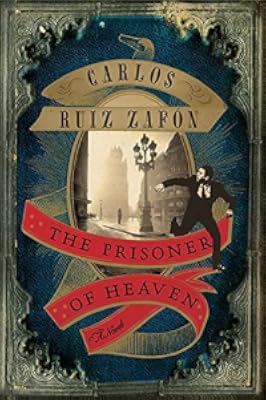
On This Page
Description
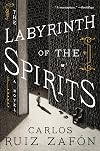
In 1957 Barcelona, Daniel Semper and his close friend Fermin Romero de Torres find their lives violently disrupted by the arrival of a mysterious stranger who threatens to divulge a terrible secret that has been buried for two decades in the city's dark past.Tags
Recommendations
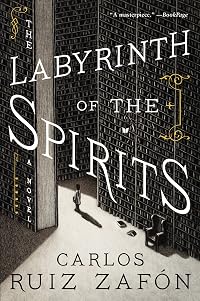
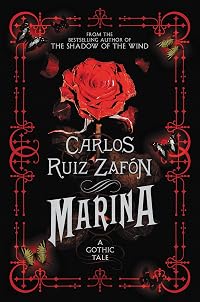

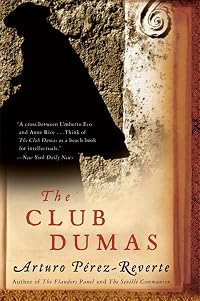












Member Recommendations
Member Reviews
I have long wanted to read Zafón's novels; everyone I know raves about The Shadow of the Wind. This is the third book in Zafón's quartet, and the book opens with a promise that each book can be read as a standalone, and in any order. I hear that about almost all books in a series, so I was dubious, but I inhaled this book without any confusion.
This is a book lover's book, a novel with a story-in-a-story motif, vibrant characters -- including villainous villains -- and evocative locales. Opening Christmas 1957 in Barcelona, Spain, we follow Daniel Sempere, who runs a family bookstore with his father. Amid anxieties about a letter to his wife from her ex-fiancee, Daniel is chilled by the arrival of a creepy man who purchases one of the show more most expensive books in his store, a gorgeous vintage copy of The Count of Monte Cristo. More disturbingly, the stranger dedicates it to Daniel's friend Fermín Romero de Torres, who in turn shares the story of his violent imprisonment during Franco's regime in 1930 -- a story that echoes Dumas' classic tale.
I raced through this book -- it's about 300 pages in paperback, but reads like 150! -- and found myself captivated. Zafón mixes clever black humor -- usually snappy comebacks by the moody Fermín -- with lurid descriptions of prison life. There's almost a magical quality to the story without it going straight to magical realism; a fantasy element without fantasy. Perhaps it's the mood that harkens to Dumas' The Count of Monte Cristo -- grandiose adventure, seemingly impossible scenarios, bigger-than-life personalities. I didn't know where this story intersected with the previous two novels but didn't feel like I was missing anything; now I'm eager to read both before the fourth and final book comes out.
Sadly, there's no biography for the translator, Lucia Graves, in my edition. (I'm intensely curious about translators -- they shape a story, intentionally or not!) Graves is the daughter of Robert Graves, and was nominated for an award for her translation of another Zafón book. Particularly intriguing for me is Graves' connection to the setting and era of this book: Graves lived in Majorca during Franco's dictatorship and later, as an adult when first married.
For those new to Zafón, consider this -- fans might not think this is the best one to start with, but as someone who plunged in and came out happy, I think it works! Those who like historical fiction that is a bitterly fun and a little dark will like this -- while it's not The Orphan Master's Son-level of black comedy, it's up there, so if you enjoyed that one, you'll like this too! show less
This is a book lover's book, a novel with a story-in-a-story motif, vibrant characters -- including villainous villains -- and evocative locales. Opening Christmas 1957 in Barcelona, Spain, we follow Daniel Sempere, who runs a family bookstore with his father. Amid anxieties about a letter to his wife from her ex-fiancee, Daniel is chilled by the arrival of a creepy man who purchases one of the show more most expensive books in his store, a gorgeous vintage copy of The Count of Monte Cristo. More disturbingly, the stranger dedicates it to Daniel's friend Fermín Romero de Torres, who in turn shares the story of his violent imprisonment during Franco's regime in 1930 -- a story that echoes Dumas' classic tale.
I raced through this book -- it's about 300 pages in paperback, but reads like 150! -- and found myself captivated. Zafón mixes clever black humor -- usually snappy comebacks by the moody Fermín -- with lurid descriptions of prison life. There's almost a magical quality to the story without it going straight to magical realism; a fantasy element without fantasy. Perhaps it's the mood that harkens to Dumas' The Count of Monte Cristo -- grandiose adventure, seemingly impossible scenarios, bigger-than-life personalities. I didn't know where this story intersected with the previous two novels but didn't feel like I was missing anything; now I'm eager to read both before the fourth and final book comes out.
Sadly, there's no biography for the translator, Lucia Graves, in my edition. (I'm intensely curious about translators -- they shape a story, intentionally or not!) Graves is the daughter of Robert Graves, and was nominated for an award for her translation of another Zafón book. Particularly intriguing for me is Graves' connection to the setting and era of this book: Graves lived in Majorca during Franco's dictatorship and later, as an adult when first married.
For those new to Zafón, consider this -- fans might not think this is the best one to start with, but as someone who plunged in and came out happy, I think it works! Those who like historical fiction that is a bitterly fun and a little dark will like this -- while it's not The Orphan Master's Son-level of black comedy, it's up there, so if you enjoyed that one, you'll like this too! show less
Audiobook performed by Peter Kenny
Book three in the Cemetery of Forgotten Books series.
Just before Christmas 1957 a mysterious stranger appears in Barcelona’s Sempere bookshop. He knows much more than he lets on but it’s clear he poses a threat to Fermin Romero del Torres. Fermin is about to be married and the secrets the stranger threatens to reveal will destroy him. Daniel pledges to help but first he must understand the events of 1940s Barcelona during the Franco regime.
Oh, I love Zafón’s writing! The book is very atmospheric; I can feel the chill of a wintery wind, smell the candlewax and dust, practically taste the delicacies offered at 7 Portes restaurant (a dining establishment I have, in fact, visited in real life), or show more feel the pain of blows inflicted by a ruthless prison guard.
There are twists and turns and changes in time line that confuse, obfuscate, tease the reader and illuminate the plot. I caught references that helped tie in the first two books, though, in fact, any of them can be read as a stand alone novel, and they do not need to be read in any particular order.
Peter Kenny did a fine job of narrating the audiobook. He had many characters to deal with and managed to give them sufficiently unique voices to differentiate them. HOWEVER, he chose to use British accents for everyone and that drove me nuts. The book is Spanish, the characters are Spanish, NONE of them should have a Cockney accent! Lost a star there. show less
Book three in the Cemetery of Forgotten Books series.
Just before Christmas 1957 a mysterious stranger appears in Barcelona’s Sempere bookshop. He knows much more than he lets on but it’s clear he poses a threat to Fermin Romero del Torres. Fermin is about to be married and the secrets the stranger threatens to reveal will destroy him. Daniel pledges to help but first he must understand the events of 1940s Barcelona during the Franco regime.
Oh, I love Zafón’s writing! The book is very atmospheric; I can feel the chill of a wintery wind, smell the candlewax and dust, practically taste the delicacies offered at 7 Portes restaurant (a dining establishment I have, in fact, visited in real life), or show more feel the pain of blows inflicted by a ruthless prison guard.
There are twists and turns and changes in time line that confuse, obfuscate, tease the reader and illuminate the plot. I caught references that helped tie in the first two books, though, in fact, any of them can be read as a stand alone novel, and they do not need to be read in any particular order.
Peter Kenny did a fine job of narrating the audiobook. He had many characters to deal with and managed to give them sufficiently unique voices to differentiate them. HOWEVER, he chose to use British accents for everyone and that drove me nuts. The book is Spanish, the characters are Spanish, NONE of them should have a Cockney accent! Lost a star there. show less
A mysterious man shows up at Sempere & Sons book store looking for Fermin, setting Daniel on a quest to find out about his friend's past. He has no idea how intertwined his own story is with Fermin's.
This is the third in the connected stories in the Cemetery of Forgotten Books cycle. While it's not necessary to have read The Shadow of the Wind and The Angel's Game beforehand, I think I would have been a little lost and not as emotionally connected to events if I had not. Of the three, I think this book stands alone the least, though it still could, as the author intends, be the introduction to the cycle set in 1950s Barcelona. In fact (and I never thought I'd say this), it made me want to go back and reread The Angel's Game because I show more have the feeling I completely misunderstood it the first time around. While it still doesn't hold a candle to The Shadow of the Wind, I loved getting Fermin's back story and am truly looking forward to seeing where the next book takes these characters. show less
This is the third in the connected stories in the Cemetery of Forgotten Books cycle. While it's not necessary to have read The Shadow of the Wind and The Angel's Game beforehand, I think I would have been a little lost and not as emotionally connected to events if I had not. Of the three, I think this book stands alone the least, though it still could, as the author intends, be the introduction to the cycle set in 1950s Barcelona. In fact (and I never thought I'd say this), it made me want to go back and reread The Angel's Game because I show more have the feeling I completely misunderstood it the first time around. While it still doesn't hold a candle to The Shadow of the Wind, I loved getting Fermin's back story and am truly looking forward to seeing where the next book takes these characters. show less
A couple of years ago I picked up the first book in this series, The Shadow of the Wind, on a whim. I liked it quite a bit, but life being what it is, I didn’t get to any of the others. Thankfully Zafon has constructed the books so you can read them in any order. The intricate way they are woven reminds me of a literary mobius strip in how one book continues seamlessly into another. For example in this one, Daniel is an adult and he’s trying to help Fermin sort out his past so he can get married. That past includes a bit of prison time and a fellow inmate named David Martin, the author of the book that features in the second in this series. Here in the third book during Fermin’s prison tale it hasn’t been written yet and it only show more shows up in the very last act (or close to it). That kind of imagination and craft really impresses me. All the snaking threads of the story finding their way to each other.
Oddly, I expect going into Zafon’s books that his language will be archaic or old-fashioned, but it isn’t at all. It’s colloquial, light and contains a lot of humor. This series is set in Spain in the 1950s which is still a very turbulent time. This one focuses on Fermin, who is a bit less whimsical in this one because his impending marriage may expose his past. There are people with power to ruin his life again and those of the people he loves.
He tells Daniel his tale and it is an homage to The Count of Monte Cristo with similar themes and a plot to spring him from prison in the same way Dantes was sprung from his. It isn’t a revenge tale per se, but there is a mysterious and potentially dangerous figure in the present who could ruin everything. Unraveling his identity and what he wants is only part of the problem, getting Fermin on solid ground so he can get married is another. Protecting the Cemetery of Forgotten Books yet another. Then there’s the whole tale of the past and the other prisoners Fermin encounters and how each of them will either befriend or blackmail him. With Fumero dead, we need a new villain and Zafon gives us a pretty good one.
For most readers this is the wrap up novel of the series, but I will have to go read the second one and I better do it soon because all the little connections are important and I’m afraid I’ll miss them if I don’t. That said, I did snag the short story (freebie) that gives us the secret origins of the Cemetery of Forgotten Books. It was fun. show less
Oddly, I expect going into Zafon’s books that his language will be archaic or old-fashioned, but it isn’t at all. It’s colloquial, light and contains a lot of humor. This series is set in Spain in the 1950s which is still a very turbulent time. This one focuses on Fermin, who is a bit less whimsical in this one because his impending marriage may expose his past. There are people with power to ruin his life again and those of the people he loves.
He tells Daniel his tale and it is an homage to The Count of Monte Cristo with similar themes and a plot to spring him from prison in the same way Dantes was sprung from his. It isn’t a revenge tale per se, but there is a mysterious and potentially dangerous figure in the present who could ruin everything. Unraveling his identity and what he wants is only part of the problem, getting Fermin on solid ground so he can get married is another. Protecting the Cemetery of Forgotten Books yet another. Then there’s the whole tale of the past and the other prisoners Fermin encounters and how each of them will either befriend or blackmail him. With Fumero dead, we need a new villain and Zafon gives us a pretty good one.
For most readers this is the wrap up novel of the series, but I will have to go read the second one and I better do it soon because all the little connections are important and I’m afraid I’ll miss them if I don’t. That said, I did snag the short story (freebie) that gives us the secret origins of the Cemetery of Forgotten Books. It was fun. show less
***My review assumes you’ve already read The Shadow of the Wind and there will be some spoilers for that book, but no spoilers for this book***
This is the third installment in the Cemetery of Forgotten Books series, a series which I adore. All three books are set in Barcelona in the 20th Century and this book picks up just shortly after the end of The Shadow of the Wind (TSTW). Bea and Daniel are married and living with their son Julian. Fermín is about to be married when a stranger stops into the Sempere & Sons bookshop where they both work. His presence stirs up old memories and Daniel finds himself in the midst of a strange mystery once again.
I just ate this one up, 24 hours and the book was done. I loved reading it. As a show more standalone novel it didn’t take my breath away like Shadow or get inside my brain like The Angel’s Game (TAG), but it is an extension of those books and because of that I love it. It returned me to the city and people I’ve grown attached to and learning more about their world was wonderful. Zafón adds layers and fleshes out the back stories of some of the characters and that’s exactly what I was hoping this novel would do.
This book mainly focuses on Fermín’s history, which was unknown throughout The Shadow of the Wind. It deviates from the style of the first two in a few ways. It’s a shorter and in many ways simpler book. The plot isn’t quote as complicated and it assumes you’ve already been introduced to the characters through the other books. I think that some people are going to dismiss this one because the writing doesn’t have the same eloquence, but I was more than happy with it. It connected some important dots and set up the final book beautifully.
Prisoner is the string that ties everything in the first two novels together. TSTW and TAG can both stand on their own as independent novels. The characters and places occasionally make appearances in the other book, but they do not take over the story. In Prisoner we are reintroduced to the main characters from both books and we learn how their lives are connected and intertwined.
We learn more about David Martín, the main character in The Angel’s Game, and what become of him. We meet Daniel’s mother Isabella, who also appears in TAG. There’s also a slew of new characters introduced in this book: Maurcio Valls, the governor of a prison, Professor Alburquerque, who may one day write secret history of Barcelona and the sinister Sebastian Salgado. Prisoner is also an ode to The Count of Monte Cristo, paying homage to that classic with continuous references.
Unlike the other two novels in the series, this one ends with a bit of a cliffhanger. Nothing awful, it’s just obviously setting up the final book in the series. I didn’t feel like it left me hanging, it just made me excited to read the final book when it is released.
BOTTOM LINE: A great addition to the series. I would highly recommend starting with The Shadow of the Wind; follow it with The Angel’s Game and then The Prisoner of Heaven. All three are wonderful gothic mysteries, and while Shadow remains my favorite, Prisoner fills in many of the missing gaps in the story.
“Sometimes he seemed to grow a little older just by looking at me and remembering.”
"'I think today will be the day. Today our luck will change,' I proclaimed on the wings of the first coffee of the day, pure optimism in a liquid state." show less
This is the third installment in the Cemetery of Forgotten Books series, a series which I adore. All three books are set in Barcelona in the 20th Century and this book picks up just shortly after the end of The Shadow of the Wind (TSTW). Bea and Daniel are married and living with their son Julian. Fermín is about to be married when a stranger stops into the Sempere & Sons bookshop where they both work. His presence stirs up old memories and Daniel finds himself in the midst of a strange mystery once again.
I just ate this one up, 24 hours and the book was done. I loved reading it. As a show more standalone novel it didn’t take my breath away like Shadow or get inside my brain like The Angel’s Game (TAG), but it is an extension of those books and because of that I love it. It returned me to the city and people I’ve grown attached to and learning more about their world was wonderful. Zafón adds layers and fleshes out the back stories of some of the characters and that’s exactly what I was hoping this novel would do.
This book mainly focuses on Fermín’s history, which was unknown throughout The Shadow of the Wind. It deviates from the style of the first two in a few ways. It’s a shorter and in many ways simpler book. The plot isn’t quote as complicated and it assumes you’ve already been introduced to the characters through the other books. I think that some people are going to dismiss this one because the writing doesn’t have the same eloquence, but I was more than happy with it. It connected some important dots and set up the final book beautifully.
Prisoner is the string that ties everything in the first two novels together. TSTW and TAG can both stand on their own as independent novels. The characters and places occasionally make appearances in the other book, but they do not take over the story. In Prisoner we are reintroduced to the main characters from both books and we learn how their lives are connected and intertwined.
We learn more about David Martín, the main character in The Angel’s Game, and what become of him. We meet Daniel’s mother Isabella, who also appears in TAG. There’s also a slew of new characters introduced in this book: Maurcio Valls, the governor of a prison, Professor Alburquerque, who may one day write secret history of Barcelona and the sinister Sebastian Salgado. Prisoner is also an ode to The Count of Monte Cristo, paying homage to that classic with continuous references.
Unlike the other two novels in the series, this one ends with a bit of a cliffhanger. Nothing awful, it’s just obviously setting up the final book in the series. I didn’t feel like it left me hanging, it just made me excited to read the final book when it is released.
BOTTOM LINE: A great addition to the series. I would highly recommend starting with The Shadow of the Wind; follow it with The Angel’s Game and then The Prisoner of Heaven. All three are wonderful gothic mysteries, and while Shadow remains my favorite, Prisoner fills in many of the missing gaps in the story.
“Sometimes he seemed to grow a little older just by looking at me and remembering.”
"'I think today will be the day. Today our luck will change,' I proclaimed on the wings of the first coffee of the day, pure optimism in a liquid state." show less
Zafon is so good that I not only completely enjoyed The Prisoner of Heaven, but I also remembered why I loved Shadow of the Wind and The Angel's Game so much. I wanted to read them again and I will. And I will enjoy them even more for having read The Prisoner of Heaven.
Where to start?
The writing: lyrical and vivid don't do Zafon's skill justice. They are just words. My words. Sort of like someone giving you a brush and the exact colors that Degas used to paint a masterpiece. A nice start, but you won't get there. I will just say that very, very few writers have ever painted a picture like Zafon does. Old school, classical, timeless, beautiful. I feel lucky to have his books to read.
The characters: Dickens and Dumas would love these show more characters. They are complex, endearing, vivid...alive. Brimming with humor and menace, they leap off the page. It just doesn't get any better.
World building: you and feel the damp and smell the aroma of Barcelona. You can't get closer without a time machine.
Tone and style: Gothic with a sense of humor and rapier wit. You will run out of note cards on which to copy quotes. I really feel that Mr. Zafon is a modern Dumas. What is it about these Spanish writers (also thinking of Arturo Perez Reverte) that makes them so good? They are throw-backs in such a good way. Every time I read them I feel that someone discovered a great lost Dumas novel in their attic.
Story: seamlessly weaving into the prior books, it made me want to re-read them just to experience them again in light of this wonderful new story that provides both a present story and a back story to a central character---so the action both follows AND predates the other books. Don't be afraid to read them out of order, but you really should start with Shadow of the Wind as it really sets the whole Zafon world in motion. My only gripe? I was done too fast. You fly through Zafon's books and while it was a satisfying story, I wanted more. He is the only writer that I can think of that I wish every book that he wrote was 1,000 pages long.
He may not be to everyone's taste, but if you like gothic, atmospheric, old style dark adventures; if you really love Dumas; if you love to visit vast, ancient cities and meet characters both sinister and angelic, then you will love Zafon's books. show less
Where to start?
The writing: lyrical and vivid don't do Zafon's skill justice. They are just words. My words. Sort of like someone giving you a brush and the exact colors that Degas used to paint a masterpiece. A nice start, but you won't get there. I will just say that very, very few writers have ever painted a picture like Zafon does. Old school, classical, timeless, beautiful. I feel lucky to have his books to read.
The characters: Dickens and Dumas would love these show more characters. They are complex, endearing, vivid...alive. Brimming with humor and menace, they leap off the page. It just doesn't get any better.
World building: you and feel the damp and smell the aroma of Barcelona. You can't get closer without a time machine.
Tone and style: Gothic with a sense of humor and rapier wit. You will run out of note cards on which to copy quotes. I really feel that Mr. Zafon is a modern Dumas. What is it about these Spanish writers (also thinking of Arturo Perez Reverte) that makes them so good? They are throw-backs in such a good way. Every time I read them I feel that someone discovered a great lost Dumas novel in their attic.
Story: seamlessly weaving into the prior books, it made me want to re-read them just to experience them again in light of this wonderful new story that provides both a present story and a back story to a central character---so the action both follows AND predates the other books. Don't be afraid to read them out of order, but you really should start with Shadow of the Wind as it really sets the whole Zafon world in motion. My only gripe? I was done too fast. You fly through Zafon's books and while it was a satisfying story, I wanted more. He is the only writer that I can think of that I wish every book that he wrote was 1,000 pages long.
He may not be to everyone's taste, but if you like gothic, atmospheric, old style dark adventures; if you really love Dumas; if you love to visit vast, ancient cities and meet characters both sinister and angelic, then you will love Zafon's books. show less
Books like The Prisoner of Heaven by Carlos Ruiz Zafón make me love being not only a reader, but someone who loves the look, feel, and smell of books. Why? Because I get the feeling that Zafón has the same sort of reaction to picking up a book. There's this feeling of history, companionship, and shared experience I get when I handle something old and precious, and a sense of awakening hope for the future when I pick up something new.
The Prisoner of Heaven is the third book centering around the Cemetery of Forgotten Books, but if you haven't read the other two novels, The Shadow of the Wind and The Angel's Game, don't let that stop you from picking this one up - because you see, Zafón has done something brilliant and perfectly show more fitting with these books. You can start with any book and read them in any order, and they all remain connected through this one, single, perfect place. In this book the story of Fermin Romero de Torres is detailed out piece by fascinating piece, and Daniel is given more information on the history of his parents. The relationship between Daniel and Bea is also in question - and references to both The Shadow of the Wind and The Angel's Game crop up throughout the book in, sometimes, the most surprising of places.
And let's not forget the fantastic homage paid to The Count of Monte Cristo - because it's there and it's a beautiful thing. Zafón has this way of describing places that are detestable, filled with dirt and filth and corruption, and making it come to life in such a way that I was both fascinated and repulsed at the same time. But then to tie in the literary message - it was a thing of beauty and I cannot stop raving over how good this book was.
I devoured The Prisoner of Heaven in about four hours. It is less than 300 pages, and more easily accessible, reading wise, than Zafón's previous books were. His prose is still beautiful - full of flowing lyricism that made me feel, at times, as if I were reading a piece of artwork, but it was more simple, less complicated somehow. Then again, it may just have been the fantastic story being told.
If you haven't checked out Zafón's books, or are avoiding them because of the hype, don't. Please. I'm not one to brim with praises for hyped books, but I can say that these deserve every bit. show less
The Prisoner of Heaven is the third book centering around the Cemetery of Forgotten Books, but if you haven't read the other two novels, The Shadow of the Wind and The Angel's Game, don't let that stop you from picking this one up - because you see, Zafón has done something brilliant and perfectly show more fitting with these books. You can start with any book and read them in any order, and they all remain connected through this one, single, perfect place. In this book the story of Fermin Romero de Torres is detailed out piece by fascinating piece, and Daniel is given more information on the history of his parents. The relationship between Daniel and Bea is also in question - and references to both The Shadow of the Wind and The Angel's Game crop up throughout the book in, sometimes, the most surprising of places.
And let's not forget the fantastic homage paid to The Count of Monte Cristo - because it's there and it's a beautiful thing. Zafón has this way of describing places that are detestable, filled with dirt and filth and corruption, and making it come to life in such a way that I was both fascinated and repulsed at the same time. But then to tie in the literary message - it was a thing of beauty and I cannot stop raving over how good this book was.
I devoured The Prisoner of Heaven in about four hours. It is less than 300 pages, and more easily accessible, reading wise, than Zafón's previous books were. His prose is still beautiful - full of flowing lyricism that made me feel, at times, as if I were reading a piece of artwork, but it was more simple, less complicated somehow. Then again, it may just have been the fantastic story being told.
If you haven't checked out Zafón's books, or are avoiding them because of the hype, don't. Please. I'm not one to brim with praises for hyped books, but I can say that these deserve every bit. show less
Members
- Recently Added By
Published Reviews
ThingScore 75
While the reader should not expect many shocking plot twists, the story is gripping and the pace is just right. Further, the magic of the novel is in the wonderfully constructed creepy and otherworldly setting, the likable characters, and the near-perfect dialogue.
added by DorsVenabili
Like his countryman Arturo Pérez-Reverte, Zafón combines sincere engagement with genre tradition, with clever touches of the literary postmodern. (The novel's epigraph is by a fictional writer who featured in The Shadow of the Wind.) This is explicitly, and joyously, a book about books, about what can be learned from them (say, how to follow someone in the street), and what is lost when they show more are lost. Much of the novel's appeal is that of time-travelling tourism, strongly flavoured with literary nostalgia – for a time when a bookshop could be a city's cultural nerve-centre, when a paper-based bureaucracy could be outwitted, when bohemian scribblers could afford to eat world-class crème caramels, and even when money could be "cursed". But beneath the sugared surface there is also political anger. show less
added by souloftherose
A rousing adventure that reads as if Jorge Borges were writing in the mode of Umberto Eco's 'The Name of the Rose.
added by thebookpile
Lists

1001 Books You Must Read Before You Die
1,448 works; 1,134 members

Top Five Books of 2013
1,562 works; 721 members

Historical Fiction
889 works; 91 members

Books Read in 2014
2,343 works; 89 members

Huxley's Reading Log 2018
37 works; 1 member

IMPAC Dublin Literary Award 2014 longlist
150 works; 3 members

infjsarah's wishlist
408 works; 2 members

KayStJ's to-read list
1,616 works; 11 members

Favorite Books in Translation
320 works; 133 members

Books Read in 2026
1,952 works; 66 members
Author Information

35+ Works 56,355 Members
Carlos Ruiz Zafón was born in Barcelona, Spain on September 25, 1964. He is a scriptwriter and the author of both adult and young adult novels. His first novel, El Príncipe de la Niebla (The Prince of Mist, 1993) received the Premio Edebé literary prize for young adult fiction. His other young adult novels include El Palacio de la Medianoche show more (1994), Las Luces de Septiembre (1995), and Marina (1999). His adult novels include La Sombra del Viento (The Shadow of the Wind, 2001) and El Juego del Angel (The Angel's Game, 2008). (Bowker Author Biography) show less
Some Editions
Awards and Honors
Awards
Distinctions
Series

Belongs to Publisher Series
Work Relationships
Is contained in
Common Knowledge
- Canonical title
- The Prisoner of Heaven
- Original title
- El prisionero del cielo
- Original publication date
- 2011
- People/Characters*
- Daniel Sempere; Betriz Aguilar; Fermín Romero de Torres; David Martin; Mauricio Valls; Sebastian Salgado (show all 7); Bernarda
- Important places
- Barcelona, Catalonia, Spain
- Important events
- Spanish Civil War
- Epigraph*
- Ho sempre saputo che un giorno sarei tornato in queste strade per raccontare la storia dell’uomo che perse l’anima e il nome tra le ombre di quella Barcellona immersa nel torbido sonno di un tempo di cenere e silenzio. So... (show all)no pagine scritte con il fuoco al riparo della città dei maledetti, parole incise nella memoria di colui che tornò dal mondo dei morti con una promessa scolpita nel cuore e il prezzo di una maledizione. Il sipario si alza, il pubblico tace e, prima che l’ombra che grava sul suo destino discenda dal macchinario teatrale, una compagnia di bianchi spettri entra in scena con una commedia sulle labbra e la benedetta innocenza di chi, credendo che il terzo atto sia l’ultimo, ci viene a raccontare una favola natalizia senza sapere che, mentre gira l’ultima pagina, l’inchiostro del suo fiato lo trascinerà in maniera lenta e inesorabile nel cuore delle tenebre.
JULIAN CARAX, // Prigioniero del Cielo (Editions de la Lumière, Parigi, 1992) - First words
- That year at Christmas time, every morning dawned laced with frost under leaden skies.
- Last words
- (Click to show. Warning: May contain spoilers.)It has only just begun.
- Original language
- Spanish
*Some information comes from Common Knowledge in other languages. Click "Edit" for more information.
Classifications
- Genres
- Fiction and Literature, General Fiction, Historical Fiction, Mystery, Fantasy
- DDC/MDS
- 863.64 — Literature & rhetoric Spanish Literature Spanish fiction 20th Century 1945-2000
- LCC
- PQ6668 .U49 .P7613 — Language and Literature French, Italian, Spanish and Portuguese literatures Spanish literature Individual authors, 1961-2000
- BISAC
Statistics
- Members
- 4,437
- Popularity
- 3,343
- Reviews
- 176
- Rating
- (3.85)
- Languages
- 19 — Catalan, Danish, Dutch, English, Estonian, Finnish, French, German, Greek, Hebrew, Hungarian, Italian, Norwegian (Bokmål), Polish, Romanian, Spanish, Swedish, Turkish, Portuguese (Portugal)
- Media
- Paper, Audiobook, Ebook
- ISBNs
- 121
- ASINs
- 23