
On This Page
Description
A monument of fantastic literature to stand beside such classics as Dune and The Lord of the Rings, Lyonesse evokes the Elder Isles, a land of pre-Arthurian myth now lost beneath the Atlantic, where powerful sorcerers, aloof faeries, stalwart champions, and nobles eccentric, magnanimous, and cruel pursue intrigue among their separate worlds. In this first book of the trilogy, Suldrun's Garden, Prince Aillas of Troicinet is betrayed on his first diplomatic voyage and cast into the sea. Before show more he redeems his birthright, he must pass the breadth of Hybras Isle as prisoner, vagabond, and slave, an acquaintance of faeries, wizards, and errant knights, and lover to a sad and beautiful girl whose fate sets his bitter rivalry with the tyrant Casmir, King of Lyonesse.. show less
Tags
Recommendations

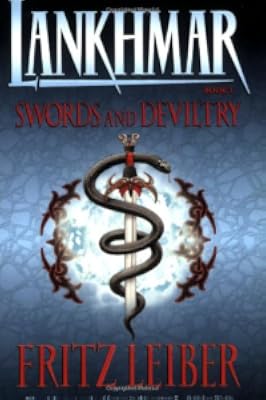
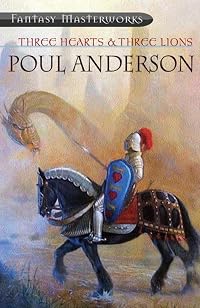


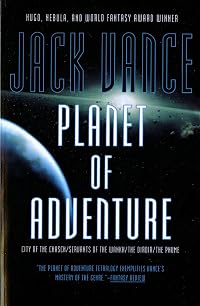
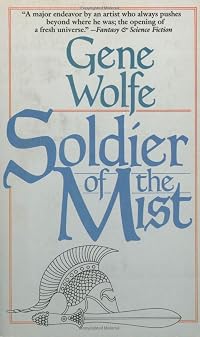

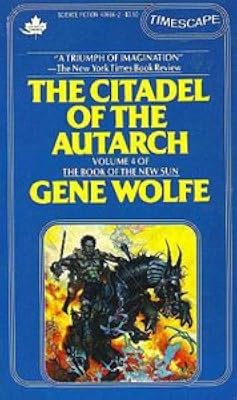


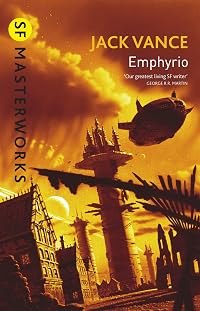

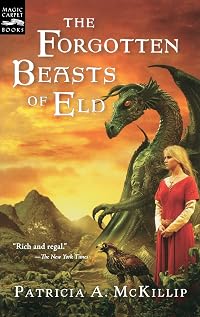
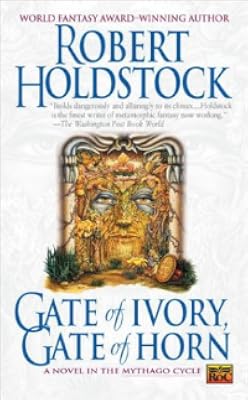
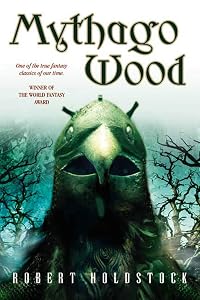
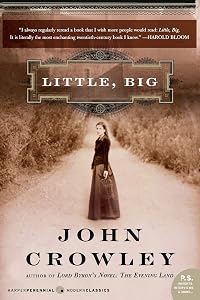
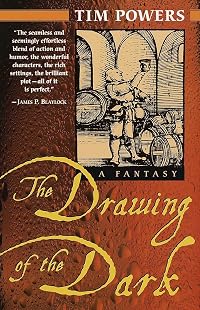
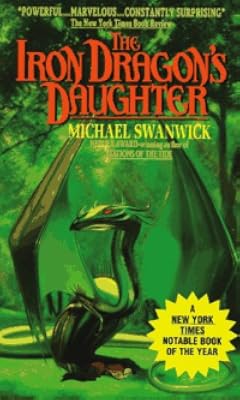


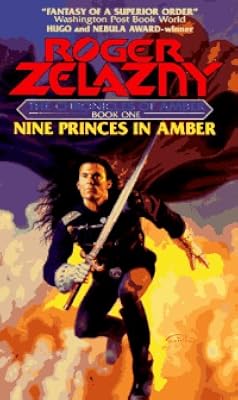






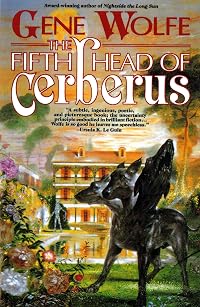
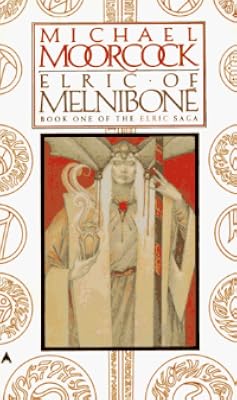
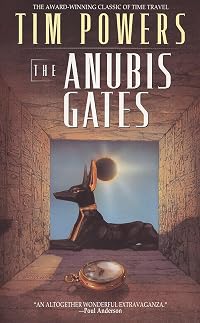
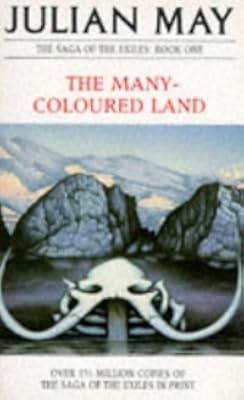


Member Recommendations

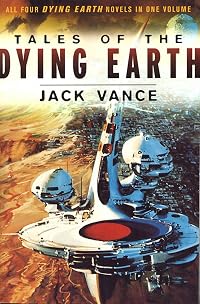
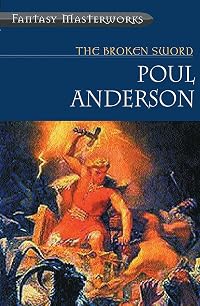
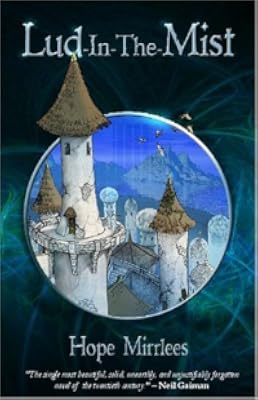
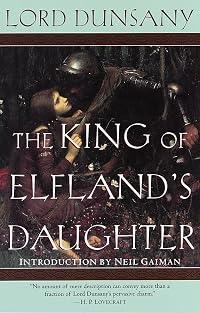
corporate_clone another modern telling of fairy tales, Amber and Lyonnesse have quite a bit in common and may appeal the same readers.
20
Member Reviews
Let's be clear: it's not perfect, and it's not for everybody. But (for me) it's imperfections seem deliberate and charming. It was apparently written in the 1980s, but has the air of something written in the 1940s crossed with something written in the 1600s.
If you're familiar with the "romance" genre--not the Harlequin or Mills & Boone kind of romance, but the antecedent of the novel, exemplified in Sir Philip Sidney's Arcadia, you will have a sense of what to expect: a dazzling array of characters, whose character is little delved into, points-of-view that skip all over the place, an uneven sense of scale and description (there is no guarantee that the more that is written, the more important it is. At one point he lists, in list show more form, the characteristics of a dozen or-so individual fairies, none of whom enter into the story), and other such flaws.
And yet, it felt like a masterwork to me, and criticizing it would be like criticizing The Odyssey or Grimms' Fairy Tales. I loved it. It was odd, but lovely, and very much itself throughout.
(Note: 5 stars = amazing, wonderful, 4 = very good book, 3 = decent read, 2 = disappointing, 1 = awful, just awful. I'm fairly good at picking for myself so end up with a lot of 4s). I feel a lot of readers automatically render any book they enjoy 5, but I grade on a curve! show less
If you're familiar with the "romance" genre--not the Harlequin or Mills & Boone kind of romance, but the antecedent of the novel, exemplified in Sir Philip Sidney's Arcadia, you will have a sense of what to expect: a dazzling array of characters, whose character is little delved into, points-of-view that skip all over the place, an uneven sense of scale and description (there is no guarantee that the more that is written, the more important it is. At one point he lists, in list show more form, the characteristics of a dozen or-so individual fairies, none of whom enter into the story), and other such flaws.
And yet, it felt like a masterwork to me, and criticizing it would be like criticizing The Odyssey or Grimms' Fairy Tales. I loved it. It was odd, but lovely, and very much itself throughout.
(Note: 5 stars = amazing, wonderful, 4 = very good book, 3 = decent read, 2 = disappointing, 1 = awful, just awful. I'm fairly good at picking for myself so end up with a lot of 4s). I feel a lot of readers automatically render any book they enjoy 5, but I grade on a curve! show less
I think this fantasy trilogy may well be my favourite. It's one I still reread with pleasure, probably because it is so clearly written for adults, though when I first read it as a teenager the violent indignities inflicted on Christian missionaries and the fate of poor Suldrun scared me off after the cosy safety of Middle Earth and Narnia. Luckily I went back to it. The dangers and cruelties of the Elder Isles anticipate the modern hard-boiled fantasy epics of Martin, Abercombie et al, yet the language is that of high chivalry, arch wit and sharp irony. Even the most horrible monster is highly articulate and argues with logic and reason. For every danger and cruelty, however, there is wonder and kindness and joy. The books, also, are show more unashamedly drenched with magic and crowded with fey personages, possibly the best fictional representation of fairies I have ever read, wonderful creatures utterly without conscience.
The story is long and strange and always unexpected. Our protagonists suffer sudden changes or reversals of fortune at every turn, and it's only about halfway through before a narrative begins to take proper shape. Vance's evocation of a fantasy landscape is unparalleled. For the first time, I noticed that there was something missing from the detailed descriptions of meals and feasts and scavenged scraps and quick repasts: no potatoes. Because, of course, they haven't been brought back from the Americas yet. I don't know why, but that little detail made me unaccountably happy. show less
The story is long and strange and always unexpected. Our protagonists suffer sudden changes or reversals of fortune at every turn, and it's only about halfway through before a narrative begins to take proper shape. Vance's evocation of a fantasy landscape is unparalleled. For the first time, I noticed that there was something missing from the detailed descriptions of meals and feasts and scavenged scraps and quick repasts: no potatoes. Because, of course, they haven't been brought back from the Americas yet. I don't know why, but that little detail made me unaccountably happy. show less
Wow. What a wonderful surprise!
For an early eighties fantasy, it reads rather fantastically easy, with a near perfect blend of adventure, spry heroes and heroines, and an almost mythical command of myth, history, and magic in a hugely creative blend. We're not even bogged down in any such weird concepts like "historical accuracy", either.
And actually, I loved the whole idea of slap-dashing a whole continent next to Gaul and throwing in Merlin (Murgen), Mithra, evil christians, the fae, chivalry, high Celts, and so much more.
None of it overwhelmed the taste of adventure, where three kingdoms vied, played, made alliances, and started wars during a span of 30 years, and the characterizations were pure fantasy boilerplate, but lest you show more get turned off by that idea, just know that they all go through tons of changes... heck, they went through nearly as many as what happen to the plot, itself.
Is that a problem? Hell no. Not for me. I was actually rather amazed at the sheer scope of where we started, from a princess's childhood (Suldrun), her setup as a fairytale, then the betrayal of her wonderful prince (Aillas), their love, and their tragedy merely sets the stage, even if it takes up a sizable portion of the book. The rest of the tale happens to be one of the best written and most imaginative, quickly paced, and thoroughly satisfying traditional fantasy novels I've ever read, staying firmly on the road of adventure, adventure, adventure.
Aillas's tragedy is only the starting point, after all, and making a ladder out of bones is just the beginning, especially after he learns that his lost Suldrun had a child.
Tons of trigger points for me, and I've never gotten tired of such tales. I just can't believe how awesome the adventure was, or just how much was accomplished all the way to a mostly happy ending.
And now that I've finished the first book in the trilogy and loved it, I have absolutely no reason not to enthusiastically dive into The Green Pearl. :) show less
For an early eighties fantasy, it reads rather fantastically easy, with a near perfect blend of adventure, spry heroes and heroines, and an almost mythical command of myth, history, and magic in a hugely creative blend. We're not even bogged down in any such weird concepts like "historical accuracy", either.
And actually, I loved the whole idea of slap-dashing a whole continent next to Gaul and throwing in Merlin (Murgen), Mithra, evil christians, the fae, chivalry, high Celts, and so much more.
None of it overwhelmed the taste of adventure, where three kingdoms vied, played, made alliances, and started wars during a span of 30 years, and the characterizations were pure fantasy boilerplate, but lest you show more get turned off by that idea, just know that they all go through tons of changes... heck, they went through nearly as many as what happen to the plot, itself.
Is that a problem? Hell no. Not for me. I was actually rather amazed at the sheer scope of where we started, from a princess's childhood (Suldrun), her setup as a fairytale, then the betrayal of her wonderful prince (Aillas), their love, and their tragedy merely sets the stage, even if it takes up a sizable portion of the book. The rest of the tale happens to be one of the best written and most imaginative, quickly paced, and thoroughly satisfying traditional fantasy novels I've ever read, staying firmly on the road of adventure, adventure, adventure.
Aillas's tragedy is only the starting point, after all, and making a ladder out of bones is just the beginning, especially after he learns that his lost Suldrun had a child.
Tons of trigger points for me, and I've never gotten tired of such tales. I just can't believe how awesome the adventure was, or just how much was accomplished all the way to a mostly happy ending.
And now that I've finished the first book in the trilogy and loved it, I have absolutely no reason not to enthusiastically dive into The Green Pearl. :) show less
It is hard to believe I have not reviewed this book, having read it many times before and just finished re-reading it again. It is an amazing work of fantasy. It adds politics and the affairs of great magicians, humour and eroticism to fairy stories. It is set in the 'Elder Isles', a now-sunken area between Ireland and Galicia which comprises ten kingdoms. Princess Suldrun of Lyonesse is imprisoned in a garden by her father, the ambitious King Casmir, who plots to rule all of the Elder Isles. Into Suldrun's garden washes Prince Aillas of Troicinet after an accident at sea. She cares for him and the pair fall in love. But this triggers events which affect not only the lovers but the magicians, fairies and kings of the Elder Isles.
This is my first Vance novel and my only regret is that someone did not turn me onto him sooner. I am excited to move onto the Dying Earth after finishing this series.
Lyonesse reminds me of the Faerie Queene. A series of fast-paced vignettes and stories that form an overall plot but which can almost stand alone as bedtime stories. The narrator has a sardonic sense of humor and delivers the story in a way that makes the action seem familiar, as if a historian from that mythological time were relating the events. Or as if it were a serialized novel from the distant past.
I haven't read fantasy in this style for a long time, if ever, and it is refreshing. I was impressed at how rich and complex a world Vance creates without complex show more character development. At first it dragged on and on, and I wondered where the plot was, but then it moves away from Suldrun and starts skipping around the world of Lyonesse with ease to the point where I don't understand why the subtitle "Suldrun's Garden" was even needed.
Vance has a way of making you smile or even laugh out loud while on the next page you find yourself cringing with disgust. What seems at first a simple and almost childish story turns out to be quite a mature tale. show less
Lyonesse reminds me of the Faerie Queene. A series of fast-paced vignettes and stories that form an overall plot but which can almost stand alone as bedtime stories. The narrator has a sardonic sense of humor and delivers the story in a way that makes the action seem familiar, as if a historian from that mythological time were relating the events. Or as if it were a serialized novel from the distant past.
I haven't read fantasy in this style for a long time, if ever, and it is refreshing. I was impressed at how rich and complex a world Vance creates without complex show more character development. At first it dragged on and on, and I wondered where the plot was, but then it moves away from Suldrun and starts skipping around the world of Lyonesse with ease to the point where I don't understand why the subtitle "Suldrun's Garden" was even needed.
Vance has a way of making you smile or even laugh out loud while on the next page you find yourself cringing with disgust. What seems at first a simple and almost childish story turns out to be quite a mature tale. show less
Aside from the Dying Earth books, I’ve not read much Jack Vance. Which is odd, as I do adore those, the complexity and richness of the language, the sly wit and dark humour, the anti-heroes so well rendered. Lyonesse is a quite different beast. In some ways it feels far more of a traditional fantasy than the much earlier tales of Cugel the clever and Turjan and Chun the Unavoidable. It is definitely more of a true novel; most of the Dying Earth books are portmanteau made up of episodic short stories, while this is a distinct single tale.
The novel is set in several of the divided kingdoms of the Elder Isles, placed south of Ireland and north of Iberia, roughly where the Bay of Biscay becomes the Atlantic Ocean proper, as shown with a show more truly terrible map. We gather from the setting and occasional footnotes that this is where so many of the myths of Europe originate; this is Atlantis and Hy-Brasil and the Fairy Isles.
It did take me a little while to find my feet, for a couple of reasons. It wasn’t initially clear to me where this Atlantean land in which the tale unfolds was situated in time; the language and mores felt largely like those of the late middle ages (or, at any rate, with that Arthurian feel of the late middle ages from which much high fantasy takes its tone) but the references did not truly help to place it anywhere - or, rather, anywhen. It is stated that the founding family of one kingdom are also of the line that gave rise to Arthur Pendragon, although this seems to have been some time before. There is a Christian missionary, and reference is stated to the power of the church of Rome. It is, I think, deliberately vague and anachronistic, and it cased to be an issue once I was in caught up in the story.
Also early on, I had a problem with some changes of tone. At the outset the authorial voice is recognisably high fantasy, and becomes somewhat mythic or fairytale at points, but then we have a sudden shift into a rather dry chapter of historical and political exposition, before returning to the fairytale fantasy tone. Not long after this, however, I saw how the separate sections began to come together and that they were threads weaving into a greater tapestry. Vance does this quite superbly, introducing what appear to be obvious directions for the plot (obvious because of the fairytale fantasy inflection of the writing) only to immediately subvert them - and then call back much later on with an unforeseen payoff.
The characters are somewhere between mythic archetypes and actual people, something brought out by the habit of several of the magicians of the books splitting off from themselves scions, or sub-personalities, which begin as an aspect of the original but quickly develop their own characteristics.
For perhaps the first quarter of the book I was enjoying Lyonesse and thought it fine but, by the halfway point, I began to see why this is considered one of the great works of fantasy. show less
The novel is set in several of the divided kingdoms of the Elder Isles, placed south of Ireland and north of Iberia, roughly where the Bay of Biscay becomes the Atlantic Ocean proper, as shown with a show more truly terrible map. We gather from the setting and occasional footnotes that this is where so many of the myths of Europe originate; this is Atlantis and Hy-Brasil and the Fairy Isles.
It did take me a little while to find my feet, for a couple of reasons. It wasn’t initially clear to me where this Atlantean land in which the tale unfolds was situated in time; the language and mores felt largely like those of the late middle ages (or, at any rate, with that Arthurian feel of the late middle ages from which much high fantasy takes its tone) but the references did not truly help to place it anywhere - or, rather, anywhen. It is stated that the founding family of one kingdom are also of the line that gave rise to Arthur Pendragon, although this seems to have been some time before. There is a Christian missionary, and reference is stated to the power of the church of Rome. It is, I think, deliberately vague and anachronistic, and it cased to be an issue once I was in caught up in the story.
Also early on, I had a problem with some changes of tone. At the outset the authorial voice is recognisably high fantasy, and becomes somewhat mythic or fairytale at points, but then we have a sudden shift into a rather dry chapter of historical and political exposition, before returning to the fairytale fantasy tone. Not long after this, however, I saw how the separate sections began to come together and that they were threads weaving into a greater tapestry. Vance does this quite superbly, introducing what appear to be obvious directions for the plot (obvious because of the fairytale fantasy inflection of the writing) only to immediately subvert them - and then call back much later on with an unforeseen payoff.
The characters are somewhere between mythic archetypes and actual people, something brought out by the habit of several of the magicians of the books splitting off from themselves scions, or sub-personalities, which begin as an aspect of the original but quickly develop their own characteristics.
For perhaps the first quarter of the book I was enjoying Lyonesse and thought it fine but, by the halfway point, I began to see why this is considered one of the great works of fantasy. show less
This is my first Vance novel and my only regret is that someone did not turn me onto him sooner. I am excited to move onto the Dying Earth after finishing this series.
Lyonesse reminds me of the Faerie Queene. A series of fast-paced vignettes and stories that form an overall plot but which can almost stand alone as bedtime stories. The narrator has a sardonic sense of humor and delivers the story in a way that makes the action seem familiar, as if a historian from that mythological time were relating the events. Or as if it were a serialized novel from the distant past.
I haven't read fantasy in this style for a long time, if ever, and it is refreshing. I was impressed at how rich and complex a world Vance creates without complex show more character development. At first it dragged on and on, and I wondered where the plot was, but then it moves away from Suldrun and starts skipping around the world of Lyonesse with ease to the point where I don't understand why the subtitle "Suldrun's Garden" was even needed.
Vance has a way of making you smile or even laugh out loud while on the next page you find yourself cringing with disgust. What seems at first a simple and almost childish story turns out to be quite a mature tale. show less
Lyonesse reminds me of the Faerie Queene. A series of fast-paced vignettes and stories that form an overall plot but which can almost stand alone as bedtime stories. The narrator has a sardonic sense of humor and delivers the story in a way that makes the action seem familiar, as if a historian from that mythological time were relating the events. Or as if it were a serialized novel from the distant past.
I haven't read fantasy in this style for a long time, if ever, and it is refreshing. I was impressed at how rich and complex a world Vance creates without complex show more character development. At first it dragged on and on, and I wondered where the plot was, but then it moves away from Suldrun and starts skipping around the world of Lyonesse with ease to the point where I don't understand why the subtitle "Suldrun's Garden" was even needed.
Vance has a way of making you smile or even laugh out loud while on the next page you find yourself cringing with disgust. What seems at first a simple and almost childish story turns out to be quite a mature tale. show less
Members
- Recently Added By
Lists

Best Fantasy Novels
821 works; 358 members

Fantasy Masterworks
66 works; 5 members

Favourite Books
1,819 works; 308 members

Faerie Mythology
87 works; 13 members

Princess Tales
130 works; 4 members

Modern Arthurian Fiction
237 works; 16 members

infjsarah's wishlist
408 works; 2 members
Author Information

373+ Works 34,779 Members
John Holbrook Vance (August 28, 1916 - May 26, 2013) was an American mystery, fantasy and science fiction writer. Most of his work was published under the name Jack Vance. He also wrote 11 mystery novels as John Holbrook Vance and three as Ellery Queen, and once each used pseudonyms Alan Wade, Peter Held, John van See, and Jay Kavanse. Vance won show more the World Fantasy Award for Life Achievement in 1984. The Science Fiction Hall of Fame inducted him in 2001. Among his awards for particular works were: Hugo Awards, in 1963 for The Dragon Masters, in 1967 for The Last Castle, and in 2010 for his memoir This is Me, Jack Vance!; a Nebula Award in 1966, also for The Last Castle; the Jupiter Award in 1975; the World Fantasy Award in 1990 for Lyonesse: Madouc. He also won an Edgar (the mystery equivalent of the Nebula) for the best first mystery novel in 1961 for The Man in the Cage. He died at his home in Oakland, California, on May 26, 2013, aged 96. (Bowker Author Biography) show less
Some Editions
Awards and Honors
Awards
Notable Lists
Series

Belongs to Publisher Series
Work Relationships
Is contained in
Has the adaptation
Common Knowledge
- Canonical title
- Lyonesse: Suldrun's Garden
- Original title
- Suldrun's Garden
- Alternate titles
- Suldrun's Garden
- Original publication date
- 1983-04
- People/Characters
- Suldrun; Aillas; Dhrun; Glyneth; Tamurello; Murgen (show all 13); Shimrod; Desmei; Melancthe; Faude Carfilhiot; Casimir; Sollace; Umphred
- Important places
- Lyonesse; Troicinet; Dascinet; Dahaut; South Ulfland; North Ulfland (show all 11); Caduz; Pomperol; Godelie; Blalog; Skaghane
- Dedication
- To Norma: wife and colleague
- First words
- On a dreary winter's day, with rain sweeping across Lyonesse Town, Queen Sollace went into labor.
- Last words
- (Click to show. Warning: May contain spoilers.)He is potent and Murgen must presently tire, and in great sorrow concede defeat.
- Original language
- English
- Canonical DDC/MDS
- 813.087661
Classifications
- Genres
- Fantasy, Fiction and Literature
- DDC/MDS
- 813.087661 — Literature & rhetoric American literature in English American fiction in English By type Genre fiction Adventure fiction Speculative fiction Fantasy High fantasy
- LCC
- PS3572 .A424 .L9 — Language and Literature American literature American literature Individual authors 1961-
- BISAC
Statistics
- Members
- 1,714
- Popularity
- 12,906
- Reviews
- 30
- Rating
- (3.84)
- Languages
- 10 — Czech, Dutch, English, French, German, Hungarian, Italian, Polish, Russian, Spanish
- Media
- Paper, Audiobook, Ebook
- ISBNs
- 38
- UPCs
- 1
- ASINs
- 23