
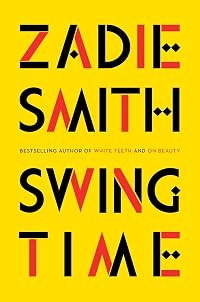
Swing Time
by Zadie Smith
On This Page
Description
"An ambitious, exuberant new novel moving from North West London to West Africa, from the multi-award-winning author of White Teeth and On Beauty Two brown girls dream of being dancers--but only one, Tracey, has talent. The other has ideas: about rhythm and time, about black bodies and black music, what constitutes a tribe, or makes a person truly free. It's a close but complicated childhood friendship that ends abruptly in their early twenties, never to be revisited, but never quite show more forgotten, either. Tracey makes it to the chorus line but struggles with adult life, while her friend leaves the old neighborhood behind, traveling the world as an assistant to a famous singer, Aimee, observing close up how the one percent live. But when Aimee develops grand philanthropic ambitions, the story moves from London to West Africa, where diaspora tourists travel back in time to find their roots, young men risk their lives to escape into a different future, the women dance just like Tracey--the same twists, the same shakes--and the origins of a profound inequality are not a matter of distant history, but a present dance to the music of time"-- show lessTags
Recommendations






















Member Recommendations


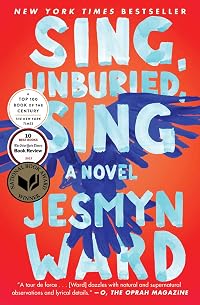
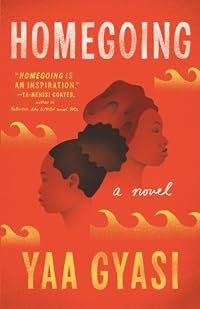
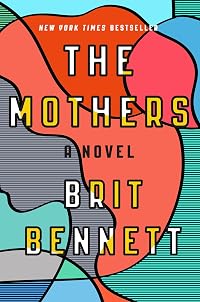
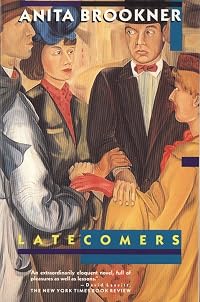
hairball Maybe it's because I read these in a row, but in my mind, they seem to fit together.

Member Reviews
A sweeping multi-layered novel that reads like a dance through childhood into adulthood, across cultures, exploring race, class and gender issues. At the heart of this novel is the friendship between two “brown girls” growing up in public housing estates but in school with a largely white community in London. They see each other at dance class and are immediately drawn to each other, to the same tone of skin, similar but opposites. They are opposites in that one has a white obese doting mother that lathers her daughter with praise and attention while the other has a black mother subsumed with leftist politics and educating herself seemingly hardly noticing her daughter. The narrator feels like an accessory to her mother. She feels show more barely noticed and out of place until her friendship with Tracey begins.
The narrator is unnamed throughout the novel and her childhood friend is Tracey, who is boisterous, adventurous, fun loving and narcissistic. The narrator seems to float through the novel on the energy of others. First and foremost, there is Tracey’s energy that dictates their play and social lives. Tracey is a brilliantly talented dancer and though the narrator loves dancing, she lacks Tracey’s talent. They spend countless hours watching videos of Fred Astaire, Ginger Rogers, Michael Jackson to name a few.
The narrator’s Jamaican mother, a modern day Nefertiti, is a left wing feminist and activist studying politics and philosophy. The father lacks motivation, but is loving and doting towards his family. This is in sharp contrast to Tracey’s family, where there is an absent father. Tracey creates stories to explain where he is and what he is doing, but it seems he left them and has a new family. Though the narrator’s mother criticizes Tracey’s mother and her habits, the narrator enjoys the quiet of Tracey’s home compared to the anger in her own home where her mother no longer wishes to be married to her father.
Jealousies arise and tensions result. The girls in childhood had written stories of “ballet dancers in peril.” Tracey would create and dictate these stories while the narrator transcribed. Always, just as it seemed the happy ending would arrive, disaster would result. Thus, Tracey’s stories foreshadow the end of the beautiful friendship of Tracey and the narrator. Tracey tells the narrator a story about her father, which may be fact or fiction, that causes them to cease speaking to each other for over a decade.
The narrator goes off to college and leaves behind Tracey and their friendship. After a few gigs as a dancer, Tracey’s dancing career fades and she is a single mother to three children all by different fathers and is still living in the public housing estates, a fate the narrator’s mother warned against. The narrator begins working for a big name singer/dancer named Aimee. Aimee’s life is large. She has many people who work for her, numerous boyfriends, children by various men, she travels widely, and becomes interested in opening a girls’ school in an un-named country West Africa. The narrator again is living in the shadow of another large personality, not living a life of her own, running on the energy of another. The narrator travels back and forth getting to know the inhabitants this West African country, watching the fall out of diaspora that occurs there as people (especially men) begin to leave.
The narrator is eventually drawn back to Tracey through her mother who has been working for Parliament. The narrator’s mother reaches out to the narrator pleading with her to ask Tracey to stop harassing her with countless letters that initially ask for help, but then begin to criticize the government, and her mother, and the inability of anybody to help with her situation. Her mother becomes consumed and tortured by these letters, unable to think of anything else. She is guilt ridden and seemingly identifying Tracey rather than the narrator as her daughter as she is dying,
When the narrator confronts Tracey, Tracey asks her who she is trying to be. The narrator’s voice has changed, her life has changed. After leaking the childhood video, Tracey sends it to the narrator with a note saying, “now everyone knows who you really are.” Are we our childhood selves? Is who we are defined by who we connect and interact with? Is that identity forever changing? How much of that identity is tied to gender, class and race? How much of our childhood identity, our moral core, do we keep with us?
This novel is beautifully written, incredibly expansive and brings up awesome philosophical questions. There are so many layers to this novel, that one could go on dissecting this for a very long time. I highly recommend this book to everyone. It would make a superb book club book. My one wish for this novel is that the narrator had more presence, but I think that is part of the point of this book. She floats on the energy of others, she is visible in the shadows of her relationship with others. Class, race and gender issues are often seen in reaction to the narrator.
For discussion questions, please see: http://www.book-chatter.com/?p=2040. show less
The narrator is unnamed throughout the novel and her childhood friend is Tracey, who is boisterous, adventurous, fun loving and narcissistic. The narrator seems to float through the novel on the energy of others. First and foremost, there is Tracey’s energy that dictates their play and social lives. Tracey is a brilliantly talented dancer and though the narrator loves dancing, she lacks Tracey’s talent. They spend countless hours watching videos of Fred Astaire, Ginger Rogers, Michael Jackson to name a few.
The narrator’s Jamaican mother, a modern day Nefertiti, is a left wing feminist and activist studying politics and philosophy. The father lacks motivation, but is loving and doting towards his family. This is in sharp contrast to Tracey’s family, where there is an absent father. Tracey creates stories to explain where he is and what he is doing, but it seems he left them and has a new family. Though the narrator’s mother criticizes Tracey’s mother and her habits, the narrator enjoys the quiet of Tracey’s home compared to the anger in her own home where her mother no longer wishes to be married to her father.
Jealousies arise and tensions result. The girls in childhood had written stories of “ballet dancers in peril.” Tracey would create and dictate these stories while the narrator transcribed. Always, just as it seemed the happy ending would arrive, disaster would result. Thus, Tracey’s stories foreshadow the end of the beautiful friendship of Tracey and the narrator. Tracey tells the narrator a story about her father, which may be fact or fiction, that causes them to cease speaking to each other for over a decade.
The narrator goes off to college and leaves behind Tracey and their friendship. After a few gigs as a dancer, Tracey’s dancing career fades and she is a single mother to three children all by different fathers and is still living in the public housing estates, a fate the narrator’s mother warned against. The narrator begins working for a big name singer/dancer named Aimee. Aimee’s life is large. She has many people who work for her, numerous boyfriends, children by various men, she travels widely, and becomes interested in opening a girls’ school in an un-named country West Africa. The narrator again is living in the shadow of another large personality, not living a life of her own, running on the energy of another. The narrator travels back and forth getting to know the inhabitants this West African country, watching the fall out of diaspora that occurs there as people (especially men) begin to leave.
The narrator is eventually drawn back to Tracey through her mother who has been working for Parliament. The narrator’s mother reaches out to the narrator pleading with her to ask Tracey to stop harassing her with countless letters that initially ask for help, but then begin to criticize the government, and her mother, and the inability of anybody to help with her situation. Her mother becomes consumed and tortured by these letters, unable to think of anything else. She is guilt ridden and seemingly identifying Tracey rather than the narrator as her daughter as she is dying,
When the narrator confronts Tracey, Tracey asks her who she is trying to be. The narrator’s voice has changed, her life has changed. After leaking the childhood video, Tracey sends it to the narrator with a note saying, “now everyone knows who you really are.” Are we our childhood selves? Is who we are defined by who we connect and interact with? Is that identity forever changing? How much of that identity is tied to gender, class and race? How much of our childhood identity, our moral core, do we keep with us?
This novel is beautifully written, incredibly expansive and brings up awesome philosophical questions. There are so many layers to this novel, that one could go on dissecting this for a very long time. I highly recommend this book to everyone. It would make a superb book club book. My one wish for this novel is that the narrator had more presence, but I think that is part of the point of this book. She floats on the energy of others, she is visible in the shadows of her relationship with others. Class, race and gender issues are often seen in reaction to the narrator.
For discussion questions, please see: http://www.book-chatter.com/?p=2040. show less
"I remember there was always a girl with a secret, with something furtive and broken in her, and walking through the village with Aimee, entering people's homes, shaking their hands, accepting their food and drink, being hugged by their children, I often thought I saw her again, this girl who lives everywhere and at all times in history, who is sweeping the yard or pouring out tea or carrying someone else's baby on her hip, and looking over at you with a secret she can't tell..."
I am a fan of Smith. A much savvier reading friend put me on to her through [On Beauty], the story of two families mixed histories. I wish she still wrote for the Guardian Reviews about other people's books. I thought the only problem with The Embassy of show more Cambodia was it was too short, and NW struck all sorts of memories about living in London. So that is a really longwinded way of saying that I was really pleased to get a Netgalley for this book.
Told exclusively from the perspective of one young woman, child of a white working class guy and a woman from Jamaica who is so determined to pull herself up she has all but forgotten her daughter is there too. [Swing Time] is a reference to the musicals which she watches with her friend Tracey, a gifted dancer. Those dances, the films, and their music, recur throughout the book as the narrator reflects on her family and 'race'. Tracey's dad left long ago, and her mum is not working, 'on benefits', with a 'Kilburn facelift'. Smith catches the differences between a certain kind of aspirational family and a kind of working class one: including the firm belief from parents that children can be somehow convinced that not having a particular doll is a *good* thing (fail).
The story leaps between the narrator's childhood and her employment as a PA to an Australian singer-actress: long famous, young despite her years, fiercely fit and capable of dropping people without looking back. The singer, Aimee, decides to fund a school in Senegal. Our narrator is the pathfinder, exploring the options for supporting a girls' school, spending long periods in the Senegalese village to make plans with a more experienced development worker. And here her job gets horribly complicated. Smith nods to the freight of a British -Jamaican in West Africa: she visits the slave castles, tries to imagine herself back in time. But in the village she is given oven chips instead of sharing the family rice, not permitted to work or help, and treated firmly as an outsider. It was here that I most loved this book. Smith puts her finger on so many development gremlins: subtly and smartly, not offering glib solutions just raising things to the light and saying 'this is really odd: what is going on here?' The bit at the end might sound far fetched but for the news of celebs and their 'African adventures'. Smith lets no one off lightly. show less
I am a fan of Smith. A much savvier reading friend put me on to her through [On Beauty], the story of two families mixed histories. I wish she still wrote for the Guardian Reviews about other people's books. I thought the only problem with The Embassy of show more Cambodia was it was too short, and NW struck all sorts of memories about living in London. So that is a really longwinded way of saying that I was really pleased to get a Netgalley for this book.
Told exclusively from the perspective of one young woman, child of a white working class guy and a woman from Jamaica who is so determined to pull herself up she has all but forgotten her daughter is there too. [Swing Time] is a reference to the musicals which she watches with her friend Tracey, a gifted dancer. Those dances, the films, and their music, recur throughout the book as the narrator reflects on her family and 'race'. Tracey's dad left long ago, and her mum is not working, 'on benefits', with a 'Kilburn facelift'. Smith catches the differences between a certain kind of aspirational family and a kind of working class one: including the firm belief from parents that children can be somehow convinced that not having a particular doll is a *good* thing (fail).
The story leaps between the narrator's childhood and her employment as a PA to an Australian singer-actress: long famous, young despite her years, fiercely fit and capable of dropping people without looking back. The singer, Aimee, decides to fund a school in Senegal. Our narrator is the pathfinder, exploring the options for supporting a girls' school, spending long periods in the Senegalese village to make plans with a more experienced development worker. And here her job gets horribly complicated. Smith nods to the freight of a British -Jamaican in West Africa: she visits the slave castles, tries to imagine herself back in time. But in the village she is given oven chips instead of sharing the family rice, not permitted to work or help, and treated firmly as an outsider. It was here that I most loved this book. Smith puts her finger on so many development gremlins: subtly and smartly, not offering glib solutions just raising things to the light and saying 'this is really odd: what is going on here?' The bit at the end might sound far fetched but for the news of celebs and their 'African adventures'. Smith lets no one off lightly. show less
Possibly my favourite Zadie Smith novel. So much goodness sprayed across a canvas that stretches from Kilburn to Manhattan via Africa. This is a novelist at the height of her powers from tiny and intimate portraits of a church hall dance class to a Madonna-type global superstar and her entourage.
Specific and sprawling and Franzenesque in all the best ways.
Specific and sprawling and Franzenesque in all the best ways.
I was completely captivated by the story while also completely disliking the protagonist/narrator. Her cluelessness about anything happening around her, her passivity, her inability to ever say the right thing at the right time, all of these qualities were utterly infuriating to me. (This is one of those times where what I hate most in others is what I hate most in myself.) Every time I put the book down it was with some level of exasperation with the narrator; yet I couldn't stop picking the book up. The story loops and circles, which I always love. And the other characters have something going on, something worth diving into feet first. Highly recommend.
For most of this new novel from Zadie Smith, I really liked it and considered it the best of her work that I’ve read (NW, and On Beauty, with White Teeth on my TBR). It was only towards the end of Swing Time when the narrator is floundering around in a morass of self-abnegation that I lost confidence in what the author was doing. But that was not enough to make me dislike the book: it really is very good reading.
The main body of the novel is the coming-of-age of two ‘brown’ girls growing up in London’s Kilburn, formerly an Irish enclave and now a multicultural melting pot. Their girls’ future prospects seem preordained by their lowly social and economic status, but they share a passionate interest in dance and spend long hours show more watching old Hollywood musicals and perfecting the moves they become so adept at analysing. They both attend Miss Isabel’s Dance School but only Tracey has real talent… the un-named narrator doesn’t quite have it. Just as in Swing music, where the emphasis is on the off–beat or weaker pulse in the music, the narrator sees herself always as the weaker part of any relationships that she has. Despite her mother’s passionate efforts to ensure that her daughter transcends expectations, she always just misses the beat: she wears the wrong clothes to a ‘white’ birthday party, and the university she eventually goes to is second-tier. And although she ends up in a glamour job with an international celebrity (who seems to be based on Madonna) while Tracey never gets beyond the chorus line, this narrator is always on the fringes, trailing along behind the others who seem to be in control of their destiny as she is not.
Zadie Smith is intensely conscious of race, exposing all kinds of ways in which it impacts on life, but Swing Time isn’t focussed on identity politics. It’s more about class and ambition and how choices that more fortunate people take for granted don’t seem to be available for these characters.
To read the rest of my review please visit https://anzlitlovers.com/2016/12/29/swing-time-by-zadie-smith/ show less
The main body of the novel is the coming-of-age of two ‘brown’ girls growing up in London’s Kilburn, formerly an Irish enclave and now a multicultural melting pot. Their girls’ future prospects seem preordained by their lowly social and economic status, but they share a passionate interest in dance and spend long hours show more watching old Hollywood musicals and perfecting the moves they become so adept at analysing. They both attend Miss Isabel’s Dance School but only Tracey has real talent… the un-named narrator doesn’t quite have it. Just as in Swing music, where the emphasis is on the off–beat or weaker pulse in the music, the narrator sees herself always as the weaker part of any relationships that she has. Despite her mother’s passionate efforts to ensure that her daughter transcends expectations, she always just misses the beat: she wears the wrong clothes to a ‘white’ birthday party, and the university she eventually goes to is second-tier. And although she ends up in a glamour job with an international celebrity (who seems to be based on Madonna) while Tracey never gets beyond the chorus line, this narrator is always on the fringes, trailing along behind the others who seem to be in control of their destiny as she is not.
Zadie Smith is intensely conscious of race, exposing all kinds of ways in which it impacts on life, but Swing Time isn’t focussed on identity politics. It’s more about class and ambition and how choices that more fortunate people take for granted don’t seem to be available for these characters.
To read the rest of my review please visit https://anzlitlovers.com/2016/12/29/swing-time-by-zadie-smith/ show less
Brilliant. With Smith's other novels I have appreciated them more than I liked them; they felt too academic. In Swing Time, she nails a perfect blend of character, story, and issues: identity, race, feminism, inequality. The unnamed narrator ("I experienced myself as a kind of shadow") grows up with a close friend/rival in Tracey, who devotes her life to dance; the narrator, who lacks the physical talent (and whose mother has academic ambitions for her), instead goes to regular school and college and becomes a personal assistant to pop star Aimee. Aimee gets it in her head to build a school for girls in a West African country, and the narrator is thrust between the reality on the ground and the one in Aimee's head. A bit naive, show more politically uninformed, and unambitious, the narrator is nevertheless sympathetic. A solid novel.
Quotes
A truth was being revealed to me: that I had always tried to attach myself to the light of other people, that I had never had any light of my own. I experienced myself as a kind of shadow. (4)
And what are babies, I can remember thinking, if they can do this to women? Do they have the power to reprogram their mothers? To make their mothers into the kinds of women their younger selves would not even recognize? (110)
Was this a general rule? Did all friendships - all relations - involve this discreet and mysterious exchange of qualities, this exchange of power? Did it extend to peoples and nations or was it a thing that happened only between individuals? ... What did I give Tracey? What did Tracey give me? (122)
...Aimee herself had no abstract interest in power. She was motivated by something else: impatience. To Aimee poverty was one of the world's sloppy errors, one among many, which might be easily corrected if only people would bring to the problem the focus she brought to everything. (127)
I knew it was childish but I was in an absolute rage about my birthday...I was feeding off it in that righteous way you can if you never mention out loud the wrong you are being done. (136)
...her life was perfect as far as I was concerned, and this is one side-effect of envy, maybe, this failure of imagination. (215)
Watching all that fire with so little kindling, it was of course easy to despair. (225)
"No one is more ingenious than the poor, wherever you find them. When you are poor every stage has to be thought through. Wealth is the opposite. With wealth you get to be thoughtless."
"I don't see anything ingenious about poverty like this. I don't see anything ingenious about having ten children when you can't afford one."
Fern put his glasses back on and smiled at me sadly.
"Children can be a kind of wealth," he said. (Fern and narrator, 253)
I did try to be happy for her. I knew it was what she'd always wanted. But it's hard, when you're at a loose end yourself, to be happy for others... (307-308)
I hugged her but felt the familiar smile fasten itself on my face...and I experienced the same acute sense of betrayal. I was ashamed to feel that way but couldn't help it, a piece of my heart closed against her. (377)
But I could see she wanted to talk, that her pat phrases were like lids dancing on top of bubbling cooking pots, and all I had to do was sit patiently and wait for her to boil over. (378)
"Men are so ridiculous. But it turns out so are women." (narrator's mother, 392)
To avoid watching her, I looked around the circle at all the adamant, inflexible love, sadly misdirected....[Hawa's] perfect face wrapped up tightly like a present. (416)
...devoting all time and energy to somebody else's existence, to somebody else's desires and needs and requirements. It's a shadow life and after a while it gets to you. Nannies, assistants, agents, secretaries, mothers - women are used to it. Men have a lower tolerance. (431)
When I was a child [my mother] had been immortal. I couldn't imagine her leaving this world without ripping its fabric. (443)
The power she has over me is the same as it has always been, judgment, and it goes beyond words. (447-448) show less
Quotes
A truth was being revealed to me: that I had always tried to attach myself to the light of other people, that I had never had any light of my own. I experienced myself as a kind of shadow. (4)
And what are babies, I can remember thinking, if they can do this to women? Do they have the power to reprogram their mothers? To make their mothers into the kinds of women their younger selves would not even recognize? (110)
Was this a general rule? Did all friendships - all relations - involve this discreet and mysterious exchange of qualities, this exchange of power? Did it extend to peoples and nations or was it a thing that happened only between individuals? ... What did I give Tracey? What did Tracey give me? (122)
...Aimee herself had no abstract interest in power. She was motivated by something else: impatience. To Aimee poverty was one of the world's sloppy errors, one among many, which might be easily corrected if only people would bring to the problem the focus she brought to everything. (127)
I knew it was childish but I was in an absolute rage about my birthday...I was feeding off it in that righteous way you can if you never mention out loud the wrong you are being done. (136)
...her life was perfect as far as I was concerned, and this is one side-effect of envy, maybe, this failure of imagination. (215)
Watching all that fire with so little kindling, it was of course easy to despair. (225)
"No one is more ingenious than the poor, wherever you find them. When you are poor every stage has to be thought through. Wealth is the opposite. With wealth you get to be thoughtless."
"I don't see anything ingenious about poverty like this. I don't see anything ingenious about having ten children when you can't afford one."
Fern put his glasses back on and smiled at me sadly.
"Children can be a kind of wealth," he said. (Fern and narrator, 253)
I did try to be happy for her. I knew it was what she'd always wanted. But it's hard, when you're at a loose end yourself, to be happy for others... (307-308)
I hugged her but felt the familiar smile fasten itself on my face...and I experienced the same acute sense of betrayal. I was ashamed to feel that way but couldn't help it, a piece of my heart closed against her. (377)
But I could see she wanted to talk, that her pat phrases were like lids dancing on top of bubbling cooking pots, and all I had to do was sit patiently and wait for her to boil over. (378)
"Men are so ridiculous. But it turns out so are women." (narrator's mother, 392)
To avoid watching her, I looked around the circle at all the adamant, inflexible love, sadly misdirected....[Hawa's] perfect face wrapped up tightly like a present. (416)
...devoting all time and energy to somebody else's existence, to somebody else's desires and needs and requirements. It's a shadow life and after a while it gets to you. Nannies, assistants, agents, secretaries, mothers - women are used to it. Men have a lower tolerance. (431)
When I was a child [my mother] had been immortal. I couldn't imagine her leaving this world without ripping its fabric. (443)
The power she has over me is the same as it has always been, judgment, and it goes beyond words. (447-448) show less
The rhythms of life, of a life, may pulse and flow, pivot and roll like a dance compelled by unheard music. For the unnamed narrator of Swing Time, life is always just a bit out of step. She is the child of mixed parents, like her best friend, Tracey. She feels the pull of the heritage that her relentless Jamaican-born mother pursues through her self-directed education. (Her mother eventually finishes school, completes a part-time university degree, and then moves into local and finally national politics.) But she also knows that it is her father’s care and kindness, however weak he may be, that cushions her bumping path through childhood. It’s what her friend Tracey lacks. Still, Tracey is the better dancer.
The story moves easily show more between the childhood of the two girls and the later life of the narrator as she completes a media degree, joins the staff of the nascent British YTV, and later steps into the role of personal assistant (one of four) to Aimee, an international pop star and perpetual force in the celebrity culture. It is through the latter association, in one of Aimee’s fits of generous enthusiasm, that the focus shifts to a small west-African village where Aimee is determined to build a school for girls. There is plenty of opportunity for misunderstanding and, at least for some, growth. Here our narrator slowly develops the moral and spiritual resources to dance like a native. Of course, merely getting in step with life won’t necessarily see you through. But it may prompt the crisis that pushes you onto the next part of your life, whatever that might involve.
The writing here is compelling, soulful and insightful in equal measure. Smith’s narrative voice never becomes overly familiar. The reader always feels like there is more to her. And the world around her, whether that be north London, New York, or west-Africa, is always being freshly revealed. Even characters who are problematic, such as Tracey or Lamin, or Aimee herself, are always a step beyond easy summary, or summary dismissal. I felt like I was fully immersed in the narrator’s life, even when that life was not such a comfortable place to reside. It is a lovely achievement for any writer.
Certainly recommended. show less
The story moves easily show more between the childhood of the two girls and the later life of the narrator as she completes a media degree, joins the staff of the nascent British YTV, and later steps into the role of personal assistant (one of four) to Aimee, an international pop star and perpetual force in the celebrity culture. It is through the latter association, in one of Aimee’s fits of generous enthusiasm, that the focus shifts to a small west-African village where Aimee is determined to build a school for girls. There is plenty of opportunity for misunderstanding and, at least for some, growth. Here our narrator slowly develops the moral and spiritual resources to dance like a native. Of course, merely getting in step with life won’t necessarily see you through. But it may prompt the crisis that pushes you onto the next part of your life, whatever that might involve.
The writing here is compelling, soulful and insightful in equal measure. Smith’s narrative voice never becomes overly familiar. The reader always feels like there is more to her. And the world around her, whether that be north London, New York, or west-Africa, is always being freshly revealed. Even characters who are problematic, such as Tracey or Lamin, or Aimee herself, are always a step beyond easy summary, or summary dismissal. I felt like I was fully immersed in the narrator’s life, even when that life was not such a comfortable place to reside. It is a lovely achievement for any writer.
Certainly recommended. show less
Members
- Recently Added By
Published Reviews
ThingScore 75
For its plot alone, Swing Time makes for truly marvellous reading. The narrator’s journey, from gritty estate to glittering globe and back again, is the juicy stuff of which film adaptations are made. And the music! If one were to make a playlist of the references, one would have a greatest hits of black music: from Gambian drummers to Cab Calloway to Michael Jackson to Rakim. What makes show more Swing Time so extraordinary are the layers on which it operates; beneath its virtuosic plotting lies the keenest social commentary. show less
added by bergs47
Some of the narrator’s experiences in Africa with Aimee — combined with her efforts to understand shifting attitudes toward race in music and dance — are meant to raise larger questions about cultural appropriation, and the relationship between the privileged West and the developing world. But these issues do not spring organically from this clumsy novel — a novel that showcases its show more author’s formidable talents in only half its pages, while bogging down the rest of the time in formulaic and predictable storytelling. show less
added by private library
Lists

Booker Prize
491 works; 62 members

Top Five Books of 2017
757 works; 230 members

Man Booker Prize Longlist 2017
13 works; 4 members

Books Read in 2017
4,249 works; 130 members

music to my eyes
86 works; 12 members

Books Read in 2023
5,547 works; 145 members
Kirkus Starred Fiction Reviews of Books Published in 2016
63 works; 3 members

Recommendations
17 works; 1 member

Netgalley Reads
458 works; 3 members

Novels featuring Mothers
64 works; 8 members

wish list
61 works; 3 members

To Read
617 works; 7 members

Africa
109 works; 8 members

Books Read in 2018
4,360 works; 110 members

Books Read in 2019
4,052 works; 110 members

Global Reads: Books Set in Africa
19 works; 3 members
Author Information

52+ Works 41,014 Members
Zadie Smith is a novelist, essayist and short story writer. As of 2012, she has published four novels, White Teeth (2000), The Autograph Man (2002), On Beauty (2005), and NW (2012), all of which have received critical praise. In 2003, she was included on Granta's list of 20 best young authors and Smith won the Orange Prize for Fiction in 2006. Her show more novel White Teeth was included in Time magazines TIME 100 Best English-language. Smith joined NYU's Creative Writing Program as a tenured professor in 2010. Smith attended Hampstead Comprehensive School, and King's College, Cambridge University where she studied English literature. (Bowker Author Biography) show less
Some Editions
Awards and Honors
Awards
Distinctions
The Guardian Book of the Day (2016-11-13)
The Guardian Book of the Day (2016-11-04)
Notable Lists
Series
Belongs to Publisher Series
Gallimard, Folio (6739)
Work Relationships
Has as a student's study guide
Common Knowledge
- Canonical title*
- Swing time
- Original title
- Swing Time
- Original publication date
- 2016
- People/Characters
- Tracey; Aimee; Fern; Lamin
- Important places
- London, England, UK; New York, USA; The Gambia, West Africa
- Epigraph
- When the music changes, so does the dance. -- Hausa proverb
- Dedication
- For my mother, Yvonne
- First words
- It was the first day of my humiliation.
- Last words
- (Click to show. Warning: May contain spoilers.)She was right above me, on her balcony, in a dressing gown and slippers, her hands in the air, turning, turning, her childen around her, everybody dancing.
- Publisher's editor
- Prosser, Simon
*Some information comes from Common Knowledge in other languages. Click "Edit" for more information.
Classifications
Statistics
- Members
- 3,013
- Popularity
- 5,888
- Reviews
- 112
- Rating
- (3.63)
- Languages
- 14 — Czech, Danish, Dutch, English, Finnish, French, German, Hungarian, Italian, Polish, Romanian, Spanish, Swedish, Portuguese (Portugal)
- Media
- Paper, Audiobook, Ebook
- ISBNs
- 57
- ASINs
- 15