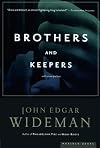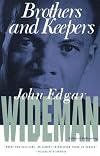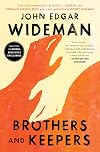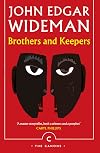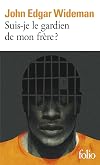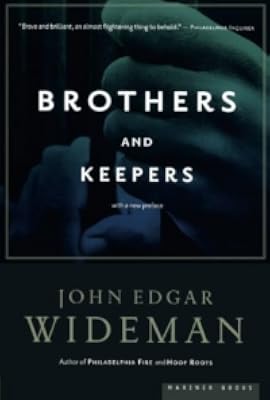
Brothers and Keepers
by John Edgar Wideman
On This Page
Description
The author examines his brother's life in comparison to his own and asks himself why they are so different, one a college professor, one sentenced to life imprisonment. A haunting portrait of lives arriving at different destinies, this is the author's seminal memoir about two brothers, one an award-winning novelist, the other a fugitive wanted for robbery and murder. He recalls the capture of his younger brother Robby, details the subsequent trials that resulted in a sentence of life in show more prison, and provides vivid views of the American prison system. A gripping, unsettling account, it weighs the bonds of blood, tenderness, and guilt that connect the author to his brother and measures the distance that lies between them. show lessTags
Recommendations
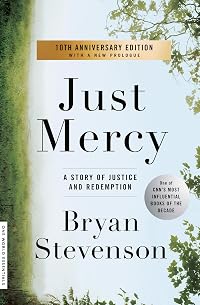

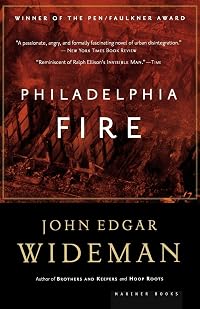
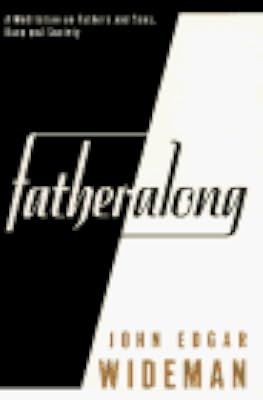
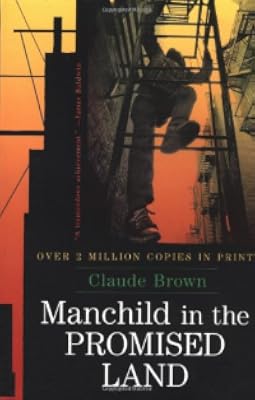









Member Recommendations
Member Reviews
This is the story of John and his brother Robert, aka Robby. Robby was arrested and convicted of murder in the early 1970s and was sentenced to life in prison. John sets out to tell his story and, in doing so, explores the nuances of race and family in the late 20th Century. This is an honorable and moving memoir, one in which John moves fluidly from his own voice to that of Robby, his hip and tough younger brother.
I tried not to read this book through the lens of cool distance and liberal curiosity provided by my white privilege. But I can't shed that privilege. So I tried to listen deeply to the experiences that John shares in this memoir. He unapologetically notes that Black men in the 1970s did not have many options; unemployment show more was high and racism was alive and kicking. But neither does he acquit his brother for his path, a path lined with women and drugs and, ultimately, with murder. John acknowledges that, though he chose a different path than that chosen by Robby, their anger is the same. The sense of disempowerment, the constant awareness of categorization as a "black man" -- the brothers share this experience fully and absolutely. The line between their lives -- that of a Black man who earned a college degree and taught at the college level, and that of a Black man who committed murder in a drug deal gone bad and ended up imprisoned for life -- that line is viciously thin. If nothing else, this is an acknowledgement and exploration of that perilously thin line.
John and Robert grew up in Pittsburgh in a loving family with limited financial resources. John eloquently captures this theme and distinguishes theirs from families where violence and hatred existed. Poor they might have been, but he honors the love and care that his family provided without "whitewashing" the struggles they experienced. Robert was the youngest son and John compassionately explores the impact of the older siblings' success on young Robby's sense of his options. He wanted to be different; he wanted to forge his own path. Unfortunately, this led to disaster and a life sentence in prison.
Robby's voice is so eloquent in this memoir. The fluid way in which John weaves his own voice with that of his brother is pure literature. At times this memoir reads like a mystery novel, gripping and entertaining, and at other times it reads like a... well, like a memoir.
As a white woman of privilege, trying to describe and effectively endorse this memoir is a challenge. But recommending it is easy. I do so, wholeheartedly and without reservation. show less
I tried not to read this book through the lens of cool distance and liberal curiosity provided by my white privilege. But I can't shed that privilege. So I tried to listen deeply to the experiences that John shares in this memoir. He unapologetically notes that Black men in the 1970s did not have many options; unemployment show more was high and racism was alive and kicking. But neither does he acquit his brother for his path, a path lined with women and drugs and, ultimately, with murder. John acknowledges that, though he chose a different path than that chosen by Robby, their anger is the same. The sense of disempowerment, the constant awareness of categorization as a "black man" -- the brothers share this experience fully and absolutely. The line between their lives -- that of a Black man who earned a college degree and taught at the college level, and that of a Black man who committed murder in a drug deal gone bad and ended up imprisoned for life -- that line is viciously thin. If nothing else, this is an acknowledgement and exploration of that perilously thin line.
John and Robert grew up in Pittsburgh in a loving family with limited financial resources. John eloquently captures this theme and distinguishes theirs from families where violence and hatred existed. Poor they might have been, but he honors the love and care that his family provided without "whitewashing" the struggles they experienced. Robert was the youngest son and John compassionately explores the impact of the older siblings' success on young Robby's sense of his options. He wanted to be different; he wanted to forge his own path. Unfortunately, this led to disaster and a life sentence in prison.
Robby's voice is so eloquent in this memoir. The fluid way in which John weaves his own voice with that of his brother is pure literature. At times this memoir reads like a mystery novel, gripping and entertaining, and at other times it reads like a... well, like a memoir.
As a white woman of privilege, trying to describe and effectively endorse this memoir is a challenge. But recommending it is easy. I do so, wholeheartedly and without reservation. show less
John Edgar Wideman is black and became an English professor. His 10-year-younger brother, Robby, robbed and murdered someone in 1975 and is in prison for life. The author decided to write Robby's story, including visits to the prison and how it all affected John himself.
I originally liked the author's writing style at start of book (he is apparently normally a fiction writer) – at that point, it was more focused on himself and how Robby's actions affected him. However, I didn't like Robby's story as much (though it seemed like it might have been the more interesting of the stories here) – it was written more in Robby's “voice”, I think, so it may have been the style. But, I wasn't as interested again later with the author show more trying to figure out Robby and maybe bringing in some philosophical stuff. I did get more interested again in Robby's story later in the book while John was visiting him in jail. I also found interesting the descriptions of the jail and what was happening there. So, a bit of a mixed bag for me for this one. show less
I originally liked the author's writing style at start of book (he is apparently normally a fiction writer) – at that point, it was more focused on himself and how Robby's actions affected him. However, I didn't like Robby's story as much (though it seemed like it might have been the more interesting of the stories here) – it was written more in Robby's “voice”, I think, so it may have been the style. But, I wasn't as interested again later with the author show more trying to figure out Robby and maybe bringing in some philosophical stuff. I did get more interested again in Robby's story later in the book while John was visiting him in jail. I also found interesting the descriptions of the jail and what was happening there. So, a bit of a mixed bag for me for this one. show less
I could never get into Wideman's fiction, but I think this memoir is fascinating.
Sad but valis insights into prison life & the behaviors that lead to incarceration.
Ratings
Members
- Recently Added By
Lists

Literary Pittsburgh
45 works; 1 member
Author Information

40+ Works 3,289 Members
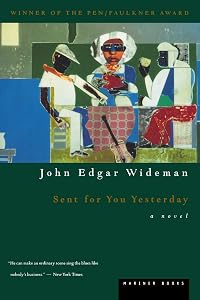
Writer John Edgar Wideman was born in Washington, D. C., on June 14, 1941. He graduated from the University of Pennsylvania, studied at Oxford University, and was the second African American to become a Rhodes Scholar. He taught at the University of Pennsylvania and eventually founded and chaired the African American studies department. He also show more taught at the University of Wyoming and the University of Massachusetts at Amherst. Wideman is the author of more than a dozen books. Sent for You Yesterday won a PEN/Faulkner Award in 1984, and Philadelphia Fire received one a decade later. Fatheralong was a finalist for the National Book Award (1994) and Brothers and Keepers was a finalist for the National Book Critics Circle Award (1995). (Bowker Author Biography) show less
Awards and Honors
Awards
Distinctions
Series
Belongs to Publisher Series
Gallimard, Folio (3278)
Work Relationships
Is abridged in
Common Knowledge
- Canonical title
- Brothers and Keepers
- Original publication date
- 1984
- Important places
- Pittsburgh, Pennsylvania, USA
Classifications
- Genre
- Biography & Memoir
- DDC/MDS
- 813.54 — Literature & rhetoric American literature in English American fiction in English 1900-1999 1945-1999
- LCC
- HV6245 .W733 — Social sciences Social pathology. Social and public welfare. Criminology Social pathology. Social and public welfare. Criminology Criminal classes
- BISAC
Statistics
- Members
- 431
- Popularity
- 71,370
- Reviews
- 4
- Rating
- (3.87)
- Languages
- English, French
- Media
- Paper, Audiobook, Ebook
- ISBNs
- 14
- UPCs
- 1
- ASINs
- 5