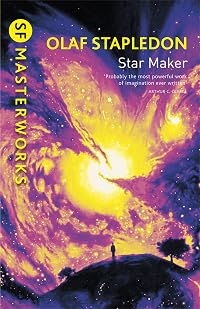
Star Maker
by Olaf Stapledon
On This Page
Description
This bold exploration of the cosmos ventures into intelligent star clusters and mingles among alien races for a memorable vision of infinity. Cited as a key influence by science-fiction masters such as Doris Lessing, this classic has left its mark not only in modern literature but also in the fields of social anthropology and philosophy.Tags
Recommendations







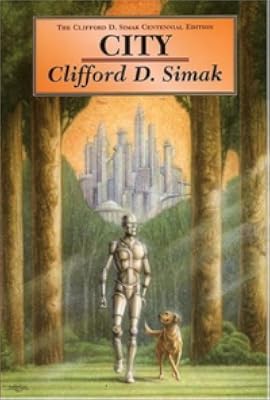
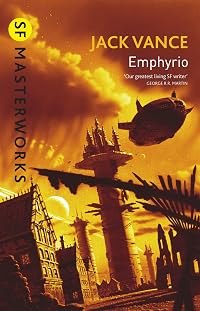
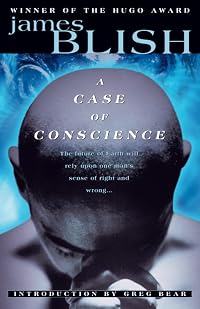
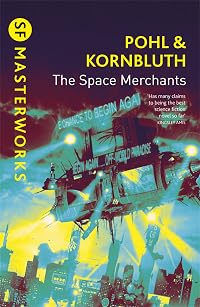














Member Recommendations
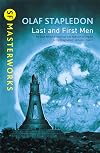
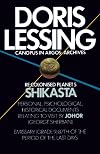
djryan Set in the same universe.
Member Reviews
I have conflicting feelings about this book: I could just as well give it 1 star or 5 stars. The British science fiction author Olaf Stapledon (1886-1950) certainly had an unbridled imagination. This was already evident in his phenomenal Last and the First Men (1930), a reconstruction of more than 2 billion years of human history (you read that right: 2 billion years). In this book, Star Maker (1937), he even goes a step further: he lets a British man look back on a cosmic journey of years along solar systems with inhabited planets, entire galaxies and ultimately the Creator/Star Maker himself. Once again, the strangest creatures, civilizations and cosmic empires pass by, in an increasingly intense succession and interconnection. Again show more I was impressed by Stapledon’s knowledge and use of the astronomical science of the time, I just think of his description of multiverses. Most notable is his emphasis on cosmic interconnectedness: starting with the methods of ‘psychical attraction’ and ‘disembodied flight’ that he uses to transport his narrator through space (and time) faster than the speed of light, along with an ever-increasing number of mentally interconnected entities, and culminating in a collective mind that encompasses the entire cosmos, a truly impressive image: “Each world, peopled with its unique, multitudinous race of sensitive individual intelligences united in true community, was itself a living thing, possessed of a common spirit. And each system of many populous orbits was itself a communal being. And the whole galaxy, knit in a single telepathic mesh, was a single intelligent and ardent being, the common spirit, the ‘I’, of all its countless, diverse, and ephemeral individuals.”
But Stapledon was also a child of his time (the interbellum), and that is shown, for example, in his long digression on racial differences, in the many references to fascism and capitalism, and in his very cyclical view of the development of civilizations. It is this constant rise and fall of civilizations, and especially the sometimes arbitrary destruction and annihilation of entire worlds, galaxies and even universes that raises fundamental, existential questions in the narrator: “As we searched up and down time and space, discovering more and more of the rare grains called planets, as we watched race after race struggle to a certain degree of lucid consciousness, only to succumb to some external accident or, more often, to some flaw in its own nature, we were increasingly oppressed by a sense of the futility, the planlessness of the cosmos.”
And so our narrator in his quest ultimately ends up with the Star Maker, the creator of everything. And – as might be expected – this ‘encounter’ is expressed in true Dantesque terms: “I saw, though nowhere in cosmical space, the blazing source of the hypercosmical light, as though it were an overwhelmingly brilliant point, a star, a sun more powerful than all suns together. It seemed to me that this effulgent star was the centre of a four-dimensional sphere whose curved surface was the three-dimensional cosmos. The star of stars, this star that was indeed the Star Maker, was perceived by me, its cosmical creature, for one moment before its splendour seared my vision.”
But the big question is of course how this Supreme Being could remain so indifferent to all these destroyed beings and worlds. In an attempt to explain this, Stapledon presents us with the image of a kind of Ultimate Laboratory Technician in a permanent creative mood, experimenting both within and outside of time (clearly Stapledon has read Augustine), with ever-reconfigured universes, a formidable, endlessly learning entity. This may seem an attractive intellectual image (which, by the way, comes close to the image of God in process theology), but from a human-existential point of view it seems to me an emotional sign of weakness.
The scope and depth of what Stapledon touches upon in this novel may safely be called phenomenal. But in all honesty I must say that the accumulation of descriptions and experiences is so overwhelming and sometimes so very detailed that it eventually becomes very difficult to follow, and – as far as I am concerned – also a bit long-winded. Hence my allusion to the choice between 1 or 5 stars. So I will cowardly refrain from giving a rating, but this is without a doubt one of the most remarkable writings of the first half of the 20th century show less
But Stapledon was also a child of his time (the interbellum), and that is shown, for example, in his long digression on racial differences, in the many references to fascism and capitalism, and in his very cyclical view of the development of civilizations. It is this constant rise and fall of civilizations, and especially the sometimes arbitrary destruction and annihilation of entire worlds, galaxies and even universes that raises fundamental, existential questions in the narrator: “As we searched up and down time and space, discovering more and more of the rare grains called planets, as we watched race after race struggle to a certain degree of lucid consciousness, only to succumb to some external accident or, more often, to some flaw in its own nature, we were increasingly oppressed by a sense of the futility, the planlessness of the cosmos.”
And so our narrator in his quest ultimately ends up with the Star Maker, the creator of everything. And – as might be expected – this ‘encounter’ is expressed in true Dantesque terms: “I saw, though nowhere in cosmical space, the blazing source of the hypercosmical light, as though it were an overwhelmingly brilliant point, a star, a sun more powerful than all suns together. It seemed to me that this effulgent star was the centre of a four-dimensional sphere whose curved surface was the three-dimensional cosmos. The star of stars, this star that was indeed the Star Maker, was perceived by me, its cosmical creature, for one moment before its splendour seared my vision.”
But the big question is of course how this Supreme Being could remain so indifferent to all these destroyed beings and worlds. In an attempt to explain this, Stapledon presents us with the image of a kind of Ultimate Laboratory Technician in a permanent creative mood, experimenting both within and outside of time (clearly Stapledon has read Augustine), with ever-reconfigured universes, a formidable, endlessly learning entity. This may seem an attractive intellectual image (which, by the way, comes close to the image of God in process theology), but from a human-existential point of view it seems to me an emotional sign of weakness.
The scope and depth of what Stapledon touches upon in this novel may safely be called phenomenal. But in all honesty I must say that the accumulation of descriptions and experiences is so overwhelming and sometimes so very detailed that it eventually becomes very difficult to follow, and – as far as I am concerned – also a bit long-winded. Hence my allusion to the choice between 1 or 5 stars. So I will cowardly refrain from giving a rating, but this is without a doubt one of the most remarkable writings of the first half of the 20th century show less
I was pointed into the direction of this book by an acquaintance and now that I got around to it I must thank this acquaintance, because Stapledon's Star Maker is unlike any other science fiction I have read. This book is epic on a cosmological scale, a journey through space and time to the outer reaches of both - and beyond. The sociological, psychological and societal analyses of the alien species found by the book's protagonist are enormously interesting and largely realistic despite the fantastical nature of the conscious entities encountered. The fact that the contents of this book aren't completely ridiculous more than 70 years after it's conception render it a true masterpiece of science fiction.
Wow. Just wow. This novel disproves the general assumption that golden age SF is either hokey or unscientific.
In fact, it starts out like a strong hard-SF exploration novel touching on many possible alien races, mindsets, and physiologies, but it dives right down the rabbit hole into vast combined telepathic minds, galactic societies that actually are GALACTIC in scale, telepathic communication with multiple galaxies, and even to the discovery the rich stellar intelligence. That's right. Intelligent suns.
And an ever further exploration follows. This is a short novel that spans 5 billion years! It may be fast, glorious, imaginative, and deeply philosophical, but more than that, it's SUBVERSIVE.
Let me be clear on this. This novel is just show more as valid and fun today as it must have been back in 1937. More than that, it's probably something that would be appreciated more NOW than way back then.
Why? The Star Maker is the creation of God from Man. And even better, it even flies right into Manichean heresies! :) As HARD SF! It's fast as hell and fun as HELL! :)
Olaf Stapledon is easily one of the most brilliant and imaginative writers to have ever decided to use hard-SF as a furious vehicle of massive speculative philosophy in sociology, biology, physics, and cosmology. Was he a brilliant man? What do you think?
I can't get my jaw to stop dropping. I'm not even giving it special props for coming out of 1937. It's as good as any of the most vast-spanning hard-SF of today.
Come blow your mind! :) show less
In fact, it starts out like a strong hard-SF exploration novel touching on many possible alien races, mindsets, and physiologies, but it dives right down the rabbit hole into vast combined telepathic minds, galactic societies that actually are GALACTIC in scale, telepathic communication with multiple galaxies, and even to the discovery the rich stellar intelligence. That's right. Intelligent suns.
And an ever further exploration follows. This is a short novel that spans 5 billion years! It may be fast, glorious, imaginative, and deeply philosophical, but more than that, it's SUBVERSIVE.
Let me be clear on this. This novel is just show more as valid and fun today as it must have been back in 1937. More than that, it's probably something that would be appreciated more NOW than way back then.
Why? The Star Maker is the creation of God from Man. And even better, it even flies right into Manichean heresies! :) As HARD SF! It's fast as hell and fun as HELL! :)
Olaf Stapledon is easily one of the most brilliant and imaginative writers to have ever decided to use hard-SF as a furious vehicle of massive speculative philosophy in sociology, biology, physics, and cosmology. Was he a brilliant man? What do you think?
I can't get my jaw to stop dropping. I'm not even giving it special props for coming out of 1937. It's as good as any of the most vast-spanning hard-SF of today.
Come blow your mind! :) show less
If you're a big sci-fi fan, like I am, reading old stuff is always interesting, not only for the stories but also to see how the authors who actually created science fiction tell those stories. Star Maker was written in 1937 England, and is clearly the product of an intelligent, philosophical, somewhat Marxist rationalist trying to make sense out of the most desperate time period of the 20th century. Think Bertrand Russell plus Arthur C Clarke. Very thinly veiled in the account of a man who is transported across time and space to observe and join his consciousness with other species are natural questions for someone who had lived through WW1, the Great Depression, and the queasy birth pangs of WW2: is progress possible? Must war be show more inevitable? Does God exist? If so, what's the deal? The story has a sort of "powers of ten" aspect: first the narrator's soul/pneuma watches another human-like species go through their final sad cycle of growth-plateau-war-decline, then he and the friend he found on that world venture to other planets and other minds, then to other star systems, then galaxies, and eventually he meets the Star Maker. One drawback of the book is that Stapledon merely tells you his points instead of constructing narratives, so it's a little dry and clinical, especially because it's all about isms: spiritualism, puritanism, capitalism, communism, and imperialism are all brought in under the vast dialectical sweep of Stapledon's pen in search of a higher harmony, an e pluribus unum in the great galactic concord of races. Along the way there's some cool hard sci-fi (Dyson spheres, Project Orion), some unscientific weirdness (living stars and nebulae), and some totally confused astro-Plato-Gnosticism at the end when the narrator finds God and goes back home. I liked the book and Stapledon (check out his neat long essay Saints and Revolutionaries online) and might check out more. show less
This is some quality proto-dreampunk right here. The whole thing is an out-of-body experience with some of the most important plot points coming from literal dreams. It's such an immense story packed into a short book that sometimes it feels more like notes for a long series like Asimov's Foundation.
If you're up for a highly abstract story that's not so much about individual characters as it is about life, the universe, and everything, then this is quite a read.
If you're up for a highly abstract story that's not so much about individual characters as it is about life, the universe, and everything, then this is quite a read.
I don't know what Star Maker is, but it's sure not a novel. An Englishman lying on a hillside is mentally carried into deep space, where after frolicking with the stars, he enters into telepathic communion with a member of a race of Other Men, intelligent aliens with a society based on taste as our is based on sight. From this initial point, Stapledon explores a diverse galaxy of intelligent aliens evolved on different lines, using the expanding collective consciousness as lens. Each society is beset by a kind of industrial crisis, taking different forms, but generally a conflict between anarchic individualism, tribal primitivism, and oppressive totalitarianism. Species which transcend their crisis enter into a utopian society, and show more telepathic community with the galactic whole, which defeats war itself, has a brief conflict between planetary species and the living star, and then settles into perfecting its collective mentality in an attempt to reach the supreme being, which the collective intelligence deems the Star Maker. Eventually, this immensely wise intelligence finds its creator, which is immensely greater, and has created many universes operating on many laws of good and evil.
It's a fantastic cosmological voyage and speculation, but almost entirely devoid of plot or character. And in the end, it's shockingly conventional. The Star Maker is... basically the Christian Gods. Capitalist societies reach a historical crisis, which either kills them or transforms them into Marx's utopian communism. A lot of ideas which have become stock in scifi seem to have appeared here first, and it's an ambitious book, but one which I can't honestly recommend. show less
It's a fantastic cosmological voyage and speculation, but almost entirely devoid of plot or character. And in the end, it's shockingly conventional. The Star Maker is... basically the Christian Gods. Capitalist societies reach a historical crisis, which either kills them or transforms them into Marx's utopian communism. A lot of ideas which have become stock in scifi seem to have appeared here first, and it's an ambitious book, but one which I can't honestly recommend. show less
Science fiction should have plenty of the wonder factor and I found Star Maker to be almost mind expanding. Stapledon is describing the birth and death of the whole cosmos, no less and is doing it from a first person perspective. I read the first half of this book late at night and later had the most weird dreams, so weird in fact that I thought I had better finish the thing the next morning. These days, dreams are the nearest I get to mind expansion
Stapledon's book has long been regarded as a science fiction classic, receiving plenty of critical acclaim when it was first published in 1937 and today it features in the science fiction 'masterwork' series. That is quite an achievement for a book that hardly has a storyline: it is more of show more a framework for Stapledon to hang his theories about how galaxies were formed, how life emerged and how it eventually died, or was destroyed because of the machinations of the Star Maker. There is some philosophy some science, some world building and plenty of ideas about the life forms that pulse through the cosmos.
The speaker of the book is a man very much like Stapledon himself who walks up onto a hillside above the suburb where he lives, reflecting on the world below him (he can make out his bungalow where his wife has switched on the lights as night comes down). He gazes up at the stars and finds himself lost in the looking, so much so that he has an out of body experience and sees himself as a point of light rushing up towards the stars. This is the start of a most incredible journey as he vaguely wonders if he has died, but his experiences of travelling through space push those thoughts to the background. After a very long journey where he appears to have travelled way beyond the solar system to one of the arms of the milky way, winking in and out of time itself, he eventually arrives on a planet a little like earth which he calls the other earth. There is humanoid life on the planet and the speaker finds he is able to lodge himself within the mind of one of the aliens. He lives within the mind of Bvalltu becoming a sort of surrogate partner until he is also ready to join with the speaker to explore the universe and they both set off visiting other planets, collecting more minds along the way until they form a community of explorers/watchers. Time has no meaning for them as they watch various life forms struggle to what the speaker calls "The Awakened State". Very few civilizations achieve the utopia of this world community in which every person is a valued member, but it is only when they get to this stage that they can advance further into a more spiritual existence.
The watchers discover that they can travel backwards and forwards through time and in a search for the meaning of life they are able to watch the cosmos grow from its first inception to maturity and then slowly die as it's stars burn out. They discover that the very stars are a life force and eventually they have a dream or vision of the Star Maker itself. The Speaker is able to report on the various ages of the galaxy from the time of the isolated worlds to the time when interstellar travel is possible to a time when empires are formed as the inhabitants struggle to obtain a galactic community/mentality before moving further towards a cosmic mentality. Everything must die in the end and the futility of existence for those who seek answers to their questions becomes an insistent theme.
In the preface to his book Stapledon sets out his own state of mind when he was writing just before the second world war:
At a moment when Europe is in danger of a catastrophe worse than that of 1914 a book like this may be condemned as a detraction from the desperately urgent defence of civilization against modern barbarianism
The fight against barbarianism is a constant theme of the book and it is no surprise that homo sapiens are not one of the species that make it even as far as a world community. There are however more enlightened civilizations that do survive and Stapledon indulges in describing some of the most important civilizations that become leading players in the galactic community. These are the passages in the book that I enjoyed the most when the author can allow his fertile imagination to run ahead. He is also effective in describing the advanced civilizations battling against a decaying cosmos and he does a pretty good job with the creation of the galaxies. And what of the Star Maker itself? all to possible perhaps.
The science in the book holds up pretty well and Stapledon manages to pitch it at a level where many people will be able to grasp the concepts. In a book without a real story line there are some longuers and it can be a little repetitive. Stapledon writes well enough, but he is no poet and although he manages to induce a sense of wonder his writing at times is less than magical, but this does not stop it becoming a wonderful exercise in fiction writing. A bit of a milestone in the science fiction genre and with ideas enough to satisfy any literary criteria. A Five star book show less
Stapledon's book has long been regarded as a science fiction classic, receiving plenty of critical acclaim when it was first published in 1937 and today it features in the science fiction 'masterwork' series. That is quite an achievement for a book that hardly has a storyline: it is more of show more a framework for Stapledon to hang his theories about how galaxies were formed, how life emerged and how it eventually died, or was destroyed because of the machinations of the Star Maker. There is some philosophy some science, some world building and plenty of ideas about the life forms that pulse through the cosmos.
The speaker of the book is a man very much like Stapledon himself who walks up onto a hillside above the suburb where he lives, reflecting on the world below him (he can make out his bungalow where his wife has switched on the lights as night comes down). He gazes up at the stars and finds himself lost in the looking, so much so that he has an out of body experience and sees himself as a point of light rushing up towards the stars. This is the start of a most incredible journey as he vaguely wonders if he has died, but his experiences of travelling through space push those thoughts to the background. After a very long journey where he appears to have travelled way beyond the solar system to one of the arms of the milky way, winking in and out of time itself, he eventually arrives on a planet a little like earth which he calls the other earth. There is humanoid life on the planet and the speaker finds he is able to lodge himself within the mind of one of the aliens. He lives within the mind of Bvalltu becoming a sort of surrogate partner until he is also ready to join with the speaker to explore the universe and they both set off visiting other planets, collecting more minds along the way until they form a community of explorers/watchers. Time has no meaning for them as they watch various life forms struggle to what the speaker calls "The Awakened State". Very few civilizations achieve the utopia of this world community in which every person is a valued member, but it is only when they get to this stage that they can advance further into a more spiritual existence.
The watchers discover that they can travel backwards and forwards through time and in a search for the meaning of life they are able to watch the cosmos grow from its first inception to maturity and then slowly die as it's stars burn out. They discover that the very stars are a life force and eventually they have a dream or vision of the Star Maker itself. The Speaker is able to report on the various ages of the galaxy from the time of the isolated worlds to the time when interstellar travel is possible to a time when empires are formed as the inhabitants struggle to obtain a galactic community/mentality before moving further towards a cosmic mentality. Everything must die in the end and the futility of existence for those who seek answers to their questions becomes an insistent theme.
In the preface to his book Stapledon sets out his own state of mind when he was writing just before the second world war:
At a moment when Europe is in danger of a catastrophe worse than that of 1914 a book like this may be condemned as a detraction from the desperately urgent defence of civilization against modern barbarianism
The fight against barbarianism is a constant theme of the book and it is no surprise that homo sapiens are not one of the species that make it even as far as a world community. There are however more enlightened civilizations that do survive and Stapledon indulges in describing some of the most important civilizations that become leading players in the galactic community. These are the passages in the book that I enjoyed the most when the author can allow his fertile imagination to run ahead. He is also effective in describing the advanced civilizations battling against a decaying cosmos and he does a pretty good job with the creation of the galaxies. And what of the Star Maker itself? all to possible perhaps.
The science in the book holds up pretty well and Stapledon manages to pitch it at a level where many people will be able to grasp the concepts. In a book without a real story line there are some longuers and it can be a little repetitive. Stapledon writes well enough, but he is no poet and although he manages to induce a sense of wonder his writing at times is less than magical, but this does not stop it becoming a wonderful exercise in fiction writing. A bit of a milestone in the science fiction genre and with ideas enough to satisfy any literary criteria. A Five star book show less
Members
- Recently Added By
Lists

The Guardian's 1000 Novels Everyone Must Read
1,005 works; 550 members

Survey of Classic Science Fiction
171 works; 48 members

S.F. Masterworks (Complete)
229 works; 15 members

SF Masterworks
193 works; 8 members

Isaac Arthur’s Book Recommendations
98 works; 3 members

Books read in 2015
213 works; 5 members


Books Read in 2026
1,891 works; 66 members
Favorite Science Fiction
456 works; 218 members

An evolving science fiction novel canon
50 works; 2 members
Author Information

70+ Works 6,342 Members
Some Editions
Awards and Honors
Distinctions
Series
Belongs to Publisher Series
Work Relationships
Is contained in
Common Knowledge
- Canonical title*
- Der Sternenschöpfer
- Original title
- Star Maker
- Alternate titles*
- Der Sternenmacher
- Original publication date
- 1937
- People/Characters*
- Bvalltu
- Important places
- Earth; Venus; Uranus
- First words
- One night when I had tasted bitterness I went out on to the hill.
- Last words
- (Click to show. Warning: May contain spoilers.)Strange, that it seems more, not less, urgent to play some part in this struggle, this brief effort of animalcules striving to win for their race some increase of lucidity before the ultimate darkness.
- Blurbers
- Borges, Jorge Luis; Clarke, Arthur C.; Robinson, Kim Stanley
- Original language*
- Englisch
- Disambiguation notice
- Nebula Maker is basically a first draft for Star Maker and is not the same work.
*Some information comes from Common Knowledge in other languages. Click "Edit" for more information.
Classifications
Statistics
- Members
- 1,908
- Popularity
- 11,168
- Reviews
- 42
- Rating
- (3.80)
- Languages
- 10 — Danish, English, Finnish, French, German, Greek, Japanese, Spanish, Swedish, Turkish
- Media
- Paper, Audiobook, Ebook
- ISBNs
- 81
- ASINs
- 35