
Through the Language Glass: Why the World Looks Different in Other Languages
by Guy Deutscher
On This Page
Description
A masterpiece of linguistics scholarship, at once erudite and entertaining, confronts the thorny question of how--and whether--culture shapes language and language, culture.Tags
Recommendations




















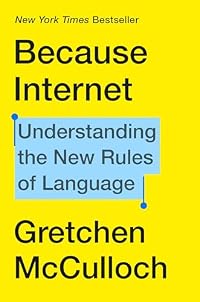






















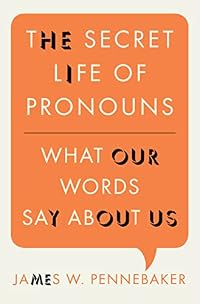






Member Recommendations



chmod007 The first few chapters of Through The Language Glass talk about color as a cultural construct, drawing upon 19th century inquiries into the works of Homer and his seeming indifference to the finer hues of the spectrum. The beginning of TOOCITBOTBM starts with a similar exploration of ancient conceptions (or lack thereof) of consciousness, supported by linguistic evidence.
Member Reviews
Fabulous. Captivating. Everyone should read this book. Can I say anything more superlative?
From thinking about color to grammatical gender to spatial coordinates, this book challenges so much that I have taken for granted. When I tell a story I don't have a need to tell you how I know every detail that is in the story; I just tell it and that is just fine for my American friends. That won't fly in all cultures, however. It turns out there are no syntactic universals.
Those of us from "Western" nations "naturally" think with an east-west, north-south orientation. But those from (bad pun alert) an Oriental perspective don't and I find it mind-boggling. They think south-north and west-east. I can't wrap my head around it. I asked a show more Chinese-American friend how he did it. He said it was simple, when he thought in Chinese he used a south-north outlook and when he thought in English, a north-south.
That conversation helped me in reading this book. When Deutscher discussed anthropological studies that showed cultures who always related where they were in the world spatially (rather than our prevalent mode, which is to the left, to the right, above and below), although I still do not think I could do it, I understand that it can be done and without a second thought.
Being familiar with other Romance Languages such as Spanish and French, I understand the role that grammatical gender plays on thinking. It is never (well, rarely?) logical. But the studies done in this field, too, are fascinating.
The book begins (and ends) with what I found most fascinating. Color. It turns out blue isn't necessarily blue to everyone. Well, of course, it is, but it is not spoken of in the same way in all languages.
Just when we (as a species) think we know it all, along comes some young whipper-snapper to tell us we haven't looked at everything yet. Life. Ya gotta love it! show less
From thinking about color to grammatical gender to spatial coordinates, this book challenges so much that I have taken for granted. When I tell a story I don't have a need to tell you how I know every detail that is in the story; I just tell it and that is just fine for my American friends. That won't fly in all cultures, however. It turns out there are no syntactic universals.
Those of us from "Western" nations "naturally" think with an east-west, north-south orientation. But those from (bad pun alert) an Oriental perspective don't and I find it mind-boggling. They think south-north and west-east. I can't wrap my head around it. I asked a show more Chinese-American friend how he did it. He said it was simple, when he thought in Chinese he used a south-north outlook and when he thought in English, a north-south.
That conversation helped me in reading this book. When Deutscher discussed anthropological studies that showed cultures who always related where they were in the world spatially (rather than our prevalent mode, which is to the left, to the right, above and below), although I still do not think I could do it, I understand that it can be done and without a second thought.
Being familiar with other Romance Languages such as Spanish and French, I understand the role that grammatical gender plays on thinking. It is never (well, rarely?) logical. But the studies done in this field, too, are fascinating.
The book begins (and ends) with what I found most fascinating. Color. It turns out blue isn't necessarily blue to everyone. Well, of course, it is, but it is not spoken of in the same way in all languages.
Just when we (as a species) think we know it all, along comes some young whipper-snapper to tell us we haven't looked at everything yet. Life. Ya gotta love it! show less
There are a lot of big, interesting questions to be asked about language and psychology and culture. Does language divide things up in ways that are "natural," based on categories that exist in the real world, or is it entirely arbitrary? For instance, are "blue" and "green" obvious, separate colors that any language would recognize as distinct, or can we slice up the spectrum any old way? And what effects do linguistic differences have on us? If you speak a language that has only one word for both "blue" and "green," do you actually perceive those colors differently? Does it make any real difference in how you think about color in the world around you?
Deutscher delves into these questions in a fair amount of detail, with a particular show more focus on those questions of color, getting into how various languages differ when it comes to labeling colors and how ideas about what that means have changed over the years. This is more interesting than it sounds, honestly. I was fascinated to learn, among other things, that it was once seriously believed by many people that the ancient Greeks must have been colorblind, because Homer, whose descriptions are otherwise quite vivid, uses a notably limited number of color words, some of which seem very strangely chosen.
But while color is a main focus of the book, it's not the only one. Deutscher also considers the possibility that languages that categorize nouns randomly as masculine or feminine might have some influence on how people think of the objects named by those nouns. And he introduces us to an Australian language where it is impossible to say something is "in front of you" or "to your left" or "to your right." Instead, everything is expressed using cardinal directions, so that the thing in front of you is described instead as being "north of you," but only, of course, if you happen to be facing north. Perhaps unsurprisingly, speakers of this language are really good at knowing which direction is which at all times, which Deutscher suggests is because their language forces them to pay attention to this subject.
His arguments on that, and on pretty much everything else, seem reasonable and not remotely radical, but according to Deutscher, they are opposed to the conventional wisdom in linguistics today, which insists that the cultural and psychological influences of language are, if not nonexistent, then never more than utterly trivial. He sees this stance as a case of the pendulum swinging back a bit too far, after a period in which many linguists bought into now thoroughly discredited ideas about language shaping human thought even to the extent that that which we don't have words for is literally unthinkable.
It's all very interesting stuff, or at least it is to me, anyway. And Deutscher is a great writer, explaining complicated things in a lucid, engaging, easy-to-understand fashion, peppered with sly touches of humor. Definitely recommended for people with an interest in language and culture. And possibly those interested in the psychology of color, too. show less
Deutscher delves into these questions in a fair amount of detail, with a particular show more focus on those questions of color, getting into how various languages differ when it comes to labeling colors and how ideas about what that means have changed over the years. This is more interesting than it sounds, honestly. I was fascinated to learn, among other things, that it was once seriously believed by many people that the ancient Greeks must have been colorblind, because Homer, whose descriptions are otherwise quite vivid, uses a notably limited number of color words, some of which seem very strangely chosen.
But while color is a main focus of the book, it's not the only one. Deutscher also considers the possibility that languages that categorize nouns randomly as masculine or feminine might have some influence on how people think of the objects named by those nouns. And he introduces us to an Australian language where it is impossible to say something is "in front of you" or "to your left" or "to your right." Instead, everything is expressed using cardinal directions, so that the thing in front of you is described instead as being "north of you," but only, of course, if you happen to be facing north. Perhaps unsurprisingly, speakers of this language are really good at knowing which direction is which at all times, which Deutscher suggests is because their language forces them to pay attention to this subject.
His arguments on that, and on pretty much everything else, seem reasonable and not remotely radical, but according to Deutscher, they are opposed to the conventional wisdom in linguistics today, which insists that the cultural and psychological influences of language are, if not nonexistent, then never more than utterly trivial. He sees this stance as a case of the pendulum swinging back a bit too far, after a period in which many linguists bought into now thoroughly discredited ideas about language shaping human thought even to the extent that that which we don't have words for is literally unthinkable.
It's all very interesting stuff, or at least it is to me, anyway. And Deutscher is a great writer, explaining complicated things in a lucid, engaging, easy-to-understand fashion, peppered with sly touches of humor. Definitely recommended for people with an interest in language and culture. And possibly those interested in the psychology of color, too. show less
Very, very readable, the kind of book you'll be discussing with friends after putting it down. The color chapters are by far the strongest (first and last). He gives a careful dissecting of Whorfianism and showing why he's not defending that (a good debate strategy, to be sure); however, other works argue that the evidence presented therein really does have cause and effect backwards (as far as language and thought).
I would strongly recommend reading this in conjunction with Christine Kennealy's "The First Word" and Steven Pinker's "The Stuff of Thought," and drawing your own conclusions, assuming of course you're a linguistics nerd and have a lot of time on your hands. This, you'll get through fairly quickly: Pinker especially, show more though, will take you some chewing. show less
I would strongly recommend reading this in conjunction with Christine Kennealy's "The First Word" and Steven Pinker's "The Stuff of Thought," and drawing your own conclusions, assuming of course you're a linguistics nerd and have a lot of time on your hands. This, you'll get through fairly quickly: Pinker especially, show more though, will take you some chewing. show less
Предположение о том, что разные народы видят мир по-разному, высказал еще Уильям Гладстон — премьер-министр викторианской Англии и по совместительству большой знаток Гомера. Его удивило, что синий цвет напрочь отсутствует в творениях великого грека, а воды моря он неожиданно сравнивает с цветом... вина. Современники политика не заметили этого наблюдения, но со временем исследователи решили проверить show more гипотезу, уточняя ее и ставя новые вопросы. Например, были ли глаза древних устроены по-иному, нежели сейчас? Или, возможно, в их языке почему-то вообще отсутствовало слово «синий»? Российских читателей, безусловно, порадует специальная глава, где рассматривается тезис об отсутствии в английском языке отдельного слова для голубого цвета, и, как следствие, его ущербности. Лингвисту Дойчеру хорошо удаются наводящие на дальнейшие размышления ответы на подобные «заряженные» вопросы. Да, современное зрение появилось не сразу, но у греков оно уже было таким же, как у нас. Все ли языки одинаково сложны и выразительны? «Ключевым различием между языками является не то, что каждый язык позволяет говорящим на нем выразить, — в теории на любом языке можно выразить все что угодно — а то, какую информацию каждый язык заставляет его носителя выражать». Например, в русском вы непременно должны указать пол того, с кем ходили в кино — с другом или подругой. Многие другие языки позволяют вам не вдаваться в столь интимные подробности. Интересные различия есть, и как ни политкорректничай, но статистически, например, более крупные сообщества используют больше звуков в речи, чем совсем небольшие, а ряд народов использует не понятия «лево-право», но «западнее-восточнее». Таким образом, заставляя говорящего обращать внимание на пол или географическое положение описываемого, язык вынуждает его учитывать некоторые особенности окружающей реальности каждый раз, когда он открывает рот или прислушивается к ответу. Речевые привычки в конечном счете оказывают влияние на мозг, сказываясь на особенностях запоминания, восприятия или даже практических навыках. Собственно, вот почему на другом языке мир выглядит иначе. show less
This book looks at the aspects of language that have been actually shown to have an impact on how people see the world, focusing chiefly on words for colours and to spatial descriptions with a brief detour on the impact of grammatical genders. It's all well-written and lucidly argued, I really enjoyed reading it.
Through the Language Glass: Why the World Looks Different in Other Languages is a title that is so cute it misleads. Guy Deutscher has not written a book about why language changes our worldview. It is about the history of the nature versus nurture debate over color perception. That debate is more nuanced than one might think and remains unresolved after over a century. Linguistics, genetics, and neurology still have things to contribute to our understanding of the interaction between the cultural and biological evolution of color perception.
The book is crammed with historical and linguistic details that were new to me. For example, Deutscher begins with an account of Victorian Prime Minister William Gladstone’s impressive analysis of show more color imagery in Homer and his argument that concludes that the Ancient Greeks could not see the color blue.
One caveat: I wish the appendix on the basic science of color vision had been worked into the text. show less
The book is crammed with historical and linguistic details that were new to me. For example, Deutscher begins with an account of Victorian Prime Minister William Gladstone’s impressive analysis of show more color imagery in Homer and his argument that concludes that the Ancient Greeks could not see the color blue.
One caveat: I wish the appendix on the basic science of color vision had been worked into the text. show less
In fact, in his voluminous musings on this subject, Humboldt abided by the first two commandments for any great thinker: (1)Thou shalt be vague, (2) Thou shalt not eschew self-contradiction.
Guy Deutscher takes the reader on a history of a branch of linguistics, trying to figure out if a person's native language actually influences his or her thoughts and perceptions. As a linguistics major, I loved the exploration not only of dozens and dozens of languages, but also of the evolution of linguistics as a science. Deutscher explores three aspects of language in particular: how languages name and label color (for all of Homer's detailed descriptions, he has a very limited color palate. The books starts off with a 19th century linguist show more hypothesizing that the ancients' eyes were less evolved); how languages handle spatial terms and relative orientation; and the phenomenon of gender in language (think masculine and feminine nouns in French and Spanish, and an Australian language that has 15 genders). Deutscher circuitously veers away from old, euro-centric postulations, such as "the simplicity or complexity of a culture is reflected in the simplicity or complexity of its language," and examines language complexity and cultural influences on language in a surprisingly humorous and breezy style (I laughed out loud throughout the book, though I could never decide if I liked his cheeky, linguistically acrobatic showmanship -- did the cleverness enhance my enjoyment of the book, or distract my focus from the content to the zingy author?).
After an exhaustive but entertaining romp through the evolution of the science itself (Like any pendulum worth it's weight, received opinion finds it difficult to swing from one extreme position and settle directly in the middle, without first hurtling all the way back to the opposite extreme.), and the progression of theories about the essential question (does language affect/influence thought and perception), Deutscher eventually concludes that is does. While interesting, I felt this was the weakest part of the book: there was a lot of research and anecdotes, but too little conclusion. Deutscher feels, and I agree, that more light will be shed on the subject the more the scientific world body learns about the workings of the human brain. Fascinating reading. show less
Guy Deutscher takes the reader on a history of a branch of linguistics, trying to figure out if a person's native language actually influences his or her thoughts and perceptions. As a linguistics major, I loved the exploration not only of dozens and dozens of languages, but also of the evolution of linguistics as a science. Deutscher explores three aspects of language in particular: how languages name and label color (for all of Homer's detailed descriptions, he has a very limited color palate. The books starts off with a 19th century linguist show more hypothesizing that the ancients' eyes were less evolved); how languages handle spatial terms and relative orientation; and the phenomenon of gender in language (think masculine and feminine nouns in French and Spanish, and an Australian language that has 15 genders). Deutscher circuitously veers away from old, euro-centric postulations, such as "the simplicity or complexity of a culture is reflected in the simplicity or complexity of its language," and examines language complexity and cultural influences on language in a surprisingly humorous and breezy style (I laughed out loud throughout the book, though I could never decide if I liked his cheeky, linguistically acrobatic showmanship -- did the cleverness enhance my enjoyment of the book, or distract my focus from the content to the zingy author?).
After an exhaustive but entertaining romp through the evolution of the science itself (Like any pendulum worth it's weight, received opinion finds it difficult to swing from one extreme position and settle directly in the middle, without first hurtling all the way back to the opposite extreme.), and the progression of theories about the essential question (does language affect/influence thought and perception), Deutscher eventually concludes that is does. While interesting, I felt this was the weakest part of the book: there was a lot of research and anecdotes, but too little conclusion. Deutscher feels, and I agree, that more light will be shed on the subject the more the scientific world body learns about the workings of the human brain. Fascinating reading. show less
Members
- Recently Added By
Published Reviews
ThingScore 75
Deutscher starts with the puzzling fact that many languages lack words for what (to English speakers) seem to be basic colors. For anyone interested in the development of ideas, Deutscher’s first four chapters make fascinating reading. Did you know that the British statesman William Gladstone was also an accomplished Greek scholar who, noting among other things the surprising absence of any show more term for “blue” in classical Greek texts, theorized that full-color vision had not yet developed in humans when those texts were composed? Or that a little-known 19th-century philologist named Lazarus Geiger made profound and surprising discoveries about how languages in general divide up the color spectrum, only to have his discoveries ignored and forgotten and then rediscovered a century later? show less
added by Silvernfire
Deutscher argues that the key to differences between languages is a contained in a maxim of the linguist Roman Jakobson: “Languages differ essentially in what they must convey and not in what they may convey.” As an example, he quotes the English statement, “I spent last night with a neighbour”, in which we may keep private whether the person was male or female.
added by jimroberts
Lists

Great Books About Language
73 works; 48 members

Top Five Books of 2014
1,064 works; 397 members

Finished in 2019
15 works; 1 member

What're you reading? ..Words, words words.
11 works; 2 members

Books Read in 2017
4,249 works; 130 members
Author Information

5+ Works 2,715 Members
Guy Deutscher was born in Tel Aviv in 1969. He received an undergraduate degree in Math and a Ph.D. in linguistics from the University of Cambridge. Afterward, he became a fellow in historical linguistics at St. John's College at Cambridge. He later became a honorary research fellow at the University of Manchester and was a professor in the show more department of Ancient Near Eastern Languages at the University of Leiden in Holland. He has written several books including Syntactic Change in Akkadian (2000), The Unfolding of Language (2005), and Through the Language Glass (2010). (Bowker Author Biography) show less
Some Editions
Awards and Honors
Awards
Distinctions
Series
Belongs to Publisher Series
dtv (34754)
Common Knowledge
- Original title
- Through the Language Glass : Why the World Looks Different in Other Languages
- Alternate titles
- Through the Language Glass
- Original publication date
- 2010
- Dedication
- To Alma
- First words
- "There are four tongues worthy of the world's use," says the Talmud: "Greek for song, Latin for war, Syriac for lamentation, and Hebrew for ordinary speech."
- Last words
- (Click to show. Warning: May contain spoilers.)But if we are led into this temptation, your kingdom will never come.
- Blurbers
- Fry, Stephen; Bybee, Joan
Classifications
Statistics
- Members
- 1,425
- Popularity
- 16,431
- Reviews
- 44
- Rating
- (3.79)
- Languages
- 7 — Dutch, English, French, German, Italian, Russian, Spanish
- Media
- Paper, Ebook
- ISBNs
- 17
- ASINs
- 10