On This Page
Description
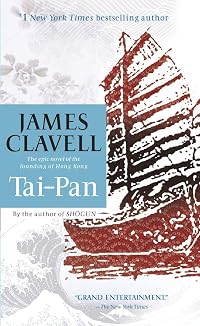
"There can only be one Tai-Pan." Dirk Struan rose from humble beginnings to build Struan & Company, also known as the Noble House, into the world's largest Far East trading company. He is now the Tai-Pan-Supreme Leader-of all Tai-Pans in China. Along the way, however, he made a powerful enemy. Tyler Brock, Struan's rival from their early opium-smuggling days, also heads a large trading fleet, second in size only to Struan's. But it is not only silks and spices that drive their mutual show more companies' wealth-the opium trade is still booming. War between England and China might be over, but the hostilities remain. Struan and Brock come to control much of England's trade with China yet neither can control their desires or their hatred of each other. Over the years, their two families will cross paths, threatening to rip both apart, with reverberations that will echo across the generations. Struan must fight to save his company and his family, or risk seeing everything he has created destroyed at the hands of his sworn enemy. Ambition, political intrigue, and love and lust weave their way throughout the novel the New York Times called, "grand entertainment...packed with action...with blood and sin, treachery and conspiracy, sex and murder." East and West come together in an opulent and intricately plotted narrative. A tour-de-force of historical fiction, rich in detail yet eminently readable, Tai-Pan will stay with you long after the final page. show lessTags
Recommendations


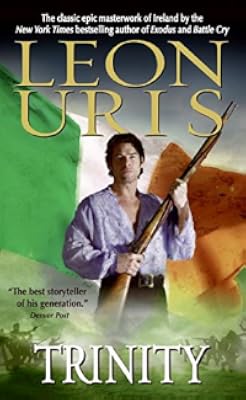
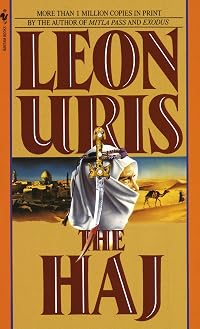
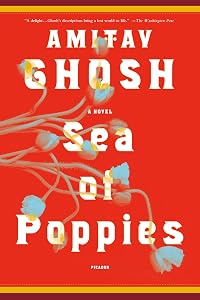
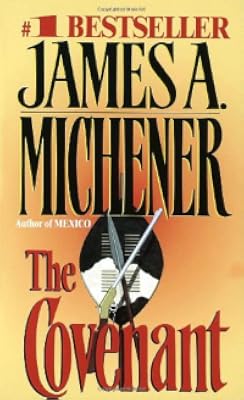










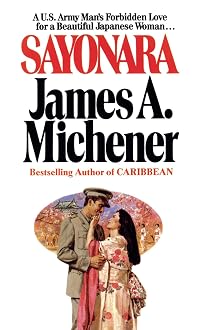
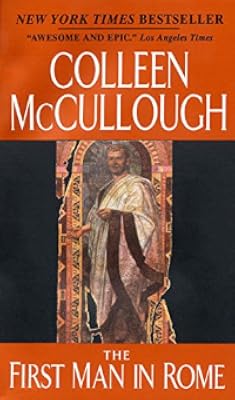
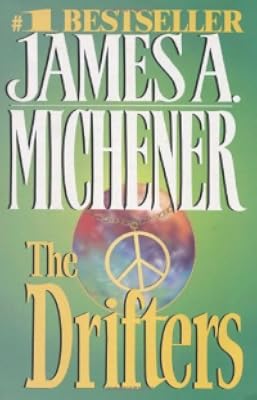
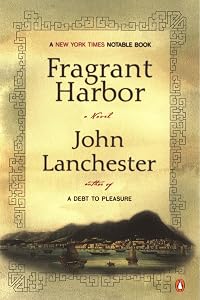
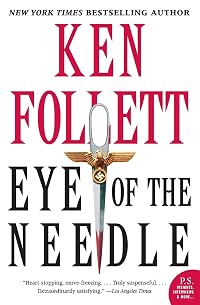
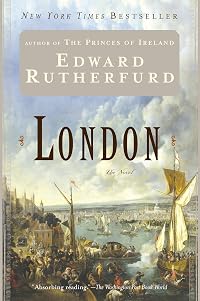


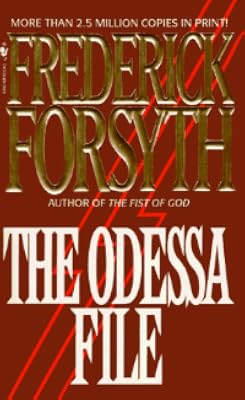
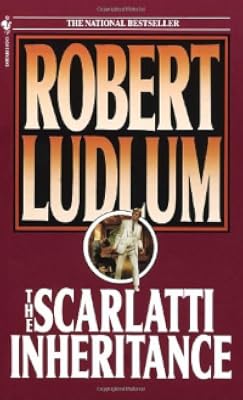
Member Recommendations


Member Reviews
A doorstopper of a novel that doesn't rise to the heights of Shogun. It's engaging and quite fun, but the length makes it hard to justify, compared to other historical novels. It relies quite a bit on repetition of the same themes and phrases by God and it's easy to see how you could cut it down severely without really compromising the contents. The novels chauvinistic and imperialist aspects might stand out to a modern reader but considering the time it was written and the period it's about, it's quite progressive.
In 1841, British forces are setting up shop on Hong Kong, and Dirk Struan, leader of the all-powerful Noble House trading firm, is at the forefront of knitting China and Great Britain inextricably together. Unfortunately, most of his family has just succumbed to plague in Scotland, his lone surviving son Culum resents his father and can't be trusted to rule Noble House, his arch-nemesis Brock is trying to destroy him, his Chinese bastard Gordon Chen is secretly involved with the Triad anarchists, the British government is skeptical of Hong Kong's value, other European powers are trying to disrupt British plans, the Chinese mandarins keep trying to violently dislodge the traders from Hong Kong, and the other traders are developing show more alliances and betrayals at lightning speeds. Oh, and Struan's young Chinese mistress really wants to get married.
In theory, this is exactly the kind of sprawling book that I love. Unfortunately, nearly all the Western-Eastern cultural interactions are inevitably reduced to "foreigners are strange, but I will allow them to continue in their misguided ways while I smirk from within my invincible cultural superiority." Which I'm sure happened in 1841 -- it's not as if Hong Kong was settled in the name of universal brotherhood -- but the book is so desperate to convey the point that it bludgeons the reader with redundant scenes. Clavell, we get it. But, wait! Clavell wants to puncture this kind of ethnocentric isolation as much as he wants to portray it, so he makes Dirk Struan into a near-messianic figure of tolerance and understanding. Struan really is settling Hong Kong in the name of universal brotherhood.
In short: eh. show less
In theory, this is exactly the kind of sprawling book that I love. Unfortunately, nearly all the Western-Eastern cultural interactions are inevitably reduced to "foreigners are strange, but I will allow them to continue in their misguided ways while I smirk from within my invincible cultural superiority." Which I'm sure happened in 1841 -- it's not as if Hong Kong was settled in the name of universal brotherhood -- but the book is so desperate to convey the point that it bludgeons the reader with redundant scenes. Clavell, we get it. But, wait! Clavell wants to puncture this kind of ethnocentric isolation as much as he wants to portray it, so he makes Dirk Struan into a near-messianic figure of tolerance and understanding. Struan really is settling Hong Kong in the name of universal brotherhood.
In short: eh. show less
Fascinating historical fiction. Not as good as shogun, but still better then most books. Great ending, but not as dramatic as I would have liked for the majority of the book. Most of the time I had little doubt Dirk would pull through.
I read this book while traveling in Asia in 1988. When I reached the typhoon scene, I was in a high-rise "guest house" in Hong Kong just as a real typhoon was blowing in. The windows down the hall were open by necessity, and the gale ripped through the building for hours as my astonished eyes darted from the fictional typhoon on the page, to the roaring, wet wind tunnel, and back to the page. Wow! I never forgot it!
A recommended read, whether in a real typhoon or not!
A recommended read, whether in a real typhoon or not!
Well-written and probably historically accurate capturing of the epoch of the opium trade and East India Company. Involves some, more or less accepted, physical assault of women which isn't fun to read about. Pretty actiony. "Dirk Struan rose from humble beginnings to build [...] the world’s largest Far East trading company. He is now the Tai-Pan—Supreme Leader—of all Tai-Pans in China. Along the way, however, he made a powerful enemy. Tyler Brock, Struan’s rival from their early opium-smuggling days, also heads a large trading fleet, second in size only to Struan’s."
Not quite as good as Shogun, I would rate this 3.5 stars rather than 4. I had a harder time reading this, because the conflict centered more on the Westerners than what was happening in China (as opposed to Shogun) I wish that this story had been about a Westerner forced to adapt to Chinese life instead of what it was actually about, but it is still a good read.
Here's what I wrote after reading in 1988: "The master storyteller strikes again. This predecessor story to Noble House explains the origins of Hong Kong and its powerful conglomerate, Struans. Most memorable characters? Of course, Dirk Struan, the Tai-pan, who is ruthless, adventuresome, cunning, and surprisingly sensitive. Also memorable is May-May, his beautiful Chines mistress who helps him to be more "chinese" and less "barbarian". Memorable also is her seemingly favoriate word, "fantastical", "I'm fantastical urgent about marriage". Dirk Struan stuck with me; still think of some of his approaches and actions to this day!
Members
- Recently Added By
Lists

Best Historical Fiction
620 works; 262 members

Historical Fiction
889 works; 91 members
1960s, Best books published therein
254 works; 22 members

Asia
178 works; 7 members

Carole's List
445 works; 13 members

Publisher's Weekly Bestsellers - Part II - 1940 - 1979
355 works; 6 members
Author Information

135+ Works 29,444 Members
Screenwriter, director, producer, and novelist, James Clavell, was born on October 10, 1924, in Sydney, Australia. Clavell's full name was Charles Edmund DuMaresq de Clavelle. Though he wrote screenplays for such highly-acclaimed films as The Fly, The Great Escape, and To Sir With Love, Clavell is best known for his best-selling, grand novels. The show more novels, which are set in the Far East, include King Rat, Tai-pan, Shogun, Noble House, and Gai-Jin. Remarkable for their scrupulous attention to cultural detail and their innovative plots, Clavell's work has been compared to that of Charles Dickens. Clavell died on September 7, 1994, at the age of 69. (Bowker Author Biography) show less
Some Editions
Awards and Honors
Distinctions
Notable Lists
Series

Belongs to Publisher Series
Work Relationships
Is contained in
Common Knowledge
- Canonical title
- Tai-Pan
- Original title
- Tai-Pan
- Original publication date
- 1966
- People/Characters
- Dirk Struan; Robb Struan; Culum Struan; May-may; Tyler Brock; Gorth Brock (show all 21); Jefferson Cooper; Shevaun Tillman; Aristotle Quance; Longstaff; Jin-Qua; Glessing; Wolfgang Mauss; Horatio Sinclair; Mary Sinclair; Morley Skinner; Gordon Chen; Vargas; Wu Kwok; Wu Fang; Scragger
- Important places
- Hong Kong
- Related movies
- Tai-Pan (1986 | IMDb)
- Epigraph*
- Graag wil ik mijn dank uitspreken aan de bevolking van Hongkong, die me zoveel van haar tijd en kennis geschonken heeft en me een blik gunde in haar heden en verleden. Naatuurlijk is dit een roman en geen geschiedenisboek. Ma... (show all)nnen en vrouwen die erin voorkomen, kwamen voort uit de verbeelding van de schrijver en er is geen enkel verband met personen of firma's uit het huidige of het vroegere Hongkong bedoeld.
- Dedication
- For Tai-tai, for Holly, and for Michaela.
- First words
- Dirk Struan came up onto the quarterdeck of the flagship H.M.S. Vengeance, and strode for the gangway.
- Last words
- (Click to show. Warning: May contain spoilers.)Then they said, "Yes, Tai-Pan," and obeyed.
- Blurbers
- Gann, Ernest K.; Moore, Robin
- Original language
- English
*Some information comes from Common Knowledge in other languages. Click "Edit" for more information.
Classifications
Statistics
- Members
- 4,271
- Popularity
- 3,564
- Reviews
- 50
- Rating
- (4.08)
- Languages
- 16 — Chinese, Czech, Danish, Dutch, English, Finnish, French, German, Hungarian, Italian, Norwegian (Bokmål), Polish, Portuguese, Slovak, Spanish, Swedish
- Media
- Paper, Audiobook, Ebook
- ISBNs
- 93
- ASINs
- 63