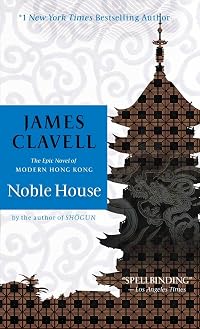
On This Page
Description
Taking place over the course of an eventful week in 1963 Hong Kong, James Clavell's Noble House is a masterfully woven novel of true suspense. Ian Dunross, the current tai-pan of the illustrious yet financially troubled Struan empire, is racing to undo the damage his predecessor left behind and to once again stand on stable ground. And he'll do whatever it takes-including striking a hard-fought deal with an American millionaire. But his rival, Quillan Gornt, has other plans. Suddenly caught show more in a dubious plot involving Soviet spies, Hong Kong's criminal underground, and the hostile takeover of his company, Dunross holds nothing back in the fight for the Noble House. Espionage, mayhem, and high-stakes betrayals make Noble House Clavell's most prolific and imaginatively crafted narrative in the Asian Saga. show lessTags
Recommendations













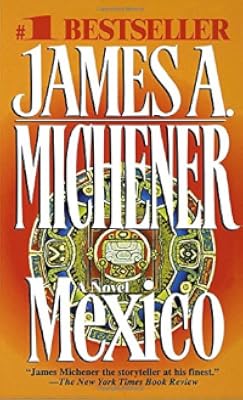
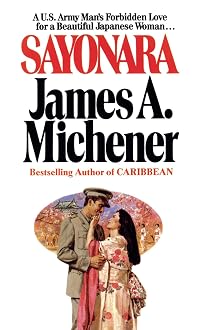
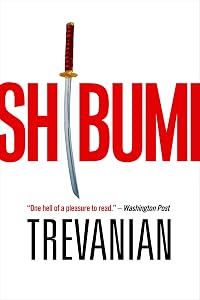
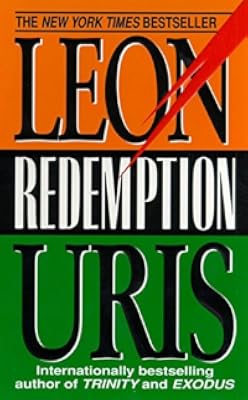
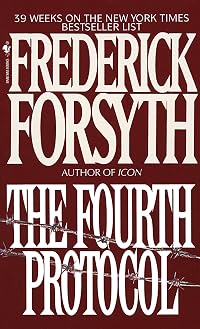
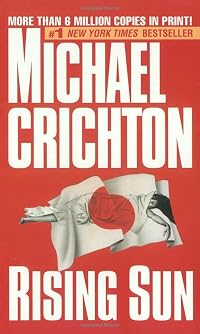
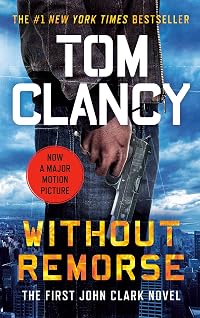
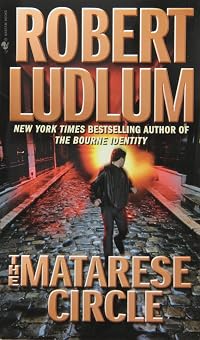

Member Recommendations



Member Reviews
Every few years, I pull out my copy of Noble House and sit down for a reread of one of my favorite books. The story takes place during one week in 1963 in Hong Kong when it was still run by the British. It is essentially a Chinese city, and the British living there understand that, while it's also a hub in Asia for other great powers like the United States, Russia, and China.
The main protagonist is Ian Dunross, tai-pan of the Noble House (the commercial side of Struan's). Ian is a descendant of Dirk Struan, the pirate and founder of the Noble House, and there are many references back to the previous books in the Asian Saga. It's probably not necessary to read them to understand this book, but knowing them does lead to better enjoyment show more here. I like all the Easter eggs for Shogun and stories about the Hag, Dirk, and Tyler Brock.
The central premise of the plot is the American company Par-Con that comes to make a deal with either Struan's or their main rival, Rothwell-Gornt (the descendants of Tyler Brock). Linc Bartlett and his CFO Casey Tcholok are raiders, determined to get into the Asian market with whoever profits them most. Events are hampered by gun-running, fires, kidnappings, drug-running, spies, and more characters than I can name. The action moves quickly and there is a lot packed into every day. I've read this book several times, and I was still on the edge of my seat with all the villains, the plotting and the politics, all mixed in with actual events of the time. There's still resentment and scars from World War II, the US is gradually getting into the Viet Nam war, and spy scandals like Profumo rock Britain. At the center of it all is Hong Kong, the hub of commerce in Asia and a focus of the great powers of the time.
As I stated, there are a lot of characters. Mr. Clavell does a wonderful job of differentiating them by personality and culture. I find that some of the most interesting parts of the story. Women are just getting into the business world though not treated equally, and even less so by cultures. It's a long book and covers so much, but is never boring or slow. I'll pick it up again in a few years, but right now I highly recommend a read. show less
The main protagonist is Ian Dunross, tai-pan of the Noble House (the commercial side of Struan's). Ian is a descendant of Dirk Struan, the pirate and founder of the Noble House, and there are many references back to the previous books in the Asian Saga. It's probably not necessary to read them to understand this book, but knowing them does lead to better enjoyment show more here. I like all the Easter eggs for Shogun and stories about the Hag, Dirk, and Tyler Brock.
The central premise of the plot is the American company Par-Con that comes to make a deal with either Struan's or their main rival, Rothwell-Gornt (the descendants of Tyler Brock). Linc Bartlett and his CFO Casey Tcholok are raiders, determined to get into the Asian market with whoever profits them most. Events are hampered by gun-running, fires, kidnappings, drug-running, spies, and more characters than I can name. The action moves quickly and there is a lot packed into every day. I've read this book several times, and I was still on the edge of my seat with all the villains, the plotting and the politics, all mixed in with actual events of the time. There's still resentment and scars from World War II, the US is gradually getting into the Viet Nam war, and spy scandals like Profumo rock Britain. At the center of it all is Hong Kong, the hub of commerce in Asia and a focus of the great powers of the time.
As I stated, there are a lot of characters. Mr. Clavell does a wonderful job of differentiating them by personality and culture. I find that some of the most interesting parts of the story. Women are just getting into the business world though not treated equally, and even less so by cultures. It's a long book and covers so much, but is never boring or slow. I'll pick it up again in a few years, but right now I highly recommend a read. show less
Written in 1981 but set in 1963, Noble House is the flip side view of Hong Kong from another novel set in the colony during the late 1950s, The World of Suzie Wong. Whereas Suzie Wong was a sympathetic portrait of cheongsam clad prostitutes desperate to survive in the muck and poverty of Hong Kong, Noble House is a lengthy soap opera detailing cheongsam clad dragon ladies and their wealthy husbands and boyfriends.
This is not meant to disparage Noble House, where once again James Clavell demonstrates his skill and talent at composing a strong narrative that weaves in and out of one side story after another. But it is a soap opera and clearly departs from the historical fiction and autobiographical fiction it is based upon from earlier show more works--Tai-Pan, Shogun, and King Rat. Those earlier works stand apart from Noble House, I believe, as works of literature, and in the case of King Rat, serious literature.
Noble House, in addition to being good soap opera, is a clear product of its time. Although set in 1963, its tone and emphasis is not too dissimilar from the 1980s' obsessions with wealth, glitter, and fame. As such, the novel seems right at home with the likes of television series such as Dallas, Dynasty, or even Robin Leach's Lifestyles of the Rich and Famous. Clavell was mining gold with this book. It fit right in to its decade, which probably explains why, when Noble House was made into a mini-series, it was updated to the time of its airing, 1988.
Otherwise, the novel is filled with annoying and dislikable characters--again typical of the 1980s' tele-soaps. Linc Bartlett is a beer-sipping amoral sleaze who deserves his fate. The Tai-Pan, the hero of the novel, Ian Dunross, is a ruthless narcissist whose superficial charm leaves him at the end also pictured appropriately--alone, overlooking Hong Kong, and jubilant in his destruction of his foes. And Quillan Gornt, Dunross' nemesis? He is someone who slips from being amoral to immoral, a sexual predator. Casy Tcholok, Dunross' executive vice president, takes her place among the roster of strong, calculating women who fill Clavell's work. But even she disappoints at the end, exiting HK with lots of money but mostly tears and regrets.
About the only sympathetic character is Peter Marlowe, the erstwhile POW from Clavell's earlier novel, King Rat. Marlowe, of course, is based on Clavell himself. Working on a novel about HK, Marlowe notes the attraction and the disgrace that is HK. In fact, the reader cannot help but remember the rat farm at the end of King Rat and how HK itself might be seen as one overpopulated rat farm, with Darwinian rules for survival. The end of the novel, with its devastating mud and landslides only reinforces this feeling. How different from the similar ending of Suzie Wong, where the death and destruction of the mudslides serves to reveal the inherent humanity and perseverance of the people on the other end of the scale of those depicted in Noble House. show less
This is not meant to disparage Noble House, where once again James Clavell demonstrates his skill and talent at composing a strong narrative that weaves in and out of one side story after another. But it is a soap opera and clearly departs from the historical fiction and autobiographical fiction it is based upon from earlier show more works--Tai-Pan, Shogun, and King Rat. Those earlier works stand apart from Noble House, I believe, as works of literature, and in the case of King Rat, serious literature.
Noble House, in addition to being good soap opera, is a clear product of its time. Although set in 1963, its tone and emphasis is not too dissimilar from the 1980s' obsessions with wealth, glitter, and fame. As such, the novel seems right at home with the likes of television series such as Dallas, Dynasty, or even Robin Leach's Lifestyles of the Rich and Famous. Clavell was mining gold with this book. It fit right in to its decade, which probably explains why, when Noble House was made into a mini-series, it was updated to the time of its airing, 1988.
Otherwise, the novel is filled with annoying and dislikable characters--again typical of the 1980s' tele-soaps. Linc Bartlett is a beer-sipping amoral sleaze who deserves his fate. The Tai-Pan, the hero of the novel, Ian Dunross, is a ruthless narcissist whose superficial charm leaves him at the end also pictured appropriately--alone, overlooking Hong Kong, and jubilant in his destruction of his foes. And Quillan Gornt, Dunross' nemesis? He is someone who slips from being amoral to immoral, a sexual predator. Casy Tcholok, Dunross' executive vice president, takes her place among the roster of strong, calculating women who fill Clavell's work. But even she disappoints at the end, exiting HK with lots of money but mostly tears and regrets.
About the only sympathetic character is Peter Marlowe, the erstwhile POW from Clavell's earlier novel, King Rat. Marlowe, of course, is based on Clavell himself. Working on a novel about HK, Marlowe notes the attraction and the disgrace that is HK. In fact, the reader cannot help but remember the rat farm at the end of King Rat and how HK itself might be seen as one overpopulated rat farm, with Darwinian rules for survival. The end of the novel, with its devastating mud and landslides only reinforces this feeling. How different from the similar ending of Suzie Wong, where the death and destruction of the mudslides serves to reveal the inherent humanity and perseverance of the people on the other end of the scale of those depicted in Noble House. show less
My first Clavell book, and I really should've started from the beginning. Regardless, it's very difficult not to be swept up in it all. There's a ton of business speak that sort of went over my head, but all the characters feel so alive. The constant shift from the rich to the poor and the various schemes and plans was thrilling to read. I felt like I was in the city and I think it was a smart decision to keep the storyline within a week or so. It means a ton of stuff happens at a breakneck pace, despite the book's length. I do think it was a bit too long and some storylines don't really go anywhere, but at the same time I felt like that kept me on my toes as I was reading. The big moments (restaurant fire, landslide) were quite show more impactful and shook things up nicely. Definitely keen to watch the mini-series and will continue the Asian Saga one day. show less
James Clavell is known for his thick books, this one is nearly 1400 pages long! Normally I like thick books - more story to read - but this one simply isn;t as good as Shogun. There were parts of this book that were really good and exciting, but other parts were very podding and I found myself frustrated with them.
Shogun was so interesting because Blackthorne/Anjin was immersed in Japanese culture and had to learn how to survive and fit within it, but the rest of the books did not follow this formula. It would have been nice if Clavell had written another book about a European stuck/stranded in another culture - it would be fun to see him try to deal with Chinese life and etc.
Noble House is not without its good parts, but again, some show more parts were really boring, and this book could have done with a good trimming-down and paring away of some of the subplots that bogged this story down. Other enticing bits of the story could have been expanded on but were cast aside. I would have liked to see a book set in the 1900's or 1910's revolving around Hag Struan and her illustrious life and deeds, but alas, since the author is dead, we take what we can get. If you liked the rest of the Asian Saga, try this book, but be prepared for some plodding and repetitiveness. show less
Shogun was so interesting because Blackthorne/Anjin was immersed in Japanese culture and had to learn how to survive and fit within it, but the rest of the books did not follow this formula. It would have been nice if Clavell had written another book about a European stuck/stranded in another culture - it would be fun to see him try to deal with Chinese life and etc.
Noble House is not without its good parts, but again, some show more parts were really boring, and this book could have done with a good trimming-down and paring away of some of the subplots that bogged this story down. Other enticing bits of the story could have been expanded on but were cast aside. I would have liked to see a book set in the 1900's or 1910's revolving around Hag Struan and her illustrious life and deeds, but alas, since the author is dead, we take what we can get. If you liked the rest of the Asian Saga, try this book, but be prepared for some plodding and repetitiveness. show less
James Clavell (1921 – 1994) was an Australian-born British (later naturalised American) novelist, screenwriter, director, World War II veteran and prisoner of war. Clavell is best known for his epic Asian Saga series of novels.
The purpose of the Asian Saga was to tell "the story of the Anglo-Saxon in Asia" and four of the six books—Tai-Pan, Gai-Jin, Noble House, and Whirlwind—follow the dealings of the great trading company Struan's, the Noble House of Asia (based on Jardine Matheson Holdings Limited), its founder Dirk Struan, and his various descendants.
The full series of books and their settings is:
• Shōgun: set in feudal Japan in 1600 and published in 1975.
• Tai-Pan: set in Hong Kong in 1841 and published in show more 1966.
• Gai-Jin: set in Japan in 1862 and published in 1993.
• King Rat: set in a Japanese POW camp in Singapore in 1945 and published in 1962.
• Noble House: set in Hong Kong in 1963 and published in 1981.
• Whirlwind: set in Iran in 1979 and published in 1986.
Noble House is a vast, sprawling novel covering a little over one week in time in more than 1,200 pages. There are many characters, some consequential to the story and some not, all with complex and often interrelated family histories and relationships. These characters appear, disappear and re-appear in the narrative flow and it is all but impossible to keep track of them all. The overall plot is straightforward: Ian Dunross, tenth tai-pan of Struan’s, finds his company the target of a hostile takeover from his arch-rival Quillan Gornt at a time when it is desperately overextended. He negotiates a business link with an American company, both to ward off the takeover attempt and to extend Struan’s reach globally. He is also embroiled in international espionage when he finds himself in possession of secret documents desperately desired by both the KGB and MI6.
This is a top class blockbuster novel. The depth, detail and narrative drive all act to pull you in and make you care about what is going on. The sizeof the novel was daunting at first, but by the end I wanted it to be even longer. Clavell clearly adores Asia and his love and respect for the people, their way of life and their traditions shines from every page. In many ways the star of Noble House is not Ian Dunross or any of the other characters, but Hong Kong itself.
The business wheeler-dealing is the heart of the book and is both fascinating and exciting. The intense desire to move forwards, to better oneself, to be rich, to win, makes for a heady mixture that puts everyone into a slightly manic state as they react to the events as they unfold. The plot line about espionage and the clashing of East and West in the Cold War was less successful. show less
The purpose of the Asian Saga was to tell "the story of the Anglo-Saxon in Asia" and four of the six books—Tai-Pan, Gai-Jin, Noble House, and Whirlwind—follow the dealings of the great trading company Struan's, the Noble House of Asia (based on Jardine Matheson Holdings Limited), its founder Dirk Struan, and his various descendants.
The full series of books and their settings is:
• Shōgun: set in feudal Japan in 1600 and published in 1975.
• Tai-Pan: set in Hong Kong in 1841 and published in show more 1966.
• Gai-Jin: set in Japan in 1862 and published in 1993.
• King Rat: set in a Japanese POW camp in Singapore in 1945 and published in 1962.
• Noble House: set in Hong Kong in 1963 and published in 1981.
• Whirlwind: set in Iran in 1979 and published in 1986.
Noble House is a vast, sprawling novel covering a little over one week in time in more than 1,200 pages. There are many characters, some consequential to the story and some not, all with complex and often interrelated family histories and relationships. These characters appear, disappear and re-appear in the narrative flow and it is all but impossible to keep track of them all. The overall plot is straightforward: Ian Dunross, tenth tai-pan of Struan’s, finds his company the target of a hostile takeover from his arch-rival Quillan Gornt at a time when it is desperately overextended. He negotiates a business link with an American company, both to ward off the takeover attempt and to extend Struan’s reach globally. He is also embroiled in international espionage when he finds himself in possession of secret documents desperately desired by both the KGB and MI6.
This is a top class blockbuster novel. The depth, detail and narrative drive all act to pull you in and make you care about what is going on. The sizeof the novel was daunting at first, but by the end I wanted it to be even longer. Clavell clearly adores Asia and his love and respect for the people, their way of life and their traditions shines from every page. In many ways the star of Noble House is not Ian Dunross or any of the other characters, but Hong Kong itself.
The business wheeler-dealing is the heart of the book and is both fascinating and exciting. The intense desire to move forwards, to better oneself, to be rich, to win, makes for a heady mixture that puts everyone into a slightly manic state as they react to the events as they unfold. The plot line about espionage and the clashing of East and West in the Cold War was less successful. show less
Noble house has become one of my favorite novels. This historical novel that is part of Clavell's "Asian Saga" contains large quantities of the Seven Deadly Sins, with avarice and lust leading the way. The story is set in mysterious Hong Kong in 1963, with its beautiful women, wealthy men, cultural clashes, and fascinating intrigue. A longtime feud between two of the largest financial houses revolves about Struan's - the Noble House - and its battle for economic survival. The plot is further complicated by the arrival of an interloping American power broker and his voluptuous assistant who plan to use the bad blood for their own financial gain. In the background the disenfranchised Chinese watch with great interest and hope to reap huge show more profits as the Europeans try to outwit each other.
The story is among its many competitors. It combines a good amount of fiction, legend and big business and produces a great novel. The struggle between the two great houses sets up the conflict that any great piece of fiction requires. The reader is placed into a world that no longer exists - doubly so since Hong Kong has been returned to Chinese control. It is a world where Tai-Pans - heads of large companies battle each other for money, power and survival. This is international gamesmanship at its highest level with no holds barred. Add gunrunning, opium smuggling, political intrigue, natural disasters, and riots, and the story keeps rolling along. Hong Kong itself sets the backdrop for the novel and in the end its Hong Kong the affects the outcome of the struggle. The book is as fast-paced as any I have ever read and reminds me of the sort of Romantic swash-buckling adventures of Dumas and Sabatini.
If you haven't read a James Clavell novel start with this one or Shogun. show less
The story is among its many competitors. It combines a good amount of fiction, legend and big business and produces a great novel. The struggle between the two great houses sets up the conflict that any great piece of fiction requires. The reader is placed into a world that no longer exists - doubly so since Hong Kong has been returned to Chinese control. It is a world where Tai-Pans - heads of large companies battle each other for money, power and survival. This is international gamesmanship at its highest level with no holds barred. Add gunrunning, opium smuggling, political intrigue, natural disasters, and riots, and the story keeps rolling along. Hong Kong itself sets the backdrop for the novel and in the end its Hong Kong the affects the outcome of the struggle. The book is as fast-paced as any I have ever read and reminds me of the sort of Romantic swash-buckling adventures of Dumas and Sabatini.
If you haven't read a James Clavell novel start with this one or Shogun. show less
First time reading this classic in the Asia series by James Clavell. It took me a very long nine months to really get into the book. I'd start and restart - mostly pausing because of the vast number of characters. A white board is needed to keep track of them all. Over (a long) time however, the story becomes engrossing. Clavell packs a life-time of events into a ten-day period - which is the period of which this book takes place. I've never been to Hong Kong, but this seemed a reasonable description of the mix of Chinese and British cultures (at least in 1963). Good, enjoyable read overall.
Members
- Recently Added By
Lists

Historical Fiction
889 works; 91 members

Asia
178 works; 7 members

Books Read in 2023
5,638 works; 147 members

Carole's List
445 works; 13 members

I Could Live There
185 works; 12 members

Books We Want To Read Again For The First Time
384 works; 160 members
Author Information

134+ Works 29,426 Members
Screenwriter, director, producer, and novelist, James Clavell, was born on October 10, 1924, in Sydney, Australia. Clavell's full name was Charles Edmund DuMaresq de Clavelle. Though he wrote screenplays for such highly-acclaimed films as The Fly, The Great Escape, and To Sir With Love, Clavell is best known for his best-selling, grand novels. The show more novels, which are set in the Far East, include King Rat, Tai-pan, Shogun, Noble House, and Gai-Jin. Remarkable for their scrupulous attention to cultural detail and their innovative plots, Clavell's work has been compared to that of Charles Dickens. Clavell died on September 7, 1994, at the age of 69. (Bowker Author Biography) show less
Some Editions
Awards and Honors
Distinctions
Series

Belongs to Publisher Series
Work Relationships
Is contained in
Has the adaptation
Common Knowledge
- Canonical title
- Noble House; Noble House
- Original title
- Noble House
- Alternate titles
- Noble House: A Novel of Contemporary Hong Kong
- Original publication date
- 1981
- People/Characters
- Ian Dunross; Quillan Gornt; Casey Tcholok; Lincoln Bartlett; Andrew Gavallan
- Important places
- Hong Kong
- Related movies
- Noble House (1988 | IMDb)
- Epigraph
- Dit is natuurlijk een roman. De mensen en maatschappijen, die erin voorkomen zijn denkbeeldig en er worden geen toespelingen gemaakt op personen of maatschappijen, die nu of in het verleden iets met Hongkong of Azië te maken... (show all) hebben of hebben gehad.
Ik wil me verontschuldigen tegenover alle Hongkong yan - alle mensen uit Hongkong - voor het feit dat ik met de plattegrond van hun stad heb geknoeid, voor het feit dat ik mensen, plaatsen, straten, maatschappijen en gebeurtenissen heb verzonnen die, naar ik hoop, levensecht lijken, maar die nooit bestaan hebben omdat dit zuiver een verhaal is...
Of course this is a novel. It is peopled with imaginary persons and companies and no reference to any person or company that was, or is, part of Hong Kong or Asia is intended.
I would also like to apologize at once to all ... (show all)Hong Kong yan—all Hong Kong persons—for rearranging their beautiful city, for taking incidents out of context, for inventing people and places and streets and companies and incidents that, hopefully, may appear to have existed but have never existed, for this, truly, is a story. . . . - Dedication
- I would like to offer this work as a tribute to Her Britannic Majesty, Elizabeth II, to the people of Her Crown Colony of Hong Kong—and perdition to their enemies.
- First words
- His name was Ian Dunross and in the torrential rain he drove his old MG sports car cautiously around the corner into Dirk's Street that skirted the Struan Building on the waterfront of Hong Kong.
- Last words
- (Click to show. Warning: May contain spoilers.)"Christ, it's so good to be alive," he said.
- Original language
- English
- Disambiguation notice
- This is the full work. Please do not combine it with one of its parts.
Classifications
Statistics
- Members
- 3,287
- Popularity
- 5,225
- Reviews
- 38
- Rating
- (4.00)
- Languages
- 15 — Czech, Danish, Dutch, English, Finnish, French, German, Hungarian, Italian, Polish, Portuguese, Romanian, Russian, Spanish, Swedish
- Media
- Paper, Audiobook, Ebook
- ISBNs
- 70
- ASINs
- 44