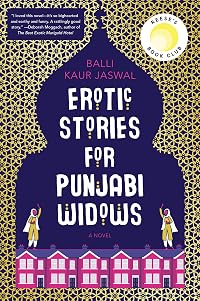
Erotic Stories for Punjabi Widows: A Novel
by Balli Kaur Jaswal
On This Page
Description
Nikki lives in cosmopolitan West London, where she tends bar at the local pub. The daughter of Indian immigrants, she's spent most of her twenty-odd years distancing herself from the traditional Sikh community of her childhood, preferring a more independent (that is, Western) life. When her father's death leaves the family financially strapped, Nikki, a law school dropout, impulsively takes a job teaching a "creative writing" course at the community center in the beating heart of London's show more close-knit Punjabi community. Because of a miscommunication, the proper Sikh widows who show up are expecting to learn basic English literacy, not the art of short-story writing. When one of the widows finds a book of sexy stories in English and shares it with the class, Nikki realizes that beneath their white dupattas, her students have a wealth of fantasies and memories. Eager to liberate these modest women, she teaches them how to express their untold stories, unleashing creativity of the most unexpected -- and exciting -- kind. As more women are drawn to the class, Nikki warns her students to keep their work secret from the Brotherhood, a group of highly conservative young men who have appointed themselves the community's "moral police." But when the widows' gossip offers shocking insights into the death of a young wife -- a modern woman like Nikki -- and some of the class erotica is shared among friends, it sparks a scandal that threatens them all. show lessTags
Recommendations
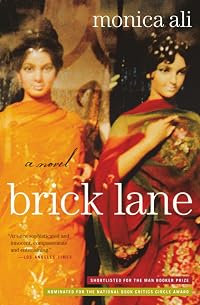
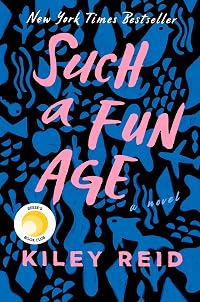
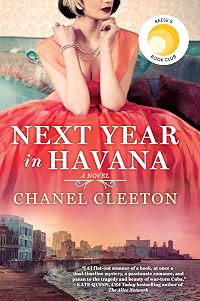
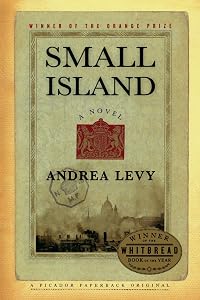
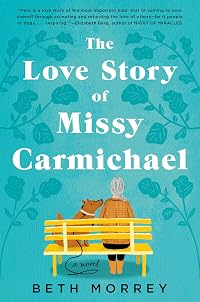
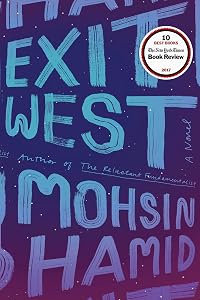
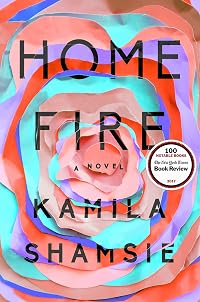
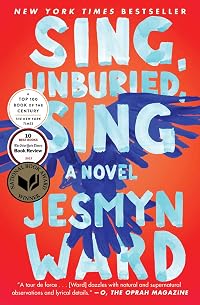
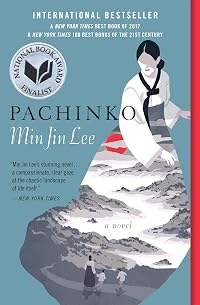
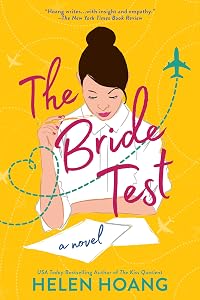
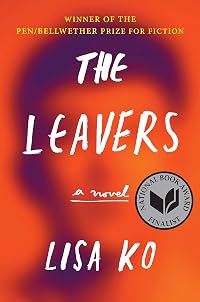

Member Recommendations
fulner The amount of similarities between the girls of antebellum South in Gone with the Wind and the Indian girls in Erotic Stories for Punjabi widows is striking.
Member Reviews
Two factors drew me to this book :
1) that title! I was intrigued. Seldom, if ever, have I seen those words combined in any entertainment or print media
2) genre -- I seek out South - Asian titles because that is my ethnic heritage. I can relate to the culture, traditions, and social morés depicted.
Nikki is a second-generation modern young woman. Although she was born into a Sikh family, she herself is not particularly religious nor traditional. Unlike her sister, Mindi(the dutiful daughter), Nikki refuses to give in to pressure from her family to pursue a stable, respectable career and settle down. And, much to their chagrin, she is living on her own in a flat above the pub where she works as a bartender. Hardly a suitable job for a show more proper Punjabi girl.
While on an involuntary errand for her sister, Mindi, at the Sikh temple in Southall, she sees it : a notice seeking a teacher for a women's writing course. As it turns out, both the course and the women are nothing like she expected. For both teacher and students, the educational journey has far-reaching consequences, both positive and negative.
I absolutely loved this book! It had everything -- drama, romance, erotica, (which, in turn led to laugh-out-loud comedy), and life lessons. All leading to a satisfying and plausible end. show less
1) that title! I was intrigued. Seldom, if ever, have I seen those words combined in any entertainment or print media
2) genre -- I seek out South - Asian titles because that is my ethnic heritage. I can relate to the culture, traditions, and social morés depicted.
Nikki is a second-generation modern young woman. Although she was born into a Sikh family, she herself is not particularly religious nor traditional. Unlike her sister, Mindi(the dutiful daughter), Nikki refuses to give in to pressure from her family to pursue a stable, respectable career and settle down. And, much to their chagrin, she is living on her own in a flat above the pub where she works as a bartender. Hardly a suitable job for a show more proper Punjabi girl.
While on an involuntary errand for her sister, Mindi, at the Sikh temple in Southall, she sees it : a notice seeking a teacher for a women's writing course. As it turns out, both the course and the women are nothing like she expected. For both teacher and students, the educational journey has far-reaching consequences, both positive and negative.
I absolutely loved this book! It had everything -- drama, romance, erotica, (which, in turn led to laugh-out-loud comedy), and life lessons. All leading to a satisfying and plausible end. show less
I never thought I'd say this, but I felt like the erotic stories contained within this book got a little repetitive and I started skimming those portions after a while - although I did have some good laughs over a certain discussion of grocery produce. In contrast, as I progressed through the book, I found the life stories of the Punjabi widows and Nikki's budding romance with Jason much more engaging. I did like the stereotype-flipping aspect of the novel, revealing a set of reserved widows from a conservative culture to be feisty ladies who just might put a few vigilante men in their place. I do wish the novel had gone a little bit further on this point, but - to be fair - that might have necessitated a much longer book.
How do I love thee? Let me count the ways....(pardon me Mrs. Browning). I loved this book...parts of it were hilarious, parts were smiley heartwarming, and parts dealt with serious real-life social issues (prejudice, morality police, chauvinism, domestic violence, arranged marriages between prepubescent girls and older men, immigration assimilation and generation cultural conflicts, honor killings, and more). Mostly I loved the hilarious parts, and the heavier topics didn't get in the way of the humor. I loved how Nikki, who answered an ad to teach a writing class but was duped into teaching a literacy class to Punjabi widows, was able to go with the flow and let the widows' imaginations soar - and soar they did. There are beautiful show more little erotic stories laced throughout the book, which could or should have been titled Erotic Stories by instead of "for" Punjabi Widows. The descriptions of how the stories spread like wildfire, among friends, acquaintances, over the internet, and even by chance encounter over the xerox machine, kept me tittering. Most of all I loved the Punjabi widows - who are as endearing as the television character of Monk. I loved the camaraderie between the widow cronies, their spunk and their tenacity. (I did fret a little over how the heck you could launder coconut oil saturated sheets, but I got over it... after all, it was only a fantasy.)
Post Script - I just noticed that this book is always available on Hoopla, if your library subscribes. show less
Post Script - I just noticed that this book is always available on Hoopla, if your library subscribes. show less
{Fiction, stand-alone}
I’ve seen this recommended a lot on LibraryThing and I thought I would read it as a shared book for the February birthstone TIOLI challenge.
The main protagonist is Nikki, a Punjabi Sikh girl born and brought up in the UK who is caught between the cultures of her family and that of the country of her birth. She hasn’t decided on a career, has dropped out of university and is working in a bar, much to the disapproval of her traditional family. When she makes an unaccustomed trip to the gurdwara (temple) in Southall, she finds a notice on the message board about leading a story-writing class and applies for it.
We also get some chapters from the point of view of Kulwinder who is the only woman on the male-centric show more gurdwara council and who feels it is her mission to represent the women of her community. It was her idea to set up a class to teach them to read and write since many of the older ladies are illiterate.
However the class unintentionally goes in a direction neither Nikki nor Kulwinder anticipated (or intended) after the ladies of the class discover a book of erotic stories that Nikki had bought as a joke for her sister. The stories they consequently write affect everyone’s lives and have a far reaching (in distance as well as effect) impact.
I really enjoyed the first chapters especially because they took me back to London (but that sense of nostalgia probably won’t apply to everyone); I’ve discovered, though, that the author was born in Singapore and now lives in Australia. I was intrigued by the secondary narrative of the way in which the culture of rural India transferred (or didn’t) to London and how the ‘community’ closed ranks to protect a perceived notion of how it should be viewed by outsiders, usually to the detriment of individuals and individual families.
Most of all, this is a story of the empowerment of women, no matter their age.
This was a little out of my usual reading zone. I’m giving it three stars (6 out of 10). It’s a solid story with a bit of romance, a bit of mystery, a bit of day-to-day family life .... and a few erotic stories by Punjabi widows.
3*** show less
I’ve seen this recommended a lot on LibraryThing and I thought I would read it as a shared book for the February birthstone TIOLI challenge.
The main protagonist is Nikki, a Punjabi Sikh girl born and brought up in the UK who is caught between the cultures of her family and that of the country of her birth. She hasn’t decided on a career, has dropped out of university and is working in a bar, much to the disapproval of her traditional family. When she makes an unaccustomed trip to the gurdwara (temple) in Southall, she finds a notice on the message board about leading a story-writing class and applies for it.
We also get some chapters from the point of view of Kulwinder who is the only woman on the male-centric show more gurdwara council and who feels it is her mission to represent the women of her community. It was her idea to set up a class to teach them to read and write since many of the older ladies are illiterate.
Kulwinder thought she should warn Nikki. She looked up. ‘The students will not be very advanced writers,’ she said.
‘Of course,’ Nikki assured. ‘That’s understandable. I’ll be there to help them.’
Her patronising tone dissolved Kulwinder’s sympathies. This girl was a child. She smiled but her eyes had a squinting quality, as if she was sizing up Kulwinder and her importance here. But was there a chance that a more traditional woman – not this haughty girl who might as well be a gori with her jeans and her halting Punjabi – would walk in and ask for the job? It was unlikely. Never mind what Nikki expected to teach, the class had to start right away, or else Gurtaj Singh would strike it off his register and with it any future opportunity for Kulwinder to have a say in women’s matters.
However the class unintentionally goes in a direction neither Nikki nor Kulwinder anticipated (or intended) after the ladies of the class discover a book of erotic stories that Nikki had bought as a joke for her sister. The stories they consequently write affect everyone’s lives and have a far reaching (in distance as well as effect) impact.
I really enjoyed the first chapters especially because they took me back to London (but that sense of nostalgia probably won’t apply to everyone); I’ve discovered, though, that the author was born in Singapore and now lives in Australia. I was intrigued by the secondary narrative of the way in which the culture of rural India transferred (or didn’t) to London and how the ‘community’ closed ranks to protect a perceived notion of how it should be viewed by outsiders, usually to the detriment of individuals and individual families.
Most of all, this is a story of the empowerment of women, no matter their age.
This was a little out of my usual reading zone. I’m giving it three stars (6 out of 10). It’s a solid story with a bit of romance, a bit of mystery, a bit of day-to-day family life .... and a few erotic stories by Punjabi widows.
3*** show less
Digital audiobook performed by Meera Syal
From the book jacket: Nikki, a modern-day daughter of Indian immigrants, has spent most of her twenty-odd years distancing herself from the traditional Sikh community of her childhood, preferring a more independent (that is, Western) life. When her father’s death leaves the family financially strapped, Nikki impulsively takes a job teaching a “creative writing” course at the community center in the beating heart of London’s close-kknit Punjabi community.
My Reactions:
I was expecting something light and breezy and I was pleasantly surprised to find some depth here. Nikki is a wonderful character who shepherds her students through to success. Along the way she discovers that her long-held show more assumptions about the women in the community need to be examined and her opinions updated. She finds women who have suffered, and women who have relished in the joys of their role, women who are brave and those who are shy or hesitant. But all the women she encounters want MORE, and want to take some control of their lives even in the relatively small way of reading – and writing – erotic stories.
I loved the women in Nikki’s classes. Some of their stories were heartbreaking, but all of them were so willing to be open and honest in their writing. That their subject matter would “shock” their peers was not a deterrent to their need to express themselves. Brava, ladies! And through their bravery and openness, Nikki comes to learn something about herself and about the value of forgiveness and second chances.
Just a delightful book.
Meera Syal did a marvelous job narrating the audiobook. She really brought these characters to life. show less
From the book jacket: Nikki, a modern-day daughter of Indian immigrants, has spent most of her twenty-odd years distancing herself from the traditional Sikh community of her childhood, preferring a more independent (that is, Western) life. When her father’s death leaves the family financially strapped, Nikki impulsively takes a job teaching a “creative writing” course at the community center in the beating heart of London’s close-kknit Punjabi community.
My Reactions:
I was expecting something light and breezy and I was pleasantly surprised to find some depth here. Nikki is a wonderful character who shepherds her students through to success. Along the way she discovers that her long-held show more assumptions about the women in the community need to be examined and her opinions updated. She finds women who have suffered, and women who have relished in the joys of their role, women who are brave and those who are shy or hesitant. But all the women she encounters want MORE, and want to take some control of their lives even in the relatively small way of reading – and writing – erotic stories.
I loved the women in Nikki’s classes. Some of their stories were heartbreaking, but all of them were so willing to be open and honest in their writing. That their subject matter would “shock” their peers was not a deterrent to their need to express themselves. Brava, ladies! And through their bravery and openness, Nikki comes to learn something about herself and about the value of forgiveness and second chances.
Just a delightful book.
Meera Syal did a marvelous job narrating the audiobook. She really brought these characters to life. show less
Erotic Stories for Punjabi Widows - Jaswal
Audio performance by Meera Syal
4 stars
This was a surprisingly fun book. Surprising, because so many of the characters have heavy burdens of grief and trauma. It’s a contemporary story set in the Sikh community of West London. The young protagonist, Nikki, is a law school dropout who has defied tradition by moving out of her family home. She supports herself with bartending while she tries to find a new direction for her life. A need for additional income causes her to take on a community teaching job; creative writing for Punjabi women.
There is a small amount of East/West culture clash in this book. But, it’s mostly a story of tensions within the community; older vs younger generation, show more affluent/educated vs poor/illiterate, and without doubt, male vs female. This is a feminist story. There are some truly funny moments as the widows create their own version of Nancy Friday’s My Secret Garden: Women’s Sexual Fantasies. Their ‘secret’ project cannot remain secret for long in a busy, gossiping, community. Reactions vary and add to the comic relief.
Some relief is necessary. Many of the women are grieving serious loss. Some are traumatized by ongoing abuse. A group of young, male, moral vigilantes are creating an atmosphere of threat and fear. The murders of at least two young women have been ignored and unsolved. Nikki is in over her head as she reluctantly becomes attached to her native community. There’s a good balance between suspense and humor that kept me turning pages. In the end female solidarity triumphs. Mostly. show less
Audio performance by Meera Syal
4 stars
This was a surprisingly fun book. Surprising, because so many of the characters have heavy burdens of grief and trauma. It’s a contemporary story set in the Sikh community of West London. The young protagonist, Nikki, is a law school dropout who has defied tradition by moving out of her family home. She supports herself with bartending while she tries to find a new direction for her life. A need for additional income causes her to take on a community teaching job; creative writing for Punjabi women.
There is a small amount of East/West culture clash in this book. But, it’s mostly a story of tensions within the community; older vs younger generation, show more affluent/educated vs poor/illiterate, and without doubt, male vs female. This is a feminist story. There are some truly funny moments as the widows create their own version of Nancy Friday’s My Secret Garden: Women’s Sexual Fantasies. Their ‘secret’ project cannot remain secret for long in a busy, gossiping, community. Reactions vary and add to the comic relief.
Some relief is necessary. Many of the women are grieving serious loss. Some are traumatized by ongoing abuse. A group of young, male, moral vigilantes are creating an atmosphere of threat and fear. The murders of at least two young women have been ignored and unsolved. Nikki is in over her head as she reluctantly becomes attached to her native community. There’s a good balance between suspense and humor that kept me turning pages. In the end female solidarity triumphs. Mostly. show less
Nikki is part of the Enfield Punjabi community but she has rebelled. Dropping out of her law degree and working part-time in a pub, she cannot understand her sister's desire for an arranged marriage. However when she travels to the Gurdwara in Southall she stumbles across a role teaching a storytelling class for woman who attend temple. Unfortunately the woman cannot write and so her class is supposed to be adult literacy, but the woman show an interest in developing a particular kind of story - erotic fantasy - and through this their lives become more liberated.
There are so many aspects of this book that are laudable. I really liked the setting in Southall and the ideas about providing a voice to woman who are defined by convention, show more even is a found the 'stories' risible. Unfortunately the book tries to be so much more, a murder mystery, a polemic on racism, a sociological study and a comparative romance - this is where it falls down. There is simply too much plot tied up in one book and none of the plots are done justice. This is a pity because as a book about cultural comparisons with a gentle hint of humour, it works incredibly well. show less
There are so many aspects of this book that are laudable. I really liked the setting in Southall and the ideas about providing a voice to woman who are defined by convention, show more even is a found the 'stories' risible. Unfortunately the book tries to be so much more, a murder mystery, a polemic on racism, a sociological study and a comparative romance - this is where it falls down. There is simply too much plot tied up in one book and none of the plots are done justice. This is a pity because as a book about cultural comparisons with a gentle hint of humour, it works incredibly well. show less
Members
- Recently Added By
Lists

Recommend the 20 best books you've read in the last five years
2,168 works; 606 members

Books Read in 2019
4,052 works; 108 members

Reading Glasses Podcast
410 works; 3 members

Books We Discovered On LibraryThing
530 works; 130 members

Reese's Book Club
122 works; 2 members
Author Information

7+ Works 2,383 Members
Some Editions
Awards and Honors
Awards
Distinctions
Notable Lists
Common Knowledge
- Canonical title*
- Historias eróticas para viudas del Punyab
- Original title
- Erotic Stories for Punjabi Widows
- Alternate titles*
- Historias eróticas para viudas del Punjab
- Original publication date
- 2017
- People/Characters
- Nikki Grewal; Jason Bhamra; Mindi Grewal; Mohan Grewal; Gaganjeet Kaur; Gulshan Kaur (show all 41); Gurlal Kaur; Hardayal Kaur; Karina Kaur; Kulwinder Kaur; Maya Kaur; Mittoo Kaur; Tanveer Kaur; Dinesh Sharma; Rahul Sharma; Gurtaj Singh; Sandeep Singh; Sarab Singh; Sam O'Reilly; Akash; Amarjhot; Bibi; Carney; Garry; Geeta; Grace; Hannah; Hayes (PC); Jaggi; Jhoti; Jo; Kirti; Nola; Olive; Rahul; Ranjit; Rupinder; Sanja; Sullivan (PC); Teal; Viktor
- Important places
- London, England, UK; Southall, London, England, UK
- Dedication
- For Paul
- First words
- Why did Mindi want an arranged marriage?
- Last words
- (Click to show. Warning: May contain spoilers.)The sensation of contact, the anticipation of a kiss or brush of Sarab’s hand across her bare thigh – such moments were miniuscule but they amounted to a lifetime of happiness.
- Original language
- English
- Canonical DDC/MDS
- 823.914
- Canonical LCC
- PR9619.3.J37
*Some information comes from Common Knowledge in other languages. Click "Edit" for more information.
Classifications
Statistics
- Members
- 1,685
- Popularity
- 13,235
- Reviews
- 108
- Rating
- (3.84)
- Languages
- 18 — Bulgarian, Czech, English, Estonian, Finnish, French, German, Greek, Hebrew, Italian, Korean, Polish, Russian, Slovenian, Spanish, Swedish, Portuguese (Portugal), Portuguese (Brazil)
- Media
- Paper, Audiobook, Ebook
- ISBNs
- 33
- ASINs
- 9
