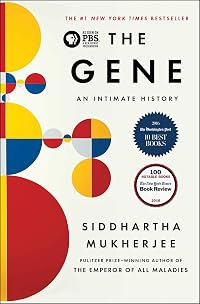
The Gene: An Intimate History
by Siddhartha Mukherjee
On This Page
Description
2017 Audie Award Finalist for Non-FictionThe #1 NEW YORK TIMES Bestseller
The basis for the PBS Ken Burns Documentary The Gene: An Intimate History
From the Pulitzer Prize–winning author of The Emperor of All Maladies—a fascinating history of the gene and "a magisterial account of how human minds have laboriously, ingeniously picked apart what makes us tick" (Elle).
"Sid Mukherjee has the uncanny ability to bring together science, history, and the future in a way that is show more understandable and riveting, guiding us through both time and the mystery of life itself." –Ken Burns
"Dr. Siddhartha Mukherjee dazzled readers with his Pulitzer Prize-winning The Emperor of All Maladies in 2010. That achievement was evidently just a warm-up for his virtuoso performance in The Gene: An Intimate History, in which he braids science, history, and memoir into an epic with all the range and biblical thunder of Paradise Lost" (The New York Times). In this biography Mukherjee brings to life the quest to understand human heredity and its surprising influence on our lives, personalities, identities, fates, and choices.
"Mukherjee expresses abstract intellectual ideas through emotional stories...[and] swaddles his medical rigor with rhapsodic tenderness, surprising vulnerability, and occasional flashes of pure poetry" (The Washington Post). Throughout, the story of Mukherjee's own family—with its tragic and bewildering history of mental illness—reminds us of the questions that hang over our ability to translate the science of genetics from the laboratory to the real world. In riveting and dramatic prose, he describes the centuries of research and experimentation—from Aristotle and Pythagoras to Mendel and Darwin, from Boveri and Morgan to Crick, Watson and Franklin, all the way through the revolutionary twenty-first century innovators who mapped the human genome.
"A fascinating and often sobering history of how humans came to understand the roles of genes in making us who we are—and what our manipulation of those genes might mean for our future" (Milwaukee Journal-Sentinel), The Gene is the revelatory and magisterial history of a scientific idea coming to life, the most crucial science of our time, intimately explained by a master. "The Gene is a book we all should read" (USA TODAY). show less
Tags
Recommendations


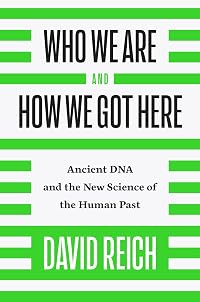
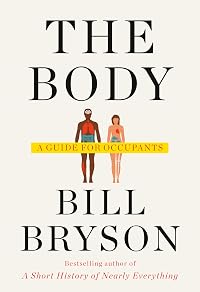

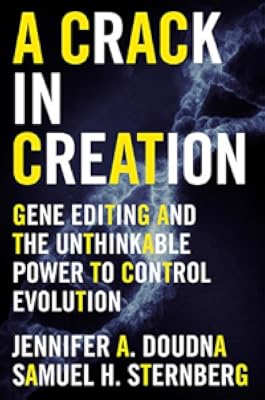

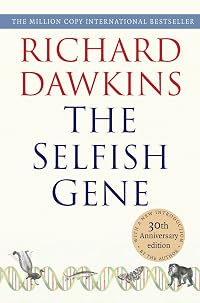



Member Recommendations
A Brief History of Everyone Who Ever Lived: The Human Story Retold Through Our Genes by Adam Rutherford
jigarpatel Summary of how humans have evolved with evidence found in genetics; interesting follow-up to Gene: An Intimate History.
Member Reviews
I think, there are two important parts to this book, the comprehensive, detailed overview of the history of genetics from Mendel to the present day and the in-depth, science behind the headlines look at the important and sometimes controversial work being done today.
Just like The Emperor of Maladies, I found myself thinking back to the headlines I had read or the brief news stories in mainstream media regarding topics like IVF, Stem Cell research, etc... and realizing how much was left unsaid or inaccurately presented in the media. To me, a lot of this was eye-opening and gave me a greater depth of understanding than I would have had from just reading pieces in my local newspaper. I even found myself re-evaluating some of my previously show more held opinions.
I have a personal connection with both of Mukherjee's books, my adoptive father went through and eventually passed away from esophageal cancer...diagnosed in November, gone in July. I watched this happen as a 13 year old child and watching my adoptive father's deterioration is something that is still etched in my mind. This was the late 70s when the use of chemo and radiation was a lot less nuanced and the effects on the patient, a lot more radical. The Emperor of Maladies really allowed me to put that in perspective and I was able to think back about a lot of conversations between my mother and father and make some realizations about what it was that they were going through.
My biological father was diagnosed with schizophrenia in the late 60s and eventually institutionalized. My parents divorced and I had little contact with my father after that but I remember thinking about and asking my mother about the possibility of developing the illness later in life. His doctor had told my mother the chances were slim unless both my mother and father had it...he probably downplayed and, I realize, did not have the knowledge of schizophrenia that they have now. After reading The Gene, I realize "slim chance" is not really an adequate description of the possibility of inheriting the illness. Food for thought...not only for me but about my two boys.
This...is a very good book...and I recommend it to anyone willing to open their mind to understanding what makes us, us. show less
Just like The Emperor of Maladies, I found myself thinking back to the headlines I had read or the brief news stories in mainstream media regarding topics like IVF, Stem Cell research, etc... and realizing how much was left unsaid or inaccurately presented in the media. To me, a lot of this was eye-opening and gave me a greater depth of understanding than I would have had from just reading pieces in my local newspaper. I even found myself re-evaluating some of my previously show more held opinions.
I have a personal connection with both of Mukherjee's books, my adoptive father went through and eventually passed away from esophageal cancer...diagnosed in November, gone in July. I watched this happen as a 13 year old child and watching my adoptive father's deterioration is something that is still etched in my mind. This was the late 70s when the use of chemo and radiation was a lot less nuanced and the effects on the patient, a lot more radical. The Emperor of Maladies really allowed me to put that in perspective and I was able to think back about a lot of conversations between my mother and father and make some realizations about what it was that they were going through.
My biological father was diagnosed with schizophrenia in the late 60s and eventually institutionalized. My parents divorced and I had little contact with my father after that but I remember thinking about and asking my mother about the possibility of developing the illness later in life. His doctor had told my mother the chances were slim unless both my mother and father had it...he probably downplayed and, I realize, did not have the knowledge of schizophrenia that they have now. After reading The Gene, I realize "slim chance" is not really an adequate description of the possibility of inheriting the illness. Food for thought...not only for me but about my two boys.
This...is a very good book...and I recommend it to anyone willing to open their mind to understanding what makes us, us. show less
Genes and their study, have dominated scientific research in the late 20th and early 21st centuries, as we've become more able to manipulate genetic information. But man's fascination with the origins of human life, inheritance, disease, and other genetic questions is far older. Aristotle believed that human traits were the result of nutrients from the father, that were given shape by the mother. In the 17th century it was suggested that human sperm or ova contained tiny human beings, homunculi, which in turn contained their own tiny human beings, and so on. It wasn't until Mendel and Darwin that we began to understand how heredity actually works.
Siddhartha Mukherjee, a cancer researcher, has reason to want answers about genes. Mental show more illness, specifically schizophrenia, gallops through his family. It is well-known that the disease has a genetic component, but the exact nature of it remains elusive. It's not a straightforward 1-to-1 relationship in the way that diseases such as Tay-Sachs or Huntington's Chorea are, but rather a complex web of mutations. In exploring the history and study of genetics, Mukherjee discusses his own family history as well as the events surrounding the discovery of the structure of DNA, early eugenics movements in the United States which found their ultimate expression on the Nazi holocaust, the mapping of the human genome, and the uncomfortable and often disastrous marriage of science and commerce which often rushes toward an end (and a payday) without full understanding of what could happen.
He recounts the death of Jesse Gelsinger, an 18 year old who suffered from a genetic disease of the liver which made him unable to metabolize ammonia, a by-product of the breakdown of protein. During the investigation of his death it was learned that both the university where the study was taking place, and the lead researcher had financial interests in the research. Money isn't the only ethical dilemma discussed here, and in fact, the field is filled with them. Mukherjee does an excellent job of discussing many, giving the reader a feel for the sheer complexity of what's happening in genetic science.
The narrative is a wonderful combination of science, history, and personal commentary, generally well-balanced the way good science writing should be. The subject is one that concerns us all whether we realize it or not. show less
Siddhartha Mukherjee, a cancer researcher, has reason to want answers about genes. Mental show more illness, specifically schizophrenia, gallops through his family. It is well-known that the disease has a genetic component, but the exact nature of it remains elusive. It's not a straightforward 1-to-1 relationship in the way that diseases such as Tay-Sachs or Huntington's Chorea are, but rather a complex web of mutations. In exploring the history and study of genetics, Mukherjee discusses his own family history as well as the events surrounding the discovery of the structure of DNA, early eugenics movements in the United States which found their ultimate expression on the Nazi holocaust, the mapping of the human genome, and the uncomfortable and often disastrous marriage of science and commerce which often rushes toward an end (and a payday) without full understanding of what could happen.
He recounts the death of Jesse Gelsinger, an 18 year old who suffered from a genetic disease of the liver which made him unable to metabolize ammonia, a by-product of the breakdown of protein. During the investigation of his death it was learned that both the university where the study was taking place, and the lead researcher had financial interests in the research. Money isn't the only ethical dilemma discussed here, and in fact, the field is filled with them. Mukherjee does an excellent job of discussing many, giving the reader a feel for the sheer complexity of what's happening in genetic science.
The narrative is a wonderful combination of science, history, and personal commentary, generally well-balanced the way good science writing should be. The subject is one that concerns us all whether we realize it or not. show less
The Gene by Siddhartha Mukherjee (the author of The Emperor of All Maladies) is well-written and very informative - apparently it is also used in some schools as a textbook. I can see why. He wraps his personal story (schizophrenia among his family members) around a tour de force history of our understanding of genetics. He goes from the ancient Greeks through Mendel and Darwin and the scary eugenics period in this country and Hitler's Germany, to the present day and what may lie ahead. I loved his description of the work of Crick and Watson and others to discover the elegant double helix of DNA, with Crick and Watson's first metal sculpture of it still available to be seen in London.
There are some sections where he gives more than this show more reader needed - particularly in the latter part of the book where he explains missteps in detail before success is obtained. No doubt those sections would be of particular interest to a student, but briefer would've been fine with me.
Mukherjee is thoughtful about bigger issues, as well as being a skilled author. Here's a couple of quotes that stood out for me. The first quote is from artist Edward Munch, and comes in the author's discussion of how schizophrenia and other mental diseases sometimes are linked to exceptional creativity:
{My troubles} are part of me and my art. They are indistinguishable from me, and treatment would destroy my art. I want to keep those sufferings.
In a eugenics discussion, Mukherjee points out this sorry story:
"Readers from India and China might note, with some shame and sobriety, that the largest 'negative eugenics' program in human history was not the systematic extermination of the Jews in Nazi Germany or Austria in the 1930s. That ghastly distinction falls on India and China, where more than 10 million female children are missing from adulthood because of infanticide, abortion and neglect."
It's not a book like I Contain Multitudes, which is so attractively written that I'm sure it's read by many with only a marginal interest in microbes. My guess is that mainly fans of the subject matter or the author, or both, will read this one. They'll get plenty to enjoy and think about, including the ethical issues raised by our increasing ability to modify genes and potentially select for desirable traits. show less
There are some sections where he gives more than this show more reader needed - particularly in the latter part of the book where he explains missteps in detail before success is obtained. No doubt those sections would be of particular interest to a student, but briefer would've been fine with me.
Mukherjee is thoughtful about bigger issues, as well as being a skilled author. Here's a couple of quotes that stood out for me. The first quote is from artist Edward Munch, and comes in the author's discussion of how schizophrenia and other mental diseases sometimes are linked to exceptional creativity:
{My troubles} are part of me and my art. They are indistinguishable from me, and treatment would destroy my art. I want to keep those sufferings.
In a eugenics discussion, Mukherjee points out this sorry story:
"Readers from India and China might note, with some shame and sobriety, that the largest 'negative eugenics' program in human history was not the systematic extermination of the Jews in Nazi Germany or Austria in the 1930s. That ghastly distinction falls on India and China, where more than 10 million female children are missing from adulthood because of infanticide, abortion and neglect."
It's not a book like I Contain Multitudes, which is so attractively written that I'm sure it's read by many with only a marginal interest in microbes. My guess is that mainly fans of the subject matter or the author, or both, will read this one. They'll get plenty to enjoy and think about, including the ethical issues raised by our increasing ability to modify genes and potentially select for desirable traits. show less
Imagine a world in which the experts wrote with skill and grace commensurate with the level of their knowledge. As we know, this is not often so. Imagine then the joy of this reader, eager to remedy his relative ignorance about a subject that profoundly interests him, as he picks up a book that not only gives a sure-footed historical overview (my favorite way of bootstrapping myself into any topic) and then finds it as good as this one is.
The book is sprinkled with insights that enlighten. One example is when the author correlates three scientific concepts that influenced the twentieth century, the atom, the byte, and the gene. There is power in what they have in common: each represents the irreducible building block of matter, of show more information, and of heredity. As Mukherjee writes, “understanding that smallest part is crucial to understanding the whole” (p. 10). Knowledge is indeed power, and power always carries the potential of danger.
Mukherjee divides his tale roughly into two parts. The first half is a look at the attempts to understand the self-evident inheritability of traits along with the breathtaking range of variation. Many of the usual figures appear—the ancient Greeks, Mendel, Darwin, Morgan, Watson and Crick—as well as others not as widely known to the public such as Avery and Rosalind Franklin. The achievements of each are explained, without the reader getting the feeling that she is being talked down to. The author strives for similes and other figures of speech to help the reader see what he is describing. For instance, he writes that the molecule of Hemoglobin A is shaped like a four-leaf clover, and that each leaf “clasps, at its center, an iron-containing chemical named heme that can bind iron” (p. 140). Thus, an attentive reader doesn’t have to fear that a deficit in general scientific literacy will prevent her understanding the text.
Another example of the author’s gift for analogy comes toward the end of the following paragraph, which nicely sums up the challenges researchers have faced at every stage of understanding the gene:
“Ironically, the very features that enable a cell to read DNA are the features that make it incomprehensible to humans—to chemists, in particular. DNA, as Schrödinger had predicted, was a chemical built to defy chemists, a molecule of exquisite contradictions—monotonous and yet infinitely varied, repetitive to the extreme and yet idiosyncratic to the extreme. Chemists generally piece together the structure of a molecule by breaking the molecule down into smaller and smaller parts, like puzzle pieces, and then assembling the structure from the constituents. But DNA, broken into pieces, degenerates into a garble of four bases—A, C, G, and T. You cannot read a book by dissolving all its words into alphabets. With DNA, as with words, the sequence carries the meaning. Dissolve DNA into its constituent bases, and it turns into a primordial four-letter alphabet soup” (p. 216).
The second half of the book covers the recent past, the present, and the future. At the same time, the focus shifts from recording the quest to understand and describe the means and mechanics of heredity to the attempts to intervene. Can the gene be engineered? The answer seems to be yes. There are remaining technical hurdles, but the big challenges involved concern not only scientists but all of us: should it be? Techniques such recombination and stem-cell engineering already exist. The questions are ethical. Should efforts be restricted to prevent diseases with a strong single-gene component, such as Huntington’s chorea, sickle-cell anemia or cystic fibrosis? Benefits and risks become less clear-cut in the case of breast cancer or familial schizophrenia and rise from there to a Pandora's box of prenatal screening of the entire genome. Our human proclivity for hubris admonishes caution. For millennia, we struggled to be the first organism to read its own instruction manual, to borrow another of Mukherjee’s figures of speech; now we are embarking on an attempt to rewrite it.
In short, this reader agrees with the fulsome praise lavished on this extended probe of the wonder of our similarity and diversity. I began reading because of curiosity, but by the time I finished, I was convinced that—in light of the political and moral questions facing us—reading it was a civic duty. show less
The book is sprinkled with insights that enlighten. One example is when the author correlates three scientific concepts that influenced the twentieth century, the atom, the byte, and the gene. There is power in what they have in common: each represents the irreducible building block of matter, of show more information, and of heredity. As Mukherjee writes, “understanding that smallest part is crucial to understanding the whole” (p. 10). Knowledge is indeed power, and power always carries the potential of danger.
Mukherjee divides his tale roughly into two parts. The first half is a look at the attempts to understand the self-evident inheritability of traits along with the breathtaking range of variation. Many of the usual figures appear—the ancient Greeks, Mendel, Darwin, Morgan, Watson and Crick—as well as others not as widely known to the public such as Avery and Rosalind Franklin. The achievements of each are explained, without the reader getting the feeling that she is being talked down to. The author strives for similes and other figures of speech to help the reader see what he is describing. For instance, he writes that the molecule of Hemoglobin A is shaped like a four-leaf clover, and that each leaf “clasps, at its center, an iron-containing chemical named heme that can bind iron” (p. 140). Thus, an attentive reader doesn’t have to fear that a deficit in general scientific literacy will prevent her understanding the text.
Another example of the author’s gift for analogy comes toward the end of the following paragraph, which nicely sums up the challenges researchers have faced at every stage of understanding the gene:
“Ironically, the very features that enable a cell to read DNA are the features that make it incomprehensible to humans—to chemists, in particular. DNA, as Schrödinger had predicted, was a chemical built to defy chemists, a molecule of exquisite contradictions—monotonous and yet infinitely varied, repetitive to the extreme and yet idiosyncratic to the extreme. Chemists generally piece together the structure of a molecule by breaking the molecule down into smaller and smaller parts, like puzzle pieces, and then assembling the structure from the constituents. But DNA, broken into pieces, degenerates into a garble of four bases—A, C, G, and T. You cannot read a book by dissolving all its words into alphabets. With DNA, as with words, the sequence carries the meaning. Dissolve DNA into its constituent bases, and it turns into a primordial four-letter alphabet soup” (p. 216).
The second half of the book covers the recent past, the present, and the future. At the same time, the focus shifts from recording the quest to understand and describe the means and mechanics of heredity to the attempts to intervene. Can the gene be engineered? The answer seems to be yes. There are remaining technical hurdles, but the big challenges involved concern not only scientists but all of us: should it be? Techniques such recombination and stem-cell engineering already exist. The questions are ethical. Should efforts be restricted to prevent diseases with a strong single-gene component, such as Huntington’s chorea, sickle-cell anemia or cystic fibrosis? Benefits and risks become less clear-cut in the case of breast cancer or familial schizophrenia and rise from there to a Pandora's box of prenatal screening of the entire genome. Our human proclivity for hubris admonishes caution. For millennia, we struggled to be the first organism to read its own instruction manual, to borrow another of Mukherjee’s figures of speech; now we are embarking on an attempt to rewrite it.
In short, this reader agrees with the fulsome praise lavished on this extended probe of the wonder of our similarity and diversity. I began reading because of curiosity, but by the time I finished, I was convinced that—in light of the political and moral questions facing us—reading it was a civic duty. show less
Genetics is a field of biomedical research that is both in motion and influential over our daily lives. It promises to help millions afflicted with horrific disease, yet it could be poised to change (or unravel?) human life as we seek to write our own destinies in DNA. Real action in this field has only occurred in the last 200 years, starting with Gregor Mendel and accelerating in the early twentieth century. Mukherjee, an oncologist (cancer doctor) with ample writing talents, authors this field’s history in engaging fashion. Importantly, he carefully deals not just with the science but with the human bioethical concerns.
Throughout my adult life, I’ve been aware of the history of genetics and have picked up this or that along the show more way. Thus, I have heard of most of the broad outline that Mukherjee has to offer. However, in each stage of this story, he contributes nuanced nuggets that shape the story, nuggets new to me. His writing talents about the history of medicine and science are well-acknowledged as he has won a Pulitzer Prize for his 2010 history of cancer. He simply extends that formidable skill into describing one of the most happening fields in contemporary research.
Because of his excellence in writing and research, I don’t have much to offer in terms of critique. His ethical perspectives are well-balanced and circumspect (even though this is not primarily a bioethical text). He even provides personal stories of his family which bring underlying passions to life. He touches all the bases of a good scientific history to maximize impact while maintaining a detached approach to matters of opinion. Therefore, it’s no surprise that it has won numerous, prestigious awards (though, lamentably, not another Pulitzer).
Obviously, professionals in fields directly touched by genetics can benefit most from reading this: geneticists, historians of science, oncologists, and microbiologists. But this book’s horizons certainly extend to the general public. Investors, cultural critics, influencers, and fans of science (among many others) can all get a scoop on how history is unfolding or a primer about a hot but difficult cultural topic. Students – whether aspiring scientists in high school or college students seeking sophistication – are obvious target audiences. Overall, this provides an excellent treatment for anyone interested in whether and how we can write human destiny, either through small cures or possibly stunningly large, potentially scary rewrites. show less
Throughout my adult life, I’ve been aware of the history of genetics and have picked up this or that along the show more way. Thus, I have heard of most of the broad outline that Mukherjee has to offer. However, in each stage of this story, he contributes nuanced nuggets that shape the story, nuggets new to me. His writing talents about the history of medicine and science are well-acknowledged as he has won a Pulitzer Prize for his 2010 history of cancer. He simply extends that formidable skill into describing one of the most happening fields in contemporary research.
Because of his excellence in writing and research, I don’t have much to offer in terms of critique. His ethical perspectives are well-balanced and circumspect (even though this is not primarily a bioethical text). He even provides personal stories of his family which bring underlying passions to life. He touches all the bases of a good scientific history to maximize impact while maintaining a detached approach to matters of opinion. Therefore, it’s no surprise that it has won numerous, prestigious awards (though, lamentably, not another Pulitzer).
Obviously, professionals in fields directly touched by genetics can benefit most from reading this: geneticists, historians of science, oncologists, and microbiologists. But this book’s horizons certainly extend to the general public. Investors, cultural critics, influencers, and fans of science (among many others) can all get a scoop on how history is unfolding or a primer about a hot but difficult cultural topic. Students – whether aspiring scientists in high school or college students seeking sophistication – are obvious target audiences. Overall, this provides an excellent treatment for anyone interested in whether and how we can write human destiny, either through small cures or possibly stunningly large, potentially scary rewrites. show less
I think I have a pretty good understanding of genetics, DNA, and cell biology. Mukherjee makes it into a great and thought provoking story. After a well done recapitulation of the history of the developing science of human understanding of inheritance he goes on to discuss the developing science of generic engineering and the ethical and philosophical dilemmas it embodies. He personalized the discussion by telling the story of mental illness in his family.
While solving the ethical dilemmas isn't a scientific problem his understanding of the science informs his analysis of the issues.
An enjoyable read.
While solving the ethical dilemmas isn't a scientific problem his understanding of the science informs his analysis of the issues.
An enjoyable read.
Mukherjee takes the reader through the history of the science of genetics, beginning with Aristotle’s observation that progeny resembled their progenitors more than strangers, jumping to Gregor Mendel’s experiments with peas, and taking us up to the present, where science has not only identified DNA and RNA, but has developed exotic techniques like gene splicing and introducing genes across species.
Mukherjee personalizes the presentation by interposing a discussion of how heredity affects his own family, which has a history of mental illness.
Mukherjee also tackles the important subject of the sociological uses of gene science, from eugenics to race theory. He does an excellent job of discussing the thorny moral and legal issues show more presented by the power to alter real human beings by manipulating their genotypes. He recounts the horrific repercussions of such applications, including forced sterilization and genocide, and debunks theories that there are significant differences between groups that humans classify as “races.”
One really has to pay attention while reading this book or the ideas presented will just whoosh by without being understood. Along with “dense,” I would add the adjectives learned, literate, comprehensive, historical, personal, and intimate. It’s really quite good, and well worth the effort to understand it.
(JAB) show less
Mukherjee personalizes the presentation by interposing a discussion of how heredity affects his own family, which has a history of mental illness.
Mukherjee also tackles the important subject of the sociological uses of gene science, from eugenics to race theory. He does an excellent job of discussing the thorny moral and legal issues show more presented by the power to alter real human beings by manipulating their genotypes. He recounts the horrific repercussions of such applications, including forced sterilization and genocide, and debunks theories that there are significant differences between groups that humans classify as “races.”
One really has to pay attention while reading this book or the ideas presented will just whoosh by without being understood. Along with “dense,” I would add the adjectives learned, literate, comprehensive, historical, personal, and intimate. It’s really quite good, and well worth the effort to understand it.
(JAB) show less
Members
- Recently Added By
Published Reviews
ThingScore 100
The story of this invention and this discovery has been told, piecemeal, in different ways, but never before with the scope and grandeur that Siddhartha Mukherjee brings to his new history, “The Gene.” ... As he did in his Pulitzer Prize-winning history of cancer, “The Emperor of All Maladies” (2010), Mukherjee views his subject panoptically, from a great and clarifying height, yet show more also intimately. show less
added by tim.taylor
... By the time “The Gene” is over, Dr. Mukherjee has covered Mendel and his peas, Darwin and his finches. He’s taken us on the quest of Watson, Crick and their many unsung compatriots to determine the stuff and structure of DNA. We learn about how genes were sequenced, cloned and variously altered, and about the race to map our complete set of DNA, or genome, which turns out to contain show more a stunning amount of filler material with no determined function.
...Many of the same qualities that made “The Emperor of All Maladies” so pleasurable are in full bloom in “The Gene.” The book is compassionate, tautly synthesized, packed with unfamiliar details about familiar people....
... “The Gene” is more pedagogical than dramatic; as often as not, the stars of this story are molecules, not humans. Dr. Mukherjee still has a poignant personal connection to the material — mental illness has wrapped itself around his family tree like a stubborn vine, claiming two uncles and a cousin on his father’s side — but this book does not aim for the gut. It aims for the mind... show less
...Many of the same qualities that made “The Emperor of All Maladies” so pleasurable are in full bloom in “The Gene.” The book is compassionate, tautly synthesized, packed with unfamiliar details about familiar people....
... “The Gene” is more pedagogical than dramatic; as often as not, the stars of this story are molecules, not humans. Dr. Mukherjee still has a poignant personal connection to the material — mental illness has wrapped itself around his family tree like a stubborn vine, claiming two uncles and a cousin on his father’s side — but this book does not aim for the gut. It aims for the mind... show less
added by rybie2
Lists

Non-Fiction Worth Reading
1,015 works; 254 members

Phi Beta Kappa reading list
260 works; 8 members

Big History
72 works; 1 member

Science: Health & Medical
100 works; 1 member

2017 Notable Books for Adults
26 works; 5 members
Books Read in 2017
4,249 works; 129 members

Books Read in 2018
4,360 works; 110 members

Mind Expanding Books by hackerkid
581 works; 8 members

The r/AskScience Reading List
159 works; 3 members

Biblioteca de não ficção
41 works; 1 member

Vlogbrothers Book Recommendations
307 works; 4 members

Books in the Bibliography of Humans: A Monstrous History by Surekha Davies
346 works; 1 member
Author Information

9+ Works 11,124 Members
Siddhartha Mukherjee was born in 1970 in New Delhi, India. He received an undergraduate degree in biology from Stanford University, a DPhil in immunology from Magdalen College, Oxford University, and a M.D. from Harvard Medical School. He is known for his work on the formation of blood, and the interactions between the micro-environment and cancer show more cells. His book, The Emperor of All Maladies: A Biography of Cancer, won the 2011 Pulitzer Prize in general non-fiction. He is an assistant professor of medicine at Columbia University and a staff physician at Columbia University Medical Center. His articles have appeared in Nature, The New England Journal of Medicine, The New York Times, and The New Republic. (Bowker Author Biography) show less
Some Editions
Awards and Honors
Awards
Distinctions
The Guardian Book of the Day (2016-06-06)
The Guardian Book of the Day (2016-05-25)
Work Relationships
Has the adaptation
Has as a reference guide/companion
Common Knowledge
- Canonical title*
- Het gen : een intieme geschiedenis
- Original title
- The gene : an intimate history
- Original publication date
- 2016
- People/Characters
- Charles Darwin [Charles Robert: 1809-1882]; Gregor Mendel; James Watson; Francis Crick; Rosalind Franklin
- Epigraph
- An exact determination of the laws of heredity will probably work more change in man's outlook on the world, and in his power over nature, than any other advance in natural knowledge that can be foreseen.
—Willi... (show all)am Bateson
Human beings are ultimately nothing but carriers—passageways—for genes. They ride us into the ground like racehorses from generation to generation. Genes don't think about what constitutes good or evil. &nb... (show all)sp;They don't care whether we are happy or unhappy. We're just means to an end for them. The only thing they think about is what is most efficient for them.
—Haruki Murakami, IQ84 - Dedication
- To Priyabala Mukherjee (1906-1985), who knew the perils;
to Carrie Buck (1906-1983), who experienced them. - First words
- Prologue
In the winter of 2012, I traveled from Delhi to Calcutta to visit my cousin Moni.
The monastery was originally a nunnery. - Last words
- (Click to show. Warning: May contain spoilers.)Perhaps it is part of what makes us human.
(Click to show. Warning: May contain spoilers.)Epilogue
Its stewardship may be the ultimate test of knowledge and discernment for our species. - Blurbers
- Doerr, Anthony; Berg, Paul
- Original language
- English
- Canonical DDC/MDS
- 616.042
- Canonical LCC
- RB155
*Some information comes from Common Knowledge in other languages. Click "Edit" for more information.
Classifications
- Genres
- Science & Nature, General Nonfiction, Nonfiction, History
- DDC/MDS
- 616.042 — Applied science & technology Medicine & health Diseases, Allergies, Skin Conditions Pathology; Diseases; Treatment Genetic and hereditary diseases Genetic Diseases
- LCC
- RB155 — Medicine Pathology Pathology Theories of disease. Etiology. Pathogenesis
- BISAC
Statistics
- Members
- 3,303
- Popularity
- 5,147
- Reviews
- 80
- Rating
- (4.22)
- Languages
- 15 — Catalan, Chinese, Czech, Danish, Dutch, English, Finnish, French, German, Italian, Polish, Portuguese, Spanish, Swedish, Turkish
- Media
- Paper, Audiobook, Ebook
- ISBNs
- 53
- UPCs
- 1
- ASINs
- 15