On This Page
Description
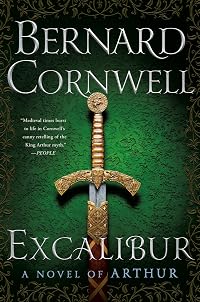
With Excalibur Bernard Cornwell draws his Arthurian trilogy to an exciting close that will have listeners gripping their headphones. If Arthur existed (and I am quite certain he did) then he was probably the great British war leader who won the battle of Mount Badon. No one knows where it was fought, or how it was fought, but we do know that the battle took place and it was the one great defeat inflicted on the English invaders of Britain. In Excalibur we follow Arthur and Derfel to that show more enormous struggle and incredible victory. It not only throws the Saxons back, but reunites Arthur and Guinevere. He might hope now to be left alone, to have a time of peace after gaining a great victory, but new enemies arise to destroy all he has achieved. First is Mordred himself, the crippled king who owes everything to Arthur and now tries to kill his benefactor. Mordred's ally is Nimue who has come to hate her mentor, Merlin. And so the story ends as it has always ended, at C 'and so my lord was gone. And no one has seen him since.'. show lessTags
Recommendations



Member Reviews
It is a rare thing for an author to draw me into a story so deeply that I didn't want it to end...and when it did I felt as if I had said good-bye to a group of friends (and fiends) I'll never see again. A bittersweet finale to a 1,500 page saga that gripped me right from page one, book one. Although he kept the magical elements of the tale at arm's length in the first two books, in this final instalment Cornwell makes them an integral part of the narrative ramping up the violence, despotism, and heroism for a climax that I'm still replaying in my head. I doubt I'll ever be able to read another take on the legend of Arthur without comparing it...unfavourably... to this one. And despite his efforts to de-romanticize the story using show more realistic characters and earthy asides regarding living conditions in 5th century Britain, Cornwell has succeeded in weaving a tall tale which fits comfortably between historical fiction and high fantasy. Beautifully done. show less
Excalibur is the conclusion to Bernard Cornwell's Arthurian trilogy, and is the best of the series. In Excalibur Cornwell masterfully brings to a conclusion plot points he's been weaving for hundreds of pages, and never once misses a step. Every character is given a satisfying - if bittersweet - ending, every plot point wrapped up satisfactorily.
Where this book really excels is in the battles. The other two entries had battles and warfare, but Excalibur brings it to a head here. I've maybe never read such gritty battle scenes before, and Cornwell does a great job contrasting the chaos and density of the shield wall with the tense personal nature of the duel. The battles are a definite high point in a series with very few low points.
I do show more wish there was perhaps an epilogue where a few of the more secondary and tertiary characters were explored a bit more and given a tiny bit more screen time - but this is Arthur's story, after all, and it's only right that the spotlight be given mostly to Arthur.
I admit post-Roman pre-Saxon Britain is not an area I've ever truly been interested in. Sure, I think everyone, especially boys, are on some level fascinated with Arthur and Guinevere and Lancelot and all the rest. Who wouldn't be? War, magic, the Round Table and the height of chivalry. Armored cavalry has a certain raw beauty and appeal, and Cornwell is well aware of this fact and uses it to great effect. That said, if we move past the legend and myth of Arthur, there really isn't much to love about this era of Britain at first glance. The might of Rome is broken and half-forgotten, we know little to nothing about the Druids, and we're still a long way off from Alfred's great glory.
This trilogy has changed that for me, a bit. This small era of Britain's history is almost entirely lost, and that makes it terribly interesting to me. Who were these people, really, with their strange gods and forts of earth, clinging to the remnants of Rome and their own scattered and half-remembered customs? We may never truly know, but Cornwell has written here a masterful work showing what might have been, if there really was a man named Arthur who was not a king and more than a king. show less
Where this book really excels is in the battles. The other two entries had battles and warfare, but Excalibur brings it to a head here. I've maybe never read such gritty battle scenes before, and Cornwell does a great job contrasting the chaos and density of the shield wall with the tense personal nature of the duel. The battles are a definite high point in a series with very few low points.
I do show more wish there was perhaps an epilogue where a few of the more secondary and tertiary characters were explored a bit more and given a tiny bit more screen time - but this is Arthur's story, after all, and it's only right that the spotlight be given mostly to Arthur.
I admit post-Roman pre-Saxon Britain is not an area I've ever truly been interested in. Sure, I think everyone, especially boys, are on some level fascinated with Arthur and Guinevere and Lancelot and all the rest. Who wouldn't be? War, magic, the Round Table and the height of chivalry. Armored cavalry has a certain raw beauty and appeal, and Cornwell is well aware of this fact and uses it to great effect. That said, if we move past the legend and myth of Arthur, there really isn't much to love about this era of Britain at first glance. The might of Rome is broken and half-forgotten, we know little to nothing about the Druids, and we're still a long way off from Alfred's great glory.
This trilogy has changed that for me, a bit. This small era of Britain's history is almost entirely lost, and that makes it terribly interesting to me. Who were these people, really, with their strange gods and forts of earth, clinging to the remnants of Rome and their own scattered and half-remembered customs? We may never truly know, but Cornwell has written here a masterful work showing what might have been, if there really was a man named Arthur who was not a king and more than a king. show less
Excalibur is the final book in Bernard Cornwell’s Warlord Chronicles trilogy, which reimagines Arthurian legend. Cornwell presents a brutal and believable 5th-century Britain. The story is told through the eyes of narrator Derfel, a Saxon captured as a child, who became Arthur's loyal warrior and friend. He is looking back on events of the past, which he witnessed firsthand. The plot is filled with dramatic action – Saxon invaders threaten, Christianity clashes with pagan beliefs, and political alliances are constantly shifting.
Cornwell excels at rendering mythical figures that feel like real people of history, marked by both achievements and failures. The gruesome battle sequences are intense. The reader can easily envision the show more shield-wall tactics and the clash of swords of early Middle Age warfare. The prose is vivid, occasionally rising to poetic heights. Cornwell’s Arthurian tale feels authentic to its historical setting while also retaining the core of the original myths. This book provides a satisfying and powerful conclusion. I very much enjoyed the entire trilogy and highly recommend all three books. show less
Cornwell excels at rendering mythical figures that feel like real people of history, marked by both achievements and failures. The gruesome battle sequences are intense. The reader can easily envision the show more shield-wall tactics and the clash of swords of early Middle Age warfare. The prose is vivid, occasionally rising to poetic heights. Cornwell’s Arthurian tale feels authentic to its historical setting while also retaining the core of the original myths. This book provides a satisfying and powerful conclusion. I very much enjoyed the entire trilogy and highly recommend all three books. show less
This series really grew on me. At the beginning, I wasn't sure about it, but I deliberately slowed down for awhile when I was reading this because I didn't want it to end. This is a very enthralling, more grounded take on Arthurian legend. The author works hard to make the world feel real, from the descriptions of characters' appearances, clothing, food to the inner workings of each kingdom and how the political system works. It was all very realistic, which is a quality at which the author excels. But he also included otherworldly incidents involving Druidic magic, that may or may not have been real, it all depends on whether we believe the narrator's interpretation and memory. I really loved these books, despite some of the disturbing show more content. If you're looking for a realistic, sometimes brutal depiction of what Arthur would have been like as a real person, then look no further. This is the series for you. show less
In this novel, the themes of religious conflict between the pagans and Christians continue one of Cornwell's favorite themes. I loved the ending of the story where Arthur sails away and we don't know exactly where he ends up. The story of Merlin and Nimue is also well told here. I very much enjoyed this novel but my favorite in the series is probably "The Enemy of God."
Overall, Cornwell does very well in handling the Arthurian legends and firmly setting them in the aftermath of the Roman era in Britain (circa 475 to 525 AD). It's firmly on
This is the 11th Cornwell novel I've read and it's interesting to see how certain themes and tropes come up again. Cornwell has a beautiful way of writing about the ruins of Roman civilization in Britain. In this story, we see Aquae Sulis (modern day Bath) and its incredible baths. Of course, we also get to experience Cornwell's magnificent battle scenes! There was also a certain catchphrase - "Fate is inexorable" - used here which also comes up multiple times in Cornwell's Saxon Stories. Finally, we also get to see Cornwell's highly critical view of clergy (with an exception here and there).
Cornwell's narrator Derfel concludes his telling of Arthur's story. Mordred is now King and Arthur hopes to retire to a quiet life, unfortunately events conspire against his dream and the Saxons are still eager to conquer Britain.
There is more magic in this book of the trilogy as Merlin and Nimue attempt to return the Old Gods to Britain. As always the battle scenes are outstanding and Cornwell's handling of the characters and their motivations is superb. This is a book to get lost in, that carries you through an old story with fresh eyes.
A great conclusion to the trilogy. I will definitely be looking into more of his books - the Grail Quest and the Saxon chronicles seem to be ones I would be most interested in reading.
There is more magic in this book of the trilogy as Merlin and Nimue attempt to return the Old Gods to Britain. As always the battle scenes are outstanding and Cornwell's handling of the characters and their motivations is superb. This is a book to get lost in, that carries you through an old story with fresh eyes.
A great conclusion to the trilogy. I will definitely be looking into more of his books - the Grail Quest and the Saxon chronicles seem to be ones I would be most interested in reading.
The finale of Cornwell's Arthurian trilogy. For lovers of historical fiction, the character and plot development are unmatched. I read frequent complaints about the author's use of violence (in and out of battle) as excessive and off-putting, yet I can't disagree more. Dark Age Britain wasn't exactly a rosy place to be, and although this work is based upon myth, Cornwell injects realism into the series with battles, destruction, sadness, and death.
This work would be better titled 'The Tragedy of Arthur', as even though it neatly ties a colossal story together in an original retelling, it leaves the reader depressed for the fate of Britain. Cornwell is a giant of historical fiction, and this work serves as the finale of his magnum opus.
This work would be better titled 'The Tragedy of Arthur', as even though it neatly ties a colossal story together in an original retelling, it leaves the reader depressed for the fate of Britain. Cornwell is a giant of historical fiction, and this work serves as the finale of his magnum opus.
Members
- Recently Added By
Lists

Best Arthurian Fiction
104 works; 33 members

Historical Fiction
889 works; 91 members
Modern Arthurian Fiction
237 works; 16 members
Author Information

167+ Works 93,482 Members
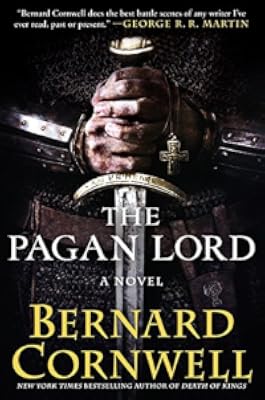
Bernard Cornwell was born in London, England, on February 23, 1944, and came to the United States in 1980. He received a B.A. from the University of London in 1967. Cornwell served as producer of the British Broadcasting Corporation from 1969-1976. After this he was head of current affairs for BBC-TV in Belfast, Northern Ireland. In 1979 he became show more editor of television news for Thames Television of London. Since 1980 he has been a freelance writer. he lives with his wife on Cape Cod. Cornwell's Sharpe series, adventure stories about a British soldier set in the Peninsula War of 1808-1814, are built on the author's interest in the Duke of Wellington's army. Titles include Sharpe's Rifles, Sharpe's Revenge, Sharpe's Siege, Sharpe's Regiment, and Sharpe's Waterloo. The Last Kingdom series has ten books. Book ten, The Flame Bearer is on the bestsellers list. He has also written other works including Wildtrack, Killer's Wake, Sea Lord, Stormchild, Rebel, Copperhead, and Battle Flag. His title Death of Kings made The New York Times Best Seller List in 2012 and In 2014 his title The Pagan Lord made the list again. (Bowker Author Biography) show less
Some Editions
Series

Work Relationships
Is contained in
Has as a student's study guide
Common Knowledge
- Canonical title
- Excalibur
- Original title
- Excalibur
- Original publication date
- 1999-07-16
- People/Characters
- Derfel; Arthur ap Uther; Ceinwyn; Issa; Aelle; Cerdic (show all 24); Culhwgh; Argante; Guinevere; Bors; Cuneglas; Emrys; Sansun; Morgan; Nimue; Merlin; Gwydre; Morwenna; Seren; Liofa; Lancelot du Lac; Galahad; Oengus mac Airem; Meurig
- Important places
- Dun Caric; Mynydd Baddon; Mai Dun; Isca, Siluria; Benoic
- Dedication*
- Excalibur é para John e Sharon Martin.
- First words*
- Mulheres, como elas assombram esta narrativa!
- Last words*
- (Click to show. Warning: May contain spoilers.)E ninguém o viu deste então.
*Some information comes from Common Knowledge in other languages. Click "Edit" for more information.
Classifications
Statistics
- Members
- 2,619
- Popularity
- 7,183
- Reviews
- 51
- Rating
- (4.19)
- Languages
- 12 — Czech, Danish, Dutch, English, French, German, Greek, Hungarian, Polish, Portuguese, Russian, Spanish
- Media
- Paper, Audiobook, Ebook
- ISBNs
- 55
- ASINs
- 18