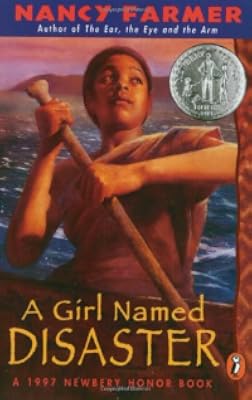
A Girl Named Disaster
by Nancy Farmer
On This Page
Description
While fleeing from Mozambique to Zimbabwe to escape an unwanted marriage, Nhamo, an eleven-year-old Shona girl, struggles to escape drowning and starvation and in so doing comes close to the luminous world of the African spirits.Tags
Recommendations


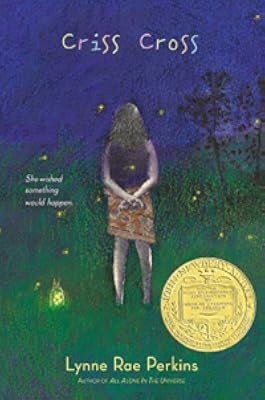
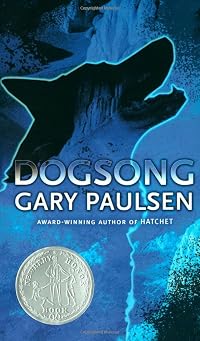
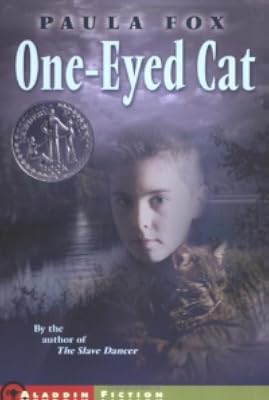
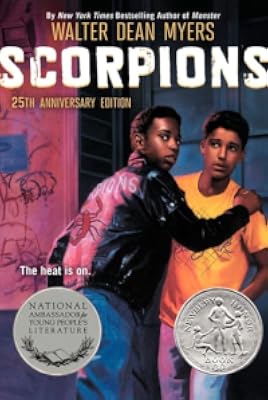
Member Recommendations
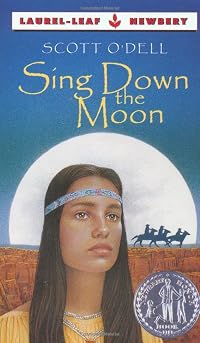
Steve.Gourley This may seem like a weird connection, but it is a novel about surviving on a river despite many dangers. Anyway, I was reminded about deliverance as Nhamo travels through the lake trying to survive.
Member Reviews
Nhamo's mother was killed by a leopard when Nhamo was just a baby and her father left her village to return to his own family in Zimbabwe, leaving Nhamo to be raised by her grandmother and a hateful aunt. Most of the heavy daily chores are piled on her, and when cholera invades the village, a witch doctor blames her father, who killed another man before he fled, for the vengeful spirit he claims has brought the sickness to them. Nhamo is condemned to be the wife of the murdered man's brother's, which is tantamount to a life of beatings and early death. So, her grandmother helps her to run away in search of her father's family. What follows is an account of her survival for months on her own in the wild before she finally makes it to show more Zimbabwe and a new life.
An excellent adventure story; think Cinderella meets Island of the Blue Dolphins, with a dash of African folklore and a heroine you'll be rooting for from the first page. Definitely recommended. show less
An excellent adventure story; think Cinderella meets Island of the Blue Dolphins, with a dash of African folklore and a heroine you'll be rooting for from the first page. Definitely recommended. show less
You know how [b:Hatchet|50|Hatchet (Brian's Saga, #1)|Gary Paulsen|https://i.gr-assets.com/images/S/compressed.photo.goodreads.com/books/1385297074l/50._SX50_.jpg|1158125] is about a boy who has to survive in the wilds of Canada? A Girl Named Disaster is kind of like that, except instead of a 13-year-old boy from NYC, it's about an approximately 13-year-old girl from Mozambique. While Brian is angsty because his parents are divorced and he has to spend the summer in Canada with his dad, Nhamo doesn't have parents, because her father took off before she was born and her mother was killed by a leopard when she was a toddler. Instead, she's been raised by her aunt, who always hated her mom and treats Nhamo like a slave. Only Nhamo's show more grandmother actually cares about her. When the family decides to marry Nhamo into a life of even more misery, her grandmother encourages her to run away to find her father's family.
My son is reading this book as part of his 7th grade language arts curriculum, along with a social studies unit on modern Africa. I've seen several comments that this is a "girl book," because the protagonist is female and there's mention of menstruation. (Deep breath.) This is a book that everyone can enjoy, that places the reader in the shoes (actually, Nhamo doesn't have shoes through most of the book) of someone from another part of the world, a completely different culture. Although it's set in 1981, after Mozambique won their independence from Portugal, Nhamo's family lives much the same way as their ancestors did a hundred years before that. It's both an immersive learning experience and an entertaining read.
Edit: Son #2 read this as an advanced 6th grader and also really enjoyed it, reinforcing my statement that this book is not. just. for. girls. show less
My son is reading this book as part of his 7th grade language arts curriculum, along with a social studies unit on modern Africa. I've seen several comments that this is a "girl book," because the protagonist is female and there's mention of menstruation. (Deep breath.) This is a book that everyone can enjoy, that places the reader in the shoes (actually, Nhamo doesn't have shoes through most of the book) of someone from another part of the world, a completely different culture. Although it's set in 1981, after Mozambique won their independence from Portugal, Nhamo's family lives much the same way as their ancestors did a hundred years before that. It's both an immersive learning experience and an entertaining read.
Edit: Son #2 read this as an advanced 6th grader and also really enjoyed it, reinforcing my statement that this book is not. just. for. girls. show less
Nhamo's mother is dead, and her father is gone. She is a virtual slave in her small African village. Before her twelfth birthday, Nhamo learns that she must marry a cruel man with three other wives and decides desperately to run away. Alone on the river, in a stolen boat, she is swept into the uncharted heart of a great lake. There, she battles drowning, starvation, and wild animals, and comes to know Africa's mystical, luminous spirits.
Wow. It took me a long time to listen to this whole book, so my impression of it is a little fragmented. First off, it's about a girl (12 or 13 years old) named Nhamo (which means "disaster") who lives in a remote village in Mozambique. She's kind of a Cinderella character because her mother is dead and she lives with her aunt who makes her do all the hard work (but she's not as miserable as Cinderella). The story is told in the third person, but Nhamo's POV is definitely primary.
Nhamo's tribe is Shona, so we learn quite a lot about the Shona religion (and Farmer gives us an appendix with more info as well). As Nhamo embarks on a dangerous journey, she relies more and more on her beliefs to give her strength.
The story takes place in show more the 1980s, so towards the end of the book there is a conflict between modern, Western religion and Nhamo's native religion. We also learn a little about the conflicts between the native Africans of Zimbabwe and the white settlers/invaders.
A lot of Nhamo's story is about surviving alone in the wilderness, a little like [b:Island of the Blue Dolphins|233818|Island of the Blue Dolphins|Scott O'Dell|http://photo.goodreads.com/books/1172966185s/233818.jpg|3215136]. Nhamo tells a lot of great stories passed down from her grandmother. She deals with the absence of her parents. She celebrates her victories by making up songs that are like, "I am Nhamo! I am the best!" It's hard not to love her for being so clever and so brave.
And the audio book was amazing. The reader did wonderful accents, and really gave each character a life, especially Crocodile Guts, Dr. van Heerden, and Ambuya. show less
Nhamo's tribe is Shona, so we learn quite a lot about the Shona religion (and Farmer gives us an appendix with more info as well). As Nhamo embarks on a dangerous journey, she relies more and more on her beliefs to give her strength.
The story takes place in show more the 1980s, so towards the end of the book there is a conflict between modern, Western religion and Nhamo's native religion. We also learn a little about the conflicts between the native Africans of Zimbabwe and the white settlers/invaders.
A lot of Nhamo's story is about surviving alone in the wilderness, a little like [b:Island of the Blue Dolphins|233818|Island of the Blue Dolphins|Scott O'Dell|http://photo.goodreads.com/books/1172966185s/233818.jpg|3215136]. Nhamo tells a lot of great stories passed down from her grandmother. She deals with the absence of her parents. She celebrates her victories by making up songs that are like, "I am Nhamo! I am the best!" It's hard not to love her for being so clever and so brave.
And the audio book was amazing. The reader did wonderful accents, and really gave each character a life, especially Crocodile Guts, Dr. van Heerden, and Ambuya. show less
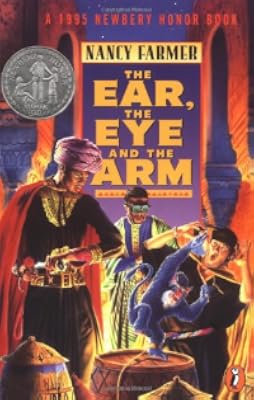
Finally getting around to reading this classic by Nancy Farmer. I was eager because Nancy is such a wonderful writer, and her knowledge of Africa and its customs is extensive. Plus, this book won just about every award there is! Although Nhamo is a sympathetic Cinderella-like character her story just didn't pull me in. It moved rather slowly, and the African mythology woven throughout did not increase my appreciation. Even though, I still want to read The Ear, the Eye, and the Arm, which several readers have said they enjoyed more than this title (which, by the way, is probably why I've wanted to read "A Girl..." ever since it was published. What a great title!) I noticed a recommendation for readers who liked this of Island of the Blue show more Dolphin. That one I read as a girl when it was first published, and I never cared for it, either! show less
I was delighted by this when I was ten or so. I read it a few times in the summer that year, and cheered Nhamo on as she sailed. As an adult rereading it, I discovered I remembered little of it: maybe a paragraph. The book's introduction is about studying and interacting with baboons. Only three chapters are actually dedicated to that, and they're anthropomorphized: a word which I have known for years and been spelling and likely pronouncing wrong this whole time, I just now learned. The bulk of this book is stories within a story, and songs. I was not interested. Nhamo's river journey to find her biological father and his family is perilous and lasts from chapter ten until the last hundred pages of the book. I'm realizing I'm not a fan show more of "lost in the wilderness" journey books. It's a good realization for me. The last hundred pages are her adjusting to a new life and being nursed back to health. Her culture shock was totally downplayed, but this is a middle grade book and sometimes they do that. The book ended abruptly but I was glad it was over. It was boring overall. show less
This is a coming of age story set in Mozambique and Zimbabwe. The reader must accept the tribal beliefs of Nhamo and her family as realities, not as superstitions. Throughout the book she really does communicate with assorted spirits in two-way conversations.
The book has three distinct parts. In the first, we meet Nhamo and her family in a remote tribe in Mozambique. She is a young girl shunned by some because her father left the family and her mother died young. Her grandmother and one cousin seem to be the only ones in the village who truly love her. After a plague of cholera kills several in the community, the family consults with a witch doctor, who tells them the cholera came because of Nhamo's father's actions, and to appease the show more spirits, the girl had to be married off to an old man who already had several wives. Grandmother tells Nhamo that she must run away. It is the only way she can survive. She must run away to Zimbabwe to seek her father's family.
The second part is pure survival tale. Nhamo sets off in a tiny boat, with minimal supplies, to row to Zimbabwe. Her trip takes far longer than she anticipated, including a stop for many months on a large island in an enormous lake. (For me, this portion of the book dragged on much too long. I could only maintain interest in how she got food, protected herself, got lonely, etc. for so long, and it stretched way beyond my own capacity to appreciate it.)
In the concluding third part, Nhamo finds her way to a tiny scientific community in Zimbabwe, which takes her in. In time, they have to seek out her real family... her father's relatives in Zimbabwe.
As for myself, I enjoyed the first part and the last part of the book, but would have enjoyed it overall significantly more if the interminably long survival section in the middle had been about 100 pages shorter. show less
The book has three distinct parts. In the first, we meet Nhamo and her family in a remote tribe in Mozambique. She is a young girl shunned by some because her father left the family and her mother died young. Her grandmother and one cousin seem to be the only ones in the village who truly love her. After a plague of cholera kills several in the community, the family consults with a witch doctor, who tells them the cholera came because of Nhamo's father's actions, and to appease the show more spirits, the girl had to be married off to an old man who already had several wives. Grandmother tells Nhamo that she must run away. It is the only way she can survive. She must run away to Zimbabwe to seek her father's family.
The second part is pure survival tale. Nhamo sets off in a tiny boat, with minimal supplies, to row to Zimbabwe. Her trip takes far longer than she anticipated, including a stop for many months on a large island in an enormous lake. (For me, this portion of the book dragged on much too long. I could only maintain interest in how she got food, protected herself, got lonely, etc. for so long, and it stretched way beyond my own capacity to appreciate it.)
In the concluding third part, Nhamo finds her way to a tiny scientific community in Zimbabwe, which takes her in. In time, they have to seek out her real family... her father's relatives in Zimbabwe.
As for myself, I enjoyed the first part and the last part of the book, but would have enjoyed it overall significantly more if the interminably long survival section in the middle had been about 100 pages shorter. show less
Members
- Recently Added By
Lists

Best Newbery Honor Books
257 works; 32 members

A Child's Book Tour of South Africa ::: Botswana, Mozambique, Zimbabwe
33 works; 3 members

Childhood: Books for or about children in different cultures around the wor
345 works; 18 members

Newbery Honor Books By year - II - 1981-2035
143 works; 4 members

Books Read in 2024
4,727 works; 128 members
Author Information

23+ Works 17,164 Members
Some Editions
Awards and Honors
Awards
Distinctions
Common Knowledge
- Original publication date
- 1996
- People/Characters
- Nhamo; Ambuya; Aunt Chipo; Dr. Everjoice Masuku
- Important places
- Africa; Lake Cabora Bassa; Mozambique; Zimbabwe
- Dedication
- To Harold
Light of my life
and spirit guide - First words
- Crouched on a branch of a mukuyu tree, a girl tore open a speckled fruit.
- Last words
- (Click to show. Warning: May contain spoilers.)And Nhamo was left with the wind blowing out of the forest and the fireflies hovering over the lucerne.
Classifications
- Genres
- Kids, Fiction and Literature, Tween, Children's Books
- DDC/MDS
- 813.54 — Literature & rhetoric American literature in English American fiction in English 1900-1999 1945-1999
- LCC
- PZ7 .F23814 .G — Language and Literature Fiction and juvenile belles lettres Fiction and juvenile belles lettres Juvenile belles lettres
- BISAC
Statistics
- Members
- 1,884
- Popularity
- 11,425
- Reviews
- 31
- Rating
- (3.68)
- Languages
- Danish, Dutch, English, German
- Media
- Paper, Audiobook, Ebook
- ISBNs
- 34
- ASINs
- 8