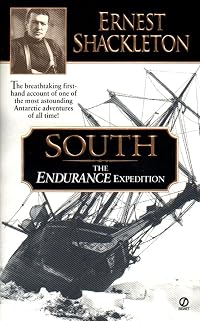
South: The Story of Shackleton's Last Expedition, 1914-1917
by Ernest Shackleton
On This Page
Description
When Sir Henry Ernest Shackleton was beaten to the South Pole in 1912, he decided to trek across the continent via the pole instead. Before his ship even reached the continent it was crushed in pack ice. Shackleton managed to bring his entire team home by his masterful leadership through a series of incredible events. He has become a cult figure and a role model for great leadership..
Tags
Recommendations
























Member Recommendations
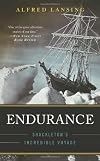
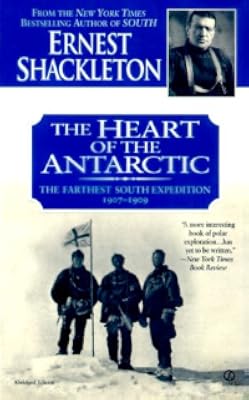
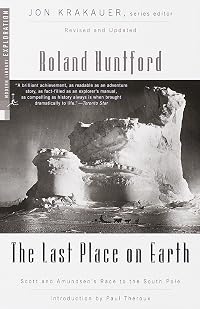
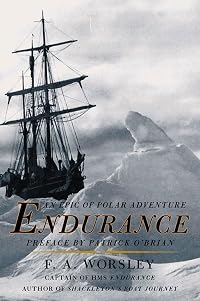
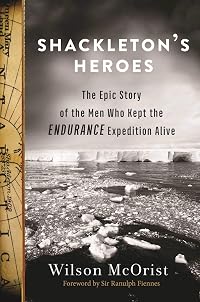
chrisharpe Lansing was a writer not an expedition member, but his account really transmits the sense of adventure.


Member Reviews
https://fromtheheartofeurope.eu/south-the-illustrated-story-of-shackletons-last-...
The Imperial Trans-Antarctic Expedition of 1915-18 ended in failure, but gloriously documented failure. Ernest Shackleton planned to lead a party across Antartica via the South Pole, from the Weddell Sea south of the Atlantic to the Ross Sea south of the Pacific, to meet up with a second group based there. Disaster struck; both ships got stuck in the ice and were eventually destroyed; Shackleton led his own crew to precarious shelter on Elephant Island, off the Antarctic coast, and then undertook a 1300 km journey in an open boat to South Georgia to secure rescue; amazingly, all of the Weddell Sea group survived. (All of the humans, that is; the dogs and show more the ship’s cat were not so lucky.) Another rescue party then had to go and find the Ross Sea party, three of whom had died in the meantime. They returned to civilisation to find that the war, which had broken out just before their departure with promises that it would end quickly, was still raging, and most of the expedition members dispersed to join the forces.
The 100th anniversary edition of Shackleton’s expedition report is beautifully illustrated with the many photographs taken on the spot, including the poignant moment when the Edncurance slipped below the ice of the Weddell Sea (to be found 106 years later). Shackleton’s diaries, always intended for publication, are vivid about the difficulties faced by his group, and the extraordinary challenges of the punishing environment. The Ross Sea group’s records are less detailed, and it’s pretty clear that Aeneas Mackintosh, the leader, lost his nerve at quite an early stage, and eventually died in a futile attempt to cross the ice of McMurdo Sound. But these were very tough circumstances.
What really struck me was the confidence that Shackleton in particular had about navigation. The South Pole is really just a dot on the map, but he was sure that if he had landed he would find it, and there was no doubt in his mind that he would find the Ross Sea team once he crossed the continent. He writes of supply depots left by previous expeditions that he locates and uses. In particular, I’m stunned by the navigational feat of finding South Georgia in the vast ocean.
One does have to wonder what it was all for? The scientific advances made were minimal, and the expenditure of resources huge, not to mention the fact that lives were lost. Fifty years later, the space race attracted greater resources and press coverage, but one senses the same kind of drive for exploration behind it. Shackleton himself died on South Georgia in the early stages of another expedition in 1922 aged 47, of a heart attack brought on by stress. I guess the story of the expedition, doomed as it was, is a compelling record anyway. show less
The Imperial Trans-Antarctic Expedition of 1915-18 ended in failure, but gloriously documented failure. Ernest Shackleton planned to lead a party across Antartica via the South Pole, from the Weddell Sea south of the Atlantic to the Ross Sea south of the Pacific, to meet up with a second group based there. Disaster struck; both ships got stuck in the ice and were eventually destroyed; Shackleton led his own crew to precarious shelter on Elephant Island, off the Antarctic coast, and then undertook a 1300 km journey in an open boat to South Georgia to secure rescue; amazingly, all of the Weddell Sea group survived. (All of the humans, that is; the dogs and show more the ship’s cat were not so lucky.) Another rescue party then had to go and find the Ross Sea party, three of whom had died in the meantime. They returned to civilisation to find that the war, which had broken out just before their departure with promises that it would end quickly, was still raging, and most of the expedition members dispersed to join the forces.
The 100th anniversary edition of Shackleton’s expedition report is beautifully illustrated with the many photographs taken on the spot, including the poignant moment when the Edncurance slipped below the ice of the Weddell Sea (to be found 106 years later). Shackleton’s diaries, always intended for publication, are vivid about the difficulties faced by his group, and the extraordinary challenges of the punishing environment. The Ross Sea group’s records are less detailed, and it’s pretty clear that Aeneas Mackintosh, the leader, lost his nerve at quite an early stage, and eventually died in a futile attempt to cross the ice of McMurdo Sound. But these were very tough circumstances.
What really struck me was the confidence that Shackleton in particular had about navigation. The South Pole is really just a dot on the map, but he was sure that if he had landed he would find it, and there was no doubt in his mind that he would find the Ross Sea team once he crossed the continent. He writes of supply depots left by previous expeditions that he locates and uses. In particular, I’m stunned by the navigational feat of finding South Georgia in the vast ocean.
One does have to wonder what it was all for? The scientific advances made were minimal, and the expenditure of resources huge, not to mention the fact that lives were lost. Fifty years later, the space race attracted greater resources and press coverage, but one senses the same kind of drive for exploration behind it. Shackleton himself died on South Georgia in the early stages of another expedition in 1922 aged 47, of a heart attack brought on by stress. I guess the story of the expedition, doomed as it was, is a compelling record anyway. show less
As Europe becomes increasingly unsettled, and countries prepare for war, one British adventurer is getting ready for a dangerous and life-threatening expedition of his own. Following the conquest of the South Pole, Shackleton set his sights on what he called 'the one remaining great object of Antarctic journeying', a trans-continental crossing of Antarctica, via the pole. Having raised the money required, and despite the outbreak of World War I on the 3rd of August, he was commanded to proceed.
What follows is the account of the expedition, complete with precise lists, geographical positions and weather, first as they try to land on Antarctica, get trapped for months in the pack ice as it freezes around them, their ship being crushed by show more the ice, and then their desperate attempts, not to complete their task, but simply to survive and return to civilisation.
A dry, studious account occasionally interjected with light humour, such as descriptions of penguins nonsensical behaviour, the enormity of their struggle is difficult to comprehend. The monotony and futility of any action is clear – stranded on a chunk of ice, having watched their ship crushed, with provisions running short and over 1000 miles to help, this is truly the meaning of Endurance (the name of the ship they lost).
Specific lists of the food they have (and lack), continuing wondering as to the progression of the war and those loved ones at home, and the depletion of resources all round are charted, and both the madness and the foolhardy bravery of these men are hard to ignore, and even harder to imagine.
The accompanying tale, that of the men sent to the other side of the continent to place supply depots ready for the group they thought would be crossing land, is even more desperately futile to listen to – knowing as the reader does, that their travails are all for nothing, as the expedition has already failed.
This is an epic disguised in the staid and precise tones of an English gentleman adventurer, who – despite everything – is always determined in his tenacity and unwillingness to give up in the face of adversity. Foolhardy, yes, but with unbelievable courage. show less
What follows is the account of the expedition, complete with precise lists, geographical positions and weather, first as they try to land on Antarctica, get trapped for months in the pack ice as it freezes around them, their ship being crushed by show more the ice, and then their desperate attempts, not to complete their task, but simply to survive and return to civilisation.
A dry, studious account occasionally interjected with light humour, such as descriptions of penguins nonsensical behaviour, the enormity of their struggle is difficult to comprehend. The monotony and futility of any action is clear – stranded on a chunk of ice, having watched their ship crushed, with provisions running short and over 1000 miles to help, this is truly the meaning of Endurance (the name of the ship they lost).
Specific lists of the food they have (and lack), continuing wondering as to the progression of the war and those loved ones at home, and the depletion of resources all round are charted, and both the madness and the foolhardy bravery of these men are hard to ignore, and even harder to imagine.
The accompanying tale, that of the men sent to the other side of the continent to place supply depots ready for the group they thought would be crossing land, is even more desperately futile to listen to – knowing as the reader does, that their travails are all for nothing, as the expedition has already failed.
This is an epic disguised in the staid and precise tones of an English gentleman adventurer, who – despite everything – is always determined in his tenacity and unwillingness to give up in the face of adversity. Foolhardy, yes, but with unbelievable courage. show less
I’d like to take an Antarctic cruise, though the prospect makes me a little uneasy. I get seasick easily, and those seas are among the world’s worst. And since I’ve shoveled out a chicken coop, I’m unsurprised by cruisers who warn that the smell of a penguin rookery can be overpowering.
The smell of penguins in their own filth was just one of the unpleasantries confronting Sir Ernest Shackleton and his men in their ill-starred 1914 expedition south. And confront it they did, at one point making camp in an abandoned rookery as the only point guaranteed to stay above the high-water mark.
Shackleton’s account is an epic of endurance and survival after the good ship Endurance was trapped and then crushed in pack ice. It’s no show more spoiler to say he survived, given that he published this three years after emerging from the south (and three years before dying of a heart attack during a final voyage).
What’s remarkable is that anyone lived at all. This exceptionally British document is so laconic that its tone belies its extraordinary contents. The dash of a small party to get help, across 800 miles of storm-tossed seas in a slapdash lifeboat, is just one example of hardship that might break me.
Stick with it through the opening chapters. They’re slow, being a cursory account from Shackelton’s journals of the months spent probing ever deeper into the pack in his attempt to be the first to cross the continent on foot.
The later chapters, documenting the misfortunes suffered by the team responsible to set up depots from the other side, get repetitive. They’re excellent as a precis of what men suffered during the Golden Age of Antarctic exploration, illustrating as they do the mind-numbing brutality of perpetual ice and snow.
Between these, the heart of the story throws at least three themes into stark relief. First, leadership matters. I find it unlikely anyone would have lived had not Shackleton and his right-hand man Frank Wild led with determination, by example, and for the good of their men.
Second, we can survive the unsurvivable if we pull together in common cause. Only when we give up on hope and each other are we definitively doomed. Third, and equally as true as the preceding two, is that neither leadership nor team spirit offer guarantees.
At any point, everyone could’ve died. The line between life and death is thin and not always under our control, as Shackleton acknowledges in attributing their survival to what he terms Providence:
“I know that during that long and racking march…it seemed to me often that we were four, not three. I said nothing to my companions on the point, but afterwards Worsley said to me, ‘Boss, I had a curious feeling on the march that there was another person with us.’ Crean confessed to the same idea. One feels ‘the dearth of human words, the roughness of mortal speech’ in trying to describe things intangible, but a record of our journeys would be incomplete without a reference to a subject very near to our hearts.”
This blend of unbending will and flexible humility is the perfect avatar of the consummate explorer. The wreck of the Endurance was found on the ocean floor in March 2022 and designated a protected monument, but this book remains the most significant monument of Shackleton’s life. We are indebted to him for as long as seekers of his mettle take inspiration to push ever forward, ever onward, into the unknown — and beyond. show less
The smell of penguins in their own filth was just one of the unpleasantries confronting Sir Ernest Shackleton and his men in their ill-starred 1914 expedition south. And confront it they did, at one point making camp in an abandoned rookery as the only point guaranteed to stay above the high-water mark.
Shackleton’s account is an epic of endurance and survival after the good ship Endurance was trapped and then crushed in pack ice. It’s no show more spoiler to say he survived, given that he published this three years after emerging from the south (and three years before dying of a heart attack during a final voyage).
What’s remarkable is that anyone lived at all. This exceptionally British document is so laconic that its tone belies its extraordinary contents. The dash of a small party to get help, across 800 miles of storm-tossed seas in a slapdash lifeboat, is just one example of hardship that might break me.
Stick with it through the opening chapters. They’re slow, being a cursory account from Shackelton’s journals of the months spent probing ever deeper into the pack in his attempt to be the first to cross the continent on foot.
The later chapters, documenting the misfortunes suffered by the team responsible to set up depots from the other side, get repetitive. They’re excellent as a precis of what men suffered during the Golden Age of Antarctic exploration, illustrating as they do the mind-numbing brutality of perpetual ice and snow.
Between these, the heart of the story throws at least three themes into stark relief. First, leadership matters. I find it unlikely anyone would have lived had not Shackleton and his right-hand man Frank Wild led with determination, by example, and for the good of their men.
Second, we can survive the unsurvivable if we pull together in common cause. Only when we give up on hope and each other are we definitively doomed. Third, and equally as true as the preceding two, is that neither leadership nor team spirit offer guarantees.
At any point, everyone could’ve died. The line between life and death is thin and not always under our control, as Shackleton acknowledges in attributing their survival to what he terms Providence:
“I know that during that long and racking march…it seemed to me often that we were four, not three. I said nothing to my companions on the point, but afterwards Worsley said to me, ‘Boss, I had a curious feeling on the march that there was another person with us.’ Crean confessed to the same idea. One feels ‘the dearth of human words, the roughness of mortal speech’ in trying to describe things intangible, but a record of our journeys would be incomplete without a reference to a subject very near to our hearts.”
This blend of unbending will and flexible humility is the perfect avatar of the consummate explorer. The wreck of the Endurance was found on the ocean floor in March 2022 and designated a protected monument, but this book remains the most significant monument of Shackleton’s life. We are indebted to him for as long as seekers of his mettle take inspiration to push ever forward, ever onward, into the unknown — and beyond. show less
A most fascinating piece of history, written up by Ernest from the diaries, logs and journals that survived his calamitous attempt at crossing the Antarctic. It seems that if it could have gone wrong, it did go wrong.
There's that all pervasive, Victorian attitude of bloody minded, arrogant perseverance throughout this book, and it certainly feels that that is all that kept these people alive, but it's also what got them into the mess in the first place.
Having been beaten to be the first to get to the South Pole by Roald Amundsen, Shackleton decided to turn his sights on being the first to cross the Antarctic. It certainly seems to me that this need to be the first, to always be proving that the British could do something quicker show more and better than any other nation, caused Shackleton to rush into something he was completely unprepared for. Whereas Amundsen, being Norwegian, was obviously very used to dealing with very cold temperatures, was fully trained with sled dogs and their uses, and set out fully trained and physically fit, Shackleton appears to have just taken the bloody minded, arrogant approach of... 'We're British and we know what we're doing and nothing, not even Nature, can stand in our way. For King and Country, and all that!'
I just get the feeling that Shackleton's attitude was... 'Let's just get going, we can't afford to wait, we can sort it all out when we get there.'
While this book is, without a doubt, an incredible testament to the incredible bravery, fortitude and perseverance of humans to survive when pushed well beyond all imaginable limits, it's also a testament to some incredible stupidity.
Yes, i realise, that that was the zeitgeist: to just keep throwing people, lives and equipment at a problem until it was dealt with. Human life was not held in such high regard back then as it is today. Spending a few years properly planning and training was simply unacceptable when other nations would have no such restraint and do it before us. So one does have to weigh this account in that regard, and when weighted in that light Shackleton did an incredible job, and it's always so easy to criticise with hindsight. If the weather had been with him those years then what could have been achieved? show less
There's that all pervasive, Victorian attitude of bloody minded, arrogant perseverance throughout this book, and it certainly feels that that is all that kept these people alive, but it's also what got them into the mess in the first place.
Having been beaten to be the first to get to the South Pole by Roald Amundsen, Shackleton decided to turn his sights on being the first to cross the Antarctic. It certainly seems to me that this need to be the first, to always be proving that the British could do something quicker show more and better than any other nation, caused Shackleton to rush into something he was completely unprepared for. Whereas Amundsen, being Norwegian, was obviously very used to dealing with very cold temperatures, was fully trained with sled dogs and their uses, and set out fully trained and physically fit, Shackleton appears to have just taken the bloody minded, arrogant approach of... 'We're British and we know what we're doing and nothing, not even Nature, can stand in our way. For King and Country, and all that!'
I just get the feeling that Shackleton's attitude was... 'Let's just get going, we can't afford to wait, we can sort it all out when we get there.'
While this book is, without a doubt, an incredible testament to the incredible bravery, fortitude and perseverance of humans to survive when pushed well beyond all imaginable limits, it's also a testament to some incredible stupidity.
Yes, i realise, that that was the zeitgeist: to just keep throwing people, lives and equipment at a problem until it was dealt with. Human life was not held in such high regard back then as it is today. Spending a few years properly planning and training was simply unacceptable when other nations would have no such restraint and do it before us. So one does have to weigh this account in that regard, and when weighted in that light Shackleton did an incredible job, and it's always so easy to criticise with hindsight. If the weather had been with him those years then what could have been achieved? show less
Something about these polar expeditions fascinate me. Why groups of men thought it would be a good idea to sail in a wooden ship to Antarctica and then walk across the continent dragging their food and supplies behind them, wearing reindeer skins and canvas, I will never understand. They are so cheerful about it, too. Poor Smith, he died of painful scurvy in a tent during a blizzard, but he smiled and joked until the end. What a great guy! I don't deny that these feats were amazing and inspiring, I just wonder how bad regular life in England was to make these journeys seem like any kind of alternative.
As war broke out in Europe in August 1914, Ernest Shackleton led a daring expedition south to Antarctica. The expedition's goal was to cross Antarctica from one side to other, via the South Pole. This book is his personal account of three years' struggle.
Shackleton's writing, whilst not especially poetic, is deeply engaging. I read the whole book in slightly longer than a day, drawn in by images of frozen seas, men living on drifting ice floes for months at a time, and the many challenges of finding food (and not becoming a whale's lunch) in such a harsh environment. I was particularly struck by their absolute isolation; at a time when war was ravaging Europe, the expedition members had no idea what was happening back home for extended show more periods of time. The book also provides excellent perspective on how nature can so easily hinder the most ambitious of human endeavours.
Shackleton is a humble narrator, who makes no attempt to glorify his own actions and presents an intriguing story of adventure, survival, and blubber. He has utterly won me over - except, perhaps, regarding the merits of eating penguin. show less
Shackleton's writing, whilst not especially poetic, is deeply engaging. I read the whole book in slightly longer than a day, drawn in by images of frozen seas, men living on drifting ice floes for months at a time, and the many challenges of finding food (and not becoming a whale's lunch) in such a harsh environment. I was particularly struck by their absolute isolation; at a time when war was ravaging Europe, the expedition members had no idea what was happening back home for extended show more periods of time. The book also provides excellent perspective on how nature can so easily hinder the most ambitious of human endeavours.
Shackleton is a humble narrator, who makes no attempt to glorify his own actions and presents an intriguing story of adventure, survival, and blubber. He has utterly won me over - except, perhaps, regarding the merits of eating penguin. show less
I read this casually, a little at a time. It's one of the great adventure stories of all time, and smashing stuff (get it?) but...here's how it works: it's based on the journals of Shackleton and everyone else in his party - he gives others lots of time too - and the entries can be a little repetitious. Like, y'know, "Still stuck on an iceberg. Cold and hungry."
Shackleton's a surprisingly good writer, though. Clear, engaging and often funny. That livens up the doldrum periods - but also, the effect of the long passages in which nothing dramatic happens is that when something does happen, it happens with extraordinary, direct impact. His account of - minor spoiler, I guess? - the final destruction of the Endurance is just crushing. An show more incredibly powerful moment. The immediacy of the epistolaryish format, with its you-are-here feel, makes the big moments of the expedition directly heartbreaking.
After his account of the main expedition, he starts completely over with what happened with the other boat, the Aurora. (You will have forgotten they exist by this time.) This is a tough one; it's just as compelling a story - they actually had it worse, if you can believe that, and again it's based on journals so it has that you're-right-there! feel to it, but there's no avoiding the fact that, having slogged all the way through Shackleton's brutal story, you groan a little when you realize you're about to start over.
I guess I'd suggest laying it aside and picking it up later for this part. It is much shorter, at least. And it's much shorter even than it looks, because after the story of the Aurora's landing party (again, this really is great stuff on its own), Shackleton backtracks again, to the people who stayed on the Aurora, and that part is utterly skippable. Nothing whatsoever happens. I read it so you don't have to. Just stop there. show less
Shackleton's a surprisingly good writer, though. Clear, engaging and often funny. That livens up the doldrum periods - but also, the effect of the long passages in which nothing dramatic happens is that when something does happen, it happens with extraordinary, direct impact. His account of - minor spoiler, I guess? - the final destruction of the Endurance is just crushing. An show more incredibly powerful moment. The immediacy of the epistolaryish format, with its you-are-here feel, makes the big moments of the expedition directly heartbreaking.
After his account of the main expedition, he starts completely over with what happened with the other boat, the Aurora. (You will have forgotten they exist by this time.) This is a tough one; it's just as compelling a story - they actually had it worse, if you can believe that, and again it's based on journals so it has that you're-right-there! feel to it, but there's no avoiding the fact that, having slogged all the way through Shackleton's brutal story, you groan a little when you realize you're about to start over.
I guess I'd suggest laying it aside and picking it up later for this part. It is much shorter, at least. And it's much shorter even than it looks, because after the story of the Aurora's landing party (again, this really is great stuff on its own), Shackleton backtracks again, to the people who stayed on the Aurora, and that part is utterly skippable. Nothing whatsoever happens. I read it so you don't have to. Just stop there. show less
Members
- Recently Added By
Lists

Polar exploration
54 works; 4 members
Author Information

20+ Works 2,913 Members
All Editions
Some Editions
Awards and Honors
Series
Belongs to Publisher Series
Work Relationships
Is contained in
Is abridged in
Inspired
Common Knowledge
- Canonical title
- South: The Story of Shackleton's Last Expedition, 1914-1917
- Original title
- South: The Endurance Expedition
- Alternate titles
- South : the story of Shackleton's last expedition, 1914-1917
- Original publication date
- 1919
- People/Characters
- Ernest Shackleton; Frank Worsley; Frank Wild; Tom Crean
- Important places
- Antarctica; Atlantic Ocean; South Georgia Island; Elephant Island; South Atlantic Ocean; Arctic
- Important events
- Endurance Expedition (1914-1917)
- Dedication
- To My Comrades who fell in the white warfare of the south and on the red fields of France and Flanders
- First words
- I had decided to leave South Georgia about December 5, and in the intervals of final preparation scanned again the plans for the voyage to winter quarters.
- Last words
- (Click to show. Warning: May contain spoilers.)No party in any of my Expeditions has used any depot laid down by a previous Expedition.
- Original language
- English
Classifications
- Genres
- Nonfiction, Travel, Biography & Memoir, General Nonfiction
- DDC/MDS
- 919.8904 — History & geography Geography & travel Geography of and travel in Australasia, Pacific Ocean islands, Atlantic Ocean islands, Arctic islands, Antarctica and on extraterrestrial worlds Polar regions Antarctica
- LCC
- G850 — Geography, Anthropology and Recreation Geography (General) Arctic and Antarctic regions
- BISAC
Statistics
- Members
- 2,181
- Popularity
- 9,324
- Reviews
- 45
- Rating
- (4.08)
- Languages
- 9 — Dutch, English, French, German, Italian, Korean, Ladino, Portuguese, Spanish
- Media
- Paper, Audiobook, Ebook
- ISBNs
- 149
- UPCs
- 2
- ASINs
- 49