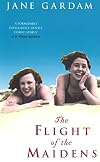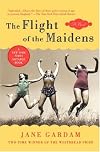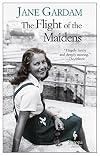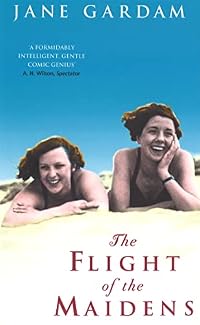
The Flight of the Maidens
by Jane Gardam
On This Page
Description
The Whitbread Award-winning author of the Old Filth trilogy captures a moment in time for three young women on the cusp of adulthood. Yorkshire, 1946. The end of the war has changed the world again, and, emboldened by this new dawning, Hetty Fallows, Una Vane, and Lieselotte Klein seize the opportunities with enthusiasm. Hetty, desperate to escape the grasp of her critical mother, books a solo holiday to the Lake District under the pretext of completing her Oxford summer coursework. Una, the show more daughter of a disconcertingly cheery hairdresser, entertains a romantically inclined young man from the wrong side of the tracks and the left-side of politics. Meanwhile, Lieselotte, the mysterious Jewish refugee from Germany, leaves the Quaker family who had rescued her, to test herself in London. Although strikingly different from one another, these young women share the common goal of adventure and release from their middle-class surroundings through romance and education. "Gardam's lean, fast-paced prose is at turns hugely funny and deeply moving.... [Her] characters are acutely and compassionately observed." - Atlantic Monthly "Quirky, enchanting... with lively, laugh-out loud elan." - The Baltimore Sun "Splendid... Gardam's style is perfect." - The New York Times Book Review "With winning charm and wit... Gardam frames her story in dozens of crisp, brief scenes featuring deliciously dizzy conversation." - Kirkus Reviews (starred review) "Ebullient, humorous, and wise, this is a novel to savor." - Booklist "The portrait of postwar England as conventions crumble and the country is rebuilt is terrific." - Publishers Weekly show lessTags
Recommendations






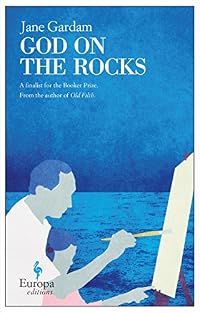
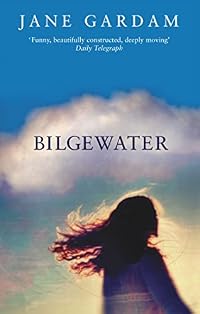




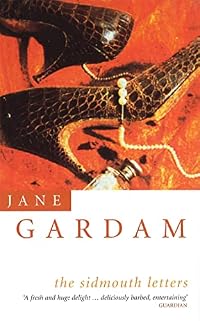










Member Recommendations

Member Reviews
I loved this, very charming but not twee, and with a lot of interesting characters. Three girls from a small town in the north of England prepare to go off to university, and have various interesting and odd adventures before starting. It's post war, and change is everywhere.
One thing I really liked was that all of their parents are quite damaged by having lived through the war, and they're characters in their own right, not just background figures.
One thing I really liked was that all of their parents are quite damaged by having lived through the war, and they're characters in their own right, not just background figures.
From the book jacket: It is the summer of 1946. A time of clothing coupons and food rations, of postwar deprivations and social readjustment. In this precarious new era, three young women prepare themselves to head off to university and explore the world beyond Yorkshire, England.
My reactions:
I’ve read three of Gadam’s novels before this one, and I rated them all 4****. I made a note to myself immediately on finishing this one with my 4-star rating, but now, a week later, as I sit to write my review I think I may have been over-enthusiastic. I’ll leave my rating at 4 since that was my initial reaction, but perhaps it should really be 3.5***.
What I love about Gardam’s writing is the way she paints her characters and shows us who show more they are. Hetty (Hester or “Hes-tah”) Fallowes is somewhat bookish and saddled with an overbearing mother. She sympathizes with but doesn’t really understand her father, who suffers from the traumas he witnessed in the trenches during WWI (what we would today recognize as PTSD). Her best friend (since age five) is Una Vane. She had a somewhat privileged upbringing, until her doctor father walked out one morning, and his body was discovered days later at the base of a cliff. He, too, had suffered from his experiences in WW1. The third girl is a recent member of their tight circle of friendship.
Leiselotte Klein, is a Jewish refugee who was taken in by a Quaker family. While Hetty and Una are thin, even skinny, Leiselotte is chubby. She slouches and is always knitting. She knows nothing of what has happened to her family, and while the Quaker couple who have taken her in have provided all they can for her, they have not been warm and loving. Her “foreignness” in this small Yorkshire community sets her apart and she’s remained rather solitary. At least until the three are joined together by the news of their scholarships.
The book opens with the three girls “picnicking” and talking about their recent acceptance at university. All will be setting off for London: Hetty to London to read Literature; Una to Cambridge to study physics; and Leiselotte to Cambridge where she’ll study Modern Languages. But before they go, they’ll have the summer months to grow up a bit.
Gardam changes point of view from chapter to chapter to give each girl a chance in the spotlight. Hetty heads for the Lake District on her own, an attempt to get away from her mother and try to get a head start on the basic reading she is certain her fellow university students have already studied. Una takes a bicycle trip around the countryside in the company of a boy from the wrong side of the tracks. Leiselotte’s journey is the most wide-ranging and full of surprises. I’m not sure I ever really got to know her in this novel and felt that her story was somewhat tacked onto that of the other girls. show less
My reactions:
I’ve read three of Gadam’s novels before this one, and I rated them all 4****. I made a note to myself immediately on finishing this one with my 4-star rating, but now, a week later, as I sit to write my review I think I may have been over-enthusiastic. I’ll leave my rating at 4 since that was my initial reaction, but perhaps it should really be 3.5***.
What I love about Gardam’s writing is the way she paints her characters and shows us who show more they are. Hetty (Hester or “Hes-tah”) Fallowes is somewhat bookish and saddled with an overbearing mother. She sympathizes with but doesn’t really understand her father, who suffers from the traumas he witnessed in the trenches during WWI (what we would today recognize as PTSD). Her best friend (since age five) is Una Vane. She had a somewhat privileged upbringing, until her doctor father walked out one morning, and his body was discovered days later at the base of a cliff. He, too, had suffered from his experiences in WW1. The third girl is a recent member of their tight circle of friendship.
Leiselotte Klein, is a Jewish refugee who was taken in by a Quaker family. While Hetty and Una are thin, even skinny, Leiselotte is chubby. She slouches and is always knitting. She knows nothing of what has happened to her family, and while the Quaker couple who have taken her in have provided all they can for her, they have not been warm and loving. Her “foreignness” in this small Yorkshire community sets her apart and she’s remained rather solitary. At least until the three are joined together by the news of their scholarships.
The book opens with the three girls “picnicking” and talking about their recent acceptance at university. All will be setting off for London: Hetty to London to read Literature; Una to Cambridge to study physics; and Leiselotte to Cambridge where she’ll study Modern Languages. But before they go, they’ll have the summer months to grow up a bit.
Gardam changes point of view from chapter to chapter to give each girl a chance in the spotlight. Hetty heads for the Lake District on her own, an attempt to get away from her mother and try to get a head start on the basic reading she is certain her fellow university students have already studied. Una takes a bicycle trip around the countryside in the company of a boy from the wrong side of the tracks. Leiselotte’s journey is the most wide-ranging and full of surprises. I’m not sure I ever really got to know her in this novel and felt that her story was somewhat tacked onto that of the other girls. show less
Three girls come of age in the weeks after they emerge from school. All of them are poor, all have won scholarships to elite English colleges.
It is Yorkshire in 1946. The people in their local town like to be seen as generous and self-sacrificing, but tend to be petty and narrow, repressed and stunted, prone to selfishness and narcissism. There is the legacy of the puritan era, and laid over that, the first world has left a residue of widows, spinsters and mad males.
In the towns and cities of England buildings still lie in ruins. People are still digesting the Holocaust, Hiroshima and Nagasaki, the reduction of Hamburg and Dresden to 'paste'. A new order had not yet begun, the postwar boom not suspected. Run-down aristocrats still cling show more to castle ruins, politics disturbs the thoughts of ordinary burghers over their morning papers, the Communist Party is still a serious option, the Pill not yet known. Threaded through all this is the silent calm of Quakerism: the puritan tradition at its gentlest, in its most dignified clothing, Quakers are presented as the force that did most to help Jews out of Germany in the 1930s.
Hetty is the daughter of an erudite man, mentally smashed in WW1, who lets his social connections lie fallow while he digs graves for a living. Quite another story is Hetty’s saintly, pretty, suffering, hyper-attentive, Anglo-Catholic mother. In a ghostly way she extends everywhere: into her own tight grey circle of female acquaintances, into the life of the local Vicar and even the life of Hetty’s boyfriend, the 'glass of cold water' Eustace; into the past, into the future, above all into Hetty’s heart and mind. To escape this attention Hetty has a few week’s holiday alone in the Lake District, where she is thrown in with farmers and daffy local aristocrats.
Liesolette is a refugee German Jew, sent out by her family in 1936. She was then raised by childless English Quakers. She has their calm silence on the outside, and another, appalling silence within. For a while before uni she moves to London, into the congested dwelling of another childless couple, German Jews like her, and she attracts a young Polish Jew as suitor; in their company the brittle silence inside her shatters at last. But complicating it all is the offer of an alternative future, from a rich great aunt, childless again, in California. Liesolotte visits and is pulled into an eerie suburban cocoon of wealth, between forest and sea.
The third girl Una lives, or rather scrapes by, with her matter-of-fact, streetwise mother. Cambridge beckons but meanwhile Una is busy exploring life with her boyfriend: shy, sensible, laconic and stern, a union man and communist. Una is a relief from the intensity of the other two (despite the earlier suicide of her father, another one done in by the Great War) and serves to tie the story together.
The plot’s coincidences and contrivances may irritate some readers but really just lighten the tone and do not, I think, get in the way of what the tale sets out to do. show less
It is Yorkshire in 1946. The people in their local town like to be seen as generous and self-sacrificing, but tend to be petty and narrow, repressed and stunted, prone to selfishness and narcissism. There is the legacy of the puritan era, and laid over that, the first world has left a residue of widows, spinsters and mad males.
In the towns and cities of England buildings still lie in ruins. People are still digesting the Holocaust, Hiroshima and Nagasaki, the reduction of Hamburg and Dresden to 'paste'. A new order had not yet begun, the postwar boom not suspected. Run-down aristocrats still cling show more to castle ruins, politics disturbs the thoughts of ordinary burghers over their morning papers, the Communist Party is still a serious option, the Pill not yet known. Threaded through all this is the silent calm of Quakerism: the puritan tradition at its gentlest, in its most dignified clothing, Quakers are presented as the force that did most to help Jews out of Germany in the 1930s.
Hetty is the daughter of an erudite man, mentally smashed in WW1, who lets his social connections lie fallow while he digs graves for a living. Quite another story is Hetty’s saintly, pretty, suffering, hyper-attentive, Anglo-Catholic mother. In a ghostly way she extends everywhere: into her own tight grey circle of female acquaintances, into the life of the local Vicar and even the life of Hetty’s boyfriend, the 'glass of cold water' Eustace; into the past, into the future, above all into Hetty’s heart and mind. To escape this attention Hetty has a few week’s holiday alone in the Lake District, where she is thrown in with farmers and daffy local aristocrats.
Liesolette is a refugee German Jew, sent out by her family in 1936. She was then raised by childless English Quakers. She has their calm silence on the outside, and another, appalling silence within. For a while before uni she moves to London, into the congested dwelling of another childless couple, German Jews like her, and she attracts a young Polish Jew as suitor; in their company the brittle silence inside her shatters at last. But complicating it all is the offer of an alternative future, from a rich great aunt, childless again, in California. Liesolotte visits and is pulled into an eerie suburban cocoon of wealth, between forest and sea.
The third girl Una lives, or rather scrapes by, with her matter-of-fact, streetwise mother. Cambridge beckons but meanwhile Una is busy exploring life with her boyfriend: shy, sensible, laconic and stern, a union man and communist. Una is a relief from the intensity of the other two (despite the earlier suicide of her father, another one done in by the Great War) and serves to tie the story together.
The plot’s coincidences and contrivances may irritate some readers but really just lighten the tone and do not, I think, get in the way of what the tale sets out to do. show less
I hate to say this, especially given how much I loved [The Man in the Wooden Hat], but this one fell flat for me. I think Gardam has great strength when she focuses the story on one narrator. Juggling three narrators - and never giving one any greater presence over the others - takes a level of finesse and skill, just like a juggler of bowling pins. Gardam has a wonderful ability to get inside her characters and for setting the scene. For a coming of age story, there is a lot to appreciate in the challenges each girl faces. As much as I liked getting to know the girls and the post-WWII setting, I found myself stumbling every time the narration shifted. Really, I do like Gardam's writing style, and her stories provide for an interesting show more 'slice of life' perspective but this one will have to be chalked up as just an okay read for me. Maybe it was the audioread itself that I stumbled with... I don't know. My experience with this one won't deter me from reading more Gardam books. show less
A warm and humorous story of three girls growing up in Yorkshire at the end of the Second World War and preparing, in their final summer holidays after school, to enter university.
For such a short book, this very successfully covered a lot of experience, especially for Hetty, who goes away to stay in the Lake District, and Una, who goes cycling and youth hostelling. The story of Lieselotte (a refugee from the kindertransport) is successful when it moves to London, describing the aftermath of the Blitz, but less convincing in portraying the move to America.
You really want to know what happens next, as the story is open-ended, but there is sufficient resolution for you to be satisfied.
For such a short book, this very successfully covered a lot of experience, especially for Hetty, who goes away to stay in the Lake District, and Una, who goes cycling and youth hostelling. The story of Lieselotte (a refugee from the kindertransport) is successful when it moves to London, describing the aftermath of the Blitz, but less convincing in portraying the move to America.
You really want to know what happens next, as the story is open-ended, but there is sufficient resolution for you to be satisfied.
With an epigraph featuring some lines from one of my favorite poets Robert Frost I felt that I at least should give this book a try. It was worth it. Hetty Fallowes and two young Yorkshire women are getting ready to go off to college, as we say here in the States. Summertime, 1946, it was a slim time for certain elements in the war-fatigued country. They were not nearly as bad off as Eurona in VENUS AND THE VOTERS, but slim were the pick-ins nonetheless.
Hetty, I will concentrate on her third of the story, was a bookish young maiden. She was not really on the same page intellectually with her hard-scrabble family. An old story. Hetty's mother was of course fiercely proud of her and fiercely jealous of her; it was Hetty's independance, show more such as it was that, caused this deep divide in her otherwise loving mother. Her father was supportive but not very helpful. Hetty was fortunate that a dying Josephine Dixon left Hetty, and her maid, a 100 pounds a piece. The rest went to a home for small dogs in Harrow.
Hetty thought a few weeks in the Lake District would put her mind straight. Things were going well till she received a letter from her mother. I won't spoil things with too many details, but I will supply two important letters that I hope will not give away too much of the story.
The letter to Hetty:
My darling - I have had a letter from him and, of course, or so one hopes, so have you. In the letter he even suggested bringing her, HERE! For coffee! (Does he know how little coffee . . . ) Your father was wonderful. . . 'Coming here today? Get your coat on Kitty, we are going out to lunch.'
And, do you know, we did! We went to the Lobster Inn . . .I was touched . . . He's never taken me out since . . . While we were out, he and Brenda, I can hardly write her name - did come around.
Hetty's mother goes on about a Eustace, a recent 'love interest' for Hetty.
The letter wraps up with:
I shall write tomorrow again, but this is just to say I think of you all the time and send you my very great sympathy, darling. It's really dreadful being a woman, isn't it?
Mummy.
This goes over like a lead balloon with Hetty:
Dear Mother,
I've just read your letter. I am sorry, but I cant be doing with it. How DARE you think that I care about that pathetic Eustace. Cant you see beyond your own silly bloody head and your ghastly friends' silly bloody heads in the Lonsdale Cafe? I only kept seeing him because I knew he made YOU feel good, being the type you used to know before the first war, a real old left-over creep. None of my friends would go near him. Poor Brenda, he's all she'll ever get. Of course he was soppy over you. All these vaguely homosexual men go for old women. He was terrible. Pa thought so but he didnt want to upset you since he cant offer romance himself, or anything else because of the war, which you never even noticed going on. That's the only reason Pa and I put up with him - you feeling so thrilled by him.
And how DARE you tell your friends! . . . Everything I tell you is immediately all over town. Why is Pa so peculiar? Because you have no real fidelity to him and he can therefor tell you nothing. Because he has had to give his married life to the Lonsdale and the vicar -and YOU, Ma. There. I have told you.
You and your imaginary illnesses and psychosomatic complaints. Your ignorance. Your patronising of women's education. Your fear of me being a 'bluestocking', when you dont know the meaning of the word. You dont know what my education means to me. Its first purpose is to get me away from you. Do you think I want to end up like you? Unable to do anything but bake cakes - cakes you are too obsequious to let even your friends buy?
I'm staying on here. Sorry about the calendar. You'll have to turn the page over. From 'The Wilderness' to the Sea of Galilee, Sudden Storm'. You dont even know where the Sea of Galilee is, which country, it's in. I'm going away on Saturday instead of coming home. I'm going for the weekend with a man I've met here. He has his own castle. I'll send you a post card.
Dont ever write to me like that again about my private life.
Yrs. Hester Falowes
You must read the book to see what follows Fallowes' letter.
The story of the other two young women is also very interesting. show less
Hetty, I will concentrate on her third of the story, was a bookish young maiden. She was not really on the same page intellectually with her hard-scrabble family. An old story. Hetty's mother was of course fiercely proud of her and fiercely jealous of her; it was Hetty's independance, show more such as it was that, caused this deep divide in her otherwise loving mother. Her father was supportive but not very helpful. Hetty was fortunate that a dying Josephine Dixon left Hetty, and her maid, a 100 pounds a piece. The rest went to a home for small dogs in Harrow.
Hetty thought a few weeks in the Lake District would put her mind straight. Things were going well till she received a letter from her mother. I won't spoil things with too many details, but I will supply two important letters that I hope will not give away too much of the story.
The letter to Hetty:
My darling - I have had a letter from him and, of course, or so one hopes, so have you. In the letter he even suggested bringing her, HERE! For coffee! (Does he know how little coffee . . . ) Your father was wonderful. . . 'Coming here today? Get your coat on Kitty, we are going out to lunch.'
And, do you know, we did! We went to the Lobster Inn . . .I was touched . . . He's never taken me out since . . . While we were out, he and Brenda, I can hardly write her name - did come around.
Hetty's mother goes on about a Eustace, a recent 'love interest' for Hetty.
The letter wraps up with:
I shall write tomorrow again, but this is just to say I think of you all the time and send you my very great sympathy, darling. It's really dreadful being a woman, isn't it?
Mummy.
This goes over like a lead balloon with Hetty:
Dear Mother,
I've just read your letter. I am sorry, but I cant be doing with it. How DARE you think that I care about that pathetic Eustace. Cant you see beyond your own silly bloody head and your ghastly friends' silly bloody heads in the Lonsdale Cafe? I only kept seeing him because I knew he made YOU feel good, being the type you used to know before the first war, a real old left-over creep. None of my friends would go near him. Poor Brenda, he's all she'll ever get. Of course he was soppy over you. All these vaguely homosexual men go for old women. He was terrible. Pa thought so but he didnt want to upset you since he cant offer romance himself, or anything else because of the war, which you never even noticed going on. That's the only reason Pa and I put up with him - you feeling so thrilled by him.
And how DARE you tell your friends! . . . Everything I tell you is immediately all over town. Why is Pa so peculiar? Because you have no real fidelity to him and he can therefor tell you nothing. Because he has had to give his married life to the Lonsdale and the vicar -and YOU, Ma. There. I have told you.
You and your imaginary illnesses and psychosomatic complaints. Your ignorance. Your patronising of women's education. Your fear of me being a 'bluestocking', when you dont know the meaning of the word. You dont know what my education means to me. Its first purpose is to get me away from you. Do you think I want to end up like you? Unable to do anything but bake cakes - cakes you are too obsequious to let even your friends buy?
I'm staying on here. Sorry about the calendar. You'll have to turn the page over. From 'The Wilderness' to the Sea of Galilee, Sudden Storm'. You dont even know where the Sea of Galilee is, which country, it's in. I'm going away on Saturday instead of coming home. I'm going for the weekend with a man I've met here. He has his own castle. I'll send you a post card.
Dont ever write to me like that again about my private life.
Yrs. Hester Falowes
You must read the book to see what follows Fallowes' letter.
The story of the other two young women is also very interesting. show less
Three young women are about to start university life in post-war England: Hester, much brighter than she thinks, with a clinging, manipulative mother; Una, who sometimes feels she would rather marry her railway porter boyfriend than go away to college; and Liselotte, who arrived on the kindertransport and is only just beginning to discover who she is and where she belongs.
Their stories unfold with an unfailing instinct for what is funny, tragic and wonderful about people who have known little but upheaval, frustration and the timid values of small-town family life.
Jane Gardam transports us into the past, blending warmth, intellect and understanding for the culture of ration books, privilege and privation, looking back on two wars show more which changed the world forever. show less
Their stories unfold with an unfailing instinct for what is funny, tragic and wonderful about people who have known little but upheaval, frustration and the timid values of small-town family life.
Jane Gardam transports us into the past, blending warmth, intellect and understanding for the culture of ration books, privilege and privation, looking back on two wars show more which changed the world forever. show less
Members
- Recently Added By
Author Information

38+ Works 8,898 Members
Jane Gardam was born in North Yorkshire, England in 1928. She is the author of many children's novels that include "A Long Way from Verona" (1971). She has also written novels and collections of stories for adults that include "God on the Rocks" (1978), "Bilgewater and the Pangs of Love and Other Stories" (1983) and "The Summer After the Funeral." show more Her book "Groundlings" was taken from "Showing the Flag and Other Stories" (1989). Gardam's novels and stories have received many literary prizes. (Bowker Author Biography) show less
Awards and Honors
Awards
Common Knowledge
- Canonical title
- The Flight of the Maidens
- Original title
- The Flight of the Maidens
- Original publication date
- 2000
- Dedication
- for Lieselotte wherever she may be
- First words
- Three girls in a graveyard.
Classifications
Statistics
- Members
- 408
- Popularity
- 75,735
- Reviews
- 13
- Rating
- (3.66)
- Languages
- English
- Media
- Paper, Audiobook, Ebook
- ISBNs
- 16
- ASINs
- 6