On This Page
Description
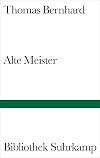
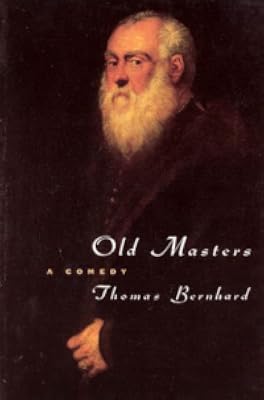
A classic comic novel from one of Europe's finest writers 'I hate walking, he says, it seems so pointless to me. I walk, and while I am walking I keep thinking how I hate walking' Old Masters (1985) is Thomas Bernhard's devilishly funny story about the friendship between two old men. For over thirty years Reger, a music critic, has sat on the same bench in front of a Tintoretto painting in a Viennese museum, thinking and railing against contemporary society, his fellow men, artists, the show more weather, even the state of public lavatories. His friend Atzbacher has been summoned to meet him, and through his eyes we learn more about Reger - the tragic death of his wife, his thoughts of suicide and, eventually, the true purpose of their appointment. At once pessimistic and exuberant, rancorous and hilarious, Old Masters is a richly satirical portrait of culture, genius, nationhood, class, the value of art and the pretensions of humanity. show lessTags
Recommendations



























Member Recommendations
Member Reviews
Der Großmeister der schlechten Laune. Passieren tut wirklich überhaupt gar nichts, aber alles ist furchtbar. Österreich, die Österreicher, die Kunst, das Essen, die Toiletten und die Menschen. Ich hab Lachtränen in den Augen beim Lesen, bis zum allerletzten Satz, der das Sahnehäubchen auf dieser Tiraden-Torte ist. Besonders im Lichte der Lektüre weiterer Romane von Bernhard (die ja auch zumeist glänzende Perlen des Gemeckers über die Erbärmlichkeit der Welt und insbesondere der Kunst sind) fällt auf, dass das hier kein wahlloser Rant ist, denn was in dem einen Roman vernichtend in Grund und Boden gegrantelt wird, kann im nächsten schon wieder wohlwollend gelobt werden. Eine Satire und Liebeserklärung zugleich an das freie show more Recht, alles doof zu finden, was einem so von der Welt angeboten wird. Feuer frei! show less
Atzbacher has been asked to meet his friend, the recently-widowed music critic Reger, in front of Tintoretto's White-bearded man in the Kunsthistorisches Museum at 11.30. He gets there early, spends 120 pages or so daydreaming, then they meet and Reger rants for most of the remaining 200 pages about what's wrong with the world, the arts, Austria and Vienna, in the best Bernhardian style. But then, two pages from the end of the book, Reger suddenly remembers the somewhat trivial reason why he asked Atzbacher to come.
Not a book to read if what you are after is a fast-moving action story, then, but you wouldn't expect that from Bernhard anyway. The ranting here is of the very finest quality, though, and the absurdity of the situation show more keeps us wanting to know more: why does this man who claims to hate all art, especially old art, choose to sit religiously in front of the Tintoretto three mornings a week for thirty years? Reger's diatribe is not only ludicrously and magnificently negative about everything (Vienna, it seems, has the dirtiest toilets, the most corrupt Catholic-National-Socialist judges, the most hypocritical politicians and the most mediocre writers and artists in Europe. Amongst other things...), but turns out to have been cunningly conceived to lead us into a very moving analysis of what it's like to lose the person who's been at the centre of your life for many years. Bernhard calls this book a comedy, but the distraught Reger's reaction to the death of his wife is obviously a fictional working-out of Bernhard's reaction to the death of his life-companion Hedwig Stavianicek in 1984. Only Bernhard could imagine a character who fights his way out of a near-terminal depression by reading Schopenhauer... show less
Not a book to read if what you are after is a fast-moving action story, then, but you wouldn't expect that from Bernhard anyway. The ranting here is of the very finest quality, though, and the absurdity of the situation show more keeps us wanting to know more: why does this man who claims to hate all art, especially old art, choose to sit religiously in front of the Tintoretto three mornings a week for thirty years? Reger's diatribe is not only ludicrously and magnificently negative about everything (Vienna, it seems, has the dirtiest toilets, the most corrupt Catholic-National-Socialist judges, the most hypocritical politicians and the most mediocre writers and artists in Europe. Amongst other things...), but turns out to have been cunningly conceived to lead us into a very moving analysis of what it's like to lose the person who's been at the centre of your life for many years. Bernhard calls this book a comedy, but the distraught Reger's reaction to the death of his wife is obviously a fictional working-out of Bernhard's reaction to the death of his life-companion Hedwig Stavianicek in 1984. Only Bernhard could imagine a character who fights his way out of a near-terminal depression by reading Schopenhauer... show less
I had a rough start with this, but ended up being moved by it - something I was not expecting. Bernhard writes one long, no paragraphs or page breaks, rant about the state of Austrian society and culture. This rant is by a man, Reger, in his 80s who goes daily to an Austrian art museum to sit in front of one painting, Tintoretto's White-Bearded Man. His rant is retold by a friend, Atzbatcher - an interesting authorial device in itself - sort of removes the reader one step. We know also that Reger's wife has recently died.
Reger rants about many things: Austrian bathrooms, Austrian government, Austrian composers (spoiler - he's not a fan of Brucker or Mahler), Austrian authors, Austrian artists, and the Austrian people themselves, among show more other topics. This was amusing at times, especially the topics I had better context for, and really annoying at times. It's very repetitive, which does help hammer the points home.
So just when I was about to give up and skim to the end, the details of Reger's wife's death start to come out. And then I was hooked. Lots of things become clear about just why Reger is so annoyed with Austria and why he's been ranting specifically about some of his topics. You also understand his anger is mixed with grief. It's all very moving and is a realistic portrait of grief, which is rarely just sadness and often includes anger.
I did not find this an easy book to read, but I am very glad I read it and think it will be a memorable book for me. show less
Reger rants about many things: Austrian bathrooms, Austrian government, Austrian composers (spoiler - he's not a fan of Brucker or Mahler), Austrian authors, Austrian artists, and the Austrian people themselves, among show more other topics. This was amusing at times, especially the topics I had better context for, and really annoying at times. It's very repetitive, which does help hammer the points home.
So just when I was about to give up and skim to the end, the details of Reger's wife's death start to come out. And then I was hooked. Lots of things become clear about just why Reger is so annoyed with Austria and why he's been ranting specifically about some of his topics. You also understand his anger is mixed with grief. It's all very moving and is a realistic portrait of grief, which is rarely just sadness and often includes anger.
I did not find this an easy book to read, but I am very glad I read it and think it will be a memorable book for me. show less
Der Großmeister der schlechten Laune. Passieren tut wirklich überhaupt gar nichts, aber alles ist furchtbar. Österreich, die Österreicher, die Kunst, das Essen, die Toiletten und die Menschen. Ich hab Lachtränen in den Augen beim Lesen, bis zum allerletzten Satz, der das Sahnehäubchen auf dieser Tiraden-Torte ist. Besonders im Lichte der Lektüre weiterer Romane von Bernhard (die ja auch zumeist glänzende Perlen des Gemeckers über die Erbärmlichkeit der Welt und insbesondere der Kunst sind) fällt auf, dass das hier kein wahlloser Rant ist, denn was in dem einen Roman vernichtend in Grund und Boden gegrantelt wird, kann im nächsten schon wieder wohlwollend gelobt werden. Eine Satire und Liebeserklärung zugleich an das freie show more Recht, alles doof zu finden, was einem so von der Welt angeboten wird. Feuer frei! show less
Der Großmeister der schlechten Laune. Passieren tut wirklich überhaupt gar nichts, aber alles ist furchtbar. Österreich, die Österreicher, die Kunst, das Essen, die Toiletten und die Menschen. Ich hab Lachtränen in den Augen beim Lesen, bis zum allerletzten Satz, der das Sahnehäubchen auf dieser Tiraden-Torte ist. Besonders im Lichte der Lektüre weiterer Romane von Bernhard (die ja auch zumeist glänzende Perlen des Gemeckers über die Erbärmlichkeit der Welt und insbesondere der Kunst sind) fällt auf, dass das hier kein wahlloser Rant ist, denn was in dem einen Roman vernichtend in Grund und Boden gegrantelt wird, kann im nächsten schon wieder wohlwollend gelobt werden. Eine Satire und Liebeserklärung zugleich an das freie show more Recht, alles doof zu finden, was einem so von der Welt angeboten wird. Feuer frei! show less
Der Großmeister der schlechten Laune. Passieren tut wirklich überhaupt gar nichts, aber alles ist furchtbar. Österreich, die Österreicher, die Kunst, das Essen, die Toiletten und die Menschen. Ich hab Lachtränen in den Augen beim Lesen, bis zum allerletzten Satz, der das Sahnehäubchen auf dieser Tiraden-Torte ist. Besonders im Lichte der Lektüre weiterer Romane von Bernhard (die ja auch zumeist glänzende Perlen des Gemeckers über die Erbärmlichkeit der Welt und insbesondere der Kunst sind) fällt auf, dass das hier kein wahlloser Rant ist, denn was in dem einen Roman vernichtend in Grund und Boden gegrantelt wird, kann im nächsten schon wieder wohlwollend gelobt werden. Eine Satire und Liebeserklärung zugleich an das freie show more Recht, alles doof zu finden, was einem so von der Welt angeboten wird. Feuer frei! show less
In which we get the rambling thoughts of Reger, an 82-year-old music critic, whose irascibility is only matched by his erudition, as he sits in Vienna's Kunsthistorisches Museum before Tintoretto's 'Portrait of a White Bearded Man'. Reger hates almost everything but reserves great passion for those things he loves. The prose - in a single paragraph, a la Garcia Marquez - is hypnotic.
"...I am basically always unhappy, I am sure you understand, Reger said then. Even though this is nonsense, Reger said then..."
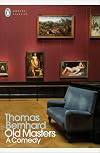
The narrative voice hugely reminded me of one of my favourite writers, Max Sebald. So I looked it up and found that, yes, Bernhard was a great influence on Sebald. I read the novel in the beautifully designed Penguin Central show more European Classics version - a pleasure in itself. The music critic as hero - this book was bound to appeal to me, then. I shall definitely be seeking out another Bernhard novel to read. show less
"...I am basically always unhappy, I am sure you understand, Reger said then. Even though this is nonsense, Reger said then..."
The narrative voice hugely reminded me of one of my favourite writers, Max Sebald. So I looked it up and found that, yes, Bernhard was a great influence on Sebald. I read the novel in the beautifully designed Penguin Central show more European Classics version - a pleasure in itself. The music critic as hero - this book was bound to appeal to me, then. I shall definitely be seeking out another Bernhard novel to read. show less
Members
- Recently Added By
Lists

1001 Books You Must Read Before You Die
1,448 works; 1,135 members

German Literature
518 works; 56 members
Reading LIst
648 works; 1 member
Author Information

286+ Works 16,469 Members
Thomas Bernhard was born to Austrian parents in Holland and reared by his mother in the vicinity of Salzburg. His temperament and erratic health created difficulties for him as he grew up in a society governed by National Socialists. Bernhard found the alpine landscapes of his native Austria far more harsh than lyrical. The isolation of the show more characters in his novels is only slightly mitigated by friendship, generally only between men, and never by love. Yet many readers feel this lack of sentimentality gives Bernhard's work an epic power. (Bowker Author Biography) show less
Some Editions
Awards and Honors
Awards
Series

Belongs to Publisher Series
Thomas Bernhard, Werke in 22 Bänden (Band 8)
Babelserien (54)
Work Relationships
Is contained in
Has the adaptation
Common Knowledge
- Canonical title
- Old Masters: A Comedy
- Original title
- Alte Meister. Komödie
- Original publication date
- 1985
- People/Characters*
- Atzbacher; Reger
- Important places
- Kunsthistorisches Museum, Vienna, Austria
- Original language*
- saksa
*Some information comes from Common Knowledge in other languages. Click "Edit" for more information.
Classifications
- Genres
- General Fiction, Fiction and Literature
- DDC/MDS
- 833.914 — Literature & rhetoric German & related literatures German fiction 1900- 1900-1990 1945-1990
- LCC
- PT2662 .E7 .A7513 — Language and Literature German, Dutch and Scandinavian literatures German literature Individual authors or works 1961-2000
- BISAC
Statistics
- Members
- 919
- Popularity
- 29,164
- Reviews
- 28
- Rating
- (4.09)
- Languages
- 22 — Catalan, Czech, Danish, Dutch, English, Estonian, Finnish, French, German, Hebrew, Italian, Lithuanian, Norwegian (Bokmål), Norwegian, Polish, Portuguese (Portugal), Romanian, Russian, Slovenian, Spanish, Swedish, Turkish
- Media
- Paper, Audiobook, Ebook
- ISBNs
- 44
- ASINs
- 8