On This Page
Description
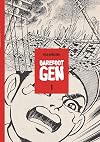
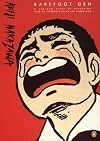
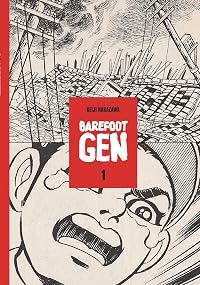
In this graphic depiction of nuclear devastation, three survivors of the bombing of Hiroshima--Gen, his mother, and his baby sister--face rejection, hunger, and humiliation in their search for a place to live.Tags
Recommendations


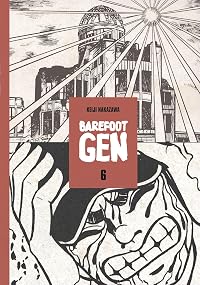




Member Recommendations
Member Reviews
A fascinating book on a few levels. The most obvious being a (fictionalized) account of the bombing of Hiroshima by someone who was on the ground when it happened. However, the style in which the story is told is jarring.
I’m assuming the aspects I found distracting came from not being exposed to much manga and being unfamiliar with the styles and tropes unique to the medium. It’s very cartoony (not a criticism unto itself, just that in the West we tend to think cartoony=for children) and periodic slapstick violence played for laughs. Imagine Homer choking Bart but then a few pages later we see Ned Flanders with his eyeballs melted out and his skin hanging as he staggers around begging for water.
If you can take such weird shifts in show more tone it’s a riveting story and the cartoony style works when you consider we’re seeing it through the eyes of a child. Horrific suffering depicted in a juvenile style reflects how Gen’s innocence had to cope with his new reality show less
I’m assuming the aspects I found distracting came from not being exposed to much manga and being unfamiliar with the styles and tropes unique to the medium. It’s very cartoony (not a criticism unto itself, just that in the West we tend to think cartoony=for children) and periodic slapstick violence played for laughs. Imagine Homer choking Bart but then a few pages later we see Ned Flanders with his eyeballs melted out and his skin hanging as he staggers around begging for water.
If you can take such weird shifts in show more tone it’s a riveting story and the cartoony style works when you consider we’re seeing it through the eyes of a child. Horrific suffering depicted in a juvenile style reflects how Gen’s innocence had to cope with his new reality show less
I picked this up after reading fannyprice's very thoughtful review (see below). I'm tempted to limit my review to just "Holy f---". That combined with the title, and the knowledge this is a graphic novel written by a survivor of the Hiroshima atomic bomb says about everything I need to say and might say it better than this commentary.
Keiji was 6 years old when the first bomb was dropped on Hiroshima, which he survived only thanks to a brick wall he was standing next to. His father, sister and younger brother were trapped under their collapsed house and burned alive, while his mother helplessly watched. I don't think I'm giving anything away here as we're told this up front, in the author's preface.
Barefoot Gen is a fictionalized Keiji, show more and the story is essentially his story. It's 10 volumes. The 10th volume is actually due out in English in November this year. Volume One covers the last few months in 1945 before the bomb was dropped, ending the day it was dropped. Remarkably, and perhaps unfortunately, it's not about vilifying the US. As he explores life before the bomb, and the constant starving and the cultural pressure to cooperate, the anger is mainly directed at the Japanese leadership and culture.
As a graphic novel, this is a quick read. There are no chapters, it's difficult to stop, especially when another half hour reading covers another 60 pages. Cartoons in Japan apparently don't have the juvenile connotations we have in west. They are taken very seriously, the images creating a kind of code that becomes more meaningful as the story progresses. Here the images aren't elegant artistic pictures, and there are no deep thoughts expressed. The drawing is rough, simple, not especially nice to look at, and yet very effective.
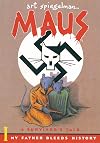
The only thing I can compare this to is Art Spiegelman's Maus I & Maus II. It's worth noting Spiegelman wrote the introduction, and he mentions having read this while writing this first Maus volume. Maus was perhaps similarly effective, but different. There is an elegance to Maus, and, in order to write it Spiegelman has to psychologically come to terms with himself and his own problems - all of which is expressed within. Not so here. Gen is merely a kid, and what happens is simply beyond any singular human's psychology.
As a initial impression, just after finishing this, it seems like the best thing I've read in years...
2009
http://www.librarything.com/topic/68641#1453076 show less
Keiji was 6 years old when the first bomb was dropped on Hiroshima, which he survived only thanks to a brick wall he was standing next to. His father, sister and younger brother were trapped under their collapsed house and burned alive, while his mother helplessly watched. I don't think I'm giving anything away here as we're told this up front, in the author's preface.
Barefoot Gen is a fictionalized Keiji, show more and the story is essentially his story. It's 10 volumes. The 10th volume is actually due out in English in November this year. Volume One covers the last few months in 1945 before the bomb was dropped, ending the day it was dropped. Remarkably, and perhaps unfortunately, it's not about vilifying the US. As he explores life before the bomb, and the constant starving and the cultural pressure to cooperate, the anger is mainly directed at the Japanese leadership and culture.
As a graphic novel, this is a quick read. There are no chapters, it's difficult to stop, especially when another half hour reading covers another 60 pages. Cartoons in Japan apparently don't have the juvenile connotations we have in west. They are taken very seriously, the images creating a kind of code that becomes more meaningful as the story progresses. Here the images aren't elegant artistic pictures, and there are no deep thoughts expressed. The drawing is rough, simple, not especially nice to look at, and yet very effective.
The only thing I can compare this to is Art Spiegelman's Maus I & Maus II. It's worth noting Spiegelman wrote the introduction, and he mentions having read this while writing this first Maus volume. Maus was perhaps similarly effective, but different. There is an elegance to Maus, and, in order to write it Spiegelman has to psychologically come to terms with himself and his own problems - all of which is expressed within. Not so here. Gen is merely a kid, and what happens is simply beyond any singular human's psychology.
As a initial impression, just after finishing this, it seems like the best thing I've read in years...
2009
http://www.librarything.com/topic/68641#1453076 show less
In his fictionalized memoir, artist Keiji Nakazawa tells the story of his childhood during WWII and his survival of the atomic bombing of Hiroshima. In this first volume of ten, Nakazawa depicts the hardships of life in Japan during the war with mandatory homeland defense training, near starvation, and constant bombing. Gen's father is outspoken about his anti-war views and he serves time in jail, leaving his family to fend for themselves. Gen's mother is pregnant, and falls ill due to malnutrition and overwork. Gen, his younger brother, and older sister live at home and are treated abominably by the neighbors for being related to a anti-war traitor. Gen and his brother retaliate violently, but it often backfires and brings down more show more trouble. One of Gen's older brothers joins the Naval Air Corps to be a kamikaze pilot and bring honor to the family, much against his family's wishes. The other, a third grader, is evacuated with his school class to the countryside where he works in the fields in harsh conditions. When Gen's father returns home, the family rejoices, but is also subject to his casual violence as he tries to beat his values into his children.
The fate of Gen's family when the bomb falls on August 6, 1945 is harrowing and true to life, with the exception that in the book Gen returns home in time to witness the events that Nakazawa actually learns later that day from his mother. Although the author describes these events in the introduction, and thus it's not really a spoiler, I am going to avoid relating what happens as the impact of reading Nakazawa words cannot be replicated.
After finishing the book, I had very mixed feelings. The memoir itself is exceptional, if difficult to read, but I had a hard time with the stylized grimacing and sweating faces of the characters. I am not familiar with manga and found the art off-putting. I also found the casual brutality depicted in the book, both within Gen's family and within the larger community, to be very disturbing, especially the violence to and by children. (Although, of course, this violence is nothing compared to the horror of the atomic bombing.) In his introduction, [[Art Spiegelman]] addresses both of these issues, and I found his explanations helpful, if not palliative. In short, according to Spiegelman, both violence and the stylized faces are typical of manga of the time and would not be seen as out of place to a Japanese audience. Nor would the length of the entire Barefoot Gen series, which runs to almost 2000 pages. Although I am glad that I read the first volume, I am going to cancel my interlibrary loan of the next two volumes, at least for now. For me, it's a story best digested in small chunks. show less
The fate of Gen's family when the bomb falls on August 6, 1945 is harrowing and true to life, with the exception that in the book Gen returns home in time to witness the events that Nakazawa actually learns later that day from his mother. Although the author describes these events in the introduction, and thus it's not really a spoiler, I am going to avoid relating what happens as the impact of reading Nakazawa words cannot be replicated.
After finishing the book, I had very mixed feelings. The memoir itself is exceptional, if difficult to read, but I had a hard time with the stylized grimacing and sweating faces of the characters. I am not familiar with manga and found the art off-putting. I also found the casual brutality depicted in the book, both within Gen's family and within the larger community, to be very disturbing, especially the violence to and by children. (Although, of course, this violence is nothing compared to the horror of the atomic bombing.) In his introduction, [[Art Spiegelman]] addresses both of these issues, and I found his explanations helpful, if not palliative. In short, according to Spiegelman, both violence and the stylized faces are typical of manga of the time and would not be seen as out of place to a Japanese audience. Nor would the length of the entire Barefoot Gen series, which runs to almost 2000 pages. Although I am glad that I read the first volume, I am going to cancel my interlibrary loan of the next two volumes, at least for now. For me, it's a story best digested in small chunks. show less
Every now and then I come across a book that I wish was required reading when I was in high school; in my estimation Barefoot Gen: Vol 1 is one of those books. Barefoot Gen is the first hand account of the author's, Keiji Nakazawa, experiences of the atomic bomb dropped on Hiroshima. Nakazawa is certainly a competent illustrator, but more importantly it's the story he tells through his panels that makes the this personal re-telling of history so compelling.
Most of the first volume takes place well before the bomb is dropped, setting the stage for the ultimate tragedy. However, the small unjustices of Gen's family in the days prior to the bombing amount to a tragedy all their own. Gen’s father is outspoken about his opposition to the show more war; he sees the famine it’s brought, the lives it takes and the values it twists, such as the group suicides who seek honor in taking their lives rather than face capture. Nakazawa looks down upon this so-called honor, instead focusing directly on the daily hardships in wartime and the futility of hope and superstitions. Nakazawa witnessed the blind loyalty of Japanese citizens to the Emperor, endured the stigma of being one of the few families opposed to the war in his village, saw the flesh dripping off the bodies of those victims caught directly in the bomb’s blast. What he puts on the illustrated page is not necessarily realistic, but it is haunting and terrible all the same. Even mixing the over-the-top comical elements (silly and strange dialogue; overt use of violence when characters disagree; even fart jokes) that is so common with Manga. I wouldn't say the Manga elements are seamlessly integrated into the story, but the story simply wouldn't be the same without them.
Nakazawa, through Gen’s family, offers one of the greatest explorations of the concept of humanity ever put in print. Loyalty and sacrifice for an ideal mean nothing when fellow neighbors are in immediate need of help. Gen’s town turns on his family once they’re branded as traitors, but it’s those who still offer them food and support that stand out in the story. I think this series will remain in my mind for a long time to come. show less
Most of the first volume takes place well before the bomb is dropped, setting the stage for the ultimate tragedy. However, the small unjustices of Gen's family in the days prior to the bombing amount to a tragedy all their own. Gen’s father is outspoken about his opposition to the show more war; he sees the famine it’s brought, the lives it takes and the values it twists, such as the group suicides who seek honor in taking their lives rather than face capture. Nakazawa looks down upon this so-called honor, instead focusing directly on the daily hardships in wartime and the futility of hope and superstitions. Nakazawa witnessed the blind loyalty of Japanese citizens to the Emperor, endured the stigma of being one of the few families opposed to the war in his village, saw the flesh dripping off the bodies of those victims caught directly in the bomb’s blast. What he puts on the illustrated page is not necessarily realistic, but it is haunting and terrible all the same. Even mixing the over-the-top comical elements (silly and strange dialogue; overt use of violence when characters disagree; even fart jokes) that is so common with Manga. I wouldn't say the Manga elements are seamlessly integrated into the story, but the story simply wouldn't be the same without them.
Nakazawa, through Gen’s family, offers one of the greatest explorations of the concept of humanity ever put in print. Loyalty and sacrifice for an ideal mean nothing when fellow neighbors are in immediate need of help. Gen’s town turns on his family once they’re branded as traitors, but it’s those who still offer them food and support that stand out in the story. I think this series will remain in my mind for a long time to come. show less
Barefoot Gen is volume one of a 10-volume manga-format memoir of the atomic bomb on Hiroshima. This volume covers the months leading up to the bomb through the initial moments after the bomb explodes.
Through 6-year-old Gen and his family and community, we see the effects on civilians of the late stages of war -- the nationalism alongside the growing disengagement with the war and the emperor, the impossible hunger and desperation that prompts both kindness and evil and is horribly sated by whole-family suicides. But we also see an optimistic and inventive young boy, whose story I must pursue further.
The most memorable single sentence (written in the 1970s and translated in the ‘80s but evocative again) occurs as Gen’s family greets show more the morning of August 6, 1945: “What a beautiful day -- the sky’s so blue!” show less
Through 6-year-old Gen and his family and community, we see the effects on civilians of the late stages of war -- the nationalism alongside the growing disengagement with the war and the emperor, the impossible hunger and desperation that prompts both kindness and evil and is horribly sated by whole-family suicides. But we also see an optimistic and inventive young boy, whose story I must pursue further.
The most memorable single sentence (written in the 1970s and translated in the ‘80s but evocative again) occurs as Gen’s family greets show more the morning of August 6, 1945: “What a beautiful day -- the sky’s so blue!” show less
Feeling slightly sick and rather overwhelmed after reading the first volume of this manga-style history of the atomic bombing of Hiroshima during WW2. I know it sounds incredibly trite, but it is almost impossible for me to believe that my country did this to people.
Barefoot Gen, Vol. 1: A Cartoon Story of Hiroshima is exactly what its name suggests - a history of the atomic bomb that was dropped on Hiroshima and its impact. This, the first installment of a 10-part series, actually focuses on wartime life in Hiroshima prior to the bombing. The series is at least partially based on the life of its creator, Keiji Nakazawa, himself a survivor of Hiroshima. This installment shows the deprivations and abuses that ordinary Japanese people show more suffered because of the war effort. The family of the main character, a young (maybe 10-year-old) boy named Gen Nakaoka, suffers doubly because of Gen's father's outspoken opposition to the war and to militarism in general.
I actually feel that I learned quite a bit about pre-war Japan and the mentality that the Japanese government instilled in its citizens through propaganda, bodily training, and punishment. I was really surprised at the level of carnage inflicted on Okinawa and the Japanese mainland by American forces - the Pacific theatre of WWII is something with which I am almost completely unfamiliar. I had no idea that civilian areas were so deliberately targeted. This carnage was compounded by the fact that many Japanese apparently chose to commit suicide en masse rather than face occupation by American forces - the panels depicting entire classrooms of students killing themselves at the direction of their teachers were particularly shocking. I have not read any non-fiction about this to know how widespread this practice was.
As mentioned previously, this installment focuses on the period prior to the bombing. The bombing itself probably occurs in the last 20 pages or so. But the aftermath is so horrifying & there is something about the stark, rather crude black and white drawings that amplifies the horror. Nakazawa's citizens of Hiroshima - those that survive the immediate impact - emerge from the rubble burned and screaming, the flesh literally melting off their faces. Gen and his pregnant mother are forced to abandon three members of the family - Gen's father, his younger brother, and his sister - who are trapped in the rubble of their destroyed house because Gen and his mother are unable to pull them out and no one will aid them, due to the encroaching flames engulfing the city. This installment ends on a bizarrely hopeful note - Gen's mother goes into labor and gives birth to a baby girl amid the burning rubble - but one can't help but feel that this is only false hope at this point.
This book was such an emotional shock - I have ordered more installments already, despite my worry that I don't know how much I can take.
I have always been very interested in the impact of the atomic bombings on the Japanese national psyche, if it is possible to talk about such a thing. How does it feel to be a citizen of the only country in the world that was intentionally subject to a nuclear holocaust? What does that do to a people? On the flip side, what did it do to the American national sense of ourselves to be responsible for that? I don't place a lot of stock in the idea of collective guilt, but I do think that part of having a national identity is having certain ideas about how your country behaves at home and abroad. It seems to me that deliberately nuking two major population centers - even to end a war - sits at odds with how Americans see their country's role in the world; I wonder how it looked to Americans who were roughly contemporary with the event. I hope subsequent installments will address the psychological, as well as the physical, impact of Hiroshima. show less
Barefoot Gen, Vol. 1: A Cartoon Story of Hiroshima is exactly what its name suggests - a history of the atomic bomb that was dropped on Hiroshima and its impact. This, the first installment of a 10-part series, actually focuses on wartime life in Hiroshima prior to the bombing. The series is at least partially based on the life of its creator, Keiji Nakazawa, himself a survivor of Hiroshima. This installment shows the deprivations and abuses that ordinary Japanese people show more suffered because of the war effort. The family of the main character, a young (maybe 10-year-old) boy named Gen Nakaoka, suffers doubly because of Gen's father's outspoken opposition to the war and to militarism in general.
I actually feel that I learned quite a bit about pre-war Japan and the mentality that the Japanese government instilled in its citizens through propaganda, bodily training, and punishment. I was really surprised at the level of carnage inflicted on Okinawa and the Japanese mainland by American forces - the Pacific theatre of WWII is something with which I am almost completely unfamiliar. I had no idea that civilian areas were so deliberately targeted. This carnage was compounded by the fact that many Japanese apparently chose to commit suicide en masse rather than face occupation by American forces - the panels depicting entire classrooms of students killing themselves at the direction of their teachers were particularly shocking. I have not read any non-fiction about this to know how widespread this practice was.
As mentioned previously, this installment focuses on the period prior to the bombing. The bombing itself probably occurs in the last 20 pages or so. But the aftermath is so horrifying & there is something about the stark, rather crude black and white drawings that amplifies the horror. Nakazawa's citizens of Hiroshima - those that survive the immediate impact - emerge from the rubble burned and screaming, the flesh literally melting off their faces. Gen and his pregnant mother are forced to abandon three members of the family - Gen's father, his younger brother, and his sister - who are trapped in the rubble of their destroyed house because Gen and his mother are unable to pull them out and no one will aid them, due to the encroaching flames engulfing the city. This installment ends on a bizarrely hopeful note - Gen's mother goes into labor and gives birth to a baby girl amid the burning rubble - but one can't help but feel that this is only false hope at this point.
This book was such an emotional shock - I have ordered more installments already, despite my worry that I don't know how much I can take.
I have always been very interested in the impact of the atomic bombings on the Japanese national psyche, if it is possible to talk about such a thing. How does it feel to be a citizen of the only country in the world that was intentionally subject to a nuclear holocaust? What does that do to a people? On the flip side, what did it do to the American national sense of ourselves to be responsible for that? I don't place a lot of stock in the idea of collective guilt, but I do think that part of having a national identity is having certain ideas about how your country behaves at home and abroad. It seems to me that deliberately nuking two major population centers - even to end a war - sits at odds with how Americans see their country's role in the world; I wonder how it looked to Americans who were roughly contemporary with the event. I hope subsequent installments will address the psychological, as well as the physical, impact of Hiroshima. show less
I’ll admit, I was somewhat nervous when Keiji Nakazawa’s Barefoot Gen was selected for February 2011’s Manga Moveable Feast. I studied the atomic bombing of Hiroshima and Nagasaki extensively while in high school--even selecting it as the subject of my major senior project--and I have a tendency to get into heated arguments with people about it (which is really saying something for me). But ultimately, I was glad the series was selected, especially as I hadn’t actually read it myself. Nakazawa began Barefoot Gen in 1973 and it is heavily based on his own experiences as a survivor of the Hiroshima bombing. Ten volumes and over twenty-four hundred pages later, he finished the work in 1985. The first collected volume, Barefoot Gen: show more A Cartoon Story of Hiroshima was originally published in Japan in 1975. A partial English translation was also released in the late 1970s, making Barefoot Gen one of the first manga to be made available in English. It wasn’t until 2004 that the first complete English translation, with an introduction by Art Spiegelman, was published by Last Gasp.
Most of the first volume of Barefoot Gen follows the lives of the Nakaoka family, beginning several months before the atomic bombing of Hiroshima by the United States on August 6, 1945. Like many families living in Hiroshima at the time, their primary concern was finding enough to eat—not an easy task in wartime Japan for a household of seven. Day to day existence was enough of a struggle, but on top of the that the Nakaoka’s father was vehemently anti-war, often speaking out against it and the government. Since that viewpoint was seen as traitorous and was punishable, this mean that the family faced additional difficulties and discrimination from the authorities and their neighbors. But when the bomb dropped it didn’t matter who was for or against the war—civilians, military personnel, government officials, prisoners of war—everyone had to deal with the brutal consequences of the city’s destruction.
Nakazawa’s style of art in Barefoot Gen is very approachable, almost friendly and seemingly at odds with the story being told, but Nakazawa doesn’t shy away from showing the terrible realities of war and it can be quite emotional. Two motifs that appear repeatedly through Barefoot Gen are wheat and the sun. The meaning of the wheat is explained on the very first page of the manga, symbolizing the constant struggle to persevere over adversity. The symbolism of the sun is more ambiguous and left up to individual interpretation. It is a very prominent image--often the sun is the only visual element in a panel--and it recurs frequently. In addition to marking the passage of time, the sun acts as a impartial and uncaring observer, a reminder that we are only a small part of the universe, watching over the events and tragedies that unfold. Although there are few natural stopping points, there are no explicit chapter breaks in Barefoot Gen making it very easy to become absorbed in Nakazawa’s tale.
Because of its subject matter, Barefoot Gen is rather heavy reading and not easy to get through. War is a terrible thing and people can be incredibly cruel to one another. But there are heart-warming moments in Barefoot Gen as well when I couldn’t help but smile. Despite both internal and external conflicts, the Nakaoka family are wonderfully close and loving and there are those who appreciate their stance against the war. So, while Barefoot Gen honestly shows the suffering caused by war and nuclear weapons and has the potential of being overwhelmingly bleak, it is not without hope. Nakazawa was one of the first artist in Japan to address and speak out about what happened at Hiroshima through his work at a time when that information was being suppressed. Although Barefoot Gen is a fictionalized account, it is a true story based on his and his family’s lives. It is a very important, powerful and heartbreaking work.
Experiments in Manga show less
Most of the first volume of Barefoot Gen follows the lives of the Nakaoka family, beginning several months before the atomic bombing of Hiroshima by the United States on August 6, 1945. Like many families living in Hiroshima at the time, their primary concern was finding enough to eat—not an easy task in wartime Japan for a household of seven. Day to day existence was enough of a struggle, but on top of the that the Nakaoka’s father was vehemently anti-war, often speaking out against it and the government. Since that viewpoint was seen as traitorous and was punishable, this mean that the family faced additional difficulties and discrimination from the authorities and their neighbors. But when the bomb dropped it didn’t matter who was for or against the war—civilians, military personnel, government officials, prisoners of war—everyone had to deal with the brutal consequences of the city’s destruction.
Nakazawa’s style of art in Barefoot Gen is very approachable, almost friendly and seemingly at odds with the story being told, but Nakazawa doesn’t shy away from showing the terrible realities of war and it can be quite emotional. Two motifs that appear repeatedly through Barefoot Gen are wheat and the sun. The meaning of the wheat is explained on the very first page of the manga, symbolizing the constant struggle to persevere over adversity. The symbolism of the sun is more ambiguous and left up to individual interpretation. It is a very prominent image--often the sun is the only visual element in a panel--and it recurs frequently. In addition to marking the passage of time, the sun acts as a impartial and uncaring observer, a reminder that we are only a small part of the universe, watching over the events and tragedies that unfold. Although there are few natural stopping points, there are no explicit chapter breaks in Barefoot Gen making it very easy to become absorbed in Nakazawa’s tale.
Because of its subject matter, Barefoot Gen is rather heavy reading and not easy to get through. War is a terrible thing and people can be incredibly cruel to one another. But there are heart-warming moments in Barefoot Gen as well when I couldn’t help but smile. Despite both internal and external conflicts, the Nakaoka family are wonderfully close and loving and there are those who appreciate their stance against the war. So, while Barefoot Gen honestly shows the suffering caused by war and nuclear weapons and has the potential of being overwhelmingly bleak, it is not without hope. Nakazawa was one of the first artist in Japan to address and speak out about what happened at Hiroshima through his work at a time when that information was being suppressed. Although Barefoot Gen is a fictionalized account, it is a true story based on his and his family’s lives. It is a very important, powerful and heartbreaking work.
Experiments in Manga show less
Members
- Recently Added By
Lists

Club Read's Graphic Stories Recommendations
127 works; 2 members

Books Read in 2013
1,630 works; 51 members
Best Graphic Novel Nonfiction
199 works; 101 members

LAST GASP
44 works; 1 member

THE WAR ROOM
813 works; 24 members

Top Five Books of 2024
795 works; 264 members

Books That Changed Our Perspective
423 works; 168 members

Books We Discovered On LibraryThing
530 works; 130 members
Author Information

Some Editions
Awards and Honors
Awards
Notable Lists
Series

Belongs to Publisher Series
Common Knowledge
- Canonical title
- Barefoot Gen: A Cartoon Story of Hiroshima, Volume 1
- Original title
- はだしのゲン; Hadashi no Gen
- Alternate titles
- Barefoot Gen; Hadashi no Gen; Barefoot Gen #1
- Original publication date
- 1973; 1972-1973
- Important places
- Hiroshima, Japan; Honshū, Japan; Japan
- Important events
- World War II (1939 | 1945); Atomic Bombings of Hiroshima and Nagasaki (1945); World War II, Pacific Theater (1941-12-07 | 1945-09-02)
- Related movies
- Hadashi no Gen (1983 | IMDb); Hadashi no Gen (2007 | IMDb)
- First words
- Wheat pushes its shoots up through the winter frost, only to be stepped on again and again...
- Last words
- (Click to show. Warning: May contain spoilers.)Waaahh!
- Publisher's editor
- Gleason, Alan; Turner, Colin
- Blurbers
- Spiegelman, Art; Crumb, Robert
- Original language
- Japanese
Classifications
- Genre
- Graphic Novels & Comics
- DDC/MDS
- 741.5952 — Arts & recreation Drawing & decorative arts Drawing Comic books, graphic novels, fotonovelas, cartoons, caricatures, comic strips History, geographic treatment, biography Asian Japanese
- LCC
- PN6790 .J33 .N33 — Language and Literature Literature (General) Literature (General) Collections of general literature Comic books, strips, etc.
- BISAC
Statistics
- Members
- 978
- Popularity
- 26,925
- Reviews
- 34
- Rating
- (4.24)
- Languages
- 12 — Dutch, English, Esperanto, Finnish, French, German, Italian, Japanese, Norwegian (Bokmål), Portuguese, Spanish, Swedish
- Media
- Paper, Ebook
- ISBNs
- 33
- UPCs
- 1
- ASINs
- 12