On This Page
Description
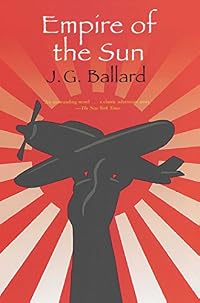
Based on the author's childhood experiences during World War II, depicts the story of a young English schoolboy who is captured by the Japanese and interred for three years at the infamous Langhua concentration camp.Tags
Recommendations

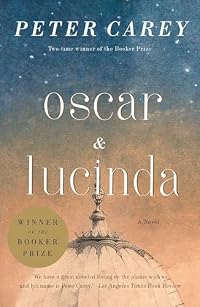
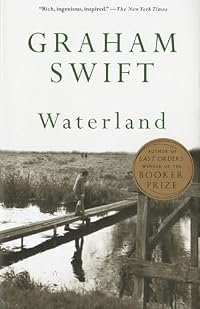
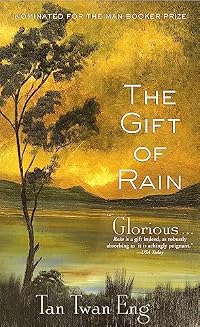
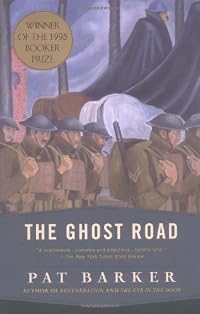
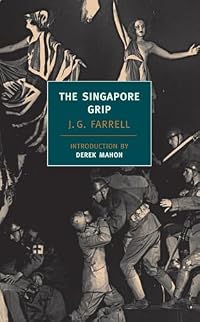





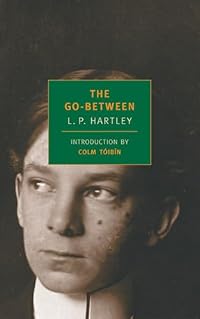
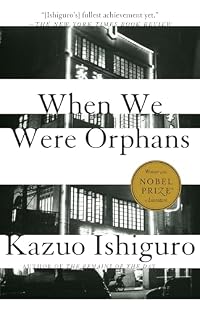
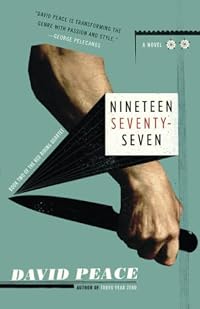


Member Recommendations

anonymous user The follow-up to Empire of the Sun.


lucyknows Empire of the Sun can be paired with That Eye, the Sky by Tim Winton or Harper Lee's To kill a Mockingbird. In all three books the authors speak through the childhoods of their main characters.
Member Reviews
I don't know whether it's a mistake to read all the other things this great SF author has read first and THEN read this brilliant WWII novel of a young kid lost in Shanghai during the Japanese occupation or whether it might be best to see all the wildness of his short stories, longer fictions, and utter fascination with flying and emotional deadening in the middle of tragedy FIRST.
Or whether everyone and anyone with even a slight interest in reading one of the very best novels of the war should drop everything else on their list and jump right into this.
I admit I watched the Spielberg film back in the day, utterly fascinated and totally identifying with Jim, the main character, who just happened to be played by a young Christian Bale, show more admitting that while this kind of movie was NOTHING like the kinds of movies or books I preferred, and yet falling for it completely...
...right down to the dead-eyed stares after so much starvation, death, and Jim's last vestiges of innocent wonder and miracles retained throughout the very worst that humanity has to offer.
I've seen the movie like four times.
And yet, I only just now read the book AFTER having read several others by the same author AND the complete short story collection.
I FEEL LIKE A DAMN FOOL.
Maybe I should have started with this. It's brilliant. No two ways about it. I broke down into tears and was amazed by how much further the book takes it even after KNOWING what to expect from the movie.
I'm not exactly NEW to this genre. I shouldn't have been affected this hard. I shouldn't have had to stop the book for several minutes at a time because I couldn't breathe right. It was just... almost... too much for me. Emotionally. I'm wrecked.
Sure, the movie is a good intro or perhaps a companion to this brilliant novel, but by NO MEANS should the novel be skipped. It's just one of those brilliant classics that may be regarded as timeless.
No pressure, right? show less
Or whether everyone and anyone with even a slight interest in reading one of the very best novels of the war should drop everything else on their list and jump right into this.
I admit I watched the Spielberg film back in the day, utterly fascinated and totally identifying with Jim, the main character, who just happened to be played by a young Christian Bale, show more admitting that while this kind of movie was NOTHING like the kinds of movies or books I preferred, and yet falling for it completely...
...right down to the dead-eyed stares after so much starvation, death, and Jim's last vestiges of innocent wonder and miracles retained throughout the very worst that humanity has to offer.
I've seen the movie like four times.
And yet, I only just now read the book AFTER having read several others by the same author AND the complete short story collection.
I FEEL LIKE A DAMN FOOL.
Maybe I should have started with this. It's brilliant. No two ways about it. I broke down into tears and was amazed by how much further the book takes it even after KNOWING what to expect from the movie.
I'm not exactly NEW to this genre. I shouldn't have been affected this hard. I shouldn't have had to stop the book for several minutes at a time because I couldn't breathe right. It was just... almost... too much for me. Emotionally. I'm wrecked.
Sure, the movie is a good intro or perhaps a companion to this brilliant novel, but by NO MEANS should the novel be skipped. It's just one of those brilliant classics that may be regarded as timeless.
No pressure, right? show less
While I found this book very difficult to read: it was such a delicate mix of violence and tender innocence as we wage the war with Jim, separated from his parents, in a camp. We watch him grow from an energetic boy to a distrusting teen but who managed nonetheless to keep his boyish dreams and hopes alive. I loved Jim's unique perspective as well: there is no good or bad, just safe and unsafe - the very premise of survival.
It was for me also an insight into the Pacific war which I am much less familiar with, especially from a Chinese perspective. The uncertainty at the end of the war with colonial powers collapsing is also something that I would now want to know more about.
Despite some lengthiness, this book was incredibly moving and show more Jim's voice felt deeply authentic. This is definitely a must read. show less
It was for me also an insight into the Pacific war which I am much less familiar with, especially from a Chinese perspective. The uncertainty at the end of the war with colonial powers collapsing is also something that I would now want to know more about.
Despite some lengthiness, this book was incredibly moving and show more Jim's voice felt deeply authentic. This is definitely a must read. show less
I wonder how many people are displaced by war vs. how many people are combatants. Empire of the Sun, the front and back covers proclaim, is a novel of the Second World War-- but not a single battle graces its pages. Which isn't unusual per se, as books like Between the Acts and Mrs. Miniver are World War II novels without any actual fighting, but all the violence in those books is offstage. Empire of the Sun is all about violence, but there are no battles.
The novel is about a young English boy named Jamie Graham, growing up as part of an English community in Shanghai. When the Japanese bomb Pearl Harbor and attack the British ships at Shanghai, Jamie becomes separated from his parents and ends up in a refugee camp. The book is a lot show more less orderly than this implies. What's astonishing about the book is how violent and callous everyone is. It takes Jamie ages just to get into the camp because the Japanese soldiers would rather ignore him than put effort into dealing with him. Similarly at the end of the war, the book has another hundred pages or so to go because it takes Jamie that long to find anyone who both can and will help him. It's a depressing testament to man's inhumanity to man, as Jamie grows up in an almost apocalyptic environment, helped only by those who perceive the benefits he can bring them.
Jamie experiences a lot of cognitive dissonance throughout the novel, held captive by brutal Japanese soldiers but unable to let go of his boyhood dream of being a pilot in the Japanese air force, or at one point believing himself to be dead, or at the same time forgetting what his parents look like and still believing they must be in Shanghai waiting for him unchanged, or his claim that World War III must have already started because he cannot imagine a world without war. Characters come and go in the world around him, and at times the detachment of the narrative means the book almost moves into a dreamlike state.
One of the most striking parts to me was when Jamie gets copies of magazine (Reader's Digest and Life, I think) after the end of the war, and they're full of people and things he never even heard of for all the years of the war, like Eisenhower and D-Day and Patton. Unlike Between the Acts or Mrs. Miniver, Jamie's not isolated from a war he knows about, but he's fighting an entirely different war that has nothing to do with the one we think of when we imagine "World War II." Yet for so many people, this is all the war there was, and it was ugly. show less
The novel is about a young English boy named Jamie Graham, growing up as part of an English community in Shanghai. When the Japanese bomb Pearl Harbor and attack the British ships at Shanghai, Jamie becomes separated from his parents and ends up in a refugee camp. The book is a lot show more less orderly than this implies. What's astonishing about the book is how violent and callous everyone is. It takes Jamie ages just to get into the camp because the Japanese soldiers would rather ignore him than put effort into dealing with him. Similarly at the end of the war, the book has another hundred pages or so to go because it takes Jamie that long to find anyone who both can and will help him. It's a depressing testament to man's inhumanity to man, as Jamie grows up in an almost apocalyptic environment, helped only by those who perceive the benefits he can bring them.
Jamie experiences a lot of cognitive dissonance throughout the novel, held captive by brutal Japanese soldiers but unable to let go of his boyhood dream of being a pilot in the Japanese air force, or at one point believing himself to be dead, or at the same time forgetting what his parents look like and still believing they must be in Shanghai waiting for him unchanged, or his claim that World War III must have already started because he cannot imagine a world without war. Characters come and go in the world around him, and at times the detachment of the narrative means the book almost moves into a dreamlike state.
One of the most striking parts to me was when Jamie gets copies of magazine (Reader's Digest and Life, I think) after the end of the war, and they're full of people and things he never even heard of for all the years of the war, like Eisenhower and D-Day and Patton. Unlike Between the Acts or Mrs. Miniver, Jamie's not isolated from a war he knows about, but he's fighting an entirely different war that has nothing to do with the one we think of when we imagine "World War II." Yet for so many people, this is all the war there was, and it was ugly. show less
[[J. G. Ballard]] is much more well-known for his esoteric sci-fi short fiction - which I never seem to connect with - but this book should be on your reading list. Based on his own childhood experiences in and around Shanghai upon World War II breaking out, young Jaime survives the entire war in a Japanese camp. while the experience never seems to break his spirit altogether, there are some dark days along the way. The supporting cast of characters is wildly interesting and eccentric, providing for many unusual exploits. Jaime is a survivor, and Ballard is an enigma.
4 bones!!!!
Recommended!!!!
4 bones!!!!
Recommended!!!!
To get here I need to go back a bit, to when I was about 14. My sister, who was home from college for the summer, my mother and I went to see some Spielberg film called ‘Empire of the Sun’ and something happened to my very impressionable mind. The images stuck—wealthy British expats pristinely made-up for a fancy costume ball sitting inside their cars as the filthy exotic throngs of pre-Japanese invasion Shanghai pass outside their windows, a certain Japanese leather flight jacket, and those P-51 Mustangs, the Cadillacs of the WWII sky. And John Malkovich, the wonderfully-bad American fortune seeker. I didn’t realize quite how much the movie got to me until I made my wife watch it with me a couple years back and every single show more scene brought along an intense and involuntary emotional response. This story of British expatriates imprisoned by the Japanese outside Shanghai – it’s just so out there, and held so many mysteries, and it somehow embedded itself in my psyche.
So, I finally read the book and discovered that it’s vaguely non-fictional, and also that the movie was only vaguely based on the book – kind of like three parallel universes. (The book and movie were equally well done, IMO.) J. G. Ballard, who was born in Shanghai and had never been to England, was about 11-years-old on December 7, 1941, when, among other significant activities, the Japanese invaded British-protected Shanghai. Quickly taking the city, the Japanese found a large assortment of expats, and somehow found a way to separate them out. The Germans and French (France was already conquered) were left alone, as were Russians, where as the various allied-associated expats were rounded up, given a chance to die quickly, and then moved to prison camps. Ballard spent WWII growing up in one of these camps—which is probably the extent of the precisely true part of this novel. However, this much being true certainly it makes a world of difference. Actually, it makes the novel, it makes it real.
The story of the fictional Jamie/Jim is as brilliant as it is exotic. The pre-war Shanghai, the Japanese invasion, and Jamie’s survival after getting separated from his parents are fascinating. But the story really begins once Jamie ends up imprisoned, starved, and yet somehow contagiously optimistic. These prisons camps were death traps of a sort. In the best times, at the beginning, prisoners survived on little food, no warmth in the winter and no medicine. The sick were left to die. These weren’t military prisoners of war, but business men and their families, including the children, many of whom freeze to death the first winter. But, as the war gets worse for the Japanese, things get even worse for the prisoners. Food rations get reduced, and there comes a point where even the Japanese guards are starving. And then there’s the post-war where things really get bad.
What makes it so captivating is J.G. Ballard’s take. For Jamie, and for us the reader, this horror sequence was a something of a wondrous adventure. No discipline, no school or enforced structure, Jamie is free, and radiates throughout tireless and energetic optimism that can only be found in childhood. But when things hit their worst Jamie’s optimism hits us in a very different way. We can see and feel emotions he was too young to understand, and somehow, in this surreal way, the weight of what actually happened pours through.
2010
http://www.librarything.com/topic/90167#2022299 show less
So, I finally read the book and discovered that it’s vaguely non-fictional, and also that the movie was only vaguely based on the book – kind of like three parallel universes. (The book and movie were equally well done, IMO.) J. G. Ballard, who was born in Shanghai and had never been to England, was about 11-years-old on December 7, 1941, when, among other significant activities, the Japanese invaded British-protected Shanghai. Quickly taking the city, the Japanese found a large assortment of expats, and somehow found a way to separate them out. The Germans and French (France was already conquered) were left alone, as were Russians, where as the various allied-associated expats were rounded up, given a chance to die quickly, and then moved to prison camps. Ballard spent WWII growing up in one of these camps—which is probably the extent of the precisely true part of this novel. However, this much being true certainly it makes a world of difference. Actually, it makes the novel, it makes it real.
The story of the fictional Jamie/Jim is as brilliant as it is exotic. The pre-war Shanghai, the Japanese invasion, and Jamie’s survival after getting separated from his parents are fascinating. But the story really begins once Jamie ends up imprisoned, starved, and yet somehow contagiously optimistic. These prisons camps were death traps of a sort. In the best times, at the beginning, prisoners survived on little food, no warmth in the winter and no medicine. The sick were left to die. These weren’t military prisoners of war, but business men and their families, including the children, many of whom freeze to death the first winter. But, as the war gets worse for the Japanese, things get even worse for the prisoners. Food rations get reduced, and there comes a point where even the Japanese guards are starving. And then there’s the post-war where things really get bad.
What makes it so captivating is J.G. Ballard’s take. For Jamie, and for us the reader, this horror sequence was a something of a wondrous adventure. No discipline, no school or enforced structure, Jamie is free, and radiates throughout tireless and energetic optimism that can only be found in childhood. But when things hit their worst Jamie’s optimism hits us in a very different way. We can see and feel emotions he was too young to understand, and somehow, in this surreal way, the weight of what actually happened pours through.
2010
http://www.librarything.com/topic/90167#2022299 show less
Amazing read. Reminded me of a combination The Adventures of Huckleberry Finn and Slaughterhouse 5. Like Slaughterhouse 5, war is presented as relentless death. Yet the contrasts produced by viewing this relentlessness through the lens of a boys own adventure create a far more horrific juxtaposition. Imagine Huck Finn's son climbing over a pile of corpses at Gettysburg and you've got half of it. Now imagine why this boy would be laughing at you've got the rest.
What Slaughterhouse 5 achieves through repetition ("So it goes"), Empire of the Sun works out through dramatic irony--Huckleberry Finn's comic device turned towards a far darker purpose. It would take a dissertation to dig out the layers of naivete in this book. Sometimes the show more adults know what Jim does not. Sometimes Jim knows what the adults do not. Sometimes Jim hallucinates due to hunger and fatigue. Sometimes things Jim thinks were hallucinations turn out to be (or are already known by the reader to be) real. And so on. It is not simply the Jim's world that is destroyed, but his ability to relate to the world that ends. For Ballard to have written "and then one day the war came and everything was different" would have been one thing. Instead, he essentially writes here is "and one day the war came and then there was nothing".
The world itself, by the way, strikes me as the final referent for the 'Empire of the Sun'. While the phrase obviously refers to Japan, Japan itself is barely referred to at all in the novel, concerned as it is not with political abstractions like nations, but instead with Jim's personal experiences, i.e. with Japanese soldiers, pilots, and, more often than not, corpses. The Sun's empire is of course the world it shines down upon, and the end of Japan's imperial ambitions are reflected in the end of Jim's world.
Wait, I don't know if that last bit made sense.
So, yeah. As always, more could be said. These are just notes to myself really. I'll just add that I found this book quite moving, in both a personally and deeply odd way. I strongly identified with Jim, yet, relatively speaking, I have never even suffered at all. I find myself wondering 'How could this be?' show less
What Slaughterhouse 5 achieves through repetition ("So it goes"), Empire of the Sun works out through dramatic irony--Huckleberry Finn's comic device turned towards a far darker purpose. It would take a dissertation to dig out the layers of naivete in this book. Sometimes the show more adults know what Jim does not. Sometimes Jim knows what the adults do not. Sometimes Jim hallucinates due to hunger and fatigue. Sometimes things Jim thinks were hallucinations turn out to be (or are already known by the reader to be) real. And so on. It is not simply the Jim's world that is destroyed, but his ability to relate to the world that ends. For Ballard to have written "and then one day the war came and everything was different" would have been one thing. Instead, he essentially writes here is "and one day the war came and then there was nothing".
The world itself, by the way, strikes me as the final referent for the 'Empire of the Sun'. While the phrase obviously refers to Japan, Japan itself is barely referred to at all in the novel, concerned as it is not with political abstractions like nations, but instead with Jim's personal experiences, i.e. with Japanese soldiers, pilots, and, more often than not, corpses. The Sun's empire is of course the world it shines down upon, and the end of Japan's imperial ambitions are reflected in the end of Jim's world.
Wait, I don't know if that last bit made sense.
So, yeah. As always, more could be said. These are just notes to myself really. I'll just add that I found this book quite moving, in both a personally and deeply odd way. I strongly identified with Jim, yet, relatively speaking, I have never even suffered at all. I find myself wondering 'How could this be?' show less
This book is so real. No bullshit narrative arc where Jim glorifies war and then leaarns the hard way that it's hell; no phantasmagoria of horrors, so when things do get a little hallucinatory, you're just about ready to accept it at face; no trying to impress the reader by making each episode sadder and more awful than the last (it turns out this wasn't the book I remembered from childhood where it was all forcing women to drink water and then jumping on their stomach till it burst, and stepping on babies' heads), because the endless grinding need to stay two steps ahead of the thresher to survive hits us in a less sensationalistic, more uncomfortable way--IS the next war just about to start? Is the security of modern life just a veil, show more so easily pulled apart forever? Is war not a catastrophe, but the natural state of humanity?
And if that's the case, of course it's a war of all against all, and so Jim's keen evaluative eye and ability to identify with whoever is to his advantage to identify with at the moment is so natural. This book has really interesting things to say (for one) about traditional national stereotypes--Jim's attraction to the hawk-eyed Japanese, cruel and clean among the filth and maggots, and the way it fades before the casual irony and eye to an advantage of the Americans, backed by a billion horsepower in Flying Fortresses (and you are reminded that any national idea would have been as appealing as "America", if it had the circumstances to wax confident and strong in that America had; and I see also that the initial US involvement in Chine came in the 1840s to "protect the Chinese from the British operating in the condition of a monopoly" or similar); his ambivalent relationship with the best survivalist Boy's Own tradition of Britain, represented by Dr. Ransome; and the ultimate fear that the Chinese have it right, and that war of all against all is what's coming, and the cold-eyed and cynical will survive and win.
And, like, I guess this is gauche or whatever to be impressed, but Ballard lived through this. I mean that in both senses: he was there, and he survived. And the book's constant refrain is "Jim knew", and some of the things he knows are most dubious, but he can't afford the luxury of doubt--he needs solid intelligence on which to make life-sustaining decisions. And that bit at the end--it's only a throwaway line, but where Jim looks for his turtle, absurdly, because it is eaten or killed or at the very least miles away--but you're like "a kid needs a turtle. Otherwise all he has to relate to are shity colonist internees (and the colonial whites come out as bad here as they do in, say, The Seed and the Sower) and Japanese fighter pilots." But, oh hell, the fighter pilots are children too, twisted in just the same way. Our grandparents' generation wasn't especially brave for throwing themselves into the meat grinder, which people have been doing since time immemorial; they were brave for coming home and getting together a system that persevered without setting the world on fire (more or less) for 64 years and counting. show less
And if that's the case, of course it's a war of all against all, and so Jim's keen evaluative eye and ability to identify with whoever is to his advantage to identify with at the moment is so natural. This book has really interesting things to say (for one) about traditional national stereotypes--Jim's attraction to the hawk-eyed Japanese, cruel and clean among the filth and maggots, and the way it fades before the casual irony and eye to an advantage of the Americans, backed by a billion horsepower in Flying Fortresses (and you are reminded that any national idea would have been as appealing as "America", if it had the circumstances to wax confident and strong in that America had; and I see also that the initial US involvement in Chine came in the 1840s to "protect the Chinese from the British operating in the condition of a monopoly" or similar); his ambivalent relationship with the best survivalist Boy's Own tradition of Britain, represented by Dr. Ransome; and the ultimate fear that the Chinese have it right, and that war of all against all is what's coming, and the cold-eyed and cynical will survive and win.
And, like, I guess this is gauche or whatever to be impressed, but Ballard lived through this. I mean that in both senses: he was there, and he survived. And the book's constant refrain is "Jim knew", and some of the things he knows are most dubious, but he can't afford the luxury of doubt--he needs solid intelligence on which to make life-sustaining decisions. And that bit at the end--it's only a throwaway line, but where Jim looks for his turtle, absurdly, because it is eaten or killed or at the very least miles away--but you're like "a kid needs a turtle. Otherwise all he has to relate to are shity colonist internees (and the colonial whites come out as bad here as they do in, say, The Seed and the Sower) and Japanese fighter pilots." But, oh hell, the fighter pilots are children too, twisted in just the same way. Our grandparents' generation wasn't especially brave for throwing themselves into the meat grinder, which people have been doing since time immemorial; they were brave for coming home and getting together a system that persevered without setting the world on fire (more or less) for 64 years and counting. show less
Members
- Recently Added By
Lists

The Guardian's 1000 Novels Everyone Must Read
1,005 works; 546 members

1001 Books You Must Read Before You Die
1,448 works; 1,131 members
20th Century Literature
1,161 works; 54 members

Recommend the 20 best books you've read in the last five years
2,168 works; 606 members

Booker Prize
491 works; 62 members

Books About World War II
102 works; 29 members
1980s
356 works; 23 members

War Literature
101 works; 19 members

Top Five Books of 2020
982 works; 348 members

Top Five Books of 2016
795 works; 228 members

Books about World War II
241 works; 22 members
Booker Prize Shortlist: Titles Read
103 works; 10 members

BBC Radio 4 Bookclub
340 works; 13 members

1,001 BYMRBYD Concensus
723 works; 27 members

Asia
178 works; 7 members

TML 200 Best Books 1950-1999
202 works; 10 members

Man Booker Prize Longlist 1984
6 works; 1 member
Shaking a Leg
111 works; 3 members

Books Read in 2022
5,164 works; 111 members
SantaThing 2014 Gifts
299 works; 17 members

Books We Couldn't Put Down
443 works; 197 members

Books Read in 2018
4,360 works; 110 members

el
1,139 works; 1 member

THE WAR ROOM
813 works; 24 members

My TBR
371 works; 3 members

Books With the Most Memorable Titles
478 works; 158 members

Global Reads: Books Set in East Asia
139 works; 12 members

Writers at Risk
106 works; 17 members
Best War Fiction Books
41 works; 4 members

Tonikat reading completed on Librarything journals
329 works; 2 members

The Modern Library (The Two Hundred Best Novels....
202 works; 1 member
Talk Discussions
Past Discussions
1001 Group Read--Dec, 2011: Empire of the Sun in 1001 Books to read before you die (December 2011)
Author Information

291+ Works 37,656 Members
J. G. Ballard was born to British parents in Shanghai, China on November 15, 1930. While a child during World War II, he spent four years in a Japanese POW camp. This experience was the basis for the emotionally moving novel Empire of the Sun, which he adapted into a successful movie, directed by Steven Spielberg. Before becoming a full-time show more writer, he studied medicine at Cambridge University and served as a pilot in the British Royal Air Force. Ballard is best known for his science fiction writings. His early works were heavily influenced by surrealism. Most of his novels deal with death and destruction of the human spirit. Novels such as Crash, Concrete Island, and High Rise portray a society that is devolving into barbaric chaos. Crash was made into a movie by David Cronenberg in 1996. The Drowned World describes an apocalyptic society, with a hero that ushers in the destruction of the world. His novel Empire of the Sun was shortlisted for the Booker Prize and awarded the Guardian Fiction Prize and James Tait Black Memorial Prize for fiction. Empire of the Sun was filmed by Steven Spielberg in 1987, starring a young Christian Bale as Jim (Ballard). Ballard moved away from science fiction, but he is still considered one of the leading authors of the genre. He died on April 19, 2009 at the age of 78. (Bowker Author Biography) show less
Some Editions
Awards and Honors
Awards
Distinctions
Notable Lists
Series

Belongs to Publisher Series
Work Relationships
Is contained in
Has the adaptation
Is abridged in
Has as a commentary on the text
Has as a student's study guide
Common Knowledge
- Canonical title*
- Het keizerrijk van de zon
- Original title
- Empire of the Sun
- Original publication date
- 1984
- People/Characters
- Jamie Graham; Dr Ransome; Basie; Mrs. Vincent; Frank; Private Kimona (show all 12); Capt. Polkinghorn; Nagata; Mrs. Gilmour; Mrs. Hug; Mr. Tulloch; Mr. Radik
- Important places
- Shanghai, China; China; Japan; Lunghua Interment Camp, Longhua, Shanghai, China; U.S.S. Wake; Nantao Stadium (show all 8); China Sea; Columbia Road
- Important events
- World War II (1939 | 1945); Atomic Bombings of Hiroshima and Nagasaki (1945)
- Related movies
- Empire of the Sun (1987 | IMDb)
- First words
- Wars came early to Shanghai, overtaking each other like the tides that raced up the Tangtze and returned to this gaudy city all the coffins cast adrift from the funeral piers of the Chinese Bund.
- Quotations
- James had told his parents nothing of all this. Nor had he confided in Dr. Ransome, who clearly suspected that Jim had chosen to stay on at Lunghua after the armistice, playing his games of war and death.
- Last words
- (Click to show. Warning: May contain spoilers.)The flowers formed a wavering garland around the coffin as it began its long journey to the estuary of the Yangtze, only to be swept back by the incoming tide among the quays and mud flats, driven once again to the shores of this terrible city.
- Blurbers
- Bailey, Paul; Thwaite, Anthony; Burgess, Anthony; Carter, Angela; Nye, Robert; Shrimpton, Nicholas (show all 8); Grosvenor, Peter; Boyd, William
- Original language
- English
*Some information comes from Common Knowledge in other languages. Click "Edit" for more information.
Classifications
Statistics
- Members
- 4,144
- Popularity
- 3,684
- Reviews
- 80
- Rating
- (3.96)
- Languages
- 18 — Catalan, Czech, Danish, Dutch, English, Finnish, French, German, Hungarian, Italian, Japanese, Norwegian (Bokmål), Polish, Portuguese, Russian, Slovak, Spanish, Swedish
- Media
- Paper, Audiobook, Ebook
- ISBNs
- 80
- UPCs
- 1
- ASINs
- 27