
On This Page
Description
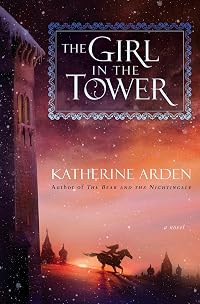
"The magical adventure begun in The Bear and the Nightingale continues as brave Vasya, now a young woman, is forced to choose between marriage or life in a convent and instead flees her home--but soon finds herself called upon to help defend the city of Moscow when it comes under siege"--Tags
Recommendations








Member Reviews
After having read The Bear and the Nightingale - the first book of the Winternight trilogy, I was eager to get my hands on this second installment of the trilogy. In the first book, we were introduced to Vasya, a fearless, bold and fiercely independent young maiden who had inherited her grandmother's sensitivity to the ancient creatures of folklore. She was facing the fate of so many medieval Russ maidens - either accept betrothal or enter the convent - lest she become a burden on her family's resources. Neither option appealed and off into the world she rode, dressed as a young lad, sitting atop her otherworldly steed, Solovey. Thus ended book I.
In this second installment, we find our cross-dressing maid, wandering the earth, living by show more her wits, seeking adventure with Solovey. Not just once, Morozko, the Winterking (or Jack Frost as many know him), has come to her aid and delivered Vasya from certain death. At one point Vasya and Solovey, after having been pursued by bandits, happen upon a burned out village. The survivors tell tale of a marauding band of Tatars who kidnapped three of their village's young girls. Vasya vows to try and help...and the saga continues.
I loved the first book and was captivated by the second. The strength of this young maid in the face of adversity, calling upon the ancients spirits for aid and delivering her enemies to the Grim Reaper, turns the tables on all the male dominated fairy-tale literature. Arden's writing paints a rich picture of medieval Russland and Muscovy. One feels the penetrating cold of this tundra landscape as much as that of the stare of an icy opponent. And what about that amazing stallion, Solovey, who understands and conveys to Vasya his cautioning thoughts?
This is a great epic tale which I wholeheartedly commend to lovers of great adventures and rich fairytales. show less
In this second installment, we find our cross-dressing maid, wandering the earth, living by show more her wits, seeking adventure with Solovey. Not just once, Morozko, the Winterking (or Jack Frost as many know him), has come to her aid and delivered Vasya from certain death. At one point Vasya and Solovey, after having been pursued by bandits, happen upon a burned out village. The survivors tell tale of a marauding band of Tatars who kidnapped three of their village's young girls. Vasya vows to try and help...and the saga continues.
I loved the first book and was captivated by the second. The strength of this young maid in the face of adversity, calling upon the ancients spirits for aid and delivering her enemies to the Grim Reaper, turns the tables on all the male dominated fairy-tale literature. Arden's writing paints a rich picture of medieval Russland and Muscovy. One feels the penetrating cold of this tundra landscape as much as that of the stare of an icy opponent. And what about that amazing stallion, Solovey, who understands and conveys to Vasya his cautioning thoughts?
This is a great epic tale which I wholeheartedly commend to lovers of great adventures and rich fairytales. show less
‘’Think of me sometimes’’, he returned, ‘’When the snowdrops have bloomed and the snow has melted.’’
Moving on to the 2nd book of the trilogy immediately after finishing the 1st volume was a no-brainer and from the very first pages, I knew that this would prove to be an exciting journey. Well, ‘’exciting’’ is an understatement actually. In my opinion, this was a rollercoaster of images, of characters and emotions. It was better than that the 1st part of the Winternight series and its atmosphere was more ‘’Russian’’, more faithful to the original legend, more authentic.
In the rare cases in which I have dedicated my reading time to a trilogy, I’ve found that the 2nd book is usually my favourite. It show more happened with ‘’The Lord of the Rings’’ and with the Grisha Trilogy.So, ‘’The Girl in the Tower’’ was no exception. We delve right into action from the opening pages and continue in a whirlwind, because Arden achieves a much-needed balance between the action parts, the interactions of the characters and the descriptions of the life in the rural communities and the glorious city of Moscow. The lavishness of the capital juxtaposed with the threats that are lurking in the frozen woods is beautifully executed. In fact, I have nothing but praise for Arden’s writing in this installment.
What I really appreciated is the fact that Arden doesn’t dwell much in the events of the 1st part and prefers to refer to them occasionally and in context with the current events and their implications. After all, it wouldn’t be wise to start a trilogy from the 2nd part. She is a really capable writer and her writing here is mature, engaging and haunting, fully doing justice to the beautiful wintry fairy tales from the land of the Rus.There is not a single trace of YA tropes and norms in this novel, and despite the extensive presence of characters of a world beyond our own, this reads more like a Historical Fiction book, rather than a fantasy. The elements of legends are here, but they are finely woven into the narration and they are part of the action, not mere gimmicks. There is a beautiful reference to the Snow-Maiden, the fairytales that provided the inspiration for Eowyn Ivey’s masterpiece ‘’The Snow Child’’ . You’ll read about the Firebird, the horse with the golden mane, the goddesses of Morning, Midday and Midnight, the Gamayun and many familiar Russian mythical figures. I also have to say that I was impressed with the way Arden treated the Tatars’ raids subplot. Without being too graphic, she creates a shadow that looms over our heroine and over the residents of the country. The shadow of a threat that is far more real than any demons or evil spirits.
The characters are extremely well-written. Vasya is more mature, but no less intelligent, feisty, brave and kind than we knew her. Still, the complications that come from experiencing certain disturbing feelings may weigh down on her. Morozko’s presence is electrifying, a larger-than- life figure and a battlefield in which the man and the immortal try to prevail against each other. The moments between him and Vasya are the highlights of the novel. We meet a few new characters and come to know certain previously introduced ones even better, but I’d be thoughtless if I didn’t mention Sergei, a monk who is Sasha’s mentor and a wonderful character that really stood out. Olya, on the other hand, was too irritating for my troubled patience…
So, those of you who have read the 1st book, don’t tally:) Read the 2nd volume as soon as you can, because you don't want to miss the experience. I loved this book, you know. I really, really loved it. As a Historical Fiction, as a beautiful fairytale, as an avid reader and lover of Russian Folk tradition and Literature. This is a book that celebrates womanhood, love, the fight to surpass the obstacles and remain true to your principles…
‘’You are immortal, and perhaps I seem small to you’’, she said at last fiercely. ‘’But my life is not your game.’’
Many thanks to Penguin Random House and NetGalley for the ARC in exchange of an honest review. show less
Moving on to the 2nd book of the trilogy immediately after finishing the 1st volume was a no-brainer and from the very first pages, I knew that this would prove to be an exciting journey. Well, ‘’exciting’’ is an understatement actually. In my opinion, this was a rollercoaster of images, of characters and emotions. It was better than that the 1st part of the Winternight series and its atmosphere was more ‘’Russian’’, more faithful to the original legend, more authentic.
In the rare cases in which I have dedicated my reading time to a trilogy, I’ve found that the 2nd book is usually my favourite. It show more happened with ‘’The Lord of the Rings’’ and with the Grisha Trilogy.So, ‘’The Girl in the Tower’’ was no exception. We delve right into action from the opening pages and continue in a whirlwind, because Arden achieves a much-needed balance between the action parts, the interactions of the characters and the descriptions of the life in the rural communities and the glorious city of Moscow. The lavishness of the capital juxtaposed with the threats that are lurking in the frozen woods is beautifully executed. In fact, I have nothing but praise for Arden’s writing in this installment.
What I really appreciated is the fact that Arden doesn’t dwell much in the events of the 1st part and prefers to refer to them occasionally and in context with the current events and their implications. After all, it wouldn’t be wise to start a trilogy from the 2nd part. She is a really capable writer and her writing here is mature, engaging and haunting, fully doing justice to the beautiful wintry fairy tales from the land of the Rus.There is not a single trace of YA tropes and norms in this novel, and despite the extensive presence of characters of a world beyond our own, this reads more like a Historical Fiction book, rather than a fantasy. The elements of legends are here, but they are finely woven into the narration and they are part of the action, not mere gimmicks. There is a beautiful reference to the Snow-Maiden, the fairytales that provided the inspiration for Eowyn Ivey’s masterpiece ‘’The Snow Child’’ . You’ll read about the Firebird, the horse with the golden mane, the goddesses of Morning, Midday and Midnight, the Gamayun and many familiar Russian mythical figures. I also have to say that I was impressed with the way Arden treated the Tatars’ raids subplot. Without being too graphic, she creates a shadow that looms over our heroine and over the residents of the country. The shadow of a threat that is far more real than any demons or evil spirits.
The characters are extremely well-written. Vasya is more mature, but no less intelligent, feisty, brave and kind than we knew her. Still, the complications that come from experiencing certain disturbing feelings may weigh down on her. Morozko’s presence is electrifying, a larger-than- life figure and a battlefield in which the man and the immortal try to prevail against each other. The moments between him and Vasya are the highlights of the novel. We meet a few new characters and come to know certain previously introduced ones even better, but I’d be thoughtless if I didn’t mention Sergei, a monk who is Sasha’s mentor and a wonderful character that really stood out. Olya, on the other hand, was too irritating for my troubled patience…
So, those of you who have read the 1st book, don’t tally:) Read the 2nd volume as soon as you can, because you don't want to miss the experience. I loved this book, you know. I really, really loved it. As a Historical Fiction, as a beautiful fairytale, as an avid reader and lover of Russian Folk tradition and Literature. This is a book that celebrates womanhood, love, the fight to surpass the obstacles and remain true to your principles…
‘’You are immortal, and perhaps I seem small to you’’, she said at last fiercely. ‘’But my life is not your game.’’
Many thanks to Penguin Random House and NetGalley for the ARC in exchange of an honest review. show less
Originally posted on Tales to Tide You Over
This is a powerful tale of the changing times between old gods and new, focused on a young woman, Vasya, who can see the old ways but is trapped within the modern world of Medieval Russia. The book starts with a compelling storytelling voice that unwinds the events in the lives of two secondary main characters, Olga and Sasha, in a mix of details and omniscient observations to delight and unnerve. Olga even offers a traditional Russian fairytale that resonates with the unfolding story of the Winter King and Vasya’s sort of patron.
Once Vasya’s part begins, the narrator largely vanishes in favor of a more immediate view through the perspective of each scene. However, it returns at times as a show more cinematic over voice offering a broader perspective not available to Vasya because of her sheltered upbringing. For example, you see this when she approaches a small town and believes it to be Moscow in all that city’s finery.
The narrative voice is not the only structural oddity as the timeline starts with Olga and Sasha in the present, then jumps back to when Vasya’s journey began after the end of The Bear and the Nightingale. However, the choices made for the tale work by drawing the reader into a rather straightforward story then layering on complications and a larger cast of influential characters until it lives up to its Russian setting.
The narrative becoming more like what is expected of modern novels with Vasya is funny, though, because Vasya is everything but traditional or expected. Still, the distinction of the personal perspective when the reader is used to a more distant one makes her feel very real despite how she rides a magic horse and consorts with frost demons.
This is appropriate because Vasya is very real. She never looks at her circumstances and considers them setting her apart from her sisters and brothers. The rules and constrictions placed on a young woman of her status sit uneasy on her shoulders, and she’s willing to do anything to shed them, but at the same time, she rarely considers the cost, not in a self-absorbed way but because she cannot imagine what is true for most people as being mandated.
Vasya is the hero of the story, but also sometimes the villain or trickster. She can’t fit in even if she wants to because the twisted priest Konstantin from the first book is still spilling his poison, though he’s the least of those set against her. At the same time, her efforts, whether for others or herself, have very real, sometimes fatal, consequences. Vasya bears these burdens heavily.
Her story is no simple farmer boy turned savior as in the fairytales, though she bears some resemblance to that role, which both makes the book stronger and her path harder. She tries to make the right choices, but what is right for her can be dangerous as well and has costs she cannot foresee. Vasya acts out of emotion and in the moment, but her ties to the immortal and powerful Winter King, along with her ability to see the fae, draws her into an ancient fight that threatens to take all of Rus down. As in the first book, she does not wake this bear, but she’s driven to force it back into its den anyway.
Vasya has a good heart and a powerful love for her family and those in need. This makes her vulnerable, especially since she has a legacy she knows only in story, with the significance stripped away so nothing is left to guide her to the real meaning. Her abilities, along with her unseemly behavior, make many choose to condemn her.
While Vasya offers much to love, there is also Sasha, the warrior monk and her brother, who has given himself to the new world. Like Vasya, he is trying to protect those unable to shelter themselves, and to do so within the rules of his world. But, he has some wise mentors who can see the flaws in this new world and who open his eyes to the possibility that sometimes what is declared wrong might just be the only good choice.
Olga, Vasya’s older sister, has gone farther even than Sasha in embracing her role as a princess of the Russian court. She finds ways to make it palatable because she has no choice. Even so, she bears within her a powerful love that can overcome even the strictest of propriety.
I cannot fail to mention the Winter King in more detail. A frost demon responsible for collecting the dead, he struggles to survive in a changing world. His choice of Vasya as his connection to the mortal life is both a victory and the worst choice of all. Instead of offering peace, she carves her own path and triggers an unsustainable passion.
There’s a grand villain or two offered up as well, and with good enough seeding that I developed suspicions, which later came to be true, but I was not able to guess at the whole and so didn’t find the story predictable. This includes the final villain, who turns out to be both less than I suspected and so much more than he appeared, with a complex story of his own.
These are only a few of the characters I met on this journey, and these glimpses should show them to be deep and complicated. Arrogance, passion, need, and trust all play a hand in this drama to good effect. I lived in the tale with them, feeling their pain as well as their joy. The story brought me to tears at least twice. This is prophecy done right where even knowing the future means nothing, and a strong will can overturn the grandest of schemes if determined enough, but no victory comes without cost.
P.S. I received this novel from the publisher through NetGalley in return for an honest review. show less
This is a powerful tale of the changing times between old gods and new, focused on a young woman, Vasya, who can see the old ways but is trapped within the modern world of Medieval Russia. The book starts with a compelling storytelling voice that unwinds the events in the lives of two secondary main characters, Olga and Sasha, in a mix of details and omniscient observations to delight and unnerve. Olga even offers a traditional Russian fairytale that resonates with the unfolding story of the Winter King and Vasya’s sort of patron.
Once Vasya’s part begins, the narrator largely vanishes in favor of a more immediate view through the perspective of each scene. However, it returns at times as a show more cinematic over voice offering a broader perspective not available to Vasya because of her sheltered upbringing. For example, you see this when she approaches a small town and believes it to be Moscow in all that city’s finery.
The narrative voice is not the only structural oddity as the timeline starts with Olga and Sasha in the present, then jumps back to when Vasya’s journey began after the end of The Bear and the Nightingale. However, the choices made for the tale work by drawing the reader into a rather straightforward story then layering on complications and a larger cast of influential characters until it lives up to its Russian setting.
The narrative becoming more like what is expected of modern novels with Vasya is funny, though, because Vasya is everything but traditional or expected. Still, the distinction of the personal perspective when the reader is used to a more distant one makes her feel very real despite how she rides a magic horse and consorts with frost demons.
This is appropriate because Vasya is very real. She never looks at her circumstances and considers them setting her apart from her sisters and brothers. The rules and constrictions placed on a young woman of her status sit uneasy on her shoulders, and she’s willing to do anything to shed them, but at the same time, she rarely considers the cost, not in a self-absorbed way but because she cannot imagine what is true for most people as being mandated.
Vasya is the hero of the story, but also sometimes the villain or trickster. She can’t fit in even if she wants to because the twisted priest Konstantin from the first book is still spilling his poison, though he’s the least of those set against her. At the same time, her efforts, whether for others or herself, have very real, sometimes fatal, consequences. Vasya bears these burdens heavily.
Her story is no simple farmer boy turned savior as in the fairytales, though she bears some resemblance to that role, which both makes the book stronger and her path harder. She tries to make the right choices, but what is right for her can be dangerous as well and has costs she cannot foresee. Vasya acts out of emotion and in the moment, but her ties to the immortal and powerful Winter King, along with her ability to see the fae, draws her into an ancient fight that threatens to take all of Rus down. As in the first book, she does not wake this bear, but she’s driven to force it back into its den anyway.
Vasya has a good heart and a powerful love for her family and those in need. This makes her vulnerable, especially since she has a legacy she knows only in story, with the significance stripped away so nothing is left to guide her to the real meaning. Her abilities, along with her unseemly behavior, make many choose to condemn her.
While Vasya offers much to love, there is also Sasha, the warrior monk and her brother, who has given himself to the new world. Like Vasya, he is trying to protect those unable to shelter themselves, and to do so within the rules of his world. But, he has some wise mentors who can see the flaws in this new world and who open his eyes to the possibility that sometimes what is declared wrong might just be the only good choice.
Olga, Vasya’s older sister, has gone farther even than Sasha in embracing her role as a princess of the Russian court. She finds ways to make it palatable because she has no choice. Even so, she bears within her a powerful love that can overcome even the strictest of propriety.
I cannot fail to mention the Winter King in more detail. A frost demon responsible for collecting the dead, he struggles to survive in a changing world. His choice of Vasya as his connection to the mortal life is both a victory and the worst choice of all. Instead of offering peace, she carves her own path and triggers an unsustainable passion.
There’s a grand villain or two offered up as well, and with good enough seeding that I developed suspicions, which later came to be true, but I was not able to guess at the whole and so didn’t find the story predictable. This includes the final villain, who turns out to be both less than I suspected and so much more than he appeared, with a complex story of his own.
These are only a few of the characters I met on this journey, and these glimpses should show them to be deep and complicated. Arrogance, passion, need, and trust all play a hand in this drama to good effect. I lived in the tale with them, feeling their pain as well as their joy. The story brought me to tears at least twice. This is prophecy done right where even knowing the future means nothing, and a strong will can overturn the grandest of schemes if determined enough, but no victory comes without cost.
P.S. I received this novel from the publisher through NetGalley in return for an honest review. show less
What an incredible story! I loved the first book in this trilogy (The Bear and the Nightingale) and could not wait to immerse myself once again in the cold winter world of Vasilisa and Morozko. The Girl in the Tower was so much more than I expected; this book had all of the wonderful atmospheric imagery and dark magic of the first, but instead took me on a breathless adventure with Vasya and her stallion Solovey through the wilds of the Russian winter as they set out to travel the world. Cast away from Lesnaya Zemlya, and not content to be confined in marriage or in a convent, Vasya instead chooses to disguise herself as a boy and embrace her fate as a traveler…with reluctant help from Morozko the Frost winter demon. Her travels lead show more to a fight for survival against the cold and a mysterious, murderous group of bandits, until she is eventually reunited with her brother and sister in Moscow, who are now part of the Grand Prince’s court. In the city, Vasya faces the new challenge of maintaining her disguise in the midst of court politics, all whilst another dark force looms.
Among the things that I loved most about this story:
Vasya’s strength and spirit in her journey to figure out who she is and what she wants out of her life, even as everyone tried to define her and encouraged her to conform to the societal exceptions of a young woman. Although still impulsive with a wild streak, Vasya’s heart and intentions remain true and good, and her growing maturity shines through as she knowledges and learns from her mistakes.
Morozko, the winter demon, who has his own secrets yet cannot turn away from Vasya despite his best efforts. The gruffness and tenderness he showed to Vasya made my heart ache for them.
The relationship between Vasya and Solovney, and their bond of ultimate trust and steadfast loyalty.
I am in awe of the author’s talent in seamlessly weaving together an adventure story with historical fact, intermingled with dark magical elements. Her writing is so beautiful and vivid that I was immediately transported to a cold dark ethereal Russian winter. I cannot wait to see what is next for Vasya and Morozko, and for this author! show less
Among the things that I loved most about this story:
Vasya’s strength and spirit in her journey to figure out who she is and what she wants out of her life, even as everyone tried to define her and encouraged her to conform to the societal exceptions of a young woman. Although still impulsive with a wild streak, Vasya’s heart and intentions remain true and good, and her growing maturity shines through as she knowledges and learns from her mistakes.
Morozko, the winter demon, who has his own secrets yet cannot turn away from Vasya despite his best efforts. The gruffness and tenderness he showed to Vasya made my heart ache for them.
The relationship between Vasya and Solovney, and their bond of ultimate trust and steadfast loyalty.
I am in awe of the author’s talent in seamlessly weaving together an adventure story with historical fact, intermingled with dark magical elements. Her writing is so beautiful and vivid that I was immediately transported to a cold dark ethereal Russian winter. I cannot wait to see what is next for Vasya and Morozko, and for this author! show less
 This review was written for LibraryThing Early Reviewers.
Fair warning: this is the second book in the Winternight trilogy. There’s definitely going to be spoilers ahead for the first book in the series, The Bear and the Nightingale. If you want, you can read my review of that book here.
____________________________________________________________________
Vasya has been driven from her village after the deaths of her father and stepmother. The options are slim for a young woman in medieval Russia — convent or marriage. Vasya, ever seeking to be her own master, decides to create a third option: to wander the vast expanses of Rus’ disguised as a boy, and explore the wide world now open to her. But the road and the places upon it are dangerous. Unnatural and vicious bandits are plundering show more remote towns in northern Rus’, and political intrigue and betrayal surround the residents of Moscow. Pulled into the events of the larger world, Vasya finds herself walking on a knife’s edge to help her family and her country, and to safeguard her precious freedom.
I simply adore this series. The Bear and the Nightingale was one of those delightful little surprises you come across occasionally. Expecting a typical historical fantasy, I found myself enveloped in a fairy tale story richly woven through with historical detail and living, breathing characters. The Girl in the Tower stays true to form. Arden’s careful attention to detail, and phenomenal gift for bringing fully-fleshed characters to her tales are undiminished in the second book.
Vasya has become a bit older and harder than last we saw her, but still retains her close ties with the many spirits who inhabit her world. Her choices and their consequences are rarely easy, and we get to see her grow and change as the plot moves along. Her relationship with Morozko, the winter demon is well done. No sappy love story here, but a subtler, bittersweet rapport that feels much more real.
If you enjoyed The Bear and the Nightingale, then you’ll most likely love the continuation to the story. Fans of fantasy, fairy tales, and magic should definitely check out this phenomenal and original series.
An advance copy of this book was provided by the publisher in exchange for an honest review. show less
____________________________________________________________________
Vasya has been driven from her village after the deaths of her father and stepmother. The options are slim for a young woman in medieval Russia — convent or marriage. Vasya, ever seeking to be her own master, decides to create a third option: to wander the vast expanses of Rus’ disguised as a boy, and explore the wide world now open to her. But the road and the places upon it are dangerous. Unnatural and vicious bandits are plundering show more remote towns in northern Rus’, and political intrigue and betrayal surround the residents of Moscow. Pulled into the events of the larger world, Vasya finds herself walking on a knife’s edge to help her family and her country, and to safeguard her precious freedom.
I simply adore this series. The Bear and the Nightingale was one of those delightful little surprises you come across occasionally. Expecting a typical historical fantasy, I found myself enveloped in a fairy tale story richly woven through with historical detail and living, breathing characters. The Girl in the Tower stays true to form. Arden’s careful attention to detail, and phenomenal gift for bringing fully-fleshed characters to her tales are undiminished in the second book.
Vasya has become a bit older and harder than last we saw her, but still retains her close ties with the many spirits who inhabit her world. Her choices and their consequences are rarely easy, and we get to see her grow and change as the plot moves along. Her relationship with Morozko, the winter demon is well done. No sappy love story here, but a subtler, bittersweet rapport that feels much more real.
If you enjoyed The Bear and the Nightingale, then you’ll most likely love the continuation to the story. Fans of fantasy, fairy tales, and magic should definitely check out this phenomenal and original series.
An advance copy of this book was provided by the publisher in exchange for an honest review. show less
Ah, The Tower. Such an enduring symbol in folklore and fantasy! It projects an aura of not only protectiveness and safety, but also frequently detains and keeps secret its cloistered, maybe even captive inhabitants. In The Girl in the Tower, the second book of an enthralling trilogy, the tower in question is the locale of a terem, in medieval Russia a conclave of highborn women and girls who have been secluded away from society, ostensibly for their own protection from the depravity of men and society in general. This terem is headed by Olga, a matronly princess and the older sister of the protagonist, Vasya, a fiercely independent young woman.
Vasya, whom we met in the first novel of this trilogy, The Bear and the Nightingale, has show more never wanted to come anywhere near such an institution. She was a fey spirit as a child in the earlier story, seeing and talking with the actual household and nature spirits populating her home and village, and she hasn't changed as a young woman in this story. She most desires to be free (what many other people call "wild") and wilfully lives accordingly. As a young child, because she believed in the actuality of these spirits and wasn't sufficiently deferential to the social customs, the people in her rural village branded her a witch. When her nasty stepmother vowed to tame her (and get rid of her) by putting her in a convent, Vasya ran away into the forest, in the middle of winter, to avoid both immanent stoning, the common punishment for witchcraft, as well as the loathsome future her stepmother was forcing upon her. Through the patronage of Morozko, AKA Frost, the spirit of winter, AKA the death god, Vasya survives, but soon asserts her independence and, pretending to be a boy, becomes a "traveller," a wanderer seeking experience of the world. This is where we pick up her story.
Of course, such assertiveness and "uppityness" in a woman in medieval Russia does not go unnoticed, by malevolent spirits as well as evil people. The old Russian fairy tale of Morozko, expanded in The Bear and the Nightingale, turns into an enthralling fantasy story in The Girl in the Tower, with Vasya growing into a brave and generous young woman (though trying hard to hide her identity.) Society's pressures to conform continue to operate and Vasya must not only face the rigors and dangers of life on the trail, she must also avoid scrutiny in the cities, including Moscow, she so wants to see.
This fantasy, while full of exciting and suspenseful events, also takes up some serious issues - the effect of belief over rationality; the force of religion, both benevolent and nefarious, over civil society; the nature of reality; and, most particularly in this second book of the trilogy, the censures and strictures placed on a woman by society, limiting her freedom and demeaning her spirit. A pivotal issue is the notion of fantasy, itself. Vasya does perceive and commune with the chyerti, the various spirits of Russian folklore - the guardian of the household, the guardian of the bathhouse, the Midnight Woman who causes children's nightmares, the black bird who speaks prophesy, Morozko, the frost demon death god, etc. For Vasya and select others, these spirits are real and their forces shape the narrative; for the rest of the populace, however, they are the stuff of folklore, they are fantasies. The Christian church in medieval Russia actively battles these spirits, preaching that such entities are fantasies not to be believed. The effect on the spirits is that they slowly fade away, for they require people's belief in order to exist.
While she has been aided by a benevolent Morozko, Vasya, as she grows into adulthood, comes to believe that that aid was not selflessly given, but was a ploy by Morozko to retain Vasya's belief and thus ensure his own continued existence. Vasya's changing relationship with Morozko is but one example of her maturation and fierce independence, but her perception that she was used, voiced to Morozko, causes an internal dilemma for him as well: how can a death god rationally seek immortality?
I am enthusiastic about this book. Upon reaching the conclusion, I wanted more, and I wanted it now! Thank goodness The Girl in the Tower is the second book of a trilogy. I hope we don't have to wait too long for the next installment.
I received a free copy of this book from the publisher in exchange for an honest review. show less
Vasya, whom we met in the first novel of this trilogy, The Bear and the Nightingale, has show more never wanted to come anywhere near such an institution. She was a fey spirit as a child in the earlier story, seeing and talking with the actual household and nature spirits populating her home and village, and she hasn't changed as a young woman in this story. She most desires to be free (what many other people call "wild") and wilfully lives accordingly. As a young child, because she believed in the actuality of these spirits and wasn't sufficiently deferential to the social customs, the people in her rural village branded her a witch. When her nasty stepmother vowed to tame her (and get rid of her) by putting her in a convent, Vasya ran away into the forest, in the middle of winter, to avoid both immanent stoning, the common punishment for witchcraft, as well as the loathsome future her stepmother was forcing upon her. Through the patronage of Morozko, AKA Frost, the spirit of winter, AKA the death god, Vasya survives, but soon asserts her independence and, pretending to be a boy, becomes a "traveller," a wanderer seeking experience of the world. This is where we pick up her story.
Of course, such assertiveness and "uppityness" in a woman in medieval Russia does not go unnoticed, by malevolent spirits as well as evil people. The old Russian fairy tale of Morozko, expanded in The Bear and the Nightingale, turns into an enthralling fantasy story in The Girl in the Tower, with Vasya growing into a brave and generous young woman (though trying hard to hide her identity.) Society's pressures to conform continue to operate and Vasya must not only face the rigors and dangers of life on the trail, she must also avoid scrutiny in the cities, including Moscow, she so wants to see.
This fantasy, while full of exciting and suspenseful events, also takes up some serious issues - the effect of belief over rationality; the force of religion, both benevolent and nefarious, over civil society; the nature of reality; and, most particularly in this second book of the trilogy, the censures and strictures placed on a woman by society, limiting her freedom and demeaning her spirit. A pivotal issue is the notion of fantasy, itself. Vasya does perceive and commune with the chyerti, the various spirits of Russian folklore - the guardian of the household, the guardian of the bathhouse, the Midnight Woman who causes children's nightmares, the black bird who speaks prophesy, Morozko, the frost demon death god, etc. For Vasya and select others, these spirits are real and their forces shape the narrative; for the rest of the populace, however, they are the stuff of folklore, they are fantasies. The Christian church in medieval Russia actively battles these spirits, preaching that such entities are fantasies not to be believed. The effect on the spirits is that they slowly fade away, for they require people's belief in order to exist.
While she has been aided by a benevolent Morozko, Vasya, as she grows into adulthood, comes to believe that that aid was not selflessly given, but was a ploy by Morozko to retain Vasya's belief and thus ensure his own continued existence. Vasya's changing relationship with Morozko is but one example of her maturation and fierce independence, but her perception that she was used, voiced to Morozko, causes an internal dilemma for him as well: how can a death god rationally seek immortality?
I am enthusiastic about this book. Upon reaching the conclusion, I wanted more, and I wanted it now! Thank goodness The Girl in the Tower is the second book of a trilogy. I hope we don't have to wait too long for the next installment.
I received a free copy of this book from the publisher in exchange for an honest review. show less
I was so pleasantly surprised that this successor was as good as its predecessor! It is pleasant to read about a young woman who learns to fight, who pushes back against a male suitor, and who overcomes some, but not all, odds against her.
Vasilisa starts in the Winter King's dwelling with her stallion, Solovey, who is as loyal as he is strong. Vasya wants to see the world, much against the advice of Morozko, the Winter King, who still arms her with a sword and teaches her to use it. And gold and some provisions for her journey. Concurrent with her journey are reports of village raiders who burn the villages and steal all the young women. And yes, our Vasya, disguised as a boy, manages to rescue three girls from the most recently-raided show more village.
She is reunited with her brother, Sasha the Priest, and her sister Olga, who is a lord's wife and pregnant with her second child. These are not happy reunions, however, as they must all grapple with Vasya's choice to turn away from her two paths: convent and marriage, and seek her own way in the world. And when she meets the Grand Prince of Moscow, who treats her as a boy, she also begins to put together the pieces of the puzzle of who the kingdom raiders are.
These dangers do grow as they did in the first book, and not always happily. But the events are logical and brave and tragic and full of twists, and it all comes to a stunning series of events. As in, I finished most of this book in a weekend since it was so well-paced and the events were so interwoven. And the title character? I'll leave that for the next reader to decide! show less
Vasilisa starts in the Winter King's dwelling with her stallion, Solovey, who is as loyal as he is strong. Vasya wants to see the world, much against the advice of Morozko, the Winter King, who still arms her with a sword and teaches her to use it. And gold and some provisions for her journey. Concurrent with her journey are reports of village raiders who burn the villages and steal all the young women. And yes, our Vasya, disguised as a boy, manages to rescue three girls from the most recently-raided show more village.
She is reunited with her brother, Sasha the Priest, and her sister Olga, who is a lord's wife and pregnant with her second child. These are not happy reunions, however, as they must all grapple with Vasya's choice to turn away from her two paths: convent and marriage, and seek her own way in the world. And when she meets the Grand Prince of Moscow, who treats her as a boy, she also begins to put together the pieces of the puzzle of who the kingdom raiders are.
These dangers do grow as they did in the first book, and not always happily. But the events are logical and brave and tragic and full of twists, and it all comes to a stunning series of events. As in, I finished most of this book in a weekend since it was so well-paced and the events were so interwoven. And the title character? I'll leave that for the next reader to decide! show less
Members
- Recently Added By
Lists

Top-Rated Books on LibraryThing
272 works; 117 members

Female Protagonist
1,056 works; 56 members
Female Author
1,235 works; 67 members

Top Five Books of 2022
736 works; 272 members

Top Five Books of 2018
802 works; 264 members
Top Five Books of 2017
757 works; 231 members

Books Read in 2022
5,166 works; 114 members

Books Read in 2020
4,379 works; 124 members

Books Read in 2018
4,360 works; 110 members

2010s
241 works; 3 members

Books Read in 2019
4,052 works; 110 members

I Could Live There
185 works; 12 members

Summer Reading
30 works; 1 member
Author Information

15+ Works 14,657 Members
Katherine Arden is an American writer, born in Austin, Texas. She graduated from Middlebury College in 2011 with degrees in French and Russian. Before becoming a writer, she worked on a farm in Hawaii and as a teaching assistant at a boarding school in the French Alps. Her first book was published in 2017, The Bear and the Nightingale. Her other show more books include The Girl in the Tower, The Winter of the Witch, and Small Spaces. show less
Some Editions
Awards and Honors
Series

Work Relationships
Is contained in
Common Knowledge
- Canonical title
- The Girl in the Tower
- Original title
- The Girl in the Tower
- Original publication date
- 2017-12
- People/Characters
- Vasilisa "Vasya" Petrovna; Aleksandr "Sasha" Petrovich; Olga Vladimirova; Marya Vladimirovna; Daniil Vladomirich; Varvara (show all 21); Darinka; Dmitrii Ivanovich; Eudokhia Dmitreeva, Grand Princess of Moscow; Kasyan Lutovich; Solovey; Morozko; White Mare; Chelubey; Konstantin Nikonovich; Aleksei, Metropolitan of Moscow; Sergei Radonezhsky; Brother Rodion; Koschei the Deathless; Firebird; Medved "the Bear"
- Important places
- Moscow, Russia; The Trinity Lavra of St. Sergius
- Epigraph
- The storm haze shrouds the sky
Spinning snowy whirlwinds
Now it howls like a beast
Now cries like a child
Suddenly rustles the rotten thatch
On our run-down roof
Now like a late traveler
It knocks at our ... (show all)window. - A.S. Pushkin - Dedication
- To Dad and Beth with love and gratitude
- First words
- A girl rode a bay horse through a forest late at night.
- Last words
- (Click to show. Warning: May contain spoilers.)Olga put out her hands; the other two took them, and they sat a moment silent, while the morning sun strengthened outside, chasing winter away.
- Blurbers
- Hobb, Robin; Novik, Naomi; Brooks, Terry; James, Anna
- Original language
- English
Classifications
Statistics
- Members
- 2,647
- Popularity
- 7,044
- Reviews
- 158
- Rating
- (4.33)
- Languages
- 12 — Chinese, Czech, Dutch, English, French, German, Hungarian, Italian, Korean, Polish, Spanish, Portuguese (Portugal)
- Media
- Paper, Audiobook, Ebook
- ISBNs
- 35
- ASINs
- 10
