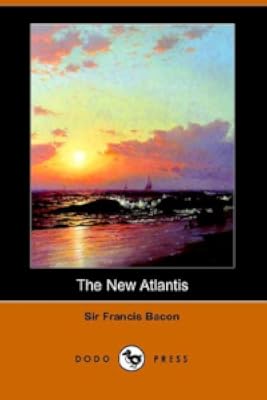
New Atlantis
by Francis Bacon
On This Page
Description
The New Atlantis is Sir Francis Bacon's creation of an ideal land where its citizens uphold the common qualities of "generosity and enlightenment, dignity and splendor, piety and public spirit." This short 1627 utopian novel depicts the land of Bensalem, discovered by a European ship after becoming lost somewhere to the west of Peru. One of the crew narrates their look at the island's customs and institutions, especially their impressive culture of science and research..
Tags
Recommendations




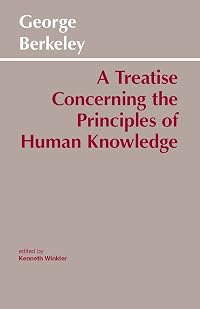
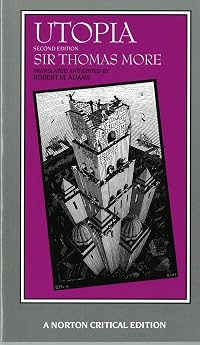

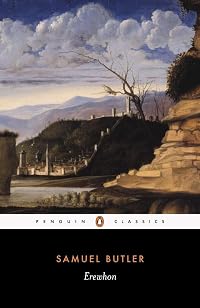
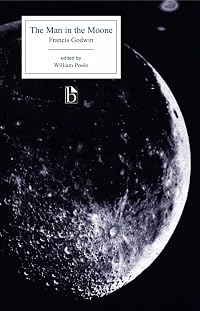













Member Recommendations


by Sensei-CRS
Member Reviews
In the south seas our narrator comes to an nation unknown to Europe but fully informed about the past and present of all the worlds lands. This is a Christian nation by miraculous delivery of the gospels 20yrs after the Crucifixion which generously allows Jews and a few others to live there. Mostly tell rather than show, the narrator 'repeats' reports about the chastity of the people and the institutionalized pursuit knowledge and practical invention.
Women however are kept firmly in the background, standing at the edges of a mans feast or sequestered in a viewing room, listed as servants and attendants of scholars, but hardly elsewhere. "Every sperm is sacred" played in my head during the Feast of the Family report. I'm inclined to show more think Francis Bacon a hypocritical prig. show less
Women however are kept firmly in the background, standing at the edges of a mans feast or sequestered in a viewing room, listed as servants and attendants of scholars, but hardly elsewhere. "Every sperm is sacred" played in my head during the Feast of the Family report. I'm inclined to show more think Francis Bacon a hypocritical prig. show less
I was rather disappointed in this. This was the second story in a book that had 3 Utopia stories in it, and after reading the first story (Moore's Utopia) this was especially a letdown. I expected more world-building, since this story is told from the POV of a man whose ship is blown off course and he ends up in a strange land.
We learn of a tradition where men with at least 30 descendants are given honor, but a woman who achieves this is not afforded the same honor. Also, at the ceremony, the man's wife must sit behind a screen. Bleh.
This story is also pretty insulting to Jews, Chinese, and black people, and the whole thing with them being given a blessing by God just... I mean, dang. The story ends too soon, after this elder tells the show more main character all about the various schools in Besalem.
Here it's all about telling, not showing, which really made the story suffer. The elder says, 'we have this school where blah blah blah and we have that school where blah blah blah' but the story ends before we actually get to see these schools, or the rest of Besalem. As far as world-building went, this was pretty sparse compared to Moore's Utopia. I can't really recommend this story. show less
We learn of a tradition where men with at least 30 descendants are given honor, but a woman who achieves this is not afforded the same honor. Also, at the ceremony, the man's wife must sit behind a screen. Bleh.
This story is also pretty insulting to Jews, Chinese, and black people, and the whole thing with them being given a blessing by God just... I mean, dang. The story ends too soon, after this elder tells the show more main character all about the various schools in Besalem.
Here it's all about telling, not showing, which really made the story suffer. The elder says, 'we have this school where blah blah blah and we have that school where blah blah blah' but the story ends before we actually get to see these schools, or the rest of Besalem. As far as world-building went, this was pretty sparse compared to Moore's Utopia. I can't really recommend this story. show less
Published in 1627 a year after Bacon's death, this slight book tells a story of a lost continent (island) which lay in uncharted waters in the South Pacific. It was discovered by a sailing ship that had been blown off course. The crew had eaten all their provisions and were preparing themselves for death when they discovered land. The inhabitants of the land welcomed the crew only when it was established that they were Christians and when they finally got ashore they found a civilization that was in many respects more advanced than their own. Following a brief description of the town and the lodging house that had been set aside for "strangers" the major part of the book tells about meetings with various officials who tell the crews show more representative, of the glories of The New Atlantis. The book ends suddenly (we know it was unfinished) following a description of the knowledge that had been gained by the New Atlantian's and how they had acquired it.
One suspects that the reason for the sudden ending was that the book had served it's purpose. Bacon has been called the father of empiricism and spent much of his life attempting to codify scientific and mechanical discoveries, which in his opinion would help to show a way forward. The final section of the book takes place in the House of Salomon and the ship's representative is told that:
"The end of our foundation is the knowledge of courses and secret motions of things and the enlarging of the bounds of human empire to the effecting of all things possible
I get the feeling from this book that Bacon is describing his idea of Utopia, but he is also careful to ensure that what he describes will cause little offence to 17th century Tudor England. Christianity is a vital aspect of the society described, but it is a society that tolerates other religions. There is no attempt to shock us with progressive social views, as the New Atlantian's value chastity and honesty and a well ordered society, however there is no King or aristocracy in evidence which might not have been quite so welcome at the Tudor English court.
My first impressions from the story were that Bacon was attempting to describe his idea of heaven. When the crew sight the island they are dying from starvation and it may all be an hallucination. The crews representative says that "We are but between death and life, for we are both beyond the old world and the new," subsequently there is not too much to reinforce this idea, but it does demonstrate what a puzzling little book this is. I would go along with the idea that Bacon's main purpose was to use it as a propaganda vehicle to arouse interest in his ideas for collecting together all scientific and mechanical knowledge.
The book is an early example of an Utopia and also falls under the genre of proto-science fiction and so would be of interest for readers in these fields, It may also be of interest for its descriptions of future mechanical and scientific discoveries that were envisaged by a man that was possibly in advance of his times. An easy and quick read for those that might be interested; 3 stars show less
One suspects that the reason for the sudden ending was that the book had served it's purpose. Bacon has been called the father of empiricism and spent much of his life attempting to codify scientific and mechanical discoveries, which in his opinion would help to show a way forward. The final section of the book takes place in the House of Salomon and the ship's representative is told that:
"The end of our foundation is the knowledge of courses and secret motions of things and the enlarging of the bounds of human empire to the effecting of all things possible
I get the feeling from this book that Bacon is describing his idea of Utopia, but he is also careful to ensure that what he describes will cause little offence to 17th century Tudor England. Christianity is a vital aspect of the society described, but it is a society that tolerates other religions. There is no attempt to shock us with progressive social views, as the New Atlantian's value chastity and honesty and a well ordered society, however there is no King or aristocracy in evidence which might not have been quite so welcome at the Tudor English court.
My first impressions from the story were that Bacon was attempting to describe his idea of heaven. When the crew sight the island they are dying from starvation and it may all be an hallucination. The crews representative says that "We are but between death and life, for we are both beyond the old world and the new," subsequently there is not too much to reinforce this idea, but it does demonstrate what a puzzling little book this is. I would go along with the idea that Bacon's main purpose was to use it as a propaganda vehicle to arouse interest in his ideas for collecting together all scientific and mechanical knowledge.
The book is an early example of an Utopia and also falls under the genre of proto-science fiction and so would be of interest for readers in these fields, It may also be of interest for its descriptions of future mechanical and scientific discoveries that were envisaged by a man that was possibly in advance of his times. An easy and quick read for those that might be interested; 3 stars show less
It started off well enough, and then it got kind of weird. But that's okay. I actually enjoyed the quick read and there are a lot of inventions and practices in this utopia that were well beyond the time of Francis Bacon, which, in my opinion, makes this short pamphlet worth reading and understanding. It may not be the most engaging read, but it is quite good for what is in it.
An unfinished fragment of a utopian novel. Sailors discover a highly advanced christian society that wishes to keep its existence a secret from the outside world. There is some proto-scifi concerning the technology possessed by the island thats interesting given the age of the story, but overall not much to write home about.
It was a bit hard to get into, though the footnotes helped whole lot in the understanding of the text. It was also a bit of a slow beginning. But once I got into the flow of Bacon's writing and once he got past the technical stuff that set the stage for the rest of the piece it was smooth sailing.
The most humorous part (though I doubt it was supposed to be) was when he explained why the natives of great Atlantis (America, though it sounded like only the top half of North America, the USA and Canada) went from those who populated Tall Ships to those who go around naked and are savages with no art or culture. Which of course, is why it's funny, because not all the tribes were naked and the fact that the Native North Americans had just as show more much art, culture etc, as any European or New Atlantean.
Anyway, maybe I'm totally reading it wrong (wouldn't be the first time), but he was basically explaining what the United States of America has always been trying to be (and had and has differing levels of success at) a place where if you come to our shores as strangers you can stay or you can stay for a bit and use our hospitality, but if you stay forever you become an American. You can be African-American, Chinese American, Irish-American, but if you choose to stay you become an American. (Plus, there's the whole prude thing, which totally sounds like us crazy US/Americans a bit too). show less
The most humorous part (though I doubt it was supposed to be) was when he explained why the natives of great Atlantis (America, though it sounded like only the top half of North America, the USA and Canada) went from those who populated Tall Ships to those who go around naked and are savages with no art or culture. Which of course, is why it's funny, because not all the tribes were naked and the fact that the Native North Americans had just as show more much art, culture etc, as any European or New Atlantean.
Anyway, maybe I'm totally reading it wrong (wouldn't be the first time), but he was basically explaining what the United States of America has always been trying to be (and had and has differing levels of success at) a place where if you come to our shores as strangers you can stay or you can stay for a bit and use our hospitality, but if you stay forever you become an American. You can be African-American, Chinese American, Irish-American, but if you choose to stay you become an American. (Plus, there's the whole prude thing, which totally sounds like us crazy US/Americans a bit too). show less
francis bacon, new atlantis (a public domain book, 1627): em sobre jardins bacon descreve o que ele considera ser um jardim não apenas adequado, mas apropriado e bom. a aparente arbitrariedade é equilibrada com pitadas de justificativas de época. em nova atlântida, a preocupação é a descrição de uma sociedade utópica, propondo um ideal de universidade (solomon’s house), introduzindo uma forma (científico-empírica) de conhecer o mundo como um ideal a ser buscado. em muitos casos, a casa de salomão é colocada acima do próprio estado, ao mesmo tempo que o serve com o que ela considera justo, apropriado e benéfico (escondendo descobertas que poderiam danificar uma ordem social bem estabelecida, por exemplo).
we have also show more sound-houses, where we practise and demonstrate all sounds, and their generation. we have harmonies which you have not, of quarter-sounds, and lesser slides of sounds show less
we have also show more sound-houses, where we practise and demonstrate all sounds, and their generation. we have harmonies which you have not, of quarter-sounds, and lesser slides of sounds show less
Members
- Recently Added By
Lists

100 Books to Read in a Lifetime (That Are Older Than 200 Years)
415 works; 175 members

Filosofía - Clásicos
217 works; 1 member

Bibliography of New World Utopias by Paul Kagan
53 works; 2 members

Read These Too
458 works; 9 members

GreatBooks Worldview Academy Lists
133 works; 4 members

Books Read in 2017
4,249 works; 130 members

How to Read a Book's Recommended Reading List
309 works; 10 members

Greatest Books, allegedly
484 works; 10 members

Recommended Reading : 600 Classics Reviewed, Editors of Salem Press, 2015
634 works; 6 members
Author Information

368+ Works 8,279 Members
Francis Bacon was born on January 22, 1561 in London. After studying at Cambridge, Bacon began a legal career, ultimately becoming a barrister in 1582. Bacon continued his political ascent, and became a Member of Parliament in 1584. In 1600, he served as Queen Elizabeth's Learned Counsel in the trial of Robert Devereaux, the Earl of Essex. After show more numerous appointments under James I, Bacon admitted to bribery and fell from power. Much of Bacon's fame stems from the belief by some that he was the actual author of the plays of William Shakespeare. While many critics dismissed that belief, Bacon did write several important works, including a digest of laws, a history of Great Britain, and biographies of the Tudor monarchy, including Henry VII. Bacon was also interested in science and the natural world. His scientific theories are recorded in Novum Organum, published in 1620. Bacon's interest in science ultimately led to his death. After stuffing a fowl with snow to study the effect of cold on the decay of meat, he fell ill, and died of bronchitis on April 9, 1626. (Bowker Author Biography) show less
Awards and Honors
Notable Lists
Series
Belongs to Publisher Series
Work Relationships
Is contained in
Three Early Modern Utopias: Thomas More: Utopia / Francis Bacon: New Atlantis / Henry Neville: The Isle of Pines (Oxford World's Classics) by Susan Bruce
Der utopische Staat : Morus: Utopia + Campanella: Sonnenstaat + Bacon: Neu-Atlantis by Klaus J. Heinisch
Common Knowledge
- Canonical title
- New Atlantis
- Original title
- Nova Atlantis
- Alternate titles
- The New Atlantis
- Original publication date
- 1627
Classifications
Statistics
- Members
- 525
- Popularity
- 57,026
- Reviews
- 22
- Rating
- (2.99)
- Languages
- 15 — Dutch, English, Estonian, French, German, Greek, Hungarian, Italian, Japanese, Latin, Portuguese, Romanian, Spanish, Swedish, Turkish
- Media
- Paper, Audiobook, Ebook
- ISBNs
- 115
- ASINs
- 18