On This Page
Description
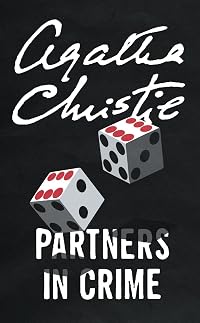
Agatha Christie's Tommy and Tuppence Beresford are Partners in Crime-or rather partners in crime solving-and must demonstrate their deductive skills in a wide range of confounding cases after agreeing to take over Blunt's International Detective Agency. Tommy and Tuppence Beresford are restless for adventure, so when they are asked to take over Blunt's International Detective Agency, they leap at the chance. Their first case is a success-the triumphant recovery of a pink pearl. Other cases show more soon follow-a stabbing on Sunningdale golf course; cryptic messages in the personal columns of newspapers; and even a box of poisoned chocolates. But can they live up to their slogan of "Any case solved in 24 hours"? show lessTags
Recommendations




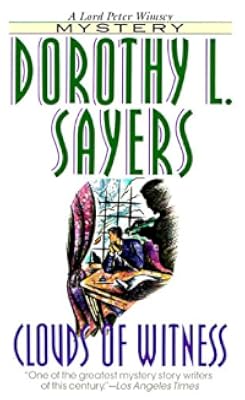
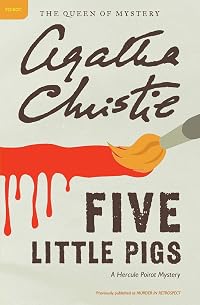
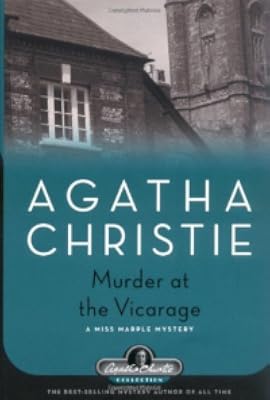
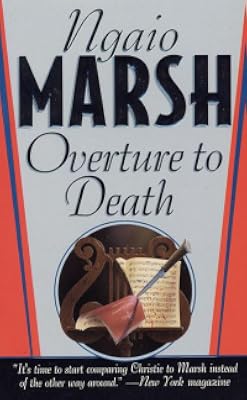


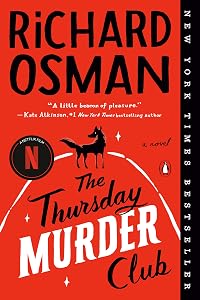
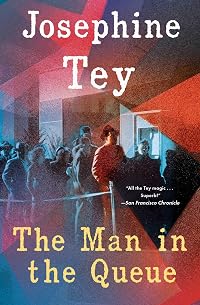
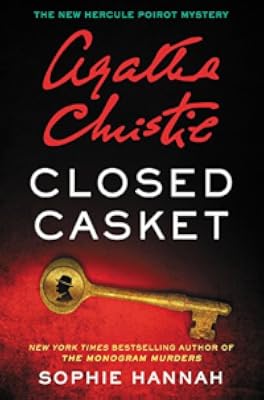
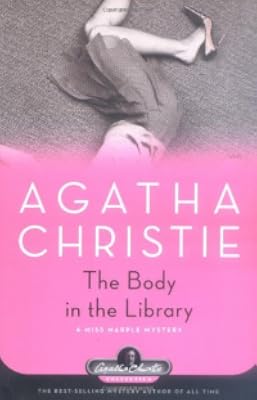


Member Recommendations

themulhern A selection of short stories about detectives whose originators were more or less contemporary with Sherlock Holmes. Many were quite well-known in their time, but are forgotten today.
20
Member Reviews
I enjoyed my meetings with Agatha Christie’s Tommy and Tuppence both as bright young things looking for adventure in ‘The Secret Adversary' (1922) and as an older married couple working for the security service tracking down spies at the English seaside early in the Second World War in ’N or M?’ (1941).
So I set up a Buddy Read ‘Partners In Crime’ during May with other Agatha Christie fans.
The twelve stories in the collection are light-hearted tales that Agatha Christie wrote both to revisit her boisterous young detecting couple and to parody detective stories that were popular in the 1920s.
To me, the stories seemed to be a sort of Improv game that Christie was playing for her own amusement. I imagined her having a fine time show more effortlessly spinning off plot idea after plot idea and dressing them ironically in the costumes of another writer's characters. How exhilarating it must have been to have an imagination so fertile.
Unfortunately, they are less fun to read than they probably were to write.
For the most part, they read more like sketches than short stories and they're sketches that depend for their full effect on knowledge of other Golden Age Crime writers that I don't have. I feel that I'm watching 'Spitting Image' without knowing the celebrities that puppets are ridiculing.
My enjoyment of the stories went up when I was familiar with the fictional detective(s) being mimicked but they are so slight that, when I'm ignorant of the reference points, it's like biting into a meringue.
That said, the chemistry between Tommy and Tuppence still worked and I enjoyed seeing Christie being so playful in her writing.
I think this is a collection that will be enjoyed most by Christie fans with a broad knowledge of Golden Age Mystery writers.
If you're interested, you can find my opinions of each of the stories here:
https://mikefinnsfiction.com/2023/05/31/partners-in-crime-a-collection-of-tommy-... show less
So I set up a Buddy Read ‘Partners In Crime’ during May with other Agatha Christie fans.
The twelve stories in the collection are light-hearted tales that Agatha Christie wrote both to revisit her boisterous young detecting couple and to parody detective stories that were popular in the 1920s.
To me, the stories seemed to be a sort of Improv game that Christie was playing for her own amusement. I imagined her having a fine time show more effortlessly spinning off plot idea after plot idea and dressing them ironically in the costumes of another writer's characters. How exhilarating it must have been to have an imagination so fertile.
Unfortunately, they are less fun to read than they probably were to write.
For the most part, they read more like sketches than short stories and they're sketches that depend for their full effect on knowledge of other Golden Age Crime writers that I don't have. I feel that I'm watching 'Spitting Image' without knowing the celebrities that puppets are ridiculing.
My enjoyment of the stories went up when I was familiar with the fictional detective(s) being mimicked but they are so slight that, when I'm ignorant of the reference points, it's like biting into a meringue.
That said, the chemistry between Tommy and Tuppence still worked and I enjoyed seeing Christie being so playful in her writing.
I think this is a collection that will be enjoyed most by Christie fans with a broad knowledge of Golden Age Mystery writers.
If you're interested, you can find my opinions of each of the stories here:
https://mikefinnsfiction.com/2023/05/31/partners-in-crime-a-collection-of-tommy-... show less
This short story collection by Agatha Christie features Tommy and Tuppence Beresford's adventures as they take over Blunt's International Detective Agency at the behest of Scotland Yard. Tommy impersonates Mr. Blunt, while Tuppence takes on the role of his confidential secretary, Miss Robinson. They solve cases of disappearance, theft, blackmail and murder, all while attempting to flush out international spies. And with each case, they experiment with the methods of a different fictional detective, including Christie's own Hercule Poirot.
You don't need to have read mysteries featuring the detectives that Christie is parodying to enjoy these stories. Wikipedia has a full list of the novelists and detectives being riffed on if you're show more interested in digging through the inspirations for these stories. That said, I did find it a treat to be able to recognize names such as Inspector French and Reggie Fortune, who have appeared in books republished by the British Library's Crime Classics series.
Taking these stories at face value, not just parodies, they are simply so much fun. Tommy and Tuppence are lively, clever, and unafraid to take on anything. Hugh Fraser narrates excellently -- I just about died during the last story, because of it parodying Hercule Poirot, and yes, even son cher Hastings! This collection will certainly be on my list of comfort audios. show less
You don't need to have read mysteries featuring the detectives that Christie is parodying to enjoy these stories. Wikipedia has a full list of the novelists and detectives being riffed on if you're show more interested in digging through the inspirations for these stories. That said, I did find it a treat to be able to recognize names such as Inspector French and Reggie Fortune, who have appeared in books republished by the British Library's Crime Classics series.
Taking these stories at face value, not just parodies, they are simply so much fun. Tommy and Tuppence are lively, clever, and unafraid to take on anything. Hugh Fraser narrates excellently -- I just about died during the last story, because of it parodying Hercule Poirot, and yes, even son cher Hastings! This collection will certainly be on my list of comfort audios. show less
I still can't believe it: this is the first of Agatha Christie's works that I didn't finish. This collection of short stories features Tommy and Tuppence, first encountered in The Secret Adversary, as they take over a detective agency at the request of Tommy's boss in the Secret Intelligence Service. The two decide to tackle each case in the manner of one of the classic detective teams.
I'm sorry to say that most of the references to the detectives in question passed me by, as they will probably most of today's readership, I expect. What readers at the end of the 1920s/beginning of the 1930s probably found entertaining and hilarious comes across as simply horribly dated, and together with terribly lame jokes, melodrama, show more implausibilities, an obsession with titles, plot holes, poor pacing and plotting, and outdated gender stereotypes this is a book that – maybe except for its historical value – should be discarded on the scrap heap of time. Granted, Agatha Christie seems to send up the detective genre in general (including herself), but the result is more chore than joke. show less
I'm sorry to say that most of the references to the detectives in question passed me by, as they will probably most of today's readership, I expect. What readers at the end of the 1920s/beginning of the 1930s probably found entertaining and hilarious comes across as simply horribly dated, and together with terribly lame jokes, melodrama, show more implausibilities, an obsession with titles, plot holes, poor pacing and plotting, and outdated gender stereotypes this is a book that – maybe except for its historical value – should be discarded on the scrap heap of time. Granted, Agatha Christie seems to send up the detective genre in general (including herself), but the result is more chore than joke. show less
I loved the first book and I enjoyed the second although I was kind of sad they were no longer the Young Adventurers. Tommy and Tuppence are the best. I love them separately and I adore them together. I really like that marriage hasn't changed the banter and friendship between them. Or dulled Tuppence's thirst for adventure, quick wits or sass. Not that any books with married couples actually comes to mind. I'm not sure I've read any others - romance is always the end goal rather than the starting point.
So the second book is about Tommy and Tuppence taking over a detective agency. The format of this is kind of unique though because it's a short story collection - just all the stories revolve around the detective agency - each one being show more a case. I thought the general premise being the detective agency gave it a more cohesive feel and allowed for a depth that tends to be missing in short stories. I don't usually enjoy short story collections - too often half of them suck - but I loved this.
I liked that each story tackled different cases and that Tommy and Tuppence both played equal roles in solving them. I really liked getting to see the different cases they worked and how they solved them. Particularly when they emulate famous detectives.
I love how into it Tommy, Tuppence and Albert get. Each of them give 110% to their parts. And it amuses me how much of a production it all is. Typewriter to be typing when someone comes in. Albert to deny access to the boss because he's 'on the phone with Scotland Yard' and his quiet remarks about secret official business. It was hilarious.
Overall a solid read. 4.5 stars, rounded up to 5. I can't wait to read the next step in their journey.
2.1: A FAIRY IN THE FLAT: Six years later, Tommy is working for the Secret Service (office work though) and Tuppence is stuck buying hats because she might have money but she's bored and itching for adventure. Mr Carter comes to the rescue when he suggests that Tommy take a leave of absence and become a manager of a suspect detective agency, taking on the name of Theodore Blunt. Tuppence jumps at the chance to investigate. I liked that Albert is still around. And that he goes to the movies and then emulates what he sees.
2.2: A POT OF TEA: Their first major case involves an Earl who is in love with a shop girl that disappears and he want her found. LMFAO. Tuppence orchestrates some much needed publicity by organising for the girl to go missing. Turns out the girl is an old friend. She talks up their agency to the girl who tells the Earl and then Tuppence cons the Earl into paying double for their 24 hour guaranteed results special. Tommy is appalled. God I love Tuppence. She's freaking hilarious. Albert would be a close second. They're both so utterly dramatic and it's perfection. Tommy is the perfect foil to their craziness. This one was brilliant.
2.3: THE AFFAIR OF THE PINK PEARL: Being amateurs to detecting, Tommy comes up with a plan to get some technique by trying out different fictional detective styles just as they get a new case. A pink pearl has gone missing and they're hired to find it. Lol they're so full of shit. They bluff their way through before Tommy brilliantly solves the case. It's the French maid who is actually a thief and hides the pink pearl in a cake of soap. He snaps a picture of her and takes it to Scotland Yard.
2.4: THE ADVENTURE OF THE SINISTER STRANGER: Ooh spies! Someone has caught on that something is not right at the International Detective Agency and they send some people to check. I didn't like this as much as the others. Although it was kind of funny with Tommy pretending to be Francis and having it confirmed because he pocketed a present Tuppence had for her friend Francis. .
2.5: FINESSING THE KING: Tommy and Tuppence decide to branch out with the detective skills - choosing to emulate some American detective styles. They end up following a newspaper ad to a ball where a woman winds up dead. Just before she dies though she says Bingo. This case continues in The Gentleman Dressed in Newspaper.
2.6: THE GENTLEMAN DRESSED IN NEWSPAPER: Inspector Marriot arrives with the husband of the dead woman, Sir Arthur. He is unconvinced that Bingo Hale could have murdered his wife. Tuppence manages to solve the case when Tommy makes an offhand remark that sparks her little grey cells. The husband killed her because the wife was planning to run off with her lover, Bingo Hale and he would be cut off from her money. She said Bingo because her husband was in costume at the time - and Bingo was tricked into not going to their arranged meeting. I didn't really like this one.
2.7: THE CASE OF THE MISSING LADY: A fiancee returns for his beloved only to find she's nowhere to be found. He hires Tommy and Tuppence to find her. They find her but are appalled when they do - she's not missing, she's panicking. Her fiancee hates fat women and in the two years he's been gone she's put on weight. Still, I liked this;
“Come on,” said Tuppence, with determination. “What are you going to do?” “I’m going to climb over the wall and see if I can’t get up to the house quietly without being seen.” “Right. I’m with you.”
Christie, Agatha. The Complete Tommy & Tuppence Collection (Tommy & Tuppence Mysteries) . William Morrow Paperbacks. Kindle Edition.
The dedication to his wife. I mean at that point they didn't know she was fat. They thought she was in real danger.
2.8: BLINDMAN'S BUFF: In this one they're busy practising their detective skills by pretending to be blind and making deductions. When they go for lunch they are accosted by the mysterious ham merchant they've been on the lookout for. They manage to escape and catch the bad guys. It was amusing to see them play the detective games - I liked how into they all got.
2.9: THE MAN IN THE MIST: Tommy and Tuppence meet an actress who asks for their help. When they go to meet her they find her dead. For all it was longer I didn't really like this one all that much. And I think I've read something very similar before - not that I can remember where but still.
2.10: THE CRACKLER: Inspector Marriot needs some help. One of his cases involves counterfeit money and the people he needs to get close to are friends of friends of Tommy and Tuppence. So he sends them in undercover. I enjoyed the ending to this one. Marking the door with chalk but dropping a bottle of valerian (which apparently cats love) in front of the door so that the police weren't relying on the chalk cross but the neighbor of cats.
2.11: THE SUNNINGDALE MYSTERY: Tommy and Tuppence discuss a man who was murdered on a golf course by a woman with a hatpin. I liked the creativity of this one. It sounded like a pretty clever way of murdering someone. There's outfit changes and all. And I liked Inspector Marriot ribbing them about the string and their reading habits.
2.12: THE HOUSE OF THE LURKING DEATH: Lois Hargreaves comes to see them when she suspects a member of her household is trying to kill her. This was alright, not my favourite though.
2.13: THE UNBREAKABLE ALIBI: A woman (an Australian!) makes a bet that she can construct a perfect alibi and the man she bet needs help to break it. I loved this one. I guessed the solution pretty quickly but I enjoyed the story nonetheless.
2.14: THE CLERGYMAN'S DAUGHTER: A clergyman's daughter inherits a haunted house. She hires Tuppence and Tommy to get to the bottom of it. Case continued in The Red House.
2.15: THE RED HOUSE: Tommy and Tuppence visit the Red House and figure out why someone would want to make everyone believe it's haunted. It was the maid. And her nephew. Because the old lady who died hid her wealth on the estate. I kind of wanted Monica to drive the price of the house up further and then sell and have the money from the treasure and the house.
2.16: THE AMBASSADOR'S BOOTS: The ambassador asks Tommy and Tuppence to investigate a small puzzle - why someone would want to steal his kitbag and then return it. I didn't see the conclusion of this one. Well the bit about why the bag was taken. Or given rather. I liked Albert lassoing the guy. Like out of all the ways you can subdue someone he's reading up on and practising lassoing. I guessed why Tommy was delaying them with stories about a taxi and people following and that Tuppence was to follow and beat them there. But the rest was a nice surprise.
2.17: THE MAN WHO WAS NO. 16: The Russian superspy No. 16 makes an appearance. Or appearances as the case may be. I liked the conclusion to this - No. 16 had hidden Tuppence inside the bed. On the other hand, it annoyed me that Tuppence was taken out and had little to do with it. I prefer it when they both display brilliance. Or Tuppence manages to mostly save herself and Tommy gets there while she's escaping or something. I did like that Albert cheered Tommy up and reminded him that Tuppence is indestructible. I also liked that she's thought of as such. show less
So the second book is about Tommy and Tuppence taking over a detective agency. The format of this is kind of unique though because it's a short story collection - just all the stories revolve around the detective agency - each one being show more a case. I thought the general premise being the detective agency gave it a more cohesive feel and allowed for a depth that tends to be missing in short stories. I don't usually enjoy short story collections - too often half of them suck - but I loved this.
I liked that each story tackled different cases and that Tommy and Tuppence both played equal roles in solving them. I really liked getting to see the different cases they worked and how they solved them. Particularly when they emulate famous detectives.
I love how into it Tommy, Tuppence and Albert get. Each of them give 110% to their parts. And it amuses me how much of a production it all is. Typewriter to be typing when someone comes in. Albert to deny access to the boss because he's 'on the phone with Scotland Yard' and his quiet remarks about secret official business. It was hilarious.
Overall a solid read. 4.5 stars, rounded up to 5. I can't wait to read the next step in their journey.
2.1: A FAIRY IN THE FLAT: Six years later, Tommy is working for the Secret Service (office work though) and Tuppence is stuck buying hats because she might have money but she's bored and itching for adventure. Mr Carter comes to the rescue when he suggests that Tommy take a leave of absence and become a manager of a suspect detective agency, taking on the name of Theodore Blunt. Tuppence jumps at the chance to investigate. I liked that Albert is still around. And that he goes to the movies and then emulates what he sees.
2.2: A POT OF TEA: Their first major case involves an Earl who is in love with a shop girl that disappears and he want her found.
2.3: THE AFFAIR OF THE PINK PEARL: Being amateurs to detecting, Tommy comes up with a plan to get some technique by trying out different fictional detective styles just as they get a new case. A pink pearl has gone missing and they're hired to find it. Lol they're so full of shit. They bluff their way through before Tommy brilliantly solves the case.
2.4: THE ADVENTURE OF THE SINISTER STRANGER: Ooh spies! Someone has caught on that something is not right at the International Detective Agency and they send some people to check. I didn't like this as much as the others. Although it was kind of funny
2.5: FINESSING THE KING: Tommy and Tuppence decide to branch out with the detective skills - choosing to emulate some American detective styles. They end up following a newspaper ad to a ball where a woman winds up dead. Just before she dies though she says Bingo. This case continues in The Gentleman Dressed in Newspaper.
2.6: THE GENTLEMAN DRESSED IN NEWSPAPER: Inspector Marriot arrives with the husband of the dead woman, Sir Arthur. He is unconvinced that Bingo Hale could have murdered his wife. Tuppence manages to solve the case when Tommy makes an offhand remark that sparks her little grey cells.
2.7: THE CASE OF THE MISSING LADY: A fiancee returns for his beloved only to find she's nowhere to be found. He hires Tommy and Tuppence to find her.
“Come on,” said Tuppence, with determination. “What are you going to do?” “I’m going to climb over the wall and see if I can’t get up to the house quietly without being seen.” “Right. I’m with you.”
Christie, Agatha. The Complete Tommy & Tuppence Collection (Tommy & Tuppence Mysteries) . William Morrow Paperbacks. Kindle Edition.
The dedication to his wife. I mean at that point they didn't know she was fat. They thought she was in real danger.
2.8: BLINDMAN'S BUFF: In this one they're busy practising their detective skills by pretending to be blind and making deductions. When they go for lunch they are accosted by the mysterious ham merchant they've been on the lookout for. They manage to escape and catch the bad guys. It was amusing to see them play the detective games - I liked how into they all got.
2.9: THE MAN IN THE MIST: Tommy and Tuppence meet an actress who asks for their help. When they go to meet her they find her dead. For all it was longer I didn't really like this one all that much. And I think I've read something very similar before - not that I can remember where but still.
2.10: THE CRACKLER: Inspector Marriot needs some help. One of his cases involves counterfeit money and the people he needs to get close to are friends of friends of Tommy and Tuppence. So he sends them in undercover.
2.11: THE SUNNINGDALE MYSTERY: Tommy and Tuppence discuss a man who was murdered on a golf course by a woman with a hatpin. I liked the creativity of this one. It sounded like a pretty clever way of murdering someone.
2.12: THE HOUSE OF THE LURKING DEATH: Lois Hargreaves comes to see them when she suspects a member of her household is trying to kill her. This was alright, not my favourite though.
2.13: THE UNBREAKABLE ALIBI: A woman (an Australian!) makes a bet that she can construct a perfect alibi and the man she bet needs help to break it. I loved this one. I guessed the solution pretty quickly but I enjoyed the story nonetheless.
2.14: THE CLERGYMAN'S DAUGHTER: A clergyman's daughter inherits a haunted house. She hires Tuppence and Tommy to get to the bottom of it. Case continued in The Red House.
2.15: THE RED HOUSE: Tommy and Tuppence visit the Red House and figure out why someone would want to make everyone believe it's haunted.
2.16: THE AMBASSADOR'S BOOTS: The ambassador asks Tommy and Tuppence to investigate a small puzzle - why someone would want to steal his kitbag and then return it.
2.17: THE MAN WHO WAS NO. 16: The Russian superspy No. 16 makes an appearance. Or appearances as the case may be.
I read this several months ago and am just now catching up on the review, so my memory's a bit hazy. I remember this being fun but very ridiculous in its elaborate setups, unlikely coincidences, and improbable sleuthing. But for all that, it's Tommy and Tuppence Beresford, Agatha Christie's beloved detective couple whose dialogue alone is worth the price of admission. Witty, teasing, and always affectionate toward one another, they operate in a world of dangerous gangs, deceptive missions, espionage, double identities, and the usual trappings of romantic mystery.
The Beresfords should probably be classified more as fantasy than mystery, but I think the two genres are more closely related than is generally assumed. Both seek to create a show more fictional world that draws the reader into the problem that the hero/detective must somehow solve. Often, both genres involve quests of some kind to discover a hidden reality. Interesting, isn't it, how both are trying to get at the same thing, truth? It just so happens the fantasy world of the English mystery novel is more akin to its originating country than that of straight fantasy of the dragons and princesses variety.
It is fun that our detectives are married and not just two people falling in love over the mystery they're working together to solve. To be sure, the romantic angle is not omitted; they are forever teasing one another about infidelity (which is interesting, given Christie's experiences with both her husbands). But the reader always knows it's a joke, that underneath all the banter there is a deep and abiding loyalty that is, in its way, unassailable. Beyond the outlandish villains and unlikely settings, this is the most fantastical element of the Tommy and Tuppence tales. I think this is why despite the sometimes-clumsy plots, their stories remain popular among Christie's readers. Fun characters, married and still madly in love, having fabulous and dangerous adventures in which they prove both their competence and luck again and again—who wouldn't want to slip into their world for a bit? Enjoyable fluff. show less
The Beresfords should probably be classified more as fantasy than mystery, but I think the two genres are more closely related than is generally assumed. Both seek to create a show more fictional world that draws the reader into the problem that the hero/detective must somehow solve. Often, both genres involve quests of some kind to discover a hidden reality. Interesting, isn't it, how both are trying to get at the same thing, truth? It just so happens the fantasy world of the English mystery novel is more akin to its originating country than that of straight fantasy of the dragons and princesses variety.
It is fun that our detectives are married and not just two people falling in love over the mystery they're working together to solve. To be sure, the romantic angle is not omitted; they are forever teasing one another about infidelity (which is interesting, given Christie's experiences with both her husbands). But the reader always knows it's a joke, that underneath all the banter there is a deep and abiding loyalty that is, in its way, unassailable. Beyond the outlandish villains and unlikely settings, this is the most fantastical element of the Tommy and Tuppence tales. I think this is why despite the sometimes-clumsy plots, their stories remain popular among Christie's readers. Fun characters, married and still madly in love, having fabulous and dangerous adventures in which they prove both their competence and luck again and again—who wouldn't want to slip into their world for a bit? Enjoyable fluff. show less
Perhaps because of the imitations or parodies of other literary detectives or because of the short story form this book is better than the other "Tommy and Tuppence" books. I usually find a series of short stories about established characters more enjoyable than a series where each story has to start completely new. Nothing too momentous has to occur in an individual story as the characters will come around again. The whole thing is so deliberately artificial that you can't censure any individual story; perhaps the part you dislike most is an essential part of the parody.
The television series is probably more enjoyable than the book; partly because Albert plays a much larger and mostly humorous role.
I would not have been able to show more recognize many of the parodies if I had not previously read and watched a fair amount of "The Rivals of Sherlock Holmes" show less
The television series is probably more enjoyable than the book; partly because Albert plays a much larger and mostly humorous role.
I would not have been able to show more recognize many of the parodies if I had not previously read and watched a fair amount of "The Rivals of Sherlock Holmes" show less
Another “Tommy & Tuppence” that I have never read before, this time a collection of short stories. Fun and atmospheric. In each story, Tommy and Tuppence are copying the style of an (at that time) famous fictional detective. Except for Sherlock Holmes and Father Brown, I’d never heard of any of them, so all the jokes went over my head. Today they are all forgotten and Tommy and Tuppence are more famous. I never thought Christie would satirize herself, but in the final story, Tommy tries to be like Hercule Poirot in a Big Four-type story. Amusingly, it made it seem like Poirot’s techniques and mannerisms are sort of thin and unimpressive, so Christie really had a good sense of humor about it.
Members
- Recently Added By
Lists

British Mystery
469 works; 13 members

Crime and Mysteries to Read
746 works; 31 members

Agatha Christie Tommy & Tuppence
5 works; 1 member

Agatha Christie story collections
19 works; 1 member

Detective Stories
343 works; 5 members

Most Frequently Tagged "Read in 2015"
70 works; 1 member

Books Read in 2023
5,547 works; 145 members

Books Read in 2024
4,623 works; 126 members

Books We Love to Reread
688 works; 296 members

TBR
77 works; 1 member

Agatha Christie Chronology
93 works; 1 member
Author Information

2,153+ Works 440,422 Members
One of the most successful and beloved writer of mystery stories, Agatha Mary Clarissa Christie was born in 1890 in Torquay, County Devon, England. She wrote her first novel, The Mysterious Affair at Styles, in 1920, launching a literary career that spanned decades. In her lifetime, she authored 79 crime novels and a short story collection, 19 show more plays, and six novels written under the name of Mary Westmacott. Her books have sold over a billion copies in the English language with another billion in 44 foreign languages. Some of her most famous titles include Murder on the Orient Express, Mystery of the Blue Train, And Then There Were None, 13 at Dinner and The Sittaford Mystery. Noted for clever and surprising twists of plot, many of Christie's mysteries feature two unconventional fictional detectives named Hercule Poirot and Miss Jane Marple. Poirot, in particular, plays the hero of many of her works, including the classic, The Murder of Roger Ackroyd (1926), and Curtain (1975), one of her last works in which the famed detective dies. Over the years, her travels took her to the Middle East where she met noted English archaeologist Sir Max Mallowan. They married in 1930. Christie accompanied Mallowan on annual expeditions to Iraq and Syria, which served as material for Murder in Mesopotamia (1930), Death on the Nile (1937), and Appointment with Death (1938). Christie's credits also include the plays, The Mousetrap and Witness for the Prosecution (1953; film 1957). Christie received the New York Drama Critics' Circle Award for 1954-1955 for Witness. She was also named Dame Commander of the Order of the British Empire in 1971. Christie died in 1976. (Bowker Author Biography) show less
Some Editions
Series

Belongs to Publisher Series
Work Relationships
Common Knowledge
- Canonical title
- Partners in Crime
- Original title
- Partners in Crime
- Original publication date
- 1929-06-07
- People/Characters
- Tommy Beresford; Tuppence Beresford; Albert
- Important places
- London, England, UK
- Related movies
- Agatha Christie's Partners in Crime (1983 | IMDb); Le crime est notre affaire (2008 | IMDb)
- First words
- Mrs. Thomas Beresford shifted her position on the divan and looked gloomily out of the window of the flat.
- Last words
- (Click to show. Warning: May contain spoilers.)" ... Tommy, isn't everything marvellous?"
- Original language
- English UK
- Disambiguation notice
- ISBN 0886462517 is for the audiobook, Partners in Crime, Volume 3
Classifications
Statistics
- Members
- 3,115
- Popularity
- 5,639
- Reviews
- 69
- Rating
- (3.63)
- Languages
- 23 — Catalan, Chinese, Czech, Danish, Dutch, English, Estonian, Finnish, French, German, Greek, Hebrew, Hungarian, Indonesian, Italian, Norwegian (Bokmål), Norwegian, Polish, Croatian, Spanish, Swedish, Turkish, Portuguese (Portugal)
- Media
- Paper, Audiobook, Ebook
- ISBNs
- 138
- UPCs
- 2
- ASINs
- 60