On This Page
Description
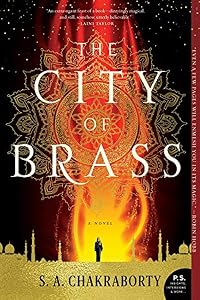
"Step into The City of Brass, the spellbinding debut from S. A. Chakraborty--an imaginative alchemy of The Golem and the Jinni, The Grace of Kings, and Uprooted, in which the future of a magical Middle Eastern kingdom rests in the hands of a clever and defiant young con artist with miraculous healing gifts. Nahri has never believed in magic. Certainly, she has power; on the streets of eighteenth-century Cairo, she's a con woman of unsurpassed talent. But she knows better than anyone that the show more trade she uses to get by--palm readings, zars, healings--are all tricks, sleights of hand, learned skills; a means to the delightful end of swindling Ottoman nobles and a reliable way to survive. But when Nahri accidentally summons an equally sly, darkly mysterious djinn warrior to her side during one of her cons, she's forced to question all she believes. For the warrior tells her an extraordinary tale: across hot, windswept sands teeming with creatures of fire, and rivers where the mythical marid sleep; past ruins of once-magnificent human metropolises, and mountains where the circling birds of prey are not what they seem, lies Daevabad, the legendary city of brass--a city to which Nahri is irrevocably bound. In Daevabad, behind gilded brass walls laced with enchantments, behind the six gates of the six djinn tribes, old resentments are simmering. A young prince dreams of rebellion. And when Nahri decides to enter this world, she learns that true power is fierce and brutal. That magic cannot shield her from the dangerous web of court politics. That even the cleverest of schemes can have deadly consequences. After all, there is a reason they say to be careful what you wish for"-- "A brilliantly imagined historical fantasy in which a young con artist in eighteenth century Cairo discovers she's the last descendant of a powerful family of djinn healers. With the help of an outcast immortal warrior and a rebellious prince, she must claim her magical birthright in order to prevent a war that threatens to destroy the entire djinn kingdom. Perfect for fans of The Grace of Kings, The Golem and the Jinni, and The Queen of the Tearling"-- show lessTags
Recommendations




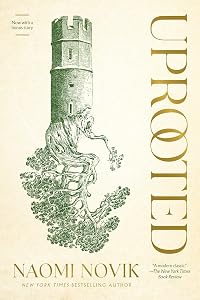
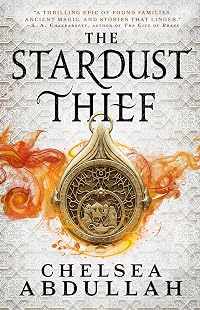
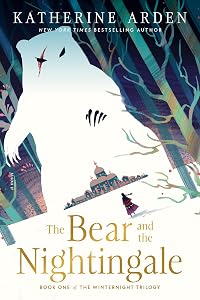
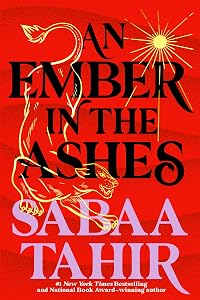


Member Recommendations
Member Reviews
I came across this book a while ago, and promptly added it to my "Want to Read" list, intrigued by its Middle Eastern setting and use of Islamic mythology. Unfortunately it then languished on that list for much longer than it deserved to. Well, not any more! Finally I've taken the plunge into The City of Brass, and despite the slow first half, I ended up riveted and really excited to read the second book.
The plot itself, if you reduce it to the essentials, is perhaps not the most original. It begins with Nahri, a professional con artist in nineteenth-century Cairo, with magical powers of healing and no recollection of her childhood. One day she's attacked by malevolent demons called ifrit, and saved by a haughty magical being named show more Dara, and through this discovers she's actually some kind of long-lost Chosen One to a magical society she knows nothing about. Dara insists that, for her safety, he he has to take her to the city of Daevabad (and then her storyline slows right down because the journey takes up a huge fraction of the book).
The other POV character is Ali, a young prince (second son of Daevabad's king) who wants to help the oppressed shafit, residents of the city who are of mixed magical and human descent. He's a devout Muslim, someone who (at least at the start of the book) wants to assume the best in everyone, and painfully naive. He ends up feeling caught between loyalty to his family and his sense of justice, and I found him a really compelling character.
So you know, Chosen One outsiders to hidden magical societies and junior royals with consciences are not the most unique fantasy characters out there (not that lacking uniqueness would make them unenjoyable). However, the setting and world-building of this story are just incredibly absorbing. I'll admit that the world-building can feel very dense, especially if you (like me) are not very familiar with Islamic mythology, because then you have that to absorb on top of the history and politics of the kingdom of Daevabad. That said, I think it's well worth persevering! The book's last section is action-packed, and since all the groundwork has now been laid, I'm excited for how eventful the next instalment might be without so many hold-ups to explain the lore.
S.A. Chakraborty wanted to pursue an academic career in Middle Eastern history before life intervened and she eventually turned to writing, and I think that background is evident in the richness of the world she's created here. On top of the mythology she draws upon, there's also a lot of interesting stuff in the different tribes of Daevabad, the tensions between the different groups living in the city (which I could imagine mirroring other cities with long histories of diversity, like Jerusalem or Istanbul), and so on. I came to really enjoy the character of the king, calculating and ruthless, but you can follow his tyrannical logic, too. In fact, despite Ali's efforts, this is not really a story about good vs. evil at all, but about power. A lot of Nahri's story, too, becomes about how she can play the game before the other players play her.
So, I think I've made it clear that despite some slowness in the first half, I really enjoyed The City of Brass. If you like worldbuilding-heavy stories, I think this is well worth the read. show less
The plot itself, if you reduce it to the essentials, is perhaps not the most original. It begins with Nahri, a professional con artist in nineteenth-century Cairo, with magical powers of healing and no recollection of her childhood. One day she's attacked by malevolent demons called ifrit, and saved by a haughty magical being named show more Dara, and through this discovers she's actually some kind of long-lost Chosen One to a magical society she knows nothing about. Dara insists that, for her safety, he he has to take her to the city of Daevabad (and then her storyline slows right down because the journey takes up a huge fraction of the book).
The other POV character is Ali, a young prince (second son of Daevabad's king) who wants to help the oppressed shafit, residents of the city who are of mixed magical and human descent. He's a devout Muslim, someone who (at least at the start of the book) wants to assume the best in everyone, and painfully naive. He ends up feeling caught between loyalty to his family and his sense of justice, and I found him a really compelling character.
So you know, Chosen One outsiders to hidden magical societies and junior royals with consciences are not the most unique fantasy characters out there (not that lacking uniqueness would make them unenjoyable). However, the setting and world-building of this story are just incredibly absorbing. I'll admit that the world-building can feel very dense, especially if you (like me) are not very familiar with Islamic mythology, because then you have that to absorb on top of the history and politics of the kingdom of Daevabad. That said, I think it's well worth persevering! The book's last section is action-packed, and since all the groundwork has now been laid, I'm excited for how eventful the next instalment might be without so many hold-ups to explain the lore.
S.A. Chakraborty wanted to pursue an academic career in Middle Eastern history before life intervened and she eventually turned to writing, and I think that background is evident in the richness of the world she's created here. On top of the mythology she draws upon, there's also a lot of interesting stuff in the different tribes of Daevabad, the tensions between the different groups living in the city (which I could imagine mirroring other cities with long histories of diversity, like Jerusalem or Istanbul), and so on. I came to really enjoy the character of the king, calculating and ruthless, but you can follow his tyrannical logic, too. In fact, despite Ali's efforts, this is not really a story about good vs. evil at all, but about power. A lot of Nahri's story, too, becomes about how she can play the game before the other players play her.
So, I think I've made it clear that despite some slowness in the first half, I really enjoyed The City of Brass. If you like worldbuilding-heavy stories, I think this is well worth the read. show less
SPOILER FREE!
This was a recommendation from a friend who very accurately divined that it would appeal to me. As soon as I started reading it I was hooked and it did prove to be a book I was reluctant to put down, made time to read, and was very engaged with.
I never like to categorise books as it may close a book off to readers that would find it worthwhile and interesting. This book is in the style of an Arabian Nights story involving characters and creatures with magical powers, and as such it will probably be found on the Fantasy shelf in bookshops and libraries. For people not inclined to read Fantasy novels this would be a terrible shame as they may never even consider reading it.
Middle Eastern mythology is the environment in which show more this story takes place but this is simply the backdrop to what is a tale of racial prejudice, political machinations, and the manipulation of historical events to influence the thinking of a population with the intent of keeping the current rulers in their place of power and suppressing any dissent that might arise. I do not know if the author had any particular real life situation in mind when she was writing this book, but I can see the actions and reactions in this book being relevant in so many real world circumstances that exist today. Having grown up in a divided community with history being used to foment violent political action I can relate to many of the incidents in this book and the way people’s emotions were used to direct the thoughts and actions of individuals and mobs.
In addition to the story demonstrating how those in power and those who are not operate to try to advance their respective group’s position, the book was very well written. Having recently read John Yorke’s excellent book “Into the Woods: how stories work and why we tell them” I was more conscious of structure and technique while reading “The City of Brass” than I otherwise would have been. In Yorke’s terminology “The City of Brass” is a three dimensional story; the characters clearly develop and the reader can see how their experiences influence their development, growth an action.
One excellent technique was the use of two viewpoints, i.e. the viewpoints of two characters drawn from each of the two main factions involved in the story. Chapters alternated between the two characters and this gave a balanced view of the situation; the reader could understand the thinking and actions of the two main parties and this gives the reader an overview of the story that allows observation of how each side is manipulating facts to influence people. In every real conflict on Earth each party uses prejudices to stir up hate against the group portrayed as the enemy; historical characters are presented as heroes despite atrocities they might have initiated; the atrocities of the other side are pulled out of the history of the group to demonise the present day enemy and fire up the crowds with fear and a desire for vengeance. I have lived through this sort of activity and recognized it very clearly in this book.
No one should be put off from reading this book because they see it as Fantasy. No one should be put off from reading this book because it has magic in it. The Fantasy and the magic in it are simply backdrops to a story about prejudice, conflict, and political manipulation. This story could be set in any nation on Earth and the tale of political struggle and inter-group conflict could be told in any environment; dressing it up in a world where magic is the norm is a technique to let people enjoy a story without being drawn into the real world conflicts that it reflects. This book is an exposé of how political power is wielded and control maintained. From that viewpoint it is a good companion book to “The Leopard” by Giuseppe Tomasi di Lampedusa and “Dune” by Frank Herbert. show less
This was a recommendation from a friend who very accurately divined that it would appeal to me. As soon as I started reading it I was hooked and it did prove to be a book I was reluctant to put down, made time to read, and was very engaged with.
I never like to categorise books as it may close a book off to readers that would find it worthwhile and interesting. This book is in the style of an Arabian Nights story involving characters and creatures with magical powers, and as such it will probably be found on the Fantasy shelf in bookshops and libraries. For people not inclined to read Fantasy novels this would be a terrible shame as they may never even consider reading it.
Middle Eastern mythology is the environment in which show more this story takes place but this is simply the backdrop to what is a tale of racial prejudice, political machinations, and the manipulation of historical events to influence the thinking of a population with the intent of keeping the current rulers in their place of power and suppressing any dissent that might arise. I do not know if the author had any particular real life situation in mind when she was writing this book, but I can see the actions and reactions in this book being relevant in so many real world circumstances that exist today. Having grown up in a divided community with history being used to foment violent political action I can relate to many of the incidents in this book and the way people’s emotions were used to direct the thoughts and actions of individuals and mobs.
In addition to the story demonstrating how those in power and those who are not operate to try to advance their respective group’s position, the book was very well written. Having recently read John Yorke’s excellent book “Into the Woods: how stories work and why we tell them” I was more conscious of structure and technique while reading “The City of Brass” than I otherwise would have been. In Yorke’s terminology “The City of Brass” is a three dimensional story; the characters clearly develop and the reader can see how their experiences influence their development, growth an action.
One excellent technique was the use of two viewpoints, i.e. the viewpoints of two characters drawn from each of the two main factions involved in the story. Chapters alternated between the two characters and this gave a balanced view of the situation; the reader could understand the thinking and actions of the two main parties and this gives the reader an overview of the story that allows observation of how each side is manipulating facts to influence people. In every real conflict on Earth each party uses prejudices to stir up hate against the group portrayed as the enemy; historical characters are presented as heroes despite atrocities they might have initiated; the atrocities of the other side are pulled out of the history of the group to demonise the present day enemy and fire up the crowds with fear and a desire for vengeance. I have lived through this sort of activity and recognized it very clearly in this book.
No one should be put off from reading this book because they see it as Fantasy. No one should be put off from reading this book because it has magic in it. The Fantasy and the magic in it are simply backdrops to a story about prejudice, conflict, and political manipulation. This story could be set in any nation on Earth and the tale of political struggle and inter-group conflict could be told in any environment; dressing it up in a world where magic is the norm is a technique to let people enjoy a story without being drawn into the real world conflicts that it reflects. This book is an exposé of how political power is wielded and control maintained. From that viewpoint it is a good companion book to “The Leopard” by Giuseppe Tomasi di Lampedusa and “Dune” by Frank Herbert. show less
This. Was. So. Good. CANNOT wait to read the next one. Has a YA vibe for sure but I was really pleasantly surprised with the depth of the politics and characters. Also thrilled that the love interest thing is not pushed too much. Really exciting storyline that kept me hooked and I appreciate the morally ambiguous characters… Which side am I supposed to be rooting for? Not entirely clear, which in my opinion is a good thing
Wow. Amazing, intricate, intense, and so compelling I tore through it.
This book is the perfect illustration of the adage “everyone’s the hero of their own story.” Or, to quote a movie: “There’s no good guys. There’s no bad guys. There’s just a bunch of guys.” Everyone in this story is doing what they do because they think it’s the best thing to do, and they all end up at loggerheads, all fighting for their own version of what is right. I ended up rooting for (almost) everyone, because the characters are so compelling, and because they want what they want so much.
I cannot believe I have to wait for 2019 for the next book. I want more *right now*.
This book is the perfect illustration of the adage “everyone’s the hero of their own story.” Or, to quote a movie: “There’s no good guys. There’s no bad guys. There’s just a bunch of guys.” Everyone in this story is doing what they do because they think it’s the best thing to do, and they all end up at loggerheads, all fighting for their own version of what is right. I ended up rooting for (almost) everyone, because the characters are so compelling, and because they want what they want so much.
I cannot believe I have to wait for 2019 for the next book. I want more *right now*.
The City of Brass is a dashing Arabian themed fantasy novel that spices up the usual characters and plots with exotic setting details and complex webs of intrigue. Nahri, our narrator, is a fortune-teller, thief, healer, and scoundrel living in Cairo in the 18th century. When an exorcism turns out to actually work, calling a powerful djinn warrior to her side, Nahri is pulled into a world of strange magic and deadly threats. She may be the last surviving heir of a powerful and sacred bloodline, her new companion Dara is an incredibly deadly warrior with a dark past, and they're being hunted by vicious renegade killers and slavers. The only sanctuary is Daevabad, the legendary City of Brass.
The other half of the story is told from the show more perspective of Ali, second son of the ruling sultan of Daevabad, an intelligent and empathic young soldier with a reputation for fanaticism, and his own developing sense of duty and honor. Ali wants to help the half-human inhabitant of the city, to serve his brother the future sultan, and to maintain some kind of ordered life. The arrival of Nahri is just the first step in a plot that might topple the entire city.
In some sense, we've seen these characters before. The hidden heir, the honorable man in a city of scoundrels. If this book were about elves, I doubt I'd care, but Chakraborty has spun 1001 Arabian Nights into a unique fantasy setting. And what really elevates this book is that so many fantasy novels have a protagonist side and antagonist side, and it's clear where the lines are. Nahri and Ali have very different priorities and worldviews, but they're both valid, and neither are obviously wrong. Chakraborty has taken to heart the adage that no one sees themselves as evil. Lots of fun, and I'm looking forward to the next book. show less
The other half of the story is told from the show more perspective of Ali, second son of the ruling sultan of Daevabad, an intelligent and empathic young soldier with a reputation for fanaticism, and his own developing sense of duty and honor. Ali wants to help the half-human inhabitant of the city, to serve his brother the future sultan, and to maintain some kind of ordered life. The arrival of Nahri is just the first step in a plot that might topple the entire city.
In some sense, we've seen these characters before. The hidden heir, the honorable man in a city of scoundrels. If this book were about elves, I doubt I'd care, but Chakraborty has spun 1001 Arabian Nights into a unique fantasy setting. And what really elevates this book is that so many fantasy novels have a protagonist side and antagonist side, and it's clear where the lines are. Nahri and Ali have very different priorities and worldviews, but they're both valid, and neither are obviously wrong. Chakraborty has taken to heart the adage that no one sees themselves as evil. Lots of fun, and I'm looking forward to the next book. show less
The City of Brass is a refreshing YA fantasy story. This is one of those series that has garnered so much hype over the last few years, and it is well-deserved. There are still a lot of familiar (and tired) tropes, but the world is different and the magic excellent… and I really enjoyed the way Chakraborty slowly peeled back bits and pieces of the land’s history.
Nahri is an interesting protagonist. She has some snark and big dreams and is surviving by her wits alone – fairly common in a YA fantasy heroine. She’s likable enough, but I think that The City of Brass benefits from being multiple POV.. I think on their own, both Nahri and Ali would have gotten tiresome, especially in such a long books. Ali is pretentious but kind. He show more has spent most of his life training to guard his brother, who will someday be the king of Daevabad. Nahri has lived on the streets in the human world most her life until she accidentally raises Dara. The two together compliment each other well – one with a well of understanding about the world and one who is slowly learning it.
As is to be expected in YA fantasy, there is a love triangle. I found it fairly inconsequential and annoying – it neither added to the story nor took away from it too much, although that may change as the trilogy goes on. If you don’t particularly care for the romance, it’s easy enough to ignore up until near the end where it becomes pretty important for a few scenes. The action took a long time coming, but I really liked the way Chakraborty developed Nahri’s magic. Unlike most characters in her position, Nahri struggles to pick up the art and makes major mistakes. It’s refreshing to see a Chosen One style character treated in that way – not everything came to her perfectly.
It’s the world of The City of Brassi that captured me most as a reader. This novel uses Arab mythology and tradition to build a world that starts in Cairo, Egypt and expands to a djinn city. Chakraborty explores legends around the djinn in a new, refreshing light while weaving in modern issues. There were a lot of things introduced in this novel that I’m hoping will be expanded upon and revisited as the story goes one.
If you have been sitting on The City of Brass, I highly recommend giving it a read. The world is interesting and alluring. Even though thesis of the book may be off-putting, the story itself captures the imagination and it’s easy to get invested. show less
Nahri is an interesting protagonist. She has some snark and big dreams and is surviving by her wits alone – fairly common in a YA fantasy heroine. She’s likable enough, but I think that The City of Brass benefits from being multiple POV.. I think on their own, both Nahri and Ali would have gotten tiresome, especially in such a long books. Ali is pretentious but kind. He show more has spent most of his life training to guard his brother, who will someday be the king of Daevabad. Nahri has lived on the streets in the human world most her life until she accidentally raises Dara. The two together compliment each other well – one with a well of understanding about the world and one who is slowly learning it.
As is to be expected in YA fantasy, there is a love triangle. I found it fairly inconsequential and annoying – it neither added to the story nor took away from it too much, although that may change as the trilogy goes on. If you don’t particularly care for the romance, it’s easy enough to ignore up until near the end where it becomes pretty important for a few scenes. The action took a long time coming, but I really liked the way Chakraborty developed Nahri’s magic. Unlike most characters in her position, Nahri struggles to pick up the art and makes major mistakes. It’s refreshing to see a Chosen One style character treated in that way – not everything came to her perfectly.
It’s the world of The City of Brassi that captured me most as a reader. This novel uses Arab mythology and tradition to build a world that starts in Cairo, Egypt and expands to a djinn city. Chakraborty explores legends around the djinn in a new, refreshing light while weaving in modern issues. There were a lot of things introduced in this novel that I’m hoping will be expanded upon and revisited as the story goes one.
If you have been sitting on The City of Brass, I highly recommend giving it a read. The world is interesting and alluring. Even though thesis of the book may be off-putting, the story itself captures the imagination and it’s easy to get invested. show less
I loved this! I love the complexity of the characters and their world, I loved the way Chakraborty described the settings so I could see the gardens and smell the markets, I loved the twists and turns of the story and the way it made me indignant for the side of Good, and I loved the set-up for the next book, which is mostly hints at what might happen and few promises. I also loved that this was set within the Middle East, grounded in its deserts and mythologies, and that it also included Islam.
This is one of the few books I’ve read, along with the Eagle books by Alan Smale, where I genuinely enjoyed the politics and the way there never quite seemed to be a good solution. Everyone has good points! Everyone has good reasons! Everyone show more has clashing personalities and incomplete information and that affects their actions! I never quite knew where things were going as a result and yes, that did leave me silently screaming at people to a) talk to each other b) listen to each other c) do the smart thing. (Spoiler: sometimes, not always.)
The beauty of the world and the way Chakraborty kept me on uneven footing pulled me through the story wonderfully and had me thinking about events while I was working too. I definitely recommend the book and can’t wait for the next installment, but also suggest you, uh, click that link in the warnings because yeah, for all that it’s a good book, it’s not perfect.
Warnings: This post by @mlledevoltaire, a lot of which I missed when reading, though I disagree about Nahri’s chapters being boring.
8/10 show less
This is one of the few books I’ve read, along with the Eagle books by Alan Smale, where I genuinely enjoyed the politics and the way there never quite seemed to be a good solution. Everyone has good points! Everyone has good reasons! Everyone show more has clashing personalities and incomplete information and that affects their actions! I never quite knew where things were going as a result and yes, that did leave me silently screaming at people to a) talk to each other b) listen to each other c) do the smart thing. (Spoiler: sometimes, not always.)
The beauty of the world and the way Chakraborty kept me on uneven footing pulled me through the story wonderfully and had me thinking about events while I was working too. I definitely recommend the book and can’t wait for the next installment, but also suggest you, uh, click that link in the warnings because yeah, for all that it’s a good book, it’s not perfect.
Warnings: This post by @mlledevoltaire, a lot of which I missed when reading, though I disagree about Nahri’s chapters being boring.
8/10 show less
Members
- Recently Added By
Published Reviews
ThingScore 100
At the moment, speculative fiction has an exciting relationship with protest fiction and feminist narratives, and while “The City of Brass” doesn’t blow away cultural notions of difference or reconfigure the male-female divide, it does exploit the genre’s penchant for inclusion. In fact, the novel feels like a friendly hand held out across the world. (I hope very much that it will be show more translated into Arabic and Farsi.) It reads like an invitation for readers from Baghdad to Fairbanks to meet across impossibly divergent worlds through the shared language and images of the fantastical. show less
added by melmore
The expected first-novel flaws—a few character inconsistencies, plot swirls that peter out, the odd patch where the author assumes facts not in evidence—matter little. Best of all, the narrative feels rounded and complete yet poised to deliver still more.
Highly impressive and exceptionally promising.
Highly impressive and exceptionally promising.
added by melmore
Lists

Best Fantasy Novels
821 works; 361 members
Favorite Long Books
330 works; 42 members

Epic fantasy by female authors
47 works; 7 members

Favourite Fantasy Books of the 21st Century
51 works; 6 members

NPR Summer 2021: 50 Favorite Sci-Fi And Fantasy Books Of The Past Decade
50 works; 8 members

Female Protagonist
1,056 works; 57 members

2018 Hugo Eligible Novels
170 works; 16 members

SFF Novels by Muslim Authors
12 works; 3 members
Female Author
1,234 works; 67 members

Top Five Books of 2020
982 works; 350 members

Nonhuman Protagonists
243 works; 35 members

PASTE magazine The 50 Best Fantasy Books of the 21st Century (So Far)
15 works; 1 member

al.vick-wishlist-scifi-fant
181 works; 2 members
Speculative Fiction to Read
706 works; 32 members

LIBROS DE CIENCIA FICCIÓN Y FANTASIA
60 works; 1 member

Hugo Award 2019 Reading List
126 works; 4 members

Books Read in 2020
4,379 works; 124 members

Books Read in 2025
4,128 works; 98 members

Reading Glasses Podcast
410 works; 3 members
Book wishlist
78 works; 1 member

Global Reads: Books Set in the Middle East and North Africa
50 works; 8 members

Books Read in 2022
5,226 works; 115 members

BookTok Adult
115 works; 2 members

mom
729 works; 1 member

Fantasy by Women Who Broke Away from Europe
144 works; 12 members

First Novels
373 works; 17 members

Speculative Fiction from around the World
610 works; 18 members

Kirkus Starred Fiction Reviews of Books Published in 2017
412 works; 7 members

Books Read in 2019
4,052 works; 110 members
Book Worlds We'd Like To Visit
322 works; 158 members

ALA The Reading List
490 works; 28 members
Author Information

10+ Works 13,736 Members
S. A. Chakraborty is an American speculative fiction writer, born and raised in New Jersey. She is a college graduate and currently lives in Queens, New York with her family. Beyond writing, she enjoys history, politics and Islamic art. She is the author of The Daevabad Trilogy. It includes her debut novel, The City of Brass, and the second book, show more The Kingdom of Copper. The third book in the trilogy will be The Empire of Gold. (Bowker Author Biography) show less
Some Editions
Awards and Honors
Awards
Series

Work Relationships
Is contained in
Has as a study
Common Knowledge
- Canonical title
- The City of Brass
- Original title
- The City of Brass
- Original publication date
- 2017-11-01
- People/Characters
- Nahri; Alizayd al Qahtani; Darayavahoush e-Afshin; Ghassan al Qahtani; Muntadhir al Qahtani; Kaveh e-Pramukh (show all 8); Jamshid e-Pramukh; Nisreen e-Kinshur
- Important places
- Daevabad; Cairo, Egypt; Egypt
- Related movies
- The City of Brass (in development | IMDb)
- Epigraph*
- Wees voorzichtig met wat je wenst
- Dedication
- For Alia, the light of my life
- First words
- He was an easy mark.
- Last words
- (Click to show. Warning: May contain spoilers.)“I think Manizheh can do anything.”
- Publisher's editor
- Krishnan, Priyanka
- Blurbers
- Tahir, Sabaa; Chokshi, Roshani; Sullivan, Michael J.; Wilde, Fran; Elliott, Kate; Durst, Sarah Beth (show all 7); Khan, Ausma Zehanat
- Original language
- English
- Canonical DDC/MDS
- 813.6
- Canonical LCC
- PS3603.H33555
*Some information comes from Common Knowledge in other languages. Click "Edit" for more information.
Classifications
Statistics
- Members
- 5,601
- Popularity
- 2,378
- Reviews
- 153
- Rating
- (3.98)
- Languages
- 11 — Dutch, English, French, German, Hungarian, Italian, Polish, Romanian, Spanish, Turkish, Portuguese (Portugal)
- Media
- Paper, Audiobook, Ebook
- ISBNs
- 36
- ASINs
- 9