
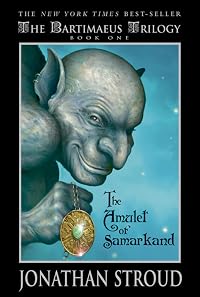
On This Page
Description
Nathaniel, a magician's apprentice, summons up the djinni Bartimaeus and instructs him to steal the Amulet of Samarkand from the powerful magician Simon Lovelace.Tags
Recommendations
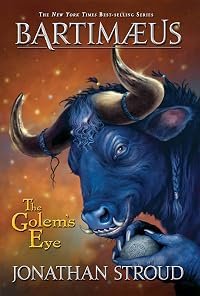
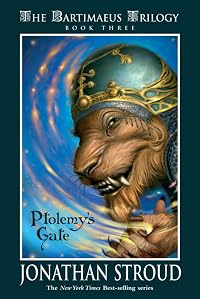
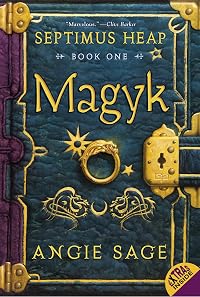
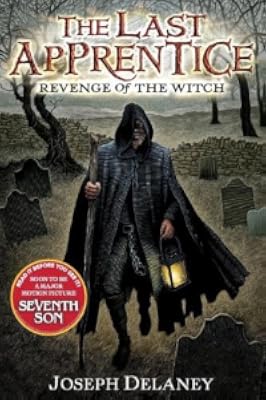
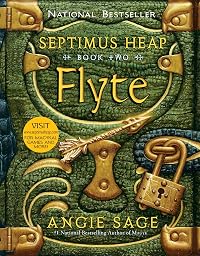
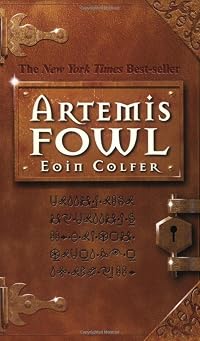
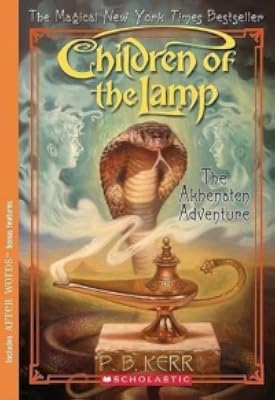






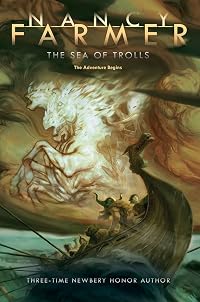
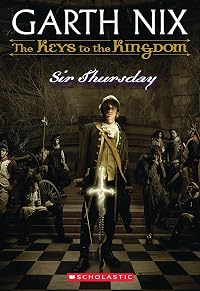

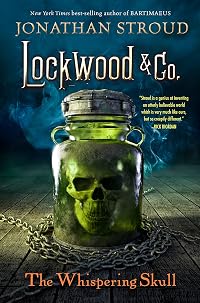

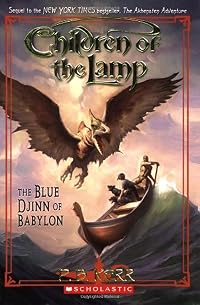
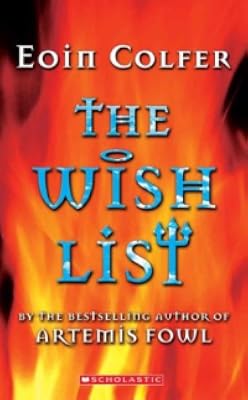
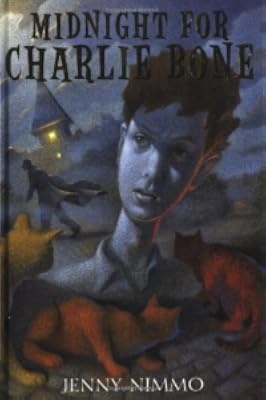

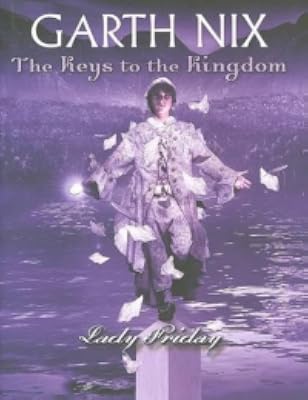

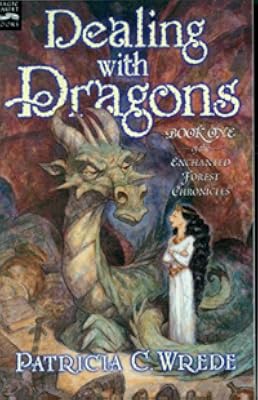
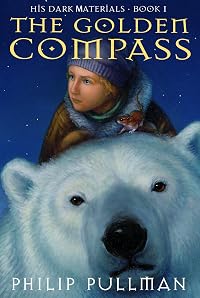
Member Recommendations

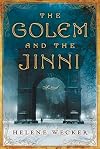
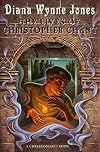
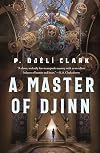
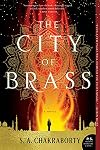
heidialice For a feisty female lead, the "His Dark Materials" trilogy does it better and more beautifully.
112

by anonymous user
nessreader Magicians and the wicked wicked hellspawn demons they command.

Member Reviews
The Amulet of Samarkand is a sharp, clever, and wildly entertaining start to The Bartimaeus Trilogy. Told through the alternating perspectives of Nathaniel—a gifted but arrogant young magician—and Bartimaeus, the sarcastic djinni he summons, the story blends magic, political intrigue, and biting humor. Jonathan Stroud’s world-building is outstanding, creating a London ruled by magicians who rely heavily on enslaved magical beings for power.
Bartimaeus’s footnoted commentary steals the show, offering witty observations, snarky insults, and unexpected honesty. Meanwhile, Nathaniel’s ambition and insecurity set the stage for moral complexity rather than a simple hero–villain divide. Their uneasy partnership drives the plot, show more which is full of action, betrayal, and escalating danger surrounding the powerful Amulet.
Both funny and unsettling, this book hooks readers with its unique voice and rich fantasy world. It’s an engaging start to a trilogy known for its intelligence, originality, and emotional depth. show less
Bartimaeus’s footnoted commentary steals the show, offering witty observations, snarky insults, and unexpected honesty. Meanwhile, Nathaniel’s ambition and insecurity set the stage for moral complexity rather than a simple hero–villain divide. Their uneasy partnership drives the plot, show more which is full of action, betrayal, and escalating danger surrounding the powerful Amulet.
Both funny and unsettling, this book hooks readers with its unique voice and rich fantasy world. It’s an engaging start to a trilogy known for its intelligence, originality, and emotional depth. show less
This series (a trilogy beginning with The Amulet of Samarkand) was just meant to be an HP rebound for me, but I ended up really caring about it. Like the Great Rowling, Stroud's really good at making serious ethical questions exciting by giving them a magical spin; but where Harry is a sympathetic character that has greatness thrust upon him, Nathaniel is a total douche most of the time. It'd be like HP following Draco Malfoy's moral development. Also, in many ways this series is a bit more sophisticated than HP. It's got a lot of that dry British sarcasm going on and the alternative London Stroud imagines is way more unsettling than Rowling's. Imagine a world that's 98% Slytherin and you'll get the idea.
I'm not saying this is better show more than HP. I'll admit there were times when I thought about putting it down and just rereading Order of the Phoenix, but I'm really glad I finished it. It was worth it. show less
I'm not saying this is better show more than HP. I'll admit there were times when I thought about putting it down and just rereading Order of the Phoenix, but I'm really glad I finished it. It was worth it. show less
Nathaniel is a young magician, apprenticed to the cold, cruel and forbidding Mr Underwood; only his master's wife treats Nathaniel with some affection. For a long time Nathaniel has planned his revenge on a powerful magician called Simon Lovelace, who mistreated and humiliated him; now, at twelve years old, he finally thinks himself ready and summons a potent djinni to do his bidding: to steal the Amulet of Samarkand from Lovelace. Unbeknownst to Nathaniel, however, the Amulet serves a vital purpose in Lovelace's plans, and he does not take kindly to the theft once he's worked out who's stolen it, with grievous consequences for Nathaniel ...
This is an imaginative, fun and thrilling foray into the children's fantasy genre, with a show more non-human protagonist at its centre; Nathaniel is Bartimaeus's counterpart in this unlikely partnership, but this is very much Bartimaeus's book. The narration jumps from Bartimaeus, in the first person, to Nathaniel in the third, which could potentially be confusing for a child, though the beginning of each chapter helpfully tells the reader whose viewpoint it is. It's well written and wildly inventive, with an intriguing back story being hinted at in places - magic wars being fought with the British Empire's enemies, the Resistance stirring up trouble, a two-tiered society with magicians at the top and non-magical commoners very much treated like second-class citizens - but it also contains flaws in that there are far too many coincidences than are good for a novel to remain credible (the existence of djinn and other spirits being taken for granted). Bartimaeus is an irreverent guide, and it is initially easier to warm to him than to Nathaniel, who is a sullen, lonely boy with ambition and a great sense of pride and honour. The fact that magicians basically torture imps, djinns and other demons to achieve what they want makes for an interesting moral debate, and I'm looking forward to reading how this will be explored in subsequent volumes in the series as both Nathaniel and Bartimaeus have found a grudging respect for the other at the end of this book. show less
This is an imaginative, fun and thrilling foray into the children's fantasy genre, with a show more non-human protagonist at its centre; Nathaniel is Bartimaeus's counterpart in this unlikely partnership, but this is very much Bartimaeus's book. The narration jumps from Bartimaeus, in the first person, to Nathaniel in the third, which could potentially be confusing for a child, though the beginning of each chapter helpfully tells the reader whose viewpoint it is. It's well written and wildly inventive, with an intriguing back story being hinted at in places - magic wars being fought with the British Empire's enemies, the Resistance stirring up trouble, a two-tiered society with magicians at the top and non-magical commoners very much treated like second-class citizens - but it also contains flaws in that there are far too many coincidences than are good for a novel to remain credible (the existence of djinn and other spirits being taken for granted). Bartimaeus is an irreverent guide, and it is initially easier to warm to him than to Nathaniel, who is a sullen, lonely boy with ambition and a great sense of pride and honour. The fact that magicians basically torture imps, djinns and other demons to achieve what they want makes for an interesting moral debate, and I'm looking forward to reading how this will be explored in subsequent volumes in the series as both Nathaniel and Bartimaeus have found a grudging respect for the other at the end of this book. show less
Fantastic - who'd've thought that a cranky, self-important djinni would steal me heart. I just want to bring him home, give him a hot water bottle, some Ancient Egyptian food, and see if I can't warm him up a bit.
Seriously. Bartimaeus is one of the most entertaining characters I've met in ages. And this story of the intelligent but idiotic wee magician who summons him in a fit of well cooled revenge is entirely delightful. I very much look forward to finishing tis trilogy
Seriously. Bartimaeus is one of the most entertaining characters I've met in ages. And this story of the intelligent but idiotic wee magician who summons him in a fit of well cooled revenge is entirely delightful. I very much look forward to finishing tis trilogy
In this first book of the YA Bartimaeus trilogy, we're introduced to an England where the ruling classes are all magicians. Nathaniel's parents have sold him off to be trained in the arts of sorcery and he is put in the care of the despicable and unworthy Arthur Underwood, a magician of mediocre abilities who fails to recognize the genius and zeal of his young charge. But Nathaniel makes the best of Underwood's vast collection of volumes on wizardry and quickly reaches a level of ability far beyond his years. After suffering a searing humiliation by a visitor, a powerful magician by the name of Simon Lovelace, eleven-year-old Nathaniel decides to take his revenge and teach Lovelace a painful lesson. When the story begins, he has just show more summoned the 5,000-year-old djinn Bartimaeus for the first time to order him to do his bidding. Bartimaeus is a powerful entity who is understandably annoyed about being bossed around by a mere boy and he is hell bent on finding a flaw in Nathaniel's methods which will enable him to return to the world of spirits. In alternating chapters, we get the first person accounts of Bartimaeus, a prideful being with an acerbic sense of humour, and the details of Nathaniel's doings in an adventure filled with action and plenty of unlikely events. I didn't know whether I'd warm to this story before picking it up, always being a bit wary of the fantasy genre, but I loved this fun little romp and will definitely look out for the other books in the series. One fun bonus was the numerous annotations found in the sections narrated by Bartimaeus. show less
I picked this up in paperback eons ago at some sale or other, and it has been kicking around my room ever since; it lived next to my bed for quite a while, but I seem to have finally put it away … somewhere … Happily, I decided to give it a try through Netgalley, and I was very happy that I did. It's smashing.
The point of view alternates between first person not-necessarily-reliable with the demon/djinn Bartimeus, and third person with the young wizard's apprentice Nathaniel. It works beautifully. Nathaniel precociously summons Bartimeus despite his youth and iffy training, and sets off his plot of vengeance against a wizard who humiliated him some months before – and also sets off a chain of events he could never have foreseen. show more He's sheltered, is Nathaniel; on a day-to-day basis he probably sees less than a dozen people, between the Underwoods (Mr. U being the wizard to whom Nathaniel is apprenticed) and the servants and tutors, and is never exactly challenged by his instruction. The project is to prove himself, to be revenged, and to fight off the fate he sees coming if everything continues as it has been.
It's a wonderful story. It's funny, with Bartimeus's snarky humor and world-weary wisdom ("I did my best to sound grandly dismissive, but voles can only do peeved") countering the young earnest anger of Nathaniel's half of the tale. And it's scary, as Nathaniel finds himself in over his head and sinking fast, though not as fast as might be expected for a boy his age: he is good.
I thought the footnotes sprinkled through the Bartimeus chapters were going to be an annoyance, but they were far from it. They were hilarious.
In the middle of the lawn was a lake adorned with an ornamental fountain, depicting an amorous Greek god trying to kiss a dolphin. 4
Footnote 4 Inadvisable.
The Adobe digital edition from Netgalley had quite a number of problems:
… currendy had the stolen goods …
…there was no knowing who eke was involved with Lovelaces plot …
- Hopefully the real thing is better. The book deserves better. show less
The point of view alternates between first person not-necessarily-reliable with the demon/djinn Bartimeus, and third person with the young wizard's apprentice Nathaniel. It works beautifully. Nathaniel precociously summons Bartimeus despite his youth and iffy training, and sets off his plot of vengeance against a wizard who humiliated him some months before – and also sets off a chain of events he could never have foreseen. show more He's sheltered, is Nathaniel; on a day-to-day basis he probably sees less than a dozen people, between the Underwoods (Mr. U being the wizard to whom Nathaniel is apprenticed) and the servants and tutors, and is never exactly challenged by his instruction. The project is to prove himself, to be revenged, and to fight off the fate he sees coming if everything continues as it has been.
It's a wonderful story. It's funny, with Bartimeus's snarky humor and world-weary wisdom ("I did my best to sound grandly dismissive, but voles can only do peeved") countering the young earnest anger of Nathaniel's half of the tale. And it's scary, as Nathaniel finds himself in over his head and sinking fast, though not as fast as might be expected for a boy his age: he is good.
I thought the footnotes sprinkled through the Bartimeus chapters were going to be an annoyance, but they were far from it. They were hilarious.
In the middle of the lawn was a lake adorned with an ornamental fountain, depicting an amorous Greek god trying to kiss a dolphin. 4
Footnote 4 Inadvisable.
The Adobe digital edition from Netgalley had quite a number of problems:
… currendy had the stolen goods …
…there was no knowing who eke was involved with Lovelaces plot …
- Hopefully the real thing is better. The book deserves better. show less
This was difficult to get through because one of the main characters, Nathaniel, never moved beyond his self absorption and sense of entitlement. Typically, you'd expect to see some character development towards maturity, but the last disc still had him whining and short-sighted. His character defects make it difficult to cheer him on. Even his success at foiling the evil plot doesn't enlarge him. Bartimaeus is much more likeable, in a charming slimy way.
Another weakness is the fact that magicians have no power beyond their abilities to control magical beings. There seems no fundamental requirement to becoming enrolled as a magician's apprentice beyond the willingness of parents to sell their children. The entire book held only two show more humans who might be considered acceptable in their humanity. The rest of the cast is either neutral or very negatively portrayed.
Not enjoyable. show less
Another weakness is the fact that magicians have no power beyond their abilities to control magical beings. There seems no fundamental requirement to becoming enrolled as a magician's apprentice beyond the willingness of parents to sell their children. The entire book held only two show more humans who might be considered acceptable in their humanity. The rest of the cast is either neutral or very negatively portrayed.
Not enjoyable. show less
Members
- Recently Added By
Lists

Best Fantasy Novels
821 works; 361 members

Best Young Adult
399 works; 101 members

1001 Children's Books You Must Read Before You Grow Up
774 works; 101 members

Children's Fantasy
73 works; 10 members

NPRs your favorites: 100 Best Ever Teen Novels
237 works; 49 members

Gaslamp Fantasy
87 works; 15 members

Nonhuman Protagonists
235 works; 34 members

Best Books Set in London
157 works; 42 members

Teen Sci-Fi Fantasy Male Lead
47 works; 1 member

Unread books
1,063 works; 87 members

Books We Want To Read Again For The First Time
384 works; 160 members

Other Wizard Fiction
32 works; 1 member

Books Read in 2013
1,630 works; 51 members

Books Read in 2014
2,343 works; 89 members

Sonlight Books
1,487 works; 25 members

al.vick-series
381 works; 2 members

Authors from England
147 works; 4 members

KayStJ's to-read list
1,616 works; 11 members
Witches and Wizards Oh My
135 works; 12 members

Kindle Action/Adventure - Junior and Teenage Re-Read
247 works; 1 member
Author Information

Jonathan Stroud, best selling fantasy fiction author, was born in Bedford, England on October 27, 1970. While growing up he experimented with different kinds of writing. He went on to read English Literature at York University. After graduation he worked in editing at Walker Books, in London and continued there for several years. His first novel, show more When Buried Fire, was published in 1999. In 2001 he began writing full-time. He is the author of the wildly popular Bartimaeus Sequence and Lockwood and Co, series. (Bowker Author Biography) show less
Some Editions
Awards and Honors
Awards
Distinctions
Notable Lists
Series

Work Relationships
Is contained in
Has the adaptation
Common Knowledge
- Canonical title
- The Amulet of Samarkand
- Original title
- The Amulet of Samarkand
- Alternate titles*
- Samarkandin amuletti
- Original publication date
- 2003-09-29
- People/Characters
- Bartimaeus (djinn); Nathaniel (John Mandrake); Arthur Underwood; Simon Lovelace; Mrs Underwood; Rupert Devereaux (Prime minister of Great Britain) (show all 12); Jessica Whitwell (Security Minister); Sholto Pinn (Merchant); Frederick Weaver ('Fred', Resistance); Stanley Hake (Resistance); Kitty Jones (Kathleen Jones, Resistance); Simkin (foliot)
- Important places
- London, England, UK; England, UK
- Dedication
- For Gina
- First words
- The temperature of the room dropped fast.
- Last words
- (Click to show. Warning: May contain spoilers.)So I departed, leaving behind a pungent smell of brimstone. Just something to remember me by.
- Original language
- English
- Disambiguation notice
- Please do not combine graphic novel with this
*Some information comes from Common Knowledge in other languages. Click "Edit" for more information.
Classifications
- Genres
- Fantasy, Fiction and Literature, Tween, Kids, Teen, Young Adult
- DDC/MDS
- 823.914 — Literature & rhetoric English & Old English literatures English fiction 1900- 1901-1999 1945-1999
- LCC
- PZ7 .S92475 .A — Language and Literature Fiction and juvenile belles lettres Fiction and juvenile belles lettres Juvenile belles lettres
- BISAC
Statistics
- Members
- 9,947
- Popularity
- 1,004
- Reviews
- 265
- Rating
- (4.01)
- Languages
- 21 — Czech, Danish, Dutch, English, Estonian, Finnish, French, German, Hungarian, Indonesian, Italian, Japanese, Latvian, Lithuanian, Norwegian (Bokmål), Polish, Portuguese, Spanish, Swedish, Turkish, Ukrainian
- Media
- Paper, Audiobook, Ebook
- ISBNs
- 78
- UPCs
- 4
- ASINs
- 43