On This Page
Description
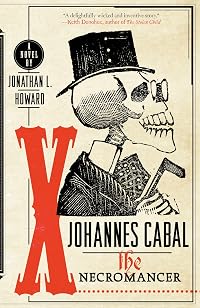
Johannes Cabal, a brillian scientist and notorious snob, is single-mindedly obsessed in heart and soul with raising the dead. Well, perhaps not soul--he hastily sold his years ago in order to learn the laws of necromancy. But now, tormented by a dark secret, he travels to the fiery pits of Hell to retrieve it. Sataon, who is incredibly bored these days, proposes a little wager, Johannes has one years to persuade one hundred people to sign over their souls or he will be damned show more forever.--From publisher's description. show lessTags
Recommendations
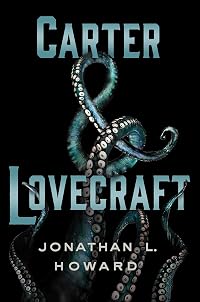





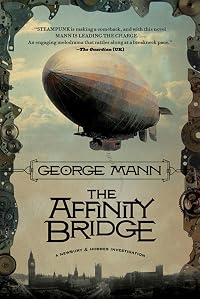
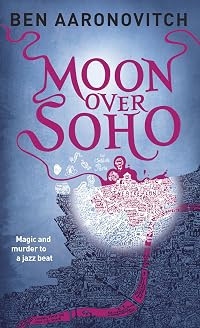
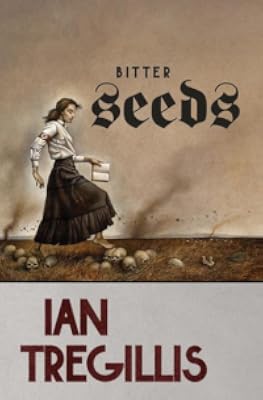

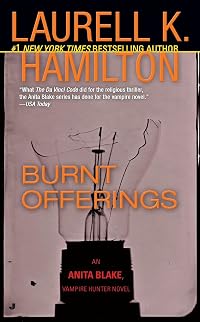

Member Recommendations
SomeGuyInVirginia Agreeably horrific gaspers.
Also recommended by asukamaxwell
20
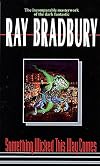
jlparent Howard himself says Bradbury's book spurred the question - where do dark carnivals come from - so check out one of the best books ever (Something Wicked This Way Comes)!
23

PitcherBooks While Howard's Cabal is a Necromancer (one who can raise the dead - in a fashion) And Pratchett's DEATH is the embodiment of death (which comes to us all)... The commonality is really that wonderful quirky British humor. Pratchett is an old favorite of mine and I have read every one of his books. Howard is my new favorite and I plan to read every one of his books. If you like one, odds are you'll enjoy the other...
PitcherBooks While Howard's Cabal is a Necromancer (one who can raise the dead - in a fashion) And Pratchett's DEATH is the embodiment of death (which comes to us all)... The commonality is really that wonderful quirky British humor. Pratchett is an old favorite of mine and I have read every one of his books. Howard is my new favorite and I plan to read every one of his books. If you like one, odds are you'll totally enjoy the other...
Member Reviews
"The darkest souls are not those which choose to exist within the hell of the abyss, but those which choose to break free from the abyss and move silently among us."
Although the above quote is from the movie Halloween, it sums up this book almost perfectly. Because even though The Necromancer may at first dazzle readers with its sharp wit and cleverness, it has a dark heart, mostly due to its eponymous leading man, Johannes Cabal.
Cabal has a problem, you see. A while ago, he sold his soul to Satan and now... Well, he's having second thoughts. The only thing to do is take a brief journey to hell and strike up a bargain with none other than Lucifer himself: in return for his soul, Cabal must convince 100 other people to sign their souls show more to eternal damnation. If he fails, though, Satan gets the souls he's collected, as well as Cabal's soul- and his life. And so, with the aid of a dark carnival, his brother (a delightfully charismatic vampire with strong morals), a small faculty of the undead, some freaks, and his own calculating intellect, Cabal sets off to triumph or fail- but whatever happens, he will have given it his damnedest.
Alright, now that the synopsis is over with, I can finally dish about all of the things I loved in this book!
Firstly, Johannes Cabal himself. Where do I even begin? This book is very much a character study of Cabal- his darkness, his soullessness, his arrogance, his desperation, and the tiny flickers of compassion and humanity that he tries his very best to hide from the world. Much of his background is murky- we know practically nothing of his past, or what he did on a daily basis before selling his soul. And that's the least of the enigma that is Johannes. As the carnival travels across England, stealing souls and leaving mayhem in its wake, we spend a lot of time inside his mind- we watch him struggle and rage, scheme and trick, steal and swindle. We watch him kill, and spare lives. We root for him and curse him in the same breath. And that, I think, is what a great character is supposed to be: complex, neither wholly good nor wholly bad, with motivations that are difficult to piece together and never clean-cut. Great characters are ones that you can relate to and empathise with despite their outlandish circumstances. They remind us of ourselves and our own struggles, and they make us doubt both their own actions and ours.
Cabal actually reminded me quite a bit of myself, which was slightly scary. No, I don't coldly murder people, and I would know better than to sell my soul to the devil, and I don't believe I'm quite as narcissistic or bitter as Cabal. But some of his traits- the discomfort around people, the way he (sometimes unknowingly) hurts people by stating facts, his biting snark, the way most people thinks he feels nothing at all, the ruthless, stop-at-nothing-until-you-understand-how-it-works sort of curiosity- that's incredibly similar to myself. And that's precisely why Johannes Cabal is such a masterpiece of a character: he's a snarky little bastard, neither hero nor villain, and even when you hate him viciously for being so obtuse or cold or just plain mean, you see enough of yourself in his darkness that you can never write him off completely.
Also, HORST! Horst is Johannes' estranged brother who also happens to be a vampire, and a rather charming one at that. Cabal recruits his help in running the carnival (which is entrusted to him by Satan for the purpose of stealing souls) because he realises that for all his knowledge, Cabal is pretty useless in the actual person-to-person advertising and entertainment aspects of running a travelling carnival. Horst is what's known as a foil in the literary world; that is, a character that contrasts another character, highlighting certain aspects of them that wouldn't be seen otherwise. In this case, Horst's morality and easy charm are a sharp contrast to Cabal's amorality and general misanthropy. The relationship between the two brothers was really touching at times, and most of the time I was shouting, "Just stop being assholes and say you love each other, dammit!" Needless to say,Horst's death absolutely crushed me. Especially since Johannes was indirectly responsible and because it got me wondering if getting out of his deal scot-free was a blessing or a curse for Cabal. Because although it may first seem like a triumph- outwitting Satan and all that- the ending leaves us with a Johannes Cabal that feels decidedly tragic, more broken than he was in the beginning despite his gain of a soul. Very thought-provoking stuff.
There's not much to say about the plot of The Necromancer, as I don't want to give much away. It's exceedingly, brilliantly weird, though, and involves prison escapees, noble ex-cops, swindling, precocious children, a brief foray into purgatory, and a good deal of demonic influence.
I found Howard's writing lovely- it was witty, smart, beautiful, imaginative, and (here comes that word again) dark. It definitely reminded me of The Monstrumologist, only less gory and horrific. Somehow the author manages to dance just along the line between exceedingly clever and trying too hard, but never goes into the trying too hard territory. He also does a really amazing job of showing, not telling, and making connections here requires a fair amount of effort and reading between the lines from the reader, and I love that. I was very surprised upon learning that Jonathan L. Howard actually wrote The Necromancer before he wrote Katya's World, which I inexplicably enjoyed but which I thought wasn't nearly as good as The Necromancer. (Side note: the sequel to Katya's World- Katya's War- was actually fantastic.) Howard's not afraid to deviate from the norm either- parts of the book are told in the form of memos, a child's school assignment, letters, and some scientific analyses from Cabal.
This book wasn't without its flaws, however, which is why I've been floundering between giving it four and five stars. My biggest gripe is the setting. It really isn't very well done. At first, I thought it took place in the late 1880s based on the technology and fashion- cravats and what not. Only halfway through the book did I realise that it actually took place in the 1910s, after 1918, due to passing references to Dadaism and the First World War. This may seem like a meaningless difference, but for me, it totally changes the background, especially the recent occurrence of the first global war. As for the "where" element, I only know it takes place in Britain because of the dialect (of other characters- the brothers Cabal are German) and the names of villages (not that I actually knew any of those villages- they could very well be totally made up for all I know- but because they all sounded rather British). I'm also still ambivalent towards the ending-mostly because Cabal doesn't really seem like he's learned anything. Not that I was expecting an epiphany (like I said, he's a stubborn son of a bitch), but I would have liked for him to have grown in some way, especially with Horst's death. The ending wasn't all bad, though, as I loved when we get to see what Cabal's been keeping in his basement. It adds to the mystery of his intentions and adds more credence to his reasons for studying necromancy (see my status update below). It also raises the possibility that our wonderful antihero-possibly-turned-villain may have a heart. I'm settling on five stars for now, because it was incredibly enjoyable and it pulled me out of a dreadful, Poe-induced reading slump. Besides, it's like I said in my review of The Shadow of the Wind: five-star books are not flawless, they are books that I loved despite- or perhaps even because of- their flaws.
Not to sound elitist, but I feel like this book will probably be enjoyed by a small group of readers- those who side with unlikeable characters, think the villains are almost always more interesting than the heroes, and have a dark sense of humour. If you don't fall into that category, you might still like it, but chances are you won't get the appeal. Luckily, the above characteristics describe my reading tastes perfectly, and so I found it a fun, darkly whimsical ride. If you're looking for some great gallows humour, complex characters, and an irresistibly original premise, chances are you'll like this one a good deal.
(Note: I apologise if this review pops up on your feed a few times. It's not because I crave popularity or I'm trying to garner likes, it's just because I don't have the book with me now and I like to add quotes to my review, so I'll be adding some quotes from the book when I get a chance. This actually goes for all of my reviews- as a rule, I never purposely bump them. Most likely, if you see some of my reviews continually popping up on your stream, it's because I found a grammar or spelling error, was too anal-retentive to let it be, and forgot to turn off the "update to stream" button when I edited it.) show less
Although the above quote is from the movie Halloween, it sums up this book almost perfectly. Because even though The Necromancer may at first dazzle readers with its sharp wit and cleverness, it has a dark heart, mostly due to its eponymous leading man, Johannes Cabal.
Cabal has a problem, you see. A while ago, he sold his soul to Satan and now... Well, he's having second thoughts. The only thing to do is take a brief journey to hell and strike up a bargain with none other than Lucifer himself: in return for his soul, Cabal must convince 100 other people to sign their souls show more to eternal damnation. If he fails, though, Satan gets the souls he's collected, as well as Cabal's soul- and his life. And so, with the aid of a dark carnival, his brother (a delightfully charismatic vampire with strong morals), a small faculty of the undead, some freaks, and his own calculating intellect, Cabal sets off to triumph or fail- but whatever happens, he will have given it his damnedest.
Alright, now that the synopsis is over with, I can finally dish about all of the things I loved in this book!
He spent an undignified few moments trying to get over the fact that he was no longer in Hell, wheeling on the spot like somebody who has walked into the wrong toilets. When he finally deduced that he had been unceremoniously translocated, he marked the revelation with a filthy curse in a language that had been dead eight thousand years, so managing to be amazingly erudite and amazingly uncouth in the selfsame instant.
Firstly, Johannes Cabal himself. Where do I even begin? This book is very much a character study of Cabal- his darkness, his soullessness, his arrogance, his desperation, and the tiny flickers of compassion and humanity that he tries his very best to hide from the world. Much of his background is murky- we know practically nothing of his past, or what he did on a daily basis before selling his soul. And that's the least of the enigma that is Johannes. As the carnival travels across England, stealing souls and leaving mayhem in its wake, we spend a lot of time inside his mind- we watch him struggle and rage, scheme and trick, steal and swindle. We watch him kill, and spare lives. We root for him and curse him in the same breath. And that, I think, is what a great character is supposed to be: complex, neither wholly good nor wholly bad, with motivations that are difficult to piece together and never clean-cut. Great characters are ones that you can relate to and empathise with despite their outlandish circumstances. They remind us of ourselves and our own struggles, and they make us doubt both their own actions and ours.
"Oh, Johannes," it moaned in exasperation. "You utter idiot. This is to get your soul back, isn't it? Don't you know anything? You can't beat him. He only bets on certainties."
"So people keep telling me," replied Cabal, growing exasperated himself. "Well, I say 'people,' but that's a fairly loose term. I need my soul back. That's not open to negotiation. I took the only deal he would offer. Take it or leave it. I took it. Perhaps he can't be beaten. I don't know, nor shall I until I give this the best I can. And if I fail, it won't be through lack of will or defeatism setting in. I'll be able to look Satan in the eye and say, 'I did my best, and it came pretty close. And while you just sat down here on your fat, sulphuric arse, I stretched for the impossible, so don't imagine for a moment that this is your victory, you smug, infernal bastard.'" He stopped, breathing heavily.
Cabal actually reminded me quite a bit of myself, which was slightly scary. No, I don't coldly murder people, and I would know better than to sell my soul to the devil, and I don't believe I'm quite as narcissistic or bitter as Cabal. But some of his traits- the discomfort around people, the way he (sometimes unknowingly) hurts people by stating facts, his biting snark, the way most people thinks he feels nothing at all, the ruthless, stop-at-nothing-until-you-understand-how-it-works sort of curiosity- that's incredibly similar to myself. And that's precisely why Johannes Cabal is such a masterpiece of a character: he's a snarky little bastard, neither hero nor villain, and even when you hate him viciously for being so obtuse or cold or just plain mean, you see enough of yourself in his darkness that you can never write him off completely.
Also, HORST! Horst is Johannes' estranged brother who also happens to be a vampire, and a rather charming one at that. Cabal recruits his help in running the carnival (which is entrusted to him by Satan for the purpose of stealing souls) because he realises that for all his knowledge, Cabal is pretty useless in the actual person-to-person advertising and entertainment aspects of running a travelling carnival. Horst is what's known as a foil in the literary world; that is, a character that contrasts another character, highlighting certain aspects of them that wouldn't be seen otherwise. In this case, Horst's morality and easy charm are a sharp contrast to Cabal's amorality and general misanthropy. The relationship between the two brothers was really touching at times, and most of the time I was shouting, "Just stop being assholes and say you love each other, dammit!" Needless to say,
"You're dead," said Barrow, hoping he was reading Horst's character properly.
"Undead, technically. Not Johannes's doing, I hasten to add. Not directly, at any rate. He had promised to find some way of bringing me back to the land of the living. Not that I'm not in the land of the living now, you understand? I'm speaking figuratively. Now I'm not so sure. I need a little time to think."
"I don't understand you."
"Neither do I, I'm afraid."
There's not much to say about the plot of The Necromancer, as I don't want to give much away. It's exceedingly, brilliantly weird, though, and involves prison escapees, noble ex-cops, swindling, precocious children, a brief foray into purgatory, and a good deal of demonic influence.
I found Howard's writing lovely- it was witty, smart, beautiful, imaginative, and (here comes that word again) dark. It definitely reminded me of The Monstrumologist, only less gory and horrific. Somehow the author manages to dance just along the line between exceedingly clever and trying too hard, but never goes into the trying too hard territory. He also does a really amazing job of showing, not telling, and making connections here requires a fair amount of effort and reading between the lines from the reader, and I love that. I was very surprised upon learning that Jonathan L. Howard actually wrote The Necromancer before he wrote Katya's World, which I inexplicably enjoyed but which I thought wasn't nearly as good as The Necromancer. (Side note: the sequel to Katya's World- Katya's War- was actually fantastic.) Howard's not afraid to deviate from the norm either- parts of the book are told in the form of memos, a child's school assignment, letters, and some scientific analyses from Cabal.
This book wasn't without its flaws, however, which is why I've been floundering between giving it four and five stars. My biggest gripe is the setting. It really isn't very well done. At first, I thought it took place in the late 1880s based on the technology and fashion- cravats and what not. Only halfway through the book did I realise that it actually took place in the 1910s, after 1918, due to passing references to Dadaism and the First World War. This may seem like a meaningless difference, but for me, it totally changes the background, especially the recent occurrence of the first global war. As for the "where" element, I only know it takes place in Britain because of the dialect (of other characters- the brothers Cabal are German) and the names of villages (not that I actually knew any of those villages- they could very well be totally made up for all I know- but because they all sounded rather British). I'm also still ambivalent towards the ending-
Not to sound elitist, but I feel like this book will probably be enjoyed by a small group of readers- those who side with unlikeable characters, think the villains are almost always more interesting than the heroes, and have a dark sense of humour. If you don't fall into that category, you might still like it, but chances are you won't get the appeal. Luckily, the above characteristics describe my reading tastes perfectly, and so I found it a fun, darkly whimsical ride. If you're looking for some great gallows humour, complex characters, and an irresistibly original premise, chances are you'll like this one a good deal.
(Note: I apologise if this review pops up on your feed a few times. It's not because I crave popularity or I'm trying to garner likes, it's just because I don't have the book with me now and I like to add quotes to my review, so I'll be adding some quotes from the book when I get a chance. This actually goes for all of my reviews- as a rule, I never purposely bump them. Most likely, if you see some of my reviews continually popping up on your stream, it's because I found a grammar or spelling error, was too anal-retentive to let it be, and forgot to turn off the "update to stream" button when I edited it.) show less
Alternate title: Something Wicked This Way Comes, the Carnie Version
Johannes Cabal is sorely vexed. Some time ago, he traded his soul to the Devil, as it was proving an impediment in his studies of necromancy. Alas, he acted too hastily–after much research, he’s realized that his soul is needed for his research to be have meaning. He might also have an ulterior motive. The epitome of the logistician, the obsessive scientist, Cabal is a hysterical straight man to the absurd humor of those around him. As his brother mocks him:
“‘For tonight only. Horst held his hands up to an imaginary sign. ‘Thrown out of the Best universities, excommunicated from all the most popular religions and many of the obscure ones, fresh from his show more recent engagement in Hell, we present Johannes Cabal, Necromancer!’ Toot toot toot! He mimed blowing trumpets.
‘You’re a constant font of hilarity, aren’t you?’ said Cabal, unsmiling. ‘And, I’ll have you know that I was never, ever thrown out of my universities. I always left of my own accord.’”
To regain his soul, Cabal makes a second deal with Satan: bring him exactly one hundred souls in a year’s time, and Cabal will get his own back. Hell, Satan’s feeling generous enough to lend him a Dark Carnival that never quite made it into circulation. Or is he? After all, Cabal just suggested Satan apologize to God for his pride. Despite that, Cabal is insightful enough to realize he needs someone who understands human nature. He seeks out his brother Horst, a being with a few unsavory habits but a surprisingly strong ethical code.
“We’re supposed to be doing the devil’s work and you’ve gone and contaminated it all with the whiff of virtue. I really don’t think you’ve quite got the hang of being an agent of evil.”
I enjoy Johannes Cabal’s voice. Howard hits the perfect note, satisfying the little scientist in me, as well as the artist in me annoyed by the scientific worldview, with both sides appreciating the humor from Cabal’s straight-edged approach. Frankly, I also empathize just the littlest bit with his misanthropy, the huddled masses who fail to appreciate the pursuit of science:
“An idea started to crystallize… It might not work, of course, and there was always the possibility that he might have to upset or hurt a few of these excuses for people. So it wasn’t all bad news.”
Plotting is relatively straightforward, much like Something Wicked, only becoming complicated at the end. Like all folktales, what the reader ultimately wants to know is if Cabal was able to escape the Devil’s Bargain, so the majority of the tale centers on collecting souls while the reader anticipates the outcome. In the meantime, the journey the carnival takes through the towns and the details of the carnival entertain. There’s also some interesting character development, or lack thereof, that elevates it beyond simple farce. Midway through, there are a couple sections that are done in epistolary form by various people. A police blotter proves surprisingly funny. The last letter is perhaps a little jarring to the narrative and takes it the most off track.
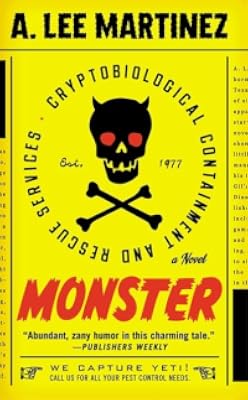
The ending is a perfect capstone. A bit of an emotional roller-coaster, it ends with a satisfactory and narrative consistent confrontation. I admire Howard for reaching for something a little more complex. I’d recommend this to fans of Something Wicked, perhaps to Pratchett fans, fans of A. Lee Martinez,and people who might like their humor a little dark but with solid ethics. I think you have to enjoy the word play, have a dark sense of humor, but not dark enough to want bloodshed and violence. Meanwhile, I’ll be looking forward to continuing the series.
Re-read 11/2024. Very absorbing. One of my favorites. show less
Johannes Cabal is sorely vexed. Some time ago, he traded his soul to the Devil, as it was proving an impediment in his studies of necromancy. Alas, he acted too hastily–after much research, he’s realized that his soul is needed for his research to be have meaning. He might also have an ulterior motive. The epitome of the logistician, the obsessive scientist, Cabal is a hysterical straight man to the absurd humor of those around him. As his brother mocks him:
“‘For tonight only. Horst held his hands up to an imaginary sign. ‘Thrown out of the Best universities, excommunicated from all the most popular religions and many of the obscure ones, fresh from his show more recent engagement in Hell, we present Johannes Cabal, Necromancer!’ Toot toot toot! He mimed blowing trumpets.
‘You’re a constant font of hilarity, aren’t you?’ said Cabal, unsmiling. ‘And, I’ll have you know that I was never, ever thrown out of my universities. I always left of my own accord.’”
To regain his soul, Cabal makes a second deal with Satan: bring him exactly one hundred souls in a year’s time, and Cabal will get his own back. Hell, Satan’s feeling generous enough to lend him a Dark Carnival that never quite made it into circulation. Or is he? After all, Cabal just suggested Satan apologize to God for his pride. Despite that, Cabal is insightful enough to realize he needs someone who understands human nature. He seeks out his brother Horst, a being with a few unsavory habits but a surprisingly strong ethical code.
“We’re supposed to be doing the devil’s work and you’ve gone and contaminated it all with the whiff of virtue. I really don’t think you’ve quite got the hang of being an agent of evil.”
I enjoy Johannes Cabal’s voice. Howard hits the perfect note, satisfying the little scientist in me, as well as the artist in me annoyed by the scientific worldview, with both sides appreciating the humor from Cabal’s straight-edged approach. Frankly, I also empathize just the littlest bit with his misanthropy, the huddled masses who fail to appreciate the pursuit of science:
“An idea started to crystallize… It might not work, of course, and there was always the possibility that he might have to upset or hurt a few of these excuses for people. So it wasn’t all bad news.”
Plotting is relatively straightforward, much like Something Wicked, only becoming complicated at the end. Like all folktales, what the reader ultimately wants to know is if Cabal was able to escape the Devil’s Bargain, so the majority of the tale centers on collecting souls while the reader anticipates the outcome. In the meantime, the journey the carnival takes through the towns and the details of the carnival entertain. There’s also some interesting character development, or lack thereof, that elevates it beyond simple farce. Midway through, there are a couple sections that are done in epistolary form by various people. A police blotter proves surprisingly funny. The last letter is perhaps a little jarring to the narrative and takes it the most off track.
The ending is a perfect capstone. A bit of an emotional roller-coaster, it ends with a satisfactory and narrative consistent confrontation. I admire Howard for reaching for something a little more complex. I’d recommend this to fans of Something Wicked, perhaps to Pratchett fans, fans of A. Lee Martinez,and people who might like their humor a little dark but with solid ethics. I think you have to enjoy the word play, have a dark sense of humor, but not dark enough to want bloodshed and violence. Meanwhile, I’ll be looking forward to continuing the series.
Re-read 11/2024. Very absorbing. One of my favorites. show less
This book turned out to be a delightfully evil tome that retells the Faustian adventure in a clever, dry and imminently British way.
Add a bit of Bradbury and the evil carnies, a dash of the detective mystery, and a very liberal dose of the classic "beating the devil at his own game"... and we've got this tale. I am pretty much delighted through and through, to tell the truth. :)
It reads like the lightest of Urban Fantasies, it has the darkness of the most evil of tales, it has the glimmer of hope and the joys of brotherhood (until they turn sour), and it has the most delightfully sinful romp of paperwork in hell that I've ever see. If only all such travels to hell could be so organized and planned. :P
Definitely a fun read. :)
Add a bit of Bradbury and the evil carnies, a dash of the detective mystery, and a very liberal dose of the classic "beating the devil at his own game"... and we've got this tale. I am pretty much delighted through and through, to tell the truth. :)
It reads like the lightest of Urban Fantasies, it has the darkness of the most evil of tales, it has the glimmer of hope and the joys of brotherhood (until they turn sour), and it has the most delightfully sinful romp of paperwork in hell that I've ever see. If only all such travels to hell could be so organized and planned. :P
Definitely a fun read. :)
Johannes Cabal wants to make a deal with the devil. Again. The first time he traded his soul for the secrets of necromancy, but this time he wants his soul back. Satan makes a wager with him that he can't get 100 souls to fatten the ranks within a year's time, and even gives him an evil carnival and hellish minions to help. Johannes races against the clock - and his own skewed-yet-still-existent morals - to fill his quota and win back his soul.
Dark and funny and touching; Howard manages to create a character who raises the dead, betrays his own brother, scorns those less intelligent than himself, and isn't afraid to kill (although he does find it distasteful), and yet still makes him absolutely lovable. You'll be rooting for him while show more being slightly troubled that you are. Perfection. show less
Dark and funny and touching; Howard manages to create a character who raises the dead, betrays his own brother, scorns those less intelligent than himself, and isn't afraid to kill (although he does find it distasteful), and yet still makes him absolutely lovable. You'll be rooting for him while show more being slightly troubled that you are. Perfection. show less
Johannes Cabal is a douche. Yep, that's right, a douche. He lies, cheats, steals, murders, and does it all without remorse, putting his end goal above all morality. And now he has a problem, because he sold his useless--so he thought--soul to Satan and without it he just can't seem to perfect his experiments. So the brilliant Johannes Cabal makes a deal with Satan to get his soul back. All he has to do is get a bunch of other souls to take its place and Satan's going to help him do that...with a traveling carnival staffed by Cabal's own handmade zombies and run by his grudge-holding vampire brother.
Johannes is a terrible person, he truly is, but somehow he's learning and changing. Not a lot, but enough to make reading his story show more entertaining. He remains a pompous ass, vexed by the stupidity of the world around him, challenged only by a man of great morality. And his daughter. show less
Johannes is a terrible person, he truly is, but somehow he's learning and changing. Not a lot, but enough to make reading his story show more entertaining. He remains a pompous ass, vexed by the stupidity of the world around him, challenged only by a man of great morality. And his daughter. show less
I liked it! I didn't expected to, because I read "Carter & Lovecraft" and it didn't click with me. But what's there not to love in a black comedy about a cluster-A necromancer? And Horst, his brother, is delicious! Every phrase he utters just drips sarcasm!
The ending was a little obvious, but this was Mr. Howard's first novel. Let´s see what happens in the next ones.
The ending was a little obvious, but this was Mr. Howard's first novel. Let´s see what happens in the next ones.
When you sell your soul to the devil, there's always a catch. When Johannes Cabal sold his, he thought it was irrelevant to his researches. He found that it wasn't. So he went to Hell to get it back.
Now Satan isn't generally inclined to return souls, but he also loves a wager. So he made a bet: if Cabal garnered him 100 souls within a year, he could have his soul again. To assist him in this endeavour, Cabal was supplied with the Carnival of Discord, which he will staff with "people" conjured from bits of bone and hair and fat, with runaway insane asylum inmates (who chant a hymn to Cthulhu) and various and sundry other odd fellows. They travel the country, and at each stop Cabal gets more contracts signed.
The Faust legend is so old, show more and has been done so many times, that it's hard to find a fresh take on it. This Howard accomplishes, and he does so with a delightfully wry sense of humor. Did you know that you must apply to be admitted to Hell? If you don't fill out the "Infernal Regions (Local Authority) Hades Admission Application -- Provisional (AAAA/342)" properly, back you go to the end of the line, and a couple of thousand more forms, all vetted by the very annoying Arthur Trubshaw.
But there's more to this story than humor. We learn that Cabal is responsible for his brother's transformation to a vampire, yet he calls upon him for help in his quest. The brother is the moral side of Cabal, and as they travel, carnies together, this rubs off on Cabal, until, at last, he must trick the Devil again.
A most enjoyable first novel, and it's not a surprise when one reads in the Acknowledgements a brief homage to Ray Bradbury, whose Something Wicked this Way Comes caused Howard to wonder where an evil carnival would come from. He has given us a quite credible answer here. show less
Now Satan isn't generally inclined to return souls, but he also loves a wager. So he made a bet: if Cabal garnered him 100 souls within a year, he could have his soul again. To assist him in this endeavour, Cabal was supplied with the Carnival of Discord, which he will staff with "people" conjured from bits of bone and hair and fat, with runaway insane asylum inmates (who chant a hymn to Cthulhu) and various and sundry other odd fellows. They travel the country, and at each stop Cabal gets more contracts signed.
The Faust legend is so old, show more and has been done so many times, that it's hard to find a fresh take on it. This Howard accomplishes, and he does so with a delightfully wry sense of humor. Did you know that you must apply to be admitted to Hell? If you don't fill out the "Infernal Regions (Local Authority) Hades Admission Application -- Provisional (AAAA/342)" properly, back you go to the end of the line, and a couple of thousand more forms, all vetted by the very annoying Arthur Trubshaw.
But there's more to this story than humor. We learn that Cabal is responsible for his brother's transformation to a vampire, yet he calls upon him for help in his quest. The brother is the moral side of Cabal, and as they travel, carnies together, this rubs off on Cabal, until, at last, he must trick the Devil again.
A most enjoyable first novel, and it's not a surprise when one reads in the Acknowledgements a brief homage to Ray Bradbury, whose Something Wicked this Way Comes caused Howard to wonder where an evil carnival would come from. He has given us a quite credible answer here. show less
Members
- Recently Added By
Lists

Best Books Involving Satan
63 works; 26 members

Top Five Books of 2016
795 works; 229 members

Cheesy pleasures and odd lots!
119 works; 7 members

Top Five Books of 2012
55 works; 11 members

Books Read in 2016
4,666 works; 199 members

Overdue Podcast
806 works; 9 members

XB-1: Osobnosti zanru doporucuji
67 works; 1 member

KayStJ's to-read list
1,616 works; 11 members
Books Read in 2012
816 works; 31 members

Books Read in 2021
5,361 works; 114 members
Author Information

42+ Works 5,213 Members
Some Editions
Awards and Honors
Awards
Series

Common Knowledge
- Canonical title
- Johannes Cabal the Necromancer
- Original title
- Johannes Cabal the Necromancer
- Original publication date
- 2009
- People/Characters
- Johannes Cabal; Lucifuge Rofocale; Arthur Trubshaw; Ratuth Slabuth; Satan; Denzil (show all 22); Dennis; Little Old Man; Mr. Bones; Horst Cabal; Rufus Maleficarus; Frank Barrow; Leonie Barrow; Joey Granite; Ted; Rachel; Timothy; Layla the Latex Lady; Monsieur Lintel; Monsieur Scree; Bobbins; Nea Winshaw
- Important places
- Hell; Flatlands (fictional); Welstone Halt (fictional); Murslaugh (fictional); Penlow on Thurse (fictional)
- Important events
- Walpurgis Night
- Epigraph
- A Clock stopped -
Not the Mantel's -
Geneva's farthest skill -
Can't put the puppet bowing -
That just now dangled still -
Emily Dickinson - Dedication
- For Noel and Enid Howard
- First words
- Walpurgisnacht, the Hexennacht. The last night of April. The night of witches, when evil walks abroad.
- Quotations
- “It's a philosophical minefield!" Cabal had a brief mental image of Aristotle walking halfway across an open field before unexpectedly disappearing in a fireball. Descartes and Nietzsche looked on appalled. He pulled himsel... (show all)f together.
The Mayor of Murslaugh was a jolly, ebullient man of the sort who, in a well-ordered world, would be called Fezziwig. That his name was Brown was a powerful indictment on the sorry state of things.
"I am Satan, also called Lucifer the Light Bearer..."
Cabal winced. What was it about devils that they always had to give you their whole family history?
"I was cast down from the presence of God himself into this dark,... (show all) sulfurous pit and condemned to spend eternity
here-"
"Have you tried saying sorry?" interrupted Cabal.
"No, I haven't! I was sent down for a sin of pride. It rather undermines my position if I say 'sorry'!” - Last words
- (Click to show. Warning: May contain spoilers.)Then Johannes Cabal slept.
- Blurbers
- Donohue, Keith; Newmark, Elle
- Original language
- English
Classifications
Statistics
- Members
- 2,029
- Popularity
- 10,281
- Reviews
- 104
- Rating
- (3.88)
- Languages
- Czech, English, French, German
- Media
- Paper, Audiobook, Ebook
- ISBNs
- 15
- ASINs
- 5