
The Screwtape Letters
by C. S. Lewis
On This Page
Description
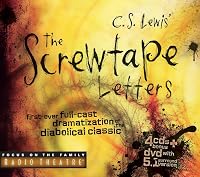
A series of congenial letters from Screwtape, an elderly devil, advising his nephew Wormwood, an apprentice devil, how to corrupt his earthly "patient."Tags
Recommendations





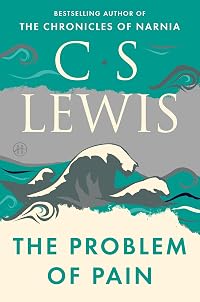
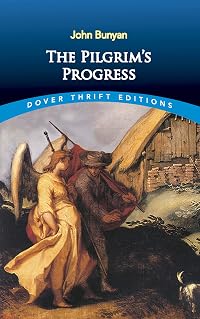
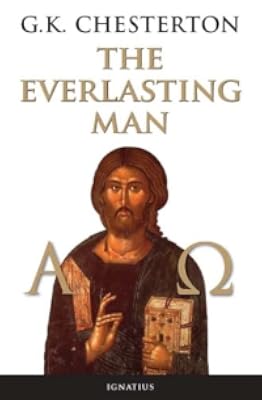
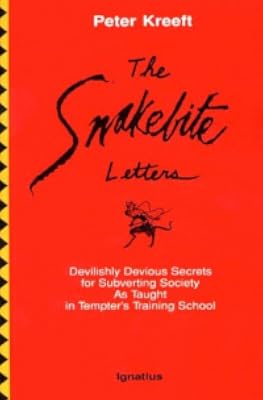






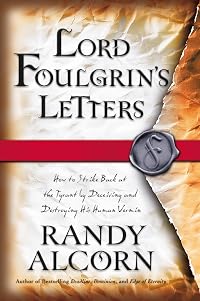



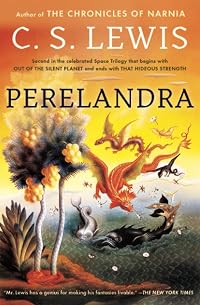





Member Recommendations
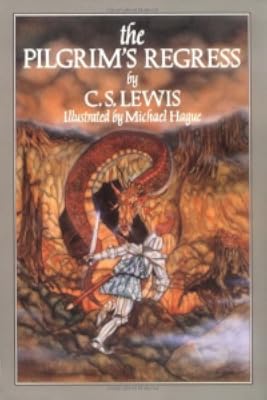
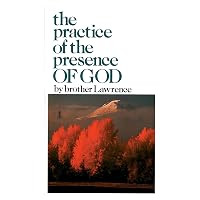
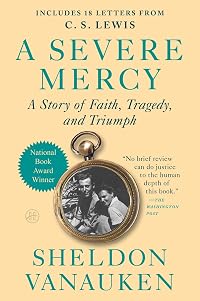
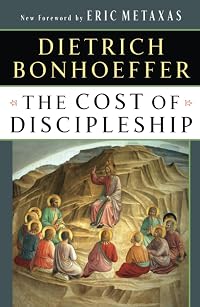
JenniferRobb Both works have angels and fallen angels trying to influence humans.

Member Reviews
The Screwtape Letters, C. S. Lewis re-imagines Hell as a gruesome bureaucracy. With spiritual insight and wry wit, Lewis suggests that demons, laboring in a vast enterprise, have horribly recognizable human attributes: competition, greed, and totalitarian punishment. Avoiding their own painful torture as well as a desire to dominate are what drive demons to torment their “patients.”
Imagine a world in which each of us is the prize in a game of tug-of-war between a guardian angel and an emissary of the Devil, assigned to their jobs of trying to win our souls to their cause. That’s Screwtape’s world, and, for that matter, it could be ours — the game is invisible.
Actually Screwtape is himself higher up in the bureaucracy of Hell. He’s mentoring his nephew, Wormwood, assigned to bring about a young man’s ruin. Wormwood seems to be especially inept at ruination. Screwtape’s letters constantly point out Wormwood’s failures, his laziness, his inattentiveness, his falling for easy solutions that miss their target. It's hard to find good help in Hell.
It’s interesting to hear Screwtape’s advice on the show more weapons Wormwood should use against his target.
“Spirituality” itself, he says can be a weapon. “Spirituality” as the trappings and piety of organized religion keep the target’s attention away from real life and on himself. Keep his attention entirely on the appearance of spirituality and piety, on the words he says or the lofty thoughts in his mind and prayers, or on the memberships and such that give him standing in the religious community. Screwtape calls this “the strongest and most beautiful of the vices — Spiritual Pride.”
Screwtape especially values strategies that keep the target’s attention on themselves, that keep the target’s mind busy — the over-examined life. There’s nothing better at defeating humility, for example, than considering yourself humble. All of that busy-ness about yourself keeps you from engaging with the world, or keeps you from engaging with other people for their own sakes, or with what Screwtape calls “The Enemy” (God).
Screwtape’s world is one in which virtues are subterfuges. That worldview is as much aspiration as fact — it’s the world he wants to make real. It’s part of the work of Wormwood and all the other Tempters in Hell’s service.
God, on the other hand, promotes such things as love and cooperation, birth, and parenting, all of which violate Screwtape’s avowed spirit of “every man for himself” and zero-sum games.
Having said that God loves the world He has created, Screwtape takes it back — it doesn’t fit how he thinks the world works, or how he wants it to work. Love is in fact impossible in that world, and God must be using the whole idea to some gain. What gain, he confesses he doesn’t know, but there must be one. He sees God reflected in his own distorting mirror.
What exactly is victory for Screwtape? It isn’t just turning the targets (us) into selfish, mean, evil-doing miscreants. Those things are nice, but what he wants is our souls, to consume them. In fact, in the included essay that Lewis wrote twenty years later in 1961, “Screwtape Proposes a Toast”, we are present at a banquet where those captured souls are eaten. The evil that they have done enhances their flavors, but it is the feast of the souls themselves that matters most.
If you ask why God, at least in theory the all powerful creator of everything in our and Screwtape’s world, would allow such a competition for souls to go on, you’ll get to the same answer we get for a whole category of questions. Why would God compete with Satan over Job’s faith? Why would God make an out and out bet with Satan over the soul of Faust? Why would God permit the Fall of Adam and Eve?
Without free will none of this happens. Free will is a gift whose price has to be less than its benefit. Without it, Screwtape’s got no game. God could rig the game so that no souls are lost. He doesn’t. That’s Screwtape’s (and the Devil’s) opening, but it’s also what makes his loss a loss. show less
Actually Screwtape is himself higher up in the bureaucracy of Hell. He’s mentoring his nephew, Wormwood, assigned to bring about a young man’s ruin. Wormwood seems to be especially inept at ruination. Screwtape’s letters constantly point out Wormwood’s failures, his laziness, his inattentiveness, his falling for easy solutions that miss their target. It's hard to find good help in Hell.
It’s interesting to hear Screwtape’s advice on the show more weapons Wormwood should use against his target.
“Spirituality” itself, he says can be a weapon. “Spirituality” as the trappings and piety of organized religion keep the target’s attention away from real life and on himself. Keep his attention entirely on the appearance of spirituality and piety, on the words he says or the lofty thoughts in his mind and prayers, or on the memberships and such that give him standing in the religious community. Screwtape calls this “the strongest and most beautiful of the vices — Spiritual Pride.”
Screwtape especially values strategies that keep the target’s attention on themselves, that keep the target’s mind busy — the over-examined life. There’s nothing better at defeating humility, for example, than considering yourself humble. All of that busy-ness about yourself keeps you from engaging with the world, or keeps you from engaging with other people for their own sakes, or with what Screwtape calls “The Enemy” (God).
Screwtape’s world is one in which virtues are subterfuges. That worldview is as much aspiration as fact — it’s the world he wants to make real. It’s part of the work of Wormwood and all the other Tempters in Hell’s service.
God, on the other hand, promotes such things as love and cooperation, birth, and parenting, all of which violate Screwtape’s avowed spirit of “every man for himself” and zero-sum games.
Having said that God loves the world He has created, Screwtape takes it back — it doesn’t fit how he thinks the world works, or how he wants it to work. Love is in fact impossible in that world, and God must be using the whole idea to some gain. What gain, he confesses he doesn’t know, but there must be one. He sees God reflected in his own distorting mirror.
What exactly is victory for Screwtape? It isn’t just turning the targets (us) into selfish, mean, evil-doing miscreants. Those things are nice, but what he wants is our souls, to consume them. In fact, in the included essay that Lewis wrote twenty years later in 1961, “Screwtape Proposes a Toast”, we are present at a banquet where those captured souls are eaten. The evil that they have done enhances their flavors, but it is the feast of the souls themselves that matters most.
If you ask why God, at least in theory the all powerful creator of everything in our and Screwtape’s world, would allow such a competition for souls to go on, you’ll get to the same answer we get for a whole category of questions. Why would God compete with Satan over Job’s faith? Why would God make an out and out bet with Satan over the soul of Faust? Why would God permit the Fall of Adam and Eve?
Without free will none of this happens. Free will is a gift whose price has to be less than its benefit. Without it, Screwtape’s got no game. God could rig the game so that no souls are lost. He doesn’t. That’s Screwtape’s (and the Devil’s) opening, but it’s also what makes his loss a loss. show less
In anticipation of reading it with a group (hypothetically/someday) I'm giving this four stars. I don't think I, alone, got as much out of it as all that, though, tbh. And I admit that I found it a slow read, despite the epistolary style and the brevity.
However, there were plenty of bits I did appreciate. And, yes, I did lol a couple of times. And if I'd been reading it with other ppl around, I would have read bits to them. I do recommend it, to Christians, atheists, and others... it's full of universal ideas. (And a few ideas particular to the author's personal culture.) I found it interesting that it was written during WWII and does reference "the European War."
On humor, and its potential as a means to destroy shame:
"If a man simply show more lets others pay for him, he is 'mean'; if he boasts of it in a jocular manner and twits his fellows with having been scored off, he is no longer 'mean' but a comical fellow.... Cruelty is shameful--unless the cruel man can represent it as a practical joke."
On [a prediction of social media]:
"All humans... have some reluctance to think about the Enemy [God]... [as it] involves facing and intensifying a whole vague cloud of half-conscious guilt.... [and it does] cut him off more and more from all real happiness.... You can make him waste his time not only in conversation with people he likes, but in conversations with those he cares nothing about on subjects that bore him. You can make him do nothing at all for long periods." show less
However, there were plenty of bits I did appreciate. And, yes, I did lol a couple of times. And if I'd been reading it with other ppl around, I would have read bits to them. I do recommend it, to Christians, atheists, and others... it's full of universal ideas. (And a few ideas particular to the author's personal culture.) I found it interesting that it was written during WWII and does reference "the European War."
On humor, and its potential as a means to destroy shame:
"If a man simply show more lets others pay for him, he is 'mean'; if he boasts of it in a jocular manner and twits his fellows with having been scored off, he is no longer 'mean' but a comical fellow.... Cruelty is shameful--unless the cruel man can represent it as a practical joke."
On [a prediction of social media]:
"All humans... have some reluctance to think about the Enemy [God]... [as it] involves facing and intensifying a whole vague cloud of half-conscious guilt.... [and it does] cut him off more and more from all real happiness.... You can make him waste his time not only in conversation with people he likes, but in conversations with those he cares nothing about on subjects that bore him. You can make him do nothing at all for long periods." show less
This book has been on my mental TBR list for a good 7-8 years now. Somehow, even though we had it on the shelf, I never quite got around to reading it until a good friend recommended it to me again. I expected it to be good, but didn’t realize just how good it was until I got into the pages.
This book is packed full of truth, even though it’s written from the perspective of a master of lies. I found it fascinating to see what the Christian life might look like to the evil world, and found this an engaging medium for examining my faith—especially, what it looks like boiled down to its bare bones.
Lewis spends a lot of time talking about the different things the Devil does to distract our focus from the Lord, and I found that show more immensely helpful in putting voice to things I’ve thought about in a nebulous sense, but haven’t found the words to really be able to examine said thoughts.
An incredible work. It made me think, made me see things I haven’t seen before, and gave great encouragement. Definitely one I want to re-read one day! show less
This book is packed full of truth, even though it’s written from the perspective of a master of lies. I found it fascinating to see what the Christian life might look like to the evil world, and found this an engaging medium for examining my faith—especially, what it looks like boiled down to its bare bones.
Lewis spends a lot of time talking about the different things the Devil does to distract our focus from the Lord, and I found that show more immensely helpful in putting voice to things I’ve thought about in a nebulous sense, but haven’t found the words to really be able to examine said thoughts.
An incredible work. It made me think, made me see things I haven’t seen before, and gave great encouragement. Definitely one I want to re-read one day! show less
Last year was an eye opening to me when it comes how easily can people be manipulated. One would think manipulation is required when there is no apparent danger - trust me when I say that it does not matter and even in case of direct health threat (like last year) manipulation is used by the unscrupulous parts of society. In everlasting quest for power, forces-that-are are willing to further the suffering of the people. Why? I guess their assistants say why not! Cannot harm to create such an atmosphere that would help them remain in power. No matter the cost.
And this brings us to this book. Some say this is christian apologetic book but I can tell you that this book, funny and witty as it is, reads as a bloody manual on a psychological show more manipulation. Direct instructions on how to make people self-centered, how to play on that almighty emotion called fear to control them and direct them, how to make them look down on others and justify everything through the prism of me-me-me-me-and-only-me..... Manual I tell you. And dont get me started on the Toast chapter. It is incredible how some things were visible for over the 100 years now and yet people let majority of these predictions come true. Craazzyy.
In terms of the book itself author has a very sharp mind and is ready to make jokes on his own religion account (imagine that today? HA!). I had a giggle ever so often. Every letter, every instruction strikes right into the heart of the matter and I am sure that non-religious people will also recognize themselves in targets of these tempsters as little devils try to find the chinks in human armor to ensure they end up several floors below the ground (and not above).
Excellent book, highly recommended. show less
And this brings us to this book. Some say this is christian apologetic book but I can tell you that this book, funny and witty as it is, reads as a bloody manual on a psychological show more manipulation. Direct instructions on how to make people self-centered, how to play on that almighty emotion called fear to control them and direct them, how to make them look down on others and justify everything through the prism of me-me-me-me-and-only-me..... Manual I tell you. And dont get me started on the Toast chapter. It is incredible how some things were visible for over the 100 years now and yet people let majority of these predictions come true. Craazzyy.
In terms of the book itself author has a very sharp mind and is ready to make jokes on his own religion account (imagine that today? HA!). I had a giggle ever so often. Every letter, every instruction strikes right into the heart of the matter and I am sure that non-religious people will also recognize themselves in targets of these tempsters as little devils try to find the chinks in human armor to ensure they end up several floors below the ground (and not above).
Excellent book, highly recommended. show less
Honestly, one of the things I liked most about this book is the unique narrative. Whilst the technical plot is about Wormwood's first assignment as a tempter, we never hear from Wormwood himself. Not even some third person perspective following him. All the information we have about Wormwood comes from the "responses" Screwtape is writing to him. I also appreciated how this kind of unraveled the story in the VERY background of the guy Wormwood was assigned to.
At the heart of the story I think Lewis has a lot to say about the foibles of humanity. It provides a lot of food for thought regarding how we interact with one another, what our disagreements stem from, and the ways we are convinced to dislike one another. While poignant, the way show more these dissections of humanity are delivered quickly felt like I was being preached at. show less
At the heart of the story I think Lewis has a lot to say about the foibles of humanity. It provides a lot of food for thought regarding how we interact with one another, what our disagreements stem from, and the ways we are convinced to dislike one another. While poignant, the way show more these dissections of humanity are delivered quickly felt like I was being preached at. show less
Had the occasional briefly interesting thought but felt so unbearably smug that I wouldn’t have been able to finish the book had it been any longer.
Seems to be written for an audience who wants their confirmation bias stroked. I had hoped for more.
Seems to be written for an audience who wants their confirmation bias stroked. I had hoped for more.
Members
- Recently Added By
Published Reviews
ThingScore 75
What struck me most about this book is its relevance, even decades after it was first published. Lewis's insights into the human condition are as pertinent today as they were back then, reminding us that the battle between good and evil is as old as time itself..........
added by Almatar
"The devil," said Thomas More, "cannot endure to be mocked," and which, if correct, means that somewhere in the inferno there must be considerable annoyance.
added by Shortride
Lists

The Top Ten: Writers Pick Their Favorite Books
240 works; 31 members

1940s
221 works; 25 members
Best Satire
188 works; 29 members

Books I've Read More Than Once
602 works; 49 members

Religious Fiction
58 works; 13 members

Church Times 100 Best Christian Books
106 works; 26 members

Unreliable Narrators
170 works; 43 members

Epistolary Books
105 works; 27 members

Folio Society
831 works; 53 members
Good, Smart, Clean Fiction
46 works; 4 members

WISHLIST
3 works; 1 member
1943 Retro-Hugo Eligible Novels
18 works; 2 members

Shaykh Hamza's Book Recommendations
439 works; 3 members
Overdue Podcast
806 works; 9 members

Books Featured on Readers' Review of the Diane Rehm Show
161 works; 8 members

Christianity
19 works; 3 members
Our Favorite Comfort Reads
334 works; 200 members

Ambleside Year 8
80 works; 1 member

Top Five Books of 2024
795 works; 264 members

Books We Love to Reread
688 works; 296 members
Best Audiobooks
240 works; 114 members

Books Read in 2024
4,623 works; 126 members

Favorite Epistolary Fiction
143 works; 144 members

Classical Conversations Challenge II Exposition
18 works; 1 member
The spare bedroom bookshelf
4 works; 1 member

Books Read in 2016
110 works; 1 member

Ambleside Books
459 works; 18 members

BookTok Adult
115 works; 2 members
Books Referenced in Know What You Believe by Paul Little (1975)
45 works; 1 member
Honey For a Child's Heart
1,152 works; 25 members

Wayland Preaching Class
31 works; 2 members
Recommendations by Peter Kreeft
45 works; 4 members
Author Information

C. S. (Clive Staples) Lewis, "Jack" to his intimates, was born on November 29, 1898 in Belfast, Ireland. His mother died when he was 10 years old and his lawyer father allowed Lewis and his brother Warren extensive freedom. The pair were extremely close and they took full advantage of this freedom, learning on their own and frequently enjoying show more games of make-believe. These early activities led to Lewis's lifelong attraction to fantasy and mythology, often reflected in his writing. He enjoyed writing about, and reading, literature of the past, publishing such works as the award-winning The Allegory of Love (1936), about the period of history known as the Middle Ages. Although at one time Lewis considered himself an atheist, he soon became fascinated with religion. He is probably best known for his books for young adults, such as his Chronicles of Narnia series. This fantasy series, as well as such works as The Screwtape Letters (a collection of letters written by the devil), is typical of the author's interest in mixing religion and mythology, evident in both his fictional works and nonfiction articles. Lewis served with the Somerset Light Infantry in World War I; for nearly 30 years he served as Fellow and tutor of Magdalen College at Oxford University. Later, he became Professor of Medieval and Renaissance English at Cambridge University. C.S. Lewis married late in life, in 1957, and his wife, writer Joy Davidman, died of cancer in 1960. He remained at Cambridge until his death on November 22, 1963. (Bowker Author Biography) show less
All Editions
Awards and Honors
Awards
Series
Belongs to Publisher Series
Work Relationships
Is contained in
The Abolition of Man / The Great Divorce / Mere Christianity / Miracles / The Problem of Pain / The Screwtape Letters by C. S. Lewis
The Complete Works: Fantasy & Sci-Fi Novels, Religious Studies, Poetry & Autobiography: Enriched edition. The Chronicles of Narnia, The Space Trilogy, The Screwtape Letters by C. S. Lewis (indirect)
The Four Loves / Surprised by Joy / A Grief Observed / The Screwtape Letters / The Great Divorce / Mere Christianity by C. S. Lewis
THE CHRISTIAN COLLECTION. 9 Books including: Mere Christianity; Screwtape Letters; Miracles; The Great Divorce; Pilgrim's Recess; The Problem Of Pain ... (Timeless Wisdom Collection Book 1016) by C. S. Lewis
The C. S. Lewis Collection: Signature Classics and Other Major Works: The Eleven Titles Include: Mere Christianity; The Screwtape Letters, Miracles; The ... Surprised by Joy; and Letters to Malcolm by C. S. Lewis
The C. S. Lewis Signature Classics: An Anthology of 8 C. S. Lewis Titles: Mere Christianity, The Screwtape Letters, Miracles, The Great Divorce, The ... The Abolition of Man, and The Four Loves by C. S. Lewis
Has the adaptation
Is abridged in
Is expanded in
Inspired
Has as a reference guide/companion
Has as a study
Common Knowledge
- Canonical title
- The Screwtape Letters
- Original title
- The Screwtape Letters
- Alternate titles*
- 魔鬼家書; Screwtape proposes a toast; 地獄來鴻; Screwtape letters ; with, Screwtape proposes a toast; 魔鬼書信; 大榔頭寫給蠹木的煽情書 (show all 7); 小心魔鬼很聰明
- Original publication date
- 1941-05-02 to 1941-11-28 (in The Guardian) (in The Guardian); 1942; 1961 (revised) (revised)
- People/Characters
- Screwtape; Wormwood; the Patient; the Patient's mother; Lucifer (mentioned | Our Father Below); God (mentioned | The Enemy) (show all 7); Slubgob
- Important places
- London, England, UK; House of Correction for Incompetent Tempters; Heaven
- Important events
- World War II
- Epigraph
- 'The best way to drive out the devil, if he will not yield to texts of Scripture, is to jeer and flout him, for he cannot bear scorn.'
—Luther
'The devil . . . the prowde spirite . . . cannot endure to be mocked.'
—Thomas More - Dedication
- To J. R. R. Tolkien
- First words
- My dear Wormwood, I note what you say about guiding your patient's reading and taking care that he sees a good deal of his materialist friend.
- Quotations
- All horrors have followed the same course, getting worse and worse and forcing you into a kind of bottleneck till, at the very moment when you thought you must be crushed, behold! you were out of the narrows and all was... (show all) suddenly well. The extraction hurt more and more and then the tooth was out. The dream became a nightmare and then you woke. You die and die and then you are beyond death.
Do not be deceived, Wormwood. Our cause is never more in danger than when a human, no longer desiring, but still intending, to do our Enemy’s will looks round upon a universe from which every trace of Him seems to have va... (show all)nished, and asks why he has been forsaken, and still obeys. - Last words
- (Click to show. Warning: May contain spoilers.)Most truly do I sign myself
Your increasingly and ravenously
affectionate uncle
Screwtape - Original language
- English
- Disambiguation notice
- Please do not combine this LT work with any abridged edition, or with any edition that includes Lewis' additional piece, "Screwtape Proposes a Toast." Each of these variants should be combined only with similar LT wor... (show all)ks. Thank you.
*Some information comes from Common Knowledge in other languages. Click "Edit" for more information.
Classifications
Statistics
- Members
- 9,400
- Popularity
- 1,117
- Reviews
- 118
- Rating
- (4.10)
- Languages
- 26 — Afrikaans, Arabic, Chinese, Czech, Danish, Dutch, English, Estonian, Finnish, French, German, Hungarian, Indonesian, Italian, Japanese, Korean, Lithuanian, Norwegian (Bokmål), Norwegian, Polish, Romanian, Slovak, Spanish, Swedish, Turkish, Portuguese (Brazil)
- Media
- Paper, Audiobook, Ebook
- ISBNs
- 146
- UPCs
- 2
- ASINs
- 193