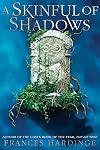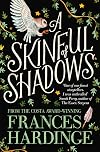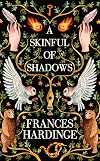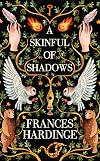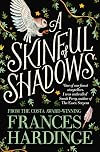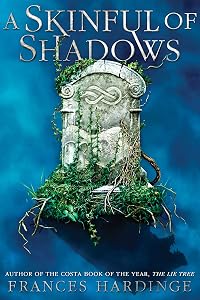
A Skinful of Shadows
by Frances Hardinge
On This Page
Description
In the 1640s during the English Civil War, the twelve-year-old illegitimate daughter of an aristocratic family shares their unique hereditary gift: the capacity to be possessed by ghosts.Tags
Recommendations




Member Reviews
The first Frances Hardinge book I read was Verdigris Deep and I'll never forget that sense of creepy-sliminess that the characters had to work their way through. Fly By Night didn't grab me the same way, but A Skinful of Shadows came back to the creepiness: the shadows are ghosts, the "skin" our heroine Makepeace who's inherited the ability to be possessed by them from a family that doesn't much care whether she wants to be or not.
Hardinge's prose remains not only transparently functional, but also beautiful and at times heartbreaking: early on I whimpered at the truth of "If someone throws aside their pride and begs with all their heart, and if they do so in vain, then they are never quite the same person afterwards."
But though show more Makepeace may change in some respects she doesn't change in others, and her perpetual compassion for the vulnerable (especially animals) combines with the strength of will she's forced to develop, to get her and her motley assortment of companions through the next several hundred pages surprisingly intact. show less
Hardinge's prose remains not only transparently functional, but also beautiful and at times heartbreaking: early on I whimpered at the truth of "If someone throws aside their pride and begs with all their heart, and if they do so in vain, then they are never quite the same person afterwards."
But though show more Makepeace may change in some respects she doesn't change in others, and her perpetual compassion for the vulnerable (especially animals) combines with the strength of will she's forced to develop, to get her and her motley assortment of companions through the next several hundred pages surprisingly intact. show less
A tale of ghosts and possession set against the backdrop of the British Civil Wars.
This was a very unusual book, with a strong and convincing main character at its heart. Frances Hardinge does female protagonists so well: interesting, relatable, resourceful and engaging, with strengths and flaws. Though the prose is often luminous, as one can expect from this author, and some tender moments between the siblings, and Makepeace and Bear, the story is pretty grim; only rarely is there some light relief, the most memorable being the exchanges between Makepeace and Dr Quick, which brought to mind the firecracker interactions between Mosca Mye and Eponymous Clent in Fly By Night and Twilight Robbery, and I was also missing the sparkling show more word-smithing so plentiful in evidence in those two books.
The narrative, as with Hardinge's other offerings I've read, is very much character-driven and builds on atmosphere, and I felt the plotting could have been tighter in places; the end, however, felt slightly rushed and there were a couple of too-convenient coincidences to be truly convincing. But I thought that the confusion and uncertainties at the heart of the civil war were brought out very well in the narrative, and the sense that a new sense of order was arriving and the world changing. I'm sure that it must have felt truly momentous to the people living through the events.
I enjoyed the time reading it, but I'm not sure I will re-read. show less
This was a very unusual book, with a strong and convincing main character at its heart. Frances Hardinge does female protagonists so well: interesting, relatable, resourceful and engaging, with strengths and flaws. Though the prose is often luminous, as one can expect from this author, and some tender moments between the siblings, and Makepeace and Bear, the story is pretty grim; only rarely is there some light relief, the most memorable being the exchanges between Makepeace and Dr Quick, which brought to mind the firecracker interactions between Mosca Mye and Eponymous Clent in Fly By Night and Twilight Robbery, and I was also missing the sparkling show more word-smithing so plentiful in evidence in those two books.
The narrative, as with Hardinge's other offerings I've read, is very much character-driven and builds on atmosphere, and I felt the plotting could have been tighter in places; the end, however, felt slightly rushed and there were a couple of too-convenient coincidences to be truly convincing. But I thought that the confusion and uncertainties at the heart of the civil war were brought out very well in the narrative, and the sense that a new sense of order was arriving and the world changing. I'm sure that it must have felt truly momentous to the people living through the events.
I enjoyed the time reading it, but I'm not sure I will re-read. show less
“You couldn’t trust people. Dogs snarled before they bit you, but people often smiled.”
I picked this up simply because the cover and title were interesting, having no idea that this was actually a children’s book! However it was very enjoyable and one of the most appealing and unique stories I’ve read in a while.
The main character was strong and entertaining, without being your typical naïve beauty. Bear was also a fun addition. It was refreshing to read a YA book that had no romance. Not everything needs to revolve around a very old vampire seducing a very young child!
I picked this up simply because the cover and title were interesting, having no idea that this was actually a children’s book! However it was very enjoyable and one of the most appealing and unique stories I’ve read in a while.
The main character was strong and entertaining, without being your typical naïve beauty. Bear was also a fun addition. It was refreshing to read a YA book that had no romance. Not everything needs to revolve around a very old vampire seducing a very young child!
My third book from this author. I am beginning to worry that she will not be able to write enough of these amazing books to satisfy my reading requirements. Why not set a fantasy adventure during the English Civil War, involving an occult form of multiple personality, plus a helping of beast-transformation? Hardinge has the diligence to research a historical period, the imagination to perceive what it might have been like, and the verbal skill to convey it to the reader, while simultaneously coming up with a fantastic idea and spinning a gripping adventure story out of it. There are things here that I have seen before -- another resourceful young female protagonist, who has a talent for staying unobserved, and exploiting the show more self-interest of more knowledgeable or powerful adult figures -- but it still works. MB 07-ix-2021 show less
I was scared to read this book.
Yes. Scared.
I had bought this at a stall with great offers during last year's annual YMCA book fair. After returning home, I realised I might have made a grave mistake, which was very common (I still haven't gotten over the betrayal done by Lyrebird). So I stowed this in the far reaches of one of my cluttered shelves and promptly forgot about it. That is, until I cleaned out the shelf and happened upon this book.
I am glad I cleaned that shelf.
The book started like many other stories, the main character, Makepeace, doing something that jeopardises her family (in this case, her mother). I am tired of this trope and absolutely hate it. However, instead of rolling my eyes, I could understand what drove her to show more it. Yes, it was rash of her to run away, but would you blame a little girl when her mother made her sleep alone every night in a graveyard filled with ghosts?
I think I liked every part of the story.
After her mistake, Makepeace becomes a smart, brave, cautious girl who can weasel her way out of danger with clever stories. She would go to great lengths to save those she cares about and believes in second chances, despite being betrayed multiple times. She might not be physically strong, nor equipped with skills, nor have magical powers. She is just a kitchen maid who is aware of her strengths and limitations and uses them well.
Ok. I take that back. She does have a skill- She can house ghosts, a gift (or perhaps a curse?) from her father's side.
I have always disliked stories where, at the end, the magical/ghostly companion has to leave the main character. Why do authors do that and bring pain to the characters and us readers? (I know housing ghosts in your head is not exactly healthy, but stilllllll......)
As Makepeace began collecting ghosts in her head, I feared that these strange friendships and truces would not survive till the end of the book. And you know what? The author didn't follow the typical path!
But one thing did bother me- Morgan
Morgan got into Makepeace's mind to make her submit to Fellmonte's Elders. However, after Makepeace convinces her to switch sides, I kept wondering why Morgan did not return to the Fellmonte family before their downfall when she got the chance to improve her standing among the Elder ghosts. Considering how much she had worked toward that goal throughout her life, this change in loyalty felt too good to be true.
The very ending (the epilogue, maybe?) was different, and I liked it.
The plot might be similar to something you have read before. But trust me, this is surely a good read. I think I will be venturing further into Frances Hardinge's works. :) show less
Yes. Scared.
I had bought this at a stall with great offers during last year's annual YMCA book fair. After returning home, I realised I might have made a grave mistake, which was very common (I still haven't gotten over the betrayal done by Lyrebird). So I stowed this in the far reaches of one of my cluttered shelves and promptly forgot about it. That is, until I cleaned out the shelf and happened upon this book.
I am glad I cleaned that shelf.
The book started like many other stories, the main character, Makepeace, doing something that jeopardises her family (in this case, her mother). I am tired of this trope and absolutely hate it. However, instead of rolling my eyes, I could understand what drove her to show more it. Yes, it was rash of her to run away, but would you blame a little girl when her mother made her sleep alone every night in a graveyard filled with ghosts?
If someone throws aside their pride and begs with all their heart, and if they do so in vain, then they are never quite the same person afterwards. Something in them dies, and something else comes to life.
I think I liked every part of the story.
After her mistake, Makepeace becomes a smart, brave, cautious girl who can weasel her way out of danger with clever stories. She would go to great lengths to save those she cares about and believes in second chances, despite being betrayed multiple times. She might not be physically strong, nor equipped with skills, nor have magical powers. She is just a kitchen maid who is aware of her strengths and limitations and uses them well.
Ok. I take that back. She does have a skill- She can house ghosts, a gift (or perhaps a curse?) from her father's side.
I have always disliked stories where, at the end, the magical/ghostly companion has to leave the main character. Why do authors do that and bring pain to the characters and us readers? (I know housing ghosts in your head is not exactly healthy, but stilllllll......)
As Makepeace began collecting ghosts in her head, I feared that these strange friendships and truces would not survive till the end of the book. And you know what? The author didn't follow the typical path!
But one thing did bother me- Morgan
Morgan got into Makepeace's mind to make her submit to Fellmonte's Elders. However, after Makepeace convinces her to switch sides, I kept wondering why Morgan did not return to the Fellmonte family before their downfall when she got the chance to improve her standing among the Elder ghosts. Considering how much she had worked toward that goal throughout her life, this change in loyalty felt too good to be true.
The very ending (the epilogue, maybe?) was different, and I liked it.
The plot might be similar to something you have read before. But trust me, this is surely a good read. I think I will be venturing further into Frances Hardinge's works. :) show less
Originally posted on Tales to Tide You Over
I made extensive notes as I read A Skinful of Shadows, but most of them I cannot use without spoiling something, which I don’t want to do. This is a very odd book. It’s set in an alternate English Civil War with a narrator who is a little girl and grows to a young woman through the course of the story. I only remember one large time gap, though, as the progression is otherwise tied smoothly into historical events.
What’s so special about Makepeace? Well, beyond her father’s inheritance (the alt-world aspect), nothing much. She’s an unwanted, poor relative turned kitchen girl who has a huge flaw. Makepeace fails to appreciate what she’s been given, doesn’t know her place, and has show more the audacity to think for herself.
With that description, you might be expecting a powerful, commanding presence who stands out in a crowd.
Instead, Makepeace is a tortured, ignorant girl who doesn’t understand the stakes until she’s imprisoned and beaten at someone else’s whim. She stays quiet, keeps her head down, and doesn’t let on what’s spinning in her mind as she dissects plan after plan to escape the unpleasant future laid out for her.
It’s an odd choice for a narrator. While the narrative voice, especially in the beginning, is a little more knowing, we see most through Makepeace’s eyes. Her lack of understanding creates a disconnect when the clues are visible to the reader but she doesn’t recognize them. She’s often alone, but that doesn’t mean her perspective is one-sided or that she’s isolated. There are things to be experienced at the right time that make this story and Makepeace compelling.
Don’t think Makepeace stays ignorant, though. She’s canny and suspicious. She’s able to translate her experiences into a broader sense of economy and class differences. Makepeace is wise with the kind of wisdom drawn from brutal experience. She has built a sense of right from wrong drawn not from any one position but from the spaces where those positions meet. Having been beneath the feet of wealthy and poor alike, she has no illusions about either. Her portrayal shows the kindness and abuse to be found in any class, along with circumstances that mark class differences.
This is a fascinating redrawing of a chaotic period in English history where one odd talent makes a power-hungry family as close to unbeatable as they can be. But Makepeace is not afraid of hardship. She has faced horrible things that made her determined to own her choices and control her destiny. This makes her unpredictable when her father’s family has built a legacy on predictability. I can’t say more without crossing the line, but the clash of worldviews is part of my fascination.
I enjoy “boots on the ground” stories, but this is not one. To fall in that category, the characters must have some stake in the conflict. Makepeace has seen both sides and learns how easy it is to be swayed by strong beliefs. She is that random piece thrown into a puzzle that fits nowhere but the hints at its picture keep drawing you back even when you know the effort is fruitless.
Makepeace is both grounded and philosophical as well as wary and trusting. She trusts by choice not because she believes herself safe from betrayal but rather because she expects it and chooses to try anyway. It’s a hard book to describe because it’s different in so many ways, but the novel drew me in and held my attention so much so I’ve already recommended it in person.
I’ll conclude with one of the non-spoilery comments from my notes: This is very much mythpunk in my opinion. The story is powerful and elemental in a way that defies the expectations of modern fantasy where rules govern. It draws on a deeper past of lore half-forgotten but which still walks in the world despite our ignorance.
P.S. I received this book as part of the 2018 Hugo packet and did not have the chance to read it until now. Though A Skinful of Shadows did not win, there is no question in my mind that it deserved its nomination. show less
I made extensive notes as I read A Skinful of Shadows, but most of them I cannot use without spoiling something, which I don’t want to do. This is a very odd book. It’s set in an alternate English Civil War with a narrator who is a little girl and grows to a young woman through the course of the story. I only remember one large time gap, though, as the progression is otherwise tied smoothly into historical events.
What’s so special about Makepeace? Well, beyond her father’s inheritance (the alt-world aspect), nothing much. She’s an unwanted, poor relative turned kitchen girl who has a huge flaw. Makepeace fails to appreciate what she’s been given, doesn’t know her place, and has show more the audacity to think for herself.
With that description, you might be expecting a powerful, commanding presence who stands out in a crowd.
Instead, Makepeace is a tortured, ignorant girl who doesn’t understand the stakes until she’s imprisoned and beaten at someone else’s whim. She stays quiet, keeps her head down, and doesn’t let on what’s spinning in her mind as she dissects plan after plan to escape the unpleasant future laid out for her.
It’s an odd choice for a narrator. While the narrative voice, especially in the beginning, is a little more knowing, we see most through Makepeace’s eyes. Her lack of understanding creates a disconnect when the clues are visible to the reader but she doesn’t recognize them. She’s often alone, but that doesn’t mean her perspective is one-sided or that she’s isolated. There are things to be experienced at the right time that make this story and Makepeace compelling.
Don’t think Makepeace stays ignorant, though. She’s canny and suspicious. She’s able to translate her experiences into a broader sense of economy and class differences. Makepeace is wise with the kind of wisdom drawn from brutal experience. She has built a sense of right from wrong drawn not from any one position but from the spaces where those positions meet. Having been beneath the feet of wealthy and poor alike, she has no illusions about either. Her portrayal shows the kindness and abuse to be found in any class, along with circumstances that mark class differences.
This is a fascinating redrawing of a chaotic period in English history where one odd talent makes a power-hungry family as close to unbeatable as they can be. But Makepeace is not afraid of hardship. She has faced horrible things that made her determined to own her choices and control her destiny. This makes her unpredictable when her father’s family has built a legacy on predictability. I can’t say more without crossing the line, but the clash of worldviews is part of my fascination.
I enjoy “boots on the ground” stories, but this is not one. To fall in that category, the characters must have some stake in the conflict. Makepeace has seen both sides and learns how easy it is to be swayed by strong beliefs. She is that random piece thrown into a puzzle that fits nowhere but the hints at its picture keep drawing you back even when you know the effort is fruitless.
Makepeace is both grounded and philosophical as well as wary and trusting. She trusts by choice not because she believes herself safe from betrayal but rather because she expects it and chooses to try anyway. It’s a hard book to describe because it’s different in so many ways, but the novel drew me in and held my attention so much so I’ve already recommended it in person.
I’ll conclude with one of the non-spoilery comments from my notes: This is very much mythpunk in my opinion. The story is powerful and elemental in a way that defies the expectations of modern fantasy where rules govern. It draws on a deeper past of lore half-forgotten but which still walks in the world despite our ignorance.
P.S. I received this book as part of the 2018 Hugo packet and did not have the chance to read it until now. Though A Skinful of Shadows did not win, there is no question in my mind that it deserved its nomination. show less
“They had found the edges of each other’s temper, like jagged rocks under a placid skin of water.”
Frances Hardinge is an amazing writer. She is one of my favorites when it comes to word-smithing; never purple, but frequently vivid and full of emotional shading. Unfortunately, she tends to be the fantasy equivalent of Tana French: stories filled with a foreboding atmosphere, enough struggle to make one despair, and characters one would rather avoid.
I didn’t know what to expect with Skinful, which perhaps made my creeping realization of being in the wrong story all the more uncomfortable. It begins with a young girl, Makepeace, feeling her way through her outsider status in a small village. It turns out that the village is show more populated with Puritans who looks askance at a single mother. One day Mother starts leaving her in the local cemetery so she can learn to use her skills.
“Mother was like this sometimes. Conversations became riddles with traps in them, and your answers had consequences.”
I was curious to see where this would go, with Makepeace and the scratching, scrabbling, little cemetery ghosts, when it ended up taking an unexpected turn. Makepeace and her Mother get caught up in London riots against the King. Quickly we move from a semi-fantastical plot to a realistic and volatile setting, around the 1640s when England was in the midst of a civil war, with all its class and economic overtones. After a couple of terrible experiences, Makepeace ends up Grizehayes, an oppressive and ominous manor controlled by the Fellmotte family.
“Twenty-seven months is long enough for a place to seep into your bones. Its colours become the palette of your mind, its sounds your private music. Its cliffs or spires overshadow your dreams, its walls funnel your thoughts… but Makepeace was used to fighting against the slow poison of habit. Her life with Mother had taught her how to keep herself unrooted. This is not your home, she reminded herself again and again and again.”
I had a hard time with this one. The story was certainly readable while I was in it. However, I lacked the impetus to continue; I felt like every page turn was bringing some new betrayal into Makepeace’s life. There was no joy and little humor in these pages, only–eventually–a sense of satisfaction at taking control of one’s situation. Even the act of learning to read, which is usually an easy place to handhold readers into a book is described in a forbidding manner:
“But when she stared at the letters, they stared back, insect-splats of bulges and splayed legs.”
In that way, I appreciate the story, but can’t say that I loved it. I appreciate the message of success, and I was intrigued by the voices in Makepeace's head, but it was too dark and grim for me. [b:Fly by Night|710437|Fly by Night|Frances Hardinge|https://i.gr-assets.com/images/S/compressed.photo.goodreads.com/books/1423450460l/710437._SX50_.jpg|198421] was far preferable in terms of mood and humor, although I can see many of the thematic seeds that grew into a nettle-patch here.
Many thanks to my buddy-readers, Nataliya, Jennifer and Stephen!
Three and a half ghosts, rounding up because of the writing. show less
Frances Hardinge is an amazing writer. She is one of my favorites when it comes to word-smithing; never purple, but frequently vivid and full of emotional shading. Unfortunately, she tends to be the fantasy equivalent of Tana French: stories filled with a foreboding atmosphere, enough struggle to make one despair, and characters one would rather avoid.
I didn’t know what to expect with Skinful, which perhaps made my creeping realization of being in the wrong story all the more uncomfortable. It begins with a young girl, Makepeace, feeling her way through her outsider status in a small village. It turns out that the village is show more populated with Puritans who looks askance at a single mother. One day Mother starts leaving her in the local cemetery so she can learn to use her skills.
“Mother was like this sometimes. Conversations became riddles with traps in them, and your answers had consequences.”
I was curious to see where this would go, with Makepeace and the scratching, scrabbling, little cemetery ghosts, when it ended up taking an unexpected turn. Makepeace and her Mother get caught up in London riots against the King. Quickly we move from a semi-fantastical plot to a realistic and volatile setting, around the 1640s when England was in the midst of a civil war, with all its class and economic overtones. After a couple of terrible experiences, Makepeace ends up Grizehayes, an oppressive and ominous manor controlled by the Fellmotte family.
“Twenty-seven months is long enough for a place to seep into your bones. Its colours become the palette of your mind, its sounds your private music. Its cliffs or spires overshadow your dreams, its walls funnel your thoughts… but Makepeace was used to fighting against the slow poison of habit. Her life with Mother had taught her how to keep herself unrooted. This is not your home, she reminded herself again and again and again.”
I had a hard time with this one. The story was certainly readable while I was in it. However, I lacked the impetus to continue; I felt like every page turn was bringing some new betrayal into Makepeace’s life. There was no joy and little humor in these pages, only–eventually–a sense of satisfaction at taking control of one’s situation. Even the act of learning to read, which is usually an easy place to handhold readers into a book is described in a forbidding manner:
“But when she stared at the letters, they stared back, insect-splats of bulges and splayed legs.”
In that way, I appreciate the story, but can’t say that I loved it. I appreciate the message of success, and I was intrigued by the voices in Makepeace's head, but it was too dark and grim for me. [b:Fly by Night|710437|Fly by Night|Frances Hardinge|https://i.gr-assets.com/images/S/compressed.photo.goodreads.com/books/1423450460l/710437._SX50_.jpg|198421] was far preferable in terms of mood and humor, although I can see many of the thematic seeds that grew into a nettle-patch here.
Many thanks to my buddy-readers, Nataliya, Jennifer and Stephen!
Three and a half ghosts, rounding up because of the writing. show less
Members
- Recently Added By
Lists

Best Fantasy Novels
821 works; 361 members

Best Young Adult
399 works; 101 members

2018 Hugo Eligible Novels
170 works; 16 members

Female Author
1,234 works; 67 members

Best 21st Century Books (So Far)
670 works; 86 members

Wish List
4 works; 1 member

Top Five Books of 2017
757 works; 231 members
Speculative Fiction to Read
706 works; 32 members

Historical Fantasy
93 works; 14 members
Top Five Books of 2018
802 works; 265 members

Recommended Speculative Fiction by Women and People of Color
298 works; 45 members
Books Read in 2018
4,360 works; 110 members
Books With Body Parts in the Title
153 works; 9 members

Literature About Women and Girls
394 works; 39 members

Books Read in 2020
4,379 works; 124 members

Teen Horror
12 works; 1 member
Author Information

23+ Works 8,441 Members
Frances Hardinge was born in 1973 in the United Kingdom. Her first novel, Fly By Night, won the Bradford Boase Award in 2006. Her other books include Verdigris Deep / Well Witched, Twilight Robbery, and A Face Like Glass. Cuckoo Song won the Robert Holdstock Award for Best Novel at the British Fantasy Awards in 2015 and The Lie Tree won the 2015 show more Costa Book of the Year award. (Bowker Author Biography) show less
Some Editions
Awards and Honors
Awards
Distinctions
Common Knowledge
- Original title
- A Skinful of Shadows
- Original publication date
- 2017-09-21
- People/Characters
- Makepeace Lightfoot; Margaret Lightfoot; White Crowe; Old Crowe; Young Crowe; James Winnersh (show all 17); Lord Obadiah Fellmotte; Sir Thomas Fellmotte; Symond Fellmotte; Lady April Fellmotte; Sir Marmaduke Fellmotte; Sir Anthony Fellmotte; Robert Fellmotte; Mistress Gotely; 'Helen'; 'Peg'; Dr Quick
- Important places
- Poplar, Middlesex, England; London, England; Grizehayes, north of England; Oxford, Oxfordshire, England, UK
- Important events
- British Civil Wars
- Dedication
- To my god-daughter Harriet,
who shares my hunger for books and unlikely adventures - First words
- The third time Makepeace woke screaming from the nightmare, her mother was angry.
- Quotations
- You couldn't trust people. Dogs snarled before they bit you, but people often smiled. (p. 75)
When Makepeace staggered back into the festivities, the jubilant, human noise shocked her like a blow. There was so much sound in the air that it hardly seemed breathable. (p. 121)
Before Symond could saddle up, Lord Fellmotte came out into the courtyard and ceremonially embraced his son. It was a clasp without warmth, like that between buckle and strap. (p. 132)
Trust was like mould. It accumulated over time in unattended places. Trusting her was convenient; distrusting her would have been inconvenient and tiresome. Over the years, Makepeace had become encrusted with other people's i... (show all)nattentive trust. (p. 135)
At a quarter to three, Young Crowe found her again. She made excuses, and ate humble pie until the taste of it made her feel sick. (p. 136)
The world was turning cartwheels, Makepeace realized, and nobody was sure which way was up any more. Rules were breaking, but nobody was certain which ones. If you had enough confidence, you could walk in and act as if you kn... (show all)ew what the new rules were, and other people would believe you. (p. 209)
His words had some truth in them, but Makepeace was still wary. Like medicine, truth could be used as a poison by someone cunning enough. (p. 268) - Blurbers
- Perry, Sarah; Taylor, Laini
- Original language
- English, UK
Classifications
- Genres
- Fiction and Literature, Fantasy, Tween, Teen, Young Adult
- DDC/MDS
- 823.92 — Literature & rhetoric English & Old English literatures English fiction 1900- 2000-
- LCC
- PZ7 .H21834 .S — Language and Literature Fiction and juvenile belles lettres Fiction and juvenile belles lettres Juvenile belles lettres
- BISAC
Statistics
- Members
- 689
- Popularity
- 41,528
- Reviews
- 31
- Rating
- (4.11)
- Languages
- 7 — Catalan, English, French, German, Italian, Portuguese (Portugal), Spanish
- Media
- Paper, Audiobook, Ebook
- ISBNs
- 22
- ASINs
- 7