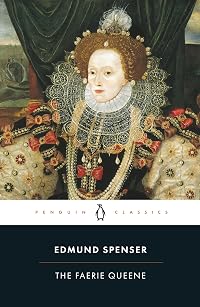
The Faerie Queene
by Edmund Spenser
On This Page
Description
This remarkable poem, dedicated to Queen Elizabeth I, was Spenser's finest achievement. The first epic poem in modern English, The Faerie Queene combines dramatic narratives of chivalrous adventure with exquisite and picturesque episodes of pageantry. At the same time, Spenser is expounding a deeply-felt allegory of the eternal struggle between Truth and Error…Tags
Recommendations










Member Reviews
Frightened of the Allegory? With Good Reason
In his letter to Sir Walter Raleigh that now serves as an introduction to the poem Spenser claimed that:
"The General end therefore of all the book is to fashion a gentleman or noble person in virtuous snd gentle discipline"
From the high sounding tone of the letter it seems to me that Spenser was clear in his mind that he had written (or was going to write) the most important epic poem of the English Renaissance. It harks back to the most popular of books for the gentleman reader: Baldassare Castiglione's [The Book of the Courtier] which had been translated into English some thirty years previously and was still immensely popular. Spenser was just as ambitious for his poem and for his own show more inspiration and for the edification of his readers he chose to base his poem on the myths of the knight errants of King Arthur's round table. The poem looks backwards rather than forwards and would have appealed to his readers for this very reason. His readers would also be familiar with the use of allegory, as much contemporary printed material and some popular stage plays were still steeped in its usage.
The first three books of the Faerie Queen were published in 1590. With Sponsorship from Sir Walter Raleigh he was able to get the Royal Seal of approval from Elizabeth I which guaranteed its success and obtained for Spenser a pension for life of £50 per year. The fact that Queen Elizabeth I is celebrated as the glorious queen of the faeries throughout the poem probably did not hinder Spenser's ambition.
Some of the reasons for the Faerie Queene's popularity with readers in the late 16th century, no longer hold good for readers today. It is a poem after all and a very long one at that. The whole thing of 6 (or 7 books if you include the Mutabilitie cantos) amounts to over 36000 lines. Spenser's intention was to write 12 books celebrating the adventures of 12 knights for the Christmas feast, some of us may be relieved that he only managed to get to half way. Then there is the allegory, familiar to Spenser's 16th century readers but not for many readers today and so when we are introduced to the very first character with that famous first line "A Gentle Knight was pricking on the plaine" it is Red Cross who symbolises Holiness; actually he is trying to achieve holiness and so the reader must have this in mind when trying to account for his actions in the story. Allegory is used in other ways; for example when describing the seven sins, they are characterised, here is Gluttony:
And by his side rode loathsome Gluttony,
Deformed creature, on a filthie swyne;
His belly was up-blowne with luxury,
And eke with fatnesse swollen were his eyne,
And like a Crane° his necke was long and fyne,
With which he swallowed up excessive feast,
For want whereof poore people oft did pyne;
And all the way, most like a brutish beast,
He spued up his gorge, that all did him deteast.
However Spenser rarely leaves his readers floundering, he usually tells us who the allegorical figures are or what they represent: at the start of each book we are told the name of the knight and his/her allegorical representation.
Spenser's language is adapted to fit into his poetic rhyming scheme, but this will be familiar to poetry readers, however his language was said to be archaic even by late 16th century standards, but really too much has been made of this and people who have been exposed to other 16th century writing and spelling will have no problem, for others if you can get to grips with the example above of Gluttony then you will enjoy the poem without a lot of trouble.
The epic proportions of the poem, the allegory and the language may be reasons to hesitate before starting in on a long read, but Spenser's Faerie Queene may be worth a little effort for other reasons. The poetry can be sublime and the syntax is not difficult to follow with most lines being end stopped. The poem is made up of nine line stanzas with a regular rhyming scheme and the final line more often than not provides a summary or commentary on the preceding eight lines.
This is an example of Spenser using the popular trope of a ship lost at sea to describe the hopelessness of ill fortune, or restless needs. It is the female knight Britomart the hero of book three, representing chastity;
"For else my feeble vessell crazd and crackt
Through thy strong buffets and outrageous blowes
cannot endure, but needs it must be wrackt
On the rough rocks, or on the sandy shallowes
The while the love it steres, and fortune rows;
Love my lewd pilot hath a restless mind
And fortune Boteswaine no assurance knowes,
But sail withouten starres gainst tide and wind:
How can they other do, sith both are bold and blind?
The battle scenes are inventive and full of action and Spenser's descriptive powers are in evidence throughout. Oh! and there is the eroticism that always seems to be just below the surface but can erupt out into some sensuous stanzas or into the realms of sadomasochism. There are plenty of purple patches but also some longueurs. Spenser saw himself as a historian or more accurately as a poetic historian and so there are some long sequences of stanzas that seem intent on naming all the mythical rulers of ancient England. These of course can be skimmed, but do hark back again to a late medieval feel.
There is no doubt the poem has layers of meaning, however it can be read as a straight forward epic adventure poem about knight errants. Some of the actions of the protagonists may seem strange, but the beauty of the poetry and the action sequences and vivid locations may be of enough interest. The next layer down is the allegory with which I think you need to have some idea to grasp the reasons why the characters do the things that they do. After all the poem is aimed to provide moral instruction and so missing out on this will put a brake on some of the enjoyment. There are also references to the politics of 16th century England and it's history, some of which will remain obscure. Spenser never aimed to be obscure and he is always there to help the reader; he usually speaks directly to the reader in the first two or three stanzas of each canto to set out his main themes or ideas and at the very start of each canto there is a four line synopsis of the canto. The Canto's can be read as separate poems, although characters do appear and reappear throughout the length of the poem the reader never needs to know the back story to make sense of the events.
Some critics have warned about reading too much into Spenser's allegory. The question Did Spenser really mean to say all of this? is pertinent and following through an allegorical, political or philosophical idea can lead to confusion. This is down to the choice of the reader, how much time do you want to spend teasing out possible meanings?
History has not been so very kind to Spenser's faerie Queene. The Cambridge History of English literature says:
"He tried to do too many things at once. and, in elaborating intellectually the allegorical plot he has confused the imaginative substance of the poetic narrative........ Spenser tried to tell his lies while clinging to a disabling kind of truth and so he does not convince his readers. He lives as an exquisite word-painter of widely different scenes and as supreme poet-musician using with unrivalled skill a noble stanza of his own invention. unparalleled in any other language"
This summary misses the excitement of the action and the underlying eroticism that lingers in the story telling. To my way of thinking Spenser has taken us into a wonderful world of faerie land, which sometimes resembles the real world too uncomfortably. It is a long poem with some passages more exciting and entertaining than others, however with a little knowledge of the allegorical structure the poem takes on another life and the reader can easily become absorbed. It is a 5 star read of course as there is nothing like it, but at times it can feel like a three star read. show less
In his letter to Sir Walter Raleigh that now serves as an introduction to the poem Spenser claimed that:
"The General end therefore of all the book is to fashion a gentleman or noble person in virtuous snd gentle discipline"
From the high sounding tone of the letter it seems to me that Spenser was clear in his mind that he had written (or was going to write) the most important epic poem of the English Renaissance. It harks back to the most popular of books for the gentleman reader: Baldassare Castiglione's [The Book of the Courtier] which had been translated into English some thirty years previously and was still immensely popular. Spenser was just as ambitious for his poem and for his own show more inspiration and for the edification of his readers he chose to base his poem on the myths of the knight errants of King Arthur's round table. The poem looks backwards rather than forwards and would have appealed to his readers for this very reason. His readers would also be familiar with the use of allegory, as much contemporary printed material and some popular stage plays were still steeped in its usage.
The first three books of the Faerie Queen were published in 1590. With Sponsorship from Sir Walter Raleigh he was able to get the Royal Seal of approval from Elizabeth I which guaranteed its success and obtained for Spenser a pension for life of £50 per year. The fact that Queen Elizabeth I is celebrated as the glorious queen of the faeries throughout the poem probably did not hinder Spenser's ambition.
Some of the reasons for the Faerie Queene's popularity with readers in the late 16th century, no longer hold good for readers today. It is a poem after all and a very long one at that. The whole thing of 6 (or 7 books if you include the Mutabilitie cantos) amounts to over 36000 lines. Spenser's intention was to write 12 books celebrating the adventures of 12 knights for the Christmas feast, some of us may be relieved that he only managed to get to half way. Then there is the allegory, familiar to Spenser's 16th century readers but not for many readers today and so when we are introduced to the very first character with that famous first line "A Gentle Knight was pricking on the plaine" it is Red Cross who symbolises Holiness; actually he is trying to achieve holiness and so the reader must have this in mind when trying to account for his actions in the story. Allegory is used in other ways; for example when describing the seven sins, they are characterised, here is Gluttony:
And by his side rode loathsome Gluttony,
Deformed creature, on a filthie swyne;
His belly was up-blowne with luxury,
And eke with fatnesse swollen were his eyne,
And like a Crane° his necke was long and fyne,
With which he swallowed up excessive feast,
For want whereof poore people oft did pyne;
And all the way, most like a brutish beast,
He spued up his gorge, that all did him deteast.
However Spenser rarely leaves his readers floundering, he usually tells us who the allegorical figures are or what they represent: at the start of each book we are told the name of the knight and his/her allegorical representation.
Spenser's language is adapted to fit into his poetic rhyming scheme, but this will be familiar to poetry readers, however his language was said to be archaic even by late 16th century standards, but really too much has been made of this and people who have been exposed to other 16th century writing and spelling will have no problem, for others if you can get to grips with the example above of Gluttony then you will enjoy the poem without a lot of trouble.
The epic proportions of the poem, the allegory and the language may be reasons to hesitate before starting in on a long read, but Spenser's Faerie Queene may be worth a little effort for other reasons. The poetry can be sublime and the syntax is not difficult to follow with most lines being end stopped. The poem is made up of nine line stanzas with a regular rhyming scheme and the final line more often than not provides a summary or commentary on the preceding eight lines.
This is an example of Spenser using the popular trope of a ship lost at sea to describe the hopelessness of ill fortune, or restless needs. It is the female knight Britomart the hero of book three, representing chastity;
"For else my feeble vessell crazd and crackt
Through thy strong buffets and outrageous blowes
cannot endure, but needs it must be wrackt
On the rough rocks, or on the sandy shallowes
The while the love it steres, and fortune rows;
Love my lewd pilot hath a restless mind
And fortune Boteswaine no assurance knowes,
But sail withouten starres gainst tide and wind:
How can they other do, sith both are bold and blind?
The battle scenes are inventive and full of action and Spenser's descriptive powers are in evidence throughout. Oh! and there is the eroticism that always seems to be just below the surface but can erupt out into some sensuous stanzas or into the realms of sadomasochism. There are plenty of purple patches but also some longueurs. Spenser saw himself as a historian or more accurately as a poetic historian and so there are some long sequences of stanzas that seem intent on naming all the mythical rulers of ancient England. These of course can be skimmed, but do hark back again to a late medieval feel.
There is no doubt the poem has layers of meaning, however it can be read as a straight forward epic adventure poem about knight errants. Some of the actions of the protagonists may seem strange, but the beauty of the poetry and the action sequences and vivid locations may be of enough interest. The next layer down is the allegory with which I think you need to have some idea to grasp the reasons why the characters do the things that they do. After all the poem is aimed to provide moral instruction and so missing out on this will put a brake on some of the enjoyment. There are also references to the politics of 16th century England and it's history, some of which will remain obscure. Spenser never aimed to be obscure and he is always there to help the reader; he usually speaks directly to the reader in the first two or three stanzas of each canto to set out his main themes or ideas and at the very start of each canto there is a four line synopsis of the canto. The Canto's can be read as separate poems, although characters do appear and reappear throughout the length of the poem the reader never needs to know the back story to make sense of the events.
Some critics have warned about reading too much into Spenser's allegory. The question Did Spenser really mean to say all of this? is pertinent and following through an allegorical, political or philosophical idea can lead to confusion. This is down to the choice of the reader, how much time do you want to spend teasing out possible meanings?
History has not been so very kind to Spenser's faerie Queene. The Cambridge History of English literature says:
"He tried to do too many things at once. and, in elaborating intellectually the allegorical plot he has confused the imaginative substance of the poetic narrative........ Spenser tried to tell his lies while clinging to a disabling kind of truth and so he does not convince his readers. He lives as an exquisite word-painter of widely different scenes and as supreme poet-musician using with unrivalled skill a noble stanza of his own invention. unparalleled in any other language"
This summary misses the excitement of the action and the underlying eroticism that lingers in the story telling. To my way of thinking Spenser has taken us into a wonderful world of faerie land, which sometimes resembles the real world too uncomfortably. It is a long poem with some passages more exciting and entertaining than others, however with a little knowledge of the allegorical structure the poem takes on another life and the reader can easily become absorbed. It is a 5 star read of course as there is nothing like it, but at times it can feel like a three star read. show less
To me, this is the great long poem in English, beside which Paradise Lost seems like a clumsy haiku. Where Milton is precise and sententious, Spenser is exuberant, almost mad, and always focused on sheer reading pleasure. His aim is to take you on a crazed sword-and-sorcery epic, and his style combines godlike verbal inventiveness with the sort of eye for lurid details that an HBO commissioning editor would kill for.
It's almost like fan fiction. One imagines Spenser getting high over his copy of Malory one night, and then falling asleep and having a feverish opium dream about it. The Faerie Queene is the result: errant knights, evil witches and dragons, cross-dressing heroes, splenetic deities, and lots of damsels who get tied up in show more becomingly abbreviated outfits to await rescue. Despite this list of clichés, though, Spenser can also be fascinatingly transgressive, especially when it comes to gender roles: women in the Faerie Queene are by no means all passive weaklings, and there are no fewer than two different ‘warrior maids’ who ride around in full armour kicking the shit out of people who question their sense of agency or look at them funny. Note also the intriguing walk-on parts such as the giantess Argantè, who keeps men locked up ‘to serve her lust’ – a nice inversion of the usual trope of women being carted off as sexual prizes – and who is moreover defeated by the female knight Palladine.
Incidentally, Spenser likes to come up with inventive perversions to characterise his villains: Argantè is accused of prenatal incest, which I have to admit was a new one on me:
These twinnes, men say, (a thing far passing thought)
While in their mothers wombe enclosd they were,
Ere they into the lightsom world were brought,
In fleshly lust were mingled both yfere,
And in that monstrous wise did to the world appere.
I don't think enough has been written about Spenser's language. There is a tendency for modern readers to gloss over the tricky bits, and think: ‘Well, presumably this was an easy read back in the 1590s.’ It really wasn't. Spenser's language was, even to his contemporaries, extremely archaic and convoluted, with a distinct taste for inventive coinages. It's like a kind of Elizabethan Clockwork Orange (A Clockwork Potato?). Some of this is now invisible to modern readers. Words like amazement, amenable, bland, blatant, bouncing, centered, discontent, dismay, elope, formerly, gurgling, horrid, invulnerable, jovial, lawlessness, memorize, newsman, Olympic, pallid, red-handed, sarcasm, transfix, unassailable, violin, warmonger – all of them, and hundreds more, seem uncomplicated now, but that is only because Spenser invented them and we have become used to them in the centuries since. This is not to mention the hundreds of other words he coined that did not catch on and have now become obsolete (there's another).
I particularly like his flair for euphemism. Here's another awesome section, where a hapless husband has tracked down his wife after she was kidnapped by a group of satyrs. He hides nearby in the bushes, only to find out that she's actually having quite a good time:
At night, when all they went to sleepe, he vewd,
Whereas his louely wife emongst them lay,
Embraced of a Satyre rough and rude,
Who all the night did minde his ioyous play:
Nine times he heard him come aloft ere day,
That all his hart with gealosie did swell…
‘Come aloft’ of course meaning something along the lines of ‘mount sexually’. There's a lot of this kind of thing – Spenser not always coming across as the most secure guy in the world. The stanza concludes with another fun figurative flourish:
But yet that nights ensample did bewray,
That not for nought his wife them loued so well,
When one so oft a night did ring his matins bell.
Haha. Love it. This form of stanza – now known as ‘Spenserian’ – was his own creation, and the way each one concludes in a jaunty rhyming couplet makes him very quotable. I actually wrote this bit out in a notebook more than two years ago, which shows how long I've been reading this – it's been a sort of long-term project that I've dipped in and out of in between other books. This makes it hard to review, because I've now long forgotten half the stuff that happened in the first couple of sections. (Indeed when I started reading it, I was using a version on the internet, but I fell in love with the poem so hard that I ended up buying a luxury Folio Society limited edition bound in goatskin, probably the most expensive book in my entire collection – which, as Hannah was not slow to point out, seems hard to justify for a poem that you can read online for free.)
So OK, the paperback looks incredibly dull and imposing, and, yes, the idea of a 1500-page allegorical poem about Queen Elizabeth I does sound like a living nightmare – but The Faerie Queene is the opposite of boring. It's pure incident from start to finish. And if there's a message to the epic, taken as a whole, I think Spenser's closing lines point us in the right direction. He shows us that what matters in this world is not money or power – nor even, in the final analysis, the virtues that he has been exploring for nearly 40,000 lines. What matters is taking the time to find pleasure – in love, in knowledge, and, most of all, in literature:
Therefore do you, my rimes, keep better measure,
And seeke to please; that now is counted wise mens threasure. show less
It's almost like fan fiction. One imagines Spenser getting high over his copy of Malory one night, and then falling asleep and having a feverish opium dream about it. The Faerie Queene is the result: errant knights, evil witches and dragons, cross-dressing heroes, splenetic deities, and lots of damsels who get tied up in show more becomingly abbreviated outfits to await rescue. Despite this list of clichés, though, Spenser can also be fascinatingly transgressive, especially when it comes to gender roles: women in the Faerie Queene are by no means all passive weaklings, and there are no fewer than two different ‘warrior maids’ who ride around in full armour kicking the shit out of people who question their sense of agency or look at them funny. Note also the intriguing walk-on parts such as the giantess Argantè, who keeps men locked up ‘to serve her lust’ – a nice inversion of the usual trope of women being carted off as sexual prizes – and who is moreover defeated by the female knight Palladine.
Incidentally, Spenser likes to come up with inventive perversions to characterise his villains: Argantè is accused of prenatal incest, which I have to admit was a new one on me:
These twinnes, men say, (a thing far passing thought)
While in their mothers wombe enclosd they were,
Ere they into the lightsom world were brought,
In fleshly lust were mingled both yfere,
And in that monstrous wise did to the world appere.
I don't think enough has been written about Spenser's language. There is a tendency for modern readers to gloss over the tricky bits, and think: ‘Well, presumably this was an easy read back in the 1590s.’ It really wasn't. Spenser's language was, even to his contemporaries, extremely archaic and convoluted, with a distinct taste for inventive coinages. It's like a kind of Elizabethan Clockwork Orange (A Clockwork Potato?). Some of this is now invisible to modern readers. Words like amazement, amenable, bland, blatant, bouncing, centered, discontent, dismay, elope, formerly, gurgling, horrid, invulnerable, jovial, lawlessness, memorize, newsman, Olympic, pallid, red-handed, sarcasm, transfix, unassailable, violin, warmonger – all of them, and hundreds more, seem uncomplicated now, but that is only because Spenser invented them and we have become used to them in the centuries since. This is not to mention the hundreds of other words he coined that did not catch on and have now become obsolete (there's another).
I particularly like his flair for euphemism. Here's another awesome section, where a hapless husband has tracked down his wife after she was kidnapped by a group of satyrs. He hides nearby in the bushes, only to find out that she's actually having quite a good time:
At night, when all they went to sleepe, he vewd,
Whereas his louely wife emongst them lay,
Embraced of a Satyre rough and rude,
Who all the night did minde his ioyous play:
Nine times he heard him come aloft ere day,
That all his hart with gealosie did swell…
‘Come aloft’ of course meaning something along the lines of ‘mount sexually’. There's a lot of this kind of thing – Spenser not always coming across as the most secure guy in the world. The stanza concludes with another fun figurative flourish:
But yet that nights ensample did bewray,
That not for nought his wife them loued so well,
When one so oft a night did ring his matins bell.
Haha. Love it. This form of stanza – now known as ‘Spenserian’ – was his own creation, and the way each one concludes in a jaunty rhyming couplet makes him very quotable. I actually wrote this bit out in a notebook more than two years ago, which shows how long I've been reading this – it's been a sort of long-term project that I've dipped in and out of in between other books. This makes it hard to review, because I've now long forgotten half the stuff that happened in the first couple of sections. (Indeed when I started reading it, I was using a version on the internet, but I fell in love with the poem so hard that I ended up buying a luxury Folio Society limited edition bound in goatskin, probably the most expensive book in my entire collection – which, as Hannah was not slow to point out, seems hard to justify for a poem that you can read online for free.)
So OK, the paperback looks incredibly dull and imposing, and, yes, the idea of a 1500-page allegorical poem about Queen Elizabeth I does sound like a living nightmare – but The Faerie Queene is the opposite of boring. It's pure incident from start to finish. And if there's a message to the epic, taken as a whole, I think Spenser's closing lines point us in the right direction. He shows us that what matters in this world is not money or power – nor even, in the final analysis, the virtues that he has been exploring for nearly 40,000 lines. What matters is taking the time to find pleasure – in love, in knowledge, and, most of all, in literature:
Therefore do you, my rimes, keep better measure,
And seeke to please; that now is counted wise mens threasure. show less
Edmund Spenser - The Faerie Queen books 4-6
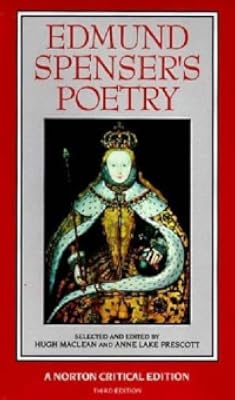
Edmund Spenser's Poetry A Norton Critical Edition
The Faerie Queene is a wonderful poem which has given me many hours of pleasure. It is a poem that can be read on many levels, and although it can be confusing it is set out in a way that helps the reader along. Each book contains 12 Cantos of between 40-60 nine line verses in Spenser's own unique rhyming scheme. Before each book there is a proem in which Spenser will either provide a brief recap of where you are in the story or his own personal thoughts on the themes that he is about to explore. He will also have words to say on the central allegorical figure represented by the knight that will be the subject of the book. At the the start of show more each canto there is a short 4 line introduction that covers the main story line of the canto; for example this is the intro. to Canto 1 book 4:
"Fayre Britomart saves Amoret
Duessa discord breedes
Twixt Scudamour and Blandamour
Their fight and warlike deeds"
So at least you are aware of some the characters that will be appearing and it is helpful if you have lost your place in the story. Some characters appear and disappear throughout all six books.
In his letter to Sir Walter Raleigh that now serves as an introduction to the poem Spenser claimed that:
"The General end therefore of all the book is to fashion a gentleman or noble person in virtuous snd gentle discipline"
Wereas the vitues of holiness, temperance and chastity in books 1-3 could be classed as private virtues; books 4-6 has friendship, justice and curtesy which are more public virtues. Cambell and Telamond are the knights of friendship in book 4 and Spenser in his proem says what he means by friendship: a broader term than in use today as its also the glue that holds societies together to create political stability and the non sexual relationship between couples. Book 4 has a number of jousting tournaments where various groups of knights operate together in bloody battles. A monster as an allegory of lust is killed by Belephebe (said to be Queen Elizazabeth I) after battling with a squire (Sir Walter Raleigh). Scudamour visits the temple of Venus and so this is a typical example of Spenser's art: crowding classical tales retold by Spenser in his own inimical way with political events at the court of Queen Elizabeth and all mixed in with his characters from Faerie land.
Book 5 features Artegal the knight of Justice. He has been trained in the art of Justice from youth and has been given the iron man Talus to assist in his quests. There are problems to solve based on episodes from the bible or from classical literature. When Artegal gets into trouble the invincible iron man uses his flail to kill and maim. Artegal must fight the Amazon warrior Radogan who overcomes him and makes him her slave. Britomart after spending dream time at the temple of Osiris rides in to save her lover. The closing Canto's of book 5 features a trial at the palace of the queen which is thinly disguised as the trial of Mary Queen of Scots. Artegal finally fulfils his quest and despatches the monster Grantoro who represents the catholic church.
Book 6 tells the legend of Sir Calidore the Knight of Curtesy. Calidores quest is to kill the Blatant Beast (slander) which leads him a merry dance throughout faerie land. Apart from the Blatant beast the adventures in this book are on a more human level. A rogue knight is killed by a young man who acuses him of molesting his girlfriend. The courteous Calidore makes him a squire, a wildman assists Calidore in a quest and becomes another follower. A woman is about to be ravaged and eaten by cannibals and she is also saved. People suffer injuries and are nursed back to health. Canto IX starts a glorious pastoral story that takes us back to Spenser's Shepherds Calender. Characters from that poem reappear and Calidore is entranced by the idyllic lifestyle. He falls in love and becomes a shepherd until a group of Brigands carry of his future bride and enslave the Shepherds. Calidore eventually tracks down the Brigands rescues Pastorella and then leaves her temporarily to continue his quest after the Blatant Beast.
Book 6 is a fitting finale to the poem bringing Spenser full circle back round to The Shepherds Calendar which was his first published poem 1579 and announced his arrival as a serious poet. Spencer was not messing about, he saw himself as the Poet Laureate, the most important poet since Chaucer. With the Faerie Queen he had created an epic poem in a framework that he believed would stand the test of time. His contemporaries were gentleman poets, poets in their spare time apologising for their efforts, many of which were pale imitations of Petrarch's Canzoniere. Spenser was the real deal.
Spenser's poetry however was rather a summation of poetry that had gone before rather than breaking new ground. The first line of the poem "A Gentle knight was pricking on the plain" could have been lifted out of Chaucer's knights tale. Spenser wrote in English rather than Latin, but his language was full of archaic words. His use of pageantry and his long lists of characters in parade like settings harks back to literature of a previous century as does his use of allegory, but this culture of writing would have been familiar to his contemporary readers.
The epic proportions of the poem, the allegory and the language may be reasons to hesitate before starting in on a long read, but Spenser's Faerie Queene may be worth a little effort for other reasons. The poetry can be sublime and the syntax is not difficult to follow with most lines being end stopped. The poem is made up of nine line stanzas with a regular rhyming scheme and the final line more often than not provides a summary or commentary on the preceding eight lines. The battle scenes and frequent jousts are inventive and full of action and Spenser's descriptive powers are in evidence throughout. Oh! and there is the eroticism that always seems to be just below the surface but can erupt out into some sensuous stanzas or into the realms of sadomasochism. There is no doubt the poem has layers of meaning, however it can be read as a straight forward epic adventure poem about knight errants. Some of the actions of the protagonists may seem strange, but the beauty of the poetry and the action sequences and vivid locations may be of enough interest. I think the poem can be dipped into. Some Canto's lend themselves to being read alone and most will contain a story leading to some sort of conclusion or Spenser will indicate if it runs on to the next canto.
The Norton Critical edition includes the whole of books 1 and 3 but only extracts from books 2,4,5, and 6 it is a shame about the paucity of poetry from book 6 which was my favourite of the books, however The Penguin Classics edition has the whole thing with enough notes and explanation to help you through. The Norton critical edition has a section of critical essays some of which dig deeper into the allegory and demonstrate the layers of meaning that can be found, fascinating as some of this is, I preferred to read through the poem keeping the allegory at the back of my mind. A venture into Spenser's faerie land is well worth the effort and really you can spend as much time there as you like. 5 stars show less
Edmund Spenser's Poetry A Norton Critical Edition
The Faerie Queene is a wonderful poem which has given me many hours of pleasure. It is a poem that can be read on many levels, and although it can be confusing it is set out in a way that helps the reader along. Each book contains 12 Cantos of between 40-60 nine line verses in Spenser's own unique rhyming scheme. Before each book there is a proem in which Spenser will either provide a brief recap of where you are in the story or his own personal thoughts on the themes that he is about to explore. He will also have words to say on the central allegorical figure represented by the knight that will be the subject of the book. At the the start of show more each canto there is a short 4 line introduction that covers the main story line of the canto; for example this is the intro. to Canto 1 book 4:
"Fayre Britomart saves Amoret
Duessa discord breedes
Twixt Scudamour and Blandamour
Their fight and warlike deeds"
So at least you are aware of some the characters that will be appearing and it is helpful if you have lost your place in the story. Some characters appear and disappear throughout all six books.
In his letter to Sir Walter Raleigh that now serves as an introduction to the poem Spenser claimed that:
"The General end therefore of all the book is to fashion a gentleman or noble person in virtuous snd gentle discipline"
Wereas the vitues of holiness, temperance and chastity in books 1-3 could be classed as private virtues; books 4-6 has friendship, justice and curtesy which are more public virtues. Cambell and Telamond are the knights of friendship in book 4 and Spenser in his proem says what he means by friendship: a broader term than in use today as its also the glue that holds societies together to create political stability and the non sexual relationship between couples. Book 4 has a number of jousting tournaments where various groups of knights operate together in bloody battles. A monster as an allegory of lust is killed by Belephebe (said to be Queen Elizazabeth I) after battling with a squire (Sir Walter Raleigh). Scudamour visits the temple of Venus and so this is a typical example of Spenser's art: crowding classical tales retold by Spenser in his own inimical way with political events at the court of Queen Elizabeth and all mixed in with his characters from Faerie land.
Book 5 features Artegal the knight of Justice. He has been trained in the art of Justice from youth and has been given the iron man Talus to assist in his quests. There are problems to solve based on episodes from the bible or from classical literature. When Artegal gets into trouble the invincible iron man uses his flail to kill and maim. Artegal must fight the Amazon warrior Radogan who overcomes him and makes him her slave. Britomart after spending dream time at the temple of Osiris rides in to save her lover. The closing Canto's of book 5 features a trial at the palace of the queen which is thinly disguised as the trial of Mary Queen of Scots. Artegal finally fulfils his quest and despatches the monster Grantoro who represents the catholic church.
Book 6 tells the legend of Sir Calidore the Knight of Curtesy. Calidores quest is to kill the Blatant Beast (slander) which leads him a merry dance throughout faerie land. Apart from the Blatant beast the adventures in this book are on a more human level. A rogue knight is killed by a young man who acuses him of molesting his girlfriend. The courteous Calidore makes him a squire, a wildman assists Calidore in a quest and becomes another follower. A woman is about to be ravaged and eaten by cannibals and she is also saved. People suffer injuries and are nursed back to health. Canto IX starts a glorious pastoral story that takes us back to Spenser's Shepherds Calender. Characters from that poem reappear and Calidore is entranced by the idyllic lifestyle. He falls in love and becomes a shepherd until a group of Brigands carry of his future bride and enslave the Shepherds. Calidore eventually tracks down the Brigands rescues Pastorella and then leaves her temporarily to continue his quest after the Blatant Beast.
Book 6 is a fitting finale to the poem bringing Spenser full circle back round to The Shepherds Calendar which was his first published poem 1579 and announced his arrival as a serious poet. Spencer was not messing about, he saw himself as the Poet Laureate, the most important poet since Chaucer. With the Faerie Queen he had created an epic poem in a framework that he believed would stand the test of time. His contemporaries were gentleman poets, poets in their spare time apologising for their efforts, many of which were pale imitations of Petrarch's Canzoniere. Spenser was the real deal.
Spenser's poetry however was rather a summation of poetry that had gone before rather than breaking new ground. The first line of the poem "A Gentle knight was pricking on the plain" could have been lifted out of Chaucer's knights tale. Spenser wrote in English rather than Latin, but his language was full of archaic words. His use of pageantry and his long lists of characters in parade like settings harks back to literature of a previous century as does his use of allegory, but this culture of writing would have been familiar to his contemporary readers.
The epic proportions of the poem, the allegory and the language may be reasons to hesitate before starting in on a long read, but Spenser's Faerie Queene may be worth a little effort for other reasons. The poetry can be sublime and the syntax is not difficult to follow with most lines being end stopped. The poem is made up of nine line stanzas with a regular rhyming scheme and the final line more often than not provides a summary or commentary on the preceding eight lines. The battle scenes and frequent jousts are inventive and full of action and Spenser's descriptive powers are in evidence throughout. Oh! and there is the eroticism that always seems to be just below the surface but can erupt out into some sensuous stanzas or into the realms of sadomasochism. There is no doubt the poem has layers of meaning, however it can be read as a straight forward epic adventure poem about knight errants. Some of the actions of the protagonists may seem strange, but the beauty of the poetry and the action sequences and vivid locations may be of enough interest. I think the poem can be dipped into. Some Canto's lend themselves to being read alone and most will contain a story leading to some sort of conclusion or Spenser will indicate if it runs on to the next canto.
The Norton Critical edition includes the whole of books 1 and 3 but only extracts from books 2,4,5, and 6 it is a shame about the paucity of poetry from book 6 which was my favourite of the books, however The Penguin Classics edition has the whole thing with enough notes and explanation to help you through. The Norton critical edition has a section of critical essays some of which dig deeper into the allegory and demonstrate the layers of meaning that can be found, fascinating as some of this is, I preferred to read through the poem keeping the allegory at the back of my mind. A venture into Spenser's faerie land is well worth the effort and really you can spend as much time there as you like. 5 stars show less
This book has stacked underneath it the most extensive amount of lit crit of anything I've ever read, save Shakespeare (maybe!). If Spenser really intended all that everyone say he did, then he is a friggin genius. There are umpteen-thousand pages in this book, but if you give it a go (especially the A.C. Hamilton-edited annotation, paired with his [b:The Spenser Encyclopedia|6945228|The Spenser Encyclopedia|A.C. Hamilton|http://photo.goodreads.com/books/1266968543s/6945228.jpg|7178989], a tome so massive you could probably murder someone with it), you will learn almost everything you need to know about Elizabethan England, the feudal system that preceded it, and then some, not to mention meeting some strange women with odd genitalia, show more memorizing the honor code among knights and their passion for horses, and running into a few sprites, nymphs, giants, and other creatures. Based on Hamilton and others, pretty much every single stanza is loaded with allusions and things worth cross-referencing - quite a feat considering how many of them there are.
Oh, and for all you [b:Twilight|41865|Twilight (Twilight, #1)|Stephenie Meyer|http://photo.goodreads.com/books/1275613536s/41865.jpg|3212258] fans, the Britomart storyline reads like a teen angsty dream, except for the part where her nurse spits on her to cure her of her love-sickness.
Seeing as Spenser intended six more books in addition to the six he wrote here (seriously), I wonder if that wouldn't have ended up like Quentin Tarentino's third Kill Bill which is rumored to bring back the daughter who saw her mother killed by Uma Thurman. I think the bloody-handed baby sucking the from the dead Amavia was meant to reprise a role in the latter six, if Spenser had been so spirited by his mere pittance from Elizabeth to continue writing. Just my two cents. To carry the Kill Bill comparison further than necessary, this story was pretty epic.
The stanzas make it very easy to take a break from reading every five seconds, but I wouldn't recommend it. Just trudge on through. Despite the intended six more books, the ending is quite satisfying - Spenser has his own personal drama that is almost as entertaining as the book, and is worth looking into especially given the poet's closing remarks. The stories are very visual and intricate. Hamilton's version has an indexed list of characters at the end that is thus very handy. It starts out being hard to read but you can probably get accustomed to the linguistic feats by the end of the first book. Also, look up the word 'puissance', since it seems to come up a lot. Some books are more episodic than others, but of course like every other word in this book, there are more than twenty people who will tell you that there is a good reason for that. Along with Hamilton, some good scholars to read in conjunction with this include Kathryn Schwarz, Stephen Greenblatt, Jean Feerick, Louis Montrose, and Mihoko Suzuki.
I read this for a class and by the end of it I think all of us had gone a little wacky. One of my classmates seemed bent on connecting this book to The Final Destination and something about aliens, regardless of what our highly-esteemed professor had to say. Another friend Justin posted the following Facebook status: "Move over 'Exit pursued by a bear' - bear carrying baby in its mouth has arrived. Three months of Spenser and I finally chuckled out loud. Perhaps that just means that I'm sick, perhaps it means that a bear making off with a baby like it's a pic-a-nic basket is actually funny. Thoughts?" By the end of the semester, we as a class found our sense of humor sickened to appreciable levels, to the point where mutilations, beheadings and bears eating babies were pretty darned hilarious. At least we know how to entertain ourselves. show less
Oh, and for all you [b:Twilight|41865|Twilight (Twilight, #1)|Stephenie Meyer|http://photo.goodreads.com/books/1275613536s/41865.jpg|3212258] fans, the Britomart storyline reads like a teen angsty dream, except for the part where her nurse spits on her to cure her of her love-sickness.
Seeing as Spenser intended six more books in addition to the six he wrote here (seriously), I wonder if that wouldn't have ended up like Quentin Tarentino's third Kill Bill which is rumored to bring back the daughter who saw her mother killed by Uma Thurman. I think the bloody-handed baby sucking the from the dead Amavia was meant to reprise a role in the latter six, if Spenser had been so spirited by his mere pittance from Elizabeth to continue writing. Just my two cents. To carry the Kill Bill comparison further than necessary, this story was pretty epic.
The stanzas make it very easy to take a break from reading every five seconds, but I wouldn't recommend it. Just trudge on through. Despite the intended six more books, the ending is quite satisfying - Spenser has his own personal drama that is almost as entertaining as the book, and is worth looking into especially given the poet's closing remarks. The stories are very visual and intricate. Hamilton's version has an indexed list of characters at the end that is thus very handy. It starts out being hard to read but you can probably get accustomed to the linguistic feats by the end of the first book. Also, look up the word 'puissance', since it seems to come up a lot. Some books are more episodic than others, but of course like every other word in this book, there are more than twenty people who will tell you that there is a good reason for that. Along with Hamilton, some good scholars to read in conjunction with this include Kathryn Schwarz, Stephen Greenblatt, Jean Feerick, Louis Montrose, and Mihoko Suzuki.
I read this for a class and by the end of it I think all of us had gone a little wacky. One of my classmates seemed bent on connecting this book to The Final Destination and something about aliens, regardless of what our highly-esteemed professor had to say. Another friend Justin posted the following Facebook status: "Move over 'Exit pursued by a bear' - bear carrying baby in its mouth has arrived. Three months of Spenser and I finally chuckled out loud. Perhaps that just means that I'm sick, perhaps it means that a bear making off with a baby like it's a pic-a-nic basket is actually funny. Thoughts?" By the end of the semester, we as a class found our sense of humor sickened to appreciable levels, to the point where mutilations, beheadings and bears eating babies were pretty darned hilarious. At least we know how to entertain ourselves. show less
http://nwhyte.livejournal.com/2029672.html
This is one of the curiosities of the English language, a long poem written in its own peculiar verse structure in which archetypal figures based on myths of many different origins contend for mastery of spoils, women and virtue in a fantasy landscape which resembles the north of County Cork. Some of the allegory is pretty straightforward, as when Prince Arthur springs to the defence of the cruelly oppressed lady Belge; other parts are more layered and/or obscure.
It has taken me five months to read this. I found I could not proceed faster than one canto every day, and on many days I did not manage any cantos at all; and there are 74 of them, plus the proems and the two concluding verses. It's show more not that it is particularly difficult to read, compared even to Shakespeare; the style is generally consistent, and a good edition (mine is the Longman edited by A.C. Hamilton) helps you through the more obscure words or usages. But it's dense and moves both rather slowly and rather fast at the same time.
I found that one of the biggest barriers to my understanding of the poem was Tolkien. Spenser writes of elves and dwarves in a parallel fantasy world, but these are not Tolkien's separate races; the elves are effectively just a fantasy nationality, and the dwarves just short guys (who tend to appear as servants). I was also subliminally expecting some Big Bad villain, but in fact we have a chain of more or less loosely connected stories, with the main linking character Prince Arthur, who is intended to be King Arthur (and yet didn't fit for me too well into my own vision of Arthurian legend). So I found myself unnecessarily distracted by my attempts to fit it into fantasy genres with which I am more familiar.
What does come over with extraordinary vigour is Spenser's love of the Irish landscape. Subsequent history shows him as one of the many adventurers who descended on Munster to occupy land confiscated from the Desmonds and their affiliates, who then lost it all in a subsequent rebellion; it's worth being reminded that from Spenser's point of view, he had come to stay, and expected his descendants to live on at Kilcolman for many generations. County Cork was his home and the focus of his imagination. It's not too difficult to believe that he died essentially of a broken heart after losing it all.
As for the actual meaning of it all: I think it is possible to over-analyze. Sometimes the allusions are pretty obvious, or indeed the description may be pretty much what it appears to be (thinking for instance of the house whose chambers correspond to organs of the human body, or the personified rivers of Britain and Ireland). The only one of the six virtues where Spenser has much interesting to show about the virtue itself, for my money, was Courtesy; I felt he let his pen wander aside from the point as his fancy took him elsewhere. The best character in it is Britomart, who is obviously the model for George R.R. Martin's Brienne of Tarth.
And there's a robot. show less
This is one of the curiosities of the English language, a long poem written in its own peculiar verse structure in which archetypal figures based on myths of many different origins contend for mastery of spoils, women and virtue in a fantasy landscape which resembles the north of County Cork. Some of the allegory is pretty straightforward, as when Prince Arthur springs to the defence of the cruelly oppressed lady Belge; other parts are more layered and/or obscure.
It has taken me five months to read this. I found I could not proceed faster than one canto every day, and on many days I did not manage any cantos at all; and there are 74 of them, plus the proems and the two concluding verses. It's show more not that it is particularly difficult to read, compared even to Shakespeare; the style is generally consistent, and a good edition (mine is the Longman edited by A.C. Hamilton) helps you through the more obscure words or usages. But it's dense and moves both rather slowly and rather fast at the same time.
I found that one of the biggest barriers to my understanding of the poem was Tolkien. Spenser writes of elves and dwarves in a parallel fantasy world, but these are not Tolkien's separate races; the elves are effectively just a fantasy nationality, and the dwarves just short guys (who tend to appear as servants). I was also subliminally expecting some Big Bad villain, but in fact we have a chain of more or less loosely connected stories, with the main linking character Prince Arthur, who is intended to be King Arthur (and yet didn't fit for me too well into my own vision of Arthurian legend). So I found myself unnecessarily distracted by my attempts to fit it into fantasy genres with which I am more familiar.
What does come over with extraordinary vigour is Spenser's love of the Irish landscape. Subsequent history shows him as one of the many adventurers who descended on Munster to occupy land confiscated from the Desmonds and their affiliates, who then lost it all in a subsequent rebellion; it's worth being reminded that from Spenser's point of view, he had come to stay, and expected his descendants to live on at Kilcolman for many generations. County Cork was his home and the focus of his imagination. It's not too difficult to believe that he died essentially of a broken heart after losing it all.
As for the actual meaning of it all: I think it is possible to over-analyze. Sometimes the allusions are pretty obvious, or indeed the description may be pretty much what it appears to be (thinking for instance of the house whose chambers correspond to organs of the human body, or the personified rivers of Britain and Ireland). The only one of the six virtues where Spenser has much interesting to show about the virtue itself, for my money, was Courtesy; I felt he let his pen wander aside from the point as his fancy took him elsewhere. The best character in it is Britomart, who is obviously the model for George R.R. Martin's Brienne of Tarth.
And there's a robot. show less
Epic poem. I really like this. Its overly long and there are so many characters you'll definitely get confused and feel lost at times, however there are so many memorable moments. The action scenes are particularly good which seems weird for poetry. Despite magic and monsters there is also an odd amount of realism to many incidents which i enjoyed.
Plus there is plenty of violence and sex which is strange for something which is a self-confessed christian allegory.
Due to its length there is plenty to dig into and i liked it enough to buy a copy despite reading it for free on my ereader.
2nd Read: Ok, not as good as last time. More sexist, classist and obsequious than i remember, also even more allegorical. I'm also starting to suspect show more Spencer might be a terrible poet, the things he does to the english language, to make words fit the rhyme, are pretty horrific :P .
Still though enough incident to keep things interesting :) . show less
Plus there is plenty of violence and sex which is strange for something which is a self-confessed christian allegory.
Due to its length there is plenty to dig into and i liked it enough to buy a copy despite reading it for free on my ereader.
2nd Read: Ok, not as good as last time. More sexist, classist and obsequious than i remember, also even more allegorical. I'm also starting to suspect show more Spencer might be a terrible poet, the things he does to the english language, to make words fit the rhyme, are pretty horrific :P .
Still though enough incident to keep things interesting :) . show less
Read it completely almost fifty years ago. I recall especially the Book of Courtesy, the Sixth Book, with its hero Calidore. I theorized at the time that Courtesy did not fit with the other allegorically systematized virtues. No wonder Spenser found he was concluding his epic before he'd really caught a head of steam to get through his 12 books, the first HALF.
He dedicates his poem to Sir Walter Raleigh, Lieutenant of Cornewayll, saying this a "continued Allegory, or dark conceit...to fashion a gentleman or noble person," his having followed all the ancients, Homer, Virgil and even Ariosto. He began with a "tall, clownishe [contrified] young man" at the Queene's feast who desires an adventure. The Lady saying he must wear the armor she show more had, for a Christian knight. He put it on, and appeared the goodliest, took on knighthood and mounted a "strange Courser," "where beginneth the first book, viz, 'A gentle knight was pricking on the playne'"(408).
Calidore, for instance, silences the "monstrous Beast" of the thousand tongues,"some were of dogges, that barked day and night,/...And some of Tygres, that did seem to gren,/But most of them were tongues of mortal men,/ That spake reproachfully, not caring where or when."(VI.xii.27) Sounds like Elizabethan Courtesy runs at odds with modern democracy, which depends on reproaches against people in power.
But Calidore silences this monstrous Beast of cacophony-democracy (?!) and breeds politesse, instead of "venemous despite" which Spenser fully expects even for this his epic poem. Backbiting "Ne spareth he the gentle Poets rime, / But rends without regard of person or of time."
As an undergrad I wrote on this poem's prosody, especially the ottava rima concluded by an alexandrine (hexameter). Northrop Frye calls it, "The most remarkably sustained mastery of verbal opsis...which we have to read with a special attention, the abiliaty to catch visualization through sound." Hazlitt says, "His versification is the most smooth and the most sounding in the language. It is a labyrinth of sweet sounds." In fact, I come up against Spenser's beautiful verses for moral ugliness. Possibly Ben Jonson, a verse moralist, found the same, for "Spenser's stanzas pleased him not, nor his matter" (Drummond's bio).
I don't find Frye's opsis, but rather, the sound pursues its own system, attched to the poem much as in a contrapuntal musical composition (Frye calls allegory as here, a "contrapuntal technique" or canonic imitation.) As for alliteration, Frye finds its overuse by characters marking liars and hypocrites (wow--Spiro Agnew never knew this!), as in "But minds of mortal men are muchell mad..."
In his effective verses, the sensual vividness results in a frozen motion:
When on the ground she groveling saw to rowle,
She ran in hast his ife to have bereft:
But ere she could him reach, the sinful sowle
Having his carrion corse quite senseless left,
Was fled to hell, surcharg'd with spoile and theft.
Yet over him she there long gazing stood,
And oft admired his monstrous shape, and oft
His mighty limbs, whilest all with filthy blood
The place there overflowne, seemd like a sodaine flood. (IV.vi.32)
As for the Mutability Cantoes, on the Comet and perhaps the Supernova, changes in the Heavens, Spenser stands clearly against Galileo (sixteen years later) or Giordano Bruno, Spenser's contemporary, who was publishing his 400 pp Latin poem on the Infinite Universe and Innumerable Worlds in 1592, four years before the Fairie Queene.
By sheer happenstance, Bruno and Spenser died around the same year, 1600 and 1599, Spenser four years younger than Bruno. Spenser's last couple years were terrible, for though Yeats would approve that Spenser was driven from Kilcoman his family holdings in North Cork. (Ben Jonson says Spenser lost a daughter when native Irish troops torched the house.)
Read in Oxford Hardback. show less
He dedicates his poem to Sir Walter Raleigh, Lieutenant of Cornewayll, saying this a "continued Allegory, or dark conceit...to fashion a gentleman or noble person," his having followed all the ancients, Homer, Virgil and even Ariosto. He began with a "tall, clownishe [contrified] young man" at the Queene's feast who desires an adventure. The Lady saying he must wear the armor she show more had, for a Christian knight. He put it on, and appeared the goodliest, took on knighthood and mounted a "strange Courser," "where beginneth the first book, viz, 'A gentle knight was pricking on the playne'"(408).
Calidore, for instance, silences the "monstrous Beast" of the thousand tongues,"some were of dogges, that barked day and night,/...And some of Tygres, that did seem to gren,/But most of them were tongues of mortal men,/ That spake reproachfully, not caring where or when."(VI.xii.27) Sounds like Elizabethan Courtesy runs at odds with modern democracy, which depends on reproaches against people in power.
But Calidore silences this monstrous Beast of cacophony-democracy (?!) and breeds politesse, instead of "venemous despite" which Spenser fully expects even for this his epic poem. Backbiting "Ne spareth he the gentle Poets rime, / But rends without regard of person or of time."
As an undergrad I wrote on this poem's prosody, especially the ottava rima concluded by an alexandrine (hexameter). Northrop Frye calls it, "The most remarkably sustained mastery of verbal opsis...which we have to read with a special attention, the abiliaty to catch visualization through sound." Hazlitt says, "His versification is the most smooth and the most sounding in the language. It is a labyrinth of sweet sounds." In fact, I come up against Spenser's beautiful verses for moral ugliness. Possibly Ben Jonson, a verse moralist, found the same, for "Spenser's stanzas pleased him not, nor his matter" (Drummond's bio).
I don't find Frye's opsis, but rather, the sound pursues its own system, attched to the poem much as in a contrapuntal musical composition (Frye calls allegory as here, a "contrapuntal technique" or canonic imitation.) As for alliteration, Frye finds its overuse by characters marking liars and hypocrites (wow--Spiro Agnew never knew this!), as in "But minds of mortal men are muchell mad..."
In his effective verses, the sensual vividness results in a frozen motion:
When on the ground she groveling saw to rowle,
She ran in hast his ife to have bereft:
But ere she could him reach, the sinful sowle
Having his carrion corse quite senseless left,
Was fled to hell, surcharg'd with spoile and theft.
Yet over him she there long gazing stood,
And oft admired his monstrous shape, and oft
His mighty limbs, whilest all with filthy blood
The place there overflowne, seemd like a sodaine flood. (IV.vi.32)
As for the Mutability Cantoes, on the Comet and perhaps the Supernova, changes in the Heavens, Spenser stands clearly against Galileo (sixteen years later) or Giordano Bruno, Spenser's contemporary, who was publishing his 400 pp Latin poem on the Infinite Universe and Innumerable Worlds in 1592, four years before the Fairie Queene.
By sheer happenstance, Bruno and Spenser died around the same year, 1600 and 1599, Spenser four years younger than Bruno. Spenser's last couple years were terrible, for though Yeats would approve that Spenser was driven from Kilcoman his family holdings in North Cork. (Ben Jonson says Spenser lost a daughter when native Irish troops torched the house.)
Read in Oxford Hardback. show less
Members
- Recently Added By
Lists

Classics you know you should have read but probably haven't
421 works; 409 members

Recommended Faerie books
67 works; 22 members

Best of British Literature
226 works; 41 members

100 Books to Read in a Lifetime (That Are Older Than 200 Years)
415 works; 175 members

Forests and Mythology
8 works; 7 members

Favorite Literary Love Stories
182 works; 101 members

CCE 100 Great Books List
145 works; 8 members

Western Canon
206 works; 2 members

Recommended Reading : 600 Classics Reviewed, Editors of Salem Press, 2015
634 works; 6 members

Book Titles Mentioned In Newberry Medal And Honor Books
884 works; 3 members

Christian Classics (Old and Modern)
53 works; 3 members

Books You Read For University
184 works; 3 members

Greatest Books, allegedly
484 works; 9 members

College Reads (Lit Edition)
75 works; 5 members

Harold Bloom - The Western Canon: B. The Aristocratic Age
231 works; 13 members

How to Read a Book's Recommended Reading List
309 works; 10 members
Trinity College Booklist (1951): Class Ten, English Literature
358 works; 5 members

It Just Wasn't Worth the Effort
21 works; 8 members

I Can't Finish This Book
189 works; 22 members

Early Modern (Shakesperean)
64 works; 2 members

50 Tough Books for Extreme Readers
71 works; 39 members

Literature Before the 17th Century
20 works; 5 members

Poetry
78 works; 1 member
Talk Discussions
Past Discussions
Faerie Queene in Folio Society Devotees (November 2021)
The Faerie Queene in Le Salon Littéraire du Peuple pour le Peuple (August 2011)
Author Information

242+ Works 7,115 Members
"The poet's poet"---as Charles Lamb was to call Spenser two centuries later---was born in London, where he attended school before going to Cambridge in 1569. About 1579 he came to know Sir Philip Sidney; his first significant work, The Shepheardes Calendar, published under a pseudonym in 1579 and consisting of 12 "ecologues" (one for each month of show more the year), was dedicated to Sidney. Spenser hoped for advancement at the court of Queen Elizabeth, but in August 1580 he took a minor position in Ireland, where he spent the rest of his life, save for two visits to England. In 1594 he married Elizabeth Boyle, in Cork; the sonnet sequence Amoretti (1595) bears on his courtship, and the great marriage hymn, Epithalamion (1595), celebrates the wedding. The first three books of Spenser's allegorical epic romance,The Faerie Queene, appeared in 1590; three more appeared in 1596. A fragment, the Cantos of Mutabilitie, which may or may not have been intended to form part of the great poem, appeared in 1609, after Spenser's death. Spenser appended a letter to his friend Sir Walter Raleigh to the edition of 1590, explaining that the "general end...of all the book is to fashion a gentleman or noble person in vertuous and gentle discipline." Although Spenser planned to write 12 books in all, only 6, and the two Cantos of Mutabilitie, survive. The rest may possibly have been destroyed by Irish rebels when, in 1598, they sacked Spenser's Irish residence at Kilcolman, but it is equally possible that the poet never managed to bring his massively planned work to completion. Spenser's Amoretti (1595) is one of the more idealized sonnet sequences, and Colin Clout's Come Home Again (1595) is an allegorical attack on the taste of the court. Like many Renaissance authors, his writings extend beyond the narrowly literary; his tract "A View of the Present State of Ireland" (1596) provides a series of brutal recommendations for the colonial suppression of England's Irish territories. Spenser's complex range of styles and genres served as both a model and a challenge for his contemporaries and for later authors. (Bowker Author Biography) show less
Some Editions
Awards and Honors
Series
Belongs to Publisher Series
Work Relationships
Is contained in
Has the adaptation
Has as a study
Has as a commentary on the text
Has as a student's study guide
Common Knowledge
- Canonical title
- The Faerie Queene
- Original publication date
- 1590
- People/Characters
- Gloriana, the Faerie Queen; Acrasia; Alma; Amoret; Archimago; Artegal (show all 26); King Arthur; Belphoebe; Braggadocchio; Britomart; Busirane; Calidore; Colin Clout; Duessa; Florimell; Guyon; Merlin; Malecasta; Marinell; Paridell; Pastorella; The Redcrosse Knight; Una; Trompart; Scudamour; Talus
- Important places
- House of Pride; Castle Joyous; Cave of Despair; Bower of Bliss; Garden of Adonis
- Important events
- 16th century; Elizabethan Era
- Dedication
- [each line centered in the original]
TO
THE MOST HIGH,
MIGHTIE
and
MAGNIFICENT
EMPRESSE RENOVV-
MED FOR PIETIE, VER-
TVE, AND ALL GRATIOVS
GOVERNMENT ELIZABETH BY
THE GRACE OF GOD QVEENE
O... (show all)F ENGLAND FRAVNCE AND
IRELAND AND OF VIRGI-
NIA, DEFENDOVR OF THE
FAITH, &. HER MOST
HVMBLE SERVANT
EDMVND SPENSER
DOTH IN ALL HV-
MILITIE DEDI-
CATE, PRE-
SENT
AND CONSECRATE THESE
HIS LABOVRS TO LIVE
VVITH THE ETERNI-
TIE OF HER
FAME. - First words
- LO I the man, whose Muse whilome did maske,
As time her taught, in lowly Shepheards weeds,
Am now enforst a far vnfitter taske,
For trumpets sterne to chaunge mine Oaten reeds,
And sing of Knights ... (show all)and Ladies gentle deeds;
Whose prayses hauing slept in silence long,
Me, all too meane, the sacred Muse areeds
To blazon broad emongst her learned throng:
Fierce warres and faithfull loues shall moralize my song. - Original language
- English
- Canonical DDC/MDS
- 821.31
- Canonical LCC
- PR2358.A3 R6
Classifications
Statistics
- Members
- 2,867
- Popularity
- 6,310
- Reviews
- 27
- Rating
- (3.81)
- Languages
- Chinese, English, French, Italian
- Media
- Paper, Audiobook, Ebook
- ISBNs
- 51
- ASINs
- 54