Portrait of an Unknown Woman
by Vanora Bennett
On This Page
Description
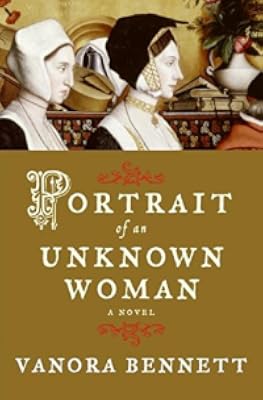
"The year is 1527. The great portraitist Hans Holbein, who has fled the reformation in Europe, is making his first trip to England under commission to Sir Thomas More. In the course of six years, Holbein will become a close friend to the More family and paint two nearly identical family portraits. But closer examination of the paintings reveals that the second holds several mysteries..."Set against the turmoil, intrigue and, tragedy of Henry VIII's court, Portrait of an Unknown Woman vividly show more evokes sixteenth-century England on the verge of enormous change. As the Protestant Reformation sweeps across Europe to lap at England's shores, relations between her king and the Catholic Church begin to plummet-driven by Henry VIII's insatiable need for a male heir and the urgings of his cunning mistress Anne Boleyn-and heresy begins to take hold. As tensions rise, Henry VIII turns to his most trusted servant and defender of Catholic orthodoxy, Sir Thomas More, to keep peace in England, but soon the entire More family find their own lives at risk.At the center of Portrait of an Unknown Woman is Meg Giggs, Sir Thomas More's twenty-three year old adopted daughter. Intelligent, headstrong, and tender-hearted, Meg has been schooled in the healing arts. And though she is devoted to her family, events conspire that will cause Meg to question everything she thought she knew-including the desires of her own heart. As the danger to More and his family increases, two men will vie for Meg's affections: John Clement, her former tutor and More's protege, who shares Meg's passion for medicine but whose true identity will become unclear, and the great Holbein, whose artistic vision will forever alter her understanding of the world.With a striking sense of period detail, Portrait of an Unknown Woman is an unforgettable story of sin and religion, desire and deception. It is the story of a young woman on the brink of sensual awakening and of a country on the edge of mayhem. show lessTags
Recommendations








Member Reviews
This is a very forgettable book.
I know that I read it when it came out, I remember buying it, I remember reading it, I dare say, I even remember what the weather was like. Yet, I didn't remember a single thing from it when I reread it now. I am not saying that I remember every book I've ever read in its fullest, but normally some snippets do come up when the memory gets juggled, but here nothing.
It starts out ok, a solid history story, we are getting to know the characters, have a little drama, a little romance, and then, there is a huge secret that gets revealed and the story turns south.
I don't mind if a historical novel isn't 100% accurate, Ms Bennett wanted to make Clement into a prince ok, fine, but she told it so awkwardly that it show more is just a lot of confusion and head shaking.
Meg who started out as a strong character turned in the end into a 21st century vindictive housewife only to change her again 180 degree on the last ten pages.
I guess I don't understand that when you have a historical figure that was known for being smart and well educated, that you make her into a lovesick puppy who all of a sudden can't reason anymore?
There were just too many story lines that got entangled and enmeshed and made everything into a big mess where at the end Ms Bennett did not see a good way to fix it and waved her author wand and puff, all lifelines are in tune again.
The writing of the characters itself was also at times way too modern, the thought processes and the way the characters acted, which made everything even more unbelievable and less enjoyable to read.
(And even though I said I don't mind inaccuracy that much, if a story gets praised for being well researched and that puts in crocheted lace into the 16th century ... makes me wonder if it was really well researched or not.) show less
I know that I read it when it came out, I remember buying it, I remember reading it, I dare say, I even remember what the weather was like. Yet, I didn't remember a single thing from it when I reread it now. I am not saying that I remember every book I've ever read in its fullest, but normally some snippets do come up when the memory gets juggled, but here nothing.
It starts out ok, a solid history story, we are getting to know the characters, have a little drama, a little romance, and then, there is a huge secret that gets revealed and the story turns south.
I don't mind if a historical novel isn't 100% accurate, Ms Bennett wanted to make Clement into a prince ok, fine, but she told it so awkwardly that it show more is just a lot of confusion and head shaking.
Meg who started out as a strong character turned in the end into a 21st century vindictive housewife only to change her again 180 degree on the last ten pages.
I guess I don't understand that when you have a historical figure that was known for being smart and well educated, that you make her into a lovesick puppy who all of a sudden can't reason anymore?
There were just too many story lines that got entangled and enmeshed and made everything into a big mess where at the end Ms Bennett did not see a good way to fix it and waved her author wand and puff, all lifelines are in tune again.
The writing of the characters itself was also at times way too modern, the thought processes and the way the characters acted, which made everything even more unbelievable and less enjoyable to read.
(And even though I said I don't mind inaccuracy that much, if a story gets praised for being well researched and that puts in crocheted lace into the 16th century ... makes me wonder if it was really well researched or not.) show less
Erasmus, Holbein, Thomas More, Henry VIII - their all here. Actually, this is an engaging novel about relationships set in humanist circles in Renaissance England. Accurately portrays the period thinking and society. Main character is Margaret Clemens (nee Roper) - interestingly drawn Renaissance woman. Loved the story, though the ending was kind of a dud.
Vanora Bennett’s “Portrait of an Unknown Woman” is a fascinating, well researched historical novel about two 16th century men, Sir Thomas More and artist Hans Holbein. Central to the storyline is a young woman who meant much to both of them. The history of the tumultuous times in which these people lived is larger than all the characters put together and makes for a dramatic story.
Whether or not you believe that John Clement was Richard, Duke of York, this is a fascinating book. It gives a real insight into the religious turbulence of the early 16th century, and explains the hidden imagery in Holbein's paintings.It's also a rollicking good story.
Whether or not you believe that John Clement was Richard, Duke of York, this is a fascinating book. It gives a real insight into the religious turbulence of the early 16th century, and explains the hidden imagery in Holbein's paintings.It's also a rollicking good story.
This title talks about passion, painting and politics in sixteenth-century England. The year is 1526. Hans Holbein the Younger is at the beginning of his remarkable career when he travels to England under the patronage of Sir Thomas More. His arrival brings the Renaissance in painting from Europe to Britain. As a guest in the splendid More household in Chelsea, Holbein begins to paint their first family portrait. Little could he know that in a few short years, the family, Tudor society and England itself would have changed beyond recognition. The great household of the courtier and scholar, Sir Thomas More, was famous for its liveliness and learning. More had taken under his patronage distinguished astrologers, artists, politicians and show more men of religion, as well as wards of court, proteges and many others. Two people visiting the great house find themselves irresistibly drawn to Meg Giggs, one of More's foster daughters. One of them is John Clements - dark, tall, elegant - an erstwhile tutor, now practising to become a medical doctor; a man of compelling presence and mysterious background. The other is Holbein himself - warm, ebullient, radical and foreign - sent by the great Erasmus to paint the More family portraits. Meg will find herself powerfully drawn to these two wildly contrasting men. She will love one, and marry the other.
My Thoughts:
I picked this book up to read and learn an insight into the More family. I know quite abit about Thomas More but very little about his family. As I have said before the best way for me to learn history is through historical fiction.
This story is told through the eyes of Meg Giggs, ward of Thomas More. I have found very little about her on the internet so I felt so let down with this book. There may be a SPOILER here so be warned. What the author has done which irritated me has changed history as we know it or have been lead to believe. There has never been conclusive evidence to what really happened to the princes in the tower, but we are lead to believe that they were sent in there by the Uncle, Richard 111 and never came out. In this book they did get out and lived under false names. One was John Clement a fictional character that marreid Meg Giggs. This is what got me mad. Why write a book about real historical figures then change what happened to them. The author may as well have just wrote a book about ‘ a family’ set in that particular time period. This book started to irritate me as I cannot read a historical book with facts changed. Fiction I know is not real but when books are supposed to be set around true events then that is what I prefer. I lost heart in this book and did give up.
So ok I have had a good moan and historical fiction fans don’t be put off by my rant as that is just me and what I like to get from a book. show less
My Thoughts:
I picked this book up to read and learn an insight into the More family. I know quite abit about Thomas More but very little about his family. As I have said before the best way for me to learn history is through historical fiction.
This story is told through the eyes of Meg Giggs, ward of Thomas More. I have found very little about her on the internet so I felt so let down with this book. There may be a SPOILER here so be warned. What the author has done which irritated me has changed history as we know it or have been lead to believe. There has never been conclusive evidence to what really happened to the princes in the tower, but we are lead to believe that they were sent in there by the Uncle, Richard 111 and never came out. In this book they did get out and lived under false names. One was John Clement a fictional character that marreid Meg Giggs. This is what got me mad. Why write a book about real historical figures then change what happened to them. The author may as well have just wrote a book about ‘ a family’ set in that particular time period. This book started to irritate me as I cannot read a historical book with facts changed. Fiction I know is not real but when books are supposed to be set around true events then that is what I prefer. I lost heart in this book and did give up.
So ok I have had a good moan and historical fiction fans don’t be put off by my rant as that is just me and what I like to get from a book. show less
Holbein, the artist, comes to England and comes to the house of renowned Humanist, Thomas More. More has an unusual family set up, with his children and wards, all of which have been given a lot of access to learning. Holbein paints two portraits of the family group, which show the changes that the family undergoes in the period between.
At the start of the book, Sir Thomas More is part of Henry VIII's inner circle, greatly respected. His star, however, is on the wane, as his commitment to the church of Rome takes him ever further from his humanist roots and the King's favour. The main narrator of the novel is Meg, one of More's wards, who makes a good witness being both on the inside and outside of family affairs.
Bennett marries a good show more story as well as a lot of historical detail, as the cover says, it is for fans of Philippa Gregory. The book moves at a good pace, and it is interesting to see a well-covered period from a different angle. show less
At the start of the book, Sir Thomas More is part of Henry VIII's inner circle, greatly respected. His star, however, is on the wane, as his commitment to the church of Rome takes him ever further from his humanist roots and the King's favour. The main narrator of the novel is Meg, one of More's wards, who makes a good witness being both on the inside and outside of family affairs.
Bennett marries a good show more story as well as a lot of historical detail, as the cover says, it is for fans of Philippa Gregory. The book moves at a good pace, and it is interesting to see a well-covered period from a different angle. show less
In order for historical fiction to be really good, it must ring true which this certainly does. There is enough "fictionalization" to make it really interesting (yes, the premise of the two princes in the Tower may be a stretch)while at the same time leading the reader down an accurate historical path.
I especially enjoyed all the background material in the back of the book. A copy of the final More Family painting would also have been helpful.
I had never read anything by Vanora Bennett -- I love Sharon Kay Penman, but I would not pass by another by Bennett.
Reread 5-2020: Still thoroughly enjoyed the book (especially after having read "The Mirror and the Light". This really is more about Sir Thomas More and Hans Holbein. Still, good show more historical read. show less
I especially enjoyed all the background material in the back of the book. A copy of the final More Family painting would also have been helpful.
I had never read anything by Vanora Bennett -- I love Sharon Kay Penman, but I would not pass by another by Bennett.
Reread 5-2020: Still thoroughly enjoyed the book (especially after having read "The Mirror and the Light". This really is more about Sir Thomas More and Hans Holbein. Still, good show more historical read. show less
When I read the book, the expression 'You can't make a silk purse from a sow's ear' repeatedly came to my thoughts. This book is basically a Harlequin romance set in the time of Sir Thomas More and Tudor England. It is the story of Thomas More's ward, Meg Giggs - her education, her interest in medicine, her relationship with her husband (is he who he seems?). The book is set during a time of religious and political upheaval.
Twice, the painter Hans Holbein the Younger stays in the More home and paints a portrait of the family. The descriptions of the paintings and the clever descriptions of the hidden meanings in the paintings kept me interested and kept me reading. I even looked up the two More family paintings on-line and referred to show more them as I read.
The rest of the book? The boy meets girl, the unrequited love, the eventual marriage, the second love interest, the happy(ish) ending? Maybe not so much. show less
Twice, the painter Hans Holbein the Younger stays in the More home and paints a portrait of the family. The descriptions of the paintings and the clever descriptions of the hidden meanings in the paintings kept me interested and kept me reading. I even looked up the two More family paintings on-line and referred to show more them as I read.
The rest of the book? The boy meets girl, the unrequited love, the eventual marriage, the second love interest, the happy(ish) ending? Maybe not so much. show less
Members
- Recently Added By
Lists

Historical Fiction
889 works; 91 members

Books To Get From The Library
115 works; 5 members
Author Information

13 Works 2,072 Members
Some Editions
Awards and Honors
Awards
Distinctions
Common Knowledge
- Canonical title
- Portrait of an Unknown Woman
- Original publication date
- 2007
- People/Characters
- Hans Holbein the Younger; Thomas More; Desiderius Erasmus (ca. 1469-1536); Meg Giggs (Margaret Clement); Henry VIII, King of England
- Important places
- England (Tudor Era)
- Dedication
- For Chris, with love
- First words
- The house was turned upside down and inside out on the day the painter was to arrive.
- Last words
- (Click to show. Warning: May contain spoilers.)So he never saw the bloodred orb deepen in the night sky behind him, above the rooftops he was leaving behind, or the long tail flaming ominously against the stars.
Classifications
Statistics
- Members
- 913
- Popularity
- 29,376
- Reviews
- 32
- Rating
- (3.55)
- Languages
- 6 — Chinese, English, German, Greek, Italian, Portuguese
- Media
- Paper, Audiobook, Ebook
- ISBNs
- 31
- ASINs
- 10