Heavy Wings
by Jie Zhang
On This Page
Description
Offers insight into the frustrations and aspirations behind the 1989 Chinese democracy movement.Tags
Recommendations



















Member Reviews
This isn't one of those books I'd tell all my friends to read but it was a very good read for me. The writing is fine, not astonishing (hard to know what's been lost in translation) but the combination of politics, marriage, life of women during a period when China was trying to rapidly industrialize and develop was surprisingly compelling.
Many Characters and Few Descriptions
Zhang Jie's "Leaden Wings" (sometimes translated as "Heavy Wings") is a difficult read because of the numerous characters and the lack of traditional narrative. It makes up for it by being the first novel I read that was written contemporaneously with the end of the Cultural Revolution.
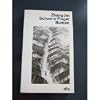
Virago's copy of the book, with a beautiful painting of a factory on the cover, includes a list of characters before the novel begins. This is a helpful resource, but sometimes I found myself looking up two or three characters on a page. Several names were similar and I became confused. The author or the translator also mixed given names with westernized translations of the names. I love Chinese literature and am show more accustomed to the names, but this was just a bit too much for me.
There is no traditional western narrative with an exposition, climax, and resolution. Instead, each chapter looks at how different characters interact with each other. This threw me off because I expected to hear from characters introduced in earlier chapters, such as the orphaned young man who lived with a journalist, but they appeared only sparingly in later chapters.
Instead of a typical plot structure, we have an ongoing conflict: reformers versus Maoists. Both groups are cliquish and disagreements flow from those groups. Tension is shown by one clique speaking to a members of the same clique, such as the young factory workers celebrating a bonus who reveal their thoughts to an older reformer who they don't know is actually a minister in charge of the factory. Zhang Jie's descriptions and personal thoughts about this are very transparent. There are several criticisms of the party structure in China, with non-party members being overlooked or scorned by party-members. There is no subtlety here. While that might make for poor literature, it was no doubt refreshing and insightful for many readers at the time.
There are several positives to this book, however. It is one of only a handful of novels written in the late '70's and early '80's that have been translated. That alone makes the book truly valuable. In addition, the not-so-subtle jabs at the old-liners certainly were brave moves by Zhang Jie. The book also features prominent female characters, including a muckraking but quiet journalist, a poorly-treated widow, and a vacuous wife of an official. All of these characters deserve further treatment, however.
Although I only give this book two stars on account of its' literary merits, I recognize that the book is very important. Students of Chinese reformist history and fans of Chinese literature will find that this book fills a very empty hole. show less
Zhang Jie's "Leaden Wings" (sometimes translated as "Heavy Wings") is a difficult read because of the numerous characters and the lack of traditional narrative. It makes up for it by being the first novel I read that was written contemporaneously with the end of the Cultural Revolution.
Virago's copy of the book, with a beautiful painting of a factory on the cover, includes a list of characters before the novel begins. This is a helpful resource, but sometimes I found myself looking up two or three characters on a page. Several names were similar and I became confused. The author or the translator also mixed given names with westernized translations of the names. I love Chinese literature and am show more accustomed to the names, but this was just a bit too much for me.
There is no traditional western narrative with an exposition, climax, and resolution. Instead, each chapter looks at how different characters interact with each other. This threw me off because I expected to hear from characters introduced in earlier chapters, such as the orphaned young man who lived with a journalist, but they appeared only sparingly in later chapters.
Instead of a typical plot structure, we have an ongoing conflict: reformers versus Maoists. Both groups are cliquish and disagreements flow from those groups. Tension is shown by one clique speaking to a members of the same clique, such as the young factory workers celebrating a bonus who reveal their thoughts to an older reformer who they don't know is actually a minister in charge of the factory. Zhang Jie's descriptions and personal thoughts about this are very transparent. There are several criticisms of the party structure in China, with non-party members being overlooked or scorned by party-members. There is no subtlety here. While that might make for poor literature, it was no doubt refreshing and insightful for many readers at the time.
There are several positives to this book, however. It is one of only a handful of novels written in the late '70's and early '80's that have been translated. That alone makes the book truly valuable. In addition, the not-so-subtle jabs at the old-liners certainly were brave moves by Zhang Jie. The book also features prominent female characters, including a muckraking but quiet journalist, a poorly-treated widow, and a vacuous wife of an official. All of these characters deserve further treatment, however.
Although I only give this book two stars on account of its' literary merits, I recognize that the book is very important. Students of Chinese reformist history and fans of Chinese literature will find that this book fills a very empty hole. show less
First published in 1980, "Leaden Wings" is the story of the attempts by the Ministry of Heavy Industry to modernise Chinese factories. Zhang Jie was divorced when she wrote this novel, and as well as being a satire on Chinese industry, her female characters show the contradictions between being able to get good jobs and rise to high political rank, while their personal lives are constrained by the remnants of the feudal social system. This theme ties in very nicely with "The Good Women of China", which I read recently.
The female characters are mostly rather negative, so Virago's afterward (which seems to be apologising for publishing it) is at pains to explain that Chinese women face different challenges from Western women. I preferred show more the other introduction, written by the translator Gladys Yang, who was brought up in in China, was the first undergraduate ever to study Chinese at Oxford, married a Chinese man and was imprisoned during the Cultural Revolution, so she really understood what the author was trying to convey. show less
The female characters are mostly rather negative, so Virago's afterward (which seems to be apologising for publishing it) is at pains to explain that Chinese women face different challenges from Western women. I preferred show more the other introduction, written by the translator Gladys Yang, who was brought up in in China, was the first undergraduate ever to study Chinese at Oxford, married a Chinese man and was imprisoned during the Cultural Revolution, so she really understood what the author was trying to convey. show less
I'm glad I've read this book.
Theme-wise it is not an easy book, but it reads okay, if you're not paying any attention to the language that is a tid bit outdated.
For me it was very much worth reading, because I'm interested in China and know a little about the country as well as about Eastern European countries.
The things that Zhang Jie describes (bureaucracy, hard work, women at work successfully, not heard at home which causes trouble) are familiar. I knew it was the way things worked in Russia during the Soviet era, but that China also had these features, is new to me.
The book follows several characters, with their own problems, ideals, desires, but ultimately they all go back to the above themes. Very dry descriptions of show more situations, showing in Western eyes absurd situations.
Like I already said: I liked reading this book! show less
Theme-wise it is not an easy book, but it reads okay, if you're not paying any attention to the language that is a tid bit outdated.
For me it was very much worth reading, because I'm interested in China and know a little about the country as well as about Eastern European countries.
The things that Zhang Jie describes (bureaucracy, hard work, women at work successfully, not heard at home which causes trouble) are familiar. I knew it was the way things worked in Russia during the Soviet era, but that China also had these features, is new to me.
The book follows several characters, with their own problems, ideals, desires, but ultimately they all go back to the above themes. Very dry descriptions of show more situations, showing in Western eyes absurd situations.
Like I already said: I liked reading this book! show less
While Jie Zhang's "Leaden Wings" is interesting from a historical and cultural perspective, as a novel it is incredibly dull.
Set in China, the novel succeeds in its portrayal of the upheaval that occurred after the Cultural Revolution in the 1980's. The main focus of the story is whether the traditional way of running a factory is more efficient than new-fangled western ways. What makes it unsuccessful is the endless parade of characters and lack of any substantive movement in plot.
For a short novel (175 pages) this took me such a long time because I couldn't read 20 pages without falling asleep.
Set in China, the novel succeeds in its portrayal of the upheaval that occurred after the Cultural Revolution in the 1980's. The main focus of the story is whether the traditional way of running a factory is more efficient than new-fangled western ways. What makes it unsuccessful is the endless parade of characters and lack of any substantive movement in plot.
For a short novel (175 pages) this took me such a long time because I couldn't read 20 pages without falling asleep.
I discovered an author called Zhang Jie who was published by Virago in the 80s, stunning short story writer.
Roman der Nach-Kulturrevolutionszeit
Sep 10, 2017German
Members
- Recently Added By
Lists

CHINESE FICTION (in translation)
33 works; 1 member
Author Information

12+ Works 316 Members
Awards and Honors
Series
Belongs to Publisher Series
Common Knowledge
- Canonical title
- Heavy Wings
- Original title
- 沉重的翅膀
- Alternate titles
- Leaden Wings
- Original publication date
- 1981
- People/Characters
- Zhang Ziyun; Ye Zhiqiu; Tian Shouchung; He Jiabin; Chen Yongming
- Important places
- Beijing, China
- Dedication
- Dedicated to those who work for the future of China, even at the expense of their own.
- First words
- From the kitchen came the tantalizing aroma of beetroot soup and the spirited sounds of a cleaver on a chopping board.
- Last words
- (Click to show. Warning: May contain spoilers.)He glances at the luminous dial of his calendar watch: 3:41, New Year's Day, 1981.
- Blurbers
- Salisbury, Harrison E.
Classifications
- Genres
- Fiction and Literature, General Fiction
- DDC/MDS
- 895.1 — Literature & rhetoric Literatures of other languages Literatures of East and Southeast Asia Chinese
- LCC
- PL2929.5 .H2 — Language and Literature Languages and literatures of Eastern Asia, Africa, Oceania Languages of Eastern Asia, Africa, Oceania Chinese language and literature Chinese literature Individual authors and works
Statistics
- Members
- 150
- Popularity
- 219,226
- Reviews
- 7
- Rating
- (3.11)
- Languages
- 6 — Dutch, English, Finnish, French, German, Russian
- Media
- Paper
- ISBNs
- 13
- ASINs
- 2