
A Northern Light
by Jennifer Donnelly
On This Page
Description
In 1906, sixteen-year-old Mattie, determined to attend college and be a writer against the wishes of her father and fiance, takes a job at a summer inn where she discovers the truth about the death of a guest. Based on a true story.Tags
Recommendations




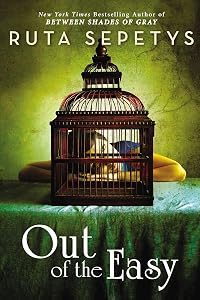
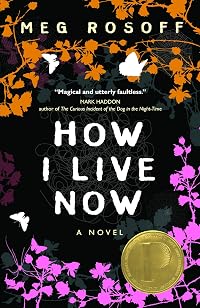
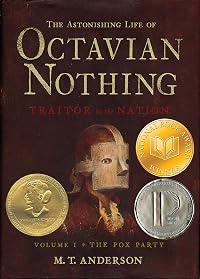


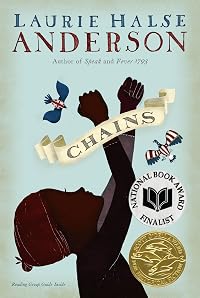
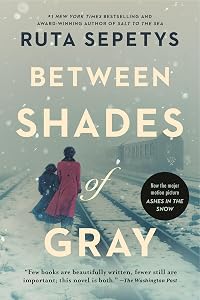
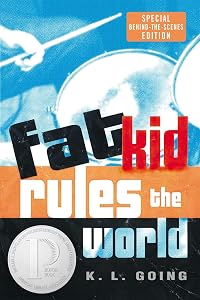

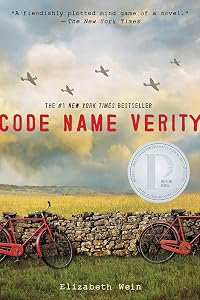
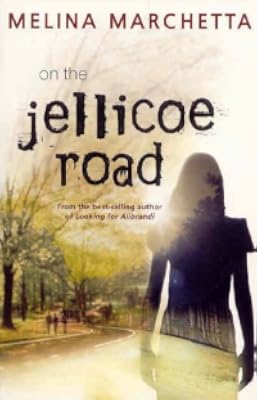



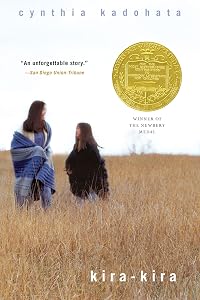

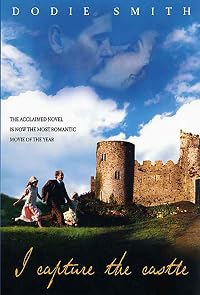
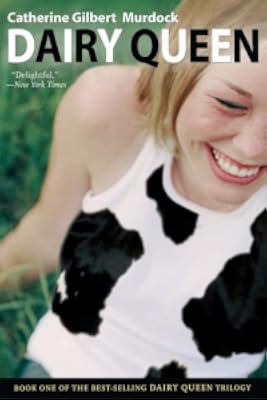


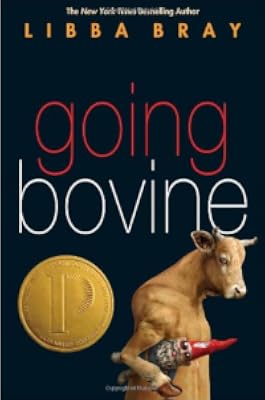



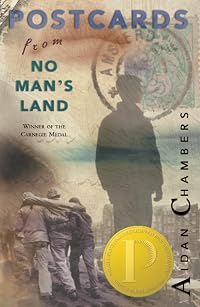

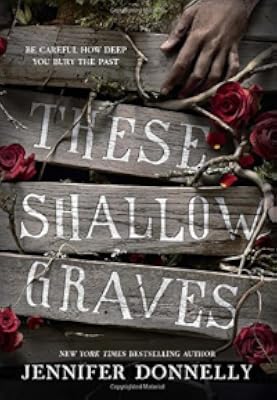











Member Recommendations

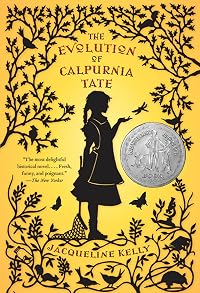
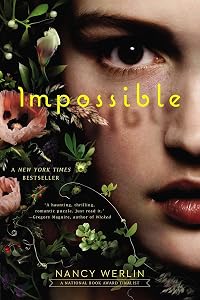
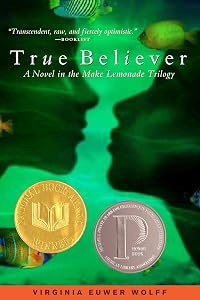
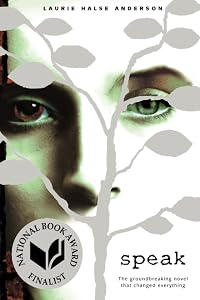
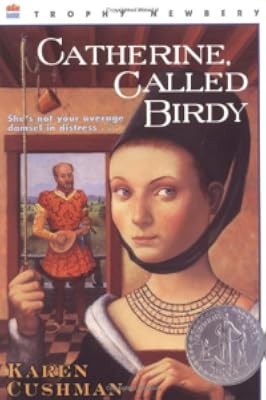
Caramellunacy Dairy Queen and A Northern Light are both about a young woman doing something unconventional (in Dairy Queen deciding to coach/play football)that leads her to reexamine her family relationships. There was a very similar feel to the two girls' reactions to their fathers and the burdens their rural lives placed on their dreams to do something different.
20

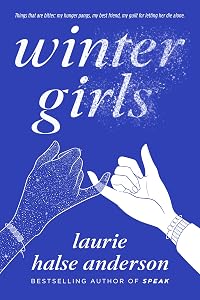
missmaddie Similar topic - young women from the countryside trying to find romance and their identity.
31
FutureMrsJoshGroban Both are excellent stories about strong, intelligent young women desperately trying to leave their difficult home lives behind and get into college and a new life.
20

konallis Also based on the Grace Brown murder case.

meggyweg Two historical novels about a young girl about to graduate from school, trying to decide between college and marriage.
Mareofthesea Both are haunting novels about making difficult decisions and trying to break away from what is expected by others.

Member Reviews
Mattie Gokey is one of the most engaging characters I have read about in fiction in a long time. She is intelligent and hardworking, yet conflicted about her goals in life. She wants an education, but isn't sure if it is worth the cost of leaving her home, her family and her boyfriend behind. At first glance that might not seem to be the most original of plots, but Mattie is an amazingly intense character who is living through a very hard time.
This story resonated with me because the decisions that Mattie has to make; dealing with loyalty, breaking promises, putting others first or doing what's best for her; these are issues that we all have to deal with at one time or another. Mattie struggles to find that balance between personal show more achievement and self-sacrifice. She has to determine what cost her personal achievements are worth, and whether it is okay to put her own goals ahead of the needs of others.
Mattie is very smart, extremely creative and has a love of learning (she learns a new word from the dictionary every day). She has a great skill for creative writing, and her teacher encourages her by exposing her to the works of other great writers and poets. It was hard at times, reading Mattie's story and knowing that if she stays on the farm or marries a local boy her creativity will be smothered by the tasks of daily life.
This book takes the form of two parallel storylines, both told by Mattie in the first person. One storyline is written in the present tense as Mattie works at the Glenmore Hotel during the summer that Grace Brown drowns in the lake. (The tale of Grace Brown is based the true story of her death by drowning in a lake in the Adirondacks.)
The other storyline is written in past tense and starts near the end of the school year before Mattie's graduation examinations. In this section we discover that when Mattie's mom died she made Mattie promise to stay and take care of the family. Initially this doesn't seem to be a problem, but then Mattie finds out that she has an opportunity to study at Barnard. Not only does she not have the money to go, but she knows that she should stay to help her family and keep her promise to her mother. She has an idea though - if she can just talk her father into letting her work at the Glenmore Hotel then she can save enough money for school (and she'll worry about her promise later).
Now, I already knew from the other storyline that Mattie found a way to work at the Glenmore Hotel, so it just seemed like I was waiting for the two storylines to come together; to discover how Mattie ends up there. As the story went on though, I realized that Mattie's tale was not so clear-cut. Trials and troubles arise, not to mention the complications of a love interest, all of which put her dreams of higher learning in jeopardy.
It's hard for me to convey how much I liked this book. I've never even been to the Adirondacks, yet as I listened to this story I could relate so much to Mattie that it felt like I was reading about someone I knew. The setting was so real that I felt like I had been there.
This book should be a classic in young adult literature right alongside books like Anne of Green Gables and The Girl of the Limberlost. I mention these two books because Mattie reminded me so much of their main characters. Mattie has ingenuity and a strong spirit like Elnora in The Girl of the Limberlost, and the brains and creativity of Anne from the Green Gables series.
I would not recommend this book for young children though, because Mattie does live through some terrible and unpleasant situations. Some of the topics discussed include: death, sickness, racism, sex, illegitimate children, and a very entertaining scene where the girls at the Glenmore Hotel get revenge on a dirty old man.
I wholeheartedly recommend this book to young adults and adults alike. I was sad to come to the end of the book, hoping to stretch out my time in Mattie's world as long as possible.
Although I own a copy of this book, this review refers to the audiobook version of A Northern Light which I checked out from the library. I thought that the narrator was a very good fit for this audiobook (though I did read elsewhere that at least one reviewer didn't like the voice of the narrator). show less
This story resonated with me because the decisions that Mattie has to make; dealing with loyalty, breaking promises, putting others first or doing what's best for her; these are issues that we all have to deal with at one time or another. Mattie struggles to find that balance between personal show more achievement and self-sacrifice. She has to determine what cost her personal achievements are worth, and whether it is okay to put her own goals ahead of the needs of others.
Mattie is very smart, extremely creative and has a love of learning (she learns a new word from the dictionary every day). She has a great skill for creative writing, and her teacher encourages her by exposing her to the works of other great writers and poets. It was hard at times, reading Mattie's story and knowing that if she stays on the farm or marries a local boy her creativity will be smothered by the tasks of daily life.
This book takes the form of two parallel storylines, both told by Mattie in the first person. One storyline is written in the present tense as Mattie works at the Glenmore Hotel during the summer that Grace Brown drowns in the lake. (The tale of Grace Brown is based the true story of her death by drowning in a lake in the Adirondacks.)
The other storyline is written in past tense and starts near the end of the school year before Mattie's graduation examinations. In this section we discover that when Mattie's mom died she made Mattie promise to stay and take care of the family. Initially this doesn't seem to be a problem, but then Mattie finds out that she has an opportunity to study at Barnard. Not only does she not have the money to go, but she knows that she should stay to help her family and keep her promise to her mother. She has an idea though - if she can just talk her father into letting her work at the Glenmore Hotel then she can save enough money for school (and she'll worry about her promise later).
Now, I already knew from the other storyline that Mattie found a way to work at the Glenmore Hotel, so it just seemed like I was waiting for the two storylines to come together; to discover how Mattie ends up there. As the story went on though, I realized that Mattie's tale was not so clear-cut. Trials and troubles arise, not to mention the complications of a love interest, all of which put her dreams of higher learning in jeopardy.
It's hard for me to convey how much I liked this book. I've never even been to the Adirondacks, yet as I listened to this story I could relate so much to Mattie that it felt like I was reading about someone I knew. The setting was so real that I felt like I had been there.
This book should be a classic in young adult literature right alongside books like Anne of Green Gables and The Girl of the Limberlost. I mention these two books because Mattie reminded me so much of their main characters. Mattie has ingenuity and a strong spirit like Elnora in The Girl of the Limberlost, and the brains and creativity of Anne from the Green Gables series.
I would not recommend this book for young children though, because Mattie does live through some terrible and unpleasant situations. Some of the topics discussed include: death, sickness, racism, sex, illegitimate children, and a very entertaining scene where the girls at the Glenmore Hotel get revenge on a dirty old man.
I wholeheartedly recommend this book to young adults and adults alike. I was sad to come to the end of the book, hoping to stretch out my time in Mattie's world as long as possible.
Although I own a copy of this book, this review refers to the audiobook version of A Northern Light which I checked out from the library. I thought that the narrator was a very good fit for this audiobook (though I did read elsewhere that at least one reviewer didn't like the voice of the narrator). show less
Even though it's been a while since I've read this book, I still remember pulling it fresh off the shelves in the YA section. A Northern Light is haunting and ridden with the kind of juicy grit most novels are afraid to unveil. Much like real life, the endings aren't always happy ones, and the main characters don't always become shining heroes. But this novel gripped and held me from start to finish.
The Great Camps of the Adirondacks, now only shadows of their former selves, bring back a time when getting away meant actually leaving the everyday, and recreation was gracious and restful. Opening with a perfect description “When summer comes to the North Woods, time slows down.” Jennifer Donnelly’s novel A Northern Light pulls the reader into the early twentieth century in the area around Big Moose Lake.
When I was a young teen, a family hired me to accompany them and their two small girls on vacation to Eagle Bay. In a time before satellite television and computers, taking a vacation in the North Country meant time away from civilization. Then it was still possible to imagine the women in their white sweeping dresses on wide show more lawns, men oaring across a lake in the afternoon quiet, the bustle of the servants getting everything prepared.
The story is told in first person narrative by Mattie, a 16 year old girl, whose promise to her mother on her death bed was to take care of the family. She escapes the tedious work on their poor farm to a paying job at a nearby camp. She has been accepted to college, unusual for her time, and is torn between her obligation to her family, the expectation that she will marry a local man, and her desire to become a writer. Each chapter opens with her “word of the day”, and she finds encouragement from a local teacher, and her friend Weaver, the only black man in Eagle Bay, to follow her dreams.
Mattie questions her world constantly, looking at her married friends, the women she meets at the camp, the man she may marry and her family. When a young woman is drowned by a wealthy man (The Great American Tragedy) she wonders about a woman’s place, her place and how the world may change.
This has been one of my favorite books as I connect with both Mattie’s struggle to understand the traditional role of women (less restrictive than my seventies recollections, but still woven firmly into my understanding of life) and with the beautiful Adirondack backdrop against which this heroic story is set. show less
When I was a young teen, a family hired me to accompany them and their two small girls on vacation to Eagle Bay. In a time before satellite television and computers, taking a vacation in the North Country meant time away from civilization. Then it was still possible to imagine the women in their white sweeping dresses on wide show more lawns, men oaring across a lake in the afternoon quiet, the bustle of the servants getting everything prepared.
The story is told in first person narrative by Mattie, a 16 year old girl, whose promise to her mother on her death bed was to take care of the family. She escapes the tedious work on their poor farm to a paying job at a nearby camp. She has been accepted to college, unusual for her time, and is torn between her obligation to her family, the expectation that she will marry a local man, and her desire to become a writer. Each chapter opens with her “word of the day”, and she finds encouragement from a local teacher, and her friend Weaver, the only black man in Eagle Bay, to follow her dreams.
Mattie questions her world constantly, looking at her married friends, the women she meets at the camp, the man she may marry and her family. When a young woman is drowned by a wealthy man (The Great American Tragedy) she wonders about a woman’s place, her place and how the world may change.
This has been one of my favorite books as I connect with both Mattie’s struggle to understand the traditional role of women (less restrictive than my seventies recollections, but still woven firmly into my understanding of life) and with the beautiful Adirondack backdrop against which this heroic story is set. show less
"No one is a failure who has books." Oops, that's supposed to read, “No one is a failure who has friends.” Wait a minute! Aren't they one in the same!?!
I met a new friend, in yet another book, that I admire and care for deeply this week. Her name is Matilda Gokey, or Mattie, and she lives in the North Woods of New York state. She is 16 and she is 17 for her story travels two separate timelines; one story occurs as she carries out chores on her family’s homestead, and the other story takes place at the Glenmore Inn where she toils as a maid.
While living with the family, Mattie chooses a word for the day from her deceased mother’s prized dictionary. (All stories about Mattie’s time with the family begin with the word of the day show more separated phonetically in the chapter title.) These words are her salvation as she toils caringly for her three younger sisters and overworked father.
Her time at Glenmore is punctuated by the untimely death of an inn guest. Grace Brown is found at dusk floating on the camp’s lake. She and her friend Carl Grahm, or is it Chester Gillette, took a little skiff out after lunch and haven’t been seen since. Well, that is before Grace’s body turns up.
In these parallel stories, Mattie has made promises to the recently dead. For her mother, she promises to look after the family, and for Grace Brown she promises to burn the letters written between Grace and Chester, oh, I mean Carl. Did you know it was a sin to break a death bed promise? Mattie just knows she will come face-to-face with their ghosts if she does.
Jennifer Donnelly has written an extremely engaging story in A Northern Light. This award winner, for the young adult crowd, is perfect for a mother/daughter book club. Given the daughter is mature and understands the facts of life. Think of this book as a Laura Ingalls story for mature audiences.
If the second story sounds familiar, that is because it is based on the 1906 murder which inspired Theodore Dreiser’s An American Tragedy.
This was one of those books I carried everywhere and didn’t want to put down. Not even when I was called to supper. Now, you know it’s a special friend, when you are willing to pass up food! show less
I met a new friend, in yet another book, that I admire and care for deeply this week. Her name is Matilda Gokey, or Mattie, and she lives in the North Woods of New York state. She is 16 and she is 17 for her story travels two separate timelines; one story occurs as she carries out chores on her family’s homestead, and the other story takes place at the Glenmore Inn where she toils as a maid.
While living with the family, Mattie chooses a word for the day from her deceased mother’s prized dictionary. (All stories about Mattie’s time with the family begin with the word of the day show more separated phonetically in the chapter title.) These words are her salvation as she toils caringly for her three younger sisters and overworked father.
Her time at Glenmore is punctuated by the untimely death of an inn guest. Grace Brown is found at dusk floating on the camp’s lake. She and her friend Carl Grahm, or is it Chester Gillette, took a little skiff out after lunch and haven’t been seen since. Well, that is before Grace’s body turns up.
In these parallel stories, Mattie has made promises to the recently dead. For her mother, she promises to look after the family, and for Grace Brown she promises to burn the letters written between Grace and Chester, oh, I mean Carl. Did you know it was a sin to break a death bed promise? Mattie just knows she will come face-to-face with their ghosts if she does.
Jennifer Donnelly has written an extremely engaging story in A Northern Light. This award winner, for the young adult crowd, is perfect for a mother/daughter book club. Given the daughter is mature and understands the facts of life. Think of this book as a Laura Ingalls story for mature audiences.
If the second story sounds familiar, that is because it is based on the 1906 murder which inspired Theodore Dreiser’s An American Tragedy.
This was one of those books I carried everywhere and didn’t want to put down. Not even when I was called to supper. Now, you know it’s a special friend, when you are willing to pass up food! show less
The first five-star book I have read in a while, YA or adult. Set in the Adirondacks in 1906, A Northern Light is the story of Mattie Gokey, who, after her mother's death, has shouldered most of the responsibility for her younger sisters and the family farm. She dreams of becoming a writer, and has a teacher who wants to help her get to college, but she promised her mother on her deathbed that she would take care of the family. Eventually, Mattie's father allows her to spend a summer working at a hotel for tourists; there, a guest gives Mattie a bundle of letters with the instructions to burn them. Not long after, the woman's body is dragged from the lake, and her male companion nowhere to be found. Reading the letters, Mattie discovers show more the couple's real story, and the woman's death is what propels her to leave and live her own life after all.
It is a quiet, not sensational, plot, but what is incredible about this book is the characters - Mattie herself, but also her black friend Weaver, her childhood friend (now the mother of twins) Minnie, her father and sisters, her teacher Miss Wilcox, her beau Royal Loomis, and Emmie Hubbard, who struggles to take care of seven children on her own. No one's life is easy, and all are brought to life in vivid detail; the author did a tremendous amount of research, and the story is deeply realistic without being packed with unnecessary historical facts.
I'm at a loss to describe how amazing this book is; you root so hard for Mattie, but her decision is a hard one and she is beset by constant obstacles. Words keep her going; she chooses a word of the day from her dictionary every morning (these words stand in for chapter numbers or headings), and finds a way to apply that word or another one to her situation throughout the day. She is strong, unselfish, and pragmatic throughout the whole book, but follows her dream in the end - and you cheer for her.
"...but I wondered sometimes, how do you stand up like a man when you're a girl?" (33)
"God took her life and she took yours." -Weaver
...
"I'm not sorry. It's true." -Weaver
"Lots of things are true. Doesn't mean you can go round saying them." -Minnie (36)
...It's unkind to leave the dead all alone in the dark. They have darkness enough ahead of them. (135)
"How old are you...seventeen or seven? Don't you know that what should be and what is are two different things?" (260)
"You are many, many things, Mathilda Gokey, but selfish isn't one of them." (309)
There's no going back once you're already gone. (377) show less
It is a quiet, not sensational, plot, but what is incredible about this book is the characters - Mattie herself, but also her black friend Weaver, her childhood friend (now the mother of twins) Minnie, her father and sisters, her teacher Miss Wilcox, her beau Royal Loomis, and Emmie Hubbard, who struggles to take care of seven children on her own. No one's life is easy, and all are brought to life in vivid detail; the author did a tremendous amount of research, and the story is deeply realistic without being packed with unnecessary historical facts.
I'm at a loss to describe how amazing this book is; you root so hard for Mattie, but her decision is a hard one and she is beset by constant obstacles. Words keep her going; she chooses a word of the day from her dictionary every morning (these words stand in for chapter numbers or headings), and finds a way to apply that word or another one to her situation throughout the day. She is strong, unselfish, and pragmatic throughout the whole book, but follows her dream in the end - and you cheer for her.
"...but I wondered sometimes, how do you stand up like a man when you're a girl?" (33)
"God took her life and she took yours." -Weaver
...
"I'm not sorry. It's true." -Weaver
"Lots of things are true. Doesn't mean you can go round saying them." -Minnie (36)
...It's unkind to leave the dead all alone in the dark. They have darkness enough ahead of them. (135)
"How old are you...seventeen or seven? Don't you know that what should be and what is are two different things?" (260)
"You are many, many things, Mathilda Gokey, but selfish isn't one of them." (309)
There's no going back once you're already gone. (377) show less
Historical fiction loaded with a myriad of details in 1906 small town life in the North Woods near the Canadian border. Mattie Gokey (Anglicized from the French) longs to finish high school, go to college, and become a writer. She grieves for her mother, recently died from cancer, and tries to understand her distant, stern father who also grieves. He depends on Mattie to care for the household, help with the farm, and maintain order with her younger sisters; Mattie struggles to not resent her older brother who fought with dad & ran away. Her father cannot imagine Mattie leaving them. She is thrilled when Royal Loomis, handsome neighbor, begins to courts her, and wants her to marry him, and settle down to a farming life. As these show more conflicting obligations begin to build, Mattie goes to work at the Glenmore, one of the huge resort hotels on the lake, & becomes drawn into a terrible tragedy, the disappearance of one of the visitors and the discovery of his drowned young woman companion- a mystery that adds to to the suspense. Mattie does have good friends, including Weaver, an African American boy who is also determined to head to college & her beloved teacher, Miss Wilcox, who turns out to have a secret life of her own. Themes of serving family v.s. finding one's own path, feminism, racism, among others lifts this story beyond just a coming of age for a young woman. show less
This is a terrific historical fiction YA book that combines true crime with an excellent coming-of-age narrative of self-discovery. This novel is set in the North Woods of New York in 1906. Young Mattie Gokey bears the responsibility of caring for her three younger sisters (and her destitute neighbors) and helping her father tend their 60-acre farm following the death of her mother and angry departure of her older brother. While she lives the life of a poor farm girl, she is captivated by books, enchanted by words, and has the support and encouragement of her worldly and gentle teacher to write true to her inner voice and dream of a college education. The book frankly presents a moving first-person narrative that bears witness to show more poverty, grief, racism, abuse, and the precarious path of women who desire education. Mattie tries to do right by her family and herself, while also falling in love with a handsome neighboring farm boy. She persuades her father to permit her to earn extra money by working in a local lake resort, where a young guest makes a mysterious request of her, and soon after dies under mysterious circumstances. This young guest is Grace Brown, an actual murder victim from 1906, whose murder is the basis of Theodore Dreiser's An American Tragedy. This book is very well done, and a wonderful story for young adult readers. I listened to an excellent narration by Hope Davis. My only complaint was the constant shift in time of the narration. The whole book spans a few months, but the action shifts between events, and was sometimes hard to follow on audio.
Curriculum: would be an interesting mentor text for the examination of how authors portray real historical events in works of fiction.
Donnelly, J. (2004). A northern light. Orlando: Harcourt, Inc. show less
Curriculum: would be an interesting mentor text for the examination of how authors portray real historical events in works of fiction.
Donnelly, J. (2004). A northern light. Orlando: Harcourt, Inc. show less
Members
- Recently Added By
Published Reviews
Donnelly's novel begins with high drama drawn from history: Grace Brown's body is discovered, and her murder is the framework for this coming-of-age story set in upstate New York in 1906. Sixteen-year-old Mattie Gokey is a waitress at the Glenmore Hotel when Brown is murdered. As she learns Brown's story, her narrative shifts between the goings-on at the hotel and her previous year at home: show more her toil at the farm; her relationship with her harsh, remote father; her pain at being forbidden to accept a college scholarship. "Plain and bookish," Mattie wonders if she must give up her dream of writing if she marries. Donnelly adds a crowd of intriguing, well-drawn secondary characters whose stories help Mattie define her own desires and sense of self. show less
added by kthomp25
Lists

Top Five Books of 2015
811 works; 241 members

Struggle for Freedom
69 works; 4 members

Boarding House and Hotel Fiction
73 works; 25 members

Carnegie Medal books I've read (shortlist and winners)
86 works; 17 members

SantaThing 2014 Gifts
299 works; 17 members

Blue Pyramid 1,276 Best Books of All Time
1,248 works; 32 members

KayStJ's to-read list
1,616 works; 11 members

Most Popular Young Adult Lit on LT
100 works; 4 members

Five star books
1,767 works; 110 members

Carnegie Medal Winners In Order
85 works; 1 member

Frequently sought stories - Name that Book group
149 works; 11 members

Slightly Foxed 1
21 works; 1 member
Talk Discussions
Past Discussions
Found: Girl learns of death in a lake. in Name that Book (October 2021)
Author Information

22+ Works 18,685 Members
Jennifer Donnelly was born in Port Chester, New York in 1963. She majored in English literature and European history at the University of Rochester. Her books for adults include The Tea Rose, The Winter Rose, and The Wild Rose. She is also the author of a picture book for children entitled Humble Pie and several young adult novels including show more Revolution and These Shallow Graves. A Northern Light was awarded Britain's Carnegie Medal, the Los Angeles Times Book Prize for Young Adult Fiction, and a Michael L. Printz Honor. (Bowker Author Biography) show less
Some Editions
Awards and Honors
Awards
Distinctions
Notable Lists
Work Relationships
Is abridged in
Has as a student's study guide
Common Knowledge
- Canonical title
- A Northern Light
- Original title
- A Northern Light
- Alternate titles
- A Gathering Light
- Original publication date
- 2003
- People/Characters
- Matilda "Mattie" Gokey; Weaver Smith; Royal Loomis; Emily Wilcox (Baxter); Grace Brown; Abby Gokey (show all 10); Lou Gokey; Beth Gokey; Michael Gokey; Tommy Hubbard
- Important places
- Adirondack Mountains, New York, USA; New York, USA; North Woods, New York, USA; USA
- Important events
- Grace Brown's Murder (1906)
- Epigraph
- "And if the many sayings of the wise
Teach of submission I will not submit
But with a spirit all unreconsciled
Flash an unquenched defiance to the stars."
Adelaide Crapsey
Saranac Lake, 1913 - Dedication
- For Megan, who escaped from the enchanted forest
- First words
- When summer comes to the North Woods, time slows down.
- Quotations
- It was one more hard and hopeless thing, and I was tired of hard and hopeless things.
- Last words
- (Click to show. Warning: May contain spoilers.)My life.
- Blurbers
- Turow, Scott; Anderson, M.T.
- Original language*
- Engels
*Some information comes from Common Knowledge in other languages. Click "Edit" for more information.
Classifications
- Genres
- Teen, Fiction and Literature, Young Adult, Historical Fiction
- DDC/MDS
- 813 — Literature & rhetoric American literature in English American fiction in English
- LCC
- PZ7 .D7194 — Language and Literature Fiction and juvenile belles lettres Fiction and juvenile belles lettres Juvenile belles lettres
- BISAC
Statistics
- Members
- 4,259
- Popularity
- 3,567
- Reviews
- 176
- Rating
- (3.99)
- Languages
- 6 — Dutch, English, French, German, Italian, Portuguese
- Media
- Paper, Audiobook, Ebook
- ISBNs
- 39
- ASINs
- 18