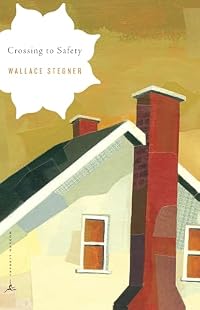
Crossing to Safety
by Wallace Earle Stegner
On This Page
Description
Called a "magnificently crafted story...brimming with wisdom" by Howard Frank Mosher in The Washington Post Book World, Crossing to Safety has, since its publication in 1987, established itself as one of the greatest and most cherished American novels of the twentieth century. Tracing the lives, loves, and aspirations of two couples who move between Vermont and Wisconsin, it is a work of quiet majesty, deep compassion, and powerful insight into the alchemy of friendship and marriage.Tags
Recommendations

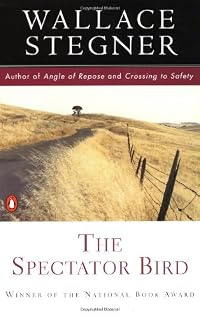
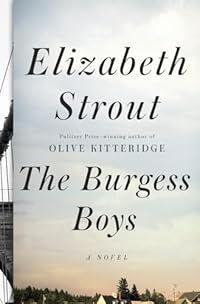
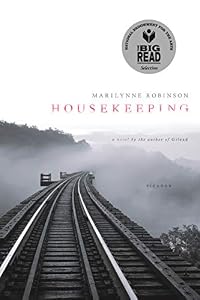

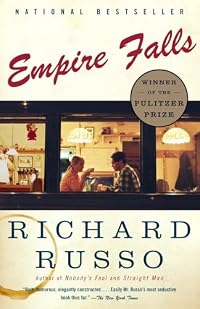

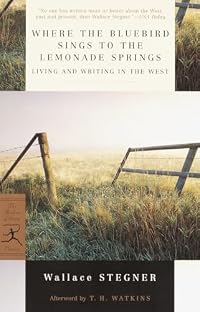




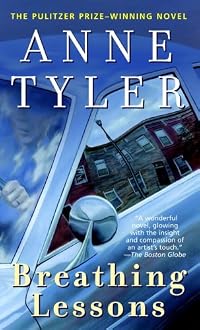
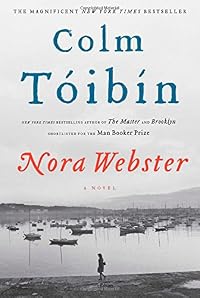
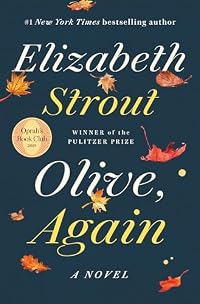
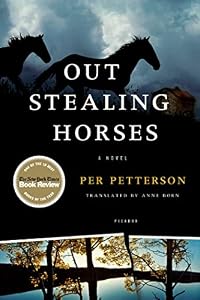
Member Recommendations
Citizenjoyce Another exploration of a tyrant who supposedly loves his family.
30


beyondthefourthwall Gorgeously written character-driven sagas of New Englanders from early adulthood onwards.

beyondthefourthwall Lovely, warm, character-driven stories of New England friendships and family.
Member Reviews
I wish I had read this book in my 30s, 30 being when you actually first become a real adult. I wish I hd done a second reading in my late 40s, early 50s. If wishes were horses .... Like Moby-Dick, this is a book that is a completely different book each time you read it. But here I am, early 70s reading it for the first time.
I enjoyed it from the start. The story of young academics took me back to my time in college, sitting in groups of other students talking about deep thoughts and grand plans, the whole of our futures spread out before us, we capable of taking over and improving the world and the lives of everyone. Dreams fade, Nature rises, Time controls.
Where I live now, we are all on the same path, as if on a pilgrimage to that show more final day. For many of us, this is the last place we will live. Couples, like the couples in this book, face the reality of who will survive whom. In some cases it is clear, but even then some surprises erupt. For some, the answer of who will survive the other has already been answered as is the question of how will I manage to carry on. For others, that question looms still. Which of us will remain and the other not? But what stuck me the most is that, when that day comes, whichever your direction, regardless of friends and family surrounding you, you will go through it absolutely and utterly ... alone. show less
I enjoyed it from the start. The story of young academics took me back to my time in college, sitting in groups of other students talking about deep thoughts and grand plans, the whole of our futures spread out before us, we capable of taking over and improving the world and the lives of everyone. Dreams fade, Nature rises, Time controls.
Where I live now, we are all on the same path, as if on a pilgrimage to that show more final day. For many of us, this is the last place we will live. Couples, like the couples in this book, face the reality of who will survive whom. In some cases it is clear, but even then some surprises erupt. For some, the answer of who will survive the other has already been answered as is the question of how will I manage to carry on. For others, that question looms still. Which of us will remain and the other not? But what stuck me the most is that, when that day comes, whichever your direction, regardless of friends and family surrounding you, you will go through it absolutely and utterly ... alone. show less
My second book by [[Wallace Stegner]] (the first was [Angle of Repose]) has convinced me that Stegner is an excellent writer. In [Crossing to Safety], Stegner confidently portrays the friendship of two couples who meet as they are just starting out in the 1930s and continues through the next 35 years of friendship. Larry and Sally, Sid and Charity meet in Madison, Wisconsin as the Depression is in full swing. Larry and Sid are both trying to carve a place in academia as English professors and writers. The difference is that Sid is incredibly wealthy through inherited money and Larry and Sally are living on a shoestring budget, not knowing where next month's rent is coming from. Sid and Charity, in essence, adopt the couple, demanding show more that they let them help monetarily because they need and want them as friends. But, though Sid and Charity have the money, it is quickly clear that Larry has the literary talent, though it will take time for him to make a living from it. Almost 40 years after they meet, Charity's deteriorating health precipitates a return of both couples to a summer home that they all stayed in for an extended period of time at the beginning of their friendship, and this prompts Larry to tell the story of the couples' friendship.
The real heart of the book is the women. Charity is the driving force behind everything that happens in this book. She always has a plan, whether it's for the activities of the day or the long-term plans for each couple. Her ideas come from a place of love but become more and more rigid and controlling as the book progresses. Sally is a quiet, steadying force in the book as she works her life around a fight with polio and losing the use of her legs. As Charity gets sicker and sicker, her need for control might ruin the relationships she's worked so hard to develop.
I thought this story was skillfully told and gave me a lot to think about. Because I didn't love any of the characters, I won't end up ranking it as a favorite, but I recognize it's excellence nonetheless. show less
The real heart of the book is the women. Charity is the driving force behind everything that happens in this book. She always has a plan, whether it's for the activities of the day or the long-term plans for each couple. Her ideas come from a place of love but become more and more rigid and controlling as the book progresses. Sally is a quiet, steadying force in the book as she works her life around a fight with polio and losing the use of her legs. As Charity gets sicker and sicker, her need for control might ruin the relationships she's worked so hard to develop.
I thought this story was skillfully told and gave me a lot to think about. Because I didn't love any of the characters, I won't end up ranking it as a favorite, but I recognize it's excellence nonetheless. show less
A wonderful novel about a friendship between two couples that spans 40 years. Larry and Sally and Charity and Sid first meet when the two men are both new instructors at the University of Wisconsin in Madison at the height of the Depression. The story is bookended by Larry and Sally's return to their friends' summer compound in Vermont in 1972, after a bit of an absence. In between, Stegner tells their story through several pivotal moments - job loss, illness, travel abroad - that illustrate both the connections between the couples and the differences between them.
This is a quiet novel featuring very real and fully developed characters. Interestingly, Stegner seems more interested in the two women and unlike a lot of male writers, he show more does an excellent job in bringing them to the page as fully realized individuals. My only real complaint about the book is that I wanted more - more of these fascinating characters and more of their relationship.
4.25 stars show less
This is a quiet novel featuring very real and fully developed characters. Interestingly, Stegner seems more interested in the two women and unlike a lot of male writers, he show more does an excellent job in bringing them to the page as fully realized individuals. My only real complaint about the book is that I wanted more - more of these fascinating characters and more of their relationship.
4.25 stars show less
I don't care if this book is about nothing in particular -- anything this well written, with such delightful metaphors and turns of phrase, is worth an investment of time. Stegner is a prose stylist of high merit, but all that stylistic effort would be worth a lot less if his object of focus wasn't an earnest pursuit of truth. And the truth that Stegner is pursuing here concerns friendship, why we make them, how we build them, how we sustain them, and why they come to mean something to us, even when they make us unhappy. And in this sense, the book is about something substantial. It only appears to be about nothing because friendship often has what feels like a transparency to it -- we see right through it most of the time, treating it show more unproblematically, like it is always there and will always be there. In a more (or less) modern sense Crossing to Safety is a book about nothing in the same way that Seinfeld was a show about nothing. In some ways, they are both about the same thing.
Throughout the book, I can feel the motivations that these characters have and see how their personalities play out in the context of sustaining a lifelong friendship. Anyone who has truly had friends knows that friendship is not always easy. Sometimes it is and we can just luxuriate in each other's presence and our affability, humor, love, and magnanimity make friendship so enjoyable. But there are also times when a person's (our own included) rough qualities, insecurities, foolishness, pettiness, and jealousies can scrape and irritate. I recognize in this story elements of my own predilections as a friend. I recognize my own wants and frustrations from my own friendships. I see my own desire to reach out and to connect in stark relief (sometimes) against the vast social media nothingness -- Goodreads included, unfortunately.
In this combination of true motive and true situations in which it feels like the characters could have made other decisions, but didn't, I think Stegner has crafted a reflective piece that anyone who values their friendships should read. show less
Throughout the book, I can feel the motivations that these characters have and see how their personalities play out in the context of sustaining a lifelong friendship. Anyone who has truly had friends knows that friendship is not always easy. Sometimes it is and we can just luxuriate in each other's presence and our affability, humor, love, and magnanimity make friendship so enjoyable. But there are also times when a person's (our own included) rough qualities, insecurities, foolishness, pettiness, and jealousies can scrape and irritate. I recognize in this story elements of my own predilections as a friend. I recognize my own wants and frustrations from my own friendships. I see my own desire to reach out and to connect in stark relief (sometimes) against the vast social media nothingness -- Goodreads included, unfortunately.
In this combination of true motive and true situations in which it feels like the characters could have made other decisions, but didn't, I think Stegner has crafted a reflective piece that anyone who values their friendships should read. show less
“Of all the people I know, Sid Lang best understands that my marriage is as surely built on addiction and dependence as his is.” — Wallace Stegner, “Crossing to Safety”
Novels about friendship are numerous, but how many of them deal with the friendships of married couples (especially without marital infidelity entering the plot)? Not many. So Wallace Stegner's Crossing to Safety (1987) stands out for that reason alone. Plus it's a terrific novel.
Larry and Sally Morgan meet Sid and Charity Lang soon after moving to Madison, Wisc., where Larry, our narrator, will teach literature at the university. Sid is another young member of the English department. The couples become instant friends.
The novel covers decades and the ups and show more downs of their respective careers and marriages. Larry is a compulsive worker and a talented writer whose success in publishing begins early. Sid, less talented and less driven, inherited great wealth, so academic success may be less important to him, yet he doesn't think so. More importantly, his wife doesn't think so.
The two wives may actually be the novel's key characters. Polio cripples Sally while she is still a young woman, and she bravely struggles to maintain a normal marriage and a normal friendship with Charity. As for Charity, she has a controlling personality that becomes more troublesome as the years pass. She insists on running everything, especially her husband's career. He longs to be a poet, while she demands he focus on serious academic writing to advance his career. Even at the end of the novel when she lies on her deathbed with advanced cancer, she manages to manipulate everyone so that she can die her way, whatever Sid or anyone else may think about it.
"She not only ran his life, she was his life," Stegner writes. In different ways, that is true of both couples. Addiction and dependence, to be sure. But the phrase "was his life" suggests a more important factor: love. show less
Novels about friendship are numerous, but how many of them deal with the friendships of married couples (especially without marital infidelity entering the plot)? Not many. So Wallace Stegner's Crossing to Safety (1987) stands out for that reason alone. Plus it's a terrific novel.
Larry and Sally Morgan meet Sid and Charity Lang soon after moving to Madison, Wisc., where Larry, our narrator, will teach literature at the university. Sid is another young member of the English department. The couples become instant friends.
The novel covers decades and the ups and show more downs of their respective careers and marriages. Larry is a compulsive worker and a talented writer whose success in publishing begins early. Sid, less talented and less driven, inherited great wealth, so academic success may be less important to him, yet he doesn't think so. More importantly, his wife doesn't think so.
The two wives may actually be the novel's key characters. Polio cripples Sally while she is still a young woman, and she bravely struggles to maintain a normal marriage and a normal friendship with Charity. As for Charity, she has a controlling personality that becomes more troublesome as the years pass. She insists on running everything, especially her husband's career. He longs to be a poet, while she demands he focus on serious academic writing to advance his career. Even at the end of the novel when she lies on her deathbed with advanced cancer, she manages to manipulate everyone so that she can die her way, whatever Sid or anyone else may think about it.
"She not only ran his life, she was his life," Stegner writes. In different ways, that is true of both couples. Addiction and dependence, to be sure. But the phrase "was his life" suggests a more important factor: love. show less
Stegner’s "Crossing to Safety" is a quiet, mostly internalized book about friendship and self-discovery, and dealing with what life throws at us. It centers on two couples whom we meet at the beginnings of their careers – the men both instructors in a small Wisconsin college, the wives both beginning pregnancies – Sally’s first and Charity’s third. That coincidence of meeting at that time in their lives, under those circumstances, sets in motion a deep and abiding friendship that spans decades and brings them, at last, to the inevitable parting as one of the four faces life’s end, each in their own characteristic and unique way.
To me, Charity Lang was the most interesting character. It is certainly she who drives most of the show more action – rushing into what seems an impetuous marriage and then taking her husband’s career in hand, driving the friendship between the Langs and the Morgans through actions large and small, ranging from incredibly generous to utterly self-serving. Charity wants to run things. She is intelligent and organized and irresistable on a force-of-nature scale, driven to have events and individuals line up just so. And perhaps the most infuriating thing about her is that she is so often right, even when the targets of her indomitable will think they want something entirely different than she has in mind for them. Is she a monster? Is she a mother-hen? Utterly selfish, or ultimately selfless?
That’s part of the fascination, and it all unfolds in Stegner’s impeccable prose. This is writing that does not knock your socks off. Rather it knits itself around your soul, cocooning and protecting and warming and sometimes threatening to smother. And then Stegner will step back and put to paper the very questions the reader may have been asking – “How do you make a book that anyone will read out of lives as quiet as these? Where are the things that novelists seize upon and readers expect? Where is the high life, the conspicuous waste, the violence, the kinky sex, the death wish? Where are the suburban infidelities, the promiscuities, the convulsive divorces, the alcohol, the drugs, the lost weekends? Where are the hatreds, the political ambitions, the lust for power? Where are speed, noise, ugliness, everything that makes us who we are and makes us recognize ourselves in fiction?”
Because none of these things are present in “Crossing to Safety”. And yet one does want to read it. Wants to know how these very approachable characters will organically grow into each others’ lives and make them fuller and richer and more satisfying. Wants to get through the heartbreak of loss and to resolve the anger one feels toward the ways in which we try, each in our own way, to manage the end of our lives.
But this is not a book about death. It’s a book about life, with its pleasures and pains and the way it can intertwine with other lives in enriching and unexpected ways. About the difference between burden and blessing, and about those essential, unchanging memories, qualities, beliefs that we carry with us all our lives, through whatever crossings fortune throws at us as we seek shelter and safety and completion. show less
To me, Charity Lang was the most interesting character. It is certainly she who drives most of the show more action – rushing into what seems an impetuous marriage and then taking her husband’s career in hand, driving the friendship between the Langs and the Morgans through actions large and small, ranging from incredibly generous to utterly self-serving. Charity wants to run things. She is intelligent and organized and irresistable on a force-of-nature scale, driven to have events and individuals line up just so. And perhaps the most infuriating thing about her is that she is so often right, even when the targets of her indomitable will think they want something entirely different than she has in mind for them. Is she a monster? Is she a mother-hen? Utterly selfish, or ultimately selfless?
That’s part of the fascination, and it all unfolds in Stegner’s impeccable prose. This is writing that does not knock your socks off. Rather it knits itself around your soul, cocooning and protecting and warming and sometimes threatening to smother. And then Stegner will step back and put to paper the very questions the reader may have been asking – “How do you make a book that anyone will read out of lives as quiet as these? Where are the things that novelists seize upon and readers expect? Where is the high life, the conspicuous waste, the violence, the kinky sex, the death wish? Where are the suburban infidelities, the promiscuities, the convulsive divorces, the alcohol, the drugs, the lost weekends? Where are the hatreds, the political ambitions, the lust for power? Where are speed, noise, ugliness, everything that makes us who we are and makes us recognize ourselves in fiction?”
Because none of these things are present in “Crossing to Safety”. And yet one does want to read it. Wants to know how these very approachable characters will organically grow into each others’ lives and make them fuller and richer and more satisfying. Wants to get through the heartbreak of loss and to resolve the anger one feels toward the ways in which we try, each in our own way, to manage the end of our lives.
But this is not a book about death. It’s a book about life, with its pleasures and pains and the way it can intertwine with other lives in enriching and unexpected ways. About the difference between burden and blessing, and about those essential, unchanging memories, qualities, beliefs that we carry with us all our lives, through whatever crossings fortune throws at us as we seek shelter and safety and completion. show less
If you had checked with me about halfway through this, I wouldn't have predicted 4 stars. There were times when I even (briefly) considered making it a DNF, not because it was bad, but because I felt at times like it just meandered through trips and parties and camping adventures...but then I would run across some brilliant passages, surprising observations, profound reflections, all delivered in a direct and unpretentious manner. And by the time I reached the last section, I realized that Stegner was not skimming over the surface of things (as I had at times suspected), but that I had unwittingly gotten to truly know these characters and had come to care deeply...
Members
- Recently Added By
Lists

1001 Books You Must Read Before You Die
1,448 works; 1,132 members

Recommend the 20 best books you've read in the last five years
2,168 works; 601 members

20th Century Literature
1,161 works; 54 members

Top Five Books of 2013
1,562 works; 715 members

Novels from The Guardian's Great American Novelist Tournament
148 works; 24 members

Top Five Books of 2020
982 works; 350 members

Favourite Books
1,817 works; 316 members

One Book, Many Authors
441 works; 40 members

Five star books
1,755 works; 108 members

End of Your Life Book Club
134 works; 4 members

Academia in Fiction
158 works; 23 members

A Novel Cure
742 works; 23 members

Carole's List
445 works; 13 members

A's favorite novels
100 works; 3 members

To Read
617 works; 7 members

Blue Pyramid 1,276 Best Books of All Time
1,248 works; 32 members

Books Read in 2021
5,361 works; 113 members

Books We Love to Reread
688 works; 296 members

Retrospective of 20th- and 21st-century literature
154 works; 1 member

Fiction With Familiar Settings
279 works; 92 members

Flashbacks
11 works; 1 member

Books Featured on Readers' Review of the Diane Rehm Show
161 works; 8 members
Talk Discussions
Past Discussions
Found: Book about couples cited in another book in Name that Book (January 2024)
Author Information

92+ Works 20,816 Members
In 1972, Wallace Earle Stegner won a Pulitzer Prize for Angle of Repose (1971), a novel about a wheelchair-bound man's recreation of his New England grandmother's experience in a late nineteenth-century frontier town. Stegner was born on February 18, 1909 in Lake Mills, Iowa. He was an American novelist, short story writer, environmentalist, and show more historian; he has been called "The Dean of Western Writers". He also won the US National Book Award in 1977 for The Spectator Bird. Stegner grew up in Great Falls, Montana; Salt Lake City, Utah; and in the village of Eastend, Saskatchewan, which he wrote about in his autobiography Wolf Willow. Stegner taught at the University of Wisconsin and Harvard University. Eventually he settled at Stanford University, where he initiated the creative writing program. His students included Wendell Berry, and Sandra Day O'Connor. The Stegner Fellowship program at Stanford University is a two-year creative writing fellowship. The house Stegner lived in from age 7 to 12 in Eastend, Saskatchewan, Canada, was restored by the Eastend Arts Council in 1990 and established as a Residence for Artists; the Wallace Stegner Grant For The Arts offers a grant of $500 and free residency at the house for the month of October for published Canadian writers. Stegner died in Santa Fe, New Mexico, on April 13, 1993, from a car accident on March 28, 1993. (Bowker Author Biography) show less
Some Editions
Awards and Honors
Awards
Work Relationships
Is contained in
Has as a student's study guide
Common Knowledge
- Canonical title
- Crossing to Safety
- Original publication date
- 1987
- People/Characters
- Larry Morgan; Sally Morgan; Sid Lang; Charity Lang
- Important places
- Madison, Wisconsin, USA; Vermont, USA; Wisconsin, USA
- Epigraph
- I could give all to Time except-except
What I myself have held. But why declare
The things forbidden that while the Customs slept
I have crossed to Safety with? For I am There
And what I would no... (show all)t part with I have kept.
Robert Frost - Dedication
- For M.P.S., in gratitude for more than half a century of love and friendship, and to the friends we were both blessed by.
- First words
- Floating upward through a confusion of dreams and memory. curving like a trout through the rings of previous risings, I surface.
- Last words
- (Click to show. Warning: May contain spoilers.)Yes," he says.
- Blurbers
- Mosher, Howard Frank; Grumbach, Doris
Classifications
Statistics
- Members
- 4,728
- Popularity
- 3,008
- Reviews
- 158
- Rating
- (4.17)
- Languages
- 9 — Catalan, Dutch, English, French, German, Italian, Russian, Spanish, Swedish
- Media
- Paper, Audiobook, Ebook
- ISBNs
- 41
- UPCs
- 2
- ASINs
- 27