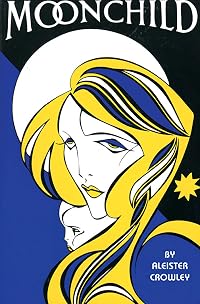
Moonchild
by Aleister Crowley
On This Page
Description
A year or so before the beginning of World War I, a young woman named Lisa la Giuffria is seduced by a white magician, Cyril Grey, and persuaded into helping him in a magical battle with a black magician and his black lodge. Grey is attempting to raise the level of his force by impregnating the girl with the soul of an ethereal being - the moonchild. To achieve this, she will have to be kept in a secluded environment, and many preparatory magical rituals will be carried out. The black show more magician Douglas is bent on destroying Grey's plan. However, Grey's ultimate motives may not be what they appear. The moonchild rituals are carried out in southern Italy, but the occult organizations are based in Paris and England. At the end of the book, the war breaks out, and the white magicians support the Allies, while the black magicians support the Central Powers. show lessTags
Recommendations











Member Recommendations

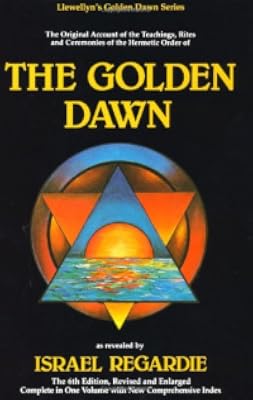
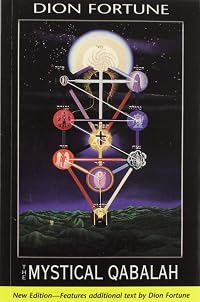
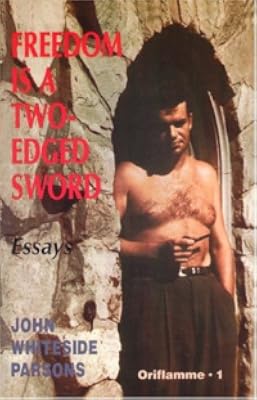
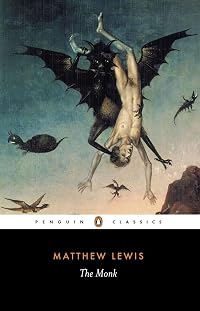
paradoxosalpha Semi-autobiographical romans a clef by seminal occultists.
Member Reviews
A tiresome potboiler in many ways, caught between proto-fascist wartime propaganda and an attempt to convey Crowley's 'Magickal' ideas, this book is neither particularly exciting nor illuminating.
The bulk of it was written in 1917 allegedly to help bring America into the First World War but was only prepared for publication in 1929 very much later when Crowley's game was getting funds on his notoriety.
This is not to say that there is not merit in the writing once you get past the late Victorian Swinburnian prose poesy or in the ideas once you get past the flummery.
But, honestly, most of the ideas are now readily available elsewhere and you have to work through a lot of dross to get to the literary gold.
It may be more entertaining if show more you have some knowledge of the period and appreciate the satire on spiritualism, on rival 'occult' schools and on the character of the imperial post-Victorian English middle classes. But that is a lot to ask of the modern reader.
There are some moments of genuine horror - the black magick ritual certainly puts Dennis Wheatley to shame - and, perfectly in character, he is much better at portraying villains than heroes.
But the story does not flow, the psychology is unconvincing, the long stretches of didacticism dull, the obfuscations unnecessary, the 'wit' heavy-handed (he is no Oscar Wilde) and the more than occasional nastiness about women and war uninspiring.
All this book tells us is that Crowley was capable of creativity but not capable of the sustained effort and judgment to refine his literary art. This looks and feels like something cobbled together for ulterior purposes.
Perhaps it serves an insight into a man who is an important cultural figure but it also confirms the view that he was only a minor literary figure if not a wholly uninteresting one. It is, in short, hard work.
A footnote may be useful on the concept of the moonchild, which is the capture of a higher soul into a newborn child through magickal means. This is an idea of interesting potential somewhat wasted in this book. However, for those Americans who remain entranced by the experiments of Jack Parsons in this area, the book might be a useful corrective and explain why, for all his dark side, Crowley was horrified by the naive dabbling of Americans in undoubtedly serious matters. The 'high ethic' of Crowley in this effort (if you are of a Platonic mind-set) contrasts with the cynicism and cruelty displayed by him on the material plane. It is difficult to work out the point of sincerity in the author. My personal view, as an out-and-out materialist, is that, consciously or unconsciously, the experiment demonstrates the inherent cruelty of all idealisms but others will be entranced by anything that takes them out of the mire and into the imaginal realm. If you can ignore the worst of the writing and the faults enumerated above and you can lose yourself in the conceit, then you may enjoy the performance. show less
The bulk of it was written in 1917 allegedly to help bring America into the First World War but was only prepared for publication in 1929 very much later when Crowley's game was getting funds on his notoriety.
This is not to say that there is not merit in the writing once you get past the late Victorian Swinburnian prose poesy or in the ideas once you get past the flummery.
But, honestly, most of the ideas are now readily available elsewhere and you have to work through a lot of dross to get to the literary gold.
It may be more entertaining if show more you have some knowledge of the period and appreciate the satire on spiritualism, on rival 'occult' schools and on the character of the imperial post-Victorian English middle classes. But that is a lot to ask of the modern reader.
There are some moments of genuine horror - the black magick ritual certainly puts Dennis Wheatley to shame - and, perfectly in character, he is much better at portraying villains than heroes.
But the story does not flow, the psychology is unconvincing, the long stretches of didacticism dull, the obfuscations unnecessary, the 'wit' heavy-handed (he is no Oscar Wilde) and the more than occasional nastiness about women and war uninspiring.
All this book tells us is that Crowley was capable of creativity but not capable of the sustained effort and judgment to refine his literary art. This looks and feels like something cobbled together for ulterior purposes.
Perhaps it serves an insight into a man who is an important cultural figure but it also confirms the view that he was only a minor literary figure if not a wholly uninteresting one. It is, in short, hard work.
A footnote may be useful on the concept of the moonchild, which is the capture of a higher soul into a newborn child through magickal means. This is an idea of interesting potential somewhat wasted in this book. However, for those Americans who remain entranced by the experiments of Jack Parsons in this area, the book might be a useful corrective and explain why, for all his dark side, Crowley was horrified by the naive dabbling of Americans in undoubtedly serious matters. The 'high ethic' of Crowley in this effort (if you are of a Platonic mind-set) contrasts with the cynicism and cruelty displayed by him on the material plane. It is difficult to work out the point of sincerity in the author. My personal view, as an out-and-out materialist, is that, consciously or unconsciously, the experiment demonstrates the inherent cruelty of all idealisms but others will be entranced by anything that takes them out of the mire and into the imaginal realm. If you can ignore the worst of the writing and the faults enumerated above and you can lose yourself in the conceit, then you may enjoy the performance. show less
I read this novel as a youngster. I read it after a period wherein I was besotted with all things Huysmans. I was raised a Catholic, so I could appreciate the ritual, etc. but my callow intelligence couldn't put its callow head around all these, what Lovecraft would call Eldritch matters. So I bumped into Crowley via Colin Wilson. Needless to say that I had not much luck penetrating these recondite matters on my own, so I enlisted the help of Robert Anton Wilson's books, a writer that literally fell off the shelf, as Colin Wilson's Library Angel says they will, as I tipped-toed around the local, and only occult bookstore. Before you label me as an afternoon occultist, I must admit here that I viewed it all as a spooky cartoon. Twelve show more years of Catholic School beat all the 'belief' out of me. And today I believe that we don't know enough to say for sure, either way, it would take a lot of convincing - there I go again!
But back to the novel. Our author makes it plain that everyone is a second-rater next to him. He whips everybody through the streets with a whip he doubtless borrowed from 'Bitter' Bierce. Two who come in for his special brand of oppobrious heckling is the poet Yeats and the occult historian, Arthur Edward Waite. There is some truth mixed in with his vitriol but, to me, it sounds like sour grapes more than anything else. Here he describes the poet Yeats:
The third commissioner was the brains of the business. He was a man highly skilled in Black Magic in his own way. He was a lean, cadaverous Protestant-Irishman named Gates, tall, with the scholar's stoop. He possessed real original talent, with now and then a flash of insight which came close to genius. But though his intellect was keen and fine, it was in some way confused; and there was a lack of virility in his make-up. His hair was long, lank and unkempt; his teeth were neglected; and he had a habit of physical dirt which was so obvious as to be repulsive even to a stranger.
But there was no harm in him; he had no business in the Black Lodge at all . .
More about Yeats:
It would be only by an effort that he spoke in English; the least distraction would send him back into Latin, Greek, or Hebrew, none of which languages he understood. He was a peddler of words; his mind was a rag-and-bone shop of worthless and disjointed mediaevalism.
After a severe struggle, he would 'proceed to an allocution.' He never 'spoke'; he 'monologized.'
About his art:
And indeed he had a pretty amateur talent for painting in water-colors: some people thought it stronger than his verses. For ten days he watched the butter-fly net with extreme care. He wrote down the routine of the inhabitants by the hour. Nothing escaped him of their doings in the garden; and (as it happened) the preponderating portion of their work lay out-of-doors. He could not make nor head nor tail of the fact that the most important people were apparently doing no magick of any kind, but, careless lovers, enjoying the firstfruits of their flight to the South.
We are led to believe that in the psychic scuffle between Yeats and Crowley, Crowley always came out on top. Doubtless the dawns were something less than Golden when these two were on the stage.
A.C. didn't save all his invective for fellows such as the poet Yeats. He seemed always to have a burr in his saddle when the redoubtable Arthur Edward Waite arrived on the aulic scene. If the reader isn't familiar with Waite's prose, this bit won't have as much bite, but I'm willing to wager there will be something here for just about any reader's amusement:
His Grimoire (Waite's) was in reality excellent for its purpose; for the infernal hierarchy delights in intelligible images, in every kind of confusion and obscurity. This particular lucubration was calculated to drag the Archdemon of Bad Syntax himself from the most remote corner of his lair.
For Arthwait could not speak with becoming unintelligibility; to knot a sentence up properly it has to be thought out carefully, and revised. New phrases have to be put in; sudden changes of subject must be introduced; verbs must be shifted to unsuspected localities; short words must be excised with ruthless hand; archaisms must be sprinkled like sugar-plums upon the concoction; the fatal human tendency to say things straightforwardly must be detected and defeated by adroit reversals; and, if a glimmer of meaning yet remain under close scrutiny, it must be removed by replacing all the principal verbs by paraphrases in some dead language.
This is not to be achieved in a moment; it is not enough to write disconnected nonsense; it must be possible for anyone acquainted with the tortuosities of the author's mind to resolve the sentence into its elements, and reproduce - not the meaning, for there is none, but the same mental fog from which he was originally suffering.
An example or two:
Ru-volvolimperipunct (circle), Subinfractically (below), Suprorientalize (arise), Kinematodrastically (soon), Phenomenize! (appear)
Now, I will admit that it wont go well if I enter the land of A.E. Waite without a pile of reference books, but I won't go as far as to say that he has no MEANING.
Reading MOONCHILD these many years later was not as mystifying an experience as my fledgling attempt. But I can't help seeing in Crowley the precocious childe who is always capering to get his parent's or anybodies attention. It has come out in recent biographies that the Great Beast's claws were not nearly as lethal as he thought they were, though I am quite sure that he did every 'damned thing' he could to earn the name of 'the wickedest man in Europe.' show less
But back to the novel. Our author makes it plain that everyone is a second-rater next to him. He whips everybody through the streets with a whip he doubtless borrowed from 'Bitter' Bierce. Two who come in for his special brand of oppobrious heckling is the poet Yeats and the occult historian, Arthur Edward Waite. There is some truth mixed in with his vitriol but, to me, it sounds like sour grapes more than anything else. Here he describes the poet Yeats:
The third commissioner was the brains of the business. He was a man highly skilled in Black Magic in his own way. He was a lean, cadaverous Protestant-Irishman named Gates, tall, with the scholar's stoop. He possessed real original talent, with now and then a flash of insight which came close to genius. But though his intellect was keen and fine, it was in some way confused; and there was a lack of virility in his make-up. His hair was long, lank and unkempt; his teeth were neglected; and he had a habit of physical dirt which was so obvious as to be repulsive even to a stranger.
But there was no harm in him; he had no business in the Black Lodge at all . .
More about Yeats:
It would be only by an effort that he spoke in English; the least distraction would send him back into Latin, Greek, or Hebrew, none of which languages he understood. He was a peddler of words; his mind was a rag-and-bone shop of worthless and disjointed mediaevalism.
After a severe struggle, he would 'proceed to an allocution.' He never 'spoke'; he 'monologized.'
About his art:
And indeed he had a pretty amateur talent for painting in water-colors: some people thought it stronger than his verses. For ten days he watched the butter-fly net with extreme care. He wrote down the routine of the inhabitants by the hour. Nothing escaped him of their doings in the garden; and (as it happened) the preponderating portion of their work lay out-of-doors. He could not make nor head nor tail of the fact that the most important people were apparently doing no magick of any kind, but, careless lovers, enjoying the firstfruits of their flight to the South.
We are led to believe that in the psychic scuffle between Yeats and Crowley, Crowley always came out on top. Doubtless the dawns were something less than Golden when these two were on the stage.
A.C. didn't save all his invective for fellows such as the poet Yeats. He seemed always to have a burr in his saddle when the redoubtable Arthur Edward Waite arrived on the aulic scene. If the reader isn't familiar with Waite's prose, this bit won't have as much bite, but I'm willing to wager there will be something here for just about any reader's amusement:
His Grimoire (Waite's) was in reality excellent for its purpose; for the infernal hierarchy delights in intelligible images, in every kind of confusion and obscurity. This particular lucubration was calculated to drag the Archdemon of Bad Syntax himself from the most remote corner of his lair.
For Arthwait could not speak with becoming unintelligibility; to knot a sentence up properly it has to be thought out carefully, and revised. New phrases have to be put in; sudden changes of subject must be introduced; verbs must be shifted to unsuspected localities; short words must be excised with ruthless hand; archaisms must be sprinkled like sugar-plums upon the concoction; the fatal human tendency to say things straightforwardly must be detected and defeated by adroit reversals; and, if a glimmer of meaning yet remain under close scrutiny, it must be removed by replacing all the principal verbs by paraphrases in some dead language.
This is not to be achieved in a moment; it is not enough to write disconnected nonsense; it must be possible for anyone acquainted with the tortuosities of the author's mind to resolve the sentence into its elements, and reproduce - not the meaning, for there is none, but the same mental fog from which he was originally suffering.
An example or two:
Ru-volvolimperipunct (circle), Subinfractically (below), Suprorientalize (arise), Kinematodrastically (soon), Phenomenize! (appear)
Now, I will admit that it wont go well if I enter the land of A.E. Waite without a pile of reference books, but I won't go as far as to say that he has no MEANING.
Reading MOONCHILD these many years later was not as mystifying an experience as my fledgling attempt. But I can't help seeing in Crowley the precocious childe who is always capering to get his parent's or anybodies attention. It has come out in recent biographies that the Great Beast's claws were not nearly as lethal as he thought they were, though I am quite sure that he did every 'damned thing' he could to earn the name of 'the wickedest man in Europe.' show less
Bit confused on the ending to this. If i got it right i'm unhappy, if i got it wrong i'm stupid and unhappy. The evil guys are so over the top. So much so that when someone was nailing a live cat to the floor, i burst out laughing (or maybe i have issues.. ;) ). Great atmosphere though.
Lots of nakedness and frolicking in gardens, quite pretentious and yet, a bit of magick succumbed to, has never hurt a flea, well me...oh! yes, but that's an altogether different type of tale. A decent and fun read by Crowley, nothing read in advance is necessary for ones enjoyment, if you like this sort of tome, as I do. Of course I had read the Illuminatus Trilogy, before this book ~ but Crowley does easily, completely, stand on his own.
I read this book many, many years ago and thought it was a fair book back then. But upon rereading it recently I have found that there is just so much more to the book than my first reading. Of course I have had over the last couple decades been able to read much more about Crowley and his exploits and the Golden Dawn and its people who were in it and I would highly recommend reading a great deal more about all of these folks before reading Moonchild. Having done that the book definitely becomes more enlightening and explains Crowley's attitude to its members which are played out in this book. I mean this book had me in falling out of the chair when he started in on Arthwaite because I could readily agree with him in his thoughts after show more reading Arthur Waite's books. And his depiction of Mathers is just as funny. A good read, just do the prep and you will enjoy it more. show less
This is a novel by Crowley about a magical war between a white lodge ( led by Iff ) and a black lodge ( led by Douglas ) over an unborn child, the "moonchild" of the title, with the action moving between London, Paris and a villa in Naples. It was written in 1917 in New Orleans.
Crowley keeps reappearing, first in the 1960's and now again in the jumble of ideas of the New Age movement. He was a mountaineer with expeditions to K2 and Kangchenjunga, otherwise "Brother Perdurabo" studying under "McGregor" Mathers, chief of the Golden Dawn movement, and also a good writer as this book shows. It switches between being surprising, humourous and stomach churning with Crowley showing his invincible English class prejudice along with the magical show more themes.
The main thread of the story is a Taoist one with the plot twisting and turning nicely around this axis. Supposedly Crowley identifies with Simon Iff and the forces of light but the undercurrent of the book and the not so obvious ending suggest a darker different conclusion.In any event it is probably a good idea to read some of the Tao Te Ching to catch the full flavour of the book.
Crowley was persistently hunted by the press and eventually bankrupted by legal actions but he didn't do anything to discourage the speculation. He loved to showboat ( the self-proclaimed Beast 666 ) and wanted the publicity. However, the relevance of the story for today is that strands of the New Age movement take the magical aspects completely seriously which is surely a trend worth watching.
His view on the advantages of being a magician:"...all one's different parts are free to act with the utmost possible vigour according to their own natures, because the other parts do not interfere with them. You don't let the navigators into the stoke-hole, or your stokers into the chart house". show less
Crowley keeps reappearing, first in the 1960's and now again in the jumble of ideas of the New Age movement. He was a mountaineer with expeditions to K2 and Kangchenjunga, otherwise "Brother Perdurabo" studying under "McGregor" Mathers, chief of the Golden Dawn movement, and also a good writer as this book shows. It switches between being surprising, humourous and stomach churning with Crowley showing his invincible English class prejudice along with the magical show more themes.
The main thread of the story is a Taoist one with the plot twisting and turning nicely around this axis. Supposedly Crowley identifies with Simon Iff and the forces of light but the undercurrent of the book and the not so obvious ending suggest a darker different conclusion.In any event it is probably a good idea to read some of the Tao Te Ching to catch the full flavour of the book.
Crowley was persistently hunted by the press and eventually bankrupted by legal actions but he didn't do anything to discourage the speculation. He loved to showboat ( the self-proclaimed Beast 666 ) and wanted the publicity. However, the relevance of the story for today is that strands of the New Age movement take the magical aspects completely seriously which is surely a trend worth watching.
His view on the advantages of being a magician:"...all one's different parts are free to act with the utmost possible vigour according to their own natures, because the other parts do not interfere with them. You don't let the navigators into the stoke-hole, or your stokers into the chart house". show less
Imagine my surprise at seeing how many re-issues there are of this work -- and how many LT participants have listed it! I read the First -- and at that time the only Edition some years ago and will add nothing much to the previous Reviews except to say that Crowley would have been astonished that so many people have taken it so seriously, probably much more seriously than he did himself. It's a lark, a jolly pass-time for a loveable screwball in his semir-retirment -- and incidentally, an unacknowldged inspiration for that hack-job ROSEMARY'S BABY.
Members
- Recently Added By
Published Reviews
Pred vama je najčuveniji i najbolji Kroulijev okultni roman! Tema je večna bitka između Sila Svetlosti i Sila Tame. Mlada devojka je upletena u magički rat između dva muškarca, i prisiljena je da izabere između jednog od njih. Kako priča odmiče čitalac proleće furioznim tempom kroz seriju magičkih zapleta, uzbuđenja i celokupnog okultnog repertoara, uključujući i Crnu Lozu. Sam show more Krouli se u romanu predstavlja kao lik Dobrog Majstora Magike. show less
added by Sensei-CRS
Lists

Works Referenced in The League of Extraordinary Gentlemen
122 works; 6 members
The League of Extraordinary Gentlemen
87 works; 4 members
Author Information

500+ Works 19,893 Members
Aleister Crowley was born Edward Alexander Crowley in Leamington Spa, England on October 12, 1875. His parents belonged to the Plymouth Brethren, a strict fundamentalist Christian sect, so he was raised with a thorough knowledge of the Bible. He attended Trinity College at Cambridge University, but left before completing his degree. He became a show more member of the Hermetic Order of the Golden Dawn, an occult society which taught magic, qabalah, alchemy, tarot, and astrology, in 1898, but the group disbanded in 1900. In 1903, he married Rose Kelly, who began entering trance states and sending him messages from Horus, an Egyptian god. These messages formed the first three chapters of The Book of the Law, which introduced Crowley's main concept of Thelema. He founded his own occult society. He was a prolific writer, who published works on a wide variety of topics. His works include The Book of Thoth, The Vision and the Voice, 777 and Other Qabalistic Writings, The Book of Lies, Little Essays Toward Truth, and The Confessions of Aleister Crowley. He also wrote fiction including plays, novels, and poems. His fictional works include Moonchild, Diary of a Drug Fiend, The Stratagem and Other Stories, White Stains, Clouds without Water, and Hymn to Pan. Three of his compositions, The Quest, The Neophyte, and The Rose and the Cross were included in the 1917 collection The Oxford Book of English Mystical Verse. He died on December 1, 1947 at the age of 72. (Bowker Author Biography) show less
Some Editions
Series
Belongs to Publisher Series
Common Knowledge
- Canonical title
- Moonchild
- Original title
- Moonchild, A Prologue
- Original publication date
- 1929
- People/Characters
- Cyril Grey; Simon Iff
- Epigraph
- Author's Note:
This book was written in 1917, during such leisure as my efforts to bring America into the War on our side allowed me. Hence my illusions on the subject, and the sad showing of Simon Iff at the end. Need I a... (show all)dd that, as the book itself demonstrates beyond all doubt, all persons and incidents are purely the figment of a disordered imagination?
~A.C.
London, 1929 - First words
- London, in England, the capital city of the British Empire, is situated upon the banks of the Thames.
- Last words
- (Click to show. Warning: May contain spoilers.)It shone serenely from the eyes of the Mahathera Hang.
Classifications
Statistics
- Members
- 732
- Popularity
- 38,707
- Reviews
- 9
- Rating
- (3.33)
- Languages
- 8 — English, French, German, Greek, Hungarian, Slovenian, Spanish, Turkish
- Media
- Paper, Audiobook, Ebook
- ISBNs
- 50
- ASINs
- 23