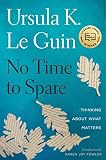
No Time to Spare: Thinking About What Matters
by Ursula K. Le Guin
On This Page
Description
From acclaimed author Ursula K. Le Guin, and with an introduction by Karen Joy Fowler, a collection of thoughts-always adroit, often acerbic-on aging, belief, the state of literature, and the state of the nation. Ursula K. Le Guin has taken readers to imaginary worlds for decades. Now she's in the last great frontier of life, old age, and exploring new literary territory: the blog, a forum where her voice-sharp, witty, as compassionate as it is critical-shines. No Time to Spare collects the show more best of Ursula's blog, presenting perfectly crystallized dispatches on what matters to her now, her concerns with this world, and her wonder at it. On the absurdity of denying your age, she says, "If I'm ninety and believe I'm forty-five, I'm headed for a very bad time trying to get out of the bathtub." On cultural perceptions of fantasy: "The direction of escape is toward freedom. So what is 'escapism' an accusation of?" On her new cat: "He still won't sit on a lap. I don't know if he ever will. He just doesn't accept the lap hypothesis." On breakfast: "Eating an egg from the shell takes not only practice, but resolution, even courage, possibly willingness to commit crime." And on all that is unknown, all that we discover as we muddle through life: "How rich we are in knowledge, and in all that lies around us yet to learn. Billionaires, all of us." show lessTags
Recommendations

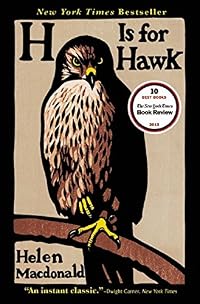
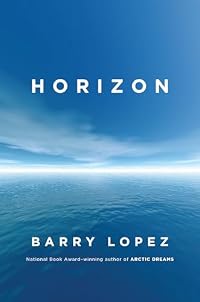
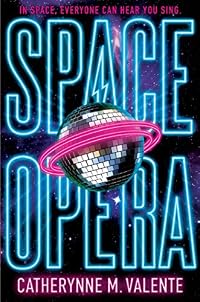
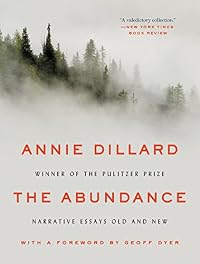
Member Recommendations

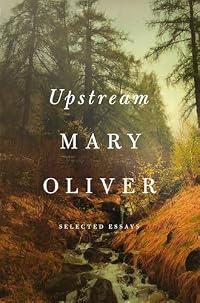
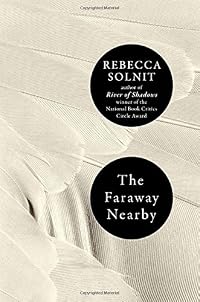
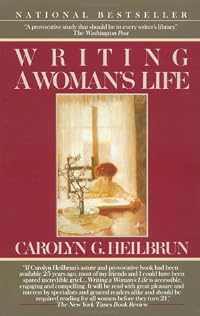
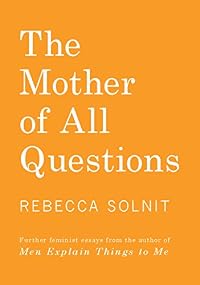
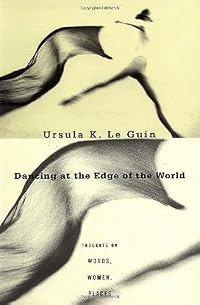
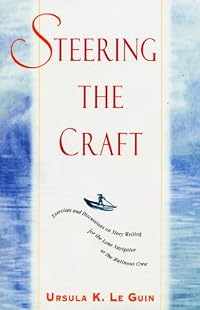
andomck Non fiction from these novelists where their pets play a large role. Also, UKL has an essay in her book about knowing Steinbeck in real life
Member Reviews
Ursula Le Guin is one of my heroes, in as much as I have them. Which is, to say, hardly at all, but her writing has often astounded me, literally impacting how I perceived the world. When I was a teen, [b:The Left Hand of Darkness|18423|The Left Hand of Darkness|Ursula K. Le Guin|https://images.gr-assets.com/books/1488213612s/18423.jpg|817527] did more to challenge my conception of gender identity than anything I would read or hear for years. However, her writing has also felt somewhat laborious to me, so when I saw this book of blog-style posts, I leapt at the chance to read it (figuratively, naturally. You think I leap at my age? What am I, a frog?) At any rate, I absolutely loved her in short-form, her words seemingly a little less show more crafted than her novels, sounding more like her voice, talking about everyday things--"The point of a soft-boiled egg is the difficulty of eating it, the attention it requires, the ceremony"--writerly things and general opinion pieces.
It's really, really good. The book comes with an introduction by Karen Joy Fowler and a note from Le Guin about her purpose and the informality of the writing. 'Part One: Going Over Eighty' is one of my favorite sections. 'Part Two: The Lit Biz' is in theory about literary stuff and contains some insight into the life of the writer --readers' questions and awards--as well as discussion on things like ubiquitousness of swearing, and narration. 'Part Three: Trying to Make Sense' of it is the most topical section. It was interesting, but not as favorite. 'Part Four: Rewards' shines, with writing beautiful enough, polished enough to remind me why she's a master. Parts One, Two and Three are all followed by 'The Annals of Pard,' brief pieces about her latest cat. I have a ridiculous amount of highlights, my Kindle equivalent of 'mm-hmm' affirmations.
The posts on aging are excellent and I probably could have just highlighted the entire piece of 'The Diminished Thing.' It does not sound as if aging has come easily, and I appreciate that she is both honest and old in claiming it. "Old age isn't a state of mind. It's an existential situation." How beautifully she negates the 'you are only as old as you think you are' mouthings!
I admire how she somewhat irascibly shares what she perceives as her failings. I love that she calls out the new generations of almost-memoirs with a writerly note on genres, and then gracefully turns it into a discussion of Delores, her 'hired help' who was so important to her ('Someone Named Delores'). I was fascinated by the entries on Pard, the latest cat, and his periodic skirmishes with mice. I think she summarized the entire problem with modern politics in three sentences (from 'The Diminished Thing' in Aging, no less):
"This is morally problematic when personal decision is confused with personal opinion. A decision worth the name is based on observation, factual information, intellectual and ethical judgment. Opinion--that darling of the press, the politician, and the poll--may be based on no information at all."
There's an interesting piece on what fantasy is that affirms why I've read so much in the field. My favorite highlight: "It doesn't have to be the way it is. That is what fantasy says... Yet it is a subversive statement." Can we please remind those who are nostalgic for the sprawling epic fantasies of the 80s and 90s or the pulp fantasy of the 50s and 60s that we can do more?
Part Three definitely spoke to me, with parts of it echoing my own hopelessness. From 'Lying it All Away:' "It appears that we've given up on the long-range view. That we've decided not to think about consequences--about cause and effect. Maybe that's why I feel that I live in exile. I used to live in a country that had a future."
It makes me wish for a coffee conversation, time to dive in and chew at these ideas. I wished I knew even more about her life, because I sense a kindred spirit, an introvert who communicates best through words, who appears transparent about ideas but extremely private about details of real life. The closing piece, is so crafted and beautiful it makes me tear. From 'Notes From a Week at a Ranch in the Oregon High Desert':
"Hundreds of blackbirds gathered in the pastures south of the house, vanishing completely in the tall grass, then rising out of it in ripples and billows, or streaming and streaming up into a single tree up under the ridge till its lower branches were blacker with birds than green with leaves, then flowing down away from it into the reeds and out across the air in a single, flickering, particulate wave. What is entity?"
Many, many thanks to NetGalley and Houghton Mifflin Harcourt for the advance reader copy. Quotes may change in final publication but are included to give a sense of the excellent writing. show less
It's really, really good. The book comes with an introduction by Karen Joy Fowler and a note from Le Guin about her purpose and the informality of the writing. 'Part One: Going Over Eighty' is one of my favorite sections. 'Part Two: The Lit Biz' is in theory about literary stuff and contains some insight into the life of the writer --readers' questions and awards--as well as discussion on things like ubiquitousness of swearing, and narration. 'Part Three: Trying to Make Sense' of it is the most topical section. It was interesting, but not as favorite. 'Part Four: Rewards' shines, with writing beautiful enough, polished enough to remind me why she's a master. Parts One, Two and Three are all followed by 'The Annals of Pard,' brief pieces about her latest cat. I have a ridiculous amount of highlights, my Kindle equivalent of 'mm-hmm' affirmations.
The posts on aging are excellent and I probably could have just highlighted the entire piece of 'The Diminished Thing.' It does not sound as if aging has come easily, and I appreciate that she is both honest and old in claiming it. "Old age isn't a state of mind. It's an existential situation." How beautifully she negates the 'you are only as old as you think you are' mouthings!
I admire how she somewhat irascibly shares what she perceives as her failings. I love that she calls out the new generations of almost-memoirs with a writerly note on genres, and then gracefully turns it into a discussion of Delores, her 'hired help' who was so important to her ('Someone Named Delores'). I was fascinated by the entries on Pard, the latest cat, and his periodic skirmishes with mice. I think she summarized the entire problem with modern politics in three sentences (from 'The Diminished Thing' in Aging, no less):
"This is morally problematic when personal decision is confused with personal opinion. A decision worth the name is based on observation, factual information, intellectual and ethical judgment. Opinion--that darling of the press, the politician, and the poll--may be based on no information at all."
There's an interesting piece on what fantasy is that affirms why I've read so much in the field. My favorite highlight: "It doesn't have to be the way it is. That is what fantasy says... Yet it is a subversive statement." Can we please remind those who are nostalgic for the sprawling epic fantasies of the 80s and 90s or the pulp fantasy of the 50s and 60s that we can do more?
Part Three definitely spoke to me, with parts of it echoing my own hopelessness. From 'Lying it All Away:' "It appears that we've given up on the long-range view. That we've decided not to think about consequences--about cause and effect. Maybe that's why I feel that I live in exile. I used to live in a country that had a future."
It makes me wish for a coffee conversation, time to dive in and chew at these ideas. I wished I knew even more about her life, because I sense a kindred spirit, an introvert who communicates best through words, who appears transparent about ideas but extremely private about details of real life. The closing piece, is so crafted and beautiful it makes me tear. From 'Notes From a Week at a Ranch in the Oregon High Desert':
"Hundreds of blackbirds gathered in the pastures south of the house, vanishing completely in the tall grass, then rising out of it in ripples and billows, or streaming and streaming up into a single tree up under the ridge till its lower branches were blacker with birds than green with leaves, then flowing down away from it into the reeds and out across the air in a single, flickering, particulate wave. What is entity?"
Many, many thanks to NetGalley and Houghton Mifflin Harcourt for the advance reader copy. Quotes may change in final publication but are included to give a sense of the excellent writing. show less
In her essays in this book, LeGuin shows herself to be a nice cat-loving old lady, a cranky octogenarian, a really sharp observer and thinker, and a beautiful writer, by turns.
This is one of those rare books that should be judged not based on how much you get out of the book, but how much the book gets out of you. I didn't relate to everything in this book of short blog posts. For example, I have no knowledge of or interest in opera or classical music, so those posts didn't work for me. But the ones that did interest me kept me thinking for days afterward. They are all very, very short.
This is one of those rare books that should be judged not based on how much you get out of the book, but how much the book gets out of you. I didn't relate to everything in this book of short blog posts. For example, I have no knowledge of or interest in opera or classical music, so those posts didn't work for me. But the ones that did interest me kept me thinking for days afterward. They are all very, very short.
Previous to this book I knew of Ursula K. Le Guin, but had never read her work; she's primarily known for her science fiction writing and I'm known for not liking science fiction. But I'd read something about her somewhere that left me with the impression that she had an interesting voice outside her known genre, and I'd heard great things about this collection of essays, so I bought it a couple of years ago, and it's sat on my TBR ever since.
Recent events however, have left me ping-ponging back and forth between light reads and chewier reads in an effort not to dwell on all the things that are outside my control at the moment. One of those things outside my control at the moment is my attention span, or the lack thereof, so I thought show more this a perfect time to pull this one off the shelf (which was within reach, thankfully).
I enjoyed this book, with a few blips along the way, from start to finish. Le Guin was a very talented writer with a timeless voice, and even when I didn't agree with her, I enjoyed reading what she had to say. Of course, the essays about her cat Pard were my favourites, but those about ageing put things into a perspective I'd never seen better articulated, and I wanted to go back in time and hug her for her essay on belief vs. thought.
I'm still unlikely to ever read her fiction, but there's at least one more collection of essays I'd love to get my hands on, if only to visit with this wonderful author and her mind one more time. show less
Recent events however, have left me ping-ponging back and forth between light reads and chewier reads in an effort not to dwell on all the things that are outside my control at the moment. One of those things outside my control at the moment is my attention span, or the lack thereof, so I thought show more this a perfect time to pull this one off the shelf (which was within reach, thankfully).
I enjoyed this book, with a few blips along the way, from start to finish. Le Guin was a very talented writer with a timeless voice, and even when I didn't agree with her, I enjoyed reading what she had to say. Of course, the essays about her cat Pard were my favourites, but those about ageing put things into a perspective I'd never seen better articulated, and I wanted to go back in time and hug her for her essay on belief vs. thought.
I'm still unlikely to ever read her fiction, but there's at least one more collection of essays I'd love to get my hands on, if only to visit with this wonderful author and her mind one more time. show less
I had no idea going into this book what it might look like. It turns out to be a book of adapted blog posts, and a stirring and wonderful book at that. I love how it is organized, with Le Guin's uncompromising voice telling us what she thinks of the world leavened by stories about her darling cat. The cat stories almost universally made me laugh. Pard is quite the adventurer, and Le Guin could spin a story out of a piece of paper dropping to earth. Anyway, one of my favorite things about this book is that Le Guin is old when she wrote it and she's extremely honest about how much being old sucks. She doesn't hide her gradual decline, or her pain, or try to pretend to be anywhere other than where she is -- an elderly woman, sharp minded, show more gradually losing the battle of physical age, and looking, unflinching, at her mortality. We may all be so brave. show less
This was a delightful, charming book, a collection of blog posts Ursula Le Guin wrote from 2010 to 2016. Unlike in last year's Words Are My Matter, there's little about science fiction here; most of them concern life, especially growing old, and also Le Guin's cat. Maybe I'm just biased to like anything she writes, but there's a quiet wisdom here, about growing old, about nature, about capitalism, about storytelling, about cats. We get glimpses of her home life and glimpses of her youth and glimpses of her working process. One of my favorites was about an alumni survey Le Guin received from Harvard on the eve of her 60th reunion, and she demonstrates a sharp sense of humor when it comes to the inane assumptions the survey makes. But show more many others were also good, like why she doesn't interfere when her cat kills mice, and her thoughts on not receiving awards.
Like the best writers of wisdom, Le Guin is able to link small moments to big ideas. I enjoyed almost every essay in some way, and I can see myself returning to this book to savor individual pieces of it in the future. Not just the world of science fiction, but the whole world is the poorer for having lost her. show less
Like the best writers of wisdom, Le Guin is able to link small moments to big ideas. I enjoyed almost every essay in some way, and I can see myself returning to this book to savor individual pieces of it in the future. Not just the world of science fiction, but the whole world is the poorer for having lost her. show less
This collection of essays all came from a blog Le Guin was keeping in recent years. Boy, was this hard to read in the days just following her death--so many of the essays are about living in old age, about what she will live to see and what she won't, what mattered to her knowing that most of her life was behind her. Gah. And then there are the pieces about her cat. They are exquisitely observed bits about cat life and being a cat lover, and now I'm thinking about how her cat must be so sad having lost her. Double gah. This is a wonderful collection on a range of topics--some about writing of course, but much else as well. Particularly poignant in this last week, but marvelous I think even without that timing.
In 2010, after discovering that author Jose Saramago had started a blog, Le Guin decides that she too could express herself in that medium. Here is collected a few dozen of her posts from 2010-2014, covering diverse topics such as getting old, writing, responding to fan letters, observations of her cat Pard, and the delight of soft-boiled eggs.
As a fantasy fan, I couldn't help but have heard of Le Guin though this is my first introduction to her works. I've most often seen her quoted in defending genre fiction (particularly science fiction and fantasy) as not being secondary to more literary fiction beloved by critics, so I knew I liked her. In this collection, though I often didn't agree with her political statements, I found much food show more for thought and enjoyed her way of expressing herself whether she was definite about something ("Old age is for anybody who gets there.") or grappling with questions ("What is the way to use anger to fuel something other than hurt, to direct it away from hatred, vengefulness, self-righteousness, and make it serve creation and compassion?"). The descriptions of her cat were especially delightful to me, and interspersed in some of the heavier topics were a respite and made it easier for me to keep reading "one more essay..." before putting the book down. show less
As a fantasy fan, I couldn't help but have heard of Le Guin though this is my first introduction to her works. I've most often seen her quoted in defending genre fiction (particularly science fiction and fantasy) as not being secondary to more literary fiction beloved by critics, so I knew I liked her. In this collection, though I often didn't agree with her political statements, I found much food show more for thought and enjoyed her way of expressing herself whether she was definite about something ("Old age is for anybody who gets there.") or grappling with questions ("What is the way to use anger to fuel something other than hurt, to direct it away from hatred, vengefulness, self-righteousness, and make it serve creation and compassion?"). The descriptions of her cat were especially delightful to me, and interspersed in some of the heavier topics were a respite and made it easier for me to keep reading "one more essay..." before putting the book down. show less
Members
- Recently Added By
Published Reviews
Prompted by an alumni survey from her alma mater, Radcliffe, that asks how she occupies her spare time, she takes issue with the idea that any time occupied by living—whether that means reading, writing, cooking, eating, cleaning, etc.—can be considered spare. Moreover, with her 81st birthday fast approaching, Le Guin declares, ”I have no time to spare.”
added by mysterymax
Lists

Top Five Books of 2018
802 works; 265 members

Books Read in 2018
4,360 works; 110 members

Carole's List
445 works; 13 members

Books Read in 2021
5,361 works; 114 members

Books We Discovered On LibraryThing
530 works; 130 members

Books Read in 2025
4,090 works; 97 members
Author Information

487+ Works 166,535 Members
Ursula K. Le Guin was born Ursula Kroeber in Berkeley, California on October 21, 1929. She received a bachelor's degree from Radcliffe College in 1951 and a master's degree in romance literature of the Middle Ages and Renaissance from Columbia University in 1952. She won a Fulbright fellowship in 1953 to study in Paris, where she met and married show more Charles Le Guin. Her first science-fiction novel, Rocannon's World, was published in 1966. Her other books included the Earthsea series, The Left Hand of Darkness, The Dispossessed: An Ambiguous Utopia, The Lathe of Heaven, Four Ways to Forgiveness, and The Telling. A Wizard of Earthsea received an American Library Association Notable Book citation, a Horn Book Honor List citation, and the Lewis Carroll Shelf Award in 1979. She received the Medal for Distinguished Contribution to American Letters in 2014. She also received the Nebula Award and the Hugo Award. She also wrote books of poetry, short stories collections, collections of essays, children's books, a guide for writers, and volumes of translation including the Tao Te Ching of Lao Tzu and selected poems by Gabriela Mistral. She died on January 22, 2018 at the age of 88. (Bowker Author Biography) show less
All Editions
Some Editions
Awards and Honors
Common Knowledge
- Canonical title*
- Keine Zeit verlieren: Über Alter, Kunst, Kultur und Katzen
- Original title
- No Time to Spare: Thinking About What Matters
- Original publication date
- 2017
- Dedication
- To Vonda N. McIntyre, with love
- First words
- I've been inspired by Jose Saramago's extraordinary blogs, which he posted when he was eighty-five and eighty-six years old.
- Quotations
- Old age is for anybody who gets there.
- Last words
- (Click to show. Warning: May contain spoilers.)Hundreds of blackbirds gathered in the pastures south of the house, vanishing completely in the tall grass, then rising out of it in ripples and billows, or streaming and streaming up into a single tree up under the ridge till its lower branches were blacker with birds than green with leaves, then flowing down away from it into the reeds and out across the air in a single, flickering particulate wave. What is entity?
- Original language
- English
*Some information comes from Common Knowledge in other languages. Click "Edit" for more information.
Classifications
- Genres
- Literature Studies and Criticism, Biography & Memoir, Nonfiction
- DDC/MDS
- 814.54 — Literature & rhetoric American literature in English American essays in English 20th Century 1945-1999
- LCC
- PS3562 .E42 .A6 — Language and Literature American literature American literature Individual authors 1961-
- BISAC
Statistics
- Members
- 1,247
- Popularity
- 19,610
- Reviews
- 58
- Rating
- (4.06)
- Languages
- 6 — English, German, Polish, Portuguese, Spanish, Turkish
- Media
- Paper, Audiobook, Ebook
- ISBNs
- 12
- ASINs
- 5