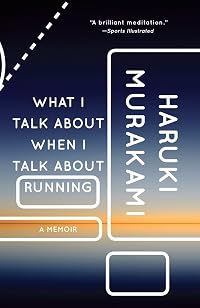
What I Talk About When I Talk About Running: A Memoir
by Haruki Murakami
On This Page
Description
Equal parts training log, travelogue, and reminiscence, this revealing memoir covers his four-month preparation for the 2005 New York City Marathon. Settings range from Tokyo, where he once shared the course with an Olympian, to the Charles River in Boston among young women who outpace him. Through this marvelous lens of sport emerges a cornucopia of memories and insights: the eureka moment when he decided to become a writer, his triumphs and disappointments, his passion for vintage LPs, and show more the experience, after fifty, of having seen his race times improve and then fall back. show lessTags
Recommendations




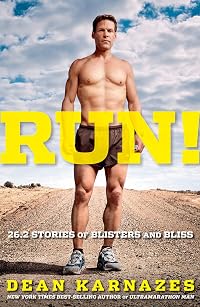

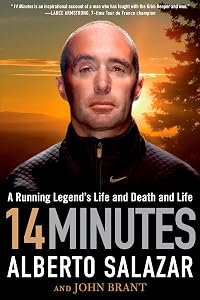
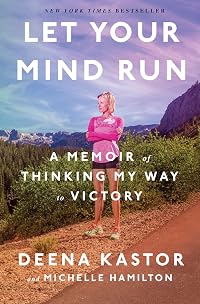
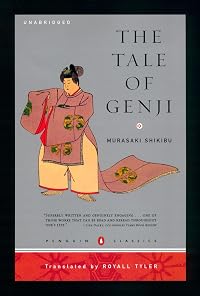
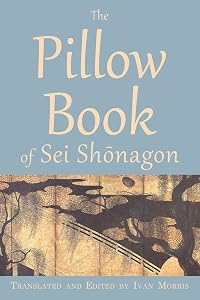
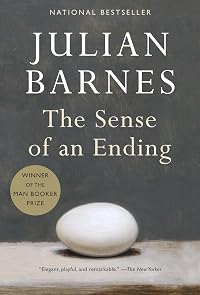
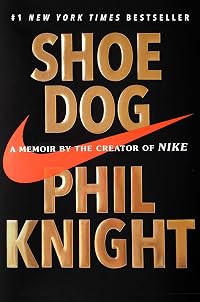
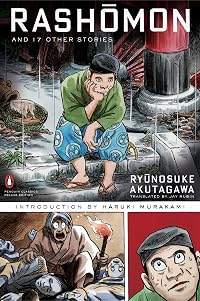
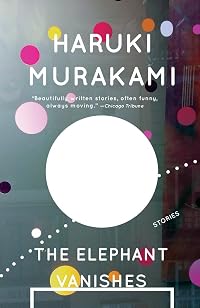
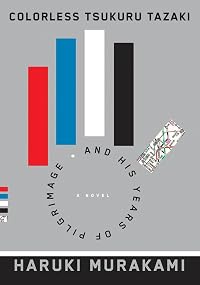
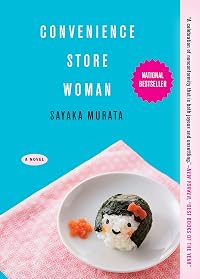
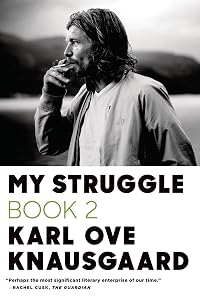
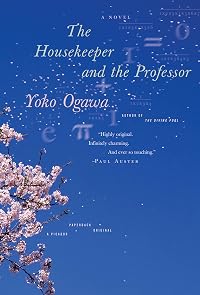
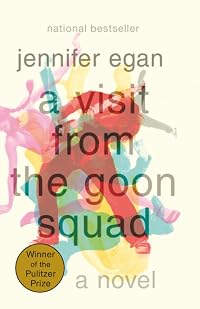
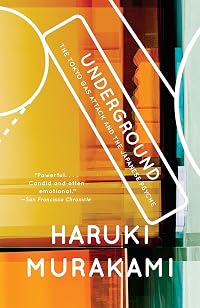
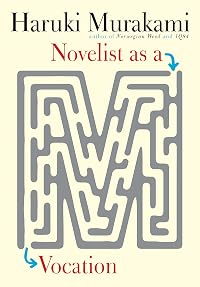
Member Recommendations
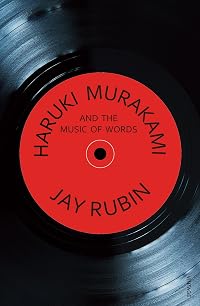
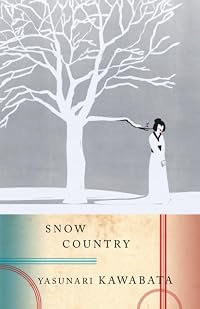
Jannes If you want to know more about Murakami as a person you can either go to his own essay-style semi-biography, or you can try Rubin's more systematic and academic approach. Both are worthy of your time.
50
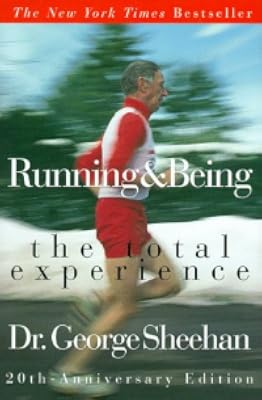
gust Krabbé heeft het over wielrennen. Ook autobografisch, maar literair beter uitgewerkt dan Murakami.
40
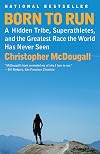
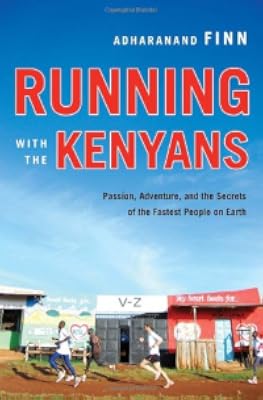
Born to Run: A Hidden Tribe, Superathletes, and the Greatest Race the World Has Never Seen by Christopher McDougall
DeDeNoel One of the best books ever about running. Murakami's book and this totally inspired me to become a runner.
30

prezzey Writers talk about the place of sports in their lives. I personally prefer Bench Press, but if you're interested in the topic, both are worth reading.
32

Member Reviews
Best for:
Runners looking for a meditation on running.
In a nutshell:
Author Murakami, better known by most for his novels, shares how running impacts his life.
Worth quoting:
“People sometimes sneer at those who run every day, claiming they’ll go to any length to live longer. But I don’t think that’s the reason most people run. Most runners run not because they want to live longer, but because they want to live life to the fullest.”
“I'm often asked what I think about as I run. Usually the people who ask this have never run long distances themselves. I always ponder the question. What exactly do I think about when I'm running? I don't have a clue.”
Why I chose it:
I’m a runner, and this book has come up a lot.
What it left me show more feeling:
Content.
Review:
This is my second running book I’ve read this year. As mentioned in my previous review, I’ve been running for many years - nearly 15 years at this point. Sometimes I’m running slow and easy, sometimes I’m pushing myself to build up some strength. On off days, I’m lifting and stretching and rolling. I’ve only taken a handful of breaks in those times - usually due to injury, and once because I just stopped, and that non-injury-related-break was definitely when I’ve felt at my lowest.
I don’t always love running, but I’m always happy that I ran, and I think Murakami captures this feeling. He says he runs to help him write. For me, I need to move regularly otherwise I am scattered and all over the place. Running helps me focus. Yes, it keeps me fit to a degree, but I think the impact on my mental health is more pronounced. And while I am active in other sports (specifically football / soccer), running is a constant for me.
Murakami focuses most of the book on a couple of seasons of running. He and I differ on our approaches - he trains by running every single day; I used to run every single day, but since I’ve gotten a running coach, it’s more like 4 times a week. He talks about runs that go well and runs that don’t. He talks about the feelings, the specific thoughts when he’s running races. He runs further than I do - he does marathons, I’m only doing half marathons - but both involve so much time alone, outside, in all kinds of weather. It’s solitary but not lonely.
One thing I especially related to was him talking about how, as he gets older, his body just doesn’t do things the same way. He’ll train the same or harder and struggle to complete races in times he previously hit with ease. At the moment I’m training in the hopes of once again running a sub-2 hour half marathon (something I have only done once out of 14 races, and about 10 years ago), but it’s hard. I’m not old, but I’m older, and things ache more. Injuries appear more often. I might reach my goal; I might not. But I’ll keep running.
Recommend to a Friend / Keep / Donate it / Toss it:
Recommend to a Friend show less
Runners looking for a meditation on running.
In a nutshell:
Author Murakami, better known by most for his novels, shares how running impacts his life.
Worth quoting:
“People sometimes sneer at those who run every day, claiming they’ll go to any length to live longer. But I don’t think that’s the reason most people run. Most runners run not because they want to live longer, but because they want to live life to the fullest.”
“I'm often asked what I think about as I run. Usually the people who ask this have never run long distances themselves. I always ponder the question. What exactly do I think about when I'm running? I don't have a clue.”
Why I chose it:
I’m a runner, and this book has come up a lot.
What it left me show more feeling:
Content.
Review:
This is my second running book I’ve read this year. As mentioned in my previous review, I’ve been running for many years - nearly 15 years at this point. Sometimes I’m running slow and easy, sometimes I’m pushing myself to build up some strength. On off days, I’m lifting and stretching and rolling. I’ve only taken a handful of breaks in those times - usually due to injury, and once because I just stopped, and that non-injury-related-break was definitely when I’ve felt at my lowest.
I don’t always love running, but I’m always happy that I ran, and I think Murakami captures this feeling. He says he runs to help him write. For me, I need to move regularly otherwise I am scattered and all over the place. Running helps me focus. Yes, it keeps me fit to a degree, but I think the impact on my mental health is more pronounced. And while I am active in other sports (specifically football / soccer), running is a constant for me.
Murakami focuses most of the book on a couple of seasons of running. He and I differ on our approaches - he trains by running every single day; I used to run every single day, but since I’ve gotten a running coach, it’s more like 4 times a week. He talks about runs that go well and runs that don’t. He talks about the feelings, the specific thoughts when he’s running races. He runs further than I do - he does marathons, I’m only doing half marathons - but both involve so much time alone, outside, in all kinds of weather. It’s solitary but not lonely.
One thing I especially related to was him talking about how, as he gets older, his body just doesn’t do things the same way. He’ll train the same or harder and struggle to complete races in times he previously hit with ease. At the moment I’m training in the hopes of once again running a sub-2 hour half marathon (something I have only done once out of 14 races, and about 10 years ago), but it’s hard. I’m not old, but I’m older, and things ache more. Injuries appear more often. I might reach my goal; I might not. But I’ll keep running.
Recommend to a Friend / Keep / Donate it / Toss it:
Recommend to a Friend show less
Let me start off with some qualifications. I'm generally not much for non-fiction. Nor am I big on audiobooks, which is the format in which I consumed this particular book. I also don't care much about running. But! I do very much like the work of Mr. Murakami, and I was particularly interested in what, over the course of discussing running, he might have to say about his writing process. So that's how I ended up giving this book a shot.
I definitely think the book will be of most interest to those who are runners. Mr. Murakami goes in depth on his training regimen for various races, as well as the events of those races, and discusses his disappointment and/or satisfaction with the results. I mean, it's a book about running marathons. show more But threaded throughout are elements of his life, his background as a writer, his thoughts on aging, some philosophies on life, and many other things that are seemingly outside of the book's main purview. His (writing) voice is so engaging that it held my attention all the way through, even during the parts that were exclusively about running.
It should be noted, for anyone who may pick this up due to an interest in running and then decide to check out more of Mr. Murakami's work: his fiction, generally speaking, does not read anything like this. Most of it is quite surreal. I'd recommend starting with Norwegian Wood (I think that's a good starting point for reading him anyway; it's a wonderful book, and relatively straightforward) and then go from there. show less
I definitely think the book will be of most interest to those who are runners. Mr. Murakami goes in depth on his training regimen for various races, as well as the events of those races, and discusses his disappointment and/or satisfaction with the results. I mean, it's a book about running marathons. show more But threaded throughout are elements of his life, his background as a writer, his thoughts on aging, some philosophies on life, and many other things that are seemingly outside of the book's main purview. His (writing) voice is so engaging that it held my attention all the way through, even during the parts that were exclusively about running.
It should be noted, for anyone who may pick this up due to an interest in running and then decide to check out more of Mr. Murakami's work: his fiction, generally speaking, does not read anything like this. Most of it is quite surreal. I'd recommend starting with Norwegian Wood (I think that's a good starting point for reading him anyway; it's a wonderful book, and relatively straightforward) and then go from there. show less
As someone who relies on running a means of revitalization and stress relief to counterbalance my demanding legal profession, and as an amateur novelist myself, I found much to relate to in this novelist's honest memoir of his running/writing life. I've always enjoyed memoirs like Stephen King's "On Writing" that offer a glimpse into the forces that enable writers to succeed. But what makes this one unique is that the focus is more on the author's running life than his writing life.
Murakami makes a compelling case that daily training in preparation for competition has a purifying and empowering value in its own right, regardless of whether you finish in the front, middle or back of the pack. The reward is in the sacrifice itself and in show more the satisfaction that you're extracting the best possible performance from yourself. His observations on the impact of aging on performance, as well as the exhilarating and agonizing sensations experienced during marathons, triathlons, and ultras, while somewhat disjointed, are always touching and inspirational. After getting to know Mr. Murakami as a runner and enjoying his clear humble voice, I'm now eager to explore some of the novels he's written. show less
Murakami makes a compelling case that daily training in preparation for competition has a purifying and empowering value in its own right, regardless of whether you finish in the front, middle or back of the pack. The reward is in the sacrifice itself and in show more the satisfaction that you're extracting the best possible performance from yourself. His observations on the impact of aging on performance, as well as the exhilarating and agonizing sensations experienced during marathons, triathlons, and ultras, while somewhat disjointed, are always touching and inspirational. After getting to know Mr. Murakami as a runner and enjoying his clear humble voice, I'm now eager to explore some of the novels he's written. show less
This past week I ran two half-marathons so it’s only fitting I post a review of Haruki Murakami’s What I Talk About When I Talk About Running. Spoiler: it has me reflecting less on running itself and more on discipline, endurance, and identity.
Murakami doesn’t write this book as a “how-to” on running or even as a motivational text. Instead, he uses running as a lens through which to explore the creative process, aging, and the long-haul nature of any meaningful pursuit. His daily training runs mirror the consistency it takes to sit down and write novels year after year.
What struck me most is his acceptance of limits. He doesn’t glamorize pushing through walls or chasing glory—he’s honest about the physical and mental show more trade-offs that come with time. In a culture obsessed with constant growth and “no limits” mindsets, Murakami offers a refreshing reminder: sustainability matters more than speed.
For me, the takeaway wasn’t about running marathons, but about finding your own rhythm—whether in work, creativity, or life—and sticking with it long enough to see where it leads. show less
Murakami doesn’t write this book as a “how-to” on running or even as a motivational text. Instead, he uses running as a lens through which to explore the creative process, aging, and the long-haul nature of any meaningful pursuit. His daily training runs mirror the consistency it takes to sit down and write novels year after year.
What struck me most is his acceptance of limits. He doesn’t glamorize pushing through walls or chasing glory—he’s honest about the physical and mental show more trade-offs that come with time. In a culture obsessed with constant growth and “no limits” mindsets, Murakami offers a refreshing reminder: sustainability matters more than speed.
For me, the takeaway wasn’t about running marathons, but about finding your own rhythm—whether in work, creativity, or life—and sticking with it long enough to see where it leads. show less
I'll be honest,I needed a Murakami fix.So all though not a distance runner, I gave it a go.Absolutely loved it, full of humour, self deprecating wisdom & just insight into Murakami as a human being, as well as a writer.Made me want to run a marathon for about 30 seconds, or the length of time it took me to pour a glass of Malt.[bc:What I Talk About When I Talk About Running|4352812|What I Talk About When I Talk About Running|Haruki Murakami|http://ecx.images-amazon.com/images/I/41cVr1DsVhL._SL75_.jpg|2475030]
Murakami uses simplicity to showcase his brilliance, yet again. And that is precisely the reason why I enjoy his writing. However, there is a noticeable detour in his writing style – the simplicity is still present, but it has merely transformed into a contemplative and, to a certain degree, meditative form.
He seems to be indifferent to the life that he led before he started writing and long-distance running. He also highlights how one aspect of his life (long-distance running on a regular basis and keeping himself physically fit) helps him accentuate the other (his writing and his mental state). Moreover, he briefly ponders the topics of talent, writing, and youth. There are also other thoughts and ideas of his which breeze along show more with the main narrative of the novel, but he is never pushy or forceful with them; Murakami is merely thinking out loud in a cautious manner as he's aware we're listening.
This memoir in its entirety, feels like a long jog with an indefinite destination; the ending doesn’t matter, but the process, the experience you gain about the track you’re running on, and the awareness of your being and body, does.
Overall, I would highly recommend this book. I’ve always hated running, but this book motivated me to give running another chance. Maybe perspective is all it takes. show less
He seems to be indifferent to the life that he led before he started writing and long-distance running. He also highlights how one aspect of his life (long-distance running on a regular basis and keeping himself physically fit) helps him accentuate the other (his writing and his mental state). Moreover, he briefly ponders the topics of talent, writing, and youth. There are also other thoughts and ideas of his which breeze along show more with the main narrative of the novel, but he is never pushy or forceful with them; Murakami is merely thinking out loud in a cautious manner as he's aware we're listening.
This memoir in its entirety, feels like a long jog with an indefinite destination; the ending doesn’t matter, but the process, the experience you gain about the track you’re running on, and the awareness of your being and body, does.
Overall, I would highly recommend this book. I’ve always hated running, but this book motivated me to give running another chance. Maybe perspective is all it takes. show less
“Pain is inevitable. Suffering is optional.”
This is better than three stars, but not quite four. It is a short series of essays on running. I think Murakami might have been in better shape in his fifties than I am in my forties.
I liked that he listens to music while running. I know a lot of runners and many of them take the view that a 'real runner,' is in their own head and doesn't need music or other distractions.
I also liked that he waxed and waned on running throughout his life with several periods where he concentrated on other things.
Finally, I thought it was great that he embraced his need for alone time. Running is a solitary activity and he is a person in need of solitude. Having that self knowledge and acting on it is show more probably a good way to make oneself happier and healthier. show less
This is better than three stars, but not quite four. It is a short series of essays on running. I think Murakami might have been in better shape in his fifties than I am in my forties.
I liked that he listens to music while running. I know a lot of runners and many of them take the view that a 'real runner,' is in their own head and doesn't need music or other distractions.
I also liked that he waxed and waned on running throughout his life with several periods where he concentrated on other things.
Finally, I thought it was great that he embraced his need for alone time. Running is a solitary activity and he is a person in need of solitude. Having that self knowledge and acting on it is show more probably a good way to make oneself happier and healthier. show less
Members
- Recently Added By
Published Reviews
ThingScore 54
You need be neither runner nor writer to find resonance in this slender but lucid meditation.
added by private library — edited by crimson-tide
So what does he think about while running? The disappointing answer is not much apart from the rhythms of feet on tarmac and blood pumping round the body.
added by private library
It is not just these perversely impressive physical feats that sharpen what might otherwise be a dull treatise on a healthful habit; Mr. Murakami's work has always combined the ordinary and the extraordinary, and this memoir is no exception.
added by private library
Lists

Books about sports
65 works; 3 members

Japanese Literature
230 works; 40 members

Tonikat reading completed on Librarything journals
329 works; 2 members
Haruki Murakami's Books
16 works; 5 members

Art of Reading
188 works; 5 members

Books With the Most Memorable Titles
478 works; 158 members

Books Read in 2023
5,547 works; 145 members

Reading Glasses Podcast
410 works; 3 members
Author Information

292+ Works 174,732 Members
Haruki Murakami was born on January 12, 1949 in Kyoto, Japan and studied at Tokyo's Waseda University. He opened a coffeehouse/jazz bar in the capital called Peter Cat with his wife. He became a full-time author following the publication of his first novel, Hear the Wind Sing, in 1979. He writes both fiction and non-fiction works. His fiction show more works include Norwegian Wood, Colorless Tsukuru Tazaki and His Years of Pilgrimage, The Strange Library, and Men Without Women. Several of his stories have been adapted for the stage and as films. His nonfiction works include What I Talk About When I Talk About Running. He has received numerous literary awards including the Franz Kafka Prize for Kafka on the Shore, the Yomiuri Prize for The Wind-Up Bird Chronicle, and the Jerusalem Prize. He has translated into Japanese literature written by F. Scott Fitzgerald, Raymond Carver, Truman Capote, John Irving, and Paul Theroux. (Bowker Author Biography) show less
Some Editions
Awards and Honors
Awards
Distinctions
Series
Belongs to Publisher Series
Common Knowledge
- Canonical title
- What I Talk About When I Talk About Running: A Memoir
- Original title
- Hashiru koto ni tsuite kataru toki ni boku no kataru koto; 走ることについて語るときに僕の語ること
- Original publication date
- 2007
- People/Characters
- Haruki Murakami
- Important places
- Kaua'i, Hawai'i, USA; Hawai'i, USA; Cambridge, Massachusetts, USA; Massachusetts, USA; Tokyo, Japan; Marathon, Greece (show all 7); Athens, Greece
- Dedication*
- Zum Schluss möchte ich dieses Buch allen Läufern widmen, denen ich auf meinem Wege begegnet bin, die ich überholt habe und die mich überholt haben. Wenn ihr nicht gewesen wärt, wäre ich vielleicht nie weitergelaufen.
- First words
- I'm on Kauai, in Hawaii, today, Friday, August 5, 2005. It's unbelievably clear and sunny, not a cloud in the sky.
- Quotations
- Pain is inevitable. Suffering is optional.
- Last words
- (Click to show. Warning: May contain spoilers.)Some day, if I have a gravestone and I'm able to pick out what's carved on it, I'd like it to say this:
Haruki Murakami
1949 - 20**
Writer (and Runner)
At Least He Never Walked
At this point, that's what I'd like it to say. - Original language
- Japanese
*Some information comes from Common Knowledge in other languages. Click "Edit" for more information.
Classifications
- Genres
- Sports and Leisure, Biography & Memoir
- DDC/MDS
- 895.635 — Literature & rhetoric Literatures of other languages Literatures of East and Southeast Asia Japanese Japanese fiction 1945–2000
- LCC
- PL856 .U673 .Z465 — Language and Literature Languages and literatures of Eastern Asia, Africa, Oceania Languages of Eastern Asia, Africa, Oceania Japanese language and literature Japanese literature Individual authors and works
- BISAC
Statistics
- Members
- 5,901
- Popularity
- 2,191
- Reviews
- 203
- Rating
- (3.68)
- Languages
- 29 — Catalan, Chinese, Czech, Danish, Dutch, English, Estonian, Finnish, French, German, Galician, Greek, Hebrew, Hungarian, Italian, Japanese, Korean, Lithuanian, Norwegian (Bokmål), Farsi/Persian, Polish, Portuguese, Romanian, Russian, Serbian, Spanish, Swedish, Thai, Turkish
- Media
- Paper, Audiobook, Ebook
- ISBNs
- 100
- ASINs
- 38