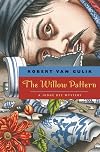
The Willow Pattern
by Robert Van Gulik
Judge Dee: Publication order (11), Judge Dee: Chronological order (14)
On This Page
Description
Judge Dee has been appointed emergency governor of the plague- and drought-ridden Imperial City. As his guards help the city fend off a popular uprising, an aristocrat from one of the oldest families in China suffers an "accident" in a deserted mansion. In The Willow Pattern, the illustrious judge uses his trademark expertise to unravel the mysteries of the nobleman, a shattered vase, and a dead bondmaid. Along the way he encounters a woman who fights with loaded sleeves, a nearly drowned show more courtesan, and an elaborate trap set for a murderer. Packed with suspense, violence, and romance, The Willow Pattern won't disappoint Judge Dee's legions of loyal fans. "The China of old, in Mr. van Gulik's skilled hands, comes vividly alive again."--Allen J. Hubin, New York Times Book Review show lessTags
Recommendations


































Member Reviews
The Willow Pattern takes placed in A.D. 677, when Judge Dee’s official magisterial career has ended and he’s been elevated to Lord Chief Justice of the Imperial capital, Chang-An (modern day Xi'an). (His faithful sergeants, Ma Joong and Chao Tai, have been promoted to colonels of the guards.) The entire city has been thrust into an uproar by a plague and the ensuing flights of the well-to-do and the corpses of the stricken.
In this confusion, Judge Dee must solve the murders of the heads of two of the three wealthiest and oldest families in Chang-An. He and his lieutenants also help put down several riots and a rebellion stirred up by plague, hunger, and fear.
Author Robert van Gulik, a Dutch diplomat, linguist and Asian scholar, show more relied on a real-life Chinese magistrate during the T’ang Dynasty named Ti Jen-chieh for his Judge Dee novels. Simplifying the magistrate’s name to Judge Dee Jen-djieh, van Gulik first introduced the West to Judge Dee in Celebrated Cases of Judge Dee, first published in 1949 (although not translated into English until 1976). And, yes, van Gulik advises us, Judge Dee really did serve for a year as President of the Metropolitan Court. In that same postscript to The Willow Pattern, van Gulik also provides some interesting history on the well-known blue-on-white Willow Pattern china.
While The Willow Pattern, like all Judge Dee books, does stand alone, I would recommend beginning the series with one of the novels in which Judge Dee still serves as a magistrate, particularly The Chinese Gold Murders, where a young Judge Dee first meets his future sergeants, Ma Joong and Chao Tai, while they’re still “brothers of the green wood,” or what we would call highwaymen. show less
In this confusion, Judge Dee must solve the murders of the heads of two of the three wealthiest and oldest families in Chang-An. He and his lieutenants also help put down several riots and a rebellion stirred up by plague, hunger, and fear.
Author Robert van Gulik, a Dutch diplomat, linguist and Asian scholar, show more relied on a real-life Chinese magistrate during the T’ang Dynasty named Ti Jen-chieh for his Judge Dee novels. Simplifying the magistrate’s name to Judge Dee Jen-djieh, van Gulik first introduced the West to Judge Dee in Celebrated Cases of Judge Dee, first published in 1949 (although not translated into English until 1976). And, yes, van Gulik advises us, Judge Dee really did serve for a year as President of the Metropolitan Court. In that same postscript to The Willow Pattern, van Gulik also provides some interesting history on the well-known blue-on-white Willow Pattern china.
While The Willow Pattern, like all Judge Dee books, does stand alone, I would recommend beginning the series with one of the novels in which Judge Dee still serves as a magistrate, particularly The Chinese Gold Murders, where a young Judge Dee first meets his future sergeants, Ma Joong and Chao Tai, while they’re still “brothers of the green wood,” or what we would call highwaymen. show less
Solid Judge Dee mystery about three cases in the plague-stricken imperial capital. I think he solves one of the mysteries too easily, but there are cool things such as the art of "loaded sleeves."
#10 in the Judge Dee series. In this episode, Magistrate Dee is in the capital of the Empire where the plague has broken out. Not only that, but while there, he has to get to the root of 2 murders. As always, each subplot ties together, and it is fun watching Judge Dee figure it all out and unravel the case. This series is one of my absolute favorites in my library.
Highly recommended; if you haven't tried this series yet you may not wish to start here, but rather with the first. If you like historical mysteries, you may wish to give Van Gulik's work a try.
Highly recommended; if you haven't tried this series yet you may not wish to start here, but rather with the first. If you like historical mysteries, you may wish to give Van Gulik's work a try.
Mein erster Richter-Di-Roman hat mir gefallen. Man erfährt einiges über das alte China, z.B. was geladene Ärmel sind. Es ist ein typischer Sherlock-Holmes-Stil: Der kluge Richter Di löst aufgrund verschiedener Indizien die Mordfälle. Seine unnachahmlichen Assistenten helfen mit, allen voran Ma Jung, der sich in das Mädchen mmit den geladenen Ärmeln verliebt.
Mar 16, 2021German
Kina, ca år 680
Hovedstaden er ramt af pest og Dommer Di er blevet indsat som kejserens stedfortræder. Udover at bekæmpe pesten får han også en mordsag at opklare. Den aldrende, men stadigt meget flittige og dygtige købmand Mei Liang er tilsyneladende faldet ned ad en stejl trappe i sit hjem og har knust hovedet. Der var tre aldrende ledere af "de gamle familier" Mei, Ye og Hu, og en gammel gadevise spår at en skal miste sin seng, en sit øje og en sit hoved. Kort tid efter Meis død, bliver Ye fundet død, slået ihjel med grusom kraft, så hans ene øje er faldet ud. Yes kone hænger sig kort efter Yes død.
Dommer Di finder ud af at det har noget at gøre med en gammel historie med en løskøbt kurtisane, som stikker af med en show more rigere bejler og bosætter sig i en stor villa. Villaen og piletræerne har givet anledning til et meget brugt porcelænsmønster, pilemotivet.
Hu har i sin tid løskøbt fru Mei, men hun ville hellere være rig og ægtede Mei. Dog bedrog hun ham med mange andre, deriblandt Hu. En dag overraskede Mei de to og de slog ham ihjel med en tuschsten. Ye havde hang til at pine unge kvinder og havde for år tilbage forårsaget marionetdukkeføreren Yuan's kones død. Hans to tvillingedøtre, Blåhvid og Koral, er ikke ens, men vil begge hævne moderen. Blåhvid slår Ye ihjel med "jern i ærmet", dvs en jernkugle gemt i ærmerne på dragten, men Dommer Di bestemmer at hun skal gå fri for straf.
En klam, men dygtig læge, doktor Yew, er også indblandet, men "nøjes" med at få en hård fængselsdom.
Ma Jung er alvorligt forelsket i Blåhvid og det er Chiao Tai og Dommer Di helt indforståede med. Chiao Tai mener endda at han bør tage Koral med i købet som andenhustru.
Sideløbende med historien rydder en pestepidemi godt ud i befolkningen i byen, men Tao Gan, Ma Jung, Chiao Tai og Dommer Di styrer byen sikkert igennem krisen. Undtagelsestilstanden gør det let at eksekvere dødsdomme, så Dommer Di rydder også hurtigt ud i forbryderne.
Ma Jung redder Blåhvid fra druknedøden undervejs og Chiao Tai og sig selv fra nogle forbrydere forklædt som gadefejere. Blåhvid "betaler kontant", dvs med sin dyd. Chiao Tai anerkender Ma Jungs dåd og Chiao plejer at være tavsheden selv, så Ma Jung er godt tilfreds.
En glimrende og meget læsværdig krimi, der foregår i det gamle Kina show less
Hovedstaden er ramt af pest og Dommer Di er blevet indsat som kejserens stedfortræder. Udover at bekæmpe pesten får han også en mordsag at opklare. Den aldrende, men stadigt meget flittige og dygtige købmand Mei Liang er tilsyneladende faldet ned ad en stejl trappe i sit hjem og har knust hovedet. Der var tre aldrende ledere af "de gamle familier" Mei, Ye og Hu, og en gammel gadevise spår at en skal miste sin seng, en sit øje og en sit hoved. Kort tid efter Meis død, bliver Ye fundet død, slået ihjel med grusom kraft, så hans ene øje er faldet ud. Yes kone hænger sig kort efter Yes død.
Dommer Di finder ud af at det har noget at gøre med en gammel historie med en løskøbt kurtisane, som stikker af med en show more rigere bejler og bosætter sig i en stor villa. Villaen og piletræerne har givet anledning til et meget brugt porcelænsmønster, pilemotivet.
Hu har i sin tid løskøbt fru Mei, men hun ville hellere være rig og ægtede Mei. Dog bedrog hun ham med mange andre, deriblandt Hu. En dag overraskede Mei de to og de slog ham ihjel med en tuschsten. Ye havde hang til at pine unge kvinder og havde for år tilbage forårsaget marionetdukkeføreren Yuan's kones død. Hans to tvillingedøtre, Blåhvid og Koral, er ikke ens, men vil begge hævne moderen. Blåhvid slår Ye ihjel med "jern i ærmet", dvs en jernkugle gemt i ærmerne på dragten, men Dommer Di bestemmer at hun skal gå fri for straf.
En klam, men dygtig læge, doktor Yew, er også indblandet, men "nøjes" med at få en hård fængselsdom.
Ma Jung er alvorligt forelsket i Blåhvid og det er Chiao Tai og Dommer Di helt indforståede med. Chiao Tai mener endda at han bør tage Koral med i købet som andenhustru.
Sideløbende med historien rydder en pestepidemi godt ud i befolkningen i byen, men Tao Gan, Ma Jung, Chiao Tai og Dommer Di styrer byen sikkert igennem krisen. Undtagelsestilstanden gør det let at eksekvere dødsdomme, så Dommer Di rydder også hurtigt ud i forbryderne.
Ma Jung redder Blåhvid fra druknedøden undervejs og Chiao Tai og sig selv fra nogle forbrydere forklædt som gadefejere. Blåhvid "betaler kontant", dvs med sin dyd. Chiao Tai anerkender Ma Jungs dåd og Chiao plejer at være tavsheden selv, så Ma Jung er godt tilfreds.
En glimrende og meget læsværdig krimi, der foregår i det gamle Kina show less
Nov 15, 2008 (Edited)Danish
Ratings
Members
- Recently Added By
Lists

Best Crime Fiction
262 works; 39 members

Books Read in 2017
4,249 works; 129 members

Books Read in 2020
4,379 works; 124 members

Scandinavian Crime Fiction
224 works; 37 members
Author Information

112+ Works 10,338 Members
Robert H. Van Gulik was born in the Netherlands on August 9, 1910. He joined the Dutch Foreign Service in 1935. From 1942-1945, he was secretary for the Dutch mission to Chiang Kai-shek's Nationalist government in Chongqing, China. During this time, he translated a number of Chinese texts including Celebrated Cases of Judge Dee (Dee Goong An). He show more proceeded to write sixteen of his own Judge Dee novels. His scholarly works included Siddham: An Essay on the History of Sanskrit Studies in China and Japan, Hayagriva: Horse Cult in Asia, and Sexual Life in Ancient China. He died on September 24, 1967. (Bowker Author Biography) show less
Some Editions
Series


Belongs to Publisher Series
SaPo (219)
Work Relationships
Is contained in
Common Knowledge
- Canonical title
- The Willow Pattern
- Original title
- The Willow Pattern
- Original publication date
- 1965
- People/Characters
- T'so Ling; Koong-se; Chang; The ta-jin
- Important places
- Ancient China
- First words
- Long, long ago, in old China, there lived a powerful elder called a mandarin.
- Last words
- (Click to show. Warning: May contain spoilers.)Koong-se and Chang were transformed into immortal love birds, and they flew high in the sky, where the cruel ta-jin could never harm them again.
- Original language
- English
- Disambiguation notice
- This is the Robert van Gulik/Judge Dee novel.
Classifications
Statistics
- Members
- 483
- Popularity
- 62,897
- Reviews
- 5
- Rating
- (3.80)
- Languages
- 12 — Chinese, Czech, Danish, Dutch, English, Estonian, Finnish, French, German, Italian, Polish, Swedish
- Media
- Paper, Audiobook, Ebook
- ISBNs
- 25
- ASINs
- 9