
The Wars
by Timothy Findley
On This Page
Description
Robert Ross, a sensitive nineteen-year-old Canadian officer, went to war--The War to End All Wars. He found himself in the nightmare world of trench warfare, of mud and smoke, of chlorine gas and rotting corpses. In this world gone mad, Robert Ross performed a last desperate act to declare his commitment to life in the midst of death.Tags
Recommendations













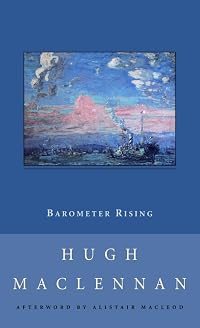
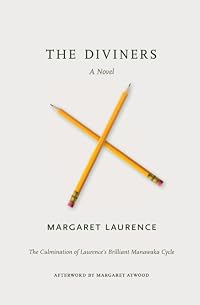
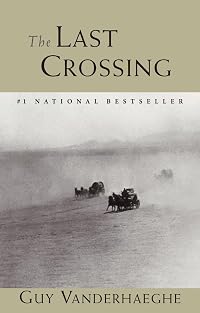


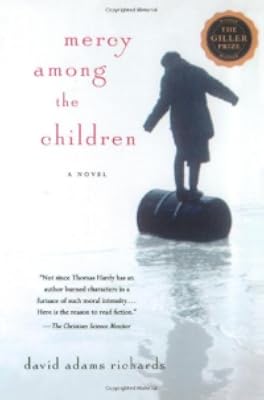




Member Recommendations
Member Reviews
I have to start this review off by saying that I was a little shocked to see this book displaying as a "Beach Reads" book on the amazon.ca webpage. The gritty and yet metaphysical examination of the meaning of life, survival and the atrocities that humans have inflicted upon other humans doesn't quite equate into a "beach read"... not in my mind anyways. I mean, this has some similarities to the story telling of Brideshead Revisited but with the grim brutal futility of war as a full frontal assault, minus the whole drinking and waxing philosophical bit. Now, don't get me wrong. I happen to be a huge fan of Findley's stories, especially the way he gets under his character's skin to expose the human condition for the flawed thing that it show more really is. I can highly, highly recommend Findley's The Last of the Crazy People, but I digress. In The Wars, Findley experiments with story telling by presenting the narration of this story as one of an unnamed individual's work to cobble together fragments of memories, snapshots and facts to tell Ross's story. I am still undecided if this was the best mechanism to use, as the story tends to jump around a bit and I was a bit confused as to what exactly happened to one of the characters, but Findley's ability to make me experience the trench warfare of World War I in all of its mud, confusion, harrowing despair, coupled with the determination to rise above it all is what continues to resonate within me long after I finished reading this story. Findley has a knack for producing wonderful quote-worthy passages, like the following monologue by Robert's mother early in the story:
For a moment she looked at what she'd done and then, without looking up, she spoke in a voice as passionless as sleep: "You think Rowena belonged to you. Well I'm here to tell you, Robert, that no one belongs to anyone. We're all cut off at birth with a knife and left at the mercy of strangers. You hear that? Strangers. I know what you want to do. I know you're going to go away and be a solder. Well - you can go to hell. I'm not responsible. I'm just another stranger. Birth I can give you - but life I cannot. I can't keep anyone alive. Not anymore.I close off this review with two more quotes that really resonated with me while I was reading this story:
The first dead man he'd seen, I think. And he said that after a while you saw them everywhere and you sort of accepted it. But the acceptance made him mad and he said this marvelous thing: I still maintain that an ordinary human being has a right to be horrified by a mangled body seen on an afternoon walk. So what it was we were denied was to be ordinary. All our ordinary credos and expectations vanished. Vanished There was so much death. No one can imagine. These were not accidents - or the quiet, expected deaths of the old. These were murders. By the thousands. All your friends were...murdered.Overall, another brilliant, thought-provoking read from one of my favorite Canadian authors. I can see why this won the 1977 Governor General's Award. A worthy read. show less
-----------
Someone once said to Clive: do you think we will ever be forgiven for what we have done? They meant their generation and the war and waht the war had done to civilization. Clive said something that I've never forgotten. He said: I doubt we'll ever be forgiven. All I hope is - they'll remember that we were human beings.
The Wars by Timothy Findley is a short book but it packs a very large punch. The story of one Canadian lad who goes off to the trenches in World War I was an intricate and heart wrenching story. The brutality that the author describes in rich, lyrical language makes it plain that there is really nothing noble about warfare and that the psychological effects of this particular war were devastating.
This book really grabbed me and I think this had a great deal to do with my own grandfather who ran away at age sixteen to fight in World War I. He was caught the first time, but succeeded a year later at seventeen. The things he saw and did affected him for the rest of his life. He kept a diary about his experiences and many of his show more descriptions matched with this book.
The Wars was a moving account of one Canadian man’s experience during World War I, and while it is not an in-depth exploration, the author introduces his character and allows us to sample his early life, his training and his war experiences that together paint a clear and penetrating picture of the shock and struggle that these soldiers were exposed to. Although the book left me feeling emotionally drained, The Wars was a very impressive read. show less
This book really grabbed me and I think this had a great deal to do with my own grandfather who ran away at age sixteen to fight in World War I. He was caught the first time, but succeeded a year later at seventeen. The things he saw and did affected him for the rest of his life. He kept a diary about his experiences and many of his show more descriptions matched with this book.
The Wars was a moving account of one Canadian man’s experience during World War I, and while it is not an in-depth exploration, the author introduces his character and allows us to sample his early life, his training and his war experiences that together paint a clear and penetrating picture of the shock and struggle that these soldiers were exposed to. Although the book left me feeling emotionally drained, The Wars was a very impressive read. show less
With Remembrance Day approaching (Nov 11th in Canada), I was looking for an appropriately themed novel and hadn't read Timothy Findley before. In the space of two hundred pages he produced this virtuoso performance of moving back and forth in time, changing perspectives, briefly offering the 2nd person, dictated interviews, portions of diaries and letters ... making all these shifts seem effortless and never chaotic or randomly performed. As its reader I was both being told the story and made to feel as though I was its researcher, investigating some act that is only spelled out in full at the novel's end. Not knowing what it was in advance proved key to how I perceived it.
Robert Ross is a man instinctively opposed to violence and show more offended by death, which makes signing up for the war an almost absurd thing to get himself involved in. He views it as penance and escape after his beloved sister dies of an accident. His story has its origins in southern Ontario, then a training camp in Alberta, then on board the troop ship to Europe. On the western front Robert is assigned to the mortars. It both does and does not develop as I expected, and always there is the unresolved mystery involving horses that still lies ahead. The ending encourages re-reading, and re-evaluating of both the novel and of the war it portrays, and of those who endured it. Never forget. show less
Robert Ross is a man instinctively opposed to violence and show more offended by death, which makes signing up for the war an almost absurd thing to get himself involved in. He views it as penance and escape after his beloved sister dies of an accident. His story has its origins in southern Ontario, then a training camp in Alberta, then on board the troop ship to Europe. On the western front Robert is assigned to the mortars. It both does and does not develop as I expected, and always there is the unresolved mystery involving horses that still lies ahead. The ending encourages re-reading, and re-evaluating of both the novel and of the war it portrays, and of those who endured it. Never forget. show less
I'm a bit torn on this one, because the trench atrocities (it's a WWI book) are atrocious in a way that makes you feel solemn and sad and not "war-porned" (an actual art movement in the Iraq War era, btw, though it seems to be mostly one guy, or "warpunk" as he called himself, booo), and there are modernist narrative flourishes that make it pretty, Robert Ross's sensitive sensibilities come across ephemeral and pretty (and make it more pretty) and their destruction as heartbreaking, not--again--exploitative; but I just can't get over that Timothy Findley could have written about anyone in this world and so of course he wrote about a beautiful, sensitive, beloved eldest son of an upper-middle-class Upper Canada gentry family, basically show more the exact Great War Canadian iteration of the "universal protagonist," basically the guy from fucking Garden State. Why? This book is fine and even good, Timothy Findley, but were you so out of touch with everything else that was out there that you thought this was the story that needed to be told? Of course you were, you were a blue-eyed upper-middle-class Upper Canada boy yourself, weren't you? You had a story and you were gonna send it spurting out come hell or relative obscurity and a job teaching high school in Burlington. I'm guilty of a small presentism here, but it feels a bit like trolling--enough about tin soldier boys and their upbringing in WASPy cold rooms and their disillusionment and how they wanted to burn like dingledodies and burned like human torches instead, especially as a postscript from 1977. I mean, I get it, I have a blue-eyed towheaded son too, and if there's another world war in 2034, let me kiss his shorn skull and sing Danny Boy in private and not elbow out everybody else's stories in a seminal Canadian novel, you know?
At least Robert Ross was never a patriot. At least he loved horses. At least his moments of homoerotic transfixion are done in a way that makes our souls stir for feelings deep and buried, although there are also moments in that regard that totally don't ring true and feel like exploitation (again). The scene of Robert's rape is so cynically done, the effort to inject it with tenderness reading like a heavy-handed reminder that he was just that beautiful and his death was such tragic.
He was beautiful. I'm sorry he died. I'm sorry Timothy Findley thought he would be the most marketable character to write about (no doubt rightly) and that the most marketable thing to do with him would be to kill him and cry crocodile tears. show less
At least Robert Ross was never a patriot. At least he loved horses. At least his moments of homoerotic transfixion are done in a way that makes our souls stir for feelings deep and buried, although there are also moments in that regard that totally don't ring true and feel like exploitation (again). The scene of Robert's rape is so cynically done, the effort to inject it with tenderness reading like a heavy-handed reminder that he was just that beautiful and his death was such tragic.
He was beautiful. I'm sorry he died. I'm sorry Timothy Findley thought he would be the most marketable character to write about (no doubt rightly) and that the most marketable thing to do with him would be to kill him and cry crocodile tears. show less
I'd be hardpressed to categorize Timothy Findley's writing style. Every book of his that I have read has been significantly different from the other. In this book Findley uses a journalistic style to tell the story of Robert Ross. He also opens the book with the scene that is the culmination of his story. Then he repeats this scene at the end but now we know how Ross came to be in that situation.
The back cover captures the essence of this story :
"Robert Ross, a sensitive nineteen-year-old Canadian Officer, went to war - The War to End All Wars. He found himself in the nightmare world of trench warfare: of mud and smoke, of chlorine gas and rotting corpses. In this world gone mad, Robert Ross performed a last desperate act to declare his show more commitment to like in the midst of death.
I thought the story was magnificently told even though it is not easy to read. But that's the point I think. The First World War was horrific and it shouldn't be the subject of light literature. show less
The back cover captures the essence of this story :
"Robert Ross, a sensitive nineteen-year-old Canadian Officer, went to war - The War to End All Wars. He found himself in the nightmare world of trench warfare: of mud and smoke, of chlorine gas and rotting corpses. In this world gone mad, Robert Ross performed a last desperate act to declare his show more commitment to like in the midst of death.
I thought the story was magnificently told even though it is not easy to read. But that's the point I think. The First World War was horrific and it shouldn't be the subject of light literature. show less
Publisher’s Summary:
Robert Ross, a sensitive nineteen-year-old Canadian officer, went to war — The War to End All Wars. He found himself in the nightmare world of trench warfare, of mud and smoke, of chlorine gas and rotting corpses. In this world gone mad, Robert Ross performed a last desperate act to declare his commitment to life in the midst of death.
My Review:
I have no idea how I’ve managed to miss this masterpiece by Findley, published in 1977, until now – but I’m grateful for two things that happened recently, which put it into my hands. First, a friend asked me about it out of the blue, and days later, I spotted it on on CBC’s list, 100 Novels That Make You Proud to Be Canadian. Indeed. I knew I had to read it.
Robert show more Ross comes from an upper middle class family in Toronto. His most precious relationship is with his disabled sister, Rowena, whom he adores. Shortly following her untimely, accidental death, Ross enlists, looking for a purpose, and for a way forward out of his grief. What he finds is another matter altogether. In Ypres, where the novel is primarily set, the horror he experiences defies imagination. Ypres marked the first mass use by Germany of poison gas on the Western Front – casualties numbered in the hundreds of thousands. Touchingly, Findley reminds us throughout the novel of the animals who also served, or were displaced by war. Ross and his comrade, Rodwell, empathize with the universality of suffering, both animal and human. Ultimately, their empathy will be their undoing. In fact, in the novel’s Prologue, Ross’s first interaction is with horses. When the narration switches focus, I wondered, “What happened to the horses?” I was hooked.
Undoubtedly, the novel’s narration is one of its primary strengths. In writing The Wars, Findley relied on family photographs, the wartime letters of his uncle, and interviews with some who could “still be met in dark old rooms with nurses in attendance” (8) – and, in doing, so, created a narrator who is an anonymous, ghostly presence. Guy Vanderhaeghe, another Canadian writer whose work I admire, writes in the Introduction that this “unnamed figure is above all a cunning narrative strategy.” (xiii) I can attest to this, given my own reading experience: Who is he? Or she? What is the relation between this presence and Ross that compels him or her to so relentlessly pursue his story?
Vanderhaeghe goes on to write that “The Wars is the finest historical novel ever written by a Canadian, and serious historical novels are always as much about the present as they are about the past.” (xiv) We are agreed, on both points. I think the greatest gifts of literature are that it informs us of our past, teaches us about our present, and offers direction for our future. I can only compare The Wars to All Quiet on the Western Front – and this I do not do lightly: while the novels are very different, both are powerful indictments of war. A must read!
_______________
Most Powerful Quotes:
“People can only be found in what they do.” (9)
“What you people who weren't yet born can never know is what it meant to sleep in cities under silent falls of snow when all night long the only sounds you heard were dogs that parked at trains that passed so far away they took a short cut through your dreams and no one even woke. It was the war that changed that. It was. After the Great War for Civilization - sleep was different everywhere.” (44)
“I doubt we will ever be forgiven. All I hope is – they'll remember we were human beings.” (164) show less
Robert Ross, a sensitive nineteen-year-old Canadian officer, went to war — The War to End All Wars. He found himself in the nightmare world of trench warfare, of mud and smoke, of chlorine gas and rotting corpses. In this world gone mad, Robert Ross performed a last desperate act to declare his commitment to life in the midst of death.
My Review:
I have no idea how I’ve managed to miss this masterpiece by Findley, published in 1977, until now – but I’m grateful for two things that happened recently, which put it into my hands. First, a friend asked me about it out of the blue, and days later, I spotted it on on CBC’s list, 100 Novels That Make You Proud to Be Canadian. Indeed. I knew I had to read it.
Robert show more Ross comes from an upper middle class family in Toronto. His most precious relationship is with his disabled sister, Rowena, whom he adores. Shortly following her untimely, accidental death, Ross enlists, looking for a purpose, and for a way forward out of his grief. What he finds is another matter altogether. In Ypres, where the novel is primarily set, the horror he experiences defies imagination. Ypres marked the first mass use by Germany of poison gas on the Western Front – casualties numbered in the hundreds of thousands. Touchingly, Findley reminds us throughout the novel of the animals who also served, or were displaced by war. Ross and his comrade, Rodwell, empathize with the universality of suffering, both animal and human. Ultimately, their empathy will be their undoing. In fact, in the novel’s Prologue, Ross’s first interaction is with horses. When the narration switches focus, I wondered, “What happened to the horses?” I was hooked.
Undoubtedly, the novel’s narration is one of its primary strengths. In writing The Wars, Findley relied on family photographs, the wartime letters of his uncle, and interviews with some who could “still be met in dark old rooms with nurses in attendance” (8) – and, in doing, so, created a narrator who is an anonymous, ghostly presence. Guy Vanderhaeghe, another Canadian writer whose work I admire, writes in the Introduction that this “unnamed figure is above all a cunning narrative strategy.” (xiii) I can attest to this, given my own reading experience: Who is he? Or she? What is the relation between this presence and Ross that compels him or her to so relentlessly pursue his story?
Vanderhaeghe goes on to write that “The Wars is the finest historical novel ever written by a Canadian, and serious historical novels are always as much about the present as they are about the past.” (xiv) We are agreed, on both points. I think the greatest gifts of literature are that it informs us of our past, teaches us about our present, and offers direction for our future. I can only compare The Wars to All Quiet on the Western Front – and this I do not do lightly: while the novels are very different, both are powerful indictments of war. A must read!
_______________
Most Powerful Quotes:
“People can only be found in what they do.” (9)
“What you people who weren't yet born can never know is what it meant to sleep in cities under silent falls of snow when all night long the only sounds you heard were dogs that parked at trains that passed so far away they took a short cut through your dreams and no one even woke. It was the war that changed that. It was. After the Great War for Civilization - sleep was different everywhere.” (44)
“I doubt we will ever be forgiven. All I hope is – they'll remember we were human beings.” (164) show less
Robert Ross is a Canadian soldier whose life story and particularly his death is being pieced together by a researcher in the "present" of the book (which at the time of publication would have been the mid- to late 1970s). The story is told through standard third-person limited as well as interview transcripts, diary excerpts and interludes with the researcher looking through books in the archives. This method of storytelling does feel kind of "elliptical" (thank you GR summary) at first, especially because the researcher interludes are in the second person, but if you know going in that the story is not just third-person limited, it will be an easier ride.
I liked the story well enough on its own, but Findley's description was wonderful show more enough to make me want to buy my own copy of this book, so I decided to award an extra star. Of the muddy conditions in Ypres, he says "[The soldiers'] graves, it seemed, just dug themselves and pulled them down." The casual horror of war is brought home when he states that one man went outside for a breath of air -- which blew the guy's head off. The desperation of soldiers trapped in a crater during a gas attack, the cramped conditions on a troop vessel, the appalling rot and squalor in the trenches: all is painted here in vivid detail. Findley also has the power to tap emotions right at the quick: my example is Rodwell's letter, which I shall not type out here but which is extremely moving in its heartfelt simplicity.
This book is recommended for those who are interested in war fiction, enjoy excellent description and/or are okay with a somewhat less straightforward storytelling method. show less
I liked the story well enough on its own, but Findley's description was wonderful show more enough to make me want to buy my own copy of this book, so I decided to award an extra star. Of the muddy conditions in Ypres, he says "[The soldiers'] graves, it seemed, just dug themselves and pulled them down." The casual horror of war is brought home when he states that one man went outside for a breath of air -- which blew the guy's head off. The desperation of soldiers trapped in a crater during a gas attack, the cramped conditions on a troop vessel, the appalling rot and squalor in the trenches: all is painted here in vivid detail. Findley also has the power to tap emotions right at the quick: my example is Rodwell's letter, which I shall not type out here but which is extremely moving in its heartfelt simplicity.
This book is recommended for those who are interested in war fiction, enjoy excellent description and/or are okay with a somewhat less straightforward storytelling method. show less
Members
- Recently Added By
Lists

1001 Books You Must Read Before You Die
1,448 works; 1,134 members
501 Must-Read Books
529 works; 71 members

The Best of Canadian Literature
235 works; 33 members
CBC Books - Canada's 100 (+ bonus 10): Which have you read?
110 works; 23 members

Stories of War and Revolution
143 works; 54 members

One Book, Many Authors
441 works; 40 members

Governor General of Canada's English Fiction Awards
89 works; 3 members
World War I Fiction
94 works; 15 members

Books Read in 2023
5,617 works; 144 members

University literature
145 works; 5 members

Swinging Seventies
255 works; 18 members

My TBR
371 works; 3 members
THE WAR ROOM
813 works; 24 members

Books recommended by Calgary Public Library staff
1,588 works; 4 members

Canadian Historical Fiction 🇨🇦
157 works; 8 members
Talk Discussions
Past Discussions
Group Read, April 2022: The Wars in 1001 Books to read before you die (June 2022)
Author Information

34+ Works 7,331 Members
Timothy Findley was born in 1930. A native of Toronto, Canada, novelist and playwright Timothy Findley initially embarked upon an acting career. Findley worked for the Canadian Stratford Festival and later, after study at London's Central School of Speech and Drama, he toured Britain, Europe, and the United States as a contract player. While show more performing in The Matchmaker by Thornton Wilder, Findley was encouraged by the playwright to write fiction. Influenced by film techniques, Findley's first novel, The Last of the Crazy People (1967) is a penetrating look at a family of "emotional cripples" from a child's perspective. With his character Hooker, Findley captures the irrational logic of a child's mind without treating childhood sentimentally.The Butterfly Plague followed in 1969. The Wars (1978), Findley's most successful novel, has been translated into numerous languages and was made into a film. The Wars uses the device of a story-within-a-story to illustrate how a personality transcends elemental forces even while being destroyed by them. In 1981 Famous Last Words was published. This fictionalization of Hugh Selwyn Mauberley by Ezra Pound, a work that was already a "fictional fact," examines fascism. In Not Wanted on the Voyage (1984), Findley rewrites the story of Noah's Ark by giving voices to women, children, workers, animals, and folklore creatures, all of whom question Noah's authority. The novel turns into a parable that seems to challenge imperialism, eugenics, fascism, and any other force that endangers human survival. Again repeating an earlier text, Findley turns to Thomas Mann's Death in Venice to write The Telling of Lies (1986). This novel draws parallels between World War II atrocities and contemporary North America, which Findley sees as a metaphoric concentration camp. Findley died on June 20, 2002 in Provence, France (Bowker Author Biography) show less
Awards and Honors
Awards
Notable Lists
Series
Belongs to Publisher Series
Common Knowledge
- Canonical title
- The Wars
- Original title
- The Wars
- Alternate titles*
- De eeuwige oorlog : roman
- Original publication date
- 1977
- People/Characters
- Robert Ross; Rowena Ross; Thomas Ross; Peggy Ross; Stuart Ross; Lady Juliet d'Orsay (show all 8); Lady Barbara d'Orsay; Eugene Taffler
- Important places
- Canada; Belgium; England, UK; France; Ypres, West Flanders, Belgium
- Important events
- World War I (1914 | 1918)
- Related movies
- The Wars (1983 | IMDb)
- Epigraph
- Never that which is shall die
— Euripides
In such dangerous things as war the errors which proceed from a spirit of benevolence are the worst.
— von Clausewitz - Dedication
- For: My FATHER and MOTHER and P.M. FINDLEY and in memory of T.I.F.
- First words
- She was standing in the middle of the railroad tracks.
- Quotations
- Houses, trees and fields of flax once flourished here. Summers had been blue with flowers. Now it was a shallow sea of stinking grey from end to end. And this is where you fought the war.
He said that in a way being loved is like being told you never have to die. And I said: Yes - but it doesn't save you, does it. And he said: No - but it saves your sanity.
Someone once said to Clive: do you think we will ever be forgiven for what we've done? They meant their generation and the war and what the war had done to civilization. Clive said something I've never forgotten. He said: I d... (show all)oubt we'll ever be forgiven. All I hope is - they'll remember we were human beings. - Last words
- (Click to show. Warning: May contain spoilers.)Robert and Rowena with Meg: Rowena seated astride the pony—Robert holding her in place. On the back is written: 'Look! You can see our breath!' And you can.
- Blurbers
- O'Brien, Tim
- Original language*
- Engels
*Some information comes from Common Knowledge in other languages. Click "Edit" for more information.
Classifications
Statistics
- Members
- 1,295
- Popularity
- 18,799
- Reviews
- 28
- Rating
- (3.91)
- Languages
- 10 — Czech, Danish, Dutch, English, Finnish, French, German, Italian, Spanish, Swedish
- Media
- Paper, Ebook
- ISBNs
- 36
- ASINs
- 11