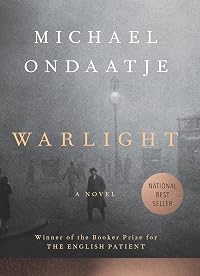
Warlight
by Michael Ondaatje
On This Page
Description
NATIONAL BEST SELLERFrom the internationally acclaimed, best-selling author of The English Patient: a mesmerizing new novel that tells a dramatic story set in the decade after World War II through the lives of a small group of unexpected characters and two teenagers whose lives are indelibly shaped by their unwitting involvement.
In a narrative as beguiling and mysterious as memory itself—shadowed and luminous at once—we read the story of fourteen-year-old Nathaniel, and his older show more sister, Rachel. In 1945, just after World War II, they stay behind in London when their parents move to Singapore, leaving them in the care of a mysterious figure named The Moth. They suspect he might be a criminal, and they grow both more convinced and less concerned as they come to know his eccentric crew of friends: men and women joined by a shared history of unspecified service during the war, all of whom seem, in some way, determined now to protect, and educate (in rather unusual ways) Rachel and Nathaniel. But are they really what and who they claim to be? And what does it mean when the siblings' mother returns after months of silence without their father, explaining nothing, excusing nothing? A dozen years later, Nathaniel begins to uncover all that he didn't know and understand in that time, and it is this journey—through facts, recollection, and imagination—that he narrates in this masterwork from one of the great writers of our time. show less
Tags
Recommendations


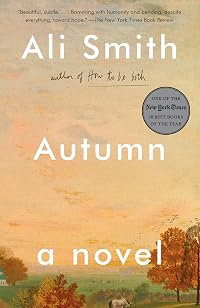
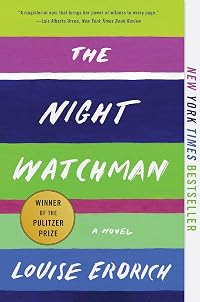

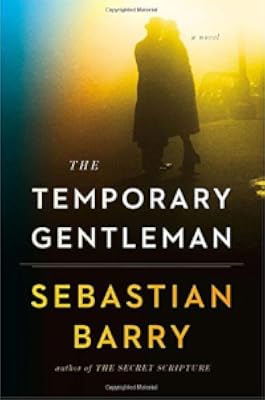
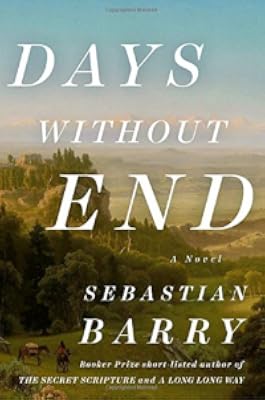



Member Recommendations
Member Reviews
Wonderful exploration of memory, imagination and awareness. The narrator ponders the events of his adolescence just after the end of WWII, when both parents left their home in London on "business", leaving 14-year-old Nathaniel and his older sister Rachel in the care of a man who had been lodging in their home. "The Moth", as the children referred to him, got up to mysterious business himself, sometimes involving Nathaniel and Rachel without their full understanding. When Nathaniel discovers that the steamer trunk he watched his mother pack so carefully is hidden in the basement, everything he thinks he knows is called into question. Clearly Mother did not fly off to join Father who had been assigned to one of Unilever's overseas show more offices. The Moth assures him his mother is fine, but will not tell him where she is. Gradually, through various interactions and inquiries, the adult Nathaniel pieces together a picture of his mother’s clandestine post-war activities, and begins to understand the part he and Rachel unwittingly played in some of them. A marvelous twisty tale. show less
Shortly after the end of WWII, Nathaniel and his sister, Rachel, are left in the care of a family friend when their parents travel to Asia for work. But their caretaker has a strange circle of friends with varying levels of criminality that draws in the siblings in different ways. Both at that time and over a decade later, Nathaniel tries to reconstruct what was truly happening around him and how it has made him the man he is.
I often find Ondaatje a challenging reading experience and Warlight was no exception. The narrative meanders like the rivers that Nathaniel spends time traveling and the line between his memories and his conjectures are fuzzy. While he explores how blind Nathaniel is to everything around him in the narcissistic way show more of many teens, he leaves tantalizing hints of who the other people who surround the protagonist might truly be. An excellent book club pick, I recognize Ondaatje's skill but while the read was interesting I didn't find it particularly enjoyable. show less
I often find Ondaatje a challenging reading experience and Warlight was no exception. The narrative meanders like the rivers that Nathaniel spends time traveling and the line between his memories and his conjectures are fuzzy. While he explores how blind Nathaniel is to everything around him in the narcissistic way show more of many teens, he leaves tantalizing hints of who the other people who surround the protagonist might truly be. An excellent book club pick, I recognize Ondaatje's skill but while the read was interesting I didn't find it particularly enjoyable. show less
Set in the UK after WWII, protagonist Nathaniel tells the tale of being left in the care of an enigmatic person he calls The Moth while his parents leave the country to take care of undisclosed “business” in Singapore. Teens Nathaniel and his sister, Rachel, are supposed to go to boarding school, but they talk The Moth into living at home, where they are exposed to the clandestine activities of The Moth’s associates. An ex-boxer, The Darter, soon joins them. Nathaniel accompanies The Darter on trips down the Thames. Though he remains mostly in the dark, he suspects these trips involve illegal dealings.
The book is split into two parts. The first relates what happens to the two teens when their parents abandon them. The second show more takes place fourteen years later and follows Nathaniel’s attempts to reconstruct what was going on with his parents, particularly his mother, during and after the war. He understands more about the situation now that he is ten years older. The narrative sheds light on the aftermath of WWII, where many regional conflicts did not cease with the cease.
“On the continent guerrilla groups and Partisan fighters had emerged from hiding, refusing defeat. Fascist and German supporters were being hunted down by people who had suffered for five or more years. The retaliations and acts of revenge back and forth devastated small villages, leaving further grief in their wake. They were committed by as many sides as there were ethnic groups across the newly liberated map of Europe.”
Though it involves espionage, it is a reflective book involving little action. It is more about the impact of the parents’ espionage activities upon the children. The prose is stellar, as one may expect from Ondaatje. It worked for me as a way of depicting the pieces of a life that we puzzle out, never really knowing the entire picture but making inferences from what little we do know.
“The lost sequence in a life, they say, is the thing we always search out.” show less
The book is split into two parts. The first relates what happens to the two teens when their parents abandon them. The second show more takes place fourteen years later and follows Nathaniel’s attempts to reconstruct what was going on with his parents, particularly his mother, during and after the war. He understands more about the situation now that he is ten years older. The narrative sheds light on the aftermath of WWII, where many regional conflicts did not cease with the cease.
“On the continent guerrilla groups and Partisan fighters had emerged from hiding, refusing defeat. Fascist and German supporters were being hunted down by people who had suffered for five or more years. The retaliations and acts of revenge back and forth devastated small villages, leaving further grief in their wake. They were committed by as many sides as there were ethnic groups across the newly liberated map of Europe.”
Though it involves espionage, it is a reflective book involving little action. It is more about the impact of the parents’ espionage activities upon the children. The prose is stellar, as one may expect from Ondaatje. It worked for me as a way of depicting the pieces of a life that we puzzle out, never really knowing the entire picture but making inferences from what little we do know.
“The lost sequence in a life, they say, is the thing we always search out.” show less
There is a distinct darkness that pervades Warlight, both in the tone of the prose as well as the dimly lit nature of most of the scenes in the book. This lack of illumination serves as a wonderful metaphor for the story itself, in which Nathaniel and Rachel, teenaged siblings living in London near the end of World War II, are suddenly abandoned by their parents. Placed in the care of two mysterious men they know only as The Moth and The Darter, the brother and sister grow up over the next ten years largely in the dark about their parents’ fate but with very different impressions of what is actually happening around them. The novel thereby creates a striking blend of a compelling mystery, a war story, and a bittersweet coming-of-age show more tale.
For readers familiar with Michael Ondaatje’s distinctive style, it will come as no surprise that this story is not unveiled in a straightforward, linear way. The first half of the book concentrates on Nathaniel’s post-war life in the care of two men who may well be criminals, while the second part reconstructs his mother Rose’s wartime activities by way of the son’s mostly passive attempts to find the truth. Throughout the story, however, the author frequently shifts the perspective forward or backward in time and uses foreshadowing to create an effective sense of foreboding. He also introduces the reader to a dizzying array of different characters, all of whom have a purpose and figure into the ultimate resolution of the novel.
I have long been a big fan of Ondaatje’s work, as much for his poetic, lyrical writing style as for the intricate and engaging stories he tells. While Warlight did not quite approach the absolute best of what the author has produced in the past—The English Patient remains one of my very favorite novels—I nevertheless found it to be a highly enjoyable and thought-provoking reading experience. There is a great line that appears toward the end of the book that summarizes so much of what the story is about: “Do we eventually become what we are originally meant to be?” For both Rose and Nathaniel, this question is resolved, even if their respective answers are not the ones they might have wanted. show less
For readers familiar with Michael Ondaatje’s distinctive style, it will come as no surprise that this story is not unveiled in a straightforward, linear way. The first half of the book concentrates on Nathaniel’s post-war life in the care of two men who may well be criminals, while the second part reconstructs his mother Rose’s wartime activities by way of the son’s mostly passive attempts to find the truth. Throughout the story, however, the author frequently shifts the perspective forward or backward in time and uses foreshadowing to create an effective sense of foreboding. He also introduces the reader to a dizzying array of different characters, all of whom have a purpose and figure into the ultimate resolution of the novel.
I have long been a big fan of Ondaatje’s work, as much for his poetic, lyrical writing style as for the intricate and engaging stories he tells. While Warlight did not quite approach the absolute best of what the author has produced in the past—The English Patient remains one of my very favorite novels—I nevertheless found it to be a highly enjoyable and thought-provoking reading experience. There is a great line that appears toward the end of the book that summarizes so much of what the story is about: “Do we eventually become what we are originally meant to be?” For both Rose and Nathaniel, this question is resolved, even if their respective answers are not the ones they might have wanted. show less
Set in the UK after WWII, protagonist Nathaniel tells the tale of being left in the care of an enigmatic person he calls The Moth while his parents leave the country to take care of undisclosed “business” in Singapore. Teens Nathaniel and his sister, Rachel, are supposed to go to boarding school, but they talk The Moth into living at home, where they are exposed to the clandestine activities of The Moth’s associates. An ex-boxer, The Darter, soon joins them. Nathaniel accompanies The Darter on trips down the Thames. Though he remains mostly in the dark, he suspects these trips involve illegal dealings.
The book is split into two parts. The first relates what happens to the two teens when their parents abandon them. The second show more takes place fourteen years later and follows Nathaniel’s attempts to reconstruct what was going on with his parents, particularly his mother, during and after the war. He understands more about the situation now that he is ten years older. The narrative sheds light on the aftermath of WWII, where many regional conflicts did not cease with the cease.
“On the continent guerrilla groups and Partisan fighters had emerged from hiding, refusing defeat. Fascist and German supporters were being hunted down by people who had suffered for five or more years. The retaliations and acts of revenge back and forth devastated small villages, leaving further grief in their wake. They were committed by as many sides as there were ethnic groups across the newly liberated map of Europe.”
Though it involves espionage, it is a reflective book involving little action. It is more about the impact of the parents’ espionage activities upon the children. The prose is stellar, as one may expect from Ondaatje. It worked for me as a way of depicting the pieces of a life that we puzzle out, never really knowing the entire picture but making inferences from what little we do know.
“The lost sequence in a life, they say, is the thing we always search out.” show less
The book is split into two parts. The first relates what happens to the two teens when their parents abandon them. The second show more takes place fourteen years later and follows Nathaniel’s attempts to reconstruct what was going on with his parents, particularly his mother, during and after the war. He understands more about the situation now that he is ten years older. The narrative sheds light on the aftermath of WWII, where many regional conflicts did not cease with the cease.
“On the continent guerrilla groups and Partisan fighters had emerged from hiding, refusing defeat. Fascist and German supporters were being hunted down by people who had suffered for five or more years. The retaliations and acts of revenge back and forth devastated small villages, leaving further grief in their wake. They were committed by as many sides as there were ethnic groups across the newly liberated map of Europe.”
Though it involves espionage, it is a reflective book involving little action. It is more about the impact of the parents’ espionage activities upon the children. The prose is stellar, as one may expect from Ondaatje. It worked for me as a way of depicting the pieces of a life that we puzzle out, never really knowing the entire picture but making inferences from what little we do know.
“The lost sequence in a life, they say, is the thing we always search out.” show less
I was excited to finally get around to reading a book from an author who won the Golden Man Booker Prize in 2018 (for The English Patient.) I expected great things. I couldn't exactly ever connect with the book though. Maybe the intentional mysteriousness of the characters didn't help the reader. Nathaniel is the main character here, a young man trying to make a living slightly after World War II. His parents leave him and his sister in the care of the mysterious Moth and Nathaniel never really feels he can be safe, while also not judging the times he is most at risk. The purpose of most of the book seems to be Nathaniel trying to figure out his mother's history. Towards the end, when suddenly Nathaniel somehow knows (or imagines fully) show more his mother's history, like he was actually present for all of his mother's life, I just wasn't buying it. It put me out of the story even more. How would he know his mother's history when she deliberately hid everything from everyone? It seemed to me this book needed a little extra work for it to work successfully. Things didn't seem to tie together. The book reminded me of Anthony Doerr's 'All the Light We Cannot See' with its quality of trying to find everything precious within a war zone. (I didn't like that book either.) Warlight also reminded me of 'The Dictionary of Animal Languages' by Heidi Sopinka which I thought was on the same theme of scattered memories, but had absolutely amazing sentences and imagery on almost every page. I wrote down so many passages from The Dictionary of Animal Languages and nothing from Warlight. I wanted to keep rereading the beautiful sentences of 'The Dictionary of Animal Languages' but my eyes just wanted to speed through Warlight. Sopinka's book was also about shifting memory but the plot didn't have to go anywhere if it didn't want to, as the sentences were delectable. I guess it was a matter of no expectations and too many expectations between these two books. I will certainly get around to The English Patient eventually, but I couldn't really see how everything was tied together with this one. show less
In this latest work from Michael Ondaatje I rediscovered the writer I first loved in The English Patient. He takes us deep into an interior monologue of first a teenage boy and later that boy as a young man trying to understand his history. Ondaatje is not a prolific writer; it's been 7 years since his last novel, but that makes every word more carefully crafted.
Nathaniel, 14 at the start of the book, and his sister Rachel have been left behind in London with a family friend that Nathaniel (Stitch to his mother) and Rachel (Wren) call The Moth to look after them while their parents supposedly go to Singapore for a year. The father may indeed be in Singapore but the mother did not join him; as Nathaniel discovers later his mother (Rose) show more has continued her work as a spy that she started during the war. The Moth is an unusual parental figure. He brings an odd assortment of people into the family home and Nathaniel and Rose become quite close to some of them. The oddest of the visitors is a man called The Pimlico Darter (only as an adult does Nathaniel discover his real name) who works at various semi-illegal jobs. One of these is smuggling greyhounds into Britain to upset the betting odds at dog racetracks. When he needs a hand conveying the dogs along the Thames in a boat or through the countryside in a car he takes Nathaniel. Nathaniel also gets some work during school holidays at the Criterion Hotel that the Moth manages. There he meets a young waitress named Agnes. For some time Nathaniel and Agnes meet in empty houses that are listed for sale by Agnes' realtor brother. Agnes also goes along on some of the river trips where she meets the Darter who she thinks is Nathaniel's father. On several occasions Nathaniel is followed and/or menaced by strange men. Is it because of his involvement with the Darter? Or is there something else at work? As a twenty-eight year old Nathaniel is finally able to piece together his memories with files he finds at the government office where he works (Nathaniel has become a sort of a spy too) and work out what his mysterious parents were doing during these years.
I listened to this book and I found that I sometimes had to backtrack to catch a bit of information that I had missed on the first listen. I don't know if a print reader would have the same problem. It wasn't really a problem for me because I got to hear Ondaatje's prose over again that way and that was really a pleasure. show less
Nathaniel, 14 at the start of the book, and his sister Rachel have been left behind in London with a family friend that Nathaniel (Stitch to his mother) and Rachel (Wren) call The Moth to look after them while their parents supposedly go to Singapore for a year. The father may indeed be in Singapore but the mother did not join him; as Nathaniel discovers later his mother (Rose) show more has continued her work as a spy that she started during the war. The Moth is an unusual parental figure. He brings an odd assortment of people into the family home and Nathaniel and Rose become quite close to some of them. The oddest of the visitors is a man called The Pimlico Darter (only as an adult does Nathaniel discover his real name) who works at various semi-illegal jobs. One of these is smuggling greyhounds into Britain to upset the betting odds at dog racetracks. When he needs a hand conveying the dogs along the Thames in a boat or through the countryside in a car he takes Nathaniel. Nathaniel also gets some work during school holidays at the Criterion Hotel that the Moth manages. There he meets a young waitress named Agnes. For some time Nathaniel and Agnes meet in empty houses that are listed for sale by Agnes' realtor brother. Agnes also goes along on some of the river trips where she meets the Darter who she thinks is Nathaniel's father. On several occasions Nathaniel is followed and/or menaced by strange men. Is it because of his involvement with the Darter? Or is there something else at work? As a twenty-eight year old Nathaniel is finally able to piece together his memories with files he finds at the government office where he works (Nathaniel has become a sort of a spy too) and work out what his mysterious parents were doing during these years.
I listened to this book and I found that I sometimes had to backtrack to catch a bit of information that I had missed on the first listen. I don't know if a print reader would have the same problem. It wasn't really a problem for me because I got to hear Ondaatje's prose over again that way and that was really a pleasure. show less
Members
- Recently Added By
Published Reviews
ThingScore 75
Ondaatje’s shrewd character study plays out in a smart, sophisticated drama, one worth the long wait for fans of wartime intrigue.
added by Shortride
By now we know what we are going to get from an Ondaatje novel: A moody, murky, lightly pretentious and mostly nonlinear investigation of lives and stories that harbor tantalizing gaps.
There will be disquisitions on arcane topics including, frequently, mapmaking. Wartime and/or criminality will feature in the foreground or background. The nature of storytelling will be weighed and found show more fascinating. The spine of the plot, unlike the spine of a steamed fish, will be nearly impossible to remove whole.....Ondaatje’s new novel, “Warlight,” is his best since “The English Patient.” That sounds like a publicist’s dream quote, but perhaps it isn’t exactly. I was among that sodality of readers who didn’t cotton to “The English Patient,” finding it merely moody, murky and lightly pretentious, a tone poem in search of a whetstone....There’s an unpleasant sense that Ondaatje is regaling us rather than simply putting across a story. In his overweening interest in secrets and tall tales, in his relish for how stories are told, he’s taken the Salman Rushdie exit off the Paul Auster turnpike....Yet his burnished, lukewarm sentences don’t snap to life like the people he enjoys. Reading him on these scruffy men and women is like listening to someone try to play “Long Tall Sally” on solo cello. It’s not awful, but it’s weird. show less
There will be disquisitions on arcane topics including, frequently, mapmaking. Wartime and/or criminality will feature in the foreground or background. The nature of storytelling will be weighed and found show more fascinating. The spine of the plot, unlike the spine of a steamed fish, will be nearly impossible to remove whole.....Ondaatje’s new novel, “Warlight,” is his best since “The English Patient.” That sounds like a publicist’s dream quote, but perhaps it isn’t exactly. I was among that sodality of readers who didn’t cotton to “The English Patient,” finding it merely moody, murky and lightly pretentious, a tone poem in search of a whetstone....There’s an unpleasant sense that Ondaatje is regaling us rather than simply putting across a story. In his overweening interest in secrets and tall tales, in his relish for how stories are told, he’s taken the Salman Rushdie exit off the Paul Auster turnpike....Yet his burnished, lukewarm sentences don’t snap to life like the people he enjoys. Reading him on these scruffy men and women is like listening to someone try to play “Long Tall Sally” on solo cello. It’s not awful, but it’s weird. show less
added by vancouverdeb
We are in familiar Ondaatje territory here – sensuous prose, curious characters, missing threads, unstable footings. But which of these fragments has real significance? “Do we eventually become what we are originally meant to be?” ponders the narrator – and the reader – as each searches for meaning....This mesmerizing novel begins in 1945, when Nathaniel’s parents disappear, show more leaving Nathaniel, then 14, and his 16-year old sister in a grimy, postwar South London, “in the care of two men who may have been criminals.” Ostensibly, both parents are going to Singapore for a year, for their father’s new job. Meanwhile, the two men – Walter (tagged “the Moth” by the children for his “shy movements”) and “the Pimlico Darter” (an ex-welterweight boxer) – fill the house with bizarre visitors....Every sentence that Ondaatje writes defies gravity with its elegance, yet is weighty with significance. Water rushes out of taps “like time itself.” There are baffling loose ends and moments of tension. And yet, underneath the uncertainty there is a sturdy cohesion that makes this one of Ondaatje’s most successful and satisfying novels. show less
added by vancouverdeb
Lists

2019 Tournament of Books
18 works; 17 members

Top Five Books of 2018
802 works; 264 members

Top Five Books of 2019
387 works; 111 members

Books recommended by Barack Obama
295 works; 28 members

Booker Prize
491 works; 62 members

Best Spy Fiction
153 works; 102 members

Five star books
1,757 works; 107 members

Litsy Awards 2018
248 works; 9 members

Books about World War II
241 works; 22 members

Kirkus Starred Fiction Reviews of Books Published in 2018
330 works; 3 members

2019 Notable Books for Adults
26 works; 3 members

Fiction: Historical
288 works; 3 members

Obama Reads
181 works; 3 members
Amazon best fictional genre picks monthly for 2018
418 works; 9 members

Books Read in 2019
4,052 works; 108 members

Books Read in 2018
4,360 works; 110 members

Books Read in 2021
5,361 works; 113 members

TLS 6011
41 works; 1 member
Barack Obama's Favorite Books of 2018
29 works; 2 members

Bibliography of How the Old World Ended by Jonathan Scott
308 works; 1 member

Top Five Books of 2025
954 works; 303 members
Author Information

67+ Works 34,807 Members
Michael Ondaatje was born in Ceylon (now Sri Lanka) on September 12, 1943. He moved to Canada in 1962 and became a Canadian citizen. He received a B.A. from the University of Toronto and a M.A. from Queen's University, Kingston, and taught English at York University. He has written several volumes of poetry, novels, and other works including show more There's a Trick with a Knife I'm Learning to Do, The Dainty Monsters, Rat Jelly, Coming through Slaughter, Running in the Family, In the Skin of a Lion, Anil's Ghost, and The Cat's Table. His title, Warlight, made the bestseller list in 2018. Ondaatje has won numerous awards including the Canadian Governor General's Award in 1971 for The Collected Works of Billy the Kid and the Booker Prize in Fiction for The English Patient, which was adapted into a film in 1996. (Bowker Author Biography) Michael Ondaatje was born in Sri Lanka. He now lives in Toronto. (Publisher Provided) show less
Some Editions
Awards and Honors
Awards
Distinctions
The Guardian Book of the Day (2018-06-16)
Common Knowledge
- Canonical title
- Warlight
- Original title
- Warlight
- Original publication date
- 2018 (Engels) (Engels); 2018 (Nederlands) (Nederlands)
- People/Characters
- Nathaniel; Rachel; Marsh Felon; The Moth; The Darter; Olive Lawrence (show all 7); Agnes Street
- Important places
- London, England, UK
- Important events
- World War II
- Epigraph
- “Most of the great battles are fought in the creases of topographical maps.”
- Dedication
- For Ellen Seligman, Sonny Mehta, and Liz Calder
over the years - First words
- In 1945 our parents went away and left us in the care of two men who may have been criminals.
- Quotations
- We order our lives with barely held stories. As if we have been lost in a confusing landscape, gathering what was invisible and unspoken—Rachel, the Wren, and I, a Stitch—sewing it all together in order to survive, incomp... (show all)lete, ignored like the sea pea on those mined beaches during the war.
- Last words
- (Click to show. Warning: May contain spoilers.)I walked loudly along the nightingale floor, closed the doors, and left.
- Blurbers
- Proulx, Annie; Hemon, Aleksandar; Swift, Graham
- Original language
- English
Classifications
- Genres
- General Fiction, Fiction and Literature, Historical Fiction
- DDC/MDS
- 813.54 — Literature & rhetoric American literature in English American fiction in English 1900-1999 1945-1999
- LCC
- PR9199.3 .O5 .W37 — Language and Literature English English Literature English literature: Provincial, local, etc.
- BISAC
Statistics
- Members
- 2,416
- Popularity
- 8,080
- Reviews
- 116
- Rating
- (3.73)
- Languages
- 10 — Arabic, Catalan, Danish, Dutch, English, French, German, Portuguese, Spanish, Swedish
- Media
- Paper, Audiobook, Ebook
- ISBNs
- 55
- ASINs
- 14