On This Page
Description
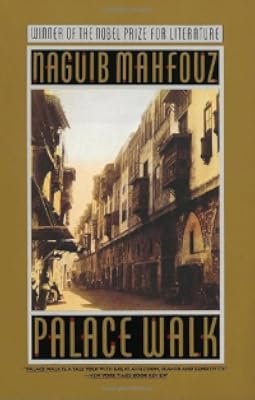
Volume I of the masterful Cairo Trilogy. A national best-seller in both hardcover and paperback, it introduces the engrossing saga of a Muslim family in Cairo during Egypt's occupation by British forces in the early 1900s.Tags
Recommendations











Member Recommendations
by anonymous user

Member Reviews
(25) Part 1 in a Nobel Prize winning trilogy about a family in Cairo living their lives between the two World Wars and when Egypt was wresting control of the British Protectorate. A time and history I know very little about. Mahfouz's characterization and intricate story telling has been compared to Dickens, to the J.G. Farrells' 'Empire Trilogy', and Paul's Scott's 'The Raj Quartet' -- all authors and literature I have enjoyed and greatly admired. This has been missing from the oeuvre oft mentioned together so I figured I would begin the trilogy when I found the first book in a used bookstore. While I would say it did not disappoint, I did struggle with the novel.
The novel is written from multiple POV's and at times stream of show more consciousness but is always readable (unlike fro example Joyce's stream of consciousness blather) The patriarch is VERY hard to empathize with - conceited, self-righteous, duplicitous, hypocritical, domineering, misogynistic. The list goes on. However much the reader (? and the author) can see these things, the other characters do not. They revere him. This was tough for me and I bristled at the hyper-religiosity of a strict Islamic family life that did not allow the women to leave the home and considered them impure and defiled if another man looked at them (even if it wasn't their fault!!) The author had the female characters (whom also narrated at times)- the sheltered Amina, and her two daughters - buy into this sublimation of their identity and submit to the religious patriarchy almost without question and this really rankled. I was left wondering what the author himself actually believed. And therein was my discomfort. Are you serious right now? You are pissed a male doctor had to come and look at the woman's crotch post childbirth especially as it turned out she was OK after all... Women who are raped during a war crime will not be able to live under their husband's roof again as they have been defiled... WTF.
Ultimately, the characters come alive. One can picture Palace Walk with shops and the minarets and the latticed balconies and all the various shopkeepers, kohl-lined eyes and scarf wrapped faces of heavy-set beauties with their lutes and incense, and the serious scholarly young men in their kurtas and fez heading out to the coffee shops and classrooms. I loved Kamal and his flights of fancy and normal little boy ways. I did empathize with the climactic ending and imagined the next scene with a heavy heart. I will read the next installment. But, I am left with an increasingly negative sentiment about Islam despite the humanity of the characters. Normally works of great literature cultivate universality despite differences of time and culture - not so here for this reader and that is a bit disappointing. But I will give the author the benefit of the doubt and will allow it all to spool out. show less
The novel is written from multiple POV's and at times stream of show more consciousness but is always readable (unlike fro example Joyce's stream of consciousness blather) The patriarch is VERY hard to empathize with - conceited, self-righteous, duplicitous, hypocritical, domineering, misogynistic. The list goes on. However much the reader (? and the author) can see these things, the other characters do not. They revere him. This was tough for me and I bristled at the hyper-religiosity of a strict Islamic family life that did not allow the women to leave the home and considered them impure and defiled if another man looked at them (even if it wasn't their fault!!) The author had the female characters (whom also narrated at times)- the sheltered Amina, and her two daughters - buy into this sublimation of their identity and submit to the religious patriarchy almost without question and this really rankled. I was left wondering what the author himself actually believed. And therein was my discomfort. Are you serious right now? You are pissed a male doctor had to come and look at the woman's crotch post childbirth especially as it turned out she was OK after all... Women who are raped during a war crime will not be able to live under their husband's roof again as they have been defiled... WTF.
Ultimately, the characters come alive. One can picture Palace Walk with shops and the minarets and the latticed balconies and all the various shopkeepers, kohl-lined eyes and scarf wrapped faces of heavy-set beauties with their lutes and incense, and the serious scholarly young men in their kurtas and fez heading out to the coffee shops and classrooms. I loved Kamal and his flights of fancy and normal little boy ways. I did empathize with the climactic ending and imagined the next scene with a heavy heart. I will read the next installment. But, I am left with an increasingly negative sentiment about Islam despite the humanity of the characters. Normally works of great literature cultivate universality despite differences of time and culture - not so here for this reader and that is a bit disappointing. But I will give the author the benefit of the doubt and will allow it all to spool out. show less
This is a book to be savored. Each sentence is a finely crafted piece of genius. And you want to dwell on each one for an inordinate amount of time. Or you want to keep rereading the sentence, wondering how Naguib Mahfouz knew that this particular combination of words would transform the narrative into something so….beautiful.
Palace Walk is a family saga taking place in Cairo in the years during and immediately following WWI. The Muslim patriarch of the Sayid family, al-Sayid Ahmad Abd al-Jawad, is a tyrannical brute who lives by a double standard. He subjects his wife, Amina and daughters Aisha and Khadija, to a life of complete and total isolation where they are not permitted out of the house and his sons Yasin, Fahmy and Kamal, show more live in constant fear of their father’s strict discipline. This severe interpretation of the Quer’an, however, somehow permits him to adopt entirely different rules for himself. He spends each evening drinking and carousing and partying and when oldest son Yasin, observes his father with another woman he can’t help but comment:
”What a strange man he was to sanction forbidden forms of entertainment for himself while denying his family legitimate enjoyments.”(Page319)
The Sayid family, up until Yasin’s observations, is completely unaware of their patriarch’s double life and even if they had known, really, what could they do? They lived in total and complete domination by a man who willfully refrained from smiling in front of his family, in order to keep up his reputation as a tyrant. I have to admit, I kept waiting for some kind of resolution of this aspect of this family’s plight because it was so outrageous. As a lifelong resident of the West, I just don’t know enough about other cultures and this story takes place almost 100 years ago, but to hold women prisoner in their homes, to not educate women so that no men will know what they look like is so foreign to me. So thank you Mr. Mahfouz for the education. On the other hand, I could not warm up to al-Sayid Ahmad. He goes so against the grain of anything that hints at women’s rights. So it’s surprising how much I loved this book.
One thing I must comment on and that is the fine-detailed, acutely defined characterizations of all the family members. As the story is told through the viewpoints of all of them, it was important for these characters to ring true, and they certainly do.
Under the dreadful conditions in the Sayid home, Mahfouz spins a tale of life in Egypt during the time of the British occupation. And middle son Fahmy, is a dedicated freedom fighter that loves his country and will do anything, even go so far as defying his father’s order to stop participating in the distribution of handbills. And when the British set up a check point right in front of the residence on Palace Walk, things really heat up. Can anything good come of this? The author builds suspense, page by page, until the final climactic page when it becomes apparent that this tale will be continued in another volume. And I will certainly be reading that one shortly. Highly recommended. show less
Palace Walk is a family saga taking place in Cairo in the years during and immediately following WWI. The Muslim patriarch of the Sayid family, al-Sayid Ahmad Abd al-Jawad, is a tyrannical brute who lives by a double standard. He subjects his wife, Amina and daughters Aisha and Khadija, to a life of complete and total isolation where they are not permitted out of the house and his sons Yasin, Fahmy and Kamal, show more live in constant fear of their father’s strict discipline. This severe interpretation of the Quer’an, however, somehow permits him to adopt entirely different rules for himself. He spends each evening drinking and carousing and partying and when oldest son Yasin, observes his father with another woman he can’t help but comment:
”What a strange man he was to sanction forbidden forms of entertainment for himself while denying his family legitimate enjoyments.”(Page319)
The Sayid family, up until Yasin’s observations, is completely unaware of their patriarch’s double life and even if they had known, really, what could they do? They lived in total and complete domination by a man who willfully refrained from smiling in front of his family, in order to keep up his reputation as a tyrant. I have to admit, I kept waiting for some kind of resolution of this aspect of this family’s plight because it was so outrageous. As a lifelong resident of the West, I just don’t know enough about other cultures and this story takes place almost 100 years ago, but to hold women prisoner in their homes, to not educate women so that no men will know what they look like is so foreign to me. So thank you Mr. Mahfouz for the education. On the other hand, I could not warm up to al-Sayid Ahmad. He goes so against the grain of anything that hints at women’s rights. So it’s surprising how much I loved this book.
One thing I must comment on and that is the fine-detailed, acutely defined characterizations of all the family members. As the story is told through the viewpoints of all of them, it was important for these characters to ring true, and they certainly do.
Under the dreadful conditions in the Sayid home, Mahfouz spins a tale of life in Egypt during the time of the British occupation. And middle son Fahmy, is a dedicated freedom fighter that loves his country and will do anything, even go so far as defying his father’s order to stop participating in the distribution of handbills. And when the British set up a check point right in front of the residence on Palace Walk, things really heat up. Can anything good come of this? The author builds suspense, page by page, until the final climactic page when it becomes apparent that this tale will be continued in another volume. And I will certainly be reading that one shortly. Highly recommended. show less
Wow, wow, wow is this book fantastic. It's a substantial book, and the first of a trilogy by a Nobel Prize-winning author and it certainly has the reputation as An Important Book, which put me off reading it despite having picked up a very nice copy over a decade ago. This book seemed like it would require effort and somehow I was never up for making the effort. And so when I finally pulled it down off of the shelf, I was astonished at how vibrant and fun this novel was, one of those rare novels where time disappeared while I was reading.
Set in Cairo, in the years before Egyptian independence from Britain, the novel centers on al-Sayyid Ahmad Abd al-Jawad and his family. In public, Sayyid is the life of the party, a fun-loving and show more generous man who loves nothing more than gathering with his friends, drinking and singing, and sleeping with a series of mistresses. At home, however, he is intent on having a strictly observant religious household, the women who stay home and never show their faces to anyone outside the family, and sons who obey his every order and remain free of all vice. At home, his genial personality transforms into one that is quick to rage. Each family member reacts differently to their circumstances and the novel concerns itself with domestic issues and the crises that pop up in ordinary life, until the dissatisfaction with being an occupied country is expressed in demonstrations and rebellion and the family has to adjust to these new circumstances.
Mahfouz writes so engagingly about ordinary life of a shopkeeper's family that it's impossible not to be drawn into their lives. He's clear about the restrictions placed on women and how onerous and damaging that is, while also showing how a rigid, patriarchal society harms everyone in it, even the ones in charge. He also goes into detail about what life was like in that time and place, in a way that makes me eager to jump into the second book of the trilogy. show less
Set in Cairo, in the years before Egyptian independence from Britain, the novel centers on al-Sayyid Ahmad Abd al-Jawad and his family. In public, Sayyid is the life of the party, a fun-loving and show more generous man who loves nothing more than gathering with his friends, drinking and singing, and sleeping with a series of mistresses. At home, however, he is intent on having a strictly observant religious household, the women who stay home and never show their faces to anyone outside the family, and sons who obey his every order and remain free of all vice. At home, his genial personality transforms into one that is quick to rage. Each family member reacts differently to their circumstances and the novel concerns itself with domestic issues and the crises that pop up in ordinary life, until the dissatisfaction with being an occupied country is expressed in demonstrations and rebellion and the family has to adjust to these new circumstances.
Mahfouz writes so engagingly about ordinary life of a shopkeeper's family that it's impossible not to be drawn into their lives. He's clear about the restrictions placed on women and how onerous and damaging that is, while also showing how a rigid, patriarchal society harms everyone in it, even the ones in charge. He also goes into detail about what life was like in that time and place, in a way that makes me eager to jump into the second book of the trilogy. show less
A superb read; first in the Cairo Trilogy, telling the saga of a middle-class family living under the hated British Protectorate
. Head of the house, Ahmad, is brilliantly and convincingly drawn - on the one hand he is a strict Muslim, demanding his wife and daughters live in total seclusion, and keeping all the family in a state of terror at his displeasure, yet every night he goes out on the town with his worldly friends to enjoy wine, women and song.
'Was he two separate people combined into one personality? Was his faith in the divine magnanimity so strong that he could not believe these pleasures really had been forbidden?...He found within himself strong instincts, some directed toward God and tamed through worship and others set show more for pleasure and quenched in play.'
His meek wife, Amina, devotes herself to pleasing him, never questioning his nocturnal excursions, while she looks out on the world through the slits in the shutters. With them lives stepson Yasin - child of a previous, unfavoured wife - who seems to be inheriting his father's immoral ways- and their own four children: sons Fahmy, a law student, becoming increasingly passionate about the anti-British movement, and mischievous schoolboy Kamal plus two daughters awaiting marriage: beautiful Aisha and her older sister, plain, sharp-tongued Khadija.
I couldn't put this down, and intend to read the other two works in near future. Utterly recommended: an Egyptian Tolstoy.
Leaves the female reader glad she doesn't live in an early 1900s Egyptian home, when she reads quotes like:
'No daughter of mine will marry a man until I am satisfied that his primary motive for marrying her is a sincere desire to be related to me...me...me...me' and
'Women are just another kind of domestic animal and must be treated like one'. !! show less
. Head of the house, Ahmad, is brilliantly and convincingly drawn - on the one hand he is a strict Muslim, demanding his wife and daughters live in total seclusion, and keeping all the family in a state of terror at his displeasure, yet every night he goes out on the town with his worldly friends to enjoy wine, women and song.
'Was he two separate people combined into one personality? Was his faith in the divine magnanimity so strong that he could not believe these pleasures really had been forbidden?...He found within himself strong instincts, some directed toward God and tamed through worship and others set show more for pleasure and quenched in play.'
His meek wife, Amina, devotes herself to pleasing him, never questioning his nocturnal excursions, while she looks out on the world through the slits in the shutters. With them lives stepson Yasin - child of a previous, unfavoured wife - who seems to be inheriting his father's immoral ways- and their own four children: sons Fahmy, a law student, becoming increasingly passionate about the anti-British movement, and mischievous schoolboy Kamal plus two daughters awaiting marriage: beautiful Aisha and her older sister, plain, sharp-tongued Khadija.
I couldn't put this down, and intend to read the other two works in near future. Utterly recommended: an Egyptian Tolstoy.
Leaves the female reader glad she doesn't live in an early 1900s Egyptian home, when she reads quotes like:
'No daughter of mine will marry a man until I am satisfied that his primary motive for marrying her is a sincere desire to be related to me...me...me...me' and
'Women are just another kind of domestic animal and must be treated like one'. !! show less
‘Tussen twee paleizen’ is het eerste deel in de Caïro-trilogie van Nobelprijswinnaar Nagieb Mahfoez.
Het verhaal speelt zich af in de laatste jaren van de eerste wereldoorlog en behandelt ook het opkomend nationalisme in Egypte in de eerste jaren na de oorlog. Mahfoez verweeft kunstig deze historische feiten met het leven van de koopmansfamilie Abd al-Gawwaad. De pater familias is uiterst streng voor zijn gezin, maar ongelooflijk mild voor zichzelf. Het is een man met twee gezichten die moeiteloos een strenge godsdienst met een losbandig leven combineert.
Van in het begin wordt de toon gezet, als de lezer zijn vrouw Amiena ontmoet, die met hem is getrouwd toen ze veertien was en al vijfentwintig jaar het huis niet heeft verlaten, show more tenzij ze een zeldzaam bezoek aan haar moeder brengt onder het alziend oog van Ahmed. Ze werkt hard, slaapt kort om na middernacht op de thuiskomst van haar man te wachten en hem daarna als een slaaf te dienen. Zijn oudste zoon Jasien die hij met zijn eerste vrouw kreeg, is qua liederlijkheid zijn evenbeeld. Van hem komt deze ongelooflijke quote:
‘Vrouwen zijn als huisdieren en moeten als huisdieren behandeld worden. Het is huisdieren niet toegestaan zich in ons persoonlijk leven te mengen. Ze moeten thuis wachten tot wij tijd hebben om ze te aaien.’
Niet alleen via Amiena, maar ook via haar dochters Khadiega en Aisja krijgt de lezer een goed beeld van de ‘rol’ van de vrouw in die tijd. Beide dochters wachten tot een bruidegom hun hand vraagt. De mooie Aisja krijgt meer dan een huwelijkskandidaat en toch mag ze van haar vader niet trouwen, zolang haar oudste zus niet in het huwelijk is getreden. Tot er een moeder met meer macht en aanzien dan de rijke koopman Abd al-Gawwaad op het toneel verschijnt. Als Jasien zelfs voor zijn vader met zijn uitspattingen zijn boekje te buiten gaat, zoekt Ahmed bij zijn beste vriend een bruid voor zijn zoon. Via Zainab zie je dat er vaders zijn die wel uitstapjes met hun dochters maken en de vrouw over het algemeen meer respecteren. Toch blijft de positie van de vrouw in die tijd in Egypte beklagenswaardig.
Via de tweede zoon Fahmi, die rechten studeert, krijg je een duidelijk beeld van wat er zich op het politieke toneel afspeelt. Hij vindt het jammer dat de Duitsers de eerste wereldoorlog hebben verloren, omdat de Engelsen terugkeren naar hun protectoraat. Hij krijgt hoop als Saad Zaghloel met een afvaardiging, de voorloper van Wafd, dat nu nog altijd politiek actief is in Egypte, onafhankelijkheid eist bij het protectoraatsbestuur. Saad wordt naar Malta verbannen en de studenten gaan staken en betogen. In al die ernstige thema’s zorgt de jongste zoon Kamaal met zijn naïviteit en ondeugendheid voor een vrolijke noot die soms een wrange bijsmaak krijgt.
Nagieb Mahfoez is kritisch voor de zeden van zijn volk en dat heeft hem als ‘ketteraar’ een aanslag op zijn leven opgeleverd. Hij tekent sommige buurten in Caïro zo gedetailleerd, dat het voelt alsof je er zelf bent. Zijn pen beschrijft het enorme verschil tussen mannen en vrouwen, wat mij als moderne westerse vrouw in de eenentwintigste eeuw, honderd jaar later, heeft gechoqueerd. Buitengewoon hoe hij aan de hand van een rijke koopmansfamilie de politieke ontwikkelingen in de laatste jaren van de oorlog en de eerste jaren erna op een onderhoudende manier vertelt. Een aanrader! show less
Het verhaal speelt zich af in de laatste jaren van de eerste wereldoorlog en behandelt ook het opkomend nationalisme in Egypte in de eerste jaren na de oorlog. Mahfoez verweeft kunstig deze historische feiten met het leven van de koopmansfamilie Abd al-Gawwaad. De pater familias is uiterst streng voor zijn gezin, maar ongelooflijk mild voor zichzelf. Het is een man met twee gezichten die moeiteloos een strenge godsdienst met een losbandig leven combineert.
Van in het begin wordt de toon gezet, als de lezer zijn vrouw Amiena ontmoet, die met hem is getrouwd toen ze veertien was en al vijfentwintig jaar het huis niet heeft verlaten, show more tenzij ze een zeldzaam bezoek aan haar moeder brengt onder het alziend oog van Ahmed. Ze werkt hard, slaapt kort om na middernacht op de thuiskomst van haar man te wachten en hem daarna als een slaaf te dienen. Zijn oudste zoon Jasien die hij met zijn eerste vrouw kreeg, is qua liederlijkheid zijn evenbeeld. Van hem komt deze ongelooflijke quote:
‘Vrouwen zijn als huisdieren en moeten als huisdieren behandeld worden. Het is huisdieren niet toegestaan zich in ons persoonlijk leven te mengen. Ze moeten thuis wachten tot wij tijd hebben om ze te aaien.’
Niet alleen via Amiena, maar ook via haar dochters Khadiega en Aisja krijgt de lezer een goed beeld van de ‘rol’ van de vrouw in die tijd. Beide dochters wachten tot een bruidegom hun hand vraagt. De mooie Aisja krijgt meer dan een huwelijkskandidaat en toch mag ze van haar vader niet trouwen, zolang haar oudste zus niet in het huwelijk is getreden. Tot er een moeder met meer macht en aanzien dan de rijke koopman Abd al-Gawwaad op het toneel verschijnt. Als Jasien zelfs voor zijn vader met zijn uitspattingen zijn boekje te buiten gaat, zoekt Ahmed bij zijn beste vriend een bruid voor zijn zoon. Via Zainab zie je dat er vaders zijn die wel uitstapjes met hun dochters maken en de vrouw over het algemeen meer respecteren. Toch blijft de positie van de vrouw in die tijd in Egypte beklagenswaardig.
Via de tweede zoon Fahmi, die rechten studeert, krijg je een duidelijk beeld van wat er zich op het politieke toneel afspeelt. Hij vindt het jammer dat de Duitsers de eerste wereldoorlog hebben verloren, omdat de Engelsen terugkeren naar hun protectoraat. Hij krijgt hoop als Saad Zaghloel met een afvaardiging, de voorloper van Wafd, dat nu nog altijd politiek actief is in Egypte, onafhankelijkheid eist bij het protectoraatsbestuur. Saad wordt naar Malta verbannen en de studenten gaan staken en betogen. In al die ernstige thema’s zorgt de jongste zoon Kamaal met zijn naïviteit en ondeugendheid voor een vrolijke noot die soms een wrange bijsmaak krijgt.
Nagieb Mahfoez is kritisch voor de zeden van zijn volk en dat heeft hem als ‘ketteraar’ een aanslag op zijn leven opgeleverd. Hij tekent sommige buurten in Caïro zo gedetailleerd, dat het voelt alsof je er zelf bent. Zijn pen beschrijft het enorme verschil tussen mannen en vrouwen, wat mij als moderne westerse vrouw in de eenentwintigste eeuw, honderd jaar later, heeft gechoqueerd. Buitengewoon hoe hij aan de hand van een rijke koopmansfamilie de politieke ontwikkelingen in de laatste jaren van de oorlog en de eerste jaren erna op een onderhoudende manier vertelt. Een aanrader! show less
Set in an evolving, emerging independent Egypt from 1917-1919, the novel begins with bullseye focus on the day-to-day schedule of the al-Jawad family before zooming out to encompass what they represent microcosmically, Egyptian society at large and Egypt itself leading up to and during the nationalist revolution.
How frustratingly patriarchal should novels be, even if it were a realistic portrayal? To include the amount of feminism that nowadays expect would ring false, but as a work of fiction, why not? The only way I could tolerate al-Sayyid Ahmad's blatant hypocrisy in his expectation of his family's conduct, which the novel did some effort to condemn and point out as unreasonable, was to view it as a human story of the British show more occupation in Egypt at the time, and hope for his ultimate demise in the rest of the trilogy. The depiction of the family also sheds terrifying lights on domestic tyranny and how people can subjugate to it by confusing fear with love: She had no regrets at all about reconciling herself to a type of security based on surrender.
Despite the rampant misogyny and double standards of men, the novel was an engrossing read, immersed as it was in a culture and politics not often depicted in western literature. (cf, Despite being a mass murderer, that person really is just great!) On the surface, the events may appear inane - we began with about a hundred pages going through a typical day of the family's routine from everyone's perspective, now there's a marriage, there's a refusal, etc -, yet subtly reveals the mentality and hustle and bustle of Cairo with its customs and culture.
Recommended for firm supporters of equality since I worry that impressionable minds may be ingrained to carry on such despicable patriarchy as the norm, show less
How frustratingly patriarchal should novels be, even if it were a realistic portrayal? To include the amount of feminism that nowadays expect would ring false, but as a work of fiction, why not? The only way I could tolerate al-Sayyid Ahmad's blatant hypocrisy in his expectation of his family's conduct, which the novel did some effort to condemn and point out as unreasonable, was to view it as a human story of the British show more occupation in Egypt at the time, and hope for his ultimate demise in the rest of the trilogy. The depiction of the family also sheds terrifying lights on domestic tyranny and how people can subjugate to it by confusing fear with love: She had no regrets at all about reconciling herself to a type of security based on surrender.
Despite the rampant misogyny and double standards of men, the novel was an engrossing read, immersed as it was in a culture and politics not often depicted in western literature. (cf, Despite being a mass murderer, that person really is just great!) On the surface, the events may appear inane - we began with about a hundred pages going through a typical day of the family's routine from everyone's perspective, now there's a marriage, there's a refusal, etc -, yet subtly reveals the mentality and hustle and bustle of Cairo with its customs and culture.
Recommended for firm supporters of equality since I worry that impressionable minds may be ingrained to carry on such despicable patriarchy as the norm, show less
The first novel in The Cairo Trilogy is set in a Cairene neighborhood in October 1917, just after the death of Husayn Kamal, the Sultan of Egypt. Kamal was chosen three years earlier as the figurehead of the land that was a part the Ottoman Empire but had been ruled by Great Britain since 1882. The previous leader, Abbas II, was deposed by the British at the onset of World War I, once the Ottoman Empire sided with the Central Powers and against Great Britain. Egypt was declared a British protectorate, which ended its semi-independent status and fueled the nationalist movement to expel the unwanted colonizers.
[Palace Walk] is centered upon al-Sayyid Ahmad Abd al-Jawad, a successful neighborhood shop owner in Cairo. He is a merciless show more tyrant at home, imposing his unbending will and strict Muslim beliefs on his family, but a beloved and devoted friend to many and a fervent lover of wine, women and song outside of it. The al-Jawad family includes Amina, al-Sayyid's pious and tirelessly devoted second wife, his two daughters, the beautiful and vain Aisha, and the homely but quick witted and razor tongued Khadija, and his three sons, Yasin, a government servant whose prodigious appetite for debauchery exceeds his father's; Fahmy, an idealistic law student and freedom fighter; and Kamal, the youngest of the clan, an irreverent young dreamer who has a nose for getting into trouble but loves everyone in his family passionately and unconditionally.
The al-Jawads and those closest to them each struggle with parallel internal conflicts, in keeping with the struggle of the Egyptian people torn between the protection from the ravages of war by British occupation and the burning desire for independence, between older religious traditions and emerging secular freedoms, and especially between the traditional and modern roles and rights of women in early 20th century Egyptian society. In addition, the three sons of al-Jawad each seem to serve as metaphors for different periods of modern Egyptian history, with Yasin representative of traditional Cairo, Khady of the troubled land during the British protectorate, and Kamal of the bright but uncertain future independent country.
Mahfouz does a masterful job in fully portraying each character, the bustling neighborhood that surrounds Palace Walk, and the deep tension and stifling oppression within the al-Jawad household. Palace Walk is a monumental work, one which is essential to an understanding of the history of modern Egypt, and an outstanding family saga that rivals any other in literature. show less
[Palace Walk] is centered upon al-Sayyid Ahmad Abd al-Jawad, a successful neighborhood shop owner in Cairo. He is a merciless show more tyrant at home, imposing his unbending will and strict Muslim beliefs on his family, but a beloved and devoted friend to many and a fervent lover of wine, women and song outside of it. The al-Jawad family includes Amina, al-Sayyid's pious and tirelessly devoted second wife, his two daughters, the beautiful and vain Aisha, and the homely but quick witted and razor tongued Khadija, and his three sons, Yasin, a government servant whose prodigious appetite for debauchery exceeds his father's; Fahmy, an idealistic law student and freedom fighter; and Kamal, the youngest of the clan, an irreverent young dreamer who has a nose for getting into trouble but loves everyone in his family passionately and unconditionally.
The al-Jawads and those closest to them each struggle with parallel internal conflicts, in keeping with the struggle of the Egyptian people torn between the protection from the ravages of war by British occupation and the burning desire for independence, between older religious traditions and emerging secular freedoms, and especially between the traditional and modern roles and rights of women in early 20th century Egyptian society. In addition, the three sons of al-Jawad each seem to serve as metaphors for different periods of modern Egyptian history, with Yasin representative of traditional Cairo, Khady of the troubled land during the British protectorate, and Kamal of the bright but uncertain future independent country.
Mahfouz does a masterful job in fully portraying each character, the bustling neighborhood that surrounds Palace Walk, and the deep tension and stifling oppression within the al-Jawad household. Palace Walk is a monumental work, one which is essential to an understanding of the history of modern Egypt, and an outstanding family saga that rivals any other in literature. show less
Members
- Recently Added By
Published Reviews
ThingScore 100
Naguib Mahfouz has been compared to Balzac and Dickens, and his characters, like theirs, are drawn with absolute authority and acute psychological insight. ''Palace Walk'' is a tale told with great affection, humor and sensitivity, in a style that in this translation, by William M. Hutchins and Olive E. Kenny, is always accessible and elegant.
added by jlelliott
Lists

The Guardian's 1000 Novels Everyone Must Read
1,005 works; 551 members

Historical Fiction
889 works; 91 members

Books I've Read More Than Once
602 works; 49 members

Books about World War I
80 works; 14 members

Novels featuring siblings
133 works; 8 members

My E-Book Collection - Opinions Welcome
92 works; 10 members

Urban Fiction
74 works; 6 members

A's favorite novels
100 works; 3 members

Books Set In Africa
81 works; 4 members

Nifty Fifties
129 works; 14 members

Books Read in 2013
1,630 works; 51 members

Global Reads: Books Set in the Middle East and North Africa
50 works; 8 members

Allie's List of Books I Want To Read
93 works; 1 member

Books written in uncommon languages
97 works; 8 members

Books Featured on Readers' Review of the Diane Rehm Show
161 works; 8 members

Alphabetical Books
211 works; 3 members

Around the World in 80 Books
79 works; 4 members

Books I may read for February 2012 TIOLI
23 works; 5 members
Talk Discussions
Past Discussions
The Palace Walk by Naguib Mahfouz in Reading Globally (July 2012)
Author Information

344+ Works 19,217 Members
Naguib Mahfouz was born in Cairo, Egypt on December 11, 1911. He received a degree in philosophy from the University of Cairo. He took on several civil service and government department jobs to supplement his income while writing, but retired from that career in 1971. During his lifetime, he wrote more than 30 novels including The Games of Fate, show more The Cairo Trilogy, Children of Gebelawi, The Thief and the Dogs, Autumn Quail, Small Talk on the Nile, and Miramar. He received numerous awards including the Egyptian State Prize, the Presidential Medal from the American University in Cairo, and the Nobel Prize for Literature in 1988. He died as a result of a head injury on August 30, 2006 at the age of 94. (Bowker Author Biography) show less
Some Editions
Awards and Honors
Distinctions
Series

Belongs to Publisher Series
Work Relationships
Is contained in
Common Knowledge
- Canonical title
- Palace Walk
- Original title
- Bayn al Quasrayn
- Alternate titles
- Tussen twee paleizen
- Original publication date
- 1956 (original Arabic) (original Arabic)
- People/Characters
- al-Sayyid Ahmad Abd al-Jawad; Amina; Yasin; Fahmy; Kamal; Khadija (show all 7); Aisha
- Important places
- Cairo, Egypt
- Important events
- Egyptian Revolution of 1919, King Farouk I overthrown 1952
- First words
- She woke at midnight.
- Last words
- (Click to show. Warning: May contain spoilers.)When he entered, he heard Kamal's voice singing melodiously:
Visit me once each year,
For it's wrong to abandon people forever. - Original language
- Arabic
Classifications
- Genres
- Fiction and Literature, General Fiction, Historical Fiction
- DDC/MDS
- 892.736 — Literature & rhetoric Literatures of other languages Afro-Asiatic literatures Arabic (Egypt, Lebanon, Palestine, Saudi Arabia, Sudan) Arabic fiction 1945–2000
- LCC
- PJ7846 .A46 .B313 — Language and Literature Oriental languages and literatures Oriental philology and literature Arabic Arabic literature Individual authors or works
- BISAC
Statistics
- Members
- 3,086
- Popularity
- 5,736
- Reviews
- 65
- Rating
- (4.01)
- Languages
- 15 — Arabic, Catalan, Dutch, English, Finnish, French, German, Greek, Italian, Norwegian (Bokmål), Norwegian, Polish, Portuguese, Spanish, Swedish
- Media
- Paper, Audiobook, Ebook
- ISBNs
- 57
- ASINs
- 16